Hydrogen Debate and the Future of Heat

We are pleased to publish a contribution to the growing debate on the use of Hydrogen to replace north sea gas for domestic heating written by Pete Roche – the article was originally published in the bulletin of Nuclear Free Local Authorities.

An argument about the future use of hydrogen, in particular for heating, has been raging amongst energy professionals and lobbyists since the Government announced it was looking at setting a date by which all boilers on sale would be “hydrogen ready”, meaning they can burn natural gas but can also be converted easily to burning hydrogen. It was also announced that the natural gas supply at Keele University is being blended with 20% hydrogen in a trial that’s of national significance.

Households could soon be required to install a boiler capable of burning hydrogen when they next upgrade their central heating system. The government has already pledged to ban installation of fossil fuel heating systems in new homes from 2025. In November Sajid Javid, the chancellor, visited the headquarters of Worcester Bosch to inspect its prototype hydrogen-ready boiler. The company says the boilers would be available by 2025. They would be £50-£100 more expensive than existing boilers, which typically cost about £900. The benefit over existing boilers is that they can continue burning natural gas but be converted to burning hydrogen in an operation that will cost about £150 and take a gas engineer one hour.

The Department for Business, Energy and Industrial Strategy’s Hy4Heat programme aims to determine the feasibility of hydrogen for heating in homes and includes work with industry to develop prototype hydrogen appliances, including hydrogen ready boilers. About 1.7 million boilers are replaced each year so if they were required to be hydrogen-ready from 2025 most homes would have the necessary boiler by the mid-2030s to allow a switch to hydrogen. (1)

One of the arguments in favour of converting our gas boilers to hydrogen is that we have poorly insulated houses with insufficient space for installing a heat pump. If you were to design a heating policy from scratch, you would not choose hydrogen. You would build well-insulated houses that use electric heat pumps. (2) Worcester Bosch argues that a house needs to have an Energy Performance Certificate rating of C or above for a heat pump to be able to heat the house effectively. According to them of the 3,276,000 UK properties within the EPC band C rating, some 3,223,000 have a condensing boiler. One of the ways of jumping one clear band within the EPC methodology is to replace a non-condensing boiler with a condensing version. This means that many of the properties in band C are really constructed to band D levels of fabric and therefore unsuitable as they stand for a heat pump installation. (3)

Ed Matthew Associate Director at independent climate and energy think tank E3G says hydrogen is the wrong choice for heating homes. Blue hydrogen (manufactured from natural gas) needs CCS so would be massively expensive and keeps us hooked on gas. Green hydrogen (made by electrolysis using renewable electricity) is 4 times less efficient than using heat pumps. “Hydrogen is being pushed by the gas industry. Beware.”

Dave Toke, reader in energy politics at Aberdeen University agrees. He calls it: “the start of one of the greatest pieces of greenwash that have been committed in the UK.” The oil and gas industry is promoting so-called ‘blue hydrogen’, that is hydrogen produced by ‘reforming’ natural gas, and capturing the carbon dioxide that is produced. Yet currently most hydrogen is produced by reforming natural gas and not capturing carbon dioxide, a process that will dramatically increase carbon dioxide emissions if hydrogen is used to heat homes. The efficiency of the gas reformation process is only around 65% meaning that much more carbon dioxide is generated to produce the hydrogen as fuel compared to simply burning the natural gas. He says any claims that the process will be done using carbon capture and storage, beyond that is a few demonstration projects supported by public grants, should be taken with a wagon load of salt.

But even if ‘green’ hydrogen generated by renewable energy were used, it would still be a grossly inefficient way of using that renewable energy. Renewable energy is normally distributed through the electricity system where it can power heat pumps in homes (either individually or through district heating systems) to much greater effect. The heat pumps use electricity much more efficiently compared to any hydrogen boilers, no matter how the hydrogen is produced. Indeed, a heat pump may increase the efficiency of the use of renewable energy by approaching fourfold compared to using ‘green hydrogen’ in a boiler. (4)

Richard Black from the Energy and Climate Intelligence Unit (ECIU) told BBC News: “We will and should have hydrogen in the mix of energy options, but it’s not a wonder solution to everything, which you sometimes get the impression from the rhetoric. There is hope – but too much hype.” (5)

Commentators also argue about the cost with some saying hydrogen will prove too expensive for mass usage, while others say switching to the use of electricity for heating will be far more costly than gas central heating and will put enormous strains on the grid during the winter months. However, heat battery manufacturer, Sunamp, claims that using an air source heat pump on off- peak electricity in conjunction with a heat battery can heat a house for a price comparable with gas central heating.

Lord Deben, chair of the Committee on Climate Change, has expressed confidence that a way will be found to produce hydrogen, which could provide a low carbon substitute for natural gas in heating systems, cheaper than is currently possible. (6)

The Commonweal Common Home Plan (see below) is sceptical about relying on the conversion of the gas grid to hydrogen. And moving to electric heating would roughly increase by a factor of five peak load on the grid which would require significant upgrades to cope. It prefers instead the idea of building district heating networks which can deliver heat from solar thermal, geothermal and industrial waste heat recovery.

New research commissioned by industry body Scottish Renewables shows the Scottish Government’s new Heat Networks Bill could see the equivalent of 460,000 homes – around a fifth of Scotland’s total – heated renewably by 2030, cutting emissions from heat by 10% and helping tackle the climate emergency. The research found 46 potential heat network projects across Scotland’s seven cities. The networks would initially serve 45,000 homes but could, with the right Scottish Government support, grow ten-fold by 2030. (7)

To date the Scottish Government has said the new Heat Networks Bill will “support, facilitate and create controls [for] the development of district heating” – but is yet to confirm the details. In response to this ongoing uncertainty industry has published, alongside the new research, a set of recommendations on how the Bill should support new projects. The potential projects represent a significant economic opportunity. Civil engineering such as the digging of trenches and laying of pipes accounts for 40% of a typical heat network’s costs, often using locally-sourced labour.

Star Renewable Energy, has installed a heat pump which can extract the small amount of heat generated by the Clyde. The river has an average temperature of around 10oC but engineers can boost it up to 80oC for use in homes. (8)

Meanwhile the HyDeploy pilot involving injecting hydrogen into Keele University’s existing natural gas network, which supplies 30 faculty buildings and 100 domestic properties is now operational. (9) And 7 industrial partners have been pledged to support a demonstration project in Denmark, which, with offshore wind as a power source, will produce renewable hydrogen that can be used in road transport. (10)

  1. Times 4th Jan 2020 https://www.thetimes.co.uk/article/hydrogen-boilers-may-be-only-choice-for-homes- by-2025-2rw5t3tpt
  2. Times 4th Jan 2020 https://www.thetimes.co.uk/article/an-exciting-carbon-free-future-depends-on- hydrogen-boilers-6ktqwpgw0
  3. See The Future of Fuel, Worcester Bosch, 2019 https://www.worcester- bosch.co.uk/img/documents/hydrogen/The_Future_of_Fuel.pdf
  4. Dave Toke’s Blog 4th Jan 2020 https://realfeed-intariffs.blogspot.com/2020/01/why-uk-government-may- be-encouraging.html
  5. BBC 2nd Jan 2020 https://www.bbc.co.uk/news/science-environment-50873047
  6. Edie 6th Dec 2019 https://www.edie.net/news/10/Lord-Deben-chides-politicians-for-failing-to-act-on-decarbonisation-of-heat/Scottish Renewables 11th Nov 2019
  7. https://scottishrenewables.createsend.com/campaigns/reports/viewCampaign.aspx
  8. Times 12th Nov 2019 https://www.thetimes.co.uk/article/667e8b5c-04d4-11ea-872c-a98e8bfab8fc
  9. Edie 2nd Jan 2020 https://www.edie.net/news/8/UK-s-first-grid-injected-hydrogen-trials-begin-in-Staffordshire/
  10. Orsted 20th Dec 2019 https://orsted.com/da/Media/Newsroom/News/2019/12/945369984118407

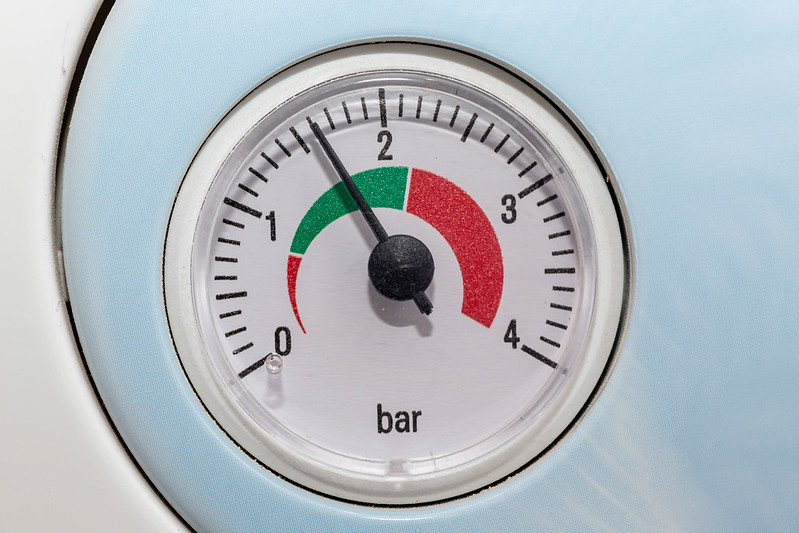
The scale of pressure on domestic gas boiler

The scale of pressure on domestic gas boiler image by Marco Verch CC BY 2.0


The case against new developments in the North Sea

The North Sea hydrocarbon reserves are among the most expensive and most technically difficult in the world. They are also short-medium life reserves compared with larger landmass oilfields.

Anticipating these disincentives, the incoming Labour governments of 1964-69 and 1974-79 with the state-owned BNOC and British Gas companies decided to make them more attractive for licenced operators by zero valuing to hydrocarbon assets thus avoiding the usual auction bidding process that would entail up-front purchase and risk acceptance by prospective extraction companies.

Then taxation rates on oil/gas extracted were relaxed to a very minimum as an incentive subsidy on future exploration and extraction activities. These arrangements- along with wholesale privatisation in 1980- meant that high profits were assured at low taxation rates and with the burden of risk and asset write-off being shouldered entirely by the taxpayer.

Also, these arrangements allowed for profligate extraction with value worthless assets being frittered away when the operational conditions got too difficult.

Unlike Norway– and many other oil and gas nation-states, no sovereign wealth fund was created on the back of oil/gas profit taxes- which in the case of Norway, has resulted in the biggest such fund for social welfare and public infrastructure in the world. So with Scottish territorial waters accounting for over 70% of UK oil and gas fields, little in the way- other than employment- of benefit has resulted/been accrued for the Scottish people.

Now Climate Change imperatives are bearing-down on all countries signed up to the IPOCC targets on carbon emissions targets- but yet ALL reliable sources producing estimates on oil (in particular) output and demand/consumption set targets well above limits required to bring about anything like a global temperature slow-down.

Also, the estimates for Scottish offshore- and fracked gas onshore- extraction fly clearly in the face of the Scottish government targets for a green neutral to zero-economy by 2030.

And also, also, it is clear that despite over 40 years of offshore hydrocarbon extraction- the living standards of the Scottish population- already low in comparison with much of the EU as well as many regions of the UK as a whole- have continued to fall and have continued downwards while the offshore company profits have continued upwards.  Essentially we have had subsidies and tax breaks for the rich oil companies and merciless market rigour for the poorest consumers.

Global oil prices (to which gas is pegged) continue to be volatile- but with an OPEC cartel of some 20 countries which are hydrocarbon exporting economic mono-cultures- future price wars- like the one in 2014 which saw 75,000 job losses in the North Sea- make any future dependence on the industry both a climate change folly and an economically ruinous strategy.

Oil and gas over-production is already upon us and any future development- such as the West of Shetland fields- is both unsustainable AND a waste of opportunities to create a green and socially equitable political economy for Scotland.

Dr Brian Parkin, Senior research fellow (Energy Economics), Leeds University

February 2020.

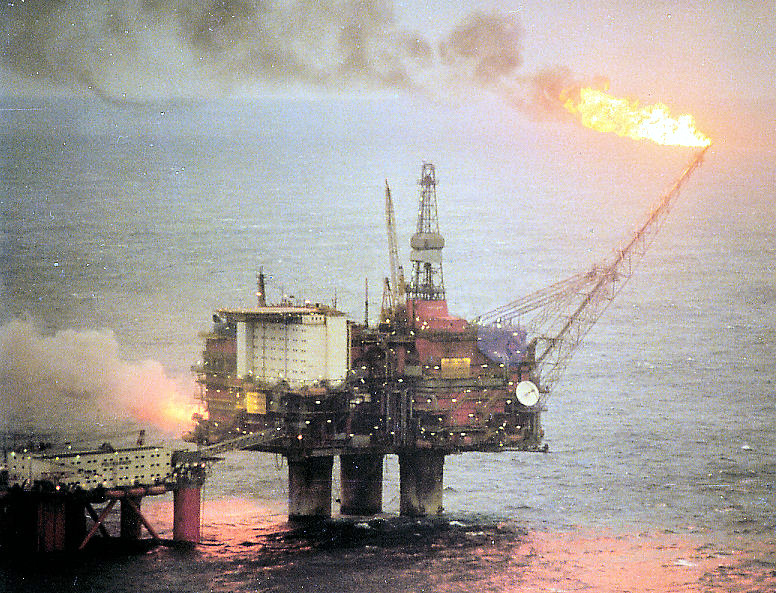
StatfjordA(Jarvin1982)Image CC0 StatfjordA (Jarvin1982).jpg


Glasgow XR meeting on North Sea Oil and Gas

Following actions in Dundee (see video) and at First Ministers Questions Glasgow XR held a well attended meeting on the 25th January.   The meeting began with contributions from XR activists, Friends of the Earth Scotland and ScotE3, before breaking into discussion groups.  The remainder of the post reproduces the text of the ScotE3  contribution in which we shared some thoughts on strategies for achieving a just transition to a zero carbon economy.

ScotE3 campaigns for the importance of climate jobs.  Jobs that are critical to the economic transformation that is needed to prevent a climate catastrophe.   In Scotland  100,000 of these jobs are needed .  However, to date we are not doing well.  According to the Office of National Statistics the UK’s green economy has shrunk since 2014.  The number of people employed has declined as has the number of green businesses.  This is true UK wide and in Scotland.  It’s no wonder that some representatives of unions that organise workers in the hydrocarbon sector pour scorn on talk of a just transition.

The Sea Change report makes it clear that unless we phase out North Sea Oil and Gas the UK will produce far more green house gas emissions than is compatible with restricting global temperature rise to 1.5 degrees.  But we have a huge challenge; the big energy companies are still committed to maximising extraction of oil and gas and so are the Holyrood and Westminster governments.  Just a year ago when the discovery of new oil and gas reserves east of Aberdeen was announced energy Minister Paul Wheelhouse highlighted,

 the significant potential for oil and gas which still exists beneath Scotland’s waters.

He added:

Scotland’s offshore oil and gas industry has an important role to play with up to 20 billion barrels of oil equivalent remaining under the North Sea and in the wider basin and discoveries such as this help to support security of supply as we make the transition to a low carbon energy system.

 Just this week the Africa summit in London ended with the Westminster Government pledging £2 billion to projects concerned with fossil fuel extraction.

From the outset North Sea has been a bonanza for the oil companies.  Nigel Lawson, now a prominent climate change denier, was Chancellor of the Exchequer in 1986 and said then

the whole outstanding success of the North Sea is based on the fact that it is the freest petroleum province in the world

He meant of course almost complete freedom for the oil companies – few if any benefits accrued to society as a whole and even centres of the industry like Aberdeen were then, and remain, centres of acute inequality.

So we need a rapid phasing out of North sea Oil and Gas.   How can we overcome the powerful vested interests that oppose this and at the same time protect the lives and livelihoods of the workers in the industry.  Theer is no evidence that the private sector can lead such a transition.  The public sector has to take the initiative – and in Scotland that means a much more ambitious role for a state energy company and the new national investment bank.  However, for this to happen we need a powerful movement of movements that has deep roots throughout Scotland.

To grow the movement and force the pace of change clarity of ideas is essential.   We don’t have all the answers but the core issues around climate jobs and just transition are clear.  So we need to patiently and persistently explain why hydrocarbons need to stay in the ground, why we need zero carbon, why the counter proposals from the industry are a dangerous diversion and how a just transition would have a positive impact on working people.

Reaching the audience we need goes hand in hand with maximising pressure on the energy corporations and local and national government.  Much of this will be through all kinds of direct action.  There have been some brilliant examples already but we need much more.

Direct action is necessary but not enough.  The power to force a transition can only come from a mass movement and to build the movement we need to win hearts and minds.  This means reaching out into unions, communities and community organisations with a vision of just transition that goes beyond simply defending existing jobs and embraces practical steps that have direct and understandable benefits for working class people across Scotland and beyond.   We need win people to a positive vision of transition, but more than that we need to win them to be active agents in the transition: part of a movement of rebels, not just on the streets, but in workplaces and communities.  So as we plan actions we always need to think about how to reach new audiences – through stalls, street leafleting, public and workplace meetings and patient door to door leafleting debate and discussion.  It may be that some of those who work in the industry will be the last to be convinced (although that’s not inevitable – our opponents are the same corporations that drive down their wages and conditions and play fast and loose with health and safety).  But if they are unconvinced we need to aim for a situation where climate justice is common sense to millions and where the people that oil workers meet in the pub, out shopping, their kids and relatives, are all won to the need for transition.

With the COP being held in Glasgow this year we have a huge opportunity to build outwards and take a massive step forward in creating a campaign for transition that is unstoppable.

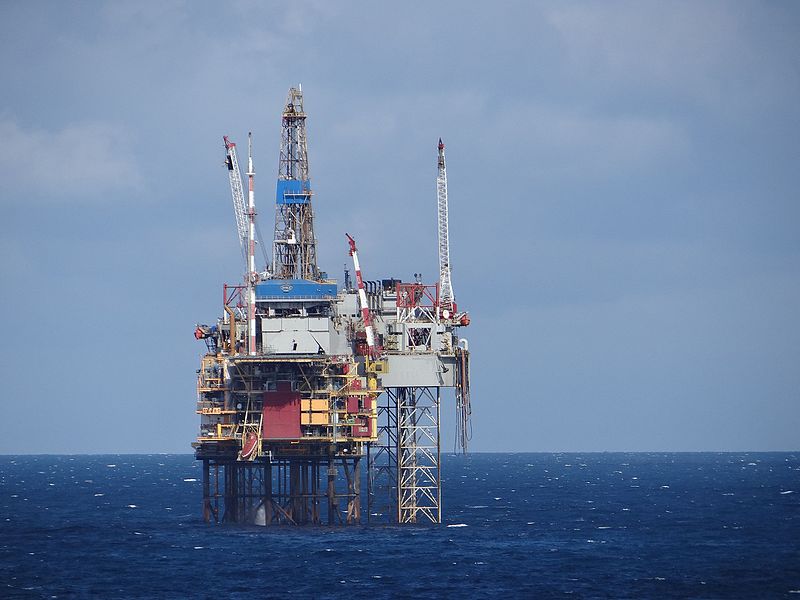
North_Sea_Oil_Rig_(7573694644)

North Sea Oil Rig by Gary Bembridge, CC BY SA 2.0

Notes from our January organising meeting

You can read the full notes from the meeting as a PDF here.  What follows are some of the main points that were discussed.

We started with a discussion on the likely impact of the general election result.  It’s likely that there will be detrimental changes to regulations and standards – areas that could be effected include energy from waste, devolved powers, outsourcing and tendering, nuclear policy, targets and subsidies, energy distribution and supply and workers rights. There is a likelihood for heightened tension between Westminster and Holyrood over many of these issues.  The big issues in the Scottish context include Oil and Gas (particularly INEOS), Public Transport, Housing and the opportunities and challenges presented by the COP being held in Glasgow.

We resolved to do all we can encourage discussion and action in workplaces and community settings. Wherever possible we will do this in partnership. We will encourage requests to help set up or provide resources for events. We agreed to prioritise setting up events in Fife, Falkirk and Aberdeen and with the Construction Rank and File group.

We agreed to work on four new briefings (we are always open for suggestions of amendments to existing briefings and suggestions for new ones) – working titles for the new additions are:

‘Is nuclear part of a sustainable solution’,

‘Organising at work’,

‘Hydrogen’,

‘What is the ‘COP’’.

wind-energy-488534_1280


How can public ownership in Offshore Wind deliver good jobs for the climate transition?

Thanks to Anna Markova from Transition Economics for permission to share this video which she presented at the STUC Energy conference – ‘Building Worker Power in the context of the climate crisis’ on 20th November.  The video looks specifically at offshore wind but raises issues around public ownership and is well worth watching in full.


2019 Conference Report – Simon Pirani

In the second plenary session of the conference Simon Pirani and Mary Church reflected on the growth of the climate movement and the challenges we face. This post includes video of most of Simon’s contribution. He began by reflecting on the connections between some of the struggles for just transition highlighted in the REEL News films and the onslaught on working class communities that took place in the Miner’s Strike of 1984/5. Miners were fighting for their communities and lives and livelihoods. He argued that in the context of climate crisis we are defending communities no less than we were in 1984/1985.

Simon was clear that there is a still an argument to win. Some trade unionists suggest that jobs and climate action are in opposition. He argued that this a false choice – without system change we face disaster on an unimaginable scale – our fight is for effective action and social justice. Each depends on the other.

Combining climate justice and social justice

Thanks to everyone who contributed to yesterday’s Scot.E3 conference.  We’ll be posting videos and reports of the discussion over the next few days.  Here we repost (in slightly edited form) an article by Pete Cannell from the latest Scottish Left Review that provides some background to the discussion at the conference.

On October 11th 2015 I was one among several thousand linking arms across the Forth Road Bridge. Hands Over Our Forth (HOOF) was meant to be the latest stage in a mass campaign to stop underground coal gasification (UCG) by burning the coal seams under the Forth. However, just before the event the Scottish Government announced that UCG would not go ahead. So the demo became a celebration. It was an assembly like no other environmental protest I’ve ever been on. Diverse, militant and embedded in the working class communities of Fife and the Lothians. When we formed my local group in Portobello, ‘Our Forth Against Unconventional Gas’, no one knew about UCG, but a whole host of local people, including ex-miners (appalled at the stupidity of setting fire to coal seams) quickly spread the word and through imaginative campaigning and direct action we won.

A great deal has happened in the four years since HOOF, much of it in the last year; XR has injected urgency into climate campaigning, the school student strikes have been inspirational and put the idea of collective action back on the agenda. Yet all of this has been against the backdrop of accelerating rates of carbon emissions and new evidence of the severity of the climate crisis.

ScotE3 was initiated by a small group of rank and file trade unionists (mainly working in construction and defence) and activists like myself keen to find a way of taking climate action into workplaces and working class communities. We were inspired by the Million Climate Jobs programme for a transition to a sustainable economy and by the struggles for just transition taking place in working class and indigenous communities in the US and elsewhere.

After working together on a submission to the Scottish Government’s energy consultation, we began by producing briefing documents that aimed to frame the politics and practice of transition in ways that related to trade unionists. The lived experience of our class is that change usually means paying the price for the problems of the rich and powerful. The havoc wreaked by pit closures and the end of coal still scars communities across. Scotland. The message we want to get across is that a just transition, based on the million climate jobs strategy, means more employment not less, better transport, more comfortable homes and a future for our children and grandchildren.

It’s a big step forward that issues of social justice have become prominent in the climate movement and reference to just transition is now routine in the climate movement. The challenge, however, is to articulate the ideas implicit in just transition in ways that can engage working class people who are rightly cynical about the promises of politicians and expect that they will be asked to pay the price for transition. Just transition is usually framed in terms of ensuring that the lives and livelihoods of those currently dependent on work in the hydrocarbon sector are protected as we transition to zero carbon. This is absolutely correct, but in our view the definition needs to go broader and deeper.   The skills and knowledge of those currently working in the oil and gas and defence sector are critical to the rapid transition that is required. The new climate jobs need to be on decent terms and conditions – not the short-term agency contracts that are more and more prevalent in these sectors.   An effective transition needs to work for the bulk of the population and not just for the rich and powerful. So it needs to tackle the gross inequality that has been a feature of the last few decades of neoliberalism.   Moreover, it also needs to encompass free movement given that the impact of climate change is, and will be, experienced most rapidly and in its most extreme form in the global south.

In November 2018 we held our first conference at which the participants spent the day working on a practical manifesto for just transition. A diverse set of participants found common cause about what needs to be done. The harder question, which we returned to at the 2019 year conference, is how to make just transition real. Not just because a just transition is the right thing to do; it’s the only way to build the kind of mass campaign that’s needed. Reliance on market solutions has led to a world teetering on the edge of catastrophe. The alternative requires us to take the spirit of rebellion into every aspect of our lives, health, transport, housing … to demand action and to not take no for an answer.

hoof3-920x481