Taking a battering. Will North Sea oil withstand the coming Covid-19, world recession and Climate change storms?
For over 40 years the North Sea oil and gas industry has been hailed as Scotland’s economic and industrial crowning glory. But economic dips and global price wars have seen the industry drop in both output and workforce over the past decade. And now, the most-deadly of confluences- a Coronavirus pandemic, a global economic recession and a rapidly closing climate crisis- confront the industry with its hastened demise.
In this brief paper we examine the closing economic vice on the industry- a crashing oil price against a sudden and historic decline in petroleum demand- as well as the realities of the urgent need to cut and eliminate carbon emissions in order to offset an impending environmental catastrophe.
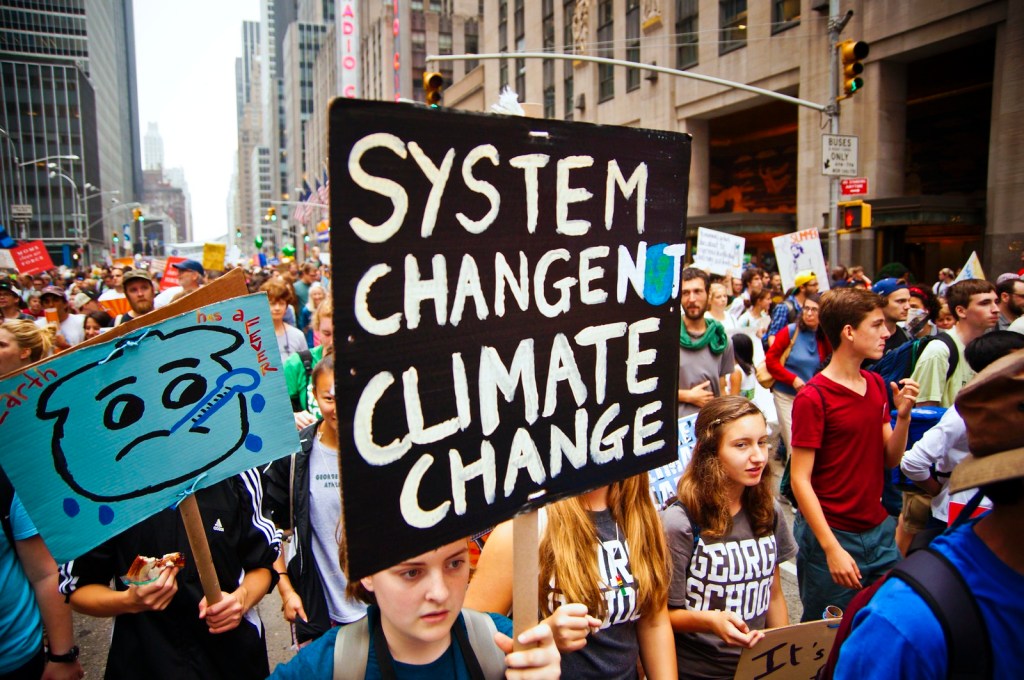
But here we will argue that rather than crises spelling the death-knell for workers and their communities, new industries requiring new skills and more jobs should emerge via a Just Transition that can offer workers, their families and communities hope for a secure, bright and clean future.
SAUDI-CALEDONIA
In his Black Gold Charles More[1] dates the origins of the UK’s North Sea industry to a day in the early 1960’s when a Dutch family’s garden caught fire. Initially investigating for wartime explosives, the authorities eventually discovered that the fire was from an out-burst of gas from hydrocarbon bearing seams that ran west out to the North Sea- towards the UK. Initially, interest in North Sea hydrocarbons was restricted to natural gas- as a cheaper and cleaner option to town coking-oven gas- but with the founding of a Department of Energy with a sovereign security of supply remit, oil, which was found in equally abundant reserves, became a growing area of interest.
Then following a humbling miners’ strike in 1972, followed by the Yom Kippur war and subsequent OPEC oil embargo and price shock, gears were shifted to put UK Continental Shelf (UKCS) oil production (and nuclear power)- on high priority as energy security hedges. Subsequently a Labour government priority became the setting up of a British National Oil Corporation (BNOC) alongside a similar gas enterprise- British Gas, to ensure the fullest exploration and extraction of North Sea assets.
In late February Scot.E3 released a hitherto unpublished paper which in great detail explained how an intricate range of taxation vehicles and regulations had encouraged oil companies into the North Sea basin by ensuring that blocs would be virtually given away by the device of zero-valuing proven oil and gas deposits whilst also ensuring that capitalisation would be subsidised, investment risk deferred to the tax payer- along with future decommissioning liabilities.
The exploitation of offshore oil resources however, failed to realise any power-generation security of supply in that the oil from the first drillings (Aramco Montrose field developed 1967, BP Forties field developed 1969 and the huge Shell Brent field developed 1971-76) all proved to have oil totally unsuitable for burning in power stations. But nevertheless, UK Continental Shelf (UKCS) oil was able to provide up to 70% of crude for the purpose of refining into transport fuels. But the reserves were substantial.
And overnight the east of Scotland ports were transformed into oil and gas bonanza towns. Texans, Uzbekis and Arabs with exploration drilling skills flocked in- to be followed by newly recruited oil and gas workers with substantial numbers from the declining Scottish shipbuilding industry. And here it is worth noting that at its peak at the time of the millennium, total UKCS employment was around 600,000.
For Scotland, the offshore waters that proved to be the most fruitful were in the Central North Sea sector where at its peak, over 50% of all N Sea offshore activity took place- the more remote North N Sea and West of Scotland sectors being later in development. And with continued tension between the big OPEC producers and the ‘west’, up until the early 2000’s the UK Continental Shelf resource looked certain for continuous development- albeit on a slight declining output expectation.
DECLINE AND FALL
Oil, and to a lesser extent, natural gas, is the most necessary commodity on the world market. It is also the most precarious and volatile. Slight fluctuations in global growth, political tensions, commodity markets speculation- and more lately, growing environmental concerns, all influence a vast capital intensive and continually technologically evolving industry.
So with these factors in mind we have to then consider the status of the UKCS oil business as both marginal- in terms of total resource strength- as well in terms of exploration, development and extraction costs. Hence the tax and subsidy fiscal environment that the industry has enjoyed under successive UK governments since 1970 as explained by Juan Carlos Boue. But with a vastly expanding global hydrocarbon resource base, it was inevitable that a tendency to over-production would lead to a continued trend of downward prices- a trend that the high cost UK oil business would find impossible to compete under.
Wars are good for oil- particularly wars in the Middle East global energy hub. So some 20 years of Iraq-Iran, the US/UK- Iraq conflict has been good. But in 2014, OPEC led by Saudi Arabia started an over-production war in order to kill off the burgeoning US shale oil industry- which it virtually did by driving oil prices at one point down to $14 per barrel- only to be followed by an oil price 6 month long depression of a price at around $35-40 per barrel. And it is this historical juncture of 2014 that has since cast a shadow on the future of the UK oil and gas industry.
So it is 2014 we should use as the pivotal point where we see the immediate loss of 75,000 offshore and onshore support jobs, after which there is a marked decline in both employment and investment- as well as a weakening of world oil prices alongside a further expansion in marginal cost producers entering the market. By 2015 total N Sea related job losses were put at 185,000.

UKCS Report Sept 2019
The balance of offshore UKCS jobs is elsewhere in the Irish sea and West of Shetland.
The oil price recovery since mid-2014 has been patchy but generally upwards. Contract prices have on occasion held at around $100 per barrel, although more recently, $85 pb has tended to be the average price which has been sufficient to maintain global output at a growing over-capacity level. Once again OPEC has attempted to control over-capacity by throttling out-put in a bid to kill off the higher cost and marginal cost fields. In this endeavour, they have sought the cooperation from Russia- a joint venture that although unstable, was able to drive down prices from the $65 pb at which 2020 opened.
But 2020 opened with the signs of a global economic recession. And now the Covid-19 pandemic.
PRICE CRASH…AND GOING DOWN
2020 began with oil prices at around $65 per barrel- which for most N Sea production requiring a $40-50 as a ‘comfort zone’- looked set to ensure a good rate of return on the more ‘mature’ N Sea infrastructure. Output from the N Sea is divided into two grades; Brent and N Sea Light crude. The Brent grade due to its viscosity and chemical content characteristics is a ‘premium marker’ grade, which along with West Texas Intermediate (WTI) provides the benchmark prices by which world traded oil prices are measured.
By early February 2020 the international oil markets had come to realise that a forthcoming pandemic was about to hit an already faltering global economy- and this, combined with the OPEC-Russia oil price tussle- was about to have a massive impact on the future of whole sections of the oil industry- let alone immediate oil prices.
By mid-February N Sea oil and gas prices were ($ per barrel or unit):
Brent 32.93
N Sea Light 25.76
Natural gas 1.484
Then by 17th March (at which NYMEX trading was suspended) prices were:
Brent 28.02
N Sea Light 18.27
Gas 1.7
And of 20th April:
Brent 25.93
N Sea Light 15.05
Gas 1.95
These prices are subject to speculative swings and as such give no certainty to which point the oil and gas prices will level out. But with world oil and petroleum products storage at about 98%, there is clearly little- if any room- left for further production above what is an already collapsing rate of consumption. And it is also clear that world prices for the foreseeable future are likely to remain well below the cost of N Sea production.
But by the morning of 21st April the Financial Times, in a departure from its usual austere and responsible mode, was in full panic flight with a front page screaming about how for the first time ever the commodity markets had turned negative. Overnight the price of premium grade crude oil had been trading at minus $40 dollars per barrel. And elsewhere analysts were suggesting a possible market intervention by producers and traders alike where for the foreseeable future oil has a traded ‘floor’ where a demand-led ‘swing’ of between $10-20 per barrel would be permitted.
However, such a ‘swing price’ would eliminate the higher cost producers such as the US shale sector, the Canadian tar sands, about 35% of OPEC members- and with certainty- the entire North Sea operation. But in the first stage of the crisis many big drilling and appraisal contractors are already cutting back on their operations with some 40% of forward investment cut overnight and hundreds of workers sacked under force majeure terms with neither redundancy pay nor furloughing support.
If we look at the employment profile of Scottish workers engaged in N sea oil and gas we find around 110,100 overall in the direct production sector. And if we then factor in a c.£45,000 per capita annual income, this translates into £4.95 billion in total earnings of which some c.£3 billion constitutes disposable income into the regional economy per year.
If we look at recent job loss events in the Scottish economy (going back some 30 years) we find that losses in coal up to 2000 were 10,100 and steel (Ravenscraig) 14,000, pale by comparison to what could happen in oil and gas losses. By any measure the present situation represents a schism from which point the status quo is irrecoverable. The terminal collapse of UK oil and gas is now a possibility, which for Scotland would be an economic catastrophe.
Oil has no cover of long-term contracts. It is a Just-In-Time commodity which in the past has been robust enough to weather any market storms. But as Goldman Sachs have reported, the free market advocates of the US oil business have just issued an emergency appeal to the Federal Reserve for a $600 billion bail-out.[1] And at the same time Brent has been trading at a mere $21.54 with its sister marker grade, West Texas Intermediate at $14.85- and falling.
The International Energy Agency now reckons that over 1 million oil and gas jobs will go by the second quarter end of 2020.[2]And if it comes to screwing more effort and more oil out of the workforce- then forget it. Since April 2014 to January 2020 North Sea oil workers have contributed to a 16% increase in annual productivity from an offshore workforce cut of 38%. Furthermore, almost punitive working conditions of 17-hour shift on a 7-day week, with a three week onshore/offshore regime have been imposed- what some workers have suspected as being ideal conditions for the cultivation and transmission of the Covid-19 Coronavirus.
Silver lining
The confluence of the Covid-19 pandemic, a protracted global recession and a mounting antipathy to hydrocarbons in what is now widely perceived to be a growing climate crisis make any return to an oil and gas status quo inconceivable. And from this a North Sea high cost marginal offshore industry faces a bleak future. But the principal asset of that industry- its workforce could be easily redirected to a green economy urgently in need of a growing renewable infrastructure.
The North Sea workforce embraces a wide range of skills only found in the most modern production processes of construction, shipbuilding, aerospace and chemical engineering. This young workforce- average age 34 years- could easily be set to task in a new vertically integrated renewables industry where point of power production to plug via a publically owned and accountable energy company could provide Scotland with a secure, safe, secure and equitable future. For that, a Just Transition is crying out.
Brian Parkin 22nd April 2020.
Sources
Goldman Sachs. Financial Times, 22nd April 2020
IEA. Energy trends April 2020.
Oilprice daily bulletin quoting Bloomberg, New York 20th April 2020.
Charles More Black Gold: Britain and Oil in the 20th century. Bloomsbury, London 2011.