Just Transition Commission Interim Report

The Just Transition Commission began its work in 2019.   Established by Scottish Ministers its remit is to advise on how just transition principles can be applied to climate change action in Scotland.  It is tasked to complete a final report with recommendations for Scottish Ministers by January 2021.  The Commission published an interim report on 26th February 2020.
Commissio interim cover

The interim report has four main themes:

  1. Planning Ahead
  2. Public engagement
  3. Bringing equity to the heart of climate change policies
  4. Opportunities and the need for immediate action

The report notes that since the Commission began its work both the Climate Change (Emission Reduction Targets) (Scotland) Act and Scottish National Investment Bank Bill include reference to just transition principles. However, it is critical of a lack of action by the Scottish Government and highlights opportunities that have not been taken.  The closure of the coal-fired power station at Longannet is cited as a case where the local community in Kincardine contest the view of Fife Council and other agencies that the closure was well managed and socially just.

There is a strong emphasis from the Commission on the need for strategic vision that cuts across sectors and for government leadership and direction.   It contends that the task of making strategic progress across sectors

… cannot be left to enterprise agencies or indeed companies themselves. There is a crucial need for Government leadership.

Further, it argues that the Scottish Government shouldn’t wait for its  2021 report before acting, stating that

We firmly believe that all decisions taken by Government in the year ahead need to be made with a view to supporting a just transition for Scotland. We don’t want Government to wait for our final report to begin planning how a just transition will be achieved.

It notes that current planning approaches are insufficiently rigorous and suggests that all Scottish Government funded investments should be prioritised against inclusive, net-zero economy outcomes.  Planning is essential if we are to avoid the kind of unjust transition that has characterised previous major economic transitions.

While arguing for a much more proactive role for the Scottish Government the interim report doesn’t make recommendations for how a state energy company could be used to drive transition. It’s to be hoped that the final report will say more about this.

While it is critical of lack of action and leadership from the Scottish Government, the interim report is weak on the role of public ownership and democratic engagement.  The former is largely neglected while the latter is viewed in terms of  consultation – there’s no real sense that system change is on the agenda.  This is most evident in the way that the report approaches North Sea Oil and Gas.  The  oil industry’s  Vision 2035 and associated roadmap are mentioned without criticism.  The truth is that aiming for the  North Sea to become the ‘first net-zero carbon hydrocarbon basin’  means continuing extraction and carbon capture and storage on a massive scale.

‘Just Transition’ was prominent at COP24 in Katowice – developed by the workers movement and climate activists – it has been partially co-opted by corporations and government agencies.  It’s critical that the climate movement defends the radical core of the concept.  If social justice is not central to transition then it will not be possible to build the scale of social mobilisation that is needed and the risk of a climate catastrophe is magnified.  Here in Scotland we need to put social justice at the heart of our actions as we build the climate movement and mobilise for COP26.  The Just Transition Commission is asking for civil society to submit their views as it works through 2020 and prepares its recommendations for Ministers.  We should do that.  But even more important is raising the level of mobilisation so that the pressure for action becomes irresistible, system change is on the agenda and corporate greenwashing is exposed as a desperate attempt to cling on to business as usual.


Mossmorran

Public Meeting

Friday 1st February, 7pm at Lochgelly Town Hall, Bank Street KY5 9

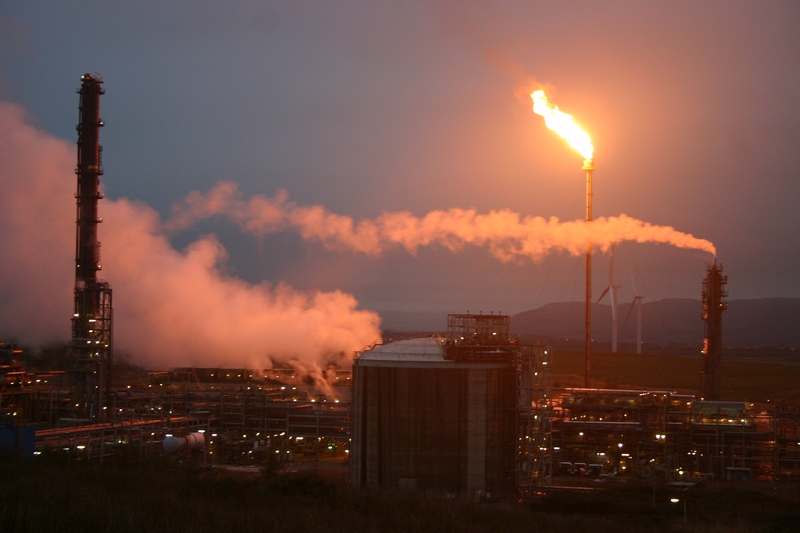
This is a really important meetingAccording to the Scottish Environmental ProtectionAgency (SEPA) the ExxonMobil plant at Mossmorran in Fife is the second biggest emitter of greenhouse gases in Scotland – only the INEOS complex at Grangemouth is a bigger polluter.  People living in the vicinity of the plant have suffered from excessive flaring and poor air quality for a long time.   The Mossmorran Action group has been campaigning for a resolution to these issues.  George Kerevan has recently written about the ways in which SEPA has failed to respond adequately to their concerns.

The plant is currently being returned to operation after a shut down in August 2019.  Flaring and pollution has been at a high level and yesterday around 170 workers walked off the site to highlight concerns over working conditions and safety.  There needs to urgent action to protect the health and safety of local residents and workers.  But in light of the climate crisis Mossmorran must also be part of a plan for a rapid phased run down of the Scottish petrochemical industry in which the workers are supported in a just transition to new sustainable jobs – part of the just transition that is so urgently needed.

Mossmorran

CC BY SA 3.0  Mossmoran petrochemical plant

Glasgow XR meeting on North Sea Oil and Gas

Following actions in Dundee (see video) and at First Ministers Questions Glasgow XR held a well attended meeting on the 25th January.   The meeting began with contributions from XR activists, Friends of the Earth Scotland and ScotE3, before breaking into discussion groups.  The remainder of the post reproduces the text of the ScotE3  contribution in which we shared some thoughts on strategies for achieving a just transition to a zero carbon economy.

ScotE3 campaigns for the importance of climate jobs.  Jobs that are critical to the economic transformation that is needed to prevent a climate catastrophe.   In Scotland  100,000 of these jobs are needed .  However, to date we are not doing well.  According to the Office of National Statistics the UK’s green economy has shrunk since 2014.  The number of people employed has declined as has the number of green businesses.  This is true UK wide and in Scotland.  It’s no wonder that some representatives of unions that organise workers in the hydrocarbon sector pour scorn on talk of a just transition.

The Sea Change report makes it clear that unless we phase out North Sea Oil and Gas the UK will produce far more green house gas emissions than is compatible with restricting global temperature rise to 1.5 degrees.  But we have a huge challenge; the big energy companies are still committed to maximising extraction of oil and gas and so are the Holyrood and Westminster governments.  Just a year ago when the discovery of new oil and gas reserves east of Aberdeen was announced energy Minister Paul Wheelhouse highlighted,

 the significant potential for oil and gas which still exists beneath Scotland’s waters.

He added:

Scotland’s offshore oil and gas industry has an important role to play with up to 20 billion barrels of oil equivalent remaining under the North Sea and in the wider basin and discoveries such as this help to support security of supply as we make the transition to a low carbon energy system.

 Just this week the Africa summit in London ended with the Westminster Government pledging £2 billion to projects concerned with fossil fuel extraction.

From the outset North Sea has been a bonanza for the oil companies.  Nigel Lawson, now a prominent climate change denier, was Chancellor of the Exchequer in 1986 and said then

the whole outstanding success of the North Sea is based on the fact that it is the freest petroleum province in the world

He meant of course almost complete freedom for the oil companies – few if any benefits accrued to society as a whole and even centres of the industry like Aberdeen were then, and remain, centres of acute inequality.

So we need a rapid phasing out of North sea Oil and Gas.   How can we overcome the powerful vested interests that oppose this and at the same time protect the lives and livelihoods of the workers in the industry.  Theer is no evidence that the private sector can lead such a transition.  The public sector has to take the initiative – and in Scotland that means a much more ambitious role for a state energy company and the new national investment bank.  However, for this to happen we need a powerful movement of movements that has deep roots throughout Scotland.

To grow the movement and force the pace of change clarity of ideas is essential.   We don’t have all the answers but the core issues around climate jobs and just transition are clear.  So we need to patiently and persistently explain why hydrocarbons need to stay in the ground, why we need zero carbon, why the counter proposals from the industry are a dangerous diversion and how a just transition would have a positive impact on working people.

Reaching the audience we need goes hand in hand with maximising pressure on the energy corporations and local and national government.  Much of this will be through all kinds of direct action.  There have been some brilliant examples already but we need much more.

Direct action is necessary but not enough.  The power to force a transition can only come from a mass movement and to build the movement we need to win hearts and minds.  This means reaching out into unions, communities and community organisations with a vision of just transition that goes beyond simply defending existing jobs and embraces practical steps that have direct and understandable benefits for working class people across Scotland and beyond.   We need win people to a positive vision of transition, but more than that we need to win them to be active agents in the transition: part of a movement of rebels, not just on the streets, but in workplaces and communities.  So as we plan actions we always need to think about how to reach new audiences – through stalls, street leafleting, public and workplace meetings and patient door to door leafleting debate and discussion.  It may be that some of those who work in the industry will be the last to be convinced (although that’s not inevitable – our opponents are the same corporations that drive down their wages and conditions and play fast and loose with health and safety).  But if they are unconvinced we need to aim for a situation where climate justice is common sense to millions and where the people that oil workers meet in the pub, out shopping, their kids and relatives, are all won to the need for transition.

With the COP being held in Glasgow this year we have a huge opportunity to build outwards and take a massive step forward in creating a campaign for transition that is unstoppable.

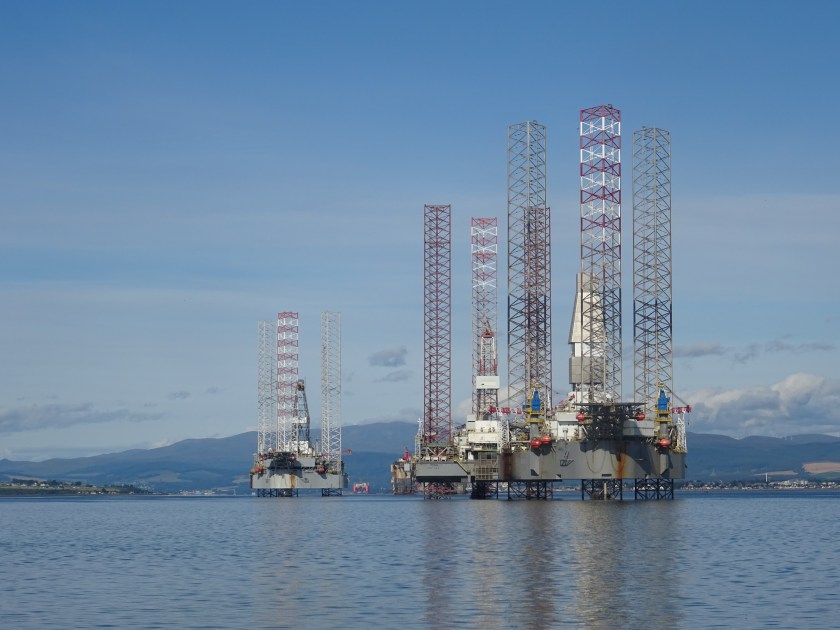
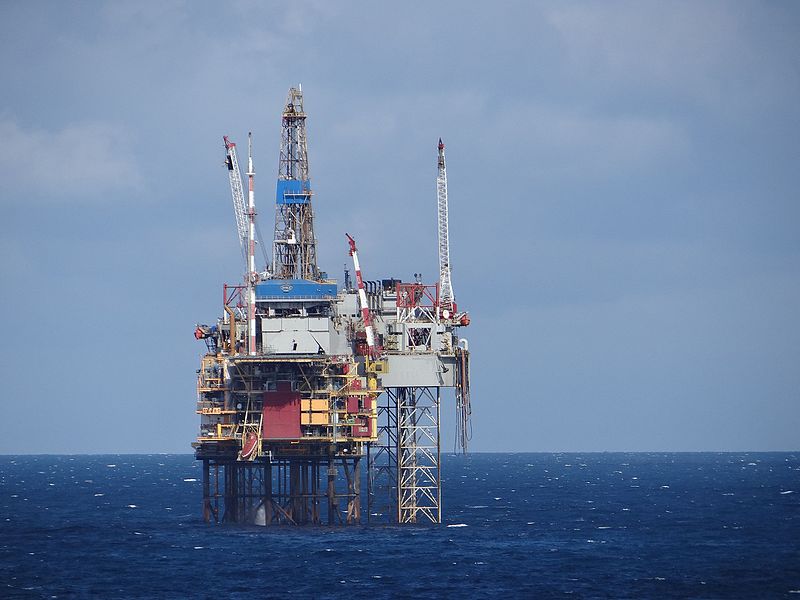
North_Sea_Oil_Rig_(7573694644)

North Sea Oil Rig by Gary Bembridge, CC BY SA 2.0

Phasing Out Oil and Gas

One of the workshop streams at the Scot.E3 conference in November focused on Oil and Gas and Just Transition for workers involved with the North Sea.   Stephen McMurray summarises the discussion that took place.  

The oil and gas group included Simon Pirani, author of Burning Up: a global history of fossil fuel consumption, and a retired oil worker now campaigning with XR and ScotE3. The initial discussions included how we start to phase out oil and gas extraction. The main policy suggestions included ending subsidies to the oil and gas industries and ending licences for oil and gas exploration.

There was an interesting debate about whether the government should set a date to end oil and gas, for example in 2030. On a positive note, it may stop companies exploring for oil and gas well before 2030. On a more negative note, it may encourage companies to seek to maximise output and increase carbon emissions before 2030.

Earlier in the conference, we had watched a series of short films by REEL News. One of the films illustrated that companies were increasingly turning to automation and subsequently reducing their workforce. This led to a discussion considering that research should be undertaken into the impact of automation into the oil and gas industries. Furthermore, it would be useful for REEL News to make a film of the North Sea and show their films on the impacts of oil and gas to oil workers.

There was a general feeling that there was a lack of information for oil and gas workers in relation to training for new industries, and that a just transition conference should be held in Aberdeen for oil and gas workers. There was also a discussion on how we engage with suppliers to the oil and gas industries so they are included in a just transition. Additionally, it was not clear that the Scottish Government had produced a post-oil industrial strategy, and there was a need to give presentations at universities for the need to move to careers post carbon.

Finally, there was an agreement that we need to bring the rebellion to the oil and gas industries and that we need a massive confrontation with big oil in Aberdeen during COP26 when it comes to Glasgow next year.

2018-07-19 08.57.05

Energy from Waste

On of the issues that came up in discussion at the recent Scot.E3 conference was ‘Energy from Waste’.  There is large-scale investment in this technology taking place across the UK.  We agreed to produce a briefing on the topic.  What follows is the text of the first draft of the briefing.  We are also developing further resources that will be added to the Resources page on this site.  We’d welcome comments on the text and ideas for useful resources that we could link to.

There are a large number of Energy from Waste (EFW) projects planned across the UK.  By the end of 2017 there were nearly 120 EFW proposals at various planning stages. Sixteen of these are in Scotland. In this briefing we take a critical look at Energy from Waste and ask whether it has a place in a strategy for a zero carbon Scotland.

Energy from Waste Projects

At first sight, the term ‘Energy from Waste’ appears to be all things green. It suggests a new and rational way of ‘treating’ the ever-growing mountains of waste that are an inevitable by-product of our throwaway society.  It invites the idea of a ‘green energy’ that has been derived from what would otherwise be a possibly harmful and long-term environmental problem. When the alternatives proposed are either a long-term toxic and smelly and unsightly landfill problem or a health-threatening incineration route, then EFW appears to be a sensible choice.

Behind the EFW hype, which many UK local authorities have accepted, there is a fog of confusion regarding the most optimal waste management solutions; whether they be recycling or minimising the production of waste at source – both options are ruled out by market driven/low cost and value-for-money economics.

Landfill

Since 1945 the volume of disposable waste per household in the UK has multiplied threefold. Over the years, the local authorities have traditionally chosen landfill disposal as the preferred waste ‘treatment’ route.  However, landfill, demands considerable land acreage and depth and entails significant public health risks as well as potentially long-term hazards for the environment. Aside from smell and vermin nuisance, landfill sites- even the best managed ones- constitute over time- a high risk of biological and toxin leaching into surface soils and ground-waters.  Methane from decomposition also adds to greenhouse gas emissions.

For all of these reasons, waste management authorities have either been incentivised away from landfill by grants for recycling- or more often – ‘disincentivised’ in the way of increasingly punitive landfill taxes. First introduced in the 1970’s, landfill taxes have been subsequently reinforced by EU directive-and as alternative waste ‘treatment’ technologies have fallen in capital cost, so landfill taxes have risen.

landfill-879437_960_720

Landfill tax per tonne

2010      £63.00

2018      £88.95

2019-20 £94.15

Tax policies make EFW-type waste treatment strategies appear attractive- particularly because in exchange for a penalty for handling waste, there is an income from generating electricity.

EFW technologies

There are a number of EFW technologies on offer but all share the same objective of converting solid (or in some cases, liquid/sludge) waste into energy for the production of electricity.

Typically, an EFW plant is based on an incinerator chamber into which is fed solid waste.  The upper walls of the chamber comprise water-filled tubes in which super-heated steam is produced for a steam turbine that in turn produces electricity.

Steam is also captured from the waste feed system. If the plant is fitted with what is called a ‘back-pressure’ steam turbine, then high-pressure hot water can be distributed to local industrial and residential heating networks in what is called a Combined Heat and Power (CHP) system.

However, as such plant is typically fed unsorted, or semi-sorted waste with a low calorific value, the combustion process will be ‘boosted’ with an additional combustion element in the form of natural gas or diesel oil. Less typical EFW technologies with little application to date, are the various gasification processed that involve the digestion of biological waste- usually food or agricultural wastes which are then converted into a ‘bio-gas’ which via a gas turbine is converted into a higher electricity output. In some processes, the waste is heat-treated anaerobically – i.e. in low oxygen conditions- (pyrolysis) to produce a synthetic ‘natural’ gas.

All EFW systems discharge exhaust gases. The principal emission is carbon dioxide but there are also emissions of nitrogen dioxide.  Quenching water can contain uncombusted toxins and  solid wastes in the form of light ash or clinker have to be disposed of safely.

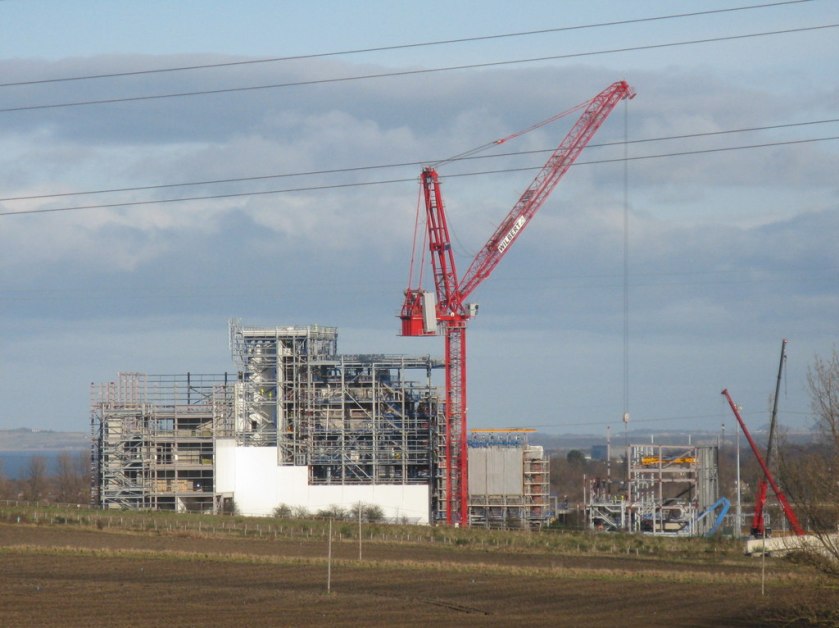
5668478_c75f25e1_1024x1024

Image M J Richardson, CC BY-SA 2.0 https://www.geograph.org.uk/photo/5668478

Renewable energy?

EFW systems add greenhouse gases to the atmosphere through the process itself and also through large-scale transport of waste to the incinerators (mostly by road).  They are a response to the perceived problem of landfill rather than tackling systems that produce unrecyclable waste.  To operate efficiently EFW plants require a continuing supply of waste at or around current levels.  Scotland produces around 1.6 million tonnes of combustible municipal waste per year, if current plans come to fruition this means and awful lot of capacity chasing a very finite amount of waste. Local authorities could be tied in to contracts to supply waste for the next thirty or forty years.   This could pose a real threat to the commitment to recycle plastics and other recoverable materials out of the waste treatment stream. The Scottish Environmental Protection Agency notes that EFW is not a renewable energy source but claims that because it can be substituted for fossil fuel electricity production it forms an important part of the Scottish Strategy for sustainable energy!

DSC03194

Alternative Strategy needed

Energy from Waste is not green and not sustainable.  It undermines attempts to reuse and recycle and it has a significant carbon footprint through transport of waste to centralised sites and through the greenhouse emissions from the burning of waste.

Investment in Energy from waste should be reallocated to genuinely sustainable technologies aimed at cutting greenhouse gas emissions, which also provide opportunities for jobs in construction and better opportunities for long-term employment.

Further reading

For further information on Energy from Waste go to www.scote3.wordpress.com and click on the Resources tab in the menu.  This briefing is one in a series produced by Scot.E3.

2019 Conference report – Mary Church

Mary, who is Head of Campaigns at Friends of the Earth Scotland followed on from Simon Pirani.  In her contribution she talked about the Scottish context and the need to mobilise for COP26 when it’s held in Glasgow in 2020.  You can watch the video of her speaking here.

2019 Conference Report – Simon Pirani

In the second plenary session of the conference Simon Pirani and Mary Church reflected on the growth of the climate movement and the challenges we face. This post includes video of most of Simon’s contribution. He began by reflecting on the connections between some of the struggles for just transition highlighted in the REEL News films and the onslaught on working class communities that took place in the Miner’s Strike of 1984/5. Miners were fighting for their communities and lives and livelihoods. He argued that in the context of climate crisis we are defending communities no less than we were in 1984/1985.

Simon was clear that there is a still an argument to win. Some trade unionists suggest that jobs and climate action are in opposition. He argued that this a false choice – without system change we face disaster on an unimaginable scale – our fight is for effective action and social justice. Each depends on the other.

2019 Conference Report – Climate Rebels

The first two sessions of the conference aimed to set the scene for the discussion on the politics and practice of just transition that followed.  First up was Shaun Day from REEL News.  The idea of just transition has deep roots in the USA and goes back to the 1990’s.

In 2018, Reel News went on a 14 week tour of North America to look at grassroots struggles around climate change, particularly struggles around a “just transition” from fossil fuels to renewable energy, where workers and communities control the process so that they benefit from the transition, and around “just recovery” – recovery from extreme weather events which do not exacerbate current inequalities.
The documentary films that they made, while in the US, record inspiring and visionary struggles all over the continent, led by working class communities of colour, with people organising just transitions and just recoveries themselves.

Shaun showed short extracts from eight of the American Climate Rebels films:

Building a social and solidarity economy in Jackson, Mississippi 

Taking on the oil giant Chevron in Richmond, California

Fighting injustice, pollution, environmental damage and police oppression in Los Angeles

People United for Sustainable Housing in Buffalo

Kentucky Miners fighting for renewable energy

Towards a zero carbon, zero waste city – New York

Hurricane Harvey – just recovery in Texas

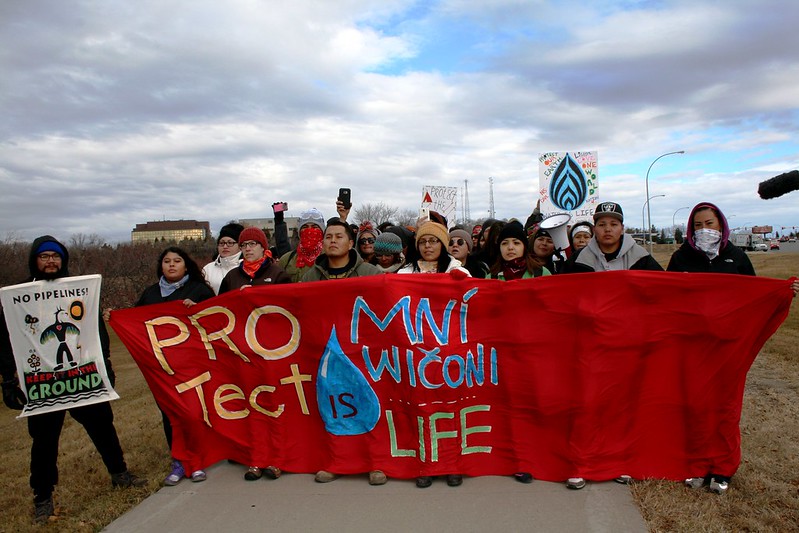
Minnesota – stopping the tar sands pipeline

31203810245_c4e9f25179_c

Image by Leslie Peterson CC BY NC 2.0  Stand with Standing Rock

Combining climate justice and social justice

Thanks to everyone who contributed to yesterday’s Scot.E3 conference.  We’ll be posting videos and reports of the discussion over the next few days.  Here we repost (in slightly edited form) an article by Pete Cannell from the latest Scottish Left Review that provides some background to the discussion at the conference.

On October 11th 2015 I was one among several thousand linking arms across the Forth Road Bridge. Hands Over Our Forth (HOOF) was meant to be the latest stage in a mass campaign to stop underground coal gasification (UCG) by burning the coal seams under the Forth. However, just before the event the Scottish Government announced that UCG would not go ahead. So the demo became a celebration. It was an assembly like no other environmental protest I’ve ever been on. Diverse, militant and embedded in the working class communities of Fife and the Lothians. When we formed my local group in Portobello, ‘Our Forth Against Unconventional Gas’, no one knew about UCG, but a whole host of local people, including ex-miners (appalled at the stupidity of setting fire to coal seams) quickly spread the word and through imaginative campaigning and direct action we won.

A great deal has happened in the four years since HOOF, much of it in the last year; XR has injected urgency into climate campaigning, the school student strikes have been inspirational and put the idea of collective action back on the agenda. Yet all of this has been against the backdrop of accelerating rates of carbon emissions and new evidence of the severity of the climate crisis.

ScotE3 was initiated by a small group of rank and file trade unionists (mainly working in construction and defence) and activists like myself keen to find a way of taking climate action into workplaces and working class communities. We were inspired by the Million Climate Jobs programme for a transition to a sustainable economy and by the struggles for just transition taking place in working class and indigenous communities in the US and elsewhere.

After working together on a submission to the Scottish Government’s energy consultation, we began by producing briefing documents that aimed to frame the politics and practice of transition in ways that related to trade unionists. The lived experience of our class is that change usually means paying the price for the problems of the rich and powerful. The havoc wreaked by pit closures and the end of coal still scars communities across. Scotland. The message we want to get across is that a just transition, based on the million climate jobs strategy, means more employment not less, better transport, more comfortable homes and a future for our children and grandchildren.

It’s a big step forward that issues of social justice have become prominent in the climate movement and reference to just transition is now routine in the climate movement. The challenge, however, is to articulate the ideas implicit in just transition in ways that can engage working class people who are rightly cynical about the promises of politicians and expect that they will be asked to pay the price for transition. Just transition is usually framed in terms of ensuring that the lives and livelihoods of those currently dependent on work in the hydrocarbon sector are protected as we transition to zero carbon. This is absolutely correct, but in our view the definition needs to go broader and deeper.   The skills and knowledge of those currently working in the oil and gas and defence sector are critical to the rapid transition that is required. The new climate jobs need to be on decent terms and conditions – not the short-term agency contracts that are more and more prevalent in these sectors.   An effective transition needs to work for the bulk of the population and not just for the rich and powerful. So it needs to tackle the gross inequality that has been a feature of the last few decades of neoliberalism.   Moreover, it also needs to encompass free movement given that the impact of climate change is, and will be, experienced most rapidly and in its most extreme form in the global south.

In November 2018 we held our first conference at which the participants spent the day working on a practical manifesto for just transition. A diverse set of participants found common cause about what needs to be done. The harder question, which we returned to at the 2019 year conference, is how to make just transition real. Not just because a just transition is the right thing to do; it’s the only way to build the kind of mass campaign that’s needed. Reliance on market solutions has led to a world teetering on the edge of catastrophe. The alternative requires us to take the spirit of rebellion into every aspect of our lives, health, transport, housing … to demand action and to not take no for an answer.

hoof3-920x481