Blog

Mossmorran

Public Meeting

Friday 1st February, 7pm at Lochgelly Town Hall, Bank Street KY5 9

This is a really important meetingAccording to the Scottish Environmental ProtectionAgency (SEPA) the ExxonMobil plant at Mossmorran in Fife is the second biggest emitter of greenhouse gases in Scotland – only the INEOS complex at Grangemouth is a bigger polluter.  People living in the vicinity of the plant have suffered from excessive flaring and poor air quality for a long time.   The Mossmorran Action group has been campaigning for a resolution to these issues.  George Kerevan has recently written about the ways in which SEPA has failed to respond adequately to their concerns.

The plant is currently being returned to operation after a shut down in August 2019.  Flaring and pollution has been at a high level and yesterday around 170 workers walked off the site to highlight concerns over working conditions and safety.  There needs to urgent action to protect the health and safety of local residents and workers.  But in light of the climate crisis Mossmorran must also be part of a plan for a rapid phased run down of the Scottish petrochemical industry in which the workers are supported in a just transition to new sustainable jobs – part of the just transition that is so urgently needed.

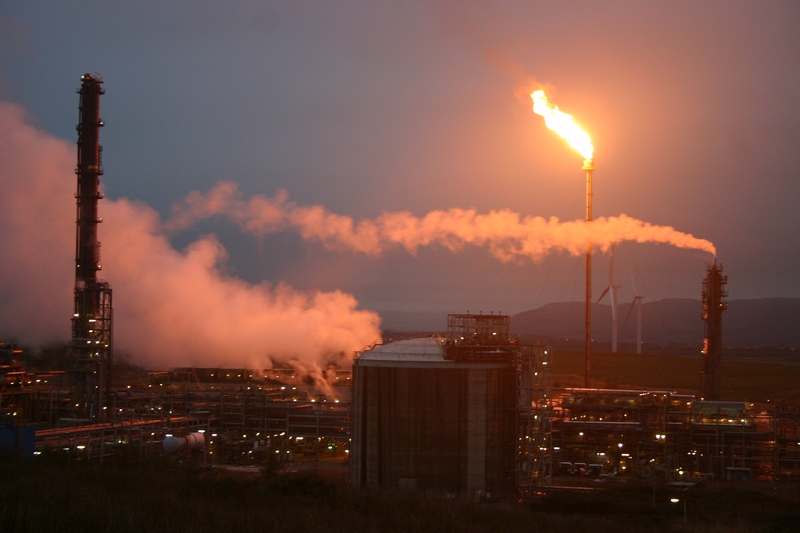
Mossmorran

CC BY SA 3.0  Mossmoran petrochemical plant

February Organising Meeting

Our February meeting will be held at the Edinburgh Peace and Justice Centre on Thursday 20th February.  The Centre is in the basement of the Epworth Halls on Nicolson Square.  The meetings are relaxed and informal and open to anyone who is keen to engage with organising around Just Transition and Climate jobs.  You can download the detailed draft agenda and there’s still time to email in other ideas and contributions to the agenda.  Among other things, we’ll be looking at what we can do in terms of outreach activities and meetings in the year of the Glasgow COP and planning updates and additions to the resources that are hosted on this website.

DSCF1600

Report back from the XR “Oil & Gas” Public Meeting

We recently published the Scot.E3 contribution to the XR “Oil & Gas” Public Meeting held in the Garnethill Multicultural Centre, Glasgow on Saturday January 25.  Thanks to Neil Rothnie for this much more comprehensive report.

Rather than try and summarise the individual contributions by invited speakers and the discussions from the work groups, I’ll try and give a sense of what I thought the meeting achieved. 

It was, it seemed to me, a success.  It was well attended.  Maybe 60 odd people? Men and women were fairly equally represented and there was a wide range of ages amongst those attending, though we were predominantly young.  The speakers were good, the meeting attentive and discussion lively. 

The success of the meeting owes much to the fact that it took place at the end of the month long Rig Rebellion 2 which, receiving considerable media attention, had brought the issue of fossil fuel production in UK into sharp focus. This meant that the struggle to end fossil fuel production on our patch was no longer just a theoretical question.  We are engaged.  This was reflected in the meeting.

A document laying out the basic premises on which the meeting was called had been circulated widely in the movement in Scotland. A “critique” of Rig Rebellion 2 presented by Andrew and a further document for discussion presented by Paul had been received by the facilitators and Paul was able to attend and speak to the documents during group discussion.  All three of these documents are appended.

The meeting was facilitated by Dario Kenner, active in XR Families in London who had travelled up with partner and two toddlers – an expression of seriousness if I ever did see one.  Dario is author of “Carbon Inequality: The role of the richest in climate change” (Routledge, 2019). He’s also co-author with Rupert Read of a memo to XR. I’ve appended it.  Dario’s presence, more than any argument, shouts that the struggle to decarbonise the economy, to take on the polluters, is a UK issue as part of a global issue.  Certainly not a Scottish issue. No more than XR Aberdeen can be expected to shoulder the burden of confronting Big Oil, XR Scotland do not have the resources to take on the UK’s major polluters and chief source of UK’s greenhouse gasses.  We are part of a movement that spans the whole of the UK. 

A very personal message from a rebel “allegedly” involved in the most ambitious of the Rig Rebellion 2 actions was delivered to the meeting. It placed central stage, the issue of civil disobedience and direct action against the polluters, and nailed, as central to the struggle for survival, the end of fossil fuel production.  Our speaker challenged the web of relationships in which oil and gas worker, rebels and the myriad other victims of climate change are caught up, in a toxic system built on misinformation, social conditioning, debt, powerlessness, privilege, excuses and ignorance.  Rig Rebellion 2 means that no longer is the discussion about the future of North Sea oil & gas to be solely the property of industry and Government.  The text will be appended if legal advice allows.

My ideas/comment on what the meeting achieved borrows heavily from the contributions of the two main speakers.  Ryan Morrison from Friends of the Earth Scotland talked us, at breakneck speed, through the FotE sponsored “Sea Change” report , and Pete Cannell from Scot E3 took the discussion on to how we respond to this crisis.  I’ve tried to reflect, as best I could,  what came out of the group discussion I was involved in, and/or had notes from.

The big lie at the centre of today’s, still restricted, public discussion about global warming and species extinction is laid out clearly in Sea Change as presented to the meeting by Ryan. We can’t avoid climate chaos without tackling global warming.  We can’t stay “well below” 2 degrees of warming without decarbonising the global economy.  That is, not without the planned rundown of the source of greenhouse gasses – fossil fuel production. (North Sea oil & gas on our patch).  And we can’t decarbonise the economy by following the “magic thinking” of industry and Government (Pete Cannell) who want business as usual and the maximum economic recovery of every barrel of oil & gas under the North Sea.  20 billion barrels more is the industry’s guesstimate. This gives us warning of what the industry plan is globally.

The issue of a “just transition” is central to the struggle to end fossil fuel production, and it’s not just about providing well paid jobs in renewables for workers who stand to lose well paid jobs in oil & gas, important as this is.  Just transition is seen very differently in the global south (Ryan) and when we get the chance to explore this when activists from throughout the global south descend on Glasgow for COP26 later this year, we can show no more solidarity than be seen to be fighting to end to fossil fuel production in the global north starting with on our own patch, the North Sea.

The meeting took the discussion forward from the understanding that the Sea Change report gives us.  Direct action is crucial in applying pressure on industry and Government and as Rig Rebellion 2 did, bringing the issue centre stage.  But it is not in itself enough if the mass of people only look on – scared.  The ideas of a just transition must become the common sense of society. (Pete)  But to do that the ideas need to be sharply defined, not just the easy ones like why the oil & gas needs to stay in the ground, but those that confront the smoke and mirrors employed by industry and Government to justify business as usual.  We need to understand carbon capture and storage (discussed by Ryan).  If, as widely suspected, it cannot be delivered at anything like the  scale required, then we need to be able to expose this with thoroughly researched materials and in a clear and concise fashion.

Multi billion pound taxpayer subsidies (our money) is handed to the industry by a Government whose ear they have.  The threat of job losses in oil & gas that the industry say would accompany the ending of such subsidies and the ludicrous industry claim that they are ready to deliver net zero as a part of the solution as they continue business as usual. (Ryan). Our answer is the massive expansion of renewables during (and financed by) the end to subsidies to the oil & gas, and the planned run down of the industry starting now.  This could leave us with a world class green energy industry to replace oil & gas.  Otherwise where would we be in 2050 if this ludicrous plan for “maximum economic recovery” is allowed to proceed.  Apart from fire fighting the results of another 30 years of full on fossil fuel greenhouse gas emissions, we’d still have a reliance on oil & gas from wherever, when the North Sea fields have been pumped dry.

The weakness in the regulatory regime that encourages the misuse of migrant labour who are paid a fraction of the UK minimum wage in the offshore renewables industry was noted. (Ryan)  A practice they no doubt learned from offshore oil decommissioning.  The Sea Change report puts trade union organisation at the centre of a just transition to renewables, though this, given the state of trade unionism on the North Sea, is problematic.

When we confront Big Oil in Dundee and Aberdeen as we have begun to do, who are we actually speaking to?  We challenge the industry’s vice grip on a media traditionally prepared to repeat any old nonsense that flows from oil company PR.  But we’re also speaking to wider society.  Those working in the industry might be the last people to be convinced, but they need to know that the energy transition is inevitable one way or another, and that their intervention will be crucial in determining whether it is to be fair to them or not.  They also need to know they do not have a veto.  All our grandchildren must have a future.

The discussion is impossible for me to record in any readable form.  I’m here setting down some of the ideas that emerged from the contributions of our speakers and from the workgroups I have notes from.  This is obviously not definitive and my be controversial.  It’s not the final say and can only at best provide a framework for further more concrete planning if, as I hope, an Oil & Gas Working Group can be set up to carry forward what the Rig Rebellions have started.

Although direct action can’t stop oil & gas production, it can identify Big Oil as the problem and can generate press interest and effectively open the issues to public scrutiny.  Maybe we can call our self Big Oil’s Big Nuisance.  That’s a joke!  But not for the industry who spend big keeping everyone “on message”.

Only as the role fossil fuels plays in generating greenhouse gasses and climate change becomes “common sense” in society (throughout the UK) can pressure be progressively brought to bear on Government and industry and finance to begin the mass expansion of renewable energy in sync with the rundown of oil & gas production.

The voice of even a small minority of oil & gas workers prepared to speak out on the issue of just transition and a future for their grandchildren would have a powerful effect and therefore outreach amongst this group is particularly important.  But whatever they want to say, the workforce must be encouraged to say it.  It is the workforce who will be forced to transition sooner or later, in a planned or a chaotic way.  They need to intervene if it is going to be anything like fair to them.  The last time there was an energy transition the coal miners and there families and communities, were shafted.

Amongst the citizens of Aberdeen, and amongst oil & gas workers, is where there is likely to be maximum pushback against these ideas, and has to be where we do our most serious listening. They will tell us where our arguments are weakest. Aberdeen also provides us with potential allies amongst those sections of the population who live amongst oil wealth and the high prices it generates, but who are living without oil wages.  Making common purpose with them in the Oil Capital of Europe will bring the spotlight on the iniquity of the system and the nature of Big Oil. The transition is inevitable.  But the industry, left to its own devices, will leave that city with little of value.  What it threatens to leave society with is mass extinction of species

Research into carbon capture and storage, and hydrogen production, pushed as solutions to global warming needs to be accessed and turned into outreach material. 

Imaginative materials allowing us to interact with citizens and oil & gas workers will be needed. 

Media penetration will be important.

Should it be decided that an Oil & Gas Working Group be established to take this discussion further and make concrete plans, I think one of it’s first tasks will be how it can penetrate XR UK Circles, and challenge them to take responsibility for encouraging the whole movement to see ending oil & gas production from the under North Sea, and a major upscaling of renewable energy production, as a major strategical aim for the movement. This will need the whole movement with all its skills and operating at its regenerative best.  UK’s greenhouse gas reserves/emissions are not a Scottish issue. XR UK must be challenged to encourage a movement wide campaign.

None of this is possible unless the necessity becomes “common sense”.  Outreach is fundamental.

This is the year of COP26 in Glasgow.  Let us show our solidarity with the activists from the Global South who come to Scotland.  Let them see our determination to end fossil fuel production in the UK.  We can organise transport and hospitality for Nigerian and other activists from around the world who may want to share our action and give their own message to Shell (and others) in Aberdeen, one of the the Oil Capitals of the Global North. 

scotland-4490046_1920

Image: Aberdeen Harbour  CC0 from Pixabay.com

More on ‘Our Common Home’

Earlier this week we shared a video of Tiffany Kane talking about Common Weal’s plan for a Green New Deal for Scotland. This post is a review of the plan written by Pete Roche. It was originally published in the bulletin of Nuclear Free Local Authorities.

commonweal

The Common Weal think tank has published a revolutionary green new deal plan for Scotland that will cost billions of pounds and create thousands of new jobs. The most costly of the raft of proposals is the biggest overhaul of housing since the Second World War, with a plan to have greener Scottish homes by installing loft installation, double glazing and renewable technologies. That would involve setting up a national housing company and spend £40 billion to make every home in Scotland more thermally efficient, saving 40% off heating bills.

The Common Weal’s plan of action would be financed through public borrowing – and it is understood it could be paid off over 50 years. It would require no additional private spending by households – while creating a carbon-neutral Scotland and future-proofing the nation for generations. The think tank says it is one of the most ambitious projects they have ever organised and consists of a “fully costed” blueprint for how to bring about a net zero Scotland – the first in the world. It will also claim that all current projections about how much of Scotland’s GDP will be needed to tackle climate change are underestimates and that every year for the next 50 years Scotland will have to spend an annual amount closer to three per cent of GDP than to the two per cent often quoted. (1)

Guiding Principles:

Take responsibility to identify what can be done domestically rather than waiting for multilateral agreements.

The crisis can’t be solved through market forces alone.

The time for setting targets is long gone – these tend to emphasise what it would be good to achieve, not how to achieve it.

You don’t want to have to make any transformations twice. The scale of investment needed is so large it must deliver value for money for many generations.

The plan must be a once-in-many-generations fix for persistent social problems.

Above all this will transition Scotland away from a linear extractive economy to a circular participatory economy – more wealth would be retained and circulated round the domestic economy and much less exported in the form of corporate profits.

Because this is a collective task which will serve many generations, the cost should be met through low cost public borrowing paid back through progressive taxation.

The headline cost of £170bn may be a sobering figure, but it is less than double Scotland’s contribution to the 2009 UK financial bailout, and will only have to be found over 25 years, and gradually repaid over 50 years. And the investment will create new revenue streams, for instance there would be a publicly-owned energy system for electricity and heating which would generate an income. The plan would create around 40,000 direct jobs. Other positive impacts would be: warmer homes, cheaper to heat; healthier food; travel faster and more efficient; quality of life would improve.

Buildings

The thermal performance of all new build houses and other buildings should be up to Passivhaus standard. (15kWh/m2/yr) But the materials used should be healthy and organic mostly sourced in Scotland.

All new houses should be ready for district heating unless they are energy neutral.

A National Housing Company should be set up to retrofit all existing houses to achieve 70 to 90% thermal efficiency. Commercial premises should be retrofitted to a similar standard. All public buildings should become energy positive.

Heating

Moving to electric heating would roughly double the load on the grid which would require significant upgrades to cope. But peak load might increase by a factor of five. While better-insulated houses would reduce the problem much of the spike would come from water heating which would not be reduced by insulation. Ground source heat pumps require a substantial land area. Air source heat pumps struggle to provide sufficient heat in the winter.

Hydrogen would have problems with leakage. All household boilers would need to be replaced. Because of the difficulty of phasing in hydrogen, boilers would probably need to be dual use. Hydrogen would probably be expensive.

Solar thermal, geothermal and industrial waste heat recovery delivered via a district heating network are probably the most viable method of heat delivery.

Heat Budget

Scotland uses around 86TWh of heating each year. Firstly, we need to reduce demand by about 40% to about 52TWh. The next step would be to make the most of solar thermal, but this would also require inter-seasonal storage. This could provide around 20TWh via district heating. Geothermal from old mines could provide another 12GWh. Biomass could also add around 6.5TWh of heat to the mix.

A Heat Supply Act could be implemented to require all developers of large waste heat sources to recover and recycle heat to feed local homes.

An Energy Development Agency would plan the shift to renewable heating; a National Energy Company would install a national district heating system and renewable heat generation infrastructure.

Electricity

Planning the future electricity generation requirements involves replacing current non-renewable electricity generation and meeting the needs for the electrification of transport and the production of hydrogen for transport and heating.

The National Energy Company would progressively take over energy supply to customers and would develop and own all future large-scale energy generating facilities. It would also generate hydrogen for energy storage.

The Scottish Energy Development Agency would plan all new capacity and have responsibility for ensuring the lights stay on while meeting the decarbonisation agenda.

Oil & Gas

The Common Home Plan says Scotland must stop extracting oil and gas. By the end of the 25-year plan Scotland will no longer be using oil and gas.

Transport

One of the biggest unknowns is the development of driverless vehicles. On call vehicles, if deployed effectively, could displace a large volume of car ownership resulting in some major changes in urban planning assumptions.

The Common Home Plan calls for the establishment of a National Transport Company which would roll out a comprehensive charging infrastructure and develop a national transport transition plan.

The Company should integrate the ability to make more journeys by foot and bike with its overall transition plan.

Scotland has around 3 million vehicles. It is generally assumed that this number will increase as population rises. Most of these would be parked in residential streets which would imply the need for charging facilities in every residential street – an enormous task. But if other transport approaches develop this could be an enormous white elephant. The National Transport Company would have to make some decisions on which way forward.

Hydrogen could become the fuel of choice for HGVs, ferries, and trains on non-electrified lines. A strategy for air travel will need to be developed.

Food and Land-Use

The plan envisages the establishment of a National Food Agency and a National Land Agency. Amongst the proposals is the suggestion that 50% of Scotland’s land area should be reforested.

There are also chapters on Resources, Trade, Learning and Us. The plan calls for, for instance, a circular economy; and training for an appropriate workforce (there are only 140 plumbers being trained at the moment and yet we will need thousands to install district heating).

The Common Home Plan can be found at https://commonweal.scot/policy-library/common- home-plan

  1. Herald 9th Nov 2019 https://www.heraldscotland.com/news/18025538.radical-multi-billion-pound-green- plan-scotland-unveiled/


Hydrogen Debate and the Future of Heat

We are pleased to publish a contribution to the growing debate on the use of Hydrogen to replace north sea gas for domestic heating written by Pete Roche – the article was originally published in the bulletin of Nuclear Free Local Authorities.

An argument about the future use of hydrogen, in particular for heating, has been raging amongst energy professionals and lobbyists since the Government announced it was looking at setting a date by which all boilers on sale would be “hydrogen ready”, meaning they can burn natural gas but can also be converted easily to burning hydrogen. It was also announced that the natural gas supply at Keele University is being blended with 20% hydrogen in a trial that’s of national significance.

Households could soon be required to install a boiler capable of burning hydrogen when they next upgrade their central heating system. The government has already pledged to ban installation of fossil fuel heating systems in new homes from 2025. In November Sajid Javid, the chancellor, visited the headquarters of Worcester Bosch to inspect its prototype hydrogen-ready boiler. The company says the boilers would be available by 2025. They would be £50-£100 more expensive than existing boilers, which typically cost about £900. The benefit over existing boilers is that they can continue burning natural gas but be converted to burning hydrogen in an operation that will cost about £150 and take a gas engineer one hour.

The Department for Business, Energy and Industrial Strategy’s Hy4Heat programme aims to determine the feasibility of hydrogen for heating in homes and includes work with industry to develop prototype hydrogen appliances, including hydrogen ready boilers. About 1.7 million boilers are replaced each year so if they were required to be hydrogen-ready from 2025 most homes would have the necessary boiler by the mid-2030s to allow a switch to hydrogen. (1)

One of the arguments in favour of converting our gas boilers to hydrogen is that we have poorly insulated houses with insufficient space for installing a heat pump. If you were to design a heating policy from scratch, you would not choose hydrogen. You would build well-insulated houses that use electric heat pumps. (2) Worcester Bosch argues that a house needs to have an Energy Performance Certificate rating of C or above for a heat pump to be able to heat the house effectively. According to them of the 3,276,000 UK properties within the EPC band C rating, some 3,223,000 have a condensing boiler. One of the ways of jumping one clear band within the EPC methodology is to replace a non-condensing boiler with a condensing version. This means that many of the properties in band C are really constructed to band D levels of fabric and therefore unsuitable as they stand for a heat pump installation. (3)

Ed Matthew Associate Director at independent climate and energy think tank E3G says hydrogen is the wrong choice for heating homes. Blue hydrogen (manufactured from natural gas) needs CCS so would be massively expensive and keeps us hooked on gas. Green hydrogen (made by electrolysis using renewable electricity) is 4 times less efficient than using heat pumps. “Hydrogen is being pushed by the gas industry. Beware.”

Dave Toke, reader in energy politics at Aberdeen University agrees. He calls it: “the start of one of the greatest pieces of greenwash that have been committed in the UK.” The oil and gas industry is promoting so-called ‘blue hydrogen’, that is hydrogen produced by ‘reforming’ natural gas, and capturing the carbon dioxide that is produced. Yet currently most hydrogen is produced by reforming natural gas and not capturing carbon dioxide, a process that will dramatically increase carbon dioxide emissions if hydrogen is used to heat homes. The efficiency of the gas reformation process is only around 65% meaning that much more carbon dioxide is generated to produce the hydrogen as fuel compared to simply burning the natural gas. He says any claims that the process will be done using carbon capture and storage, beyond that is a few demonstration projects supported by public grants, should be taken with a wagon load of salt.

But even if ‘green’ hydrogen generated by renewable energy were used, it would still be a grossly inefficient way of using that renewable energy. Renewable energy is normally distributed through the electricity system where it can power heat pumps in homes (either individually or through district heating systems) to much greater effect. The heat pumps use electricity much more efficiently compared to any hydrogen boilers, no matter how the hydrogen is produced. Indeed, a heat pump may increase the efficiency of the use of renewable energy by approaching fourfold compared to using ‘green hydrogen’ in a boiler. (4)

Richard Black from the Energy and Climate Intelligence Unit (ECIU) told BBC News: “We will and should have hydrogen in the mix of energy options, but it’s not a wonder solution to everything, which you sometimes get the impression from the rhetoric. There is hope – but too much hype.” (5)

Commentators also argue about the cost with some saying hydrogen will prove too expensive for mass usage, while others say switching to the use of electricity for heating will be far more costly than gas central heating and will put enormous strains on the grid during the winter months. However, heat battery manufacturer, Sunamp, claims that using an air source heat pump on off- peak electricity in conjunction with a heat battery can heat a house for a price comparable with gas central heating.

Lord Deben, chair of the Committee on Climate Change, has expressed confidence that a way will be found to produce hydrogen, which could provide a low carbon substitute for natural gas in heating systems, cheaper than is currently possible. (6)

The Commonweal Common Home Plan (see below) is sceptical about relying on the conversion of the gas grid to hydrogen. And moving to electric heating would roughly increase by a factor of five peak load on the grid which would require significant upgrades to cope. It prefers instead the idea of building district heating networks which can deliver heat from solar thermal, geothermal and industrial waste heat recovery.

New research commissioned by industry body Scottish Renewables shows the Scottish Government’s new Heat Networks Bill could see the equivalent of 460,000 homes – around a fifth of Scotland’s total – heated renewably by 2030, cutting emissions from heat by 10% and helping tackle the climate emergency. The research found 46 potential heat network projects across Scotland’s seven cities. The networks would initially serve 45,000 homes but could, with the right Scottish Government support, grow ten-fold by 2030. (7)

To date the Scottish Government has said the new Heat Networks Bill will “support, facilitate and create controls [for] the development of district heating” – but is yet to confirm the details. In response to this ongoing uncertainty industry has published, alongside the new research, a set of recommendations on how the Bill should support new projects. The potential projects represent a significant economic opportunity. Civil engineering such as the digging of trenches and laying of pipes accounts for 40% of a typical heat network’s costs, often using locally-sourced labour.

Star Renewable Energy, has installed a heat pump which can extract the small amount of heat generated by the Clyde. The river has an average temperature of around 10oC but engineers can boost it up to 80oC for use in homes. (8)

Meanwhile the HyDeploy pilot involving injecting hydrogen into Keele University’s existing natural gas network, which supplies 30 faculty buildings and 100 domestic properties is now operational. (9) And 7 industrial partners have been pledged to support a demonstration project in Denmark, which, with offshore wind as a power source, will produce renewable hydrogen that can be used in road transport. (10)

  1. Times 4th Jan 2020 https://www.thetimes.co.uk/article/hydrogen-boilers-may-be-only-choice-for-homes- by-2025-2rw5t3tpt
  2. Times 4th Jan 2020 https://www.thetimes.co.uk/article/an-exciting-carbon-free-future-depends-on- hydrogen-boilers-6ktqwpgw0
  3. See The Future of Fuel, Worcester Bosch, 2019 https://www.worcester- bosch.co.uk/img/documents/hydrogen/The_Future_of_Fuel.pdf
  4. Dave Toke’s Blog 4th Jan 2020 https://realfeed-intariffs.blogspot.com/2020/01/why-uk-government-may- be-encouraging.html
  5. BBC 2nd Jan 2020 https://www.bbc.co.uk/news/science-environment-50873047
  6. Edie 6th Dec 2019 https://www.edie.net/news/10/Lord-Deben-chides-politicians-for-failing-to-act-on-decarbonisation-of-heat/Scottish Renewables 11th Nov 2019
  7. https://scottishrenewables.createsend.com/campaigns/reports/viewCampaign.aspx
  8. Times 12th Nov 2019 https://www.thetimes.co.uk/article/667e8b5c-04d4-11ea-872c-a98e8bfab8fc
  9. Edie 2nd Jan 2020 https://www.edie.net/news/8/UK-s-first-grid-injected-hydrogen-trials-begin-in-Staffordshire/
  10. Orsted 20th Dec 2019 https://orsted.com/da/Media/Newsroom/News/2019/12/945369984118407

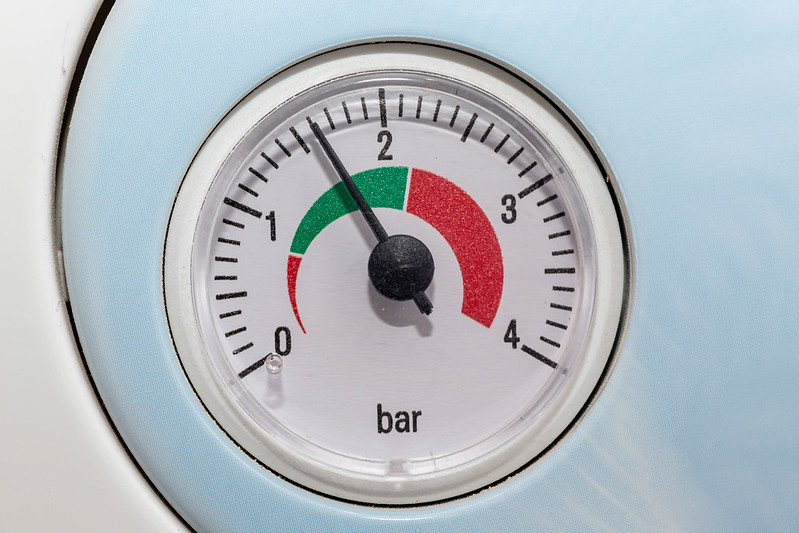
The scale of pressure on domestic gas boiler

The scale of pressure on domestic gas boiler image by Marco Verch CC BY 2.0


The case against new developments in the North Sea

The North Sea hydrocarbon reserves are among the most expensive and most technically difficult in the world. They are also short-medium life reserves compared with larger landmass oilfields.

Anticipating these disincentives, the incoming Labour governments of 1964-69 and 1974-79 with the state-owned BNOC and British Gas companies decided to make them more attractive for licenced operators by zero valuing to hydrocarbon assets thus avoiding the usual auction bidding process that would entail up-front purchase and risk acceptance by prospective extraction companies.

Then taxation rates on oil/gas extracted were relaxed to a very minimum as an incentive subsidy on future exploration and extraction activities. These arrangements- along with wholesale privatisation in 1980- meant that high profits were assured at low taxation rates and with the burden of risk and asset write-off being shouldered entirely by the taxpayer.

Also, these arrangements allowed for profligate extraction with value worthless assets being frittered away when the operational conditions got too difficult.

Unlike Norway– and many other oil and gas nation-states, no sovereign wealth fund was created on the back of oil/gas profit taxes- which in the case of Norway, has resulted in the biggest such fund for social welfare and public infrastructure in the world. So with Scottish territorial waters accounting for over 70% of UK oil and gas fields, little in the way- other than employment- of benefit has resulted/been accrued for the Scottish people.

Now Climate Change imperatives are bearing-down on all countries signed up to the IPOCC targets on carbon emissions targets- but yet ALL reliable sources producing estimates on oil (in particular) output and demand/consumption set targets well above limits required to bring about anything like a global temperature slow-down.

Also, the estimates for Scottish offshore- and fracked gas onshore- extraction fly clearly in the face of the Scottish government targets for a green neutral to zero-economy by 2030.

And also, also, it is clear that despite over 40 years of offshore hydrocarbon extraction- the living standards of the Scottish population- already low in comparison with much of the EU as well as many regions of the UK as a whole- have continued to fall and have continued downwards while the offshore company profits have continued upwards.  Essentially we have had subsidies and tax breaks for the rich oil companies and merciless market rigour for the poorest consumers.

Global oil prices (to which gas is pegged) continue to be volatile- but with an OPEC cartel of some 20 countries which are hydrocarbon exporting economic mono-cultures- future price wars- like the one in 2014 which saw 75,000 job losses in the North Sea- make any future dependence on the industry both a climate change folly and an economically ruinous strategy.

Oil and gas over-production is already upon us and any future development- such as the West of Shetland fields- is both unsustainable AND a waste of opportunities to create a green and socially equitable political economy for Scotland.

Dr Brian Parkin, Senior research fellow (Energy Economics), Leeds University

February 2020.

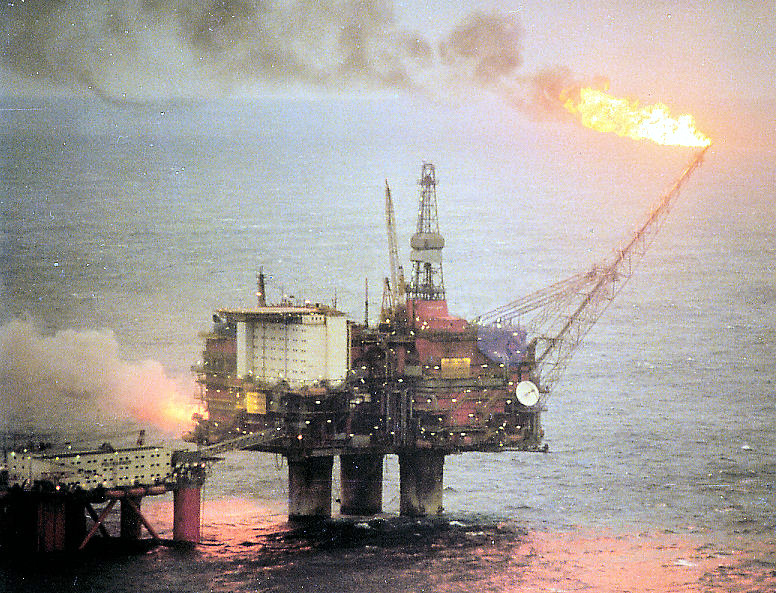
StatfjordA(Jarvin1982)Image CC0 StatfjordA (Jarvin1982).jpg


From an activist perspective, looking beyond COP 25

Pedro Perez is a climate justice activist with a background in Human Rights and working with indigenous  Communities in Latin America.   He was in Madrid for COP 25 – in this article he reflects on the recent COP and considers the implications for COP26 in Glasgow.

This paper is a reflection of my experience during COP25 in Madrid:

COP 25 will go down in history as one of the most inconsequential conferences on climate change. A summit characterized by disagreements, a lack of consensus, and no significant agreements being reached to respond to the climate crisis. Civil society and social organizations that demanded climate justice and more action from industrialized countries, could not hide their disappointment and frustration at the end of the summit. There were those who considered COP 25 as shameful, while others described it as a failure.

The outcome of COP 25 is yet another reflection of how these large conferences have been organized and managed. Hosted by the United Nations, they are under the leadership of the countries of the global north and in part are financed with funds from large corporations.

The domination of the industrialized countries is clearly evident; they are the ones who lead and benefit from the summits. In practical terms, it could be said that COP 25 was a failure because significant agreements were not reached to reduce carbon dioxide emissions. From a media perspective, the summit represented a success for industrialized countries and large corporations, which, exercising control over the media, used them to greenwash their image and continue to manipulate society with false messages. They took advantage of the summit, as a sporsor, to give the impression they are committed to respecting the environment and nature while their economic activities continue to destroy the planet, causing climate, social and economic injustice.

Corporations such as Nestlé, Coca-Cola, the energy sector and the financial world welcomed COP25. This double standard was evident in some of the publications (newspapers) on COP25 financed by Spanish corporations in the energy sector and distributed free of charge. Articles on climate change, had adverts from a travel company offered discounts on airline tickets. In another, Coca-Cola subtly transferred to the consumers of its products, the responsibility of recycling the millions of plastic bottles that the company produces every day.

At the initiative of Spain, COP25 was divided into two Zones, next to each other: the Blue and Green. zones. The Blue Zone was reserved for meetings of the scientific community, politicians and representatives of countries, corporations and, as observers, the accredited civil society. It is here that the countries of the global north and corporations assert their interest by creating powerful lobbies, which divides and creates blocks of countries, making it difficult to reach consensus and agreements on fundamental issues.

The Green Zone was a space open to the public in which Spain wanted to facilitate the participation of civil society from the global south and north and create a space to raise awareness and promote education on environmental issues related to climate change. However, the sponsors also had space here and took advantage to greenwash their image and present themselves as the standard bearers of innovation, science, transferable technology, capacity building and nature-based solutions. To show themselves as the leaders of the growing renewable energy market in the context of the neoliberal capitalist economic model which is beginning to be monopolized by energy corporations. That was a priority for Spain and an important area of ​​the Green Zone was used for that purpose.

In the Green Zone, social issues such as environmental justice and the agenda of the peoples of the global south were secondary, consigned to the background. While for example, the indigenous representatives of Chile, the host country, did have a presence here, it was not the most appropriate space to address the agenda of indigenous communities in any meaningful depth.

Spain’s lack of genuine interest in the agenda of the peoples of the global south and the demands of the movements and social organizations of the global north, led to the organization of a counter-summit, an alternative summit, the Social Summit with the support of environmentalists. The UGT union and the Complutense University of Madrid provided the spaces for it to take place.

The Social Summit for Climate convened a large demonstration in which thousands of people took to the streets of Madrid. It was attended by the Indigenous “Minga”, young people inspired by Greta Thunberg, human rights defenders, activists of the ecological movements and civil disobedience platforms, like Extinction Rebellion. The purpose was to draw the attention of governments and corporations, to the urgent need to assume a change in attitude and behavior, so that they recognize and assume responsibilities for the climate crisis that is caused by their economically motivated destructive activities. With a demand for environmental justice.

In the alternative summit they discussed among other issues: the causes that are giving rise to the climate crisis; the hidden face of the energy transition – the increase in the damaging extraction of the natural resources necessary for renewable technologies. The oil and gas fracking that remain the cheapest options to maintain economic “growth” and unlimited “progress”. False solutions such as carbon markets and REDDs; the neoliberal, patriarchal and neo-colonial capitalist economic model responsible for the environmental crisis, in which the solutions offered in the Blue and Green zones disastrously remain.

The alternative summit, which did not attract the attention of the official media, in practical terms was a success. Being a space for meeting and exchanging experiences, living together and joining the bonds of solidarity between the movements of the South and the global north. Strengthening the cohesion of the social movement that is growing significantly globally. A space for initiatives, of new plans and strategies to promote more ambitious actions ahead of COP26.

COP 26, Glasgow 2020 will have to assume the climatic emergency; pay attention to the gap between the global north and the global south that is widening significantly; respond to the social movement that is growing globally and that demands social justice and a more ambitious action to face the climatic emergency.

While the topics that will occupy the official agenda of the COP26, will be marked by a strengthening of the Paris Agreement that makes its implementation possible and has the capacity to assume the commitments of the Kyoto protocol that reaches its completion. But also, carbon market, update the NDCs and set new decarbonization goals.

COP26 in Glasgow will be the reflection of the commitment to the climate emergency and society. Its ambition will depend on the spaces assigned to civil society. COP26 can’t be used to greenwash the image and promote the lucrative interests of the corporations. It must be a space for radical approaches to climate and social justice and equality, diversity in participation of communities in the global north and genuine inclusion of the global south agendas and dialogue between all to create actions and solutions.

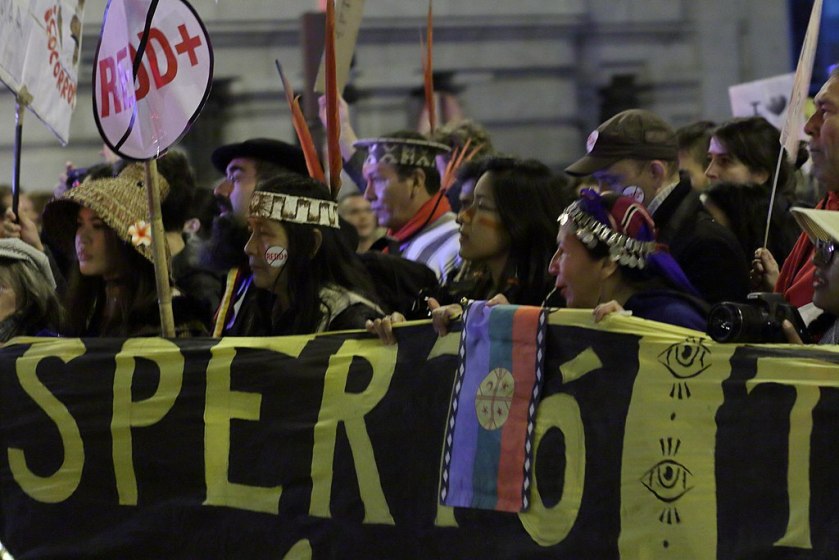
1024px-Marcha_por_el_clima_Madrid_06_diciembre_2019,_(16)

Image from WikiMedia

Glasgow XR meeting on North Sea Oil and Gas

Following actions in Dundee (see video) and at First Ministers Questions Glasgow XR held a well attended meeting on the 25th January.   The meeting began with contributions from XR activists, Friends of the Earth Scotland and ScotE3, before breaking into discussion groups.  The remainder of the post reproduces the text of the ScotE3  contribution in which we shared some thoughts on strategies for achieving a just transition to a zero carbon economy.

ScotE3 campaigns for the importance of climate jobs.  Jobs that are critical to the economic transformation that is needed to prevent a climate catastrophe.   In Scotland  100,000 of these jobs are needed .  However, to date we are not doing well.  According to the Office of National Statistics the UK’s green economy has shrunk since 2014.  The number of people employed has declined as has the number of green businesses.  This is true UK wide and in Scotland.  It’s no wonder that some representatives of unions that organise workers in the hydrocarbon sector pour scorn on talk of a just transition.

The Sea Change report makes it clear that unless we phase out North Sea Oil and Gas the UK will produce far more green house gas emissions than is compatible with restricting global temperature rise to 1.5 degrees.  But we have a huge challenge; the big energy companies are still committed to maximising extraction of oil and gas and so are the Holyrood and Westminster governments.  Just a year ago when the discovery of new oil and gas reserves east of Aberdeen was announced energy Minister Paul Wheelhouse highlighted,

 the significant potential for oil and gas which still exists beneath Scotland’s waters.

He added:

Scotland’s offshore oil and gas industry has an important role to play with up to 20 billion barrels of oil equivalent remaining under the North Sea and in the wider basin and discoveries such as this help to support security of supply as we make the transition to a low carbon energy system.

 Just this week the Africa summit in London ended with the Westminster Government pledging £2 billion to projects concerned with fossil fuel extraction.

From the outset North Sea has been a bonanza for the oil companies.  Nigel Lawson, now a prominent climate change denier, was Chancellor of the Exchequer in 1986 and said then

the whole outstanding success of the North Sea is based on the fact that it is the freest petroleum province in the world

He meant of course almost complete freedom for the oil companies – few if any benefits accrued to society as a whole and even centres of the industry like Aberdeen were then, and remain, centres of acute inequality.

So we need a rapid phasing out of North sea Oil and Gas.   How can we overcome the powerful vested interests that oppose this and at the same time protect the lives and livelihoods of the workers in the industry.  Theer is no evidence that the private sector can lead such a transition.  The public sector has to take the initiative – and in Scotland that means a much more ambitious role for a state energy company and the new national investment bank.  However, for this to happen we need a powerful movement of movements that has deep roots throughout Scotland.

To grow the movement and force the pace of change clarity of ideas is essential.   We don’t have all the answers but the core issues around climate jobs and just transition are clear.  So we need to patiently and persistently explain why hydrocarbons need to stay in the ground, why we need zero carbon, why the counter proposals from the industry are a dangerous diversion and how a just transition would have a positive impact on working people.

Reaching the audience we need goes hand in hand with maximising pressure on the energy corporations and local and national government.  Much of this will be through all kinds of direct action.  There have been some brilliant examples already but we need much more.

Direct action is necessary but not enough.  The power to force a transition can only come from a mass movement and to build the movement we need to win hearts and minds.  This means reaching out into unions, communities and community organisations with a vision of just transition that goes beyond simply defending existing jobs and embraces practical steps that have direct and understandable benefits for working class people across Scotland and beyond.   We need win people to a positive vision of transition, but more than that we need to win them to be active agents in the transition: part of a movement of rebels, not just on the streets, but in workplaces and communities.  So as we plan actions we always need to think about how to reach new audiences – through stalls, street leafleting, public and workplace meetings and patient door to door leafleting debate and discussion.  It may be that some of those who work in the industry will be the last to be convinced (although that’s not inevitable – our opponents are the same corporations that drive down their wages and conditions and play fast and loose with health and safety).  But if they are unconvinced we need to aim for a situation where climate justice is common sense to millions and where the people that oil workers meet in the pub, out shopping, their kids and relatives, are all won to the need for transition.

With the COP being held in Glasgow this year we have a huge opportunity to build outwards and take a massive step forward in creating a campaign for transition that is unstoppable.

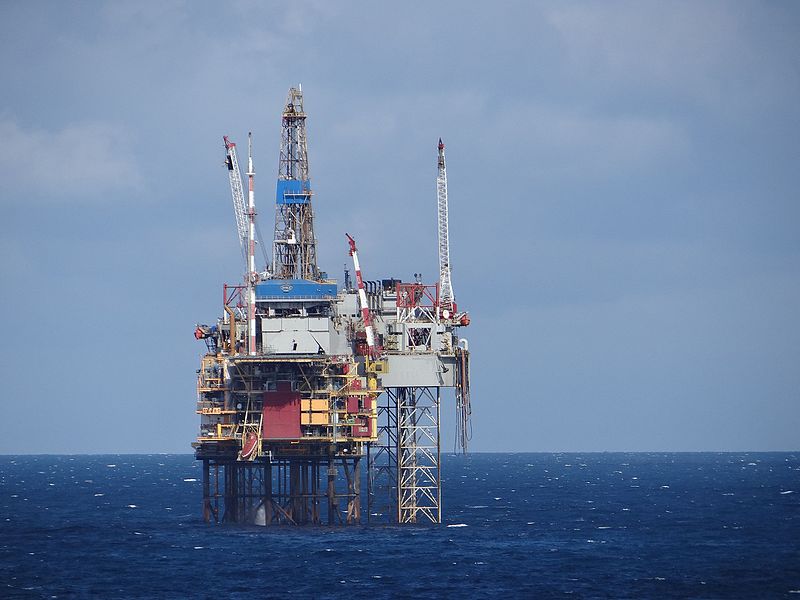
North_Sea_Oil_Rig_(7573694644)

North Sea Oil Rig by Gary Bembridge, CC BY SA 2.0

Notes from our January organising meeting

You can read the full notes from the meeting as a PDF here.  What follows are some of the main points that were discussed.

We started with a discussion on the likely impact of the general election result.  It’s likely that there will be detrimental changes to regulations and standards – areas that could be effected include energy from waste, devolved powers, outsourcing and tendering, nuclear policy, targets and subsidies, energy distribution and supply and workers rights. There is a likelihood for heightened tension between Westminster and Holyrood over many of these issues.  The big issues in the Scottish context include Oil and Gas (particularly INEOS), Public Transport, Housing and the opportunities and challenges presented by the COP being held in Glasgow.

We resolved to do all we can encourage discussion and action in workplaces and community settings. Wherever possible we will do this in partnership. We will encourage requests to help set up or provide resources for events. We agreed to prioritise setting up events in Fife, Falkirk and Aberdeen and with the Construction Rank and File group.

We agreed to work on four new briefings (we are always open for suggestions of amendments to existing briefings and suggestions for new ones) – working titles for the new additions are:

‘Is nuclear part of a sustainable solution’,

‘Organising at work’,

‘Hydrogen’,

‘What is the ‘COP’’.

wind-energy-488534_1280