
The last few days have seen a recurrence of flaring at the Mossmorran gas plant in Fife. Fumes have drifted across the Forth forcing residents in North Edinburgh to close windows. More than 700 complaints have been submitted to the Scottish Environmental Protection Agency. Join the campaign calling for the stricter enforcement and protection for those living in the neighbourhood of the plant. In our view a plan for phased closure of the plant is needed as part of a just green transition. We republish here the video we held with speakers from the Mossmorran Action Group earlier this year.
Author: scote3
Nuclear Power is not the answer
A response to Neil Mackay’s Big Read in the Herald from Stephen McMurray and Pete Cannell
The ‘Big Read’ in the Herald newspaper on Sunday 4th October was ‘The nuclear option – can atomic power save the human race from climate change?’. In it, journalist Neil Mackay reviews a new book by US earth scientist James Lawrence Powell. Powell argues that we are at a tipping point that will lead to runaway global temperature rises unless decisive action is taken to reduce greenhouse gas emissions to zero. In this he is absolutely right. However, he goes on to argue that achieving zero carbon by replacing fossil fuels with renewable energy technologies will take too long. According to Mackay, Powell argues that achieving zero carbon in a decade by adopting renewables is just ‘infeasible’. The only serious option is to produce all our energy needs by a massive expansion in the number of nuclear power plants. Essentially, he says that we should use nuclear to buy time while renewable technologies are developed further.
Undoubtedly current energy needs could be met by nuclear. But Powell himself concedes it would take at least 25 years for this level of capacity to be reached. Indeed, construction timetables for nuclear power stations are notorious for length overruns.
Powell is not alone in arguing for nuclear as the means to end the climate crisis. However, in our view the nuclear strategy is profoundly mistaken.
Nuclear power has always been entangled with nuclear weapons programmes. The US ‘Atoms for Peace’ programme, launched at the height of the cold war promised a future of almost limitless energy. In truth the civilian reactors provided the raw material for a huge increase in the US nuclear arsenal. By 1961 the US inventory of nuclear weapons was equivalent to 1,360,000 Hiroshima bombs. In the US, the UK, Russia and elsewhere nuclear power has always been a necessary support for nuclear weapons. In the UK context researchers at the University of Sussex Science Policy Research Unit have shown that the sole case for nuclear power is to subsidise nuclear weapons. Electricity consumers are paying for the high cost of an industry that subsidises the military nuclear weapons programme.
Worldwide the number of operational nuclear plants is in long-term decline. In part this is a response to Chernobyl and Fukushima, but it is also a result of the high cost of building new plants (not to mention the eyewatering sums needed for decommissioning plants at the end of their life). Renewables are cheaper than nuclear power and the gap is growing year on year.
Nuclear power is not zero carbon either. Greenhouse gases are admitted at every stage of the lifespan of a nuclear power station. The process of mining uranium and the process of milling and separating the uranium from the ore omits considerable carbon and is likely to be more energy intensive in the future.
Powell has undoubtedly played an important role in arguing the case for rapid action in the face of the climate crisis. He is a fine scientist. However, in making the case for nuclear he employs inaccurate data and even worse judgement.
He notes that in Sweden GDP and carbon emissions rose in lockstep until Sweden increase nuclear power generation at which point GDP started to grow faster than emissions. We are meant to understand here that GDP is equivalent to wealth and that with nuclear we can have GDP growth and low emissions. This is an argument that appeals to big business – it should be less appealing to the 99% for whom GDP growth in recent decades has gone along with increasing inequality.
He dismisses renewables as being immature and not ready yet. But serious studies around the world, including those by Commonweal in Scotland and the Centre for Alternative Technology in Wales, have shown that existing renewable technologies can achieve zero carbon. The technologies that are not ready are those like Carbon Capture and Storage which are advocated by those who want to tackle the climate crisis while not making the radical changes in the economic system that a genuinely sustainable economy requires.
Inexcusably Powell plays down the issue of nuclear safety and Mackay repeats his figures without questioning them. ‘Manual for Survival – A Chernobyl Guide to the Future’ by Kate Brown ought to be compulsory reading for anyone writing on this topic. In a scrupulous forensic investigation, she uncovers the decades long efforts by the old Soviet Union and then the US to cover up the real impact of Chernobyl. Rather than Powell’s 4 – 16 thousand deaths the true figure is most likely in the range 35 – 150,000. And it remains the case that long-term safe storage of the radioactive by-products of nuclear power remains unsolved.

You might also like to read Not an Atom of Truth, which we published in June 2020
Obituary: Mike Cooley, architect and bee
Mike Cooley, engineer activist, socialist and technical visionary, died aged 86 on 4 September. Mike, once the elected president of trade DATA – the Draughtsmen and Allied Technicians Association, was a dogged fighter for union democracy and the maximum possible degree of union member participation. Here Brian Parkin, Scot.E3 activist, pays tribute to an inspiring trade union ‘leader’ who combined modesty with an urgent sense of the need to overcome worker alienation and redirect production to meeting the requirements of humanity. This article was first posted on the rs21 website.

Mike Cooley
I first met Mike Cooley at a union young members school in 1968. At that time the world was alight with the prospect for revolutionary change: Vietnam, insurrectionary struggles in France, the women’s movement, Stonewall, the Black Power Olympics, the North of Ireland civil rights movement and increasingly politicised strikes here in Britain – and here, in a posh and stuffy hotel in central London, a quietly spoken, impeccably polite Irish lay union official in a crumpled suit and tie addressed a room full of young workers on why all of these world events were linked to our world of work and the alienated nature of our employment.
Mike was a union official – but unlike most of the others he was an elected workplace rep. He worked as a senior development engineer at Lucas Aerospace. Once a member of the British Communist Party, he had resigned over the increasingly undemocratic, respectable and parliamentary shell that that organisation had become. But he was not in the least inclined to join what he saw as a largely student-based Trotskyist revolutionary left; rather, as he was influenced by ‘Third World’ national liberation struggles, he became a founding member of the Maoist Communist Party of Great Britain (Marxism-Leninism).
Instantly this put him at odds with the official Communist Party, who had long coveted the control of what they rightly saw as an increasingly militant white-collar union. This was partly because Cooley was instinctively a genuine advocate of union democracy, but also because he was openly prepared to work alongside other revolutionary activists (mainly the International Socialists).
The bigger picture
Like many workers in electronic engineering in the early 1970’s, Mike Cooley and his fellow workers found themselves increasingly working in what was an extensive web of ‘defence’ manufacturing. And also, with the early stages of digital engineering processes, they were facing a growing wave of job losses. In anticipation of this threat, Mike, as convenor of the national shop stewards committee at Lucas Aerospace drew up a plan to redirect arms-dedicated design and production to peaceful ends. The ‘Lucas Plan’ grew outwards with the intention of embracing workers in other companies and industries.
At this time, I was a young union rep in a workplace that was to some extent involved in the chain of arms production – but as a member of the Socialist Workers Party, I was strongly dissuaded from getting involved in Lucas Plan activities, which my industrial organiser dismissed as ‘utopian’. Nonetheless, despite my otherwise impeccable commitment to revolutionary discipline, I remained part of the Lucas Plan network. Then in 1980, Mike Cooley wrote his first book, Architect or Bee?: the Human Price of Technology.In the book’s introduction he wrote the words that inaugurated the opening of a Lucas Plan conference: ‘We have, for example, control systems that can guide a missile to another continent with extraordinary accuracy, yet blind and disabled people stagger around our cities in much the same way as they did in medieval times.’
But realising that humanity and vision needed to be united the means of transforming dreams into reality, he rapidly set about establishing a network by which the ingenuity of workers – in conjunction with community groups and radical scientists – could identify essential needs and harness productive technology to meet them. Hence designs and prototypes for portable dialysis machines and heart resuscitation equipment small enough for paramedics to use at the point of emergency need.
Recognition
Despite the indifference of the union bureaucracy (as well as the Labour government of the late 1970s) to the Lucas Plan – mainly because it was a rank-and-file initiative – Mike pressed on, and in 1981 he was asked to form a social enterprise board for the Greater London Council for the purpose of setting up worker co-operatives aimed at harnessing new technologies for the purpose of training up a new generation of technology enthusiasts – often alienated young people who had received little formal education – dedicated to the application of science to human need.
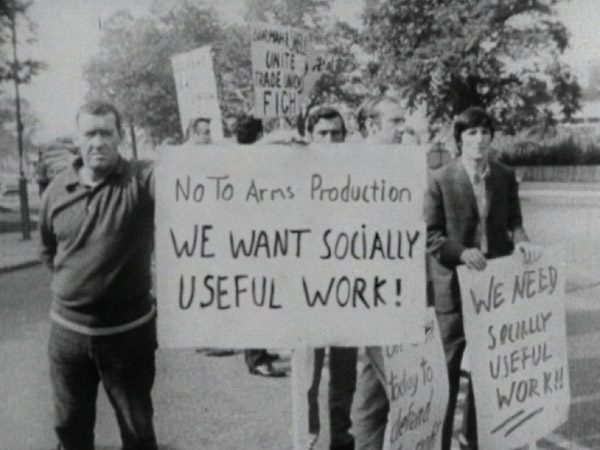
Throughout his working life, he remained a Marxist, dedicated to challenging and overthrowing the lot of most workers as alienated and degraded labour. He had an infinite faith in the creative capacities of humankind, taking inspiration from wonders of the past such as the huge medieval cathedrals that were in large part the products of worker genius, designed and realised by proto-guilds that would one day become proto-unions.
Questions
Within his union, Mike often found himself on the wrong side of an opportunist and undemocratic bureaucracy when it came to awkward questions, not least on the thorny ‘Irish Question’. Born in County Galway, he was a lifelong admirer of James Connolly – a Scottish-born revolutionary who championed the cause of a united and independent Ireland. Fully aware of how the politics of all of this would rankle with the mainly Orange union membership at the massive Shorts Harland and Wolff yards in Belfast, Mike would calmly – often while under quite abusive attack – explain how all workers could never benefit from the British imperialist project that was a Northern Ireland of six counties divorced from the Republic. And this was always done without making one ounce of concession to the Catholic church – which he would then go on to condemn for its denial of abortion and contraception rights.
Also in 1972, at the time of the Upper Clyde Shipbuilders yards’ occupation, when both the TUC and the Communist Party called for nationalisation as a panacea, Mike stood up at our union conference and posed another option. Quoting (again) James Connolly, he warned: ‘The police are nationalised, the army are nationalised- and even the hangman is nationalised. And none of them are socialist.’ He was speaking in support of the amendment that the yards should be nationalised ‘under workers’ control.’
The man
I last met Mike at a university conference in 2007. I approached him with some timidity but needlessly so, as he instantly recognised me. As ever he was warm and smiling, and with incredible precision he recalled both the good and the not-so-good times in the union. But what I noticed about him was a total absence of bitterness or rancour – which made me recall that in all those years I had known him, he had never raised his voice nor sworn at anyone in even the most bitter of disputes. And as ever, he was both optimistic and enthusiastic for our collective future.
Later, in his 2018 swan-song ode to humanity Delinquent genius: The Strange Affair of Man and his Technology, he disputed as inevitable the further de-skilling of labour, writing: ‘I disagree. The script for this finale can still be written.’ In reference to the book’s title, and in line with his own lifelong commitment to women’s liberation, he added: ‘And I do mean “man” and not humanity for it is a relationship from which women have been largely excluded – and this to disastrous effect.’
Mike Cooley, engineer, socialist and dreamer, born 23 March 1934; died 4 September 2020
North Sea workers ready to switch to renewables, survey shows
This post by Gabriel Levy was first published on Tuesday 29th September on the People and Nature website. We are pleased to repost it here with permission.
Most UK oil workers would consider switching to another industry – and, if given the option to retrain, more than half would choose to work on renewable energy, a survey published today shows.
The survey blasts a hole in the argument by trade union leaders that every last drop of oil must be produced, supposedly to preserve jobs. Actually, workers are ready to move away from fossil fuel production – as long as they can work and their families don’t suffer.
The 1383 offshore workers who responded to the survey crave job security, above all. Nearly half of them had been laid off or furloughed since oil prices crashed in March.
Many complained about precarious employment and the contract labour now rife on the North Sea.
The survey, Offshore: oil and gas workers’ views on industry conditions and the energy transition, was put together by Platform London, Friends of the Earth Scotland and Greenpeace.
The survey’s authors seem to be the first people who have actually asked workers what they think.
The Scottish government has a comfortably-funded Just Transition Commission, including trade union chiefs, that recently ran a consultation on its interim report.
But it was campaign groups, working with activists on the ground, who bothered to talk to offshore workers. The survey, distributed via social media and targeted advertising, garnered 1546 responses. The results excluded replies by 163 people who work in midstream or downstream industries, and are focused on the 1383 respondents who work upstream. That’s a representative sample: about 4.5% of the workforce.
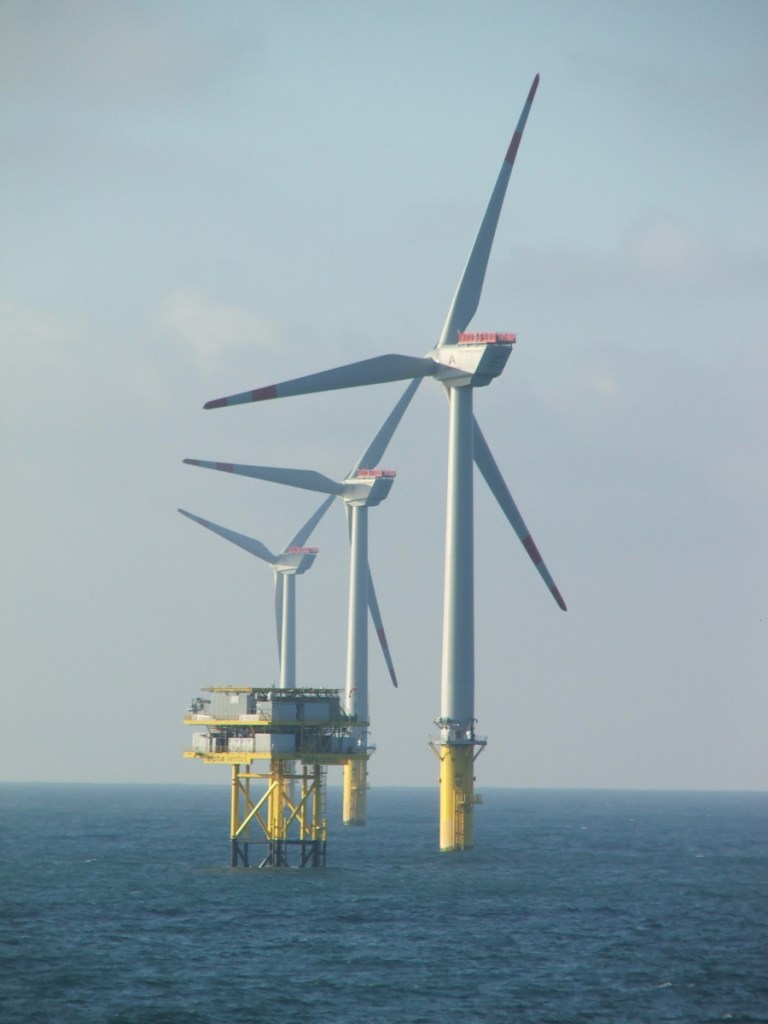
One of the survey’s most sobering results is that, when asked if they had heard of a “just transition”, a staggering 91% of survey respondents said no. (The term “just transition”, nowadays used and misused by politicians, was coined by trade union militants in the 1990s to define the need to fight for social justice during the switch away from fossil fuel burning and other ecologically ruinous practices.)
The Offshore report’s authors comment:
Clearly, campaigners and NGOs lobbying for just transition, and policymakers tasked with implementing one, have failed to reach oil and gas communities – the people who ought to be most central to transition plans.
Despite not sharing vocabulary with the chattering classes, North Sea workers are very clear that the future lies away from oil and gas.
Asked, “would you consider moving to a job outside of the oil and gas industry?”, 81.7% said yes, 7% said no and 10% said they did not know. The survey’s authors commented:
The fact that a huge majority of workers are interested in leaving the industry speaks volumes about the stability and future of oil and gas. There are of course a multitude of reasons why anyone would consider changing jobs, but it is clearly that the offshore workforce is willing to make large lifestyle changes given the opportunity.
In case studies and written responses, the vast majority of offshore workers state that they are fed up with the lack of security, decreasing employment rights and hostile conditions.
Of the 7% who would not consider moving, the three main reasons given were that they were close to retirement age; that the offshore work schedule allowed them to spend time with their families; and concern that their skills would not be transferable.
Asked what was most important to them in considering a move, respondents replied: (1) job security (contract length, pension, etc), 58%; (2) pay, 21%; (3) similar work schedule, 11%; (4) health and safety regulations, 5%.
The survey’s authors reported “a palpable exhaustion with the precarious nature of work offshore”.
North Sea workers are also ready to participate in the transition to renewable energy production, judging by the survey.
Asked, “if you could receive training or education to help you move to a new part of the energy sector, what education or skills training would you be interested in?”, and allowed to choose as many of ten options as they liked, the responses were:
Offshore wind 53%
Renewables 51%
Rig decommissioning 38%
Carbon capture and storage 26%
Non-energy sector 20%
Solar installation 19%
Geothermal technologies 18%
Battery technologies 16%
Transport 15%
Electrical engineering 13%
Other 2%.
A barrier to the transition to renewable energy is the lack of adequately-funded training schemes, the survey showed. Respondents complained that they are expected to pay for courses and qualifications themselves – and the bills are counted in thousands of pounds.
Survey respondents criticised the lack of government support for workers:
The overwhelming majority [of respondents] asked for some form of training, support to leave the industry or investment in renewables. Other prevalent themes included a need to invest in decommissioning, financial support and local supply chains.
The report ends by saying that Platform, Friends of the Earth Scotland and Greenpeace will be running a participatory consultation of oil and gas workers across the UK. “Workshops will enable energy workers to draft policy demands for a transition that works for them, and a renewables industry they want to work in.”
The report urges “energy workers, union branches, local communities, environmental groups or other stakeholders” to get involved.
Today’s report shows that North Sea workers are well aware that the false choice that trade union leaders talk about – fossil-fuel production or unemployment – has nothing to do with reality.
On the contrary, a move out of the oil industry could be, from workers’ point of view, a chance to say goodbye to precarious contracts and the constant fear of sudden lay-offs.
Offshore workers’ readiness to retrain to work on renewable energy, as shown in the survey, strikes a refreshing contrast with trade union officials’ approach. They back the oil companies’ and governments’ plans to keep pumping oil until there is no more money to be made from it.

Edinburgh May Day, 2019. Photo: Friends of the Earth Scotland / Oil, coal and resistance
The oil companies present this climate-wrecking policy in “green” wrapping paper, Vision 2035 – which cynically claims to aim at “net zero” emissions, while continuing to pump a million barrels a day.
But the underlying strategy of “maximising economic recovery”, i.e. wringing out every last drop, is unchanged.
This approach is not only incompatible with combating dangerous global warming, but also avoids focusing on the really urgent job of closing down oil and gas production and planning other futures for workers and communities (as NGOs have argued in the Sea Change report, for example).
In April, when the oil price slump triggered a new wave of lay-offs, the union bosses reiterated their sympathy for “a longer term investment strategy” in oil, rather than accelerating the switch to non-fossil technologies. The Unite, GMB, RMT, Nautilus International, BALPA and Prospect unions all fell in line, rather than treating the Covid-19 crisis as an opportunity to leave behind the fossil-fuel-centred economy.
Surely what is needed now is a real discussion in communities and among workers about how to shape the just transition, to achieve social justice and to contribute to tackling climate change. Hopefully, the participatory consultation proposed in today’s report will be part of this. GL, 29 September 2020.
Comments by North Sea workers (from the report)
On precarious work …
■ As I was self employed prior to April, the company put me on a PAYE contract even though the government delayed its implementation of the IR35 rule [rules that apply to off-payroll work contracts]. Consequently I now earn less, have to pay for all my courses out of my wages, and I have no employee safeguards or protection. It seems the oil companies have got away with everything but the workforce gets hammered. […] A union won’t stop this, it needs government intervention to hold these companies to account in the way they are treating the entire workforce.
■ I’ve gone to agencies who employ contractors as staff, and have had to go back as an independent contractor and take a 25% pay cut. This is happening on a wide scale. It’s very attractive to companies because they have to take on the risks of employees. I fear in the long term that IR35s will allow for companies to get rid of workers whenever they want. They have zero risk, they can take 150 guys and then get rid of 150 guys six months later.
On retraining …
■ At my last job […] our safety guy had worked in oil for 15-20 years. He applied for a job on [a wind farm] and it was going to be offshore. He was told he’d have to do the offshore survival course for wind. If he wanted the job he would have to spend at least £1000 for offshore wind qualifications. But the main theory behind offshore survival is surviving a helicopter crash, and it’s the same helicopter if you are going offshore to a wind turbine or an oil rig. Even a half day conversion course would be better, because as it stands it’s perceived as a money-making scam.
■ We need retraining and a job at the end of it. I can’t get any work. I was an agency worker so I get no money or help whilst not working. I have to use the money I have previously earned to live. I can’t claim one single penny from the government, it’s soul destroying. I am 52 years old and I feel my life is finished already.
■ Offer courses either free or heavily subsidised, unlike the last downturn in oil and gas where it was an absolute nightmare to get funding for retraining. They made it so difficult and unrealistic that the local governments basically pilfered the funds for themselves. They should offer better rates than what is given from the completely useless and proven to be absolutely abysmal Universal Credit. No-one can survive on that.
On the energy transition …
■ Up until now we’ve been quite reliant on oil and gas for transport, heating and generation of electricity, and obviously that’s going to have to change. […] If we want to look at training people towards understanding how we maintain our planet, it’s really important that people understand that there are ideas out there that are fantastic. But of course, not all of them are that sustainable, including biomass. I’m interested in a degree in tidal generation, mostly because we live near Montrose and there’s a three square mile basin that fills with seawater every day. […] It empties and fills twice a day, and I can’t help but think ‘surely we could be taking advantage of that’.
North Sea Oil and Gas – workers voices
A very important report has been published today by Platform that collates the results of an extensive survey of the views of more than a thousand offshore oil and gas workers on their lives, the industry they work in and energy transition. We’ll publish more on the report over the next few days but we strongly recommend downloading the full version.
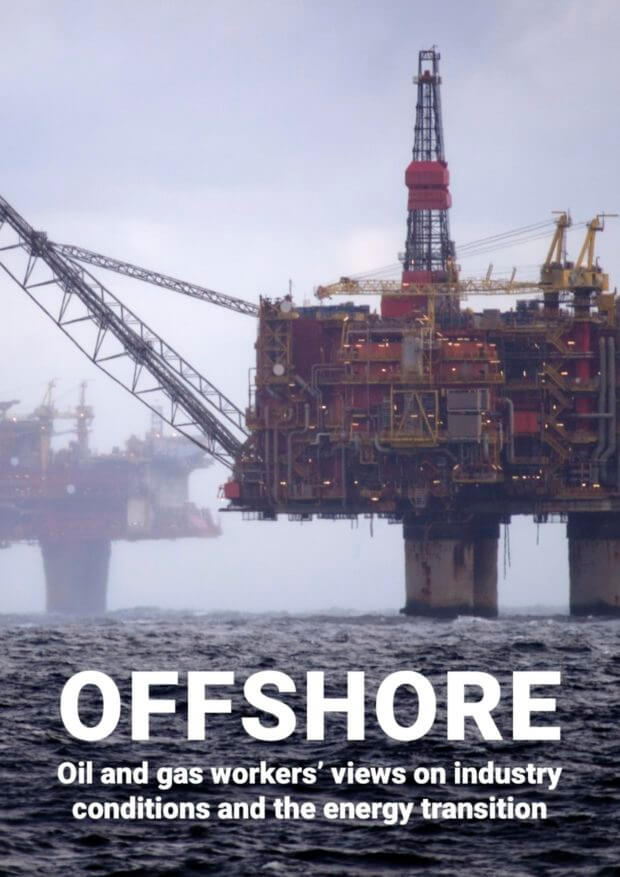
Front cover of the report
Key survey results include:
81% of offshore workers would consider leaving the industry
43% had been made redundant or furloughed since March 2020
91% of respondents had not heard of the term ‘just transition’
Given the option of retraining to work elsewhere in the energy sector, more than half would be interested in renewables and offshore wind.
Over 50% of workers deemed government support at all levels “nowhere near enough”
Current job security satisfaction was rated 1.9 out of 5, with 58% of respondents also identifying job security as their top priority in considering changing industries
Energy From Waste Is No Part Of A Green Transition
In December 2019 we published the text of a new briefing (Number 11) on Energy from Waste. It’s good news that this issue is now getting more publicity. The Ferret has highlighted a new report and briefing from Friends of the Earth Scotland that points out that the combined capacity of the Waste burning power plants proposed in Scotland exceeds the total tonnage of household waste available. These plans run a coach and horses through recycling targets and will increase carbon emissions. They should be stopped.

The Glasgow Agreement
Apologies for the short notice – we’ve just received notification that there’s an Open Assembly of the ‘Glasgow Agreement’ tomorrow (Sunday) at 2pm – the invitation to attend is copied below. You can see the latest draft of the agreement here.
We want to invite you to our next open assembly of the Glasgow Agreement on the 27th of September (Sunday), from 2pm GMT until 4pm GMT. You are more than welcome to participate, and to invite other groups that you know and that might be interested to participate in the Glasgow Agreement, even if they are not in the process yet.
Agenda:
We will talk about: the current status of the text and how you can be involved on the process; what space does the climate justice movement need in 2021; what is the inventory tool and the climate agenda.
Introductory webinar:
We will also have an introductory webinar at 1:30pm GMT, in the same links, for those who don’t know the Glasgow Agreement that well. Feel free to join us if you want to know more about the agreement before the assembly!
Platform:
The assembly will be online, using the Big Blue Button (BBB) platform.
In English, the link will be this one: https://meet.nixnet.services/b/gla-nnw-hgv.
(You can download here a guide about how to use BBB or watch this tutorial: https://www.youtube.com/watch?v=uYYnryIM0Uw)
Scot.E3 is not currently signed up to the agreement we’ll discuss this at our next meeting – please send feedback to triple.e.scot@gmail.com

The problems with BECCS
Scot.E3 has joined with a number of other organisations in signing a letter sent to the Scottish Government arguing that Bioenergy with Carbon Capture and Storage should have no place in the their updated Climate Change Plan.
The key points in the letter are listed below.

CC BY-NC
- Risk of exacerbating rather than mitigating climate change
Biodiverse forests are vital protection against the climate and ecological emergencies. Protecting mature forests and allowing more land to revert to forest and other natural ecosystems is a vital part of our efforts to sequester and store carbon. Large-scale tree burning for biomass energy is not compatible with this need, and any level of BECCS implementation would further increase demands for extraction of wood and other types of biomass.
To date, the only working example of BECCS anywhere in the world is the capture of CO2 from ethanol fermentation. This process emits more carbon than it sequesters once the fossil fuels burnt during the refining process and the emissions released by land-use change are taken into account. Cutting down trees for energy production exacerbates the climate crisis because it takes too long for new trees to grow back, and forest ecosystems that are logged will not recover for many decades, if ever.
- High risk to nature
The suggestion from the UK Committee on Climate Change (CCC) that Scotland could grow and supply around 33% of all UK biomass and would therefore be an ideal location for BECCS is extremely concerning. Existing demand for biomass energy in the UK far exceeds the availability of genuine biomass residues and wastes. If BECCS was applied on a large scale in Scotland, it would increase the demand for wood and land, and therefore add pressure on woodland and other biodiverse ecosystems.
The world’s only example of a pilot BECCS project involving the burning of biomass – one which has not succeeded in sequestering any carbon so far – is at Drax Power Station in Yorkshire. Drax is the world’s biggest biomass burner and routinely sources pellets made from clearcut, coastal and hardwood forests in the Southeastern USA as well as from forests in the Baltic States. These forests are home to countless rare and endangered species and Scotland must not have a role in their destruction.
In Scotland, biomass electricity relies heavily on burning domestic wood from tree plantations, most of which are Sitka spruce. The Forestry Strategy for Scotland highlights the major role of biomass energy in the overall demand for wood, itself one of the ‘strategic drivers’ of expansion. Conifer plantations may be faster growing than native woodlands and thus preferred for bioenergy, but they provide little habitat for wildlife.
European biofuel policy has shown that large-scale demand for crop-based biofuels causes large-scale land-use change. In the case of European crops, it involves more intensive agriculture with greater agrochemical use, contributing to the decline in farmland birds, animals, insects and wildflowers.
- Diverts resources from meaningful responses to the climate emergency
We urge the Scottish Government not to rely on speculative negative emissions technologies such as BECCS in the energy sector to make up for, or “undo”, carbon emissions. These unviable technologies distract us from the urgent action needed to tackle emissions at source and meet our climate targets.
Scotland’s new 2030 climate target requires urgent action to reduce emissions, and the costs – both financially and environmentally – of trying to develop BECCS are huge, representing a real risk of diverting much needed resources and financing away from proven and effective responses to the climate and biodiversity crises which, unlike BECCS, can be implemented immediately.
The Scottish Government must end support for new fossil fuel developments, focusing instead on ensuring a Just Transition that protects the livelihoods of communities which currently rely on high carbon industries. Swift efforts must be made to upscale truly clean energy, to develop a mix of energy storage systems at scale and to greatly expand the roll out of heat pumps and the insulation of homes.
The Scottish Government must invest in, and provide policy support for, increasing biodiverse forest and woodland cover and the protection of forest, peatland and wetland ecosystems which naturally sequester carbon prioritising the expansion of native woodland through tree planting and natural regeneration.
Global Youth Strike for Climate
A year ago, on 20th September seven million people around the world demonstrated for climate action. The Edinburgh demonstration organised by Scottish Youth Climate Strike (SYCS). SYCS are calling for people to protest on Friday September 25th. For the latest information check the SYCS website – there will be physically distanced protests where safe to do so – you can also add your voice on social media – make a sign calling for a Just Green Recovery and post a picture of it using #BuildBackBetterScot.
Follow @_sycs_ for more information (Instagram only)
Follow @syclimatestrike for more information (Facebook Only)

Support Alexander Dennis – Green Buses for Just Transition
Thanks to Friends of the Earth Scotland for sharing this information. The skills of the workforce at Alexander Dennis and the production facilities are vital for the transition to a zero carbon economy.
Background
Despite the Scottish Government’s fine rhetoric on climate action and just transition, hundreds of workers are currently at risk of redundancy at Alexander Dennis (ADL), the Falkirk-based manufacturer of high-performance hybrid buses. Unite the Union has found evidence that despite the claims of ADL, these job cuts were planned before the health crisis as part of a restructure strategy. Like the still under threat BiFab offshore platform fabrication yards in Fife, Alexander Dennis should be at the forefront of the just transition to a zero carbon economy, not struggling for survival.

Why your help is needed
Environmentalists and climate change campaigners can stand in solidarity with workers fighting to save their jobs – jobs that are vital to the green economy and protecting livelihoods.
Please support the @UniteScotland and @UniteADL campaign on social media, and call for MSPs to sign motion S5M-22467 in the Scottish Parliament. The text of the motion is below, along with links to suggested tweets to share and tweets to send directly to MSPs.
A demonstration of solidarity like this from environmentalists and climate change campaigners with workers and trade unionists will help build stronger alliances and a broader movement for climate action. Please take action today!
Scottish Parliament Motion
Motion S5M-22467: Richard Leonard, Central Scotland, Scottish Labour, Date Lodged: 19/08/2020 R
Importance of Engineering and Manufacturing to the Scottish Economy
That the Parliament recognises and affirms its support for the importance of engineering and manufacturing to the Scottish economy; considers that the sector will play a crucial role in a just transition to a cleaner and greener economy; expresses its concern at the announcement by Alexander Dennis Limited, a world leading bus manufacturer, that a significant number of jobs throughout its UK operations are at risk, including at sites in Falkirk and Larbert; recognises the serious impact that this would have on thousands of workers, and calls on the Scottish Government to offer every assistance to support the company and its skilled workforce and to work with it and the trade unions to ensure that it has an important future in supporting the development of a clean and green public transport infrastructure for communities across Scotland and further afield.
Tweets to retweet
If you’re short on time, please retweet these focused at UK & Scot Govs
If @NicolaSturgeon wants a cleaner, greener future then jobs like @ADLbus will be crucial to making this a success.
Time for @scotgov to support these key manufacturing jobs in Falkirk.
https://twitter.com/UniteADL/status/1303762702616190976
We’re still waiting on action from @BorisJohnson and @GOVUK. 4,000 green buses were promised. Our members at @ADLbus are ready to build them.
Suggested text to tweet @ your MSPs
If you want to engage your MSP, share this tweet with them. Find out who is your MSP
We call on MSPs to support @ScotParl Motion https://bit.ly/2D5cVOH
@ADLbus workers want to be part of a cleaner greener future. @UniteScotland @unitetheunion
If you want to ask your MSP to sign the motion
Hi
@XXXXXMSP
Bus manufacturing is essential to the green economy – Alexander Dennis should be thriving & at forefront of#JustTransition to zero carbon, not struggling for survival.
As my MSP, please support the motion bit.ly/2D5cVOH
If you want to thank your MSP for signing the motion (we should remember to praise MSPs when they do good stuff!)
Hi
@XXXXXMSP
Bus manufacturing is essential to the green economy – Alexander Dennis should be thriving & at forefront of#JustTransition to zero carbon, not struggling for survival.

