Mossmorran briefing

Briefing on the proposed closure of the Exxon Mobile Plant at Mossmorran

Brian Parkin provides background on the proposed closure of the Exxon Mobile Plant at Mossmorran

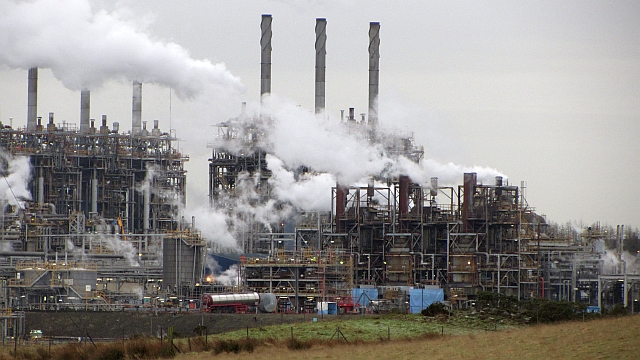
Fife Ethylene Plant, Image by Richard Webb CC BY-SA 2.0

ExxonMobil has announced plans to close the Fife Ethylene Plant (FEP) at Mossmorran in Fife in February next year. Up to 400 jobs will be lost if the closure goes ahead.

The announced closure of the gas treatment plant closure may have consequences upstream for its supply terminal at St Fergus in Northern Aberdeenshire. St Fergus is the landfall terminal for all the gas produced in the Central and Northern UK Continental Shelf fields and the recently opened North Atlantic West of Shetland fields. It also receives gas from the Western Norwegian sector.

  • Gas at St Fergus is primarily treated ‘fractioned’ to a standard acceptable for distribution through the UK National Transmission Authority network, which in turn supplies further treated gas into the National Grid.  The treatment plant at Mossmorran receives the entirety of its ‘wet’ gas from St Fergus.
  • The site and plant of Mossmorran is jointly owned and operated by Exxon/Mobil and Shell UK.
  • The wet gas at Mossmorran is divided into two separate product streams: 
  • Shell separates liquids further to produce methane vial its Fife Natural Gas Plant which is sent into the National Grid network, as well as some chemical feed-stocks for export.
  • Exxon/Mobil uses an ethylene plant to ‘fraction’ the wet gas into ethylene as a feed-stock for petro-chemicalproduction via its Fife Ethylene Plant as well as:
  • Propane, butane and other liquid gases for further treatment for fuels and also grease and other lubricants.
  • Last year Exxon/Mobil produced over 830,00 tonnes of ethylene, over 50% of which was exported to Europe and the US. Until recently Exxon/Mobil used a direct pipeline to Ineos Grangemouth plant.

Braefoot Bay is a private facility which handles almost all of the output of the two Mossmorran operations, and is presently at 85% capacity. It operates under the joint ownership of Exxon/Mobil and Shell UK and is entirely dependent on the export requirements of Mossmorran.  The port has two jetties- a deep-water jetty capable of handling 40,000- 80,000 tonne vessels, and the smaller, for 5,000- 10,000 tonne tankers.

The main tanker loading is via floating ‘roof’ tanks are continuously ‘toped-up’ from large quayside storage tanks.

At Mossmorran, there are around 90 directly employed in control rooms and plant management.  with most engineers, electrical and welders etc being subcontractors directly employed with Balfour Beatty. Virtually all Balfour Beatty workers are members of Unite. 

Protest against the Peterhead Gas Power Station

Perth Concert Hall, Mill Street, PH1 5HZ

Peterhead Power Station Image by James Allan CC BY SA 2.0

There will be a protest outside the SSE AGM in opposition to the company’s disastrous plans for a new gas burning power station in Peterhead. 

SSE already owns the existing power station in Peterhead, which is Scotland’s biggest polluter. A new plant will lock people in Scotland into reliance on expensive and polluting gas for decades – well past the Scottish Government’s 2045 net zero target. 

SSE’s Annual General Meeting is for the company to celebrate their huge profits and their expansion plans.  

We want to make sure that their bosses and shareholders know that people are not happy about their plans for new fossil fuel infrastructure, so we will be holding a demonstration outside the Concert Hall venue.  It will be a family friendly protest, and everyone is welcome!  

Here are some train times that will get you in by train if you’re coming from: 
Aberdeen – 9.44 train gets into Perth at 11.15am  
Glasgow – 10.07 train gets into Perth at 11.11am  
Edinburgh – 9.39 train gets into Perth at 11.06am  
Dundee – 10.55 train gets into Perth at 11.15am 

Thanks to Friends of the Earth Scotland for this information

Now new gas at Peterhead

SSE and Equinor plan to build a new gas-fired power station at Peterhead in Aberdeenshire.  The existing gas-fired power station in Peterhead is Scotland’s single biggest climate polluter.  Building the new plant will increase pollution levels.  

The so-called North Sea Transition deal between the UK and Scottish governments and the oil and gas industry is based on squeezing out every profitable drop of oil and gas from the North Sea.  The Peterhead plant is part of this strategy.  The investment that is planned should be directed into renewables.

The plan is up for approval by the Scottish government.  Tell your MSP that rather than more gas we need investment in renewables, in retrofitting, in public transport and in a clean energy smart grid.

Sign the petition by Friends of the Earth Scotland.

Mossmorran Climate Camp

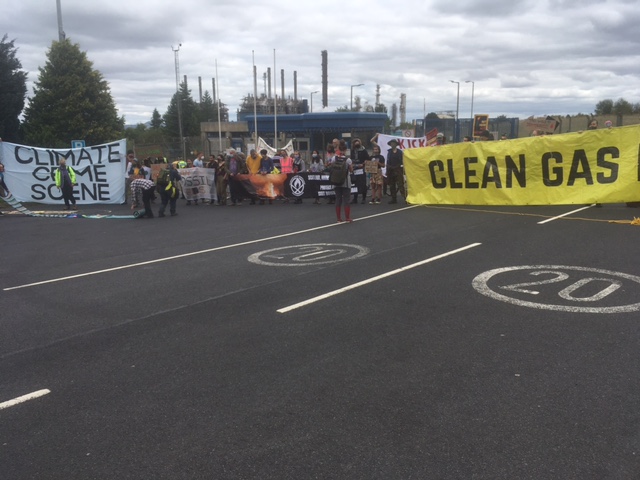
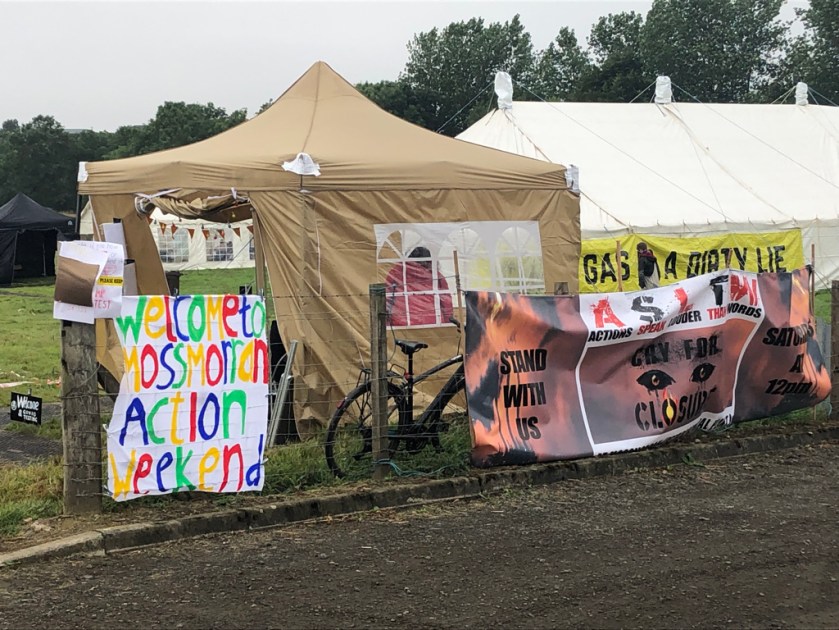
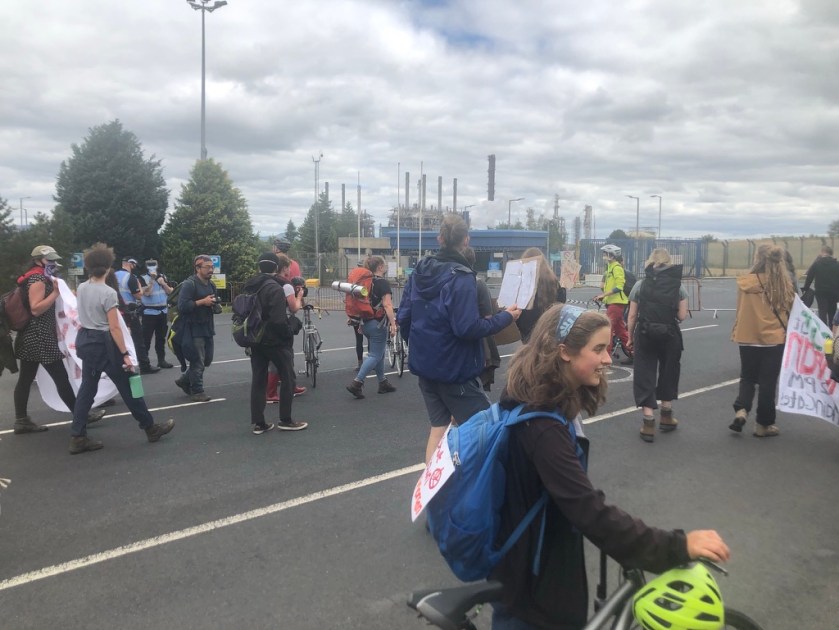
A photo report by Callum from the weekend’s climate camp at Mossmorran

And another from Neil

For more about Mossmorran check out this report of our public meeting with the Mossmorran Action Group or search the site for the several other articles we’ve published in the last two years.

COP26 Coalition – solidarity with GMB British Gas Workers

Important statement from the COP26 Coalition in support of striking British Gas Workers

Solidarity with GMB British Gas Workers. 

The COP26 Coalition sends solidarity to the GMB members in the gas industry taking action to resist the outrageous fire-and-re-hire tactics of their employer. Big employers like British Gas who have made massive profits over many years must not be allowed to make workers’ pay for failing profits through loss of jobs, lower wages and cuts in terms and conditions.

The current crisis of British Gas is emblematic of a deeper crisis that is and will continue to affect many industries. Your fight deserves the support of all workers and all those who demand a fairer and more just society where the rights of shareholders to squeeze profits out of the labour and impoverishment of workers is ended. The rights of workers must be protected and must be a priority for the climate justice movement.

The UN Climate talks at the Glasgow COP26 meeting in November 2021 is a critical moment for all of us, for the climate and for communities in the global south who have contributed the least to climate change yet are suffering first and most through more extreme weather events, rising sea levels, deforestation and the deterioration of agricultural land and water sources. The COP26 meeting is also critical for workers in carbon industries like gas.

The COP26 Coalition, made up of trade unionists, environmental, faith and justice activists are demanding that workers’ and their families’ lives are not only protected but afforded the dignity and respect we all deserve. Workers in Britain and communities in the global south both need a Just Transition to a zero-carbon economy. This means significantly changing existing industries and providing training for workers to gain new skills. A sustainable and just economy must be a greener economy. The COP26 Coalition believe gas workers must be part of the solution to the climate crisis whilst British Gas are part of the problem.

We send you our solidarity and wish you well in your dispute.

What you can do to support the strike 

Get your organisation, union branch or group to write a letter of solidarity to the striking workers.

Donate to the strike fund
Share the COP26 Coalition Statement 

Like and share our Facebook post

Like and retweet our Twitter post: 

What’s to be done about Mossmorran

The twin gas plants run by Shell and Exxon Mobil at Mossmorran in Fife have had a devastating impact on the lives of people living nearby.  At our 3rd June online meeting Linda Holt and James Glen from the Mossmorran Action Group (MAG) gave a presentation on the progress of the campaign.

In the discussion that followed Linda and James addressed questions about the campaign and participants shared useful links and ideas for solidarity and joint activity.  

Campaigning

Linda noted that the MAG Facebook page is a really useful resource for following what’s happening and is used to share reports of flaring and other impacts from the gas plants.  However, Twitter has proved effective in pressurising the Scottish Government – the MAG twitter handle is @MossFlare – do follow and retweet.

We discussed the importance of phasing out Mossmorran as part of a Just Transition in Scotland and the opportunities for joint campaigning.

Linda and James talked about the SEPA investigations into Mossmorran and the limitations of SEPA as a Scottish Government Quango, whose board members are nominated by Scottish Government Ministers and dominated by representatives from the oil and gas industry.  There was strong support for replacing SEPA by an independent body that could take a critical view of government (in)action.  The UK Statistics Authority (UKSA) was suggested as an alternative model.  The UKSA has a statutory objective of promoting and safeguarding the production and publication of official statistics that ‘serve the public good’. 

Prior to lockdown Climate Camp Scotland was planning its summer 2020 action at Mossmorran.  Local campaigners were highly supportive, and it’s hoped that action will take place in the future.

Other points

MAG has attempted to get data on cancer in the areas adjacent to Mossmorran but NHF Fife refuses on the grounds of data privacy.  The only data available covers an area so large as to be useless.

ExxonMobil and Shell largely employ workers from outside the local communities so that the communities don’t get to find out what’s really happening in the plants. Closing down Mossmorran would not have a negative impact on local jobs.  The skills of those who work at Mossmorran are valuable and with support for retraining could be redeployed into new sustainable industries.

It was agreed that there was a need to submit something more robust on Just Transition to the Just Transition Commission.  Scot.E3 is working on a document and will share with MAG before final version is produced.  The deadline is the end of June.

Further reading

George Kerevan in Bella Caledonia writing on Big Oil, SEPA and Mossmorran

Information on ‘Cancer Alley’ in the US

Edinburgh Wet’suwet’en Solidarity

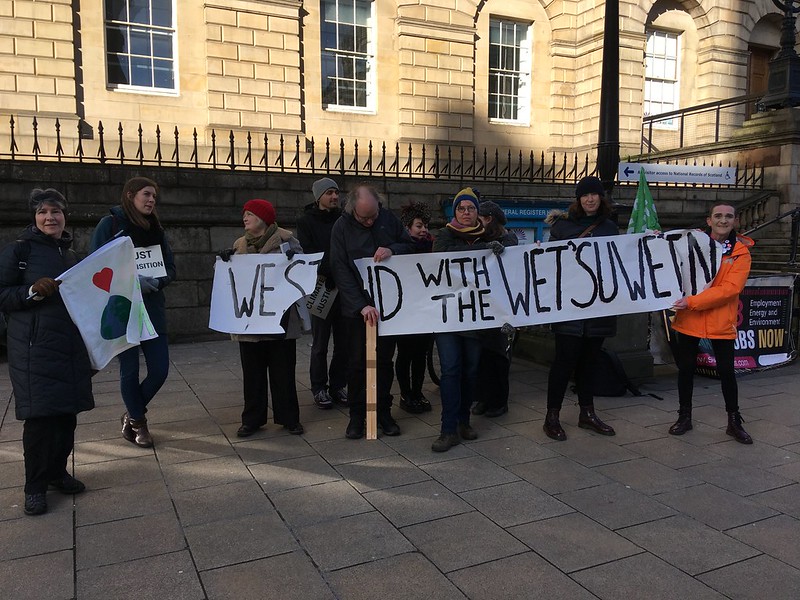
The peak winds from Storm Jorge hit central Edinburgh as we gathered to send a message of solidarity to the Wet’suwet’en this afternoon.  Gusts of over 80 km per hour destroyed our main banner and numbers were depressed by the extreme conditions but more than 20 of us stood firm in solidarity.  Most passers by were unaware of what is happening in British Columbia but we got a good reception with many people stopping to talk.  The protest was called by Scot.E3 and  supported by Friends of the Earth Scotland, Young Friends of the Earth Scotland, Global Justice Now Scotland, rs21 Scotland, People and Planet Edinburgh, Edinburgh Youth Climate Strike, Green Anti-capitalist Front and XR Edinburgh.  The breadth of support provides a good basis for continuing solidarity actions as we build for mass mobilisation at COP 26 in Glasgow later in the year.


IMG_5287

Images by Eileen Cook and Pete Cannell CC0

Donate to the Unist’ot’en 2020 Legal Fund

More information at the supporter toolkit site 

Canadian Facebook Page

UK Campaign Facebook Page 


Hydrogen Debate and the Future of Heat

We are pleased to publish a contribution to the growing debate on the use of Hydrogen to replace north sea gas for domestic heating written by Pete Roche – the article was originally published in the bulletin of Nuclear Free Local Authorities.

An argument about the future use of hydrogen, in particular for heating, has been raging amongst energy professionals and lobbyists since the Government announced it was looking at setting a date by which all boilers on sale would be “hydrogen ready”, meaning they can burn natural gas but can also be converted easily to burning hydrogen. It was also announced that the natural gas supply at Keele University is being blended with 20% hydrogen in a trial that’s of national significance.

Households could soon be required to install a boiler capable of burning hydrogen when they next upgrade their central heating system. The government has already pledged to ban installation of fossil fuel heating systems in new homes from 2025. In November Sajid Javid, the chancellor, visited the headquarters of Worcester Bosch to inspect its prototype hydrogen-ready boiler. The company says the boilers would be available by 2025. They would be £50-£100 more expensive than existing boilers, which typically cost about £900. The benefit over existing boilers is that they can continue burning natural gas but be converted to burning hydrogen in an operation that will cost about £150 and take a gas engineer one hour.

The Department for Business, Energy and Industrial Strategy’s Hy4Heat programme aims to determine the feasibility of hydrogen for heating in homes and includes work with industry to develop prototype hydrogen appliances, including hydrogen ready boilers. About 1.7 million boilers are replaced each year so if they were required to be hydrogen-ready from 2025 most homes would have the necessary boiler by the mid-2030s to allow a switch to hydrogen. (1)

One of the arguments in favour of converting our gas boilers to hydrogen is that we have poorly insulated houses with insufficient space for installing a heat pump. If you were to design a heating policy from scratch, you would not choose hydrogen. You would build well-insulated houses that use electric heat pumps. (2) Worcester Bosch argues that a house needs to have an Energy Performance Certificate rating of C or above for a heat pump to be able to heat the house effectively. According to them of the 3,276,000 UK properties within the EPC band C rating, some 3,223,000 have a condensing boiler. One of the ways of jumping one clear band within the EPC methodology is to replace a non-condensing boiler with a condensing version. This means that many of the properties in band C are really constructed to band D levels of fabric and therefore unsuitable as they stand for a heat pump installation. (3)

Ed Matthew Associate Director at independent climate and energy think tank E3G says hydrogen is the wrong choice for heating homes. Blue hydrogen (manufactured from natural gas) needs CCS so would be massively expensive and keeps us hooked on gas. Green hydrogen (made by electrolysis using renewable electricity) is 4 times less efficient than using heat pumps. “Hydrogen is being pushed by the gas industry. Beware.”

Dave Toke, reader in energy politics at Aberdeen University agrees. He calls it: “the start of one of the greatest pieces of greenwash that have been committed in the UK.” The oil and gas industry is promoting so-called ‘blue hydrogen’, that is hydrogen produced by ‘reforming’ natural gas, and capturing the carbon dioxide that is produced. Yet currently most hydrogen is produced by reforming natural gas and not capturing carbon dioxide, a process that will dramatically increase carbon dioxide emissions if hydrogen is used to heat homes. The efficiency of the gas reformation process is only around 65% meaning that much more carbon dioxide is generated to produce the hydrogen as fuel compared to simply burning the natural gas. He says any claims that the process will be done using carbon capture and storage, beyond that is a few demonstration projects supported by public grants, should be taken with a wagon load of salt.

But even if ‘green’ hydrogen generated by renewable energy were used, it would still be a grossly inefficient way of using that renewable energy. Renewable energy is normally distributed through the electricity system where it can power heat pumps in homes (either individually or through district heating systems) to much greater effect. The heat pumps use electricity much more efficiently compared to any hydrogen boilers, no matter how the hydrogen is produced. Indeed, a heat pump may increase the efficiency of the use of renewable energy by approaching fourfold compared to using ‘green hydrogen’ in a boiler. (4)

Richard Black from the Energy and Climate Intelligence Unit (ECIU) told BBC News: “We will and should have hydrogen in the mix of energy options, but it’s not a wonder solution to everything, which you sometimes get the impression from the rhetoric. There is hope – but too much hype.” (5)

Commentators also argue about the cost with some saying hydrogen will prove too expensive for mass usage, while others say switching to the use of electricity for heating will be far more costly than gas central heating and will put enormous strains on the grid during the winter months. However, heat battery manufacturer, Sunamp, claims that using an air source heat pump on off- peak electricity in conjunction with a heat battery can heat a house for a price comparable with gas central heating.

Lord Deben, chair of the Committee on Climate Change, has expressed confidence that a way will be found to produce hydrogen, which could provide a low carbon substitute for natural gas in heating systems, cheaper than is currently possible. (6)

The Commonweal Common Home Plan (see below) is sceptical about relying on the conversion of the gas grid to hydrogen. And moving to electric heating would roughly increase by a factor of five peak load on the grid which would require significant upgrades to cope. It prefers instead the idea of building district heating networks which can deliver heat from solar thermal, geothermal and industrial waste heat recovery.

New research commissioned by industry body Scottish Renewables shows the Scottish Government’s new Heat Networks Bill could see the equivalent of 460,000 homes – around a fifth of Scotland’s total – heated renewably by 2030, cutting emissions from heat by 10% and helping tackle the climate emergency. The research found 46 potential heat network projects across Scotland’s seven cities. The networks would initially serve 45,000 homes but could, with the right Scottish Government support, grow ten-fold by 2030. (7)

To date the Scottish Government has said the new Heat Networks Bill will “support, facilitate and create controls [for] the development of district heating” – but is yet to confirm the details. In response to this ongoing uncertainty industry has published, alongside the new research, a set of recommendations on how the Bill should support new projects. The potential projects represent a significant economic opportunity. Civil engineering such as the digging of trenches and laying of pipes accounts for 40% of a typical heat network’s costs, often using locally-sourced labour.

Star Renewable Energy, has installed a heat pump which can extract the small amount of heat generated by the Clyde. The river has an average temperature of around 10oC but engineers can boost it up to 80oC for use in homes. (8)

Meanwhile the HyDeploy pilot involving injecting hydrogen into Keele University’s existing natural gas network, which supplies 30 faculty buildings and 100 domestic properties is now operational. (9) And 7 industrial partners have been pledged to support a demonstration project in Denmark, which, with offshore wind as a power source, will produce renewable hydrogen that can be used in road transport. (10)

  1. Times 4th Jan 2020 https://www.thetimes.co.uk/article/hydrogen-boilers-may-be-only-choice-for-homes- by-2025-2rw5t3tpt
  2. Times 4th Jan 2020 https://www.thetimes.co.uk/article/an-exciting-carbon-free-future-depends-on- hydrogen-boilers-6ktqwpgw0
  3. See The Future of Fuel, Worcester Bosch, 2019 https://www.worcester- bosch.co.uk/img/documents/hydrogen/The_Future_of_Fuel.pdf
  4. Dave Toke’s Blog 4th Jan 2020 https://realfeed-intariffs.blogspot.com/2020/01/why-uk-government-may- be-encouraging.html
  5. BBC 2nd Jan 2020 https://www.bbc.co.uk/news/science-environment-50873047
  6. Edie 6th Dec 2019 https://www.edie.net/news/10/Lord-Deben-chides-politicians-for-failing-to-act-on-decarbonisation-of-heat/Scottish Renewables 11th Nov 2019
  7. https://scottishrenewables.createsend.com/campaigns/reports/viewCampaign.aspx
  8. Times 12th Nov 2019 https://www.thetimes.co.uk/article/667e8b5c-04d4-11ea-872c-a98e8bfab8fc
  9. Edie 2nd Jan 2020 https://www.edie.net/news/8/UK-s-first-grid-injected-hydrogen-trials-begin-in-Staffordshire/
  10. Orsted 20th Dec 2019 https://orsted.com/da/Media/Newsroom/News/2019/12/945369984118407
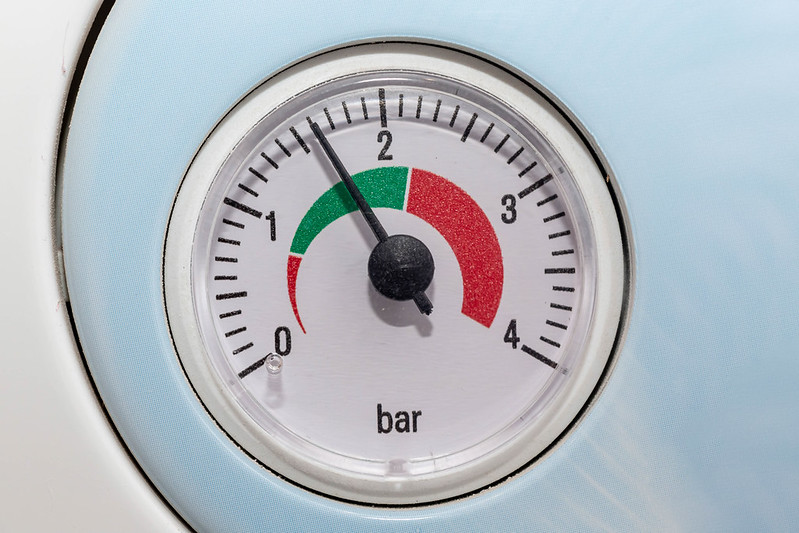
The scale of pressure on domestic gas boiler

The scale of pressure on domestic gas boiler image by Marco Verch CC BY 2.0


Update on the November conference

We are really pleased that Simon Pirani will be speaking at the Scot.E3 conference on 16th November.  Simon is the author of ‘Burning Up: A Global History of Fossil Fuel Consumption’ (Pluto, 2018).  Here’s a video of him speaking about the book:


Stopping Oil and Gas Part 3

Daisy Jamieson was the third contributor to Scot.E3’s Glasgow public meeting on stopping North Sea oil and gas. In her talk Daisy reflected on the importance of just transition.  Part 1 of the public meeting can be viewed here and part 2 here.