Technological transition, the ideology of capital

Simon Pirani reviews More, More and More: an all-consuming history of energy

Review by Simon Pirani of More, More and More: an all-consuming history of energy, by Jean-Baptiste Fressoz (Allen Lane, 2024). This article was first published on the People and Nature blog.

We really are in climate trouble now. The intergovernmental climate agreements, for whatever they were worth, are in peril. The target of limiting global heating to 1.5 degrees is effectively lost. A more chaotic global order beckons, as Trump lashes out furiously at the international institutions the declining USA so long dominated.
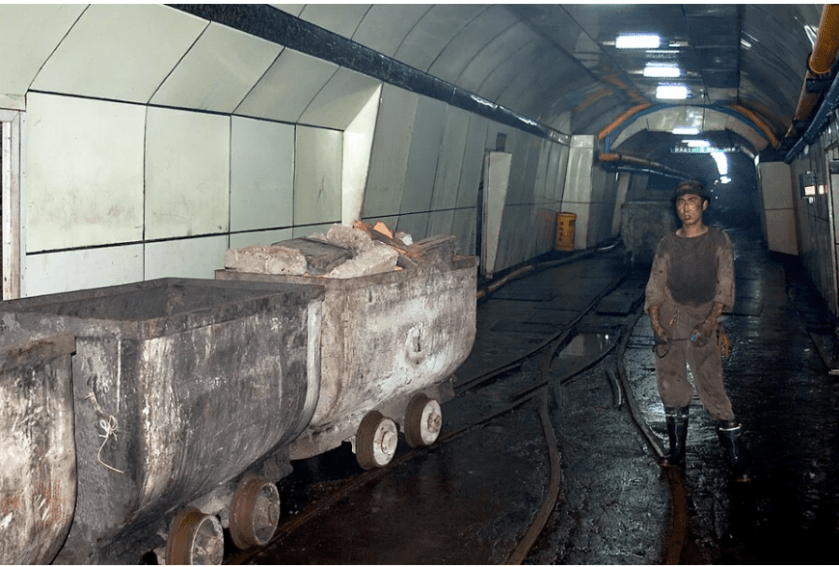
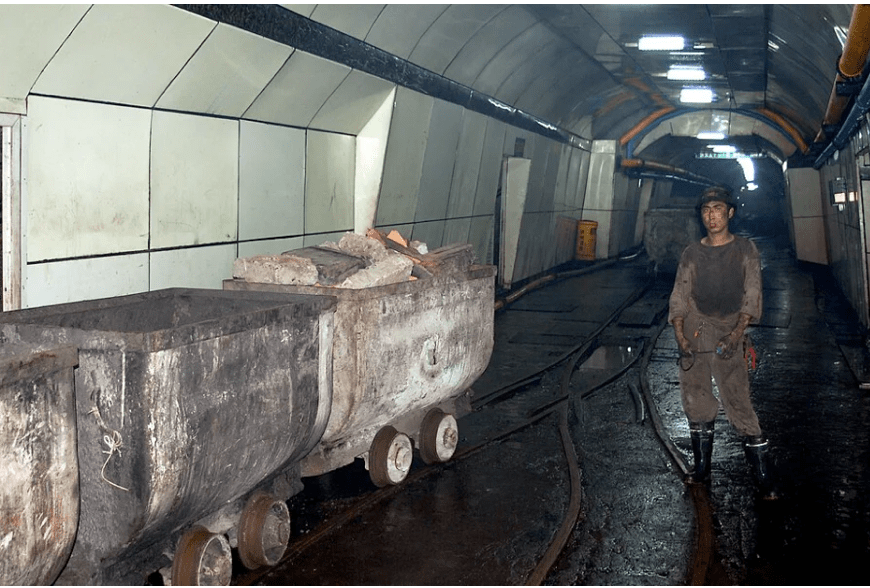
A coal miner in Xingtai, China, which now burns coal at 15 times the rate that Britain did in the 19th century / Photo: Wikimedia commons

New rounds of fossil-fuelled capital expansion threaten. AI and other technologies, far from helping, turn the screw of rising energy consumption. And pathetic, shameful politicians assure us that capital will meet the challenge with its “energy transition”.

Jean-Baptiste Fressoz’s wonderful book shows how the whole idea of “energy transition” is deceitful and dangerous – “bad history”, on which we can not base our visions of the future. If we are to find real answers to the climate crisis, we will need better understandings of energy and material dynamics than that.

There are two main parts to Fressoz’s argument. First, he shows how clunky, stagist simplifications, such as “transitions”, have distorted historians’ understanding of changes in technologies and fuel uses. False assumptions about past “energy transitions” are used to support comforting but illusory narratives about how we might move away from fossil fuels.

Second, he explains how, in the 1970s and 80s, a future “energy transition” – a shift of technologies, firstly to nuclear power – became the dominant, false “solution” to global heating, largely at the bidding of the US ruling elite. He interrogates the ideological prejudices that influenced the economists, energy analysts and other scholars who fed this narrative, and shows how it took hold – albeit not unchallenged – in the Intergovernmental Panel on Climate Change (IPCC) in the 1990s.

Energy history

The first part of the argument concerns tonnes of wood, coal, oil and other energy carriers. In the popular imagination, and the work of some careless historians, wood was displaced by coal in the late eighteenth and early nineteenth centuries, and coal by oil in the twentieth. But that’s not what happened.

Far from wood being left behind by coal and oil, in the twentieth century more was consumed than ever, in buildings, railways, crates, barrels, cardboard, paper – and pit props in coal mines. Far from coal being left behind in the “age of oil”, global production and consumption has risen in the twenty-first century to unprecedented heights.

“After two centuries of ‘energy transitions’, humanity has never burned so much oil and gas, so much coal and so much wood”, Fressoz writes (page 2). China now burns coal at about 15 times the rate that Britain did at the height of its “age of coal”.

That’s the “More, more and more” of the book’s title. But this is not just about quantity; it is also about the complexity of energy systems in which wood, coal, oil and other materials are used in increasingly interdependent ways.

To underline the point about wood and coal, Fressoz describes the heavy dependence of twentieth-century coal mines on the availability of wood for pit props. “Without abundant wood, Europe would simply have had no coal, and hence little or no steam, little or no steel and few or no railways”, he writes (page 55).” Things have changed, but this is not a transition, he insists: “rather, we should be talking about a symbiotic relationship that intensified during the nineteenth century, followed by a gradual disengagement that really began in the second half of the twentieth century.”

Even now, hundreds of millions of people rely on woody biomass for basic fuel needs; in Africa’s big cities, charcoal is a fuel of choice – two or three times more energy-dense than wood, and transported by oil-fuelled vehicles. “This new energy system is based on a combination of wood, muscle power and oil”, Fressoz writes (page 124).

Women workers loading timber for pit props in the UK in 1943. Photo: Imperial War Museum

Neither does it mean much to talk about a “transition” from coal to oil, Fressoz insists. While the wood-coal symbiosis weakened in the late twentieth century, the coal-oil symbiosis became stronger. More steel from coal-fired furnaces was needed to extract and transport oil, and to build hundreds of millions of oil-consuming cars and other oil-driven machinery. Conversely, mining coal from huge open-cast operations, and transporting it ever-greater distances, needed oil.

If the coal-to-oil “transition” did not happen, then the fashionable idea that it reshaped the relationship between labour movements and political power makes no sense. Fressoz offers an iconoclastic take-down of this false logic.

His bluntest questions are for Timothy Mitchell, who argues in Carbon Democracy: political power in the age of oil (2011) that the workers’ movement’s advance in Europe and America in the late nineteenth and early twentieth century was closely linked to coal miners’ economic power, while oil, extracted with significant capital and minimal labour, largely undermined labour.

Carbon Democracy’s “enthusiastic reception in the academic world testifies to an appetite for materialist explanations of politics and a paradoxical lack of interest in the history of production”, Fressoz writes (page 86).

‘Energy transition’ as politics

The second part of Fressoz’s argument concerns “energy transition” as a political discourse centred on technological innovation, an ideological cable that binds together governments’ “climate policies” and corporations’ PR fables.

He starts in the USA in the 1920s, when the apparently eccentric technocratic movement urged “transition” from capitalism to a society based on the most efficient use of energy and labour, through the rational deployment of technology.

In the 1940s came the atom bomb, which helped the US achieve unparalleled geopolitical and economic dominance. Its nuclear scientists found themselves in an unusually privileged position. In this milieu, long-term energy forecasting was all the rage – firstly, to convince politicians of the benefits of generous state investment in nuclear power, and, specifically, in breeder reactors that promised to produce new nuclear fuel more rapidly than they burned it.

Fressoz shows how nuclear lobbying sat comfortably with neo-Malthusian ideas about resources, including fossil fuel resources, running out due to population growth. Into this mix of ruling-class ideology, and the science influenced by it, came the issue of climate change:

Because the nuclear lobby was defending a very long-term technological option – the fast-breeder reactor – it produced a dystopian and innovative futurology, focusing not only on the end of fossil fuels, but also, as early as 1953, on global warming (page  154). 

In the 1960s and 70s, “energy transition” was brought into wider public discourse, together with a new discursive battering-ram: “energy crisis”. That was a misnomer for the 1973 oil price shock, when social and political ferment in the Middle East and Latin America, culminating in oil company nationalisations and a partial boycott of sales to the USA, forced a shift in the terms of trade in the oil-producing nations’ favour. Fressoz argues that the “energy crisis” had already been invented by the nuclear lobby in the late 1960s: the battles over oil made it taken-for-granted common sense.

Energy system forecasting, too, went mainstream in the 1970s, thanks to the oil price shock and advances in computing. Fressoz shows that the computer models often focused on one technology superceding another, e.g. nuclear over oil, rather than the cumulative expansion of energy supply in the context of capitalist economic growth. He critiques the work of the Italian nuclear physicist Cesare Marchetti, who pointed to energy systems’ inertia, and argued that we could learn more about the future from historical statistics than from models that sketched a transition to nuclear dominance.

Fressoz concludes that, for half a century, energy research has focused too much on technological innovation and too little on the persistence of old technologies.

Even today, the many studies of technological diffusion hinder our understanding of the climate challenge. On the one hand, […] they say nothing about the disappearance of the old, making the assumption – implicit or explicit and in any case unjustified – that this would be symmetrical with the diffusion of the new. On the other hand, […] since energies and materials are in symbiosis as much as in competition, we simply cannot use a technological substitution model to understand their dynamics. Nonetheless, the experts are still comforted by the upturn in the diffusion curve for wind and solar power, as if it were equivalent to the disappearance of fossil fuels. (pages 178-9). 

Who cares about the history of research, now we are confronted by climate crisis? We all should, because – as Fressoz shows in a fiercely polemical chapter on the IPCC – the technology-focused futurology summoned up by the “atomic Malthusians” of the 1950s, and written in computer code by the energy forecasters of the 1970s, now walks tall across the pages of the scientific reports on which the international climate talks rely.

By the 1990s, “a neo-Malthusian technological futurology for rich countries had suddenly become a safeguard plan for the entire planet … How was this scientific and political scandal possible?” Fressoz asks (page 180).

In the 1980s, as the climate scientists’ understanding of global heating improved, and fossil fuel burning confirmed as indubitably the main cause, it became clear that energy policy goals had to shift. The move away from fossil fuels had to be faster, not because of a Malthusian exhaustion of resources, but because of the damage done by the global economy’s constant expansion.
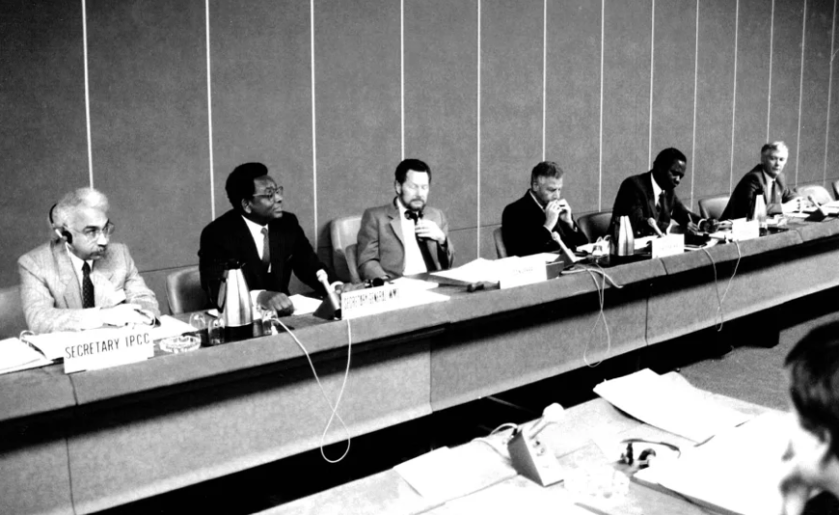
A meeting of the Intergovernmental Panel on Climate Change in the 1980s. Photo from the Geneva Environment Network

Corporate technological “solutions” to the 1970s “energy crisis” were now repurposed for this real climate crisis, Fressoz argues. The Nobel-prize-winning economist William Nordhaus, who sketched out the economic-growth-plus-innovation strategies that heavily influenced the IPCC, has much to answer for.

Fressoz quotes the minutes of the 1979 World Climate Conference in Geneva, at which oil company representatives talked of a long transition away from fossil fuels (to 2100), mainly by way of technological innovation, and many prominent scientists agreed – until the nuclear physicist David Rose warned that Nordhaus’s approach, of postponing the transition until new technologies and new capital made it less painful, was “the perfect recipe for climate disaster” (page 190).

Fressoz describes how scientists, engineers, and social and political researchers sometimes resisted, cut across, worked alongside, or capitulated to the ideological pressure of capital. Or complicated combinations. I hope this account will be read, and thought about, by activists who in Extinction Rebellion’s heyday coined the slogan “listen to the science”, as though “the science” is a deity existing above and independently of the societies we live in and the rapacious capital that dominates them. It is not.

By 1988, when the IPCC’s Working Group III was set up, with a brief to advise governments on mitigating climate change, the aim of those governments, the US’s in particular, “was to regain control over international climate experts, who were quick to brandish emission-reduction targets without weighing up their economic effects” (page  199).

Did they bring the scientists to heel? Yes and no. In the run-up to the Paris climate conference in 2015, scenarios mapping slow progress were superceded by those envisaging rapid decarbonisation, in line with the 1.5 degree target adopted. But, as Fressoz shows, the most powerful governments had meanwhile proceeded in practice with the slowest decarbonisation trajectories.

As the gap between these pathways and reality widened, it was filled with a new technofix – “negative emissions” technologies such as carbon removal, that would help achieve “net zero”.

Without saying so, without discussing it, in the 1980s and 1990s, the industrial countries chose – if that word has any meaning – growth and global warming, and gave in to adaptation. […] Populations were not consulted, especially those who will be and already are the victims (page 211). 

Fressoz concludes that the concept of “transition”, which lives on in the current obsession with carbon capture and storage, hydrogen and other false “solutions”, is “the ideology of capital in the twenty-first century. It turns evil into cure, polluting industries into the green industries of the future and innovation into our lifeline.” (page 220).

Past, present and future

To make the change that Fressoz suggests is needed – that is, to move away from fossil fuels by a deep restructuring of the economy – would require “a powerful coalition to impose its will, to make history in the most radical sense”, the economic historian Adam Tooze argues in an earlier review of More, More and More. But, he adds, “formulated this way, it can’t help but seem hopelessly out of reach”.

Maybe stabilising the temperature at 1.5 degrees above pre-industrial levels is out of reach, Tooze continues, but to assess the possibilities of the present moment, we need to look at the progress of decarbonisation so far: “it is change on a scale that would have been thought impossible until quite recently”.

Fressoz, by contrast, stresses that what looks like decarbonisation may not be. Historically, symbiosis between fuels took precedence over substitution. “The problem is that such symbiotic relationships still exist between ‘green’ technologies and fossil fuels”, he responded to Tooze in a letter (go via that link and scroll down to the end to see it).

In my view, that symbiosis is reinforced by the narrative of technological transition. And Fressoz further considers that narrative in an article just published in the academic journal Energy Research & Social Science.

He starts with Working Group III’s latest (2022) report, which mentions “technology” 2111 times, “innovation” 1667 times and “hydrogen” 1096 times – as against 232 mentions of “sufficiency”, 29 of “degrowth” (mostly in the references), and three of “prohibition”.

Fressoz proposes that this “technocentric focus” is caused first, because universities and research institutes “almost by design” prioritise novelty (e.g., focusing on hydrogen when sufficiency is more likely to matter for decarbonisation); second, research funding structures and intellectual property frameworks push scientists to work with industry researchers who are constrained by their corporate funders; and third, the way the IPCC itself operates.

He suggests that a milestone for mitigation expertise “will be the recognition that global carbon neutrality by 2050 or 2070 is not simply challenging but technologically impossible”. Accepting the impossibility of net-zero targets is “essential to freeing climate expertise from misplaced optimism and technological illusions”.

To my mind, the problem runs even deeper than this: we need to consider the ways in which the international climate talks, and the IPCC’s work, are not only part of the solution but also part of the problem. This involves questions about political power and its relation to capital.

Fressoz’s work, and his exchange with Tooze, make me think of four crucial research questions. First, we need a real assessment of current decarbonisation progress, as Tooze suggests – but conducted with an approach alert to the danger that e.g. expanding renewable electricity generation, desirable as that is, in the context of headlong economic expansion and capital accumulation may not result in any decarbonisation at all.

Second, we need to ask what a movement to forestall and obstruct that form of expansion could look like, given the global social and political conditions. Third, how can the fight against “technophilia” and technofixes be conducted most effectively? And fourth, what is our assessment of the international climate talks, and the relationship between science and political power around the IPCC?

This in turn begs another question raised in More, More and More: the position of researchers – whether historians and humanities scholars or scientists and engineers – in relation to power and capital. We are not neutral either.

□ The Earth and us: ways of seeing (a review of The Shock of the Anthropocene by Christophe Bonneuil and Jean-Baptiste Fressoz)
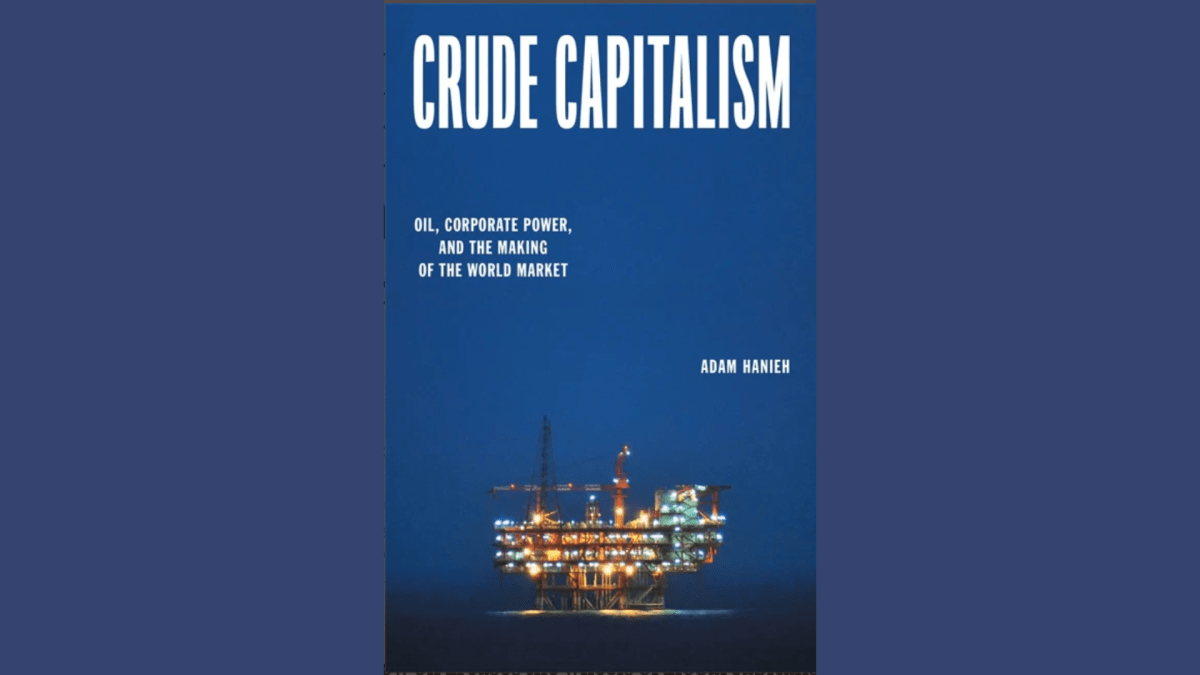
Review | Crude Capitalism

What has oil got to do with the history of the global capitalist economy? Pete Cannell reviews Adam Hanieh’s account.

REVIEW | CRUDE CAPITALISM

Pete Cannell • January 19, 2025

What has oil got to do with the history of the global capitalist economy? Pete Cannell reviews Adam Hanieh’s account.

A version of this review was published originally on the rs21 website.

The first commercially successful oil well in California was tapped in 1876 at Pico Canyon in Los Angeles County. Oil extraction and oil profits spurred the rapid growth of the city of Los Angeles. As I write this review 150 years later, LA is on fire. Crude Capitalism – Oil, Corporate Power, and the Making of the World Market charts the development of the oil industry from its early beginnings and shows how its history is intermeshed with the development of the world economy. It’s a book about oil, about the climate crisis and the environment, about economics and the dynamics of the capitalist system. The Los Angeles fires are one more instance, and not even the most destructive, of the global impact of rising temperatures and changing weather patterns. If you want to understand how oil and capitalism link events in 1876 and 2025 and the forces that shaped and continue to shape our world, then Crude Capitalism is a must read.

Wikimedia Commons CC BY-SA 4.0

In 1995 the rulers of the world met in Berlin, ostensibly to tackle the threat of global warming. In the following three decades more carbon dioxide has been added to the atmosphere than in the previous two hundred years. In the same period annual methane emissions have more than tripled. This exponential increase in greenhouse emissions should not be a surprise. Hanieh begins the first chapter of the book by noting that a decade before the first COP, the International Geosphere-Biosphere Programme (IGBP) was already investigating the connection between human activities and changes to the earth’s biological, chemical, and physical systems. When their report was published in 2004, they noted that

The second half of the twentieth century is unique in the entire history of human existence on Earth. Many human activities reached take-off points sometime in the twentieth century and have accelerated sharply towards the end of the century. The last 50 years have without doubt seen the most rapid transformation of the human relationship with the natural world in the history of humankind.1

Crude Capitalism sets out to explain why the mid-twentieth century was such a critical turning point and why despite decades of blah blah blah (to quote Greta Thunberg) the exponential increase in global greenhouse emissions continues. 

The core of the book is a chronological account of the development of the oil industry from its early beginnings until the present day. The story begins in the United States in the late 1890s. The second chapter explains how the rapidly developing oil industry became dominated by huge vertically integrated corporations such as Standard Oil. The structure of the new industry owed a lot to the particularity of US property law. The oil majors consolidated their grip through cartels and oligopolistic structures. These modes of organisation were adopted internationally in the decades that followed. A theme that runs through the book is the way in which the oil industry has become global, growing and adapting and often acting as a trail blazer for innovation in organisation and new techniques of capitalist exploitation. An example of this, in the British context, is the privatisation of the North Sea oilfields, which was at the forefront of the neoliberal reconstruction of the British economy.

With World War I, the focus of the book moves to the Middle East and Russia. One of the great strengths of the book is the way in which it deals with imperialism and how economic and military competition ties the global oil industry and the global arms industry together in an embrace of exploitation and callous destruction of the environment and possibilities for genuine human development. World War I generated a massive increase in demand for oil. The British Navy transitioned to an oil-based fleet. Britain’s colonial activities in the Middle East and its role in dismantling the Ottoman empire were critical for Britain to meet its growing demand for oil. It met this demand by developing new oil fields in Iran and Iraq. Collaboration between US big oil and British colonial interests in this new arena of exploitation paved the way for the US majors to go global.

The real acceleration in oil production, chronicled brilliantly in the central part of this book, came after World War II, when European economies joined the developmental path already well established in the US. At this point, the use of oil as a feedstock for plastics and synthetic fertilisers took off on a mass scale. Oil’s initial success lay in its energy density – a given volume of oil provides far more energy than coal or wood – but over the course of the second half of the twentieth century the ubiquity of plastics meant that, in Hanieh’s words, ‘commodity production had become a derivative – or a by-product – of the production of energy.’ This transformation of commodity production to a system powered and based on oil remains the dominant system in the global economy. This continuing domination is the reason why greenhouse gas emissions continue to rise.

In the last decade the US has once again become the largest single national producer of oil and gas. Yet at the same time as the Chinese economy has grown, the centre of gravity of the global industry has shifted east to Asia and new interdependencies have grown between Asia and the Middle East. 22 years after George Bush declared victory in Iraq, the largest oilfield in that country is run by a private Chinese company. But there is also a shift in power from private to state capital: the three biggest oil firms in the world are owned by the Chinese and Saudi Arabian states.

Crude Capitalism is withering in its critique of the oil industry’s corporate greenwashing. Hanieh notes, for example, that BP’s erstwhile rebranding as ‘Beyond Petroleum’ involved spending ‘more on the corporate rebrand than it did on renewable energy.’ The rebrand was short-lived and while many of the big companies are increasing their investment in renewables the rate of increase in investment in hydrocarbons is even faster. Twelve of the biggest companies plan to spend more than $100 million a day on new hydrocarbon projects up to the end of the decade. In addition, the industry is using its power and wealth to push technofixes that are often of limited or no utility for reducing greenhouse gas emissions but allow for the continuation of the infrastructure and systemic economic relations of fossil capital. In Britain the industry body Offshore UK has rebranded itself as Energy UK and its focus on Carbon Capture and Storage and Hydrogen is slavishly followed by the British government.

Adam Hanieh is absolutely clear about the obstacle that big oil continues to present:

Oil, in other words, remains at the core of our economy and our energy systems; without dislodging it from this position there is no possibility of ensuring a future for humanity. 

The strength of Crude Capitalism is that it shows how the oil industry is the result of a system that always puts profit first. The final paragraph sums it up:

We cannot behave as if the problem of capitalism does not exist, or can be ignored, or as if our current rulers can be convinced to take an alternative path through the sheer force of scientific evidence. This is an irrational economic system that pits the interests of a tiny few against the vast majority, and only by taking political and economic power away from the logic of the market will it be possible to build a different and better world. 

[1] Will Steffen et al., Global Change and the Earth System: A Planet under Pressure, Berlin: Springer, 2004, 81. 

The case against new developments in the North Sea

The North Sea hydrocarbon reserves are among the most expensive and most technically difficult in the world. They are also short-medium life reserves compared with larger landmass oilfields.

Anticipating these disincentives, the incoming Labour governments of 1964-69 and 1974-79 with the state-owned BNOC and British Gas companies decided to make them more attractive for licenced operators by zero valuing to hydrocarbon assets thus avoiding the usual auction bidding process that would entail up-front purchase and risk acceptance by prospective extraction companies.

Then taxation rates on oil/gas extracted were relaxed to a very minimum as an incentive subsidy on future exploration and extraction activities. These arrangements- along with wholesale privatisation in 1980- meant that high profits were assured at low taxation rates and with the burden of risk and asset write-off being shouldered entirely by the taxpayer.

Also, these arrangements allowed for profligate extraction with value worthless assets being frittered away when the operational conditions got too difficult.

Unlike Norway– and many other oil and gas nation-states, no sovereign wealth fund was created on the back of oil/gas profit taxes- which in the case of Norway, has resulted in the biggest such fund for social welfare and public infrastructure in the world. So with Scottish territorial waters accounting for over 70% of UK oil and gas fields, little in the way- other than employment- of benefit has resulted/been accrued for the Scottish people.

Now Climate Change imperatives are bearing-down on all countries signed up to the IPOCC targets on carbon emissions targets- but yet ALL reliable sources producing estimates on oil (in particular) output and demand/consumption set targets well above limits required to bring about anything like a global temperature slow-down.

Also, the estimates for Scottish offshore- and fracked gas onshore- extraction fly clearly in the face of the Scottish government targets for a green neutral to zero-economy by 2030.

And also, also, it is clear that despite over 40 years of offshore hydrocarbon extraction- the living standards of the Scottish population- already low in comparison with much of the EU as well as many regions of the UK as a whole- have continued to fall and have continued downwards while the offshore company profits have continued upwards.  Essentially we have had subsidies and tax breaks for the rich oil companies and merciless market rigour for the poorest consumers.

Global oil prices (to which gas is pegged) continue to be volatile- but with an OPEC cartel of some 20 countries which are hydrocarbon exporting economic mono-cultures- future price wars- like the one in 2014 which saw 75,000 job losses in the North Sea- make any future dependence on the industry both a climate change folly and an economically ruinous strategy.

Oil and gas over-production is already upon us and any future development- such as the West of Shetland fields- is both unsustainable AND a waste of opportunities to create a green and socially equitable political economy for Scotland.

Dr Brian Parkin, Senior research fellow (Energy Economics), Leeds University

February 2020.

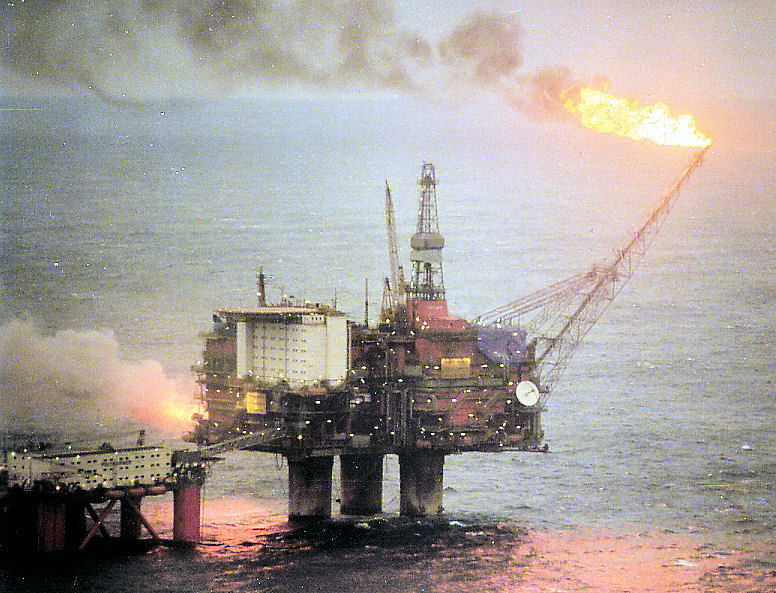
StatfjordA(Jarvin1982)Image CC0 StatfjordA (Jarvin1982).jpg


Phasing Out Oil and Gas

One of the workshop streams at the Scot.E3 conference in November focused on Oil and Gas and Just Transition for workers involved with the North Sea.   Stephen McMurray summarises the discussion that took place.  

The oil and gas group included Simon Pirani, author of Burning Up: a global history of fossil fuel consumption, and a retired oil worker now campaigning with XR and ScotE3. The initial discussions included how we start to phase out oil and gas extraction. The main policy suggestions included ending subsidies to the oil and gas industries and ending licences for oil and gas exploration.

There was an interesting debate about whether the government should set a date to end oil and gas, for example in 2030. On a positive note, it may stop companies exploring for oil and gas well before 2030. On a more negative note, it may encourage companies to seek to maximise output and increase carbon emissions before 2030.

Earlier in the conference, we had watched a series of short films by REEL News. One of the films illustrated that companies were increasingly turning to automation and subsequently reducing their workforce. This led to a discussion considering that research should be undertaken into the impact of automation into the oil and gas industries. Furthermore, it would be useful for REEL News to make a film of the North Sea and show their films on the impacts of oil and gas to oil workers.

There was a general feeling that there was a lack of information for oil and gas workers in relation to training for new industries, and that a just transition conference should be held in Aberdeen for oil and gas workers. There was also a discussion on how we engage with suppliers to the oil and gas industries so they are included in a just transition. Additionally, it was not clear that the Scottish Government had produced a post-oil industrial strategy, and there was a need to give presentations at universities for the need to move to careers post carbon.

Finally, there was an agreement that we need to bring the rebellion to the oil and gas industries and that we need a massive confrontation with big oil in Aberdeen during COP26 when it comes to Glasgow next year.

2018-07-19 08.57.05

Update on the November conference

We are really pleased that Simon Pirani will be speaking at the Scot.E3 conference on 16th November.  Simon is the author of ‘Burning Up: A Global History of Fossil Fuel Consumption’ (Pluto, 2018).  Here’s a video of him speaking about the book:


Stopping Oil and Gas Part 3

Daisy Jamieson was the third contributor to Scot.E3’s Glasgow public meeting on stopping North Sea oil and gas. In her talk Daisy reflected on the importance of just transition.  Part 1 of the public meeting can be viewed here and part 2 here.

Stopping North Sea Oil and Gas Extraction

Scot.E3 public meeting at Kinning Park Complex, 43 Cornwall Street, Glasgow G41 1BA, 7pm Tuesday 24th September.

Ryan Morrison from Friends of the Earth Scotland will speak about Friends of the Earths co-authored report ‘Sea Change’ which shows how a rapid phase out of carbon extraction from the North Sea and investment in renewables could safeguard the livelihoods of those working in the oil and gas sector and create many more jobs. Other speakers include young climate activists and Mike Downham from Scot.E3.  Tickets from Eventbrite.

69334497_2150087728621957_2172063732950106112_n


Demand a Just Transition to renewable energy

One of the lead stories on the BBC today is the UK’s oil and gas industry assertion that the best response to tackling greenhouse gas emissions is to continue production at maximum levels.  Oil and Gas UK’s “Roadmap to 2035” argues consumption would remain above the levels they could produce. 

Neil Rothnie, life long offshore oil worker and activist, argues the case for an end to business as usual and a just transition out of hydrocarbon production in the North Sea.

Both the UK oil industry and Government seem to think that new licenses should be issued and oil and gas exploration on the North Sea stepped up.   The industry estimates that 20 billion bbls of fossil fuel remain under the North Sea.  No one in authority seems to think that these reserves should not be fully exploited.

This begs the questions;

If a policy of business as usual is to be applied to the North Sea, why then should Saudi Arabian, Gulf of Mexico, Venezuelan, Sakhalin, Nigerian and other hydrocarbon reserves not also be fully exploited?

What would the effect of producing all the world’s oil and gas be on global warming and climate change?

The Scottish Government seem to be prepared to try and lead us to an independent Scotland based on a carbon economy.  According to the First Minister, Scotland’s carbon emissions would increase if oil production from the North Sea was stopped. This only makes any kind of sense if there is to be no transition to a renewable energy system to replace fossil fuel from the North Sea.

Despite government complacency, the oil industry will come under increasing pressure – financial and political – to reduce and eventually end hydrocarbon production, though perhaps not till it’s too late to avoid catastrophic climate change if the politicians and industry leaders have their way.

The past practice of both oil industry and Government suggests that the workforce, offshore and onshore, will then be abandoned to their own devices, creating the sort of wilderness in the North East of Scotland that the UK coalfields became when there was no just transition from coal.  Energy workers and their families from all over the UK would then be very badly affected.  Though this time it looks as though they won’t suffer in isolation if climate science predictions are realised.

The unjust transition from coal wasn’t inevitable.  The miners and their families were punished for standing up to Thatcher’s plans to cripple organised labour. Offshore employers wanted anyone but ex-miners with their tradition of struggle, on the North Sea, and the unions failed to step up to the mark. This time it has to be different for everyone’s sake.
A just transition to renewable energy could be planned and enacted starting now.  New oil and gas exploration could immediately be stopped and a planned rundown of hydrocarbon production and a massive development of renewable resources begun now.

Not a penny of the oil windfall has so far been saved for the peoples of the UK.  Is it not now imperative that all (declining) oil profits must be immediately re-invested in developing the renewables energy sector?  Retraining of the oil industry workforce is a must where there is an expected skills gap in a much-expanded renewables sector.  The current oil and gas workforce can and should be re-deployed to replace the fossil fuel that we can no longer afford to produce.  Without a just transition to renewable energy from sun, wind and wave, we are fucked.

2018-07-19 08.57.05Our children and grandchildren deserve more from us than business as usual.  They and the rest of the remaining life on the planet need a chance of a future that does not include the misery of living through a global meltdown.


GREEN NEW DEAL – AN OPPORTUNITY TO SEIZE THE TIME

Mike Downham notes the publication of the Scottish Green Party’s proposals for a Green New Deal and the need to step up the action on climate at this time of political and constitutional crisis.

On the same day that the Government announced the proroguing of parliament, the Scottish Greens launched their proposals for a Green New Deal. Climate change remains the most urgent of all the issues pressing down on us, and the Green New Deal initiative gives us a concrete opportunity to flex our muscles in the new context of Westminster collapse.

So the people have finally had enough of this UK Government. Its decision to trash democracy left a governing vacuum. Yesterday’s broad-based and widespread protests shows the potential to fill that vacuum and take control. Kicked off by the proroguing of parliament, the protests have escalated to articulate anger against austerity cuts, privatisation and the whole political position of the Tory Party.

The Scottish Greens give this summary of their proposals:

Scotland can

  • Redirect massive investment into low carbon industries
  • Grow a world-leading low carbon manufacturing sector
  • Restore our natural environment
  • Give everyone a warm home
  • And provide access to cheap, reliable and green transport.

But to do this we have to ditch neoliberal economics for good.

At the heart of a Scottish Green New Deal is a belief that the Scottish Government can and must take a direct role, working in partnership with citizens, communities, and companies to deliver the change Scotland and the planet so urgently needs.

Rather than pick holes in these proposals, we can build on them by making three immediate demands. Demands which are focussed, achievable and directly address key desperate needs of working-class people – fuel poverty, poverty in general, and the need for jobs which are properly rewarded, secure and satisfying.

The three demands emerge naturally from the climate movement’s in-depth work over recent years:

  1. We demand a just transition from North Sea oil and gas to renewable energy, starting immediately with the phasing out of North Sea oil and gas extraction, as recommended in the Sea Change report co-authored by Friends of the Earth Scotland, Oil Change International and Platform (2019).
  2. We demand an immediate programme for the insulation and draught-proofing of all homes, public buildings and businesses, as recommended in the One Million Climate Jobs booklet produced by the Campaign Against Climate Change (2014).
  3. We demand an immediate nationwide Free Public Transport system, as argued for by the Scottish Socialist Party since 2007, and now by the Scottish Greens (2019)

We will make it clear that we won’t take no for an answer, confident in the new-found breadth of the movement for democracy and for a break with the Economy of Madness and the Politics of Division.

Green New Deal

Image by Bart Everson, CC BY 2.0 https://www.flickr.com/photos/editor/32447100627

Sea Change – a review

In May we welcomed the publication of an important report on North Sea Oil and Gas. Ann Morgan shares her reflections on the report here.

Sea Change: Climate Emergency, Jobs and Managing the Phase Out of UK Oil and Gas Extraction

Introduction

Sea Change highlights the tremendous potential for a just transition and in outlining the scale of the potential increase in new climate jobs provides convincing evidence that trade unions, activists, politicians and economists can utilise in designing a sustainable economy.

Bella Caledonia calls the report a ‘landmark’.  A landmark is defined as a’ turning point’ or a ‘critical point.’ However, as the report is released there are very mixed messages from policy makers.  On the one hand the declaration of climate emergency by the Scottish Government and many local authorities and on the other the Oil and Gas Authority press release on 10thJuly 2019 announcing new licences for exploration and exploitation of hydrocarbons.

The Gas discovery by the Chinese State Owned CNOOC in January this year is said to be the largest in over a decade.  Exxon Mobil and Shell and other oil companies are busy extolling the virtues of Natural Gas, greenwashing thus

‘This versatile and abundant resource is contributing to emissions reductions all over the world’

No word of emissions of methane (research is currently underway to assess methane emission underestimated previously in the North Sea).  As we know methane is a potent greenhouse gas and natural gas is not a ‘bridge’ fuel as the report emphasises.

Just transition

The ScotE3 draft manifesto defines a just transition as

‘One that ensures no individual or community suffers economically or socially as old jobs end and new jobs are created’.

Sea Change makes it clear that a just transition to renewable energy is manifestly possible with the potential that three new climate jobs could be created for every North Sea job at risk. 

Just transition is the way to win hearts and minds and the Sea Change report gives an informed and detailed bridge to that improved working and living environment.  An effective campaign is needed to turn around the Oil and Gas Authority (OAG) insistence on opening up applications for the 32ndround of licensing.

Alternatives

To end fossil fuel dependence and move to the alternative, a clean and safe working and sustainable environment, will not be easy.  However the structured and planned transition that Sea Change describes cannot be ignored.  The report notes that oil and gas was developed with Government support and intervention.  Indeed the big energy companies continue to attract subsidy for their hydrocarbon activities. It argues that it is now high time for intervention and investment to enable a renewable transformation.

Sea Change is an outstanding analysis of the importance of energy at the ‘production’ level and has relevance in the systemic changes required, in public ownership, in governance and accountability and in designing new social models.  The report further illustrates a point also made by Asbjørn Wahl that solutions cannot be made on an environmental/scientific analysis alone.  Action is required to change the power imbalance nationally and internationally.

The need to end extraction

Sea Change documents the current impact of North Sea Oil and Gas and demonstrates in the starkest terms that the continued practice of Maximum Economic Recovery (MER) Is incompatible with the Climate Change Act and emissions reduction.  Mary Church Head of Campaigns at FoE (Scotland) puts it succinctly

‘ Climate Science is clear that we urgently need to phase out fossil fuels, yet the government and big oil companies are doing everything they can to squeeze every drop out of the North Sea … we must ban further exploration and redirect the vast subsidies propping up extraction towards creating decent jobs in a clean energy economy.’

The report finds that:

  • The Uk ‘s 5.7 billion barrels of oil and gas in already operating oil and gas fields will exceed the UK’s share of carbon emissions agreed in the Paris Climate goals. Currently Government and industry aim to extract 20 billion barrels.
  • The additional oil and gas extraction enabled by recent subsidies will add twice as much carbon to the atmosphere as the phase out of coal power saves.
  • Given the right policies, clean industries could create more than three jobs for every North Sea oil job lost.

The authors call for the withdrawal of the OAG authority’s 32ndlicensing round.  They recommend that the UK and Scottish Governments work with affected communities and trade unions in a managed phase out of North Sea oil and gas, investing in education, retraining and reskilling (although it is acknowledged that many existing jobs are highly skilled and transferable) and influencing the priorities of the Scottish National Investment Bank with a significant degree of public ownership. Infrastructure costs can be met with a rapid phase out of oil subsidies underpinned by a fiscal policy of support for clean energy to at least the level to which the oil and gas industry have been supported.

Otherwise the future looks bleak.  The report notes that

  • Offshore oil industry increasingly pressurised (See RMT union’s report on North Sea working conditions)
  • Renewables – currently no significant UK jobs creation with manufacturing jobs going overseas
  • Oil and Gas extraction from newly developed fields would push the world beyond climate limits

In short, the Westminster and HolyroodGovernments face a choice between two pathways to stay in climate limits.

  1. Deferred Collapse: Continue to pursue Maximum Extraction through subsidies until worsening climate impacts force rapid action to cut emissions globally. The UK Oil industry collapses pushing workers out of work in a short space of time.
  2. Managed Transition. Stop approving licensing permits and tax breaks and phase out extraction.

Climate jobs

The report argues that a National Energy Strategy can mean an energy transformation that meets climate commitments while protecting livelihoods and economic well being.  Local manufacturing and workforce participation needs to guide this transformation with new approaches in economic development, strong trade union rights and sectoral bargaining.

‘Clearly it is an ambitious project to transform the UK energy sector within a couple of decades, just as the rapid development of the North Sea was an ambitious project …’

The report models the impact on the oil and gas workforce of ending the development of new fields.  Taking into account the jobs created through decommissioning and forecast retirement in the existing workforce, it estimates that 40,000 existing oil workers (direct and support chain) may need to be in a different job by 2030. To examine the scale of jobs that can be created in compatible clean energy industries and the level of policy ambition necessary, it models the numbers of new jobs that would be created in offshore wind, marine renewables and energy efficiency retrofits, sectors that have strong overlaps with existing oil and gas skills and finds that the number of jobs created will be at least three times more than the number lost.

Social Justice

The report also highlights the international justice commitment to ensure transition is fastest in wealthier countries and end operations, which harm poor communities and workers (Jake Molloy in the RMT report notes the harsh working conditions for Asian migrant workers in decommissioning in the North Sea for as little as around £3 an hour).  Decommissioning should be paid for by oil companies and decommissioning plans should detail and provide for a Just Transition for workers.

Overall, Just Transition plans, guided by climate limits, should provide structured pathways for the existing workforce, new workers and communities.  Terms and conditions of workers must be safeguarded and accountability to trade unions and local stakeholders in place.

Finally, the authors report that in other policy arenas restrictions on the supply of harmful substances (e.g. ozone depleting chemicals and asbestos) targeted the substances, whereas with fossil fuels only measures to slow the consumption have been taken leaving the market to determine extraction.  This is beginning to change.  It is to be hoped the banning of fracking in Scotland and UK wide in future will serve as an example of legislative measures to make unsafe practices unlawful.

It is worth noting that the authors place no great faith in carbon negative strategies such as capture and storage.  While these technologies may have their place in future developments, philosophy of enabling business as usual must be guarded against.  To finish with the words of the authors

‘Oil and Gas sucks investment …’

Investment in renewables could swiftly move us to reduction in emissions within climate limits.

‘Today’s decisions shape the long term energy future’.

Let’s begin the sustainable revolution.

38460797761_54baa9052f_z