Glasgow XR meeting on North Sea Oil and Gas

Following actions in Dundee (see video) and at First Ministers Questions Glasgow XR held a well attended meeting on the 25th January.   The meeting began with contributions from XR activists, Friends of the Earth Scotland and ScotE3, before breaking into discussion groups.  The remainder of the post reproduces the text of the ScotE3  contribution in which we shared some thoughts on strategies for achieving a just transition to a zero carbon economy.

ScotE3 campaigns for the importance of climate jobs.  Jobs that are critical to the economic transformation that is needed to prevent a climate catastrophe.   In Scotland  100,000 of these jobs are needed .  However, to date we are not doing well.  According to the Office of National Statistics the UK’s green economy has shrunk since 2014.  The number of people employed has declined as has the number of green businesses.  This is true UK wide and in Scotland.  It’s no wonder that some representatives of unions that organise workers in the hydrocarbon sector pour scorn on talk of a just transition.

The Sea Change report makes it clear that unless we phase out North Sea Oil and Gas the UK will produce far more green house gas emissions than is compatible with restricting global temperature rise to 1.5 degrees.  But we have a huge challenge; the big energy companies are still committed to maximising extraction of oil and gas and so are the Holyrood and Westminster governments.  Just a year ago when the discovery of new oil and gas reserves east of Aberdeen was announced energy Minister Paul Wheelhouse highlighted,

 the significant potential for oil and gas which still exists beneath Scotland’s waters.

He added:

Scotland’s offshore oil and gas industry has an important role to play with up to 20 billion barrels of oil equivalent remaining under the North Sea and in the wider basin and discoveries such as this help to support security of supply as we make the transition to a low carbon energy system.

 Just this week the Africa summit in London ended with the Westminster Government pledging £2 billion to projects concerned with fossil fuel extraction.

From the outset North Sea has been a bonanza for the oil companies.  Nigel Lawson, now a prominent climate change denier, was Chancellor of the Exchequer in 1986 and said then

the whole outstanding success of the North Sea is based on the fact that it is the freest petroleum province in the world

He meant of course almost complete freedom for the oil companies – few if any benefits accrued to society as a whole and even centres of the industry like Aberdeen were then, and remain, centres of acute inequality.

So we need a rapid phasing out of North sea Oil and Gas.   How can we overcome the powerful vested interests that oppose this and at the same time protect the lives and livelihoods of the workers in the industry.  Theer is no evidence that the private sector can lead such a transition.  The public sector has to take the initiative – and in Scotland that means a much more ambitious role for a state energy company and the new national investment bank.  However, for this to happen we need a powerful movement of movements that has deep roots throughout Scotland.

To grow the movement and force the pace of change clarity of ideas is essential.   We don’t have all the answers but the core issues around climate jobs and just transition are clear.  So we need to patiently and persistently explain why hydrocarbons need to stay in the ground, why we need zero carbon, why the counter proposals from the industry are a dangerous diversion and how a just transition would have a positive impact on working people.

Reaching the audience we need goes hand in hand with maximising pressure on the energy corporations and local and national government.  Much of this will be through all kinds of direct action.  There have been some brilliant examples already but we need much more.

Direct action is necessary but not enough.  The power to force a transition can only come from a mass movement and to build the movement we need to win hearts and minds.  This means reaching out into unions, communities and community organisations with a vision of just transition that goes beyond simply defending existing jobs and embraces practical steps that have direct and understandable benefits for working class people across Scotland and beyond.   We need win people to a positive vision of transition, but more than that we need to win them to be active agents in the transition: part of a movement of rebels, not just on the streets, but in workplaces and communities.  So as we plan actions we always need to think about how to reach new audiences – through stalls, street leafleting, public and workplace meetings and patient door to door leafleting debate and discussion.  It may be that some of those who work in the industry will be the last to be convinced (although that’s not inevitable – our opponents are the same corporations that drive down their wages and conditions and play fast and loose with health and safety).  But if they are unconvinced we need to aim for a situation where climate justice is common sense to millions and where the people that oil workers meet in the pub, out shopping, their kids and relatives, are all won to the need for transition.

With the COP being held in Glasgow this year we have a huge opportunity to build outwards and take a massive step forward in creating a campaign for transition that is unstoppable.
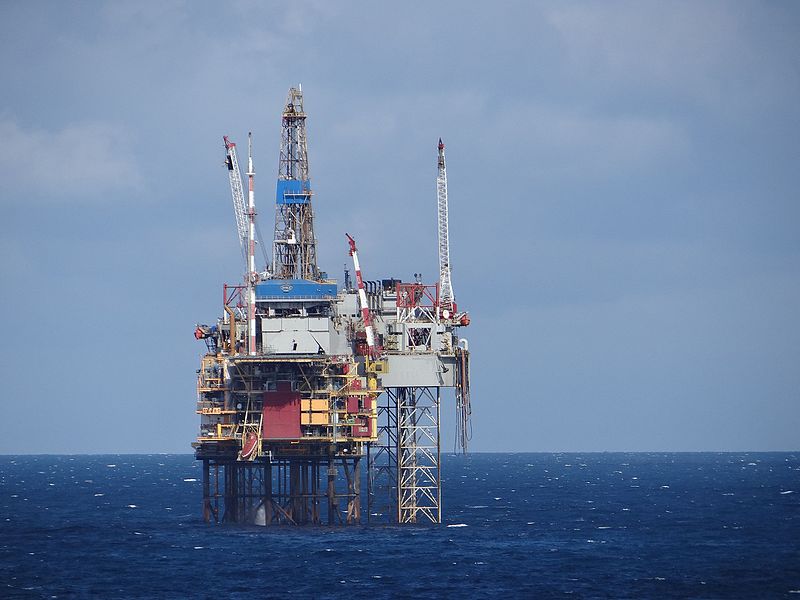
North_Sea_Oil_Rig_(7573694644)

North Sea Oil Rig by Gary Bembridge, CC BY SA 2.0

Notes from our January organising meeting

You can read the full notes from the meeting as a PDF here.  What follows are some of the main points that were discussed.

We started with a discussion on the likely impact of the general election result.  It’s likely that there will be detrimental changes to regulations and standards – areas that could be effected include energy from waste, devolved powers, outsourcing and tendering, nuclear policy, targets and subsidies, energy distribution and supply and workers rights. There is a likelihood for heightened tension between Westminster and Holyrood over many of these issues.  The big issues in the Scottish context include Oil and Gas (particularly INEOS), Public Transport, Housing and the opportunities and challenges presented by the COP being held in Glasgow.

We resolved to do all we can encourage discussion and action in workplaces and community settings. Wherever possible we will do this in partnership. We will encourage requests to help set up or provide resources for events. We agreed to prioritise setting up events in Fife, Falkirk and Aberdeen and with the Construction Rank and File group.

We agreed to work on four new briefings (we are always open for suggestions of amendments to existing briefings and suggestions for new ones) – working titles for the new additions are:

‘Is nuclear part of a sustainable solution’,

‘Organising at work’,

‘Hydrogen’,

‘What is the ‘COP’’.

wind-energy-488534_1280


Phasing Out Oil and Gas

One of the workshop streams at the Scot.E3 conference in November focused on Oil and Gas and Just Transition for workers involved with the North Sea.   Stephen McMurray summarises the discussion that took place.  

The oil and gas group included Simon Pirani, author of Burning Up: a global history of fossil fuel consumption, and a retired oil worker now campaigning with XR and ScotE3. The initial discussions included how we start to phase out oil and gas extraction. The main policy suggestions included ending subsidies to the oil and gas industries and ending licences for oil and gas exploration.

There was an interesting debate about whether the government should set a date to end oil and gas, for example in 2030. On a positive note, it may stop companies exploring for oil and gas well before 2030. On a more negative note, it may encourage companies to seek to maximise output and increase carbon emissions before 2030.

Earlier in the conference, we had watched a series of short films by REEL News. One of the films illustrated that companies were increasingly turning to automation and subsequently reducing their workforce. This led to a discussion considering that research should be undertaken into the impact of automation into the oil and gas industries. Furthermore, it would be useful for REEL News to make a film of the North Sea and show their films on the impacts of oil and gas to oil workers.

There was a general feeling that there was a lack of information for oil and gas workers in relation to training for new industries, and that a just transition conference should be held in Aberdeen for oil and gas workers. There was also a discussion on how we engage with suppliers to the oil and gas industries so they are included in a just transition. Additionally, it was not clear that the Scottish Government had produced a post-oil industrial strategy, and there was a need to give presentations at universities for the need to move to careers post carbon.

Finally, there was an agreement that we need to bring the rebellion to the oil and gas industries and that we need a massive confrontation with big oil in Aberdeen during COP26 when it comes to Glasgow next year.

2018-07-19 08.57.05

2019 Conference report – Mary Church

Mary, who is Head of Campaigns at Friends of the Earth Scotland followed on from Simon Pirani.  In her contribution she talked about the Scottish context and the need to mobilise for COP26 when it’s held in Glasgow in 2020.  You can watch the video of her speaking here.

2019 Conference Report – Simon Pirani

In the second plenary session of the conference Simon Pirani and Mary Church reflected on the growth of the climate movement and the challenges we face. This post includes video of most of Simon’s contribution. He began by reflecting on the connections between some of the struggles for just transition highlighted in the REEL News films and the onslaught on working class communities that took place in the Miner’s Strike of 1984/5. Miners were fighting for their communities and lives and livelihoods. He argued that in the context of climate crisis we are defending communities no less than we were in 1984/1985.

Simon was clear that there is a still an argument to win. Some trade unionists suggest that jobs and climate action are in opposition. He argued that this a false choice – without system change we face disaster on an unimaginable scale – our fight is for effective action and social justice. Each depends on the other.

2019 Conference Report – Climate Rebels

The first two sessions of the conference aimed to set the scene for the discussion on the politics and practice of just transition that followed.  First up was Shaun Day from REEL News.  The idea of just transition has deep roots in the USA and goes back to the 1990’s.

In 2018, Reel News went on a 14 week tour of North America to look at grassroots struggles around climate change, particularly struggles around a “just transition” from fossil fuels to renewable energy, where workers and communities control the process so that they benefit from the transition, and around “just recovery” – recovery from extreme weather events which do not exacerbate current inequalities.
The documentary films that they made, while in the US, record inspiring and visionary struggles all over the continent, led by working class communities of colour, with people organising just transitions and just recoveries themselves.

Shaun showed short extracts from eight of the American Climate Rebels films:

Building a social and solidarity economy in Jackson, Mississippi 

Taking on the oil giant Chevron in Richmond, California

Fighting injustice, pollution, environmental damage and police oppression in Los Angeles

People United for Sustainable Housing in Buffalo

Kentucky Miners fighting for renewable energy

Towards a zero carbon, zero waste city – New York

Hurricane Harvey – just recovery in Texas

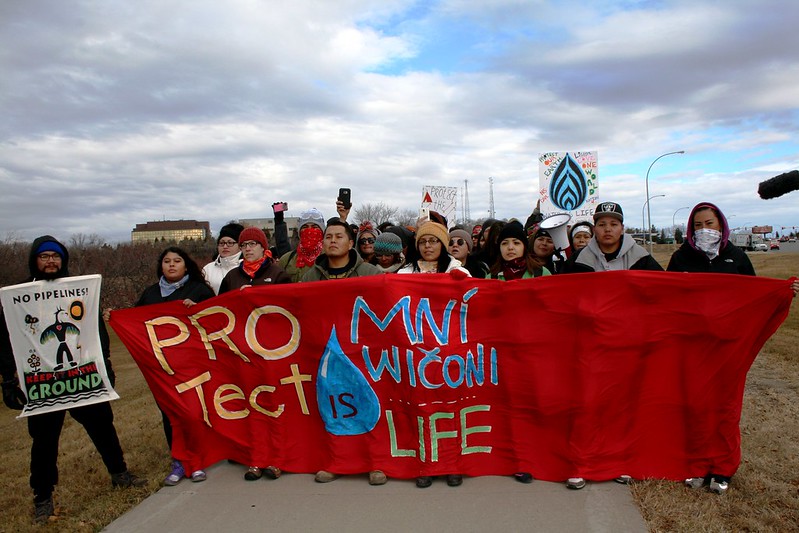
Minnesota – stopping the tar sands pipeline

31203810245_c4e9f25179_c

Image by Leslie Peterson CC BY NC 2.0  Stand with Standing Rock

Conference creche deadline

In order to ensure that we have the right level of support on the day of the ScotE3 conference we are not able to take creche bookings after 5pm on Wednesday 13th.  If you want to book a creche place please email triple.e.scot@gmail.com before then.

conference flyerv3

Building Worker Power

On the Wednesday following the ScotE3 conference on Saturday 16th November the Scottish Trades Union Congress is holding an important event in Glasgow. Contact Louise Ireland, lireland@stuc.org.uk for booking details,

 Building Worker Power in the Context of the Climate Crisis: An STUC Energy Conference

 Wednesday 20th November, 2019

9.00 am – 4.30 pm

The Lighthouse, Mitchell Lane, Glasgow

energy graphic