The slides from Simon Pirani’s talk at the Scot.E3 conference
Simon edits the People and Nature blog and is the author of Burning Up – a global history of fossil fuel consumption. In the introductory session of the conference he argued that Climate Change is an injustice multiplier and that Net Zero and Technological Transition are frauds. He asked how do we defend workers’ rights in the climate emergency and whether there are spaces we can carve out while capital dominates.
Simon Pirani reviews More, More and More: an all-consuming history of energy
Review by Simon Pirani of More, More and More: an all-consuming history of energy, by Jean-Baptiste Fressoz (Allen Lane, 2024). This article was first published on the People and Nature blog.
We really are in climate trouble now. The intergovernmental climate agreements, for whatever they were worth, are in peril. The target of limiting global heating to 1.5 degrees is effectively lost. A more chaotic global order beckons, as Trump lashes out furiously at the international institutions the declining USA so long dominated.
A coal miner in Xingtai, China, which now burns coal at 15 times the rate that Britain did in the 19th century / Photo: Wikimedia commons
New rounds of fossil-fuelled capital expansion threaten. AI and other technologies, far from helping, turn the screw of rising energy consumption. And pathetic, shameful politicians assure us that capital will meet the challenge with its “energy transition”.
Jean-Baptiste Fressoz’s wonderful book shows how the whole idea of “energy transition” is deceitful and dangerous – “bad history”, on which we can not base our visions of the future. If we are to find real answers to the climate crisis, we will need better understandings of energy and material dynamics than that.
There are two main parts to Fressoz’s argument. First, he shows how clunky, stagist simplifications, such as “transitions”, have distorted historians’ understanding of changes in technologies and fuel uses. False assumptions about past “energy transitions” are used to support comforting but illusory narratives about how we might move away from fossil fuels.
Second, he explains how, in the 1970s and 80s, a future “energy transition” – a shift of technologies, firstly to nuclear power – became the dominant, false “solution” to global heating, largely at the bidding of the US ruling elite. He interrogates the ideological prejudices that influenced the economists, energy analysts and other scholars who fed this narrative, and shows how it took hold – albeit not unchallenged – in the Intergovernmental Panel on Climate Change (IPCC) in the 1990s.
Energy history
The first part of the argument concerns tonnes of wood, coal, oil and other energy carriers. In the popular imagination, and the work of some careless historians, wood was displaced by coal in the late eighteenth and early nineteenth centuries, and coal by oil in the twentieth. But that’s not what happened.
Far from wood being left behind by coal and oil, in the twentieth century more was consumed than ever, in buildings, railways, crates, barrels, cardboard, paper – and pit props in coal mines. Far from coal being left behind in the “age of oil”, global production and consumption has risen in the twenty-first century to unprecedented heights.
“After two centuries of ‘energy transitions’, humanity has never burned so much oil and gas, so much coal and so much wood”, Fressoz writes (page 2). China now burns coal at about 15 times the rate that Britain did at the height of its “age of coal”.
That’s the “More, more and more” of the book’s title. But this is not just about quantity; it is also about the complexity of energy systems in which wood, coal, oil and other materials are used in increasingly interdependent ways.
To underline the point about wood and coal, Fressoz describes the heavy dependence of twentieth-century coal mines on the availability of wood for pit props. “Without abundant wood, Europe would simply have had no coal, and hence little or no steam, little or no steel and few or no railways”, he writes (page 55).” Things have changed, but this is not a transition, he insists: “rather, we should be talking about a symbiotic relationship that intensified during the nineteenth century, followed by a gradual disengagement that really began in the second half of the twentieth century.”
Even now, hundreds of millions of people rely on woody biomass for basic fuel needs; in Africa’s big cities, charcoal is a fuel of choice – two or three times more energy-dense than wood, and transported by oil-fuelled vehicles. “This new energy system is based on a combination of wood, muscle power and oil”, Fressoz writes (page 124).
Women workers loading timber for pit props in the UK in 1943. Photo: Imperial War Museum
Neither does it mean much to talk about a “transition” from coal to oil, Fressoz insists. While the wood-coal symbiosis weakened in the late twentieth century, the coal-oil symbiosis became stronger. More steel from coal-fired furnaces was needed to extract and transport oil, and to build hundreds of millions of oil-consuming cars and other oil-driven machinery. Conversely, mining coal from huge open-cast operations, and transporting it ever-greater distances, needed oil.
If the coal-to-oil “transition” did not happen, then the fashionable idea that it reshaped the relationship between labour movements and political power makes no sense. Fressoz offers an iconoclastic take-down of this false logic.
His bluntest questions are for Timothy Mitchell, who argues in Carbon Democracy: political power in the age of oil (2011) that the workers’ movement’s advance in Europe and America in the late nineteenth and early twentieth century was closely linked to coal miners’ economic power, while oil, extracted with significant capital and minimal labour, largely undermined labour.
Carbon Democracy’s “enthusiastic reception in the academic world testifies to an appetite for materialist explanations of politics and a paradoxical lack of interest in the history of production”, Fressoz writes (page 86).
‘Energy transition’ as politics
The second part of Fressoz’s argument concerns “energy transition” as a political discourse centred on technological innovation, an ideological cable that binds together governments’ “climate policies” and corporations’ PR fables.
He starts in the USA in the 1920s, when the apparently eccentric technocratic movement urged “transition” from capitalism to a society based on the most efficient use of energy and labour, through the rational deployment of technology.
In the 1940s came the atom bomb, which helped the US achieve unparalleled geopolitical and economic dominance. Its nuclear scientists found themselves in an unusually privileged position. In this milieu, long-term energy forecasting was all the rage – firstly, to convince politicians of the benefits of generous state investment in nuclear power, and, specifically, in breeder reactors that promised to produce new nuclear fuel more rapidly than they burned it.
Fressoz shows how nuclear lobbying sat comfortably with neo-Malthusian ideas about resources, including fossil fuel resources, running out due to population growth. Into this mix of ruling-class ideology, and the science influenced by it, came the issue of climate change:
Because the nuclear lobby was defending a very long-term technological option – the fast-breeder reactor – it produced a dystopian and innovative futurology, focusing not only on the end of fossil fuels, but also, as early as 1953, on global warming (page 154).
In the 1960s and 70s, “energy transition” was brought into wider public discourse, together with a new discursive battering-ram: “energy crisis”. That was a misnomer for the 1973 oil price shock, when social and political ferment in the Middle East and Latin America, culminating in oil company nationalisations and a partial boycott of sales to the USA, forced a shift in the terms of trade in the oil-producing nations’ favour. Fressoz argues that the “energy crisis” had already been invented by the nuclear lobby in the late 1960s: the battles over oil made it taken-for-granted common sense.
Energy system forecasting, too, went mainstream in the 1970s, thanks to the oil price shock and advances in computing. Fressoz shows that the computer models often focused on one technology superceding another, e.g. nuclear over oil, rather than the cumulative expansion of energy supply in the context of capitalist economic growth. He critiques the work of the Italian nuclear physicist Cesare Marchetti, who pointed to energy systems’ inertia, and argued that we could learn more about the future from historical statistics than from models that sketched a transition to nuclear dominance.
Fressoz concludes that, for half a century, energy research has focused too much on technological innovation and too little on the persistence of old technologies.
Even today, the many studies of technological diffusion hinder our understanding of the climate challenge. On the one hand, […] they say nothing about the disappearance of the old, making the assumption – implicit or explicit and in any case unjustified – that this would be symmetrical with the diffusion of the new. On the other hand, […] since energies and materials are in symbiosis as much as in competition, we simply cannot use a technological substitution model to understand their dynamics. Nonetheless, the experts are still comforted by the upturn in the diffusion curve for wind and solar power, as if it were equivalent to the disappearance of fossil fuels. (pages 178-9).
Who cares about the history of research, now we are confronted by climate crisis? We all should, because – as Fressoz shows in a fiercely polemical chapter on the IPCC – the technology-focused futurology summoned up by the “atomic Malthusians” of the 1950s, and written in computer code by the energy forecasters of the 1970s, now walks tall across the pages of the scientific reports on which the international climate talks rely.
By the 1990s, “a neo-Malthusian technological futurology for rich countries had suddenly become a safeguard plan for the entire planet … How was this scientific and political scandal possible?” Fressoz asks (page 180).
In the 1980s, as the climate scientists’ understanding of global heating improved, and fossil fuel burning confirmed as indubitably the main cause, it became clear that energy policy goals had to shift. The move away from fossil fuels had to be faster, not because of a Malthusian exhaustion of resources, but because of the damage done by the global economy’s constant expansion.
A meeting of the Intergovernmental Panel on Climate Change in the 1980s. Photo from the Geneva Environment Network
Corporate technological “solutions” to the 1970s “energy crisis” were now repurposed for this real climate crisis, Fressoz argues. The Nobel-prize-winning economist William Nordhaus, who sketched out the economic-growth-plus-innovation strategies that heavily influenced the IPCC, has much to answer for.
Fressoz quotes the minutes of the 1979 World Climate Conference in Geneva, at which oil company representatives talked of a long transition away from fossil fuels (to 2100), mainly by way of technological innovation, and many prominent scientists agreed – until the nuclear physicist David Rose warned that Nordhaus’s approach, of postponing the transition until new technologies and new capital made it less painful, was “the perfect recipe for climate disaster” (page 190).
Fressoz describes how scientists, engineers, and social and political researchers sometimes resisted, cut across, worked alongside, or capitulated to the ideological pressure of capital. Or complicated combinations. I hope this account will be read, and thought about, by activists who in Extinction Rebellion’s heyday coined the slogan “listen to the science”, as though “the science” is a deity existing above and independently of the societies we live in and the rapacious capital that dominates them. It is not.
By 1988, when the IPCC’s Working Group III was set up, with a brief to advise governments on mitigating climate change, the aim of those governments, the US’s in particular, “was to regain control over international climate experts, who were quick to brandish emission-reduction targets without weighing up their economic effects” (page 199).
Did they bring the scientists to heel? Yes and no. In the run-up to the Paris climate conference in 2015, scenarios mapping slow progress were superceded by those envisaging rapid decarbonisation, in line with the 1.5 degree target adopted. But, as Fressoz shows, the most powerful governments had meanwhile proceeded in practice with the slowest decarbonisation trajectories.
As the gap between these pathways and reality widened, it was filled with a new technofix – “negative emissions” technologies such as carbon removal, that would help achieve “net zero”.
Without saying so, without discussing it, in the 1980s and 1990s, the industrial countries chose – if that word has any meaning – growth and global warming, and gave in to adaptation. […] Populations were not consulted, especially those who will be and already are the victims (page 211).
Fressoz concludes that the concept of “transition”, which lives on in the current obsession with carbon capture and storage, hydrogen and other false “solutions”, is “the ideology of capital in the twenty-first century. It turns evil into cure, polluting industries into the green industries of the future and innovation into our lifeline.” (page 220).
Past, present and future
To make the change that Fressoz suggests is needed – that is, to move away from fossil fuels by a deep restructuring of the economy – would require “a powerful coalition to impose its will, to make history in the most radical sense”, the economic historian Adam Tooze argues in an earlier review of More, More and More. But, he adds, “formulated this way, it can’t help but seem hopelessly out of reach”.
Maybe stabilising the temperature at 1.5 degrees above pre-industrial levels is out of reach, Tooze continues, but to assess the possibilities of the present moment, we need to look at the progress of decarbonisation so far: “it is change on a scale that would have been thought impossible until quite recently”.
Fressoz, by contrast, stresses that what looks like decarbonisation may not be. Historically, symbiosis between fuels took precedence over substitution. “The problem is that such symbiotic relationships still exist between ‘green’ technologies and fossil fuels”, he responded to Tooze in a letter (go via that link and scroll down to the end to see it).
In my view, that symbiosis is reinforced by the narrative of technological transition. And Fressoz further considers that narrative in an article just published in the academic journal Energy Research & Social Science.
He starts with Working Group III’s latest (2022) report, which mentions “technology” 2111 times, “innovation” 1667 times and “hydrogen” 1096 times – as against 232 mentions of “sufficiency”, 29 of “degrowth” (mostly in the references), and three of “prohibition”.
Fressoz proposes that this “technocentric focus” is caused first, because universities and research institutes “almost by design” prioritise novelty (e.g., focusing on hydrogen when sufficiency is more likely to matter for decarbonisation); second, research funding structures and intellectual property frameworks push scientists to work with industry researchers who are constrained by their corporate funders; and third, the way the IPCC itself operates.
He suggests that a milestone for mitigation expertise “will be the recognition that global carbon neutrality by 2050 or 2070 is not simply challenging but technologically impossible”. Accepting the impossibility of net-zero targets is “essential to freeing climate expertise from misplaced optimism and technological illusions”.
To my mind, the problem runs even deeper than this: we need to consider the ways in which the international climate talks, and the IPCC’s work, are not only part of the solution but also part of the problem. This involves questions about political power and its relation to capital.
Fressoz’s work, and his exchange with Tooze, make me think of four crucial research questions. First, we need a real assessment of current decarbonisation progress, as Tooze suggests – but conducted with an approach alert to the danger that e.g. expanding renewable electricity generation, desirable as that is, in the context of headlong economic expansion and capital accumulation may not result in any decarbonisation at all.
Second, we need to ask what a movement to forestall and obstruct that form of expansion could look like, given the global social and political conditions. Third, how can the fight against “technophilia” and technofixes be conducted most effectively? And fourth, what is our assessment of the international climate talks, and the relationship between science and political power around the IPCC?
This in turn begs another question raised in More, More and More: the position of researchers – whether historians and humanities scholars or scientists and engineers – in relation to power and capital. We are not neutral either.
A video about local fightback against cuts and the links to energy production. Produced by Moray Trades Union Council with support from the Scottish Trade Unions Congress
This article is based on a talk by Simon Pirani at the energy campaigns strategy day, organised by the Campaign Against Climate Change in Leeds on 1 February 2025. It was first published on the People and Nature blog.
The “key questions” we hope to discuss today, listed in the agenda, include “how do we cut through with our demands for a clean energy system”, “how do we create the necessary alliances” and “how do we turn the tide of right-wing weaponisation and scapegoating of climate action”.
I will comment on these questions by taking a step back, and considering some underlying issues about how we understand the world – issues that we will come back to again and again, as we are trying to develop political strategies. I hope this is useful.
Some of this will sound general, some of it some of you know better than I do, but my idea is to try to allow us all to consider the basics that underlie all the hard campaigning work.
I will comment on six points: two on politics, two on energy systems, one on technologies, and one on campaigning proposals.
1. To what extent can we talk about UK government “climate policy”? What is the effect of the government’s actions and the way to influence them?
The economic system that we live under has a built-in requirement to expand. Capital needs to accumulate continuously. The government’s function is to facilitate that.
And so the government’s default positions on things that matter in terms of global warming – airports, road building, regulation of the building industry, North Sea oil, and so on – are anchored in its attitude to economic policy (all about “growth”), which serves the needs of capital. Capital, in its drive to expand, undermines and sabotages all climate targets.
We, the movement, must not lose sight of how this works. This is how we end up with the chancellor of the exchequer talking nonsense about electric planes and biofuels, to justify reviving the discredited, climate-trashing Heathrow third runway proposal.
Our understanding of the relationship of capital and the government is obviously relevant to our political strategy.
Take for example the 2008 Climate Change Act, arguably the best bit of legislation we have, under which the UK carbon budgets are set, and which many of us here have used as a political lever for our arguments. Actually it is a double-edged sword. The Act is used by many politicians as a cover behind which to abandon actions that would address climate change.
A starting-point for a critique of the Act is research conducted at the Tyndall Centre for Climate Change Research, and published in 2020, showing that if the UK sticks to its carbon budgets, it pours TWICE AS MUCH greenhouse gas into the atmosphere as it would under a fairly worked-out target.
The Climate Change Committee, supposedly “independent”, has always ducked the crucial question of what proportion of the global carbon budget it thinks the UK could fairly use. It considers what is “feasible”, not what is necessary.[1]
My conclusion from this is NOT that nothing can be done in the political sphere, but that we should recognise how the battlefield is actually set out. Strategies focused on convincing the government, without social movements behind them, will often fail.
2. Do we see the international climate talks as part of the solution, or part of the problem?
In recent years it has become clearer that the oil and gas industry, and governments of fossil fuel producing countries, have to a large extent taken control of the annual conferences of the parties (COPs) through their lobbying machines.
We should not give an inch to the oil companies and their lobbyists. But, in fighting them, we should beware of the idea that the international climate talks set a standard that, without these recent changes, we could return to. That was never the case.
I am talking here about the political agreements made at the talks, not about the scientific research summed up in the reports of the International Panel on Climate Change, that we should all follow as closely as we can.
(When I gave this talk, the very valid point was made in discussion that we can not just “listen to the science”, as some environmentalists say. There is not one “science”: scientific interpretations are also shaped and influenced by social forces and power relations, by the society in which scientists live.)
The international climate agreements were always based on the false premise that there could be green growth. They always combined tolerance for vast subsidies to the fossil fuel industries with the fiction of carbon trading.
And it is not only the climate talks, but all the post-1945 international political institutions, that are in crisis. The weakening of these institutions by Trump, Netanyahu, Putin and others is the outcome of a long process, not the beginning. The outrage of COP talks being run by oil company executives and oil-producing countries’ dictators needs to be seen in this context.
A very real political consequence of all this is that some activists, confronted by the horrific scale of the climate crisis, conclude that the future will inevitably be worse than the present.
These are real fears. And against the background of these fears, e.g. in Extinction Rebellion and organisations that have grown out of it, some people articulate what I call disaster environmentalism, always emphasising the worst possible outcome and minimising our own agency.
This is a very important discussion, and I do not think people active in the labour movement can cut themselves off from it.
We also need to recognise that, as the consequences of climate change become much more visible – floods, wildfires and other disasters – we will see much more civil disobedience by climate activists, and much more state repression in response.
Defending those activists, even those whose methods we might not agree with, is central, in my view.
3. What is our framework for understanding how fossil fuel use can be reduced?
First, let’s question the whole idea of “energy transition”. It has been poisoned, distorted beyond recognition, with misuse by the representatives of capital. In their telling, this “transition” will be led by oil companies, car manufacturing companies, “big tech” and their technofixes.
If you think I am exaggerating, look at the way it was discussed during the prime minister’s visit to Saudi Arabia just before Christmas.
A valuable perspective on this is presented in a new book by the historian Jean-Baptiste Fressoz, More and More and More: an all-consuming history of energy. He shows that previous so-called “energy transition” were actually additions: coal burning did not replace wood burning, but added to it; oil did not replace coal, but added to it.
And certainly right now in China, the world leader in building renewable electricity generation capacity, those renewables are being added to a still-expanding mountain of coal, not replacing it.
A second concept we should question is that “energy” is an undifferentiated thing, bought and sold as a commodity. Energy, like labour, has been commodified over the past several hundred years, by capitalism. But that is not a permanent or natural state of affairs.
Our movement should aspire to the decommodification of energy; we should think of it as a common good that people should have access to by right.
How do we move in that direction? How do we start to disentangle the system that currently delivers energy to people in the form of electricity, heat, or motive power? I suggest we start by considering the technological systems through which fossil fuels are burned and turned into these things that people can use.
I mean technological systems in a very wide sense: not only power stations and electricity networks that burn gas and produce electricity, or petrochemical processing, but also industrial and agricultural systems, urban built environments, transport systems – that all run predominantly on fossil fuels.
These technological systems are embedded in social and economic systems, and stopping fossil fuel use will involve transforming all of these.
Thinking about it in this way, we can identify three ways of reducing fossil fuel use.[2] Starting at the end of the process, where the energy supplies people’s needs, these three ways are:
a. Changing the way that energy is used. For example, replacing car-based transport systems with systems based on public transport and active travel. People do things differently, and better, using far smaller quantities of energy carriers (that is fuels, or electricity or heat, different forms energy takes).
b. Reducing the throughput of energy through technological systems. For example, replacing gas-fired heating with heat pumps run with electricity. The same result is achieved, keeping homes warm, using a small fraction of the fossil fuels burned previously.
c. At the start of the process, replacing fossil fuel inputs with renewable inputs. This is capital’s favourite change, because it does not imply reducing throughput or people living differently. Nevertheless, in my view, we in the labour movement also favour it. For producing electricity and heat, it is quite straightforward. As you know, for other things, such as making steel, it is much trickier.
I suggest this framework because in our campaigning work we are hit with a constant barrage of nonsense about decarbonisation, such as we heard from the chancellor this week about electric planes and biofuels. None of us have to be engineers to answer this stuff, but we need robust analytical categories to work with.
In energy researchers’ jargon, the use to which energy is put at the end of these technological processes – getting from place to place using petrol, heating a room using gas – are called “energy services”. From the 1970s, environmentalists argued that the economy should focus on delivering these services with less energy throughput.
“Energy services” is not a term I would use uncritically. But it’s worth knowing that there are piles of research showing how these energy services can be provided, with a substantially lower throughput of energy carriers.
(Three different, and I think complementary, takes on the UK economy are the Absolute Zero report produced at the University of Cambridge, the Centre for Alternative Technology’s Zero Carbon Britain report and Shifting the Focus, published by the Centre for Research into Energy Demand Solutions.)
4. What do we say about “demand reduction”?
Because mainstream political discourse treats energy as a commodity, it also talks about supply and demand. Actually, demand for energy is a phantom.
No-one wants energy. What people, or companies, want is energy services. These are provided by energy carriers. We want heat, or light, or we want to get from one place to the other. If the technological systems, and the social and economic systems are changed, we can get these same outcomes using far less energy.
Furthermore, energy use is differentiated. The use of energy by a pensioner to keep warm can not be compared to the use of energy at a much greater rate for a company executive to take a plane flight, or a data centre to meet increased electricity demand for crypto currencies or AI.
This should be the starting point for our political strategy. We do not want demand reduction, as our right wing opponents claim. We want to use energy differently, as part of living differently – which is surely what the labour movement has always aspired to, long before the threat of global heating loomed in front of us.
5. How do we understand and respond to technofixes?
Technologies are instruments of labour, used by people in taking from nature their means of subsistence and the material basis of their culture. But those processes go on in specific sets of social relations – for the last three centuries or so, dominated by capital.
Just as labour is shaped and controlled by social forces, so are technologies. So we should beware of thinking of technologies outside of their social context.
An example is the internet. It transformed communication and access to information in ways that have changed all our lives. But we can also see how, in the hands of powerful corporations, it is being used to reinforce the most dangerous changes in society – the growth of dictatorship, the defence of genocide, and deception and lying on an industrial scale. Witness, too, the frightful expansion of energy-intensive data centres, particularly to facilitate cryptocurrency use and AI.
In the energy sector, bad or questionable technologies are supported by capital for its own reasons: those on which attention are currently concentrated are carbon capture and storage, and hydrogen, the primary social functions of which are as survival strategies for oil companies.
Technologies that have the capacity to serve humanity – I am thinking here particularly of solar, including decentralised solar – are distrusted by capital, which seeks to control them.
As a movement, we need to develop our collective understanding of these technologies and our critique of them. A great example has been set by the informal group set up by campaigners and researchers working on CCS.
6. How do we confront the right-wing myths that climate policies are bad for ordinary people?
My conclusion from the last several years of campaigning on climate issues is: to get beyond the small number of people who have thought through the issues, we need to focus firstly on demonstrating the potential of policies that address both global warming on one hand, and social inequality on the other.
This is the way to counter the populist right wing narrative – which has also been taken up by Labour politicians and, on the issue of North Sea oil, even by union leaders – that action on climate change will inevitably hurt ordinary people.
Some exemplary campaigning, looking at how to move away from oil production on the North Sea without repeating the disaster that was visited on coal mining communities in the 1980s, has been done in Scotland. Another good example is the Energy for All campaign, launched by Fuel Poverty Action, which now has widespread support.
An example I know at first hand is that of our campaigns around transport issues in London. A couple of years ago we had to face the fact that our long-running campaign to stop the Silvertown tunnel, which will produce more road traffic and therefore more carbon emissions, had failed. The tunnel will open in April.
In discussions about how to keep together the unity and goodwill we had built up, a number of us felt that we should become more politically ambitious, not less, and advocate policies that clearly address social inequality at the same time as addressing climate and air pollution. This brought us to the demand for free public transport and the formation of Fare Free London.
Although this is a very new campaign, we have had nothing but positive responses, from unions representing transport workers and many other organisations.
We hope that, by shouting more loudly about this, we will cut right across the demoralising political diversion, launched by the populist right at the Uxbridge by-election and shamefully latched on to by some Labour right wingers, around the Ultra Low Emission Zone.
The call for free public transport flies in the face of thirty years of neoliberalism, opens the city to all and strikes a blow for social justice, and can also help to get cars off the road and make demonstrable progress towards decarbonisation. Nothing would make us happier than to see this issue taken up in other parts of the country and to move towards a Fare Free UK campaign. SP, 12 February 2025.
[1] The CCC does not say what proportion of the global budget it thinks the UK could fairly use. Instead it makes a political judgement about what a rich country, with a long history of fossil-fuel-infused imperialism, can manage. In its own words, it starts with what it deems to be “feasible limits for ambitious but credible emissions reductions targets in the near term” (Sixth Carbon Budget report, pages 319-325)
These are the five points of the Energy for All Manifesto
Under Energy For All: 1. Each household will receive, free of charge, enough energy to ensure it can cover its needs. This includes for instance adequate heating, lighting, cooking, hot water, refrigeration, charging phone and digital connectivity, and where needed, hearing aids, medical equipment, stairlifts, and wheelchairs.
2. This free energy will be paid for by higher tariffs on usage exceeding what is needed, by windfall taxes on fossil fuel corporations, and by recouping the millions of pounds now spent daily on subsidising the fossil fuel industry.
3. UK housing will urgently be brought up to a standard where people are not made ill by their own homes. It is a scandal that homes in one of the world’s richest countries are the coldest and dampest in Europe. Safe, non-toxic, non-flammable insulation appropriate to the building, and sound heating systems must be installed by skilled workers in consultation with residents. All rented property must be kept in good repair. These measures will dramatically reduce the amount of energy required to meet provision number 1. They will put low income households on a par with better off neighbours who already need less energy, and it will greatly ease pressure on the NHS.
4. No household will be required to pay in advance for the energy they need by means of key or card prepayment meter in their home, or by means of a smart meter. There should be a permanent and statutory end to the installation of prepayment meters by court orders authorising intrusion in people’s homes, or remotely by smart meters set to prepayment mode. No one should be disconnected from vital supplies as a means of recovering debt.
5. There must be urgent attention to injustices in the energy pricing system. Including the relationship between pricing for electricity and for gas when renewable energy is cheaper, geographical discrepancies, exclusion of itinerant and some other communities from current benefits and provisions, unfairness in pricing for storage heaters, time of use payments and district heating, and the huge standing charges which presently penalise people who can only afford to use a little energy. Many of these issues, including the standing charge, will be resolved by Energy For All but they must be attended to while the new pricing system is brought in.
Matthew Huber and Fred Stafford’s insistence that “electricity is poised to be a central site of political struggle in the twenty-first century” (2023, 65) is welcome and timely. But the approach they set out in “Socialist Politics and the Electricity Grid,” in Catalyst journal, is flawed. They argue that the basis for a socialist energy supply system is centralised electricity generation, primarily from nuclear power; that renewable electricity generation should play only a minor role; and that decentralised renewables are unworthy of support, for both technological and political reasons. Indeed, Huber adds, in an article on the Unherd website (2023), neoliberalism fostered decentralised renewables while undermining centralised generation, and socialists seduced by “green” renewables have unwittingly become neoliberalism’s allies.
“Make war on the nuclear monster”. More details in caption at the end
In this response, I suggest, first, that nuclear power has overcome none of the problems that led several generations of socialists to oppose it (links with the military, absence of waste disposal, and so on), and that it features only in the most impoverished views of the transition away from fossil fuels and the most conservative, state-centred versions of socialism. Second, I discuss the decades-long trend towards decentralisation of electricity networks – a reality for which Huber and Stafford fail to account. I argue that our focus should shift away from outworn pro-nuclear arguments towards a discussion of whether, and how, socialism can challenge capital’s control of electricity technologies, including decentralised renewables, and turn them to our advantage. Third, I challenge Huber and Stafford’s claims that renewables are, by comparison to nuclear, inherently inimical to labour organisation and to public forms of ownership. Finally, I question the misrepresentations on which Huber relies in an account of the relationship through history of energy technologies and neoliberalism. I build on arguments presented previously (Pirani 2023a, 2023b, 2023c.)
Nuclear and renewables
In their Catalyst article, Huber and Stafford (2023, 75) write: “From a socialist perspective aiming for reliable nonstop, zero-carbon power, nuclear energy would be the foundation of the grid.” The risks associated with nuclear are exaggerated in popular attitudes; problems with radioactive waste have been “overstated.” They do not engage with researchers of nuclear who assert that there is: (1) no long-term solution to the waste problem; (2) that there is “no working deep repository for high level waste anywhere”, despite limited progress in Finland and Sweden (Cullen 2021); (3) that a solution is “decades away”; and (4) that plans for new nuclear in the UK should be frozen “until we have a geological disposal facility”, which is timetabled for the 2040s but likely to take longer (Laville 2022).
Huber and Stafford pass over in silence the way that nuclear power implies and requires a strong state, and its close connection with the military – an omission all the more remarkable, given the occupation since 2022 of Europe’s largest nuclear plant, at Zaporizhzhia, by the Russian army, which bears responsibility for the collapse of the nearby Kakhovka hydro plant (Glantz et al. 2023). For the rich tradition of socialist writing on technology, the nuclear-military connection is not only about such “accidents,” but about deeper-going economic and technological relationships. Only nuclear reactors produce the fissile material needed for nuclear bombs; military imperatives shape national industrial supply chains more broadly; the overlaps in education, design, research and security are all extensively researched. Civilian nuclear power has been in long-term decline due to its high cost, but has proved “surprisingly resilient” to market conditions in a limited group of countries, due to this interdependence (Stirling and Johnstone 2018).
Ultimately, the way socialists see nuclear power is bound up with our views of potential post-capitalist futures. Huber and Stafford’s vision (2023, 79) is “of ‘big public power’, in which the public sector would subsidise the mass buildout of large-scale zero-carbon energy generation infrastructure including nuclear power and, where geography suits, renewables.” Against this, I commend the view held by Cullen (2021) that nuclear power is “antithetical to the world we want to see. From its origin as a figleaf to distract us from the grim truth of mutually assured destruction, to its recent resurrection as a bogus solution to climate change, it is inherently bound up with violent state forms and paranoid and secretive hierarchies.”
Views of nuclear also vary according to our approaches to the transition away from fossil fuels. The two most vital changes needed are: (1) to transform the way final energy is used (e.g. by insulating homes to reduce the need for heating, improving public transport to reduce the need for cars, ending wasteful forms of consumption), and (2) to reduce throughput of energy in technological systems (e.g. by replacing gas boilers with heat pumps). The remaining energy required must be produced with non-fossil-fuel technologies, of which renewables and nuclear are the most developed. The copious scenario analysis literature shows that climate change can only be dealt with in the course of deep-going social transformations (Grubler et al. 2018, van Vuuren et al. 2018, Allwood et al. 2019). For socialists these transformations are bound up with overcoming and superceding capitalism (Pirani 2018, Pirani, 2023a).
For the present discussion, there are three relevant points that I would like to emphasise. First, climate change deprives us of time. Nuclear power stations take many years to build, while decentralised renewable energy systems do not. Second, the future of electricity networks must be considered in the context of broader economic changes overshadowed by climate change, and the need for transforming final energy use and reducing throughput, mentioned above. (In his writing on “degrowth,” discussed elsewhere, Huber (2022, 31-32 and 162-175) has remained agnostic on energy consumption and throughput scenarios.) Third, highly flexible electricity networks are both necessary for reducing throughput and transforming final energy use – and, happily, also facilitate decentralised renewables. Integrating nuclear power stations that generate large, unchanging quantities of electricity into such networks may be less easy.
Under the present political conditions, in which labour movements and social movements are struggling for change under capitalism, choices made by the state about which energy resources to invest in do matter. Huber and Stafford (2023, 78) advocate opting for nuclear, despite the extraordinary expense: it “needs socialism to grow – or at least a form of public investment that socialises the costs of construction and does not privatise the gains.” The corollary should be spelled out: resources invested in nuclear would not be invested in renewables.
Discussions among socialists would benefit from greater attention to the transition scenarios mentioned above, which afford a way into some of the social and technological issues. It would also be worthwhile to develop a socialist critique of “100 percent renewables” scenarios (i.e. models depicting hypothetical paths towards electricity networks run solely from renewable electricity, without any fossil fuels or nuclear) developed by researchers from engineering and scientific backgrounds (Pirani 2023d). Huber and Stafford, characteristically, dismiss these scenarios as “largely based on the models of one researcher, Mark Z. Jacobson.” They are mistaken. A recent survey covered the work of some thirteen research teams (Heard et al. 2017, Brown et al. 2018).
Renewables and network integration
Huber and Stafford (2023, 65-66) propose “core principles” on which to base a socialist approach to electricity. They argue that electricity should be produced as a public good, rather than a commodity, that control by capital will always subvert this goal, and that for this reason “public or alternative ownership structures” are crucial. All this is welcome. Further, they propose that electricity is a “complex material system of production,” conducive to socialist planning, which “consequently requires a deep materialist understanding of how it works and how it might be transformed.” In my view, the conclusions they draw from this – that this understanding points toward “the importance of centralised, large-scale reliable power generation like hydroelectric dams and nuclear power, as opposed to decentralised, small-scale and intermittent forms of power like rooftop solar panels” – need to be challenged.
Huber and Stafford refer repeatedly to the supposed threat to electricity systems from decentralised renewables: intermittency “creates unavoidable problems for grid planning”; when there is too much wind and solar, that leads to curtailment, and when there is too little, electricity prices go up. They highlight the dangers of blackouts to “the very survival of the system,” but, unfortunately, remain silent on the fact that the world’s most devastating electricity blackouts (Puerto Rico 2017, Bangladesh 2022, Pakistan 2023) occurred in fossil-fuel-dominated networks for reasons that had nothing to do with renewables. They claim, mistakenly, that it is “still not clear how [renewables] can provide reliable power for the entire grid the way centralised power plants do today.”
These assertions are disproved by reality. While renewables’ share of global primary energy supply remains pitifully small, renewables generate a substantial share of electricity in a significant number of rich countries. Wind and solar account for 41 percent, 40 percent and 35 percent respectively of electricity generated in Germany, the UK and Spain, three of the largest European economies, and 43 percent in California, which consumes more electricity than most nations. Denmark generates 61 percent of its electricity from wind and solar and 23 percent from modern biofuel use. Variable renewables’ share of electricity generation in Scotland averaged 60 percent in 2019-21. This expansion of renewables, that like fossil fuels and nuclear are predominantly controlled by corporations and the state, is fraught with dangers, not least to the people of countries being plundered for minerals used in equipment manufacture. Grid integration, though, is less a danger, and more an engineering challenge (Pirani 2023b).
Wherever variable renewables expand, network upgrades are required. In particular, grids supplied by a large proportion of renewable generation need more, and newer, ways to store energy and to ensure grid stability. Because electricity grids are controlled by capital, just as the power stations are, the infrastructure investment needed to modernise them lags far behind the shift towards renewables in power generation. The most common problems caused by this failure to modernise are shortages of transmission and storage capacity (see e.g. IRENA 2023b, 11-14). The chronic level of curtailment of wind power in China in the late 2010s is noteworthy; so is the success of electricity transmission and distribution companies in fixing it (Chen et al. 2022) In the USA and Europe, the years-long queues for electricity generators to get a grid connection have become public scandals (Rand et al. 2022) But the underlying cause of poor infrastructure is not renewable technologies, but underinvestment. And the cause of that is, often, neoliberalism.
As for Huber and Stafford’s point that wholesale electricity prices may rise when less power than expected comes from wind – well, that’s how (pending improved weather forecasting) markets regulate supply and demand. (The example they cite, of too little wind in Europe in December 2022, is factually incorrect. See Pirani 2023b, section 2.4.) The problem is not the wind, it is the way markets function.
Not only does Huber and Stafford’s “deep materialist understanding” fail to explain what is going on in Scotland, California, and elsewhere; it also omits any account of the trends over several decades towards decentralisation of electricity networks, and, more recently, from uni-directional to multi-directional operation. The networks installed in rich countries in the first half of the 20th century, and across much of the global south in the second half, were designed to carry electricity in one direction: mostly from big coal, gas and nuclear power stations, to users. Peak centralisation was in the 1970s. Combined heat and power plants, and power stations using combined-cycle gas turbines (CCGT) built in the 1980s and 90s were smaller; wind and solar plants, even utility-scale ones, smaller still. (Patterson 1999, 68-70, 72-75, 114-116; IRENA 2023a, 17-18, 64-66).
As the number and type of electricity sources increases, networks adapt to manage their inputs, in the context of the “third industrial revolution,” that started with semiconductors and gave rise to a new generation of technology, including personal computers, mobile phones and the internet. The next big change, now getting underway, is towards flows of electricity in multiple directions, with the potential for microgrids, including those using direct current only, and for supply by decentralised generators to local users. These changes raise vital political issues, including: (1) whether these decentralised technologies, which are largely but not completely developing under corporate and state control, have the potential to enhance, and be strengthened by, forms of social ownership and control, to work towards the decommodification of electricity; and (2) whether co-ops, community energy projects and municipal ownership forms may be stepping stones in these directions (Pirani 2023b.)
Huber and Stafford’s concern that the addition of renewables disrupts an existing system might have made sense ten or more years ago. But the technology – if not the economics – of electricity networks has moved on. Rather than engage with this reality, it is unfortunate that they fall back on the following polemical misrepresentations:
□ They quote Mark Nelson, a consultant and nuclear advocate, to the effect that “claiming cheap renewables are a viable solution for our grid system is like claiming flimsy tents are a viable solution for the housing crisis.” They incorrectly describe Nelson as an “energy analyst,” imputing to his words an authority they do not have.
□ Huber and Stafford claim that “cheap prices of renewable energy don’t include the transmission lines to their remote locales or the costly back-up required when the weather isn’t favourable,” and that “the limited use value of solar and wind” leads to “broader system costs” not covered by renewable generators. They ignore the complexities of the integration into grids of variable renewables, and the substantial body of research of the costs (e.g. Heptonstall and Gross 2021, IEA/NEA 2020, Elliott 2020, 7-9). They misrepresent modelling by Robert Idel to create an exaggerated impression of renewables costs. (For details, see Pirani, 2023a, “Note: infrastructure costs.”) The simplified framing of renewables as an economic burden to an existing system has long been a staple of fossil-fuel-based generators’ propaganda, answered by mainstream energy economists with proposals for market reform and by socialists with calls for public ownership and decommodification. It has no place in a serious discussion.
□ Huber and Stafford pay unwarranted attention to the microscopic portion of off-grid solar in the global North, writing: “While the Elon Musks of the world hawk the benefits of ‘delinking’ from the grid through the individual purchases of rooftop solar equipment and battery storage, we must fight for the expansion of electricity as universal public infrastructure.” Yes, Elon Musk is a dangerous clown, and, yes, a small number of rich households may see rooftop solar as the road to a reactionary, isolationist, off-grid existence. But in the big picture, they are irrelevant. The overwhelming majority of rooftop solar, whether household, municipal or corporate, is connected to the grid. All these solar panels are part of a universal infrastructure. The barriers to that infrastructure being geared to use, and not profit, is not that the panels are decentralised, but that neither panels nor networks are publicly or commonly owned and controlled.
It would be regrettable if discussion among socialists were to be dominated by outdated pro-nuclear arguments, rather than by the real-world problems in electricity networks and other energy systems posed by climate change and the crises of capital. Collectively we should develop a critique of the work by engineers in politically mainstream contexts who assume markets as a key regulating mechanism (e.g. Cochran et al. 2014, Kroposki et al. 2017, Hanna et al. 2018), and build on arguments for greater public control (Elliott 2017, Elliott 2020, Kristov 2019). Research by a group of European scholars on the potential for flexible grids and decentralised renewables to open the way to forms of common ownership and to decommodification of electricity deserves our attention (Giotitsas et al. 2020; Giotitsas et al. 2022; Kostakis et al. 2020). They envisage “commons-based peer production,” under which “smart” technology is used not to trade electricity as a commodity but to share it as a common good; they show how software technologies that currently “align with the existing liberalised market with ancillary and balancing services” also “open up the possibility for democratising electricity if governed as a commons.”
Renewables, labour and socialism
Matthew Huber proposes that (i) renewable electricity generation is, by its nature, hostile to working-class organisation in a way that nuclear and hydro are not; (ii) decentralised technologies are poorly suited to public ownership, and that using them to enhance forms of social ownership at sub-national level is a blind alley; (iii) in any case such “localism” is at odds with Marxism; and (iv) there is a split in “the Left” between traditional labour unions that go with centralised generation, and “environmentalists and ecosocialists” who like decentralised renewables. I suggest that each link in this logical chain is broken.
Let us take up some of these arguments, which are important to the direction of the climate justice and labour movements.
Is electricity from renewables hostile to working-class organisation?
Huber (2023) writes, on the Unherd web site, that, in the USA in the 1980s, “the shift away from utilities and towards decentralised merchant generation explicitly undermined the labour unions who had built up their power under the older, established utility system. […] It is much easier to organise workers in centralised power plants than scattered solar and wind farms whose [sic], after all, only provide temporary construction jobs.”
The message – that solar and wind are bad for unions, large nuclear and hydro are good for unions – is oversimplified. The break-up of the US utility system did indeed damage the unions, with the loss of 150,000 unionised jobs (Beder 2003, 125). But renewables played a negligible part: those merchant generators used gas and some nuclear instead. And there was a context, which Huber does not mention: the gigantic, global shifts in labour markets that has made precariousness the “normal condition of labour under capitalism,” especially outside the rich world and among women in rich countries (Huws 2019, 51-66).
It is not in dispute that many renewable energy and other “green tech” companies are ferociously anti-union, just as many nuclear companies are anti-union. Huber and Stafford (2023) point to energy sector unions that favour nuclear, and argue that we should “listen to what these workers and unions say.” Yes, we should. But we should also probe the extent to which unions really speak for workers. And we should confront the reality that in this case, as in others, there may be tensions between some workers’ sectional interests and the aims of the workers’ movement more widely.
Are decentralised technologies poorly suited to public ownership?
In his article for Unherd, and his book on climate change, Huber shows little sympathy for the widespread movement towards co-operative and municipal ownership of electricity generation, facilitated by renewables technologies. He opposes the “localist path” as a matter of principle. It is “deeply at odds with the traditional Marxist vision of transforming social production,” he writes (2022, 250). And to drive the point home: “Duke Energy does not care if you set up a locally owned micro-grid.” It should be noted, first, that the “traditional Marxist vision” had a far more generous attitude to coops: in his classic critique of utopian socialism, Friedrich Engels (1882) went out of his way to welcome Robert Owen’s co-ops, envisaged as “transition measures to the complete communistic organisation of society,” for having “given practical proof that the merchant and the manufacturer are socially quite unnecessary.”
Second, and relevant to 21st century practice, the limits to the potential of co-ops and municipal forms of ownership of electricity generation have not yet been sufficiently tested. The valuable contributions to discussion of this include: (1) the assessment by Trade Unions for Energy Democracy of the damage done to co-ops and community energy projects in Europe by pro-business market regulation (Sweeney et al. 2020); (2) commentary on the legislation passed in New York directing the municipal power company to plan, build and operate renewables projects (Dawson 2023); and (3) research on the damaging impact of state and corporate power on efforts to use co-operative and community energy forms to advance electrification in developing countries (Baker 2023, Ulsrud 2020). Huber’s blanket rejection of “localism” obstructs these important discussions, and offers a conservative view of socialism as something brought about primarily or only by state action at national level.
Is localism at odds with Marxism?
In his polemic against “localism,” Huber (2022, 250) writes that “capitalism produces the material basis for emancipation through the development of large-scale and ever-more centralised industry.” Marx, he writes, explained that capitalism “tends to centralise capital through the ‘expropriation of many capitalists by a few’. But through this centralisation process, production itself becomes more and more socialised.” This is a misunderstanding of Marx’s point, in my view. When writing about the expropriation of many capitalists by a few, he was referring to the centralising effect of money capital and the development of corporations. But it was the socialised nature of production under capitalism, not centralisation as such, that in Marx’s view laid the basis for social ownership and control. To conclude from this a principled approval of “centralisation” makes little sense. To transpose it to a 21st century context, to claim that Marxism embraces the physical centralisation of electricity generation, makes even less sense.
Is there a split between labour and ecosocialists over decentralised renewables?
For Huber and Stafford (2023, 67), those who see potential for building elements of opposition to capitalism in co-ops, community energy projects or municipal ownership of decentralised renewables, are on the wrong side of a political divide. They see a “split within the capitalist class” between “historically embedded investor-owned utilities” who claim a commitment to reliability, and “industrial consumers of electricity” who seek flexible supply contracts and “emphasise their green credentials.” This split, they write, is replicated in “the Left”: “traditional labour unions” are siding with utilities, and therefore with centralised generation, while “environmentalists and ecosocialists” are with “renewable energy producers, Google and increased marketisation of electricity.”
This is a contrived argument. The division between US utilities and industrial electricity consumers is not one of principle, it is simply sellers vs buyers. And the identification of more renewables with “increased marketisation” is a myth: the fastest expansion of renewable generation is in China, one of the most heavily regulated electricity markets on earth. As for the supposed alliance between “environmentalists and ecosocialists” with “increased marketisation”, “Google,” and so on, this is a declaration of guilt by association.
Renewables and neoliberalism
So powerful is his crusading fervour against decentralised renewables, that Huber (2023) does the following: (i) paints decentralisation as a product of neoliberalism; (ii) claims inherent links between renewables and private capital, and between nuclear and public ownership; and (iii) sees environmentalists and leftists who embrace renewable electricity dragged along behind an “anti-social [neoliberal] reaction against society itself.” None of this withstands scrutiny.
Is decentralisation a product of neoliberalism?
Huber writes that, in the 1970s and 80s, neoliberalism set out to demolish “large, rigid institutions” of the post-war boom – unions, universities, even monopolistic corporations – “in favour of smaller, more flexible production guided by a decentralised price mechanism.” He argues that this supposed “decentralisation” underpinned the rise of renewable electricity generation. But even in its use of price mechanisms, neoliberalism was the very opposite of “decentralised.” The weapons it wielded on behalf of big, centralised corporations included deregulation of finance capital, by such measures as abolition of capital controls and expansion of offshore financial zones. Financial markets were “globalised,” in many cases subordinating national markets to internationally-determined prices.
Huber cites the neoliberal ideologue Friedrich Hayek writing about “decentralised planning.” But those words tell us little about the neoliberalism that actually existed, which Marxists long ago understood as a “political project to re-establish the conditions for capital accumulation and to restore the power of economic elites” rather than a “utopian project to realise a theoretical design [of markets],” (Harvey 2005, 12-19; Cahill and Konings 2017, 94-98).
Are renewables inherently suited to private capital?
Huber also writes that neoliberal ideology “seized the [US] electricity sector” in the late 1970s; for neoliberals, electric utilities “epitomised the kind of inflexible and corrupt institutions targeted for demolition”; environmentalist ideology of the time, epitomised by Amory Lovins’s “soft energy path,” “conformed to this neoliberal critique of ‘big’ and ‘centralised’ utilities.” Thus, “against a complex and centrally-planned system, ‘grassroots’ local communities aspired to get off the grid entirely,” while at the policy level a “vision of a decentralised renewable-powered utopia actually accompanied a broader project of electricity deregulation” under president Jimmy Carter.
First, let us put aside local communities who aspired to get off grid. They are interesting for the history of counter-culture, but irrelevant to energy policy.
Second, recall the context for the neoliberal reforms in the US electricity sector: the “energy crisis” caused by the assertion of pricing power by Middle Eastern oil producers in 1973, and the dominant capitalist powers’ alarm at the shifting terms of trade. This produced a politically-driven investment boom in nuclear and other non-fossil energy that overlapped with market liberalisation.
Third, the technological development of wind turbines was taken on by the state, via NASA; the speculative wind “boom” that followed during the 1980s was a footnote in the story of electricity, that produced less per year than one typical power station’s output; and while as Huber notes neoliberal market reform helped the corporations who dabbled in wind, it was a tax dodge (the Energy Tax Act) that was decisive. When this subsidy was junked, the “boom” collapsed (Owens 2019, Newton 2015). Only in the 2000s did wind power expand significantly in the USA.
Huber’s “new class of capitalists building renewable energy projects,” who “need not care about the grid as a social system” is, at least in the 1980s and 90s, a phantom. His connection between Lovins’s (1979) “soft energy paths” argument (which in the 1970s was anyway focused on energy conservation and cogeneration, and not on renewable power), Carter’s market reforms, and the expansion of decentralised renewables a quarter of a century later, is a specious construct.
Yes, the market reforms weakened the utilities and reinforced wholesale electricity markets. Gas rose, coal retreated. But the overarching theme is not decentralisation, but neoliberal support for gigantic corporations, including the construction companies and nuclear generators whose lobbying led to a massive excess of generating capacity (Pope 2008.)
To tell this story as one in which renewables are identified with neoliberalism, and nuclear with public power, is to rewrite history in the service of ecomodernist ideology.
A brief glance outside the USA confirms that, as a rule in the 20th century, wind and solar technologies were developed by the state and by social movements; private capital only moved in later. In Denmark, the world’s leading developer of wind power, the initial impetus came from a community movement based on co-ops; later, the state, having accepted the dominance of wind power, brought in the corporations. In Germany, a parliamentary alliance of greens and social democrats gave the initial impetus, through state subsidies. Since the 2010s, China, where state direction of industrial policy is anything but neoliberal, has been overwhelmingly dominant in the production, export and deployment of renewable technologies (Maegaard 2013; Morris and Jungjohann 2016; Pirani 2023b.)
Leftists, environmentalists and a reaction against society
Huber also writes, with reference to the 1980s: “[I]f most of the 20th century was about large-scale social integration of complex industrial societies, the neoliberal turn represents an anti-social reaction against society itself. For parts of the right, there was ‘no such thing’ as society, only individuals. But the environmental Left made a comparable turn: large-scale complex industrial society was rejected in favour of a small-scale communitarian localism. In this framework, ‘communities’ could opt out of society and usher in democratic control over energy, food and life.”
Huber evidences this colourful denunciation by quoting the German philosopher Rudolf Bahro (“we must build up areas liberated from the industrial system”) – an absurd own goal, since, however widely you define the “left,” Bahro, by his own account and those of his colleagues, had in the 1980s long ceased to be part of it (Hart and Mehle 1998).
In contrast to Bahro’s drift to anti-industrial environmentalism, there is a wealth of socialist writing that saw capitalist social relations as the underlying cause of the 1970s “energy crisis” and environmental crises. Examples include the Italian autonomists who urged a “post-nuclear transition” that presupposed transforming “not only energy use but also the capitalist mode of production and social organisation” (Sapere 1985, 71), and the American writer Barry Commoner (1990, 193) who thought of environmentalism in terms of “transformation of the present structure of the technosphere,” in the context of social change.
André Gorz
Even André Gorz (1987, 19), perhaps the 1980s’ most forceful socialist proponent of decentralised energy, saw its development as inextricably bound up with social transformation. He wrote that objections could be raised to a focus on such technologies, on the grounds that “it is impossible to change the tools without transforming society as a whole.” “This objection is valid, providing it is not taken to mean that societal change and the acquisition of state power must precede technological change. For without changing the technology, the transformation of society will remain formal and illusory.”
It is to be hoped that collectively, we will develop a socialist approach to electricity systems, including the problems that decentralised renewables pose, in the context of the struggles for social justice and to tackle climate change. A robust critique of our above-mentioned predecessors would strengthen the foundations of such an approach. Huber’s misrepresentations of these writers as allies of neoliberalism is an unwelcome obstruction to such a critique that should be moved out of the way.
Conclusions
Renewable electricity generation is not perfect — the social and environmental impacts of its materials supply chains are only the most obvious of its drawbacks. But it operates without fossil fuels or carbon emissions. Unlike nuclear power, it is (i) free of inherent links with fearsome state structures and the military, and (ii) highly compatible with more flexible networks, reductions in throughput and rapid changes in energy end-use that are the most important ways of reducing greenhouse gas emissions. The increasing decentralisation of electricity generation is not perfect either. It is a technological change that has been in progress for decades, in the context of the “third industrial revolution.” Huber and Stafford ignore this process, and suggest, mistakenly, that technological decentralisation equals political decentralisation, and that both are somehow inimical to working-class organisation and socialism. They ignore, too, the rich history of socialist writing on technology and its relationship to society, to construe a false alliance between nuclear power and working-class interests. To support this, Huber offers a sketched history of renewable electricity generation, rewritten to depict it as a child of neoliberalism, that is replete with distortions.
A starting-point for discussion on the role of electricity systems in the transition away from fossil fuels, and in struggles against capitalism, in my view, is an assessment of the technological changes underway, and the corrosive effect of the corporate and state interests under whose control it is taking place. Perspectives and policies must be considered together with the need for transformation of energy end use, for reduction of throughput and for the supply of electricity to the hundreds of millions of people who do not have it. In rich countries the potential of co-operative, municipal and other forms of public ownership must continue to be tested, alongside traditional demands for public ownership. Finally, the interests of workers directly employed by electricity companies must be considered not sectionally but as part of the broader working-class and societal interest.
□ With thanks to Daniel Faber and Marty deKadt for their comments on the draft of this article. All opinions expressed and mistakes made are mine. Simon Pirani.
A mural declaring war on the “nuclear monster”, in Italy in the 1970s, with a demonstration going past. The mural is signed by Autonomia Operaia. Reproduced from a publication of the time, on the Tactical Media Crew web site
References
Allwood, J.M. et al. 2019. Absolute Zero: Delivering the UK’s climate change commitment with incremental changes to today’s technologies (University of Cambridge)
Baker, Lucy. 2023. “New frontiers of electricity capital: energy access in sub-Saharan Africa,” New Political Economy 28.2: 206-222.
Beder, Sharon. 2003. Power Play: the fight to control the world’s electricity New York: The New Press.
Brown, T.W. et al. 2018. “Response to ‘Burden of proof’,” Renewable and Sustainable Energy Reviews 92, 834-847.
Cahill, Damien and Martijn Konings. 2017. Neoliberalism London: Polity.
Chen, Hao et al. 2022. “Winding down the wind power curtailment in China,” Renewable and Sustainable Energy Reviews 167: 112725.
Gorz, André. 1987. Ecology as Politics. London: Pluto Press.
Grubler, Arnalf et al. 2018. “A low energy demand scenario for meeting the 1.5°C target and sustainable development goals without negative emission technologies,” Nature Energy 3: 515-527.
Hart, James and Ullrich Melle. 1998. “On Rudolf Bahro,”Democracy and Nature 11/12.
Harvey, David. 2005. A Brief History of Neoliberalism. Oxford: Oxford University Press.
Heard, B.P. et al. 2017. “Burden of proof: a comprehensive review of the feasibility of 100% renewable-electricity systems,” Renewable and Sustainable Energy Reviews, 1122-1133.
Heptonstall, Philip and Robert Gross. 2021. “A systematic review of the costs and impacts of integrating variable renewables into power grids,” Nature Energy 6: 72-83
Huber, Matthew. 2022. Climate Change as Class War: building socialism on a warming planet. London: Verso.
IRENA. 2023a. Renewables 2023 Global Status report: Energy Supply module.
IRENA. 2023b. Renewables Global Status Report 2023: Energy Systems and Infrastructure module.
Kostakis, Vasily, et al. 2020. “From private to public governance: the case for reconfiguring energy systems as a commons,” Energy Research & Social Science 70: 101737.
Kristov, Lorenzo. 2019. “The Bottom-Up (R)Evolution of the Electric Power System: the Pathway to the Integrated-Decentralized System,” IEEE Power & Energy, March-April, 42-49.
Kroposki, B. et al. 2017. “Achieving a 100% renewable grid,” IEEE Power & Energy magazine, March-April, 61-73.
Lovins, Amory. 1979. Soft Energy Paths. New York: Harper & Row.
Maegaard, Preben. 2013. “Towards public ownership and popular acceptance of renewable energy for the common good,” in Preben Maegaard, Anna Krenz and Wolfgang Palz, Wind Power for the World: international reviews and developments. London: Taylor & Francis.
Morris, Craig and Arne Jungjohann. 2016. Energy Democracy: Germany’s Energiewende to Renewables. New York: Springer.
Newton, David. 2015. Wind Energy. A reference handbook Santa Barbara: ABC-CLIO.
Owens, Brandon. 2019. The Wind Power Story: a century of innovation that reshaped the global energy landscape. New York: Wiley/ IEEE Press.
Sapere. 1985. “Energy and the Capitalist Mode of Production” in: Les Levidow and Bob Young (eds.), Science, Technology and the Labour Process. London: Free Association Books.
Stirling, Andy and Phil Johnstone. 2018. A Global Picture of Industrial Interdependencies Between Civil and Military Nuclear Infrastructures. SPRU Working Paper 2018-13.
Sweeney, Sean et al. 2020. Transition in Trouble? The rise and fall of “community energy” in Europe. New York: Trade Unions for Energy Democracy.
Ulsrud, Kirsten. 2020. “Access to electricity for all and the role of decentralised solar power in sub-Saharan Africa,” Norwegian Journal of Geography 74.1: 54-63.
van Vuuren et al., D.P. 2018. “Alternative pathways to the 1.5°C target reduce the need for negative emission technologies,” Nature Climate Change 8: 391-397.
Neil Barnes is lead for Linlith-Go-Solar & Voluntary Trustee of Linlithgow Community Development Trust. In this post he makes the case for a new Scottish Community Energy Partnership. The post raises lots of issues. How do you win hearts and minds? How do you make the links with the immediate issues of fuel poverty and the cost of living crisis? How can community energy deliver renewable energy at the scale that is demanded by the climate crisis? And how does community generation intersect with the need for public ownership and public investment though a national energy company which we at ScotE3 advocate?We welcome responses to all these questions and to Neil’s article.
Have we reached a pivotal moment in our modern history to radically change the course in how energy is developed, delivered and managed in Scotland, the UK and other parts of the world?
Is the case for community-owned renewable energy and storage systems now overwhelming?
Millions more homes across the land have just been plunged into fuel poverty through no fault of their own. Our energy market is broken.
Despite the vast resources of renewable energy at our disposal – particularly solar which globally can provide more than 80 times what we need with existing technologies – we continue to rely on fossil fuels for so much of our energy supply to every rational scientist’s incredulity. In 2021, we used more fossil fuel than at any point in our history. We even set market prices for grid electricity on the price of gas-fired generation for the additional electricity required when renewables are in short supply. A key reason why the terrible invasion of Ukraine has been so damaging – especially the poorest families – as we continue to rely on gas for heating and a significant proportion of our electricity generation in power stations. Even though we know the incontrovertible fact that renewable energy (particularly land wind and solar) is cheaper to deliver. It has been for years.
As if that wasn’t bad enough, we march inexorably to climate catastrophe and the end of a viable biosphere than can maintain life as we know it.
Nevertheless, there is hope.
Did you know that when communities own their renewable energy generating systems, they could be earning as much as 30 times the revenue compared with commercial developers?
Point and Sandwick Trust (Outer Hebrides islands in Scotland) is a case in point, where they earn £170k per MW of wind turbine power installed, compared to £5k, or 34 times the community benefit generated from their wind farm compared to what they would get if led by a commercial developer.
Wind turbine just outside Lerwick image by Pete Cannell CC0
There are now over 1900 ‘official’ or constituted community energy cooperatives across Europe according to REScoop.eu. The majority are not only earning more for their communities than commercially developed systems, but they are also providing ethical investment opportunities for local people and wider populations enjoying decent but ‘ethical’ rates of interest.
What’s more, where they are in power purchase agreements (or PPAs) with building owners or tenants using the renewable electricity (or heat in some instances) they can keep energy prices lower than the National Grid because they have fewer overheads to pay.
Such local energy schemes can also pin any price increases lower than energy inflation whilst undertaking fair and friendly negotiations directly with customers. Beating the general rates of inflation is particularly easy now given the recent and humungous hikes in energy prices. Such eye-watering increases are forcing people to switch off. We’ve heard of householders reopening open coal fires and chimneys, foraging for local wood supplies and even burning furniture and clothes. The authorities and fire services are worried about an increase in domestic fires and fatalities too. This is also making it harder and harder for small businesses to survive. One in seven could go bust.
The winter of 2022 might be like no other in living memory.
Here in our wee town of Linlithgow, West Lothian, in 2019, our local community development trust started a small energy enterprise with big ambitions. Through ‘Linlith-Go-Solar’ we have installed 5 Solar PV systems in 3 local community sports clubs that have cut carbon emissions, reduced electricity costs by at least 15%, and provided an affordable ethical investment opportunity for local people. We now generate a modest amount of surplus that we reinvest into further community benefits, including educational initiatives.
The core of our model is a ‘Power Purchase Agreement’ (PPA). Indeed we all have one of these as bill payers to our utility suppliers. The ‘PPA’ price we charge the clubs for using our solar electricity is below 14p/kWh. It was only raised by 1.8% this year. A fraction of current energy inflation. And we are highly unlikely to see increases beyond that sort of level throughout the 25-year lifespan of the solar panels.
Whereas your domestic and business electricity tariffs are now moving upwards of 25 p/kWh. We have recently heard of a commercial price as high as 61 p/kWh!
Of course, there are many other factors to take into consideration and energy prices are made up of different components that a micro-supplier doesn’t face, such as network charges. But we at Linlith-Go-Solar also had significant upfront development and capital costs that means paying back bond holders with interest, as well as ongoing maintenance, metering subscription, insurance and contingencies, e.g. inverter replacement, before making surplus.
So a like-for-like comparison is still probably unfair to a great degree. Nevertheless, if we consider the vast sums that we as taxpayers and customers have already paid into the National Grid infrastructure and the enormous fossil fuel subsidies that persist, perhaps our comparison might not be wildly outside the realms of logic. Caroline Lucas MP of the UK Green Party has regularly posted on social media that fossil fuel subsidies and tax break in the UK are 9 times the rate for renewable energy. Utter folly.
On the moral front, many in the environmental campaigning sector believe it’s down to sheer avarice, if not corruption, from the large fossil fuel generators. Gas prices were rising before the Russians invaded Ukraine. Watch the recent BBC documentary: “Big oil Versus the World”. The level of disinformation and deception is startling. Rational scientists have been left feeling powerless.
Nevertheless, with the political will and right support at grassroots level, we could begin to turn the oil tanker.
In local community-owned energy projects, the community itself can decide how any surplus can be reinvested back into local community benefits. So not only are we saving carbon, we are making communities more economically resilient. The ‘multiplier’ effect means that each pound reinvested attracts at least another, and spent in the locality, and this will further benefit local people building new projects, services & assets. A social return on investment assessment would no doubt reveal even more added value for communities.
We appreciate the significant strides in greening the UK and particularly the electricity supplying the Scottish National Grid through wind, hydro and solar. It reached 98% last year. So some might question whether the carbon saving is really worth the bother. Given the embedded energy in the National Grid, the fact that in Scotland we still import fossil-fuel fired power when the wind isn’t blowing, and the knowledge that Solar PV panels, for example, will provide at least 4 times, in some cases up to 30 times, the electricity over their useful lifetime of 25 years or more, compared to the energy consumed in their manufacture (and we are not blind to other environmental impacts they might cause in other parts of the world) suggests more carbon will be saved for the foreseeable future. It should also be noted that Solar PV panels are continually improving in efficiency and alternatives, including Perovskite (a potentially more efficient replacement for silicon-based panels), solar film, solar glass and solar car ports now popping up in local neighbourhoods like the one at Falkirk FC Stadium 10 miles from Linlithgow.
Electricity demand is still rising too, around 3% per year on average, especially with the advent of Electric Vehicles, and the exponential rise in sales globally. So for some ‘District Network Operators’, the cost of reinforcing the grid and for generators to build more power stations (and many countries are still blindly bringing new fossil fuel plants online) will be prohibitive. In some places where there are constraints on the grid capacity, renewables and other power generators are forced to inhibit supply when we should be storing the surplus green energy in hydro, heat and electric batteries. This must be part of the new community energy revolution and rapid shift to come.
Scottish Power Energy Networks, who operate and manage the grid transmission and distribution in southern Scotland and elsewhere, even have their own Community Energy Strategy and have invested millions in local embedded community energy projects, including Solar PV, battery storage and green transport because they understand the strong local sustainable economic and environmental case. Linlith-Go-Solar benefited from this through Local Energy Scotland’s astute initiative in the 2nd phase of our enterprise. SPEN have just launched their Transmission Net Zero Fund for local communities, a successor to their successful Green Economy Fund, which community groups, charities and the like can apply for in their transmission area.
Yes, successive governments have provided – now much-lamented – incentives such as the Feed-in-Tariff and the Renewable Heat Incentive, but communities really struggle to find the development revenue to prospect, plan, develop and then ultimately build, own and operate their own renewable energy and storage systems. It’s been the ‘Holy Grail’ of community development of any form for decades and part of the wider local democratic deficit in Scotland in particular. Some believe independence will unleash a new surge in local empowerment. Others are sceptical. When compared to other par” and Lesley Riddock’s seminal book – ‘Blossom’.
Raising capital does not seem to be such a major challenge as experienced in many community renewable energy shares or bond schemes, often oversubscribed, and earning anywhere between 0.5% and 4% interest. The average invested is somewhere in the region of £1500 per investor with some schemes starting at £5 for low income households to be part of this local investment. Some projects like ours – part funded by over £40k worth of community bonds delivered in partnership with Scottish Communities Finance Limited (SCFL) – have deliberately kept interest rates under 1.75%. Firstly, because the nature of our community bonds is that they should not be about making profit as the prime motivation, but helping communities become more carbon-free and resilient through developing locally-owned renewable energy. And we’re pretty disciplined about our small budget ensuring it’s kept well into the black for all eventualities. Furthermore, we are bound by certain rules and regulations by the Finance Conduct Authority to exercise financial discipline so as not to favour the large high-return distant investor. Also, because we want local people to invest in it, sharing the returns far and wide across our community, and at investment purchase levels as low as £50 for a bond, it reinforces that sense of ownership. And in an SCFL survey over 80% say they will invest again. Bonds can also be bought as an ‘eco gift’ for children and grandchildren, creating a legacy for future generations.
The Scottish Government have provided £50 mill over 10 years from the Community and Renewable Energy Scheme (CARES) via Local Energy Scotland – a very supportive scheme – and you can also cite the Climate Challenge Fund, and both south and north of the border there are various funds for communities to tap into to help fund a range of regeneration initiatives and now COVID resilience from the public purse. But it is woefully inadequate, especially when one considers the billions – nay trillions – invested in fossil fuel subsidies globally; or vast amounts given to private companies during the pandemic without due public procurement process or scrutiny. Of course, we sympathised with the terrible predicament the UK Government and public servants were in, attempting to keep us all safe. But when we look back at the money squandered in Test and Trace, PPE contracts and so on, we may just become very irked indeed by the fact that this could have been invested far more sustainably in something as far-reaching and cross cutting as cheaper community energy.
Investing in community energy is apolitical; it cuts across all mainstream party policies. It’s enterprising in the way profits are generated and used as ‘community surplus’ that can be locked into a community. It is cooperative in that it works with the community, often supporting different sites, some more conducive to development than others that could be overlooked to help cut costs, or giving them the option to invest first. It connects strategically with local authorities for use of land and assets, potentially providing rent, planning permission and building warrant and other fees, as well as helping their Climate & Renewables Strategies, or working with different officer experts. It partners with industry and local SMEs for advice, supply of goods, installation, maintenance, monitoring and other innovations. Such activity can boost jobs, education & training opportunities for so many. It can work with fellow communities with lower volunteer and know-how capacity to deliver, or give more benefits to those localities with greater need.
What’s not to like about that?
All things considered, even if you are a local community volunteer, with the passion, hunger and energy, you may become exhausted or disillusioned quickly at the lack of accessible development revenue to employ staff to deal with the mountain of red tape of setting a scheme up. It often takes less than a week to install a small scale rooftop Solar PV system but a whole year to do all the rest! This is a form of modern day madness. It might actually explain a great deal as to why many of us – particularly those in fuel poverty and more worried than ever about their energy bills – have not enjoyed the benefits of ubiquitous renewable forms of energy owned and delivered by their local community. Indeed, the FiT was set up partly to help people in poverty to afford micro-renewable energy systems but failed to deliver. Yet rich landowners and large companies benefited enormously.
The sun provides many more times the – technically capturable – energy we need as an entire planet. This is in the form of existing solar power technologies alone in their various electricity and heat generating forms. So not some fanciful sci-fi movie. Actual, deliverable technologies that right now can power the entire planet in a much cleaner, greener way. Read “10 Short Lessons in Renewable Energy” by Stephen Peake.
The saddest news of all is that scientists, engineers, industrialists, banks, governments and many of us, knew that we should have done this decades ago. The great physicist and mathematician – Arrhenius – knew and lectured about the risk of burning fossil fuels 120 years ago in 1902! His warnings – after studying the effect of thick greenhouse gases on Venus causing surface temperatures over 500oC, above which no carbon-based life like ours or any on our planet can survive – were cast asunder. Now where have we heard that before? There are not too many climate sceptics around now. But unfortunately for my two children and yours, too many are still flying the fossil fuel, or ‘transition fuel’ flag. And the simple matter is, we just don’t need to. We don’t have time to delay either.
The other great opportunity – albeit poorer brother of the ‘renewables bling’ – is energy efficiency. In my 20 or so years in or around the energy sector, I haven’t visited a building yet – new or old – that couldn’t save considerable amounts of energy through simple energy-saving and efficiency measures. And much of it is sheer common sense in simple behavioural or low cost/no cost measures such as draught proofing or basic insulation.
But even those energy efficiency measures can take considerable time, effort and money to pay – preferably local – people to get them done. Or to rely on caring volunteers to help mobilise.
It’s no wonder local volunteers get exhausted trying to support their local folk – never mind those trying to run food banks. Food sustainability is another huge subject and carbon conundrum to explore for our communities, never mind building local resilience through local energy generation. We could marry the two as in other parts of the world developing solar-agriculture.
We should be employing an army of new ‘Green Miners’. Young and old alike to work in local communities with local groups, volunteers, retrofit clubs, charities and SMEs to deal in this new carbon-saving currency in the new community energy revolution.
In our wee toon, we are very keen to have young people at the heart of this revolution. Having reached out to the local academy and young graduates and undergraduates, we are doing our bit to try and engage them and our Young Energy Enterprise Group in real STEM activities to develop their careers. We are still trawling the funding landscape for pennies to invest in our ambitions to employ local folk to do this green stuff, and are also talking closely with fellow community development trusts in our region and elsewhere to lever in this elusive resource. Despite several knock-backs and near misses, we are still trying.
Now it really is up to big government to properly invest and incentivise the community energy sector.
There is also a decentralising of the energy system coming through as distribution network operators look to become more ‘service-based’, as we innovate and introduce more smart grid systems. But in the UK there are only a few companies managing the grid. Germany has some 800 more locally-based district network operators. We have 2 in Scotland and only half a dozen or so down south. (Reference: https://www.capgemini.com/wp-content/uploads/2017/07/tl_Overview_of_Electricity_Distribution_in_Europe.pdf)
This provides more hope that a more open, accessible grid and talk of potential nationalisation too, could support communities to develop and store energy they own at scale without those often insurmountable connection barriers and costs. Some communities might go off grid altogether.
Want some more inspiration? Watch the documentary film “We the Power – the Future of Energy is Community-Owned”. Two community energy activists in Germany even managed to wrestle the local grid from the regional nuclear power company via a referendum. People power can work.
Yet in Scotland those communities and homes living closer to cheaper, greener renewable energy generating systems, including wind, hydro and solar, are being unfairly penalised. In the Highlands & Islands, fuel poverty is the highest in the UK, perhaps above 80% in some cases, exacerbated by a ‘Highland premium’, a disproportionate number of higher-cost prepayment meters, solid fuel and electric storage heaters and lower temperatures of course. The whole system is topsy turvy and stacked against those communities in greatest need.
The campaign group ‘Power for People’ in the UK have now managed to sign up over 300 MPs for the implementation of their Local Electricity Bill, now progressing through the UK Parliament. If this goes through, it will provide local communities with the freedom, and remove the red tape and regulatory fees and barriers to effectively sell on their renewable energy and energy surplus to each other and their residents via the National Grid. Indeed, our regulator, OfGEM, have been under huge criticism recently for its lack of teeth and nous in failing to prevent some of the energy market failures we have experienced recently and the unprecedented rise in energy prices, whilst it had been warned about the risks faced by smaller utility suppliers entering the market. The energy price cap is a very blunt instrument and lack of innovation in such policy tools and other incentives are key barriers to resolving our energy crisis.
Earlier this year, our very own MP Martyn Day SNP, deposited our wee petition for a new ‘Community Energy Booster’ form the UK Government. Martyn presented the petition and ‘complaint’ to the Houses of Parliament. We did receive a reasonably positive response from the Parliamentary Under-Secretary of State for Business, Energy and Industrial Strategy (Lord Callanan). There are some funds being put into the mix to support the community energy cause. And they graciously cited the Scottish Government’s CARES scheme too, which we’ve already enjoyed. But it is still way insufficient for the type of support that would kick start a new community energy revolution.
On a more positive note, we had visit from MSP and Minister Mairi MacAllan in July and she was very interested in all our local climate action activity, including Linlith-Go-Solar. We shall continue to impress upon our politicians the need for more support. And we continue to learn from others, including the examples above, the Big Solar Coop with its first live investment opportunity to build community solar systems in England, REScoop, Edinburgh Solar Coop, Local Energy Scotland, Community Energy Scotland & England, Scot.e3, Scotland’s Towns Partnership (over 60% of Scotland’s people live in towns and villages and many could be accelerated towards Net Zero and modes of best practice) and many like-minded communities, some of whom have come directly to us to learn about our modest wee enterprise. This collective sharing can only be a good thing for all. We’re keen to marry our ambitions with mass retrofit schemes including those under the new Scottish Government’s Heat In Buildings Strategy, as well as like-minded communities with community sheds, tool libraries, emerging retrofit clubs, business improvement district schemes to support SMEs, local schools, colleges and universities. The potential for such wholesome collaborations is massive.
Perhaps we need to form – urgently – a new Scottish Community Energy Partnership, made up of energy and non-energy bodies, led by grassroots community representatives, starting with a summit on the future of community energy in 2023, building on our assets and good people with the right values and passion to drive us towards a far more sustainable energy system?
Now, will you join us in the new community energy revolution?
Yesterday (6th April) the UK Government announced a new ‘British Energy Security Strategy’. The shape of the strategy isn’t a surprise with many of the elements being trailed in recent weeks. Put simply the strategy is a disaster. It’s a recipe for failing to meet UK greenhouse gas emission targets and ignores the recommendations of the IPCC report that was published earlier in the week (4th April).
This post is a first response, and we will share more detailed analysis in the weeks to come.
The government’s press release notes that the strategy involves an ‘ambitious, quicker expansion of nuclear, wind, solar, hydrogen, oil and gas, including delivering the equivalent to one nuclear reactor a year instead of one a decade.’
Note the ‘expansion of oil and gas’. The aim will be to accelerate the approval of new oil and gas fields in the North Sea and west of Shetland. Essentially, it’s a doubling down on the oil industries so called ‘North Sea Transition Deal’. The aim of the deal is to make the North Sea a ‘net-zero’ oil and gas basin by 2050 – but this can only happen if carbon capture and storage can be developed and introduced at large scale, which is as yet uncertain.
Hydrogen is part of the oil industry strategy – the aim of the transition deal is for hydrogen to replace North Sea gas in domestic and commercial heating systems – these currently account for more than 20% of UK greenhouse gas emissions. The strategy talks about hydrogen supplying around 10% of energy needs. What it doesn’t say is that producing hydrogen by splitting methane or water is an enormously inefficient process and so a very significant proportion of all the new electricity produced from nuclear, wind, solar and oil and gas will be needed to produce the hydrogen!
After a period of equivocating on nuclear power it’s now back at the centre of the strategy. No figures are given, but if we extrapolate from the cost of the current Hinkley C project the proposed developments will cost around £150 billion. The government refers to nuclear as clean and safe. It is neither. This blog has looked at the arguments about nuclear elsewhere. It’s a hugely expensive form of energy, high risk with long construction times and a history of cost overruns and serious and unresolved problems with radioactive waste.
The new strategy says nothing about reducing energy demand through insulating new buildings and retrofitting existing housing stock. Retrofitting the majority of UK housing is estimated to cost around £160 billion – this is roughly what the new nuclear programme will cost. So, it seems like their plan is to construct large scale nuclear plants whose output will then provide the energy that is lost through the walls and roofs of homes, office and factories.
The supposed rationale for the new strategy is energy security. Currently working people are paying the price for the super profits being earned by the oil and gas sector. Led by that sector the strategy opts for a future of high energy prices – continuing oil and gas and new nuclear. Renewable costs continue to decrease, nuclear energy costs continue to rise. Currently renewable electricity is 6 times cheaper than gas and the gap is even bigger between the cost of renewables and the cost of nuclear.
Wind turbines near Carberry – image Pete Cannell CC0
It will be interesting to hear the response from the Scottish Government. Until now Holyrood has been firmly signed up the North Sea Transition Deal and the oil industry agenda, but it has had a firm position of no new nuclear. Similarly, it is now crunch time for the trade unions who have advocated just transition while endorsing the Transition Deal Strategy. The argument at root has been over jobs. It has been the case for a long time now that large-scale investment in renewables creates far more jobs than the same investment in nuclear. Yesterday’s strategy announcement means in effect no transition and no justice. There is an ever more urgent need for the workers movement and the climate movement to work together in opposition to the new strategy (really just the old strategy with more investment in false solutions). Less than 24 hours after its release the strategy has been widely criticised but we will need to do more than oppose this latest attempt at preserving an unacceptable status quo and reject the North Sea transition deal in its entirety.
Briefing #14 on climate, fuel poverty and the cost of living is now available for download. As with all the our briefings you are welcome to use and adapt the briefing content – attribution to https://scote3.net is appreciated.
The content of the briefing is reproduced below.
Climate, fuel poverty & the cost of living
Fuel poverty kills
Prior to the latest crisis almost 25% of households in Scotland lived in fuel poverty and just over 12% were in extreme fuel poverty. Households in extreme fuel poverty are disproportionately represented in rural Scotland. Older people living in rural Scotland are particularly hard hit. Every year thousands die because of fuel poverty – in 2018/19 excess winter mortality (that’s in comparison with the average winter mortality for the previous five years) was 2060 – the death toll can be more than twice as high in cold winters. Around 85% of households in the UK rely on gas for heating and cooking. The huge hike in gas prices is going to make an already unacceptable situation much, much worse.
Rising fuel prices
Gas and electricity prices have been rising faster than inflation for a long time. From 2006 – 2016, Gas prices rose by 71% and Electricity 62%. Between 2017 and 2020 electricity prices increased by a further 8% in real terms while gas prices fell by a similar amount. But gas prices are extremely volatile. Since 2019 the wholesale price has almost trebled.
Gas consumption fell by just over 2% in 2020, a consequence of lockdowns around the world. In 2021 there was a rebound with consumption increasing by 4.6% because of increased economic activity and several extreme weather events worldwide. The cost of producing gas is about the same this year as it was last year and the year before. So why has the price rocketed up? Prior to 1987 the EU designated natural gas a premium fuel that should be reserved for home heating. Now 60% of gas is used to generate electricity. Britain used to have significant storage capability. This was abandoned in favour of allowing the market to deliver gas as needed. These changes have been a disaster. Gas is traded on the spot market with hedge funds gambling on future prices. As a result, the cost of an essential utility is determined by a casino where traders rake in massive profits while consumers pay the price.
Lack of ambition
In June 2019 the Scottish Parliament passed a new act setting statutory targets for reducing fuel poverty. Rightly it highlights the impact of fuel poverty on the most vulnerable in society. Low-income, high-energy costs, and poorly insulated housing result in the appalling situation where families, young people, elderly, disabled and many working people, cannot afford adequate warmth. The new act sets interim targets for reducing fuel poverty to 15% of households by 2030 and final targets for 2040. Considering the cost of living and climate crises we face this is too slow and not enough. The act failed to address the threat posed by a chaotic market. From April 2022 annual bills will increase by an average of almost £700. Further increases are expected later in the year. The numbers in fuel poverty are set to rise well above the current level.
Fossil fuels cost the earth
Both Holyrood and Westminster remain committed to the maximum economic extraction of oil and gas from the North Sea. The big energy companies are making billions in extra profits out of the crisis. North Sea oil and gas operates under a regime of very low taxation. With prices high companies will be doubling down on plans to open new gas fields. If this happens there is no chance of meeting the reductions in greenhouse gas emissions that are essential. We argue that there are two essential steps. The first is to protect all those who are in fuel poverty and stop more people joining them. A windfall tax on profiteers will help with this but should not be mistaken for a long-term solution – and the scale of the problem is so large that it requires significant redistribution with higher taxes on the rich and much more support for the poor. These are necessary short-term steps to prevent large scale misery, deprivation and increased winter deaths. But a secure future for us all rests on gas being taken out of the market, with North Sea and North Atlantic oil and gas taken into public ownership and control. With public control it then becomes possible to plan for the phase out of fossil fuels from the North Sea. In the process we cut greenhouse gas emissions and replace expensive gas heating by cheaper renewables. The interests of working people and the need to protect the planet are aligned.
A mass insulation campaign
In its ‘One Million Climate Jobs Pamphlet’, the Campaign Against Climate Change (CACC) notes that
Three quarters of emissions from houses and flats … are caused by heating air and water. To reduce this we need to insulate and draught- proof the buildings, and replace inefficient boilers. This can cut the amount of energy used to heat the home and water by about 40% and delivers the double-whammy of reducing energy costs and helping mitigate the scourge of fuel poverty.
Based on these CACC estimates, which are for the whole of the UK, a campaign to properly insulate all homes in Scotland would employ around 20,000 construction workers for the next 20 years. This doesn’t account for additional jobs in education, training and manufacture that would spin off from such an endeavour. Through this carbon dioxide emissions from homes would be cut by 95%. We could ensure that all new houses are effectively carbon neutral. The technology exists – there are examples of ‘passive houses’ that use very little energy. Insulation together with the steady replacement of gas boilers by affordable heat pumps is the solution to cutting the energy demands of domestic heating. Hydrogen is not a solution (see Briefing #13).
Image by Pete Cannell CC0 Public Domain
New Technologies
The current costs for fossil fuel power range from 4p -12p per kilowatt-hour. Inter renewable energy agency (IREA) state that renewable energy will cost 2p – 7p with the best onshore wind and solar photovoltaic projects expected to deliver electricity for 2p or less. Renewable energy is necessary for a sustainable future, and it is cheaper than fossil fuels. Current Westminster Government policy – notably the subsidy ban for new onshore wind farms – is impeding the shift to renewables.
No Fracking
For the moment fracking is off the agenda in Scotland. The result of a magnificent campaign of resistance. But INEOS continues to import fracked gas from the US. This has to stop.
In conclusion
Fuel Poverty and the cost-of-living crisis are the direct result of the “wrecking ball” of market forces dominating our need for energy to give us warmth, light and sustenance. In the pursuit of profit, the use of fossil fuels adds to the catastrophe of climate change.
We have the technology and skills to stop this madness and misery through a radical shift in Energy policy that would combine sustainable and renewable resources dedicated to social need. Tackling climate change would go hand in hand with creating additional jobs, eliminating fuel poverty, and improving health and well-being. To make this happen we need the kind of focus and the level of investment that has only normally applied at times of war. Ending the use of fossil fuels over a short period is practically possible provided there is the political will.
Some of the material in this briefing also appears in Briefing #7 – Fuel Poverty
About Scot E3
Scot.E3 is a group of rank and file trade unionists, activists and environmental campaigners. In 2107 we made a submission to the Scottish Government’s Consultation on a Scottish Energy Strategy. Since then we have been busy producing and sharing leaflets and bulletins.
We believe there is a compelling case for a radical shift in energy policy. Looming over us there is the prospect of catastrophic climate change, which will wreck the future for our children and grandchildren.
We have the knowledge and the skills to make a difference to people’s lives in the here and now. A sustainable future requires a coherent strategy for employment, energy and the environment. We need a sense of urgency. We need a coordinated strategy and massive public investment.
In December 2019 we published the text of a new briefing (Number 11) on Energy from Waste. It’s good news that this issue is now getting more publicity. The Ferret has highlighted a new report and briefing from Friends of the Earth Scotland that points out that the combined capacity of the Waste burning power plants proposed in Scotland exceeds the total tonnage of household waste available. These plans run a coach and horses through recycling targets and will increase carbon emissions. They should be stopped.


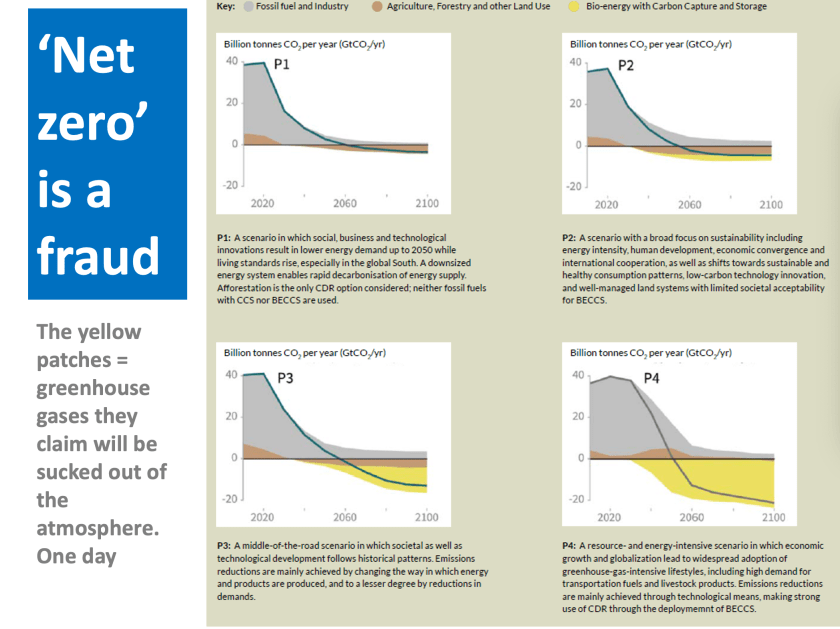
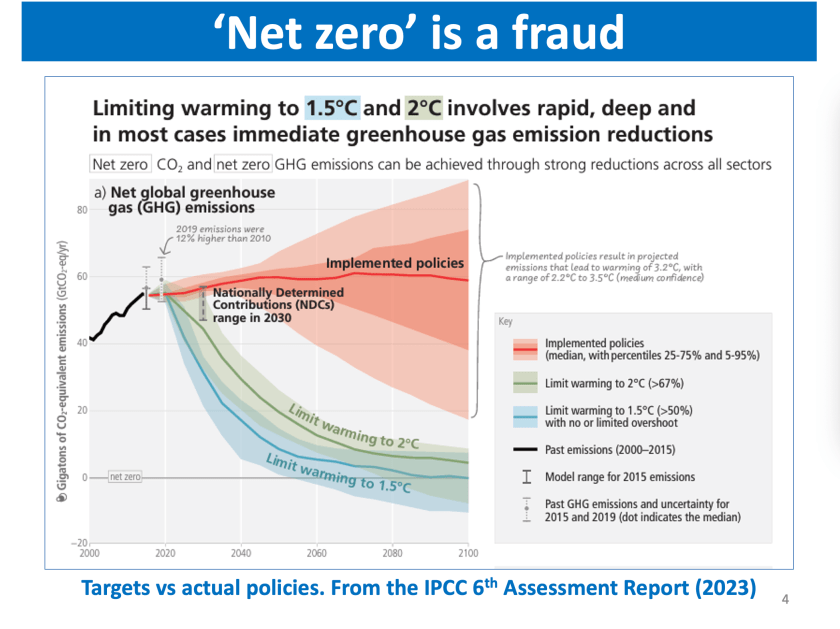
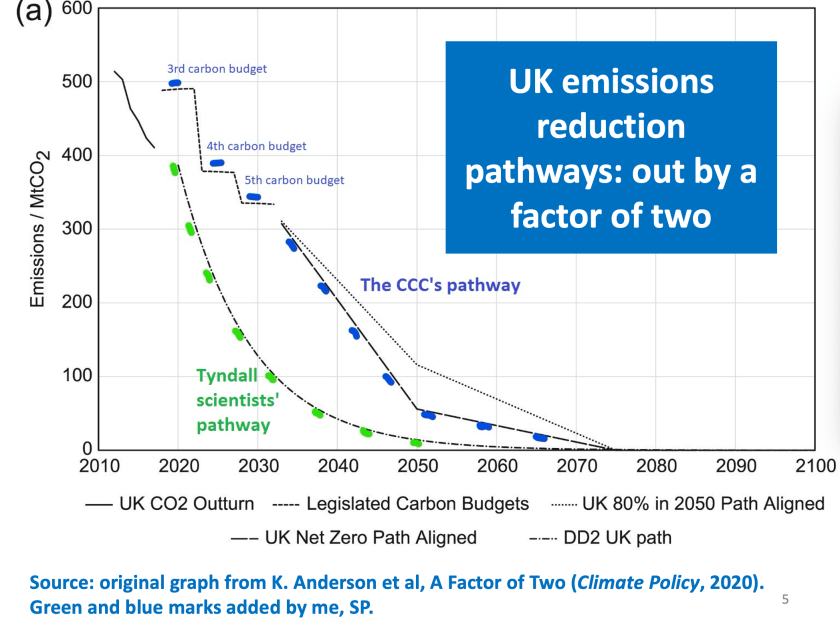


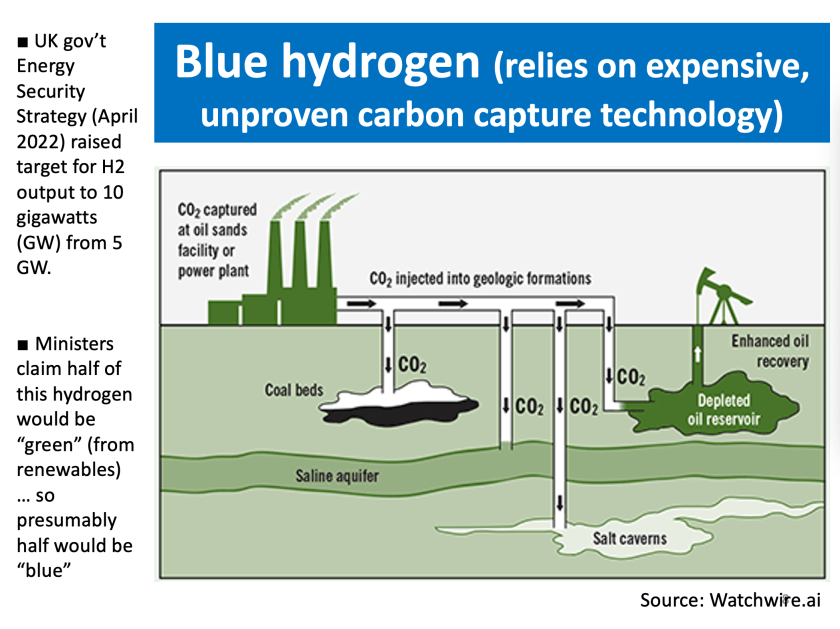

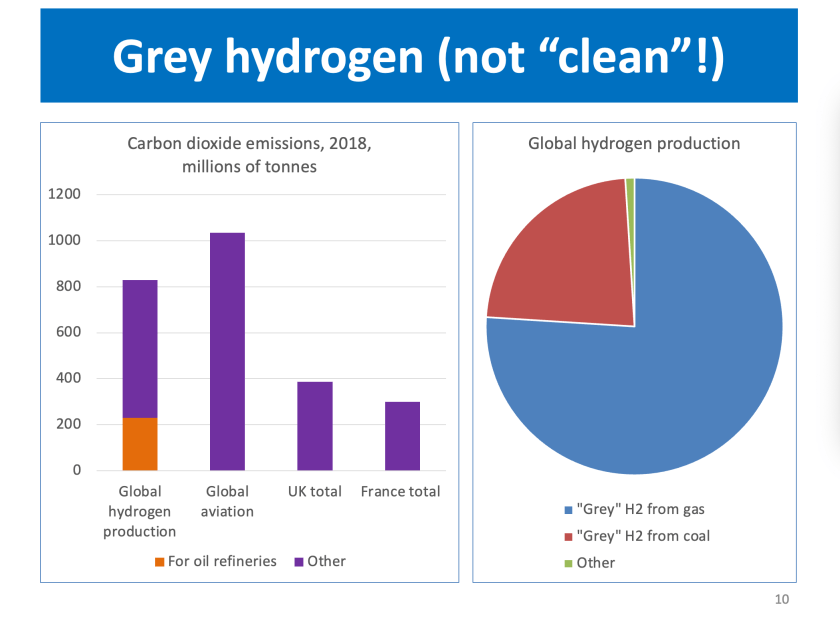

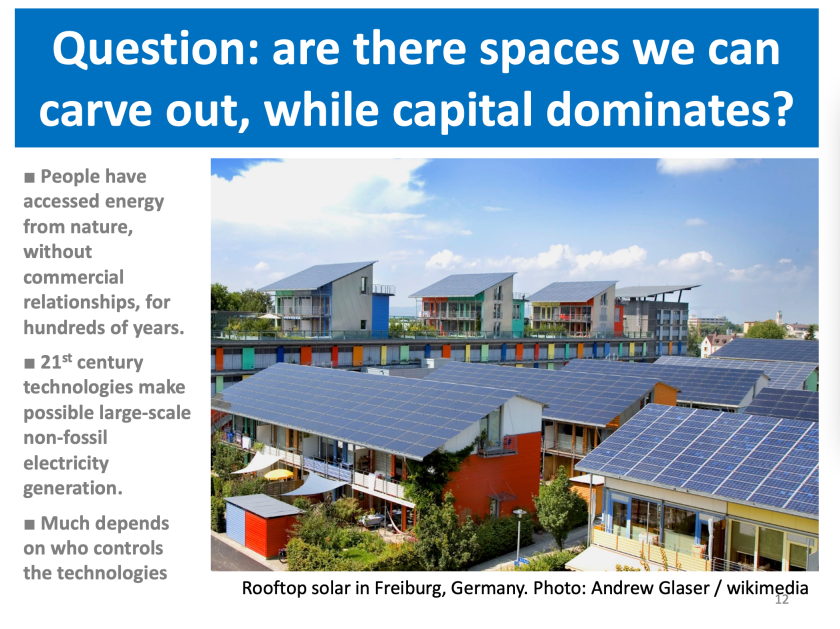
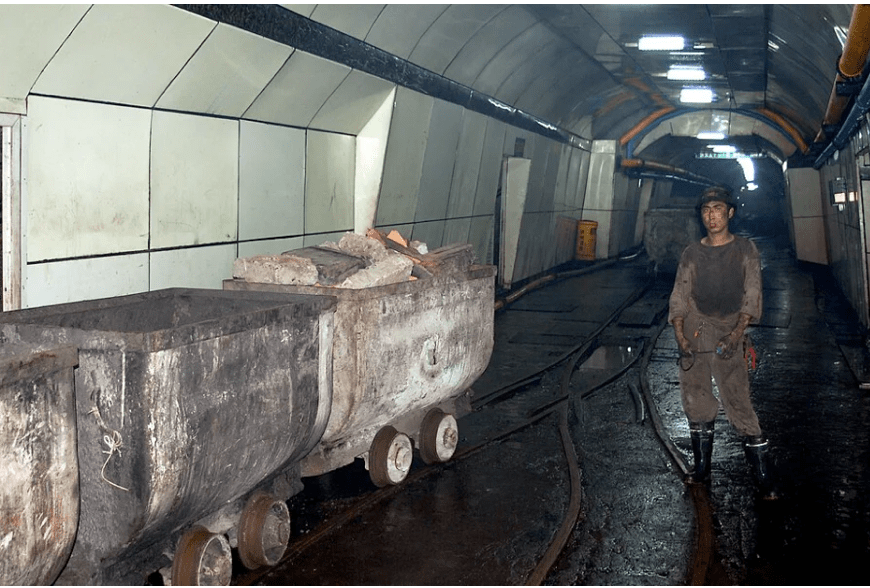
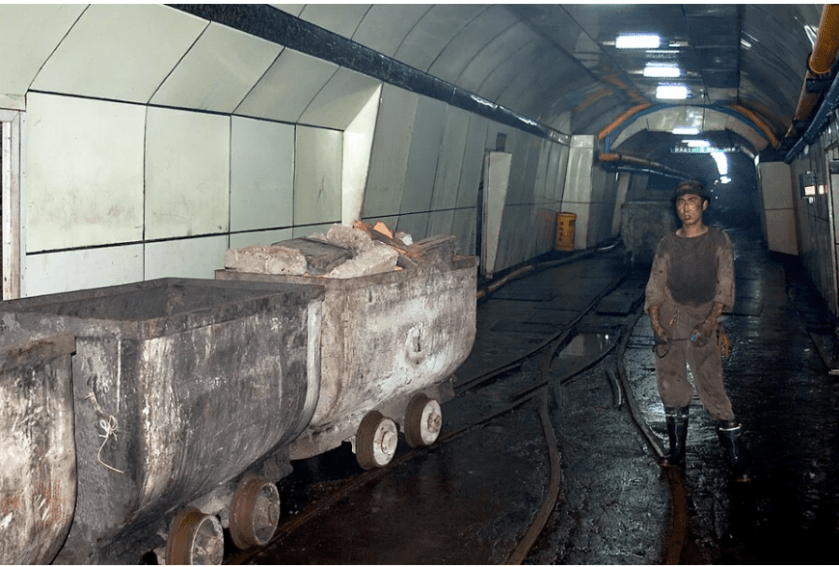

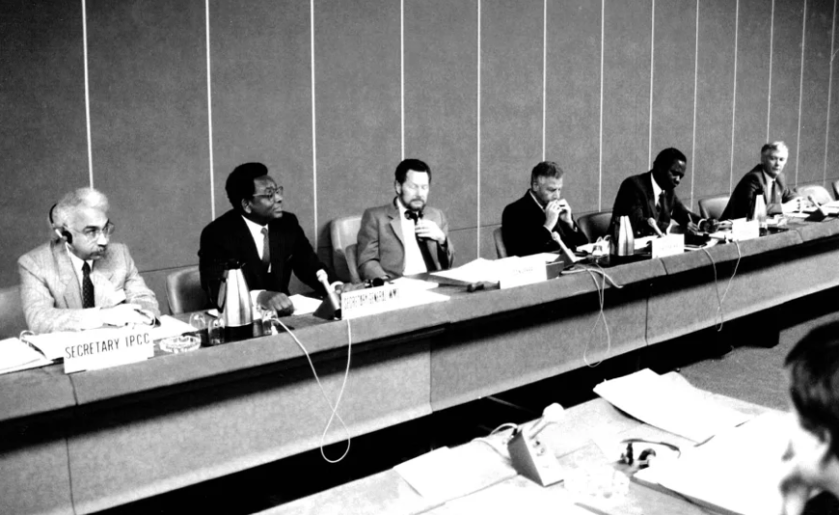
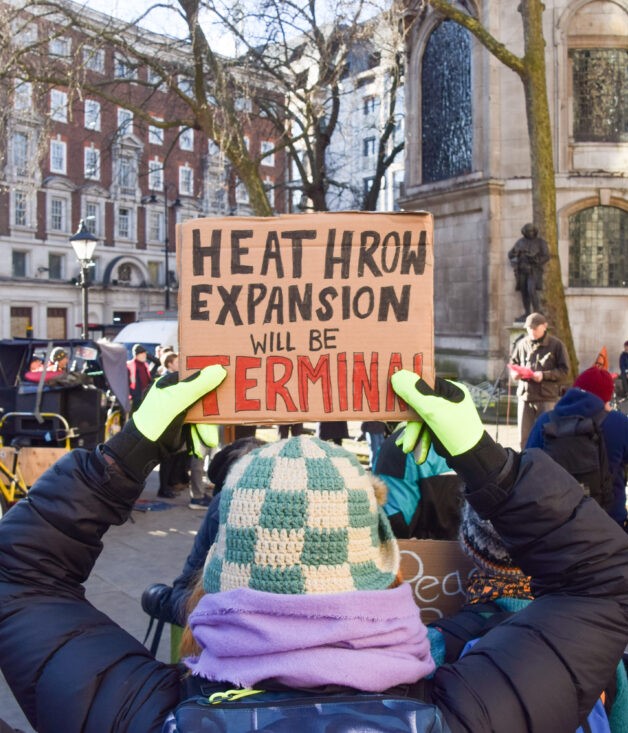





 Employment, Energy and Environment
