Blog

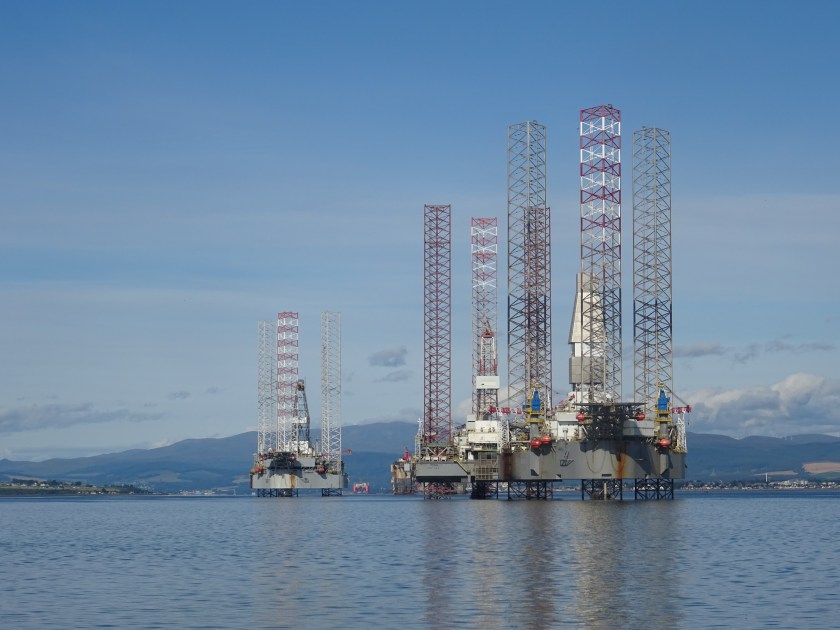
The case against new developments in the North Sea

The North Sea hydrocarbon reserves are among the most expensive and most technically difficult in the world. They are also short-medium life reserves compared with larger landmass oilfields.

Anticipating these disincentives, the incoming Labour governments of 1964-69 and 1974-79 with the state-owned BNOC and British Gas companies decided to make them more attractive for licenced operators by zero valuing to hydrocarbon assets thus avoiding the usual auction bidding process that would entail up-front purchase and risk acceptance by prospective extraction companies.

Then taxation rates on oil/gas extracted were relaxed to a very minimum as an incentive subsidy on future exploration and extraction activities. These arrangements- along with wholesale privatisation in 1980- meant that high profits were assured at low taxation rates and with the burden of risk and asset write-off being shouldered entirely by the taxpayer.

Also, these arrangements allowed for profligate extraction with value worthless assets being frittered away when the operational conditions got too difficult.

Unlike Norway– and many other oil and gas nation-states, no sovereign wealth fund was created on the back of oil/gas profit taxes- which in the case of Norway, has resulted in the biggest such fund for social welfare and public infrastructure in the world. So with Scottish territorial waters accounting for over 70% of UK oil and gas fields, little in the way- other than employment- of benefit has resulted/been accrued for the Scottish people.

Now Climate Change imperatives are bearing-down on all countries signed up to the IPOCC targets on carbon emissions targets- but yet ALL reliable sources producing estimates on oil (in particular) output and demand/consumption set targets well above limits required to bring about anything like a global temperature slow-down.

Also, the estimates for Scottish offshore- and fracked gas onshore- extraction fly clearly in the face of the Scottish government targets for a green neutral to zero-economy by 2030.

And also, also, it is clear that despite over 40 years of offshore hydrocarbon extraction- the living standards of the Scottish population- already low in comparison with much of the EU as well as many regions of the UK as a whole- have continued to fall and have continued downwards while the offshore company profits have continued upwards.  Essentially we have had subsidies and tax breaks for the rich oil companies and merciless market rigour for the poorest consumers.

Global oil prices (to which gas is pegged) continue to be volatile- but with an OPEC cartel of some 20 countries which are hydrocarbon exporting economic mono-cultures- future price wars- like the one in 2014 which saw 75,000 job losses in the North Sea- make any future dependence on the industry both a climate change folly and an economically ruinous strategy.

Oil and gas over-production is already upon us and any future development- such as the West of Shetland fields- is both unsustainable AND a waste of opportunities to create a green and socially equitable political economy for Scotland.

Dr Brian Parkin, Senior research fellow (Energy Economics), Leeds University

February 2020.

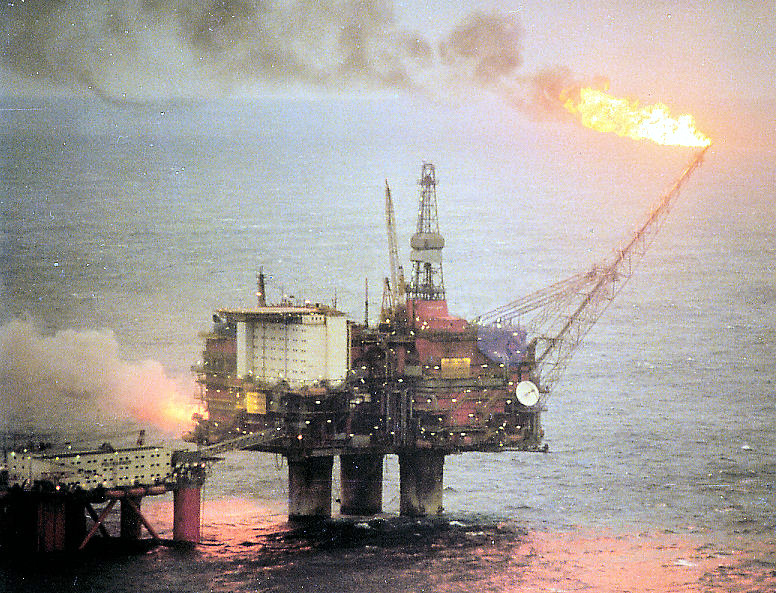
StatfjordA(Jarvin1982)Image CC0 StatfjordA (Jarvin1982).jpg


From an activist perspective, looking beyond COP 25

Pedro Perez is a climate justice activist with a background in Human Rights and working with indigenous  Communities in Latin America.   He was in Madrid for COP 25 – in this article he reflects on the recent COP and considers the implications for COP26 in Glasgow.

This paper is a reflection of my experience during COP25 in Madrid:

COP 25 will go down in history as one of the most inconsequential conferences on climate change. A summit characterized by disagreements, a lack of consensus, and no significant agreements being reached to respond to the climate crisis. Civil society and social organizations that demanded climate justice and more action from industrialized countries, could not hide their disappointment and frustration at the end of the summit. There were those who considered COP 25 as shameful, while others described it as a failure.

The outcome of COP 25 is yet another reflection of how these large conferences have been organized and managed. Hosted by the United Nations, they are under the leadership of the countries of the global north and in part are financed with funds from large corporations.

The domination of the industrialized countries is clearly evident; they are the ones who lead and benefit from the summits. In practical terms, it could be said that COP 25 was a failure because significant agreements were not reached to reduce carbon dioxide emissions. From a media perspective, the summit represented a success for industrialized countries and large corporations, which, exercising control over the media, used them to greenwash their image and continue to manipulate society with false messages. They took advantage of the summit, as a sporsor, to give the impression they are committed to respecting the environment and nature while their economic activities continue to destroy the planet, causing climate, social and economic injustice.

Corporations such as Nestlé, Coca-Cola, the energy sector and the financial world welcomed COP25. This double standard was evident in some of the publications (newspapers) on COP25 financed by Spanish corporations in the energy sector and distributed free of charge. Articles on climate change, had adverts from a travel company offered discounts on airline tickets. In another, Coca-Cola subtly transferred to the consumers of its products, the responsibility of recycling the millions of plastic bottles that the company produces every day.

At the initiative of Spain, COP25 was divided into two Zones, next to each other: the Blue and Green. zones. The Blue Zone was reserved for meetings of the scientific community, politicians and representatives of countries, corporations and, as observers, the accredited civil society. It is here that the countries of the global north and corporations assert their interest by creating powerful lobbies, which divides and creates blocks of countries, making it difficult to reach consensus and agreements on fundamental issues.

The Green Zone was a space open to the public in which Spain wanted to facilitate the participation of civil society from the global south and north and create a space to raise awareness and promote education on environmental issues related to climate change. However, the sponsors also had space here and took advantage to greenwash their image and present themselves as the standard bearers of innovation, science, transferable technology, capacity building and nature-based solutions. To show themselves as the leaders of the growing renewable energy market in the context of the neoliberal capitalist economic model which is beginning to be monopolized by energy corporations. That was a priority for Spain and an important area of ​​the Green Zone was used for that purpose.

In the Green Zone, social issues such as environmental justice and the agenda of the peoples of the global south were secondary, consigned to the background. While for example, the indigenous representatives of Chile, the host country, did have a presence here, it was not the most appropriate space to address the agenda of indigenous communities in any meaningful depth.

Spain’s lack of genuine interest in the agenda of the peoples of the global south and the demands of the movements and social organizations of the global north, led to the organization of a counter-summit, an alternative summit, the Social Summit with the support of environmentalists. The UGT union and the Complutense University of Madrid provided the spaces for it to take place.

The Social Summit for Climate convened a large demonstration in which thousands of people took to the streets of Madrid. It was attended by the Indigenous “Minga”, young people inspired by Greta Thunberg, human rights defenders, activists of the ecological movements and civil disobedience platforms, like Extinction Rebellion. The purpose was to draw the attention of governments and corporations, to the urgent need to assume a change in attitude and behavior, so that they recognize and assume responsibilities for the climate crisis that is caused by their economically motivated destructive activities. With a demand for environmental justice.

In the alternative summit they discussed among other issues: the causes that are giving rise to the climate crisis; the hidden face of the energy transition – the increase in the damaging extraction of the natural resources necessary for renewable technologies. The oil and gas fracking that remain the cheapest options to maintain economic “growth” and unlimited “progress”. False solutions such as carbon markets and REDDs; the neoliberal, patriarchal and neo-colonial capitalist economic model responsible for the environmental crisis, in which the solutions offered in the Blue and Green zones disastrously remain.

The alternative summit, which did not attract the attention of the official media, in practical terms was a success. Being a space for meeting and exchanging experiences, living together and joining the bonds of solidarity between the movements of the South and the global north. Strengthening the cohesion of the social movement that is growing significantly globally. A space for initiatives, of new plans and strategies to promote more ambitious actions ahead of COP26.

COP 26, Glasgow 2020 will have to assume the climatic emergency; pay attention to the gap between the global north and the global south that is widening significantly; respond to the social movement that is growing globally and that demands social justice and a more ambitious action to face the climatic emergency.

While the topics that will occupy the official agenda of the COP26, will be marked by a strengthening of the Paris Agreement that makes its implementation possible and has the capacity to assume the commitments of the Kyoto protocol that reaches its completion. But also, carbon market, update the NDCs and set new decarbonization goals.

COP26 in Glasgow will be the reflection of the commitment to the climate emergency and society. Its ambition will depend on the spaces assigned to civil society. COP26 can’t be used to greenwash the image and promote the lucrative interests of the corporations. It must be a space for radical approaches to climate and social justice and equality, diversity in participation of communities in the global north and genuine inclusion of the global south agendas and dialogue between all to create actions and solutions.
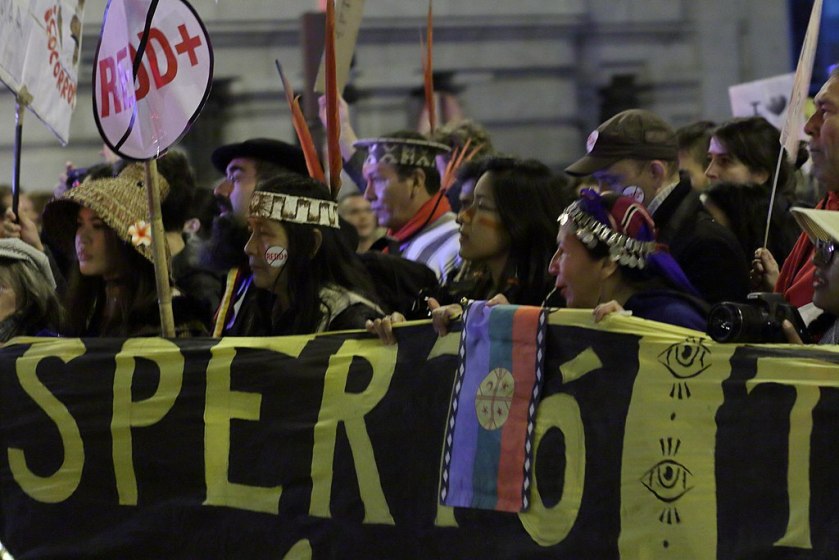
1024px-Marcha_por_el_clima_Madrid_06_diciembre_2019,_(16)

Image from WikiMedia

Glasgow XR meeting on North Sea Oil and Gas

Following actions in Dundee (see video) and at First Ministers Questions Glasgow XR held a well attended meeting on the 25th January.   The meeting began with contributions from XR activists, Friends of the Earth Scotland and ScotE3, before breaking into discussion groups.  The remainder of the post reproduces the text of the ScotE3  contribution in which we shared some thoughts on strategies for achieving a just transition to a zero carbon economy.

ScotE3 campaigns for the importance of climate jobs.  Jobs that are critical to the economic transformation that is needed to prevent a climate catastrophe.   In Scotland  100,000 of these jobs are needed .  However, to date we are not doing well.  According to the Office of National Statistics the UK’s green economy has shrunk since 2014.  The number of people employed has declined as has the number of green businesses.  This is true UK wide and in Scotland.  It’s no wonder that some representatives of unions that organise workers in the hydrocarbon sector pour scorn on talk of a just transition.

The Sea Change report makes it clear that unless we phase out North Sea Oil and Gas the UK will produce far more green house gas emissions than is compatible with restricting global temperature rise to 1.5 degrees.  But we have a huge challenge; the big energy companies are still committed to maximising extraction of oil and gas and so are the Holyrood and Westminster governments.  Just a year ago when the discovery of new oil and gas reserves east of Aberdeen was announced energy Minister Paul Wheelhouse highlighted,

 the significant potential for oil and gas which still exists beneath Scotland’s waters.

He added:

Scotland’s offshore oil and gas industry has an important role to play with up to 20 billion barrels of oil equivalent remaining under the North Sea and in the wider basin and discoveries such as this help to support security of supply as we make the transition to a low carbon energy system.

 Just this week the Africa summit in London ended with the Westminster Government pledging £2 billion to projects concerned with fossil fuel extraction.

From the outset North Sea has been a bonanza for the oil companies.  Nigel Lawson, now a prominent climate change denier, was Chancellor of the Exchequer in 1986 and said then

the whole outstanding success of the North Sea is based on the fact that it is the freest petroleum province in the world

He meant of course almost complete freedom for the oil companies – few if any benefits accrued to society as a whole and even centres of the industry like Aberdeen were then, and remain, centres of acute inequality.

So we need a rapid phasing out of North sea Oil and Gas.   How can we overcome the powerful vested interests that oppose this and at the same time protect the lives and livelihoods of the workers in the industry.  Theer is no evidence that the private sector can lead such a transition.  The public sector has to take the initiative – and in Scotland that means a much more ambitious role for a state energy company and the new national investment bank.  However, for this to happen we need a powerful movement of movements that has deep roots throughout Scotland.

To grow the movement and force the pace of change clarity of ideas is essential.   We don’t have all the answers but the core issues around climate jobs and just transition are clear.  So we need to patiently and persistently explain why hydrocarbons need to stay in the ground, why we need zero carbon, why the counter proposals from the industry are a dangerous diversion and how a just transition would have a positive impact on working people.

Reaching the audience we need goes hand in hand with maximising pressure on the energy corporations and local and national government.  Much of this will be through all kinds of direct action.  There have been some brilliant examples already but we need much more.

Direct action is necessary but not enough.  The power to force a transition can only come from a mass movement and to build the movement we need to win hearts and minds.  This means reaching out into unions, communities and community organisations with a vision of just transition that goes beyond simply defending existing jobs and embraces practical steps that have direct and understandable benefits for working class people across Scotland and beyond.   We need win people to a positive vision of transition, but more than that we need to win them to be active agents in the transition: part of a movement of rebels, not just on the streets, but in workplaces and communities.  So as we plan actions we always need to think about how to reach new audiences – through stalls, street leafleting, public and workplace meetings and patient door to door leafleting debate and discussion.  It may be that some of those who work in the industry will be the last to be convinced (although that’s not inevitable – our opponents are the same corporations that drive down their wages and conditions and play fast and loose with health and safety).  But if they are unconvinced we need to aim for a situation where climate justice is common sense to millions and where the people that oil workers meet in the pub, out shopping, their kids and relatives, are all won to the need for transition.

With the COP being held in Glasgow this year we have a huge opportunity to build outwards and take a massive step forward in creating a campaign for transition that is unstoppable.

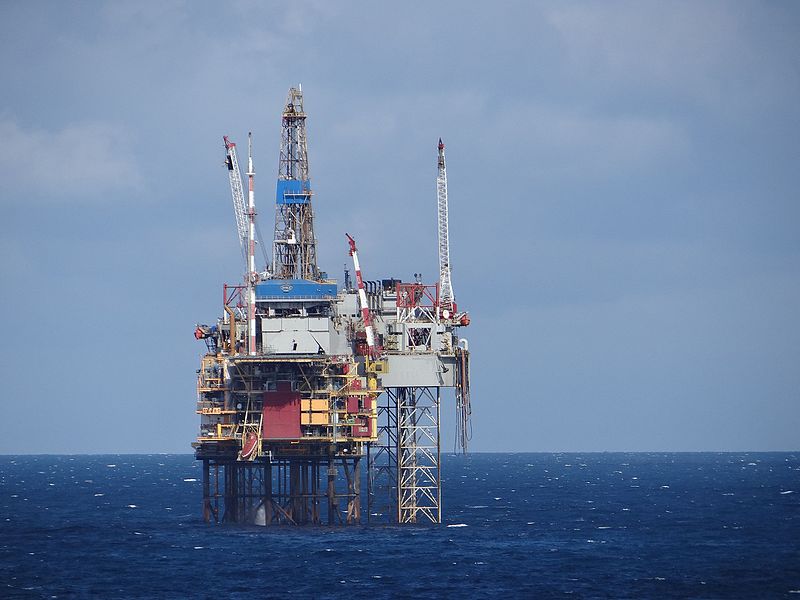
North_Sea_Oil_Rig_(7573694644)

North Sea Oil Rig by Gary Bembridge, CC BY SA 2.0

Notes from our January organising meeting

You can read the full notes from the meeting as a PDF here.  What follows are some of the main points that were discussed.

We started with a discussion on the likely impact of the general election result.  It’s likely that there will be detrimental changes to regulations and standards – areas that could be effected include energy from waste, devolved powers, outsourcing and tendering, nuclear policy, targets and subsidies, energy distribution and supply and workers rights. There is a likelihood for heightened tension between Westminster and Holyrood over many of these issues.  The big issues in the Scottish context include Oil and Gas (particularly INEOS), Public Transport, Housing and the opportunities and challenges presented by the COP being held in Glasgow.

We resolved to do all we can encourage discussion and action in workplaces and community settings. Wherever possible we will do this in partnership. We will encourage requests to help set up or provide resources for events. We agreed to prioritise setting up events in Fife, Falkirk and Aberdeen and with the Construction Rank and File group.

We agreed to work on four new briefings (we are always open for suggestions of amendments to existing briefings and suggestions for new ones) – working titles for the new additions are:

‘Is nuclear part of a sustainable solution’,

‘Organising at work’,

‘Hydrogen’,

‘What is the ‘COP’’.

wind-energy-488534_1280


Climate Learning Week

UCU, NUS and other organisations have got together to produce themed resources on the climate crisis.  The aim is to get as many schools, colleges and universities as possible using the resources in the week 10th – 14th February.  The resources are relevant and useable at any time and we’ve added the link to the Resources page on this site.  If you are a student or work in education do check them out and think about how they can be used in your institution.

climate learning week

Climate emergency – a model motion

New Year 2020 is a critical time to be taking the campaign for climate action into our workplaces.  Below we’ve pasted a model motion that can be used or adapted in your own workplace context.  (You can also download a PDF here and a Word version here.  If you have already raised a similar motion in your workplace we’d love to hear about it and would be pleased to share the text (with permission) so that others can build on your experience.  We think there’s a particular case for developing clear policies in education, from school through to university, and would be really interested to get feedback on particular demands and actions for the education sector.  Please send feedback to triple.e.scot@gmail.com 

Draft model motion 

This (branch/region/committee/trades council/union/conference) notes the urgent need for action on the climate emergency, both in response to existing negative impacts such as extreme weather, fires, droughts, floods and loss of habitat and species; and to avoid the catastrophic and irreversible climate damage which people increasingly realise the world is on course for, after the 2018 Intergovernmental Panel on Climate Change (IPCC) report.

We recognise that big business, the military and the richest individuals are responsible for the vast majority of climate change, yet the global working class and poor are disproportionately at risk. A just transition (that protects the lives, livelihoods and rights of the poor and disadvantaged) to a decarbonised economy is not only right, but is the only way the movement against climate chaos will secure the mass support needed to win, and avoid a rich minority protecting themselves at the expense of the planet and the vast majority of people.

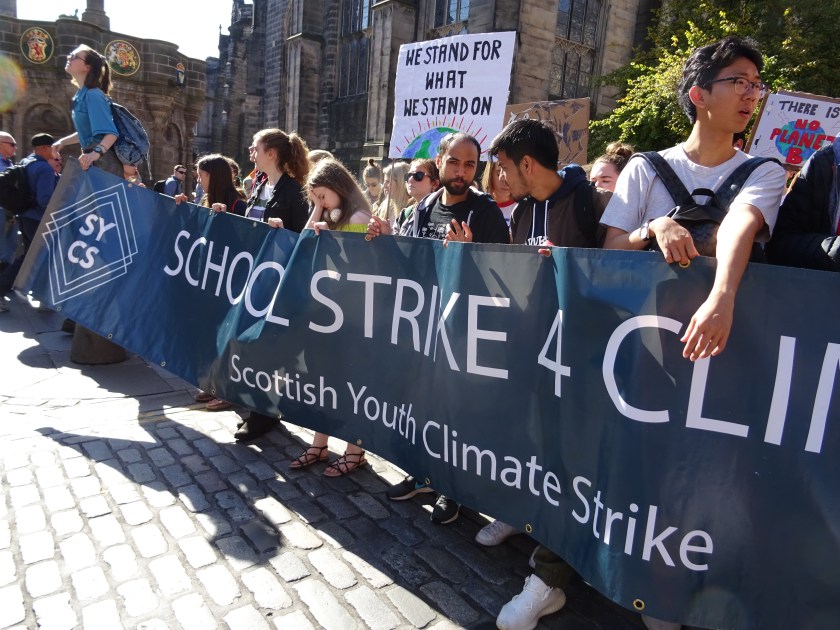
We congratulate the school students striking around the world for real climate action and welcome the decision of the TUC to support them and call for a solidarity stoppage. We note that many workers did strike on 20 September 2019, despite Britain’s repressive legislation, by campaigning to pressure employers not to apply sanctions to climate strikers.

We note that there is discussion about the possibility of making Friday 1 May 2020, traditionally International Workers’ Day, also a climate strike. We note that the UN ‘COP’ climate change conferences have become a major focus for campaigners, that COP26 will be taking place in Glasgow from 9-20 November 2020, and that many organisations are already making plans.

We resolve to:

  1. Publicly state our support and solidarity with the climate strikers and the wider movement for rapid and effective climate action
  2. Invite climate strikers to speak at our meeting
  3. Educate our members about the climate emergency
  4. Give practical support to the climate strikes, without adults taking it over. This will include asking schools and local authorities to commit to imposing no sanctions against striking students, promoting the strikes on social media, encouraging members to attend, taking our flags or banner if agreed with the strikers. If requested, it could include co-hosting events, providing sound systems, staging and stewards, using our public liability insurance, help with press releases or police liaison.
  5. Support workers joining climate strikes and maximise member involvement
  6. Work with other local labour movement and environmental organisations to arrange discussions locally and within workplaces about practically how workers and unions can learn from 20 September, join climate strikes or show solidarity
  7. Promote through the labour and climate movements the idea of making 1 May 2020 a climate strike as well as International Workers’ Day
  8. Organise to make COP26 in Glasgow, 9-20 November 2020, a major focus of campaigning for effective action on the climate emergency
  9. Call on employers and local authorities to declare a climate emergency and involve workers and communities in planning, implementing and monitoring to rapidly achieve zero carbon emissions, including ending investments in fossil fuels
  10. Call on employers to recognise union green/environmental reps and give them work time for their activities
  11. Create climate action groups at workplace level and within union structures
  12. Look for opportunities for unions, communities and the climate movement to work together, for example for improved housing and public transport
  13. Call on unions and the TUC to back the climate strikes, call and build action
  14. Call on our union to carry out a major exercise to understand the potential positive and negative impacts of the climate crisis and responses to it on employment
  15. Campaign for a legal right to strike and to repeal all legislation that makes it harder to strike over climate
  16. Discuss what climate-related demands to include in collective bargaining, including ones which could be the basis of a lawful “trade dispute” under current legislation and to call on our union to produce guidance on this
  17. Ensure that unions are visible as relevant and useful organisations within the climate movement and that participants are encouraged to join a union
  18. Demand massive public investment in the jobs required to address climate emergency, including massive improvements in renewable energy, housing and public transport
  19. Send this motion to our local trades union council, up through our union structure, and to local SNP, Labour Party and Green Party branches

DSC03423


Energy efficient housing

The announcement by Paul Wheelhouse that the Scottish government will work on new regulations to ensure that new homes use renewable or low carbon energy sources for heating is a small but welcome step in the right direction.  However, the timescale for action is disappointingly unambitious; the new measures are not planned to be implemented until 2024.  Setting a much shorter deadline would send a message to private sector builders and local authorities that ‘climate emergency’ is exactly what it says. In housing, as elsewhere, action needs to be take place on the shortest time lines possible.

Let’s up the pressure for a mass public programme of retrofitting existing houses to be energy efficient.  This is a necessary step and in addition the climate jobs and the improvements in living conditions that it would generate would have a massive impact on people’s attitude to the climate emergency and what needs to be done.  It would be just transition in practice.

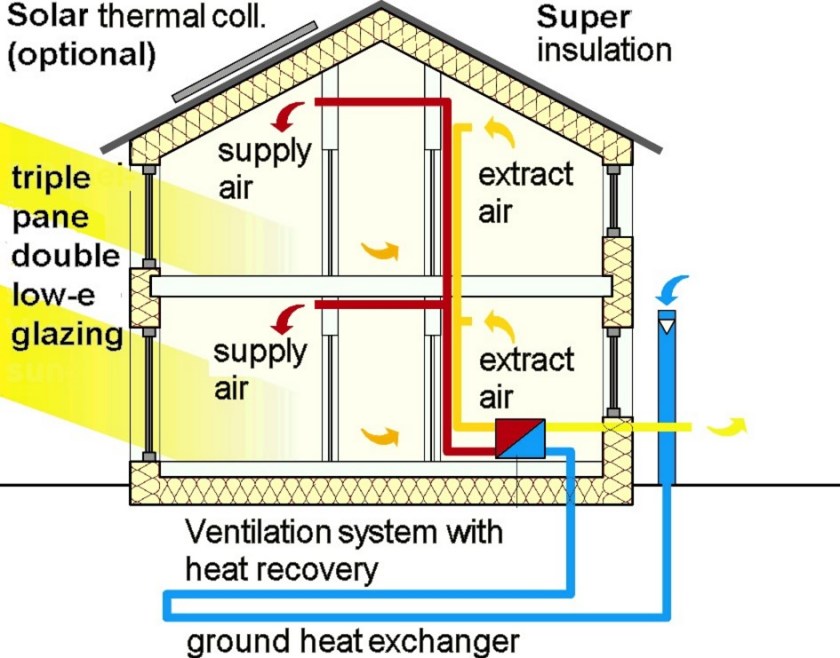
Passivhaus_section_en

Passive House, Image CC BY SA 3.0

Phasing Out Oil and Gas

One of the workshop streams at the Scot.E3 conference in November focused on Oil and Gas and Just Transition for workers involved with the North Sea.   Stephen McMurray summarises the discussion that took place.  

The oil and gas group included Simon Pirani, author of Burning Up: a global history of fossil fuel consumption, and a retired oil worker now campaigning with XR and ScotE3. The initial discussions included how we start to phase out oil and gas extraction. The main policy suggestions included ending subsidies to the oil and gas industries and ending licences for oil and gas exploration.

There was an interesting debate about whether the government should set a date to end oil and gas, for example in 2030. On a positive note, it may stop companies exploring for oil and gas well before 2030. On a more negative note, it may encourage companies to seek to maximise output and increase carbon emissions before 2030.

Earlier in the conference, we had watched a series of short films by REEL News. One of the films illustrated that companies were increasingly turning to automation and subsequently reducing their workforce. This led to a discussion considering that research should be undertaken into the impact of automation into the oil and gas industries. Furthermore, it would be useful for REEL News to make a film of the North Sea and show their films on the impacts of oil and gas to oil workers.

There was a general feeling that there was a lack of information for oil and gas workers in relation to training for new industries, and that a just transition conference should be held in Aberdeen for oil and gas workers. There was also a discussion on how we engage with suppliers to the oil and gas industries so they are included in a just transition. Additionally, it was not clear that the Scottish Government had produced a post-oil industrial strategy, and there was a need to give presentations at universities for the need to move to careers post carbon.

Finally, there was an agreement that we need to bring the rebellion to the oil and gas industries and that we need a massive confrontation with big oil in Aberdeen during COP26 when it comes to Glasgow next year.

2018-07-19 08.57.05

Housing and climate action

One of the workshop streams at the Scot.E3 conference in November was devoted to housing. This report is from Mike Downham who was one of the facilitators of the discussion.  

  1. Housing in Scotland is a disgrace – from the Muirhead tower blocks to new-build. A participant from Hungary, who has been in Glasgow for a year or so and has had extreme difficulties in finding somewhere to live and which is affordable to heat, said that Scotland’s housing compares very badly with Hungary’s, which at least has thick walls. “You’ve got to do something about it”.
  2. Student housing. The Universities are supplying student housing which is unaffordable except for wealthy students, mostly from the Far East, and make it difficult for most students to find less expensive accommodation. There has been a lot of public criticism about students having such high quality housing, while many citizens are homeless. But the reality is that the majority of students have huge difficulties in finding housing they can afford to rent and heat. It’s not unusual for them to end up on someone else’s sofa.
  3. Commodification of housing since 1980 is at the root of the housing crisis in Scotland. Housing policy has been primarily aimed at growing the national economy, instead of housing being recognised as a human right.
  4. What we can do together towards a just transition in Scotland’s Housing:
  • Demand that Councils bring building standards up to passive-house specifications and replace building control jobs lost in the name of austerity, without which new housing can’t be adequately inspected. These changes are perfectly feasible for Councils.
  • Put pressure on the Scottish Government to ensure that the new Scottish Investment Bank will direct enough funding to build the new houses needed (this is urgent – the Scottish Investment Bank Bill is going through parliament now).
  • Put pressure on Pension Funds to invest in housing.
  • Support grass-roots protest as demonstrated by Living Rent’s support for Muirhouse tenants, which started with door-knocking to get all tenants’ views.
  • Suggest to XR that they target some of their direct action on grass-roots projects such as Muirhouse
  • Suggest that grass-roots projects such as Muirhouse deliver their demands to the COP 26 – to both the formal and the alternative meetings.
  • Keep in our sites the eventual objective of a National Housing Company through which communities will choose the type of housing, local facilities and green species they need
  1. Climate is just one part of the wider argument – so the challenge for the Climate Movement is to build links with all other movements concerned with social injustice.
  2. “We need to close this down” – just as we would have no hesitation in doing if there was a proposal to build an asbestos factory at the end of our street. Though this was said in respect of the climate polluters, the fact that it was said in a discussion on Housing, Health and Fuel Poverty suggests that it should be our approach to all forms of social and planetary injustice.

Construction_of_the_passive_house_10_(18696022004)

Image (Construction of the Passive House) CC BY SA 2.0 from Sustainable Sanitation Alliance  


Energy from Waste

On of the issues that came up in discussion at the recent Scot.E3 conference was ‘Energy from Waste’.  There is large-scale investment in this technology taking place across the UK.  We agreed to produce a briefing on the topic.  What follows is the text of the first draft of the briefing.  We are also developing further resources that will be added to the Resources page on this site.  We’d welcome comments on the text and ideas for useful resources that we could link to.

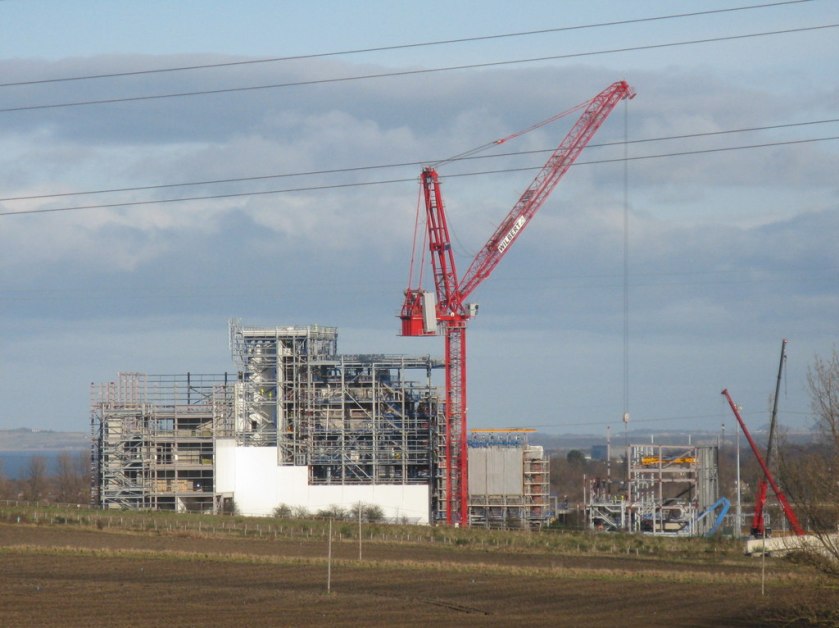
There are a large number of Energy from Waste (EFW) projects planned across the UK.  By the end of 2017 there were nearly 120 EFW proposals at various planning stages. Sixteen of these are in Scotland. In this briefing we take a critical look at Energy from Waste and ask whether it has a place in a strategy for a zero carbon Scotland.

Energy from Waste Projects

At first sight, the term ‘Energy from Waste’ appears to be all things green. It suggests a new and rational way of ‘treating’ the ever-growing mountains of waste that are an inevitable by-product of our throwaway society.  It invites the idea of a ‘green energy’ that has been derived from what would otherwise be a possibly harmful and long-term environmental problem. When the alternatives proposed are either a long-term toxic and smelly and unsightly landfill problem or a health-threatening incineration route, then EFW appears to be a sensible choice.

Behind the EFW hype, which many UK local authorities have accepted, there is a fog of confusion regarding the most optimal waste management solutions; whether they be recycling or minimising the production of waste at source – both options are ruled out by market driven/low cost and value-for-money economics.

Landfill

Since 1945 the volume of disposable waste per household in the UK has multiplied threefold. Over the years, the local authorities have traditionally chosen landfill disposal as the preferred waste ‘treatment’ route.  However, landfill, demands considerable land acreage and depth and entails significant public health risks as well as potentially long-term hazards for the environment. Aside from smell and vermin nuisance, landfill sites- even the best managed ones- constitute over time- a high risk of biological and toxin leaching into surface soils and ground-waters.  Methane from decomposition also adds to greenhouse gas emissions.

For all of these reasons, waste management authorities have either been incentivised away from landfill by grants for recycling- or more often – ‘disincentivised’ in the way of increasingly punitive landfill taxes. First introduced in the 1970’s, landfill taxes have been subsequently reinforced by EU directive-and as alternative waste ‘treatment’ technologies have fallen in capital cost, so landfill taxes have risen.

landfill-879437_960_720

Landfill tax per tonne

2010      £63.00

2018      £88.95

2019-20 £94.15

Tax policies make EFW-type waste treatment strategies appear attractive- particularly because in exchange for a penalty for handling waste, there is an income from generating electricity.

EFW technologies

There are a number of EFW technologies on offer but all share the same objective of converting solid (or in some cases, liquid/sludge) waste into energy for the production of electricity.

Typically, an EFW plant is based on an incinerator chamber into which is fed solid waste.  The upper walls of the chamber comprise water-filled tubes in which super-heated steam is produced for a steam turbine that in turn produces electricity.

Steam is also captured from the waste feed system. If the plant is fitted with what is called a ‘back-pressure’ steam turbine, then high-pressure hot water can be distributed to local industrial and residential heating networks in what is called a Combined Heat and Power (CHP) system.

However, as such plant is typically fed unsorted, or semi-sorted waste with a low calorific value, the combustion process will be ‘boosted’ with an additional combustion element in the form of natural gas or diesel oil. Less typical EFW technologies with little application to date, are the various gasification processed that involve the digestion of biological waste- usually food or agricultural wastes which are then converted into a ‘bio-gas’ which via a gas turbine is converted into a higher electricity output. In some processes, the waste is heat-treated anaerobically – i.e. in low oxygen conditions- (pyrolysis) to produce a synthetic ‘natural’ gas.

All EFW systems discharge exhaust gases. The principal emission is carbon dioxide but there are also emissions of nitrogen dioxide.  Quenching water can contain uncombusted toxins and  solid wastes in the form of light ash or clinker have to be disposed of safely.

5668478_c75f25e1_1024x1024

Image M J Richardson, CC BY-SA 2.0 https://www.geograph.org.uk/photo/5668478

Renewable energy?

EFW systems add greenhouse gases to the atmosphere through the process itself and also through large-scale transport of waste to the incinerators (mostly by road).  They are a response to the perceived problem of landfill rather than tackling systems that produce unrecyclable waste.  To operate efficiently EFW plants require a continuing supply of waste at or around current levels.  Scotland produces around 1.6 million tonnes of combustible municipal waste per year, if current plans come to fruition this means and awful lot of capacity chasing a very finite amount of waste. Local authorities could be tied in to contracts to supply waste for the next thirty or forty years.   This could pose a real threat to the commitment to recycle plastics and other recoverable materials out of the waste treatment stream. The Scottish Environmental Protection Agency notes that EFW is not a renewable energy source but claims that because it can be substituted for fossil fuel electricity production it forms an important part of the Scottish Strategy for sustainable energy!

DSC03194

Alternative Strategy needed

Energy from Waste is not green and not sustainable.  It undermines attempts to reuse and recycle and it has a significant carbon footprint through transport of waste to centralised sites and through the greenhouse emissions from the burning of waste.

Investment in Energy from waste should be reallocated to genuinely sustainable technologies aimed at cutting greenhouse gas emissions, which also provide opportunities for jobs in construction and better opportunities for long-term employment.

Further reading

For further information on Energy from Waste go to www.scote3.wordpress.com and click on the Resources tab in the menu.  This briefing is one in a series produced by Scot.E3.