Just Transition Commission Interim Report

The Just Transition Commission began its work in 2019.   Established by Scottish Ministers its remit is to advise on how just transition principles can be applied to climate change action in Scotland.  It is tasked to complete a final report with recommendations for Scottish Ministers by January 2021.  The Commission published an interim report on 26th February 2020.

Commissio interim cover

The interim report has four main themes:

  1. Planning Ahead
  2. Public engagement
  3. Bringing equity to the heart of climate change policies
  4. Opportunities and the need for immediate action

The report notes that since the Commission began its work both the Climate Change (Emission Reduction Targets) (Scotland) Act and Scottish National Investment Bank Bill include reference to just transition principles. However, it is critical of a lack of action by the Scottish Government and highlights opportunities that have not been taken.  The closure of the coal-fired power station at Longannet is cited as a case where the local community in Kincardine contest the view of Fife Council and other agencies that the closure was well managed and socially just.

There is a strong emphasis from the Commission on the need for strategic vision that cuts across sectors and for government leadership and direction.   It contends that the task of making strategic progress across sectors

… cannot be left to enterprise agencies or indeed companies themselves. There is a crucial need for Government leadership.

Further, it argues that the Scottish Government shouldn’t wait for its  2021 report before acting, stating that

We firmly believe that all decisions taken by Government in the year ahead need to be made with a view to supporting a just transition for Scotland. We don’t want Government to wait for our final report to begin planning how a just transition will be achieved.

It notes that current planning approaches are insufficiently rigorous and suggests that all Scottish Government funded investments should be prioritised against inclusive, net-zero economy outcomes.  Planning is essential if we are to avoid the kind of unjust transition that has characterised previous major economic transitions.

While arguing for a much more proactive role for the Scottish Government the interim report doesn’t make recommendations for how a state energy company could be used to drive transition. It’s to be hoped that the final report will say more about this.

While it is critical of lack of action and leadership from the Scottish Government, the interim report is weak on the role of public ownership and democratic engagement.  The former is largely neglected while the latter is viewed in terms of  consultation – there’s no real sense that system change is on the agenda.  This is most evident in the way that the report approaches North Sea Oil and Gas.  The  oil industry’s  Vision 2035 and associated roadmap are mentioned without criticism.  The truth is that aiming for the  North Sea to become the ‘first net-zero carbon hydrocarbon basin’  means continuing extraction and carbon capture and storage on a massive scale.

‘Just Transition’ was prominent at COP24 in Katowice – developed by the workers movement and climate activists – it has been partially co-opted by corporations and government agencies.  It’s critical that the climate movement defends the radical core of the concept.  If social justice is not central to transition then it will not be possible to build the scale of social mobilisation that is needed and the risk of a climate catastrophe is magnified.  Here in Scotland we need to put social justice at the heart of our actions as we build the climate movement and mobilise for COP26.  The Just Transition Commission is asking for civil society to submit their views as it works through 2020 and prepares its recommendations for Ministers.  We should do that.  But even more important is raising the level of mobilisation so that the pressure for action becomes irresistible, system change is on the agenda and corporate greenwashing is exposed as a desperate attempt to cling on to business as usual.


Edinburgh Wet’suwet’en Solidarity

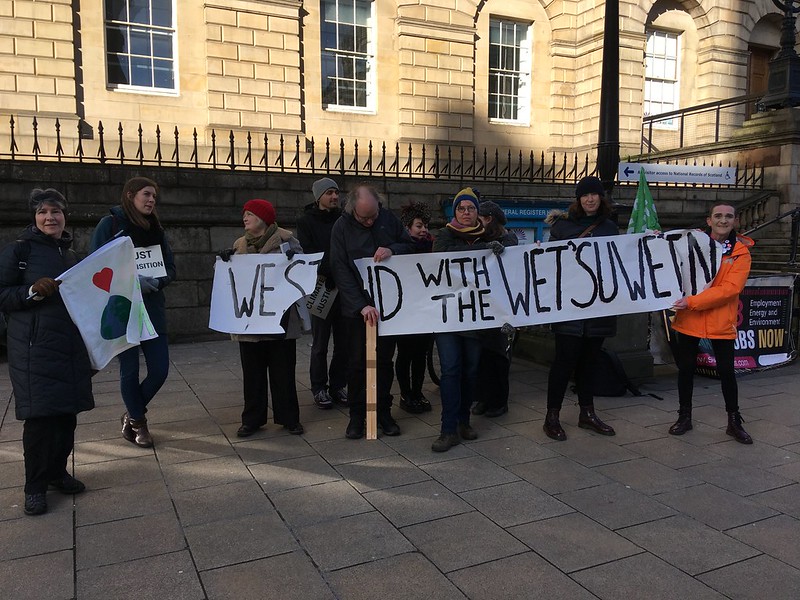
The peak winds from Storm Jorge hit central Edinburgh as we gathered to send a message of solidarity to the Wet’suwet’en this afternoon.  Gusts of over 80 km per hour destroyed our main banner and numbers were depressed by the extreme conditions but more than 20 of us stood firm in solidarity.  Most passers by were unaware of what is happening in British Columbia but we got a good reception with many people stopping to talk.  The protest was called by Scot.E3 and  supported by Friends of the Earth Scotland, Young Friends of the Earth Scotland, Global Justice Now Scotland, rs21 Scotland, People and Planet Edinburgh, Edinburgh Youth Climate Strike, Green Anti-capitalist Front and XR Edinburgh.  The breadth of support provides a good basis for continuing solidarity actions as we build for mass mobilisation at COP 26 in Glasgow later in the year.


IMG_5287

Images by Eileen Cook and Pete Cannell CC0

Donate to the Unist’ot’en 2020 Legal Fund

More information at the supporter toolkit site 

Canadian Facebook Page

UK Campaign Facebook Page 


Public transport use in Scotland in decline

The decision by the Scottish Government to extend free bus travel to under 19 year olds is a small but positive step.  However, the latest Transport for Scotland Report published yesterday (27th February 2020) shows that the number of bus journeys undertaken is continuing to fall while car usage is rising.  The steepest fall in bus use is in the Highlands and Islands while the decline is least in South East Scotland.  The data in the report doesn’t break down regions by public transport provider but the relatively small decline in the South East is almost certainly a result of increased numbers using publicly run Lothian Buses.

In 2107 transport accounted for 36.8% of Scotland’s total greenhouse gas emissions.  Cars were the biggest contributor accounting for almost 40% of the total.  Cutting the use of polluting car transport is a critical part of shifting to a zero carbon future.  Simply replacing petrol and diesel by electric would put huge pressure on natural resources that are in short supply and whose extraction causes major environmental damage.  The answer must surely be a comprehensive, flexible and well connected public transport system that has electric buses as a key component and is free to users.  There is good evidence that low or free fares results in a massive increase in public transport use.

800px-Lothian_Buses_Envrio400XLB_1071

One of Lothian’s new 100 seat Envrio400XLB buses.  CC-BY-SA 4.0

Solidarity with the Wet’suwet’en!

Sunday 1st March, 2pm – 3pm at the east end of Princes Street, Edinburgh (opposite Balmoral Hotel)

Scot.E3 has called a protest in solidarity with indigenous land defenders in the Wet’suwet’en territory of British Columbia.  They are protesting against the construction of a new gas pipeline across their land.  The construction project breaks the Canadian constitution, however, the protests have been met with harsh repression by Royal Canadian Mounted Police.  There has been solidarity action across Canada.

At a time of climate crisis we should be phasing out oil and gas.  The Wet’suwet’en protesters are in the front line of our common struggle for a sustainable future.

‘It’s a whole damn army up there. They’ve got guns on, they’ve got tactical gear on. They look like they’re ready for war.’
– Wet’suwet’en hereditary Chief Woos (Frank Alec).

Donate to the Unist’ot’en 2020 Legal Fund

More information at the supporter toolkit site 

Canadian Facebook Page

UK Campaign Facebook Page 

At the time of writing the Edinburgh solidarity event has been cohosted by: Friends of the Earth Scotland, Young Friends of the Earth Scotland, People and Planet Edinburgh, rs21 Scotland, Edinburgh Youth Climate Strike and Extinction Rebellion Edinburgh

There is also a protest in London at Canada House on the same day.

86376680_3023080517751404_488089137308499968_o

Climate Change and Conflict

Mike Martin made a speech reflecting on Climate Change and Conflict at an event during the Aberdeen Climate Strike on 14th February.  Mike is an environmental modeling group programmer dedicated to mitigating the greenhouse gas emissions from different land uses and land use change.  He’s a member of CND and the Stop the War Coalition

Here are his notes:

Since the last time I addressed you much has happened – Australia, US drone assassination ramped up tensions with Iran, General Election and a massive locust plague in East Africa.

Australia

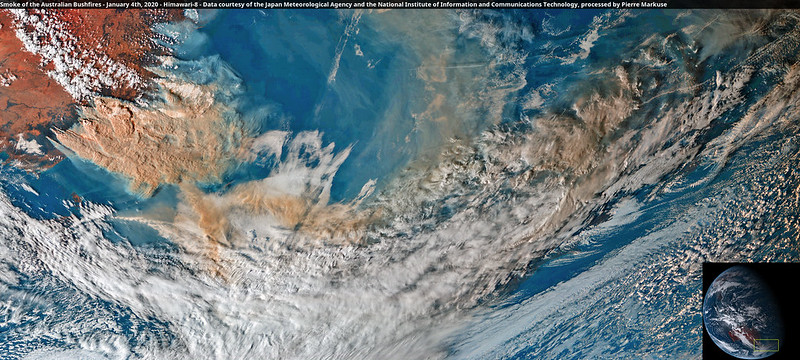
As of 14 January, fires this season have burnt an estimated 186,000 km2, about 0.75 size of UK, destroyed over 5,900 buildings (including 2,779 homes) and killed at least 34 people. Eastern Australia is being gripped by a heat wave and a prolonged drought.
49327928461_4a5cd02659_c

Image by Pierre Markuse Smoke of the Australian Bushfires – January 4th, 2020  CC BY 2.0

Conflict not only kills people but is also carbon intensive

A 2019 report from Brown University has estimated that since the invasion of Afghanistan in 2001, the U.S. military has emitted 1,212 million metric tons of greenhouse gases. In 2017 alone, CO2 emissions added up to 59 million tons – more than many industrialized nations including Sweden and Switzerland.

General Election

We now have a leadership who want to bring the UK into a closer alliance with the US, which will mean accepting US standards (chlorinated chicken) and being a loyal participant in US interventionist geostrategic objectives.

Locusts

The swarms spread into east Africa from Yemen across the Red Sea, after heavy rainfall in late 2019 created ideal conditions for the insects to flourish.

Conflict prevents progress on implementing measures to address climate change as the UN FAO could not deploy in Yemen and Somalia because of security concerns.

Technical solutions already exist

There are measures, which can be taken to straightforwardly address this threat and which could, through their implementation, result in a more attractive environment in many ways.  For example:

The Green New Deal:

  • Planting a trillion trees across the planet in underutilized, marginal or degraded land forest cover is currently 42% in EU, 11.8% UK, 10% England, 15% Wales, 19% Scotland and 8% in NI, 11% Ireland
  • Deployment of renewable energy systems
  • Deployment of new methods in cement production, improved building construction methods, upgrading of existing housing
  • The provision of heat – vast amounts are vented into the atmosphere
  • Transport electrification – health benefits, Aberdeen has hydrogen-powered buses and cars
  • Agriculture – poor land management, individual farmers making impressive efforts. New farming methodologies

An expanded workforce

The Green New Deal has the potential to create millions of jobs as much additional labour will be required

Importance of Government

The role of government as an enabler is crucial:

  • state led investment
  • mobilization of underutilized capital (80% held privately) and labour

Importance of Government intervention

I grew up in 60s and 70s with war, racism and increasing standard of living

State investment 3-4% of GDP, built up pharmaceuticals, nuclear power, computers, and council housing, which peaked at almost 200,000 in 1967.   There were remarkable changes in energy use – the transition from town gas from coal to natural gas took place between 1967 and 1977.  There is a parallel with WW2 – government can direct the economy as well as mobilize and motivate people

Above all intergovernmental cooperation is required

Situation now

There is war, racism and falling standard of living.  State investment is less than 1% of GDP, stagnant economy across Europe plus climate crisis

What holds us back – the importance of understanding the UK

The UK government is perfectly capable of intervening and doing all of this, but the problem is that both the UK government and organs of the state are locked into the past, in a sort of military-empire alcoholism

Barriers

British Naval patrols operate thousands of miles away from the UK but in close proximity to other countries, Persian Gulf, South China Sea – very provocative! The US-led “Operation Sentinel” maritime security coalition patrols the Strait of Hormuz. Operation Sentinel’s members include Australia, Bahrain, Saudi Arabia, the UAE, the UK and Albania – interestingly not the EU.

400 UK Army personnel are deployed in Iraq, across three bases forming part of Operation Shader – the UK’s contribution to the US-led mission against so-called Islamic State. The RAF is also part of Operation Shader through launching air strikes over Iraq and Syria from RAF Akrotiri in Cyprus, and by Reaper drones operated remotely from RAF Waddington and Nevada in the US.

The UK has no business there, the people of the Middle East are perfectly capable of sorting out their own affairs if they are left to do so – as per UN Charter. This is where the first civilizations in human history in Mesopotamia (what is now Iraq) began 5,200 years ago.

The economic war against Russia and Iran is just one step from actual war. Two large states but although Russian threat is played up bear in mind its economy is only

just larger than Spain but smaller than Italy’s. Sanctions damage prospects for individuals and businesses in the UK also. This year 2,500 UK troops are participating in Defender Europe 20, NATO’s biggest war-games for over 25 years which will take place in April and May in border regions with Russia, including Georgia. 18 states are involved deploying a total of 37,000 troops, 20,000 of which are US – a huge source of Green House Gas emissions.

Legacy of Empire – UK’s nuclear weapons

The UK is one of the few countries to have nuclear weapons; their use was threatened in the Falklands-Malvinas war in 1982. CND cites approximately 11,520 civilian jobs are directly dependent on Trident. Guaranteeing people’s livelihoods matters but the £205 billion cost of Trident could be used far more effectively to create well-paid jobs than wasting it on replacing Trident. The skills of the workers would be welcome in building conventional ships or in rapidly developing industries such as renewable energy.  A government-led economic diversification plan would minimise the job losses should Trident be scrapped. The Dreadnought class is the future replacement for the Vanguard class of ballistic missile submarines. Like their predecessors they will carry Trident II D-5 missiles.

497px-Trident_II_missile_image

Trident II Missile CC0 Image from Wikimedia Commons

UK is bonded to the US

The 1958 US–UK Mutual Defence Agreement, is a bilateral treaty on nuclear weapons co-operation. It allows the US and the UK to exchange nuclear materials, technology and information. Since 1958 the treaty has been amended and renewed with the most recent renewal extended it to 31 December 2024.

From the dead end of the Warfare State to the repair state

Our focus needs to be on fixing the climate, but like an alcoholic, the UK cannot move forward until it has kicked its military-empire habit built up over several centuries since 1707.   We must find ways to let go of the past and effect transition.  International, mutually beneficial, scientific and technical cooperation is needed to assist transition to a post oil and gas economy and sustainable planet.

Enormous societal assets

Many scientists and technicians are employed in the UK defence sector: BAe 83,500; Rolls Royce: 50,000 the majority of whom are on defence contracts; oil and gas sector currently supports more than 283,000 jobs in the UK. We need these skills for the transition.

In my past life I’ve met many people who work for BAe and in the oil and gas sector – it is not so much a problem with people – so many of them are excellent – it is a problem of the government and state – they have the power to set the direction of travel of society.

Most comparable states do not have this baggage of empire

  • the UK is a punitive state (compare German imprisonment rate)
  • it has underage military recruitment
  • UK maintains expensive overseas garrisons (military bases) in Brunei, the Falkland Islands, Cyprus
  • UK maintains strong relationship with the GCC states – sovereign wealth funds invested via the City of London, provision military services, a conveyor, friend of the family – Saudi pilots, Saudi researchers. Locking in current Saudi leadership, when Saudi Arabia could be leader of the solar transformation
  • Inherited wealth from the Empire

Reasons to hope

“It is still not too late to act. It will take a far-reaching vision, it will take courage, it will take fierce, fierce determination to act now, to lay the foundations where we may not know all the details about how to shape the ceiling. In other words, it will take cathedral (grand-mosque) thinking.”

We must lobby politicians who come in different types:

  • some are insecure people and blow with the wind, try to mold them
  • others are hopeless, they buy into the military-empire illusion
  • quite a number are principled and progressive.

obviously, we must take the opportunity to influence through elections but also by becoming the government, state and the media,

I am reminded of the philosopher and political activist Noam Chomsky “don’t just slate the media, be the media!”, contest the political process and also every job where we can influence society, don’t leave it to the chancers and self- promoters

It is important we find ways to exercise maximum leverage, to influence, to refashion the government,

  • Understand the problem,
  • tactics subordinate to strategy (Sun Tzu)
  • boldness of vision, meticulousness of preparation,
  • energy and persistence but have a capacity to recognize and learn from mistakes,

It is not yet 1938 when World War 2 was inevitable after the defeat of Republicans in Spain and the consolidation of Hitler in Germany.  We’re in it for the long term but there will be no long term if we mess up!


Outcomes from the 20th February organising meeting

What follows is a summary of the main points from the meeting – the full write up of the action points from the meeting is available here. 

Following a discussion in which we shared information on the progress being made in mobilising for COP 26 we agreed to establish a new page on www.scote3.net dedicated to COP 26 and to prioritise a Briefing ‘What is the COP?’  The page is work in progress and ideas for useful content would be really appreciated.  Please email them in.

At the January meeting we had sketched out an ambitious programme of meetings and events around Scotland and on the 20th we made further plans to link up with other groups to take this forward.  We are also submitting an application for grant funding to the Joseph Rowntree Charitable Trust to support the activities that we have planned in the run up to the COP and beyond.

The North Sea Oil and Gas report has had a significant impact and was downloaded 242 times in the first 5 days from its publication.  We are exploring the possibility of a fringe meeting on the report at the STUC conference in April and are keen to promote other opportunities for sharing the information and promoting debate on the process of phasing out North Sea Oil and Gas production.

We have been invited to speak at the Edinburgh City Council Unison AGM in February and the EIS/ULA AGM in March – we are always open to invitations to speak at events and we are working on the development of speakers notes as part of expanding the pool of people who are confident to speak at these events.

We agreed to contact other groups to see if we could hold a solidarity protest in support of the Wet-suwet-en in British Columbia.  This is scheduled for 2pm on Sunday March 1st at the east end of Princes Street – there is a protest in London on the same day.

We also agreed to work with SCND and others to hold discussion meetings based around screenings of the new Lucas Plan film – The Plan.  Details soon.

2018-07-19 08.57.05

Understanding Climate Change

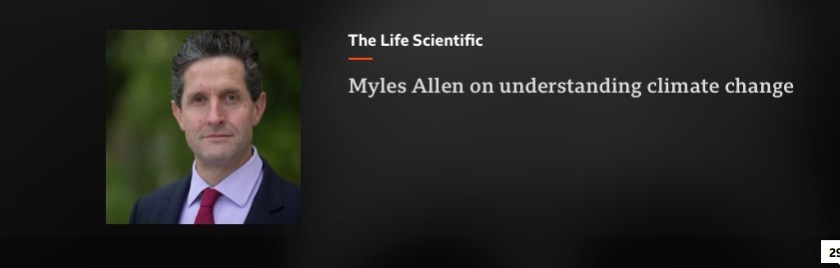
Myles Allen has made an important contribution to our understanding of  role of human activity on the global climate.  He was interviewed on Radio 4’s ‘The Life Scientific’ last week.  Well worth listening to the podcast on BBC Sounds.

https://www.bbc.co.uk/sounds/play/m000fgcn

myles allen

Mossmorran

Public Meeting

Friday 1st February, 7pm at Lochgelly Town Hall, Bank Street KY5 9

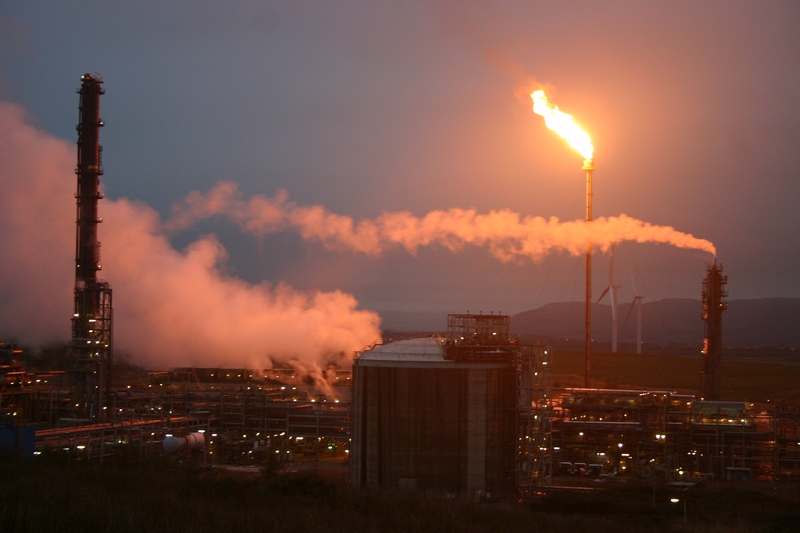
This is a really important meeting.  According to the Scottish Environmental ProtectionAgency (SEPA) the ExxonMobil plant at Mossmorran in Fife is the second biggest emitter of greenhouse gases in Scotland – only the INEOS complex at Grangemouth is a bigger polluter.  People living in the vicinity of the plant have suffered from excessive flaring and poor air quality for a long time.   The Mossmorran Action group has been campaigning for a resolution to these issues.  George Kerevan has recently written about the ways in which SEPA has failed to respond adequately to their concerns.

The plant is currently being returned to operation after a shut down in August 2019.  Flaring and pollution has been at a high level and yesterday around 170 workers walked off the site to highlight concerns over working conditions and safety.  There needs to urgent action to protect the health and safety of local residents and workers.  But in light of the climate crisis Mossmorran must also be part of a plan for a rapid phased run down of the Scottish petrochemical industry in which the workers are supported in a just transition to new sustainable jobs – part of the just transition that is so urgently needed.

Mossmorran

CC BY SA 3.0  Mossmoran petrochemical plant

February Organising Meeting

Our February meeting will be held at the Edinburgh Peace and Justice Centre on Thursday 20th February.  The Centre is in the basement of the Epworth Halls on Nicolson Square.  The meetings are relaxed and informal and open to anyone who is keen to engage with organising around Just Transition and Climate jobs.  You can download the detailed draft agenda and there’s still time to email in other ideas and contributions to the agenda.  Among other things, we’ll be looking at what we can do in terms of outreach activities and meetings in the year of the Glasgow COP and planning updates and additions to the resources that are hosted on this website.

DSCF1600

Report back from the XR “Oil & Gas” Public Meeting

We recently published the Scot.E3 contribution to the XR “Oil & Gas” Public Meeting held in the Garnethill Multicultural Centre, Glasgow on Saturday January 25.  Thanks to Neil Rothnie for this much more comprehensive report.

Rather than try and summarise the individual contributions by invited speakers and the discussions from the work groups, I’ll try and give a sense of what I thought the meeting achieved. 

It was, it seemed to me, a success.  It was well attended.  Maybe 60 odd people? Men and women were fairly equally represented and there was a wide range of ages amongst those attending, though we were predominantly young.  The speakers were good, the meeting attentive and discussion lively. 

The success of the meeting owes much to the fact that it took place at the end of the month long Rig Rebellion 2 which, receiving considerable media attention, had brought the issue of fossil fuel production in UK into sharp focus. This meant that the struggle to end fossil fuel production on our patch was no longer just a theoretical question.  We are engaged.  This was reflected in the meeting.

A document laying out the basic premises on which the meeting was called had been circulated widely in the movement in Scotland. A “critique” of Rig Rebellion 2 presented by Andrew and a further document for discussion presented by Paul had been received by the facilitators and Paul was able to attend and speak to the documents during group discussion.  All three of these documents are appended.

The meeting was facilitated by Dario Kenner, active in XR Families in London who had travelled up with partner and two toddlers – an expression of seriousness if I ever did see one.  Dario is author of “Carbon Inequality: The role of the richest in climate change” (Routledge, 2019). He’s also co-author with Rupert Read of a memo to XR. I’ve appended it.  Dario’s presence, more than any argument, shouts that the struggle to decarbonise the economy, to take on the polluters, is a UK issue as part of a global issue.  Certainly not a Scottish issue. No more than XR Aberdeen can be expected to shoulder the burden of confronting Big Oil, XR Scotland do not have the resources to take on the UK’s major polluters and chief source of UK’s greenhouse gasses.  We are part of a movement that spans the whole of the UK. 

A very personal message from a rebel “allegedly” involved in the most ambitious of the Rig Rebellion 2 actions was delivered to the meeting. It placed central stage, the issue of civil disobedience and direct action against the polluters, and nailed, as central to the struggle for survival, the end of fossil fuel production.  Our speaker challenged the web of relationships in which oil and gas worker, rebels and the myriad other victims of climate change are caught up, in a toxic system built on misinformation, social conditioning, debt, powerlessness, privilege, excuses and ignorance.  Rig Rebellion 2 means that no longer is the discussion about the future of North Sea oil & gas to be solely the property of industry and Government.  The text will be appended if legal advice allows.

My ideas/comment on what the meeting achieved borrows heavily from the contributions of the two main speakers.  Ryan Morrison from Friends of the Earth Scotland talked us, at breakneck speed, through the FotE sponsored “Sea Change” report , and Pete Cannell from Scot E3 took the discussion on to how we respond to this crisis.  I’ve tried to reflect, as best I could,  what came out of the group discussion I was involved in, and/or had notes from.

The big lie at the centre of today’s, still restricted, public discussion about global warming and species extinction is laid out clearly in Sea Change as presented to the meeting by Ryan. We can’t avoid climate chaos without tackling global warming.  We can’t stay “well below” 2 degrees of warming without decarbonising the global economy.  That is, not without the planned rundown of the source of greenhouse gasses – fossil fuel production. (North Sea oil & gas on our patch).  And we can’t decarbonise the economy by following the “magic thinking” of industry and Government (Pete Cannell) who want business as usual and the maximum economic recovery of every barrel of oil & gas under the North Sea.  20 billion barrels more is the industry’s guesstimate. This gives us warning of what the industry plan is globally.

The issue of a “just transition” is central to the struggle to end fossil fuel production, and it’s not just about providing well paid jobs in renewables for workers who stand to lose well paid jobs in oil & gas, important as this is.  Just transition is seen very differently in the global south (Ryan) and when we get the chance to explore this when activists from throughout the global south descend on Glasgow for COP26 later this year, we can show no more solidarity than be seen to be fighting to end to fossil fuel production in the global north starting with on our own patch, the North Sea.

The meeting took the discussion forward from the understanding that the Sea Change report gives us.  Direct action is crucial in applying pressure on industry and Government and as Rig Rebellion 2 did, bringing the issue centre stage.  But it is not in itself enough if the mass of people only look on – scared.  The ideas of a just transition must become the common sense of society. (Pete)  But to do that the ideas need to be sharply defined, not just the easy ones like why the oil & gas needs to stay in the ground, but those that confront the smoke and mirrors employed by industry and Government to justify business as usual.  We need to understand carbon capture and storage (discussed by Ryan).  If, as widely suspected, it cannot be delivered at anything like the  scale required, then we need to be able to expose this with thoroughly researched materials and in a clear and concise fashion.

Multi billion pound taxpayer subsidies (our money) is handed to the industry by a Government whose ear they have.  The threat of job losses in oil & gas that the industry say would accompany the ending of such subsidies and the ludicrous industry claim that they are ready to deliver net zero as a part of the solution as they continue business as usual. (Ryan). Our answer is the massive expansion of renewables during (and financed by) the end to subsidies to the oil & gas, and the planned run down of the industry starting now.  This could leave us with a world class green energy industry to replace oil & gas.  Otherwise where would we be in 2050 if this ludicrous plan for “maximum economic recovery” is allowed to proceed.  Apart from fire fighting the results of another 30 years of full on fossil fuel greenhouse gas emissions, we’d still have a reliance on oil & gas from wherever, when the North Sea fields have been pumped dry.

The weakness in the regulatory regime that encourages the misuse of migrant labour who are paid a fraction of the UK minimum wage in the offshore renewables industry was noted. (Ryan)  A practice they no doubt learned from offshore oil decommissioning.  The Sea Change report puts trade union organisation at the centre of a just transition to renewables, though this, given the state of trade unionism on the North Sea, is problematic.

When we confront Big Oil in Dundee and Aberdeen as we have begun to do, who are we actually speaking to?  We challenge the industry’s vice grip on a media traditionally prepared to repeat any old nonsense that flows from oil company PR.  But we’re also speaking to wider society.  Those working in the industry might be the last people to be convinced, but they need to know that the energy transition is inevitable one way or another, and that their intervention will be crucial in determining whether it is to be fair to them or not.  They also need to know they do not have a veto.  All our grandchildren must have a future.

The discussion is impossible for me to record in any readable form.  I’m here setting down some of the ideas that emerged from the contributions of our speakers and from the workgroups I have notes from.  This is obviously not definitive and my be controversial.  It’s not the final say and can only at best provide a framework for further more concrete planning if, as I hope, an Oil & Gas Working Group can be set up to carry forward what the Rig Rebellions have started.

Although direct action can’t stop oil & gas production, it can identify Big Oil as the problem and can generate press interest and effectively open the issues to public scrutiny.  Maybe we can call our self Big Oil’s Big Nuisance.  That’s a joke!  But not for the industry who spend big keeping everyone “on message”.

Only as the role fossil fuels plays in generating greenhouse gasses and climate change becomes “common sense” in society (throughout the UK) can pressure be progressively brought to bear on Government and industry and finance to begin the mass expansion of renewable energy in sync with the rundown of oil & gas production.

The voice of even a small minority of oil & gas workers prepared to speak out on the issue of just transition and a future for their grandchildren would have a powerful effect and therefore outreach amongst this group is particularly important.  But whatever they want to say, the workforce must be encouraged to say it.  It is the workforce who will be forced to transition sooner or later, in a planned or a chaotic way.  They need to intervene if it is going to be anything like fair to them.  The last time there was an energy transition the coal miners and there families and communities, were shafted.

Amongst the citizens of Aberdeen, and amongst oil & gas workers, is where there is likely to be maximum pushback against these ideas, and has to be where we do our most serious listening. They will tell us where our arguments are weakest. Aberdeen also provides us with potential allies amongst those sections of the population who live amongst oil wealth and the high prices it generates, but who are living without oil wages.  Making common purpose with them in the Oil Capital of Europe will bring the spotlight on the iniquity of the system and the nature of Big Oil. The transition is inevitable.  But the industry, left to its own devices, will leave that city with little of value.  What it threatens to leave society with is mass extinction of species

Research into carbon capture and storage, and hydrogen production, pushed as solutions to global warming needs to be accessed and turned into outreach material. 

Imaginative materials allowing us to interact with citizens and oil & gas workers will be needed. 

Media penetration will be important.

Should it be decided that an Oil & Gas Working Group be established to take this discussion further and make concrete plans, I think one of it’s first tasks will be how it can penetrate XR UK Circles, and challenge them to take responsibility for encouraging the whole movement to see ending oil & gas production from the under North Sea, and a major upscaling of renewable energy production, as a major strategical aim for the movement. This will need the whole movement with all its skills and operating at its regenerative best.  UK’s greenhouse gas reserves/emissions are not a Scottish issue. XR UK must be challenged to encourage a movement wide campaign.

None of this is possible unless the necessity becomes “common sense”.  Outreach is fundamental.

This is the year of COP26 in Glasgow.  Let us show our solidarity with the activists from the Global South who come to Scotland.  Let them see our determination to end fossil fuel production in the UK.  We can organise transport and hospitality for Nigerian and other activists from around the world who may want to share our action and give their own message to Shell (and others) in Aberdeen, one of the the Oil Capitals of the Global North. 

scotland-4490046_1920

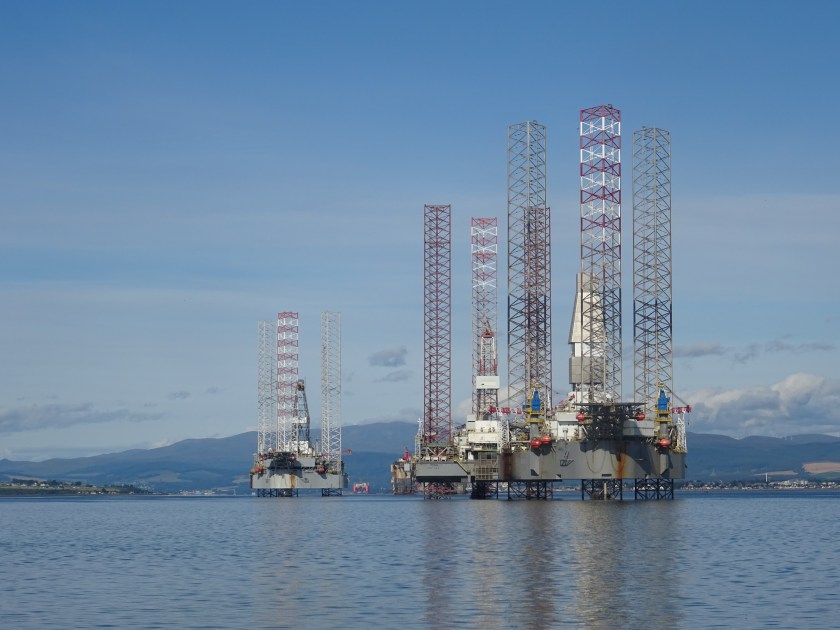
Image: Aberdeen Harbour  CC0 from Pixabay.com