Blog

‘Transition’ from oil? Our idea now looks like a delusion

NEIL ROTHNIE, retired oil worker and climate activist, reflects on his participation in Extinction Rebellion and what we have, and have not, achieved.

This post was first published on the People and Nature blog. If you’d like to respond to this article please use the contact form to get in touch.

“The rebellion starts here”, I wrote in October 2019. “There must be non violent direct action aimed at big oil, and targeting oil production.”

The article, North Sea oil and gas: the elephant in the room, was originally a leaflet that I took to London, to Extinction Rebellion’s festival of rebellion.

At that time I was four years’ retired, after 40 years as an offshore oilworker. I was experiencing a personal renaissance, as Extinction Rebellion (XR) crashed onto the streets. 

My article wasn’t particularly radical or controversial. Certainly not to most XR rebels who were its target audience. And it still today, at least in part, reflects what is a fairly mainstream position in the climate movement. 

I wasn’t really focussed on XR’s demands as such – e.g. getting the government to “tell the truth”.  Even then I wasn’t convinced that that was very likely, but I certainly didn’t disagree. I knew next to nothing about the popular assemblies that XR was calling for, or about whether Net Zero was remotely achievable by 2025.  

But I’d been hugely impressed by the way Extinction Rebellion had burst onto the scene, blocking bridges over the Thames the year before. That’s when I’d become aware of the movement.  

By this time, I was troubled about global warming and thought that it would take the masses to intervene in this existential issue. Really all I wanted to do was to bring my own experience to bear on the situation.

I’d been flabbergasted that many rebels I’d spoken to had little awareness of the North Sea oilfield’s existence.

I felt that the “fossil fuels” that were understood to be the major source of greenhouse gases when burned, were in fact still pretty much a “concept” – something in their heads, rather than real stuff mined by real people in our patch.  

My article called on the climate movement to turn towards the oil workers with a call for a “just transition”.

Just transition of course was not my formulation, but was a concept that I swallowed whole, and expected would appeal to the offshore oil workforce on some level and might be the basis for workers to mobilise around.  

This, after all, was the workforce that had engaged in a huge struggle after the 167 deaths by burning and drowning on the Piper Alpha platform, albeit 30 years previously.

In what now seems like an age since 2019, we’ve seen virtually no response from oil and gas workers, despite a concerted turn towards them by parts of the climate movement.

Perhaps the one concrete thing is that we know that they would be more than happy to transfer from offshore oilfield to offshore wind field … if they can keep the lifestyle and the wages.

But the workers are still in lock step with their trade unions (the minority that are actually organised) and with their employers, with Big Oil globally, and with our government. 

Short of a massive storm event on the North Sea creating another major tragedy, it’s hard to see this unholy alliance unravelling any time soon.  

But while I’m not embarrassed by the 2019 article, I don’t think it reflects the reality we’re experiencing, never mind the future we’re facing. That is why I came back and asked Simon for the use of his blog again.  

Right now, everywhere, we have an accelerating pattern of disasters, intermittently destroying lives and the natural environment and by all accounts driving the tendency towards mass extinctions of species. 

We’ve seen a succession of global heating-induced disasters rock the planet. The floods in Pakistan, the fires in the Amazon, and today in California, stand out for me. It’s relentless. You’ll have your own list.

Can I tell the future? Well obviously not. But, as far as any layman can understand the climate science consensus, it seems that we’re way way further down the road to a radically different global climate, and massive changes to local weather that cause mayhem and misery.  

My characterisation of the industry/government strategy as “business as usual” was, and remains, accurate, I think.  

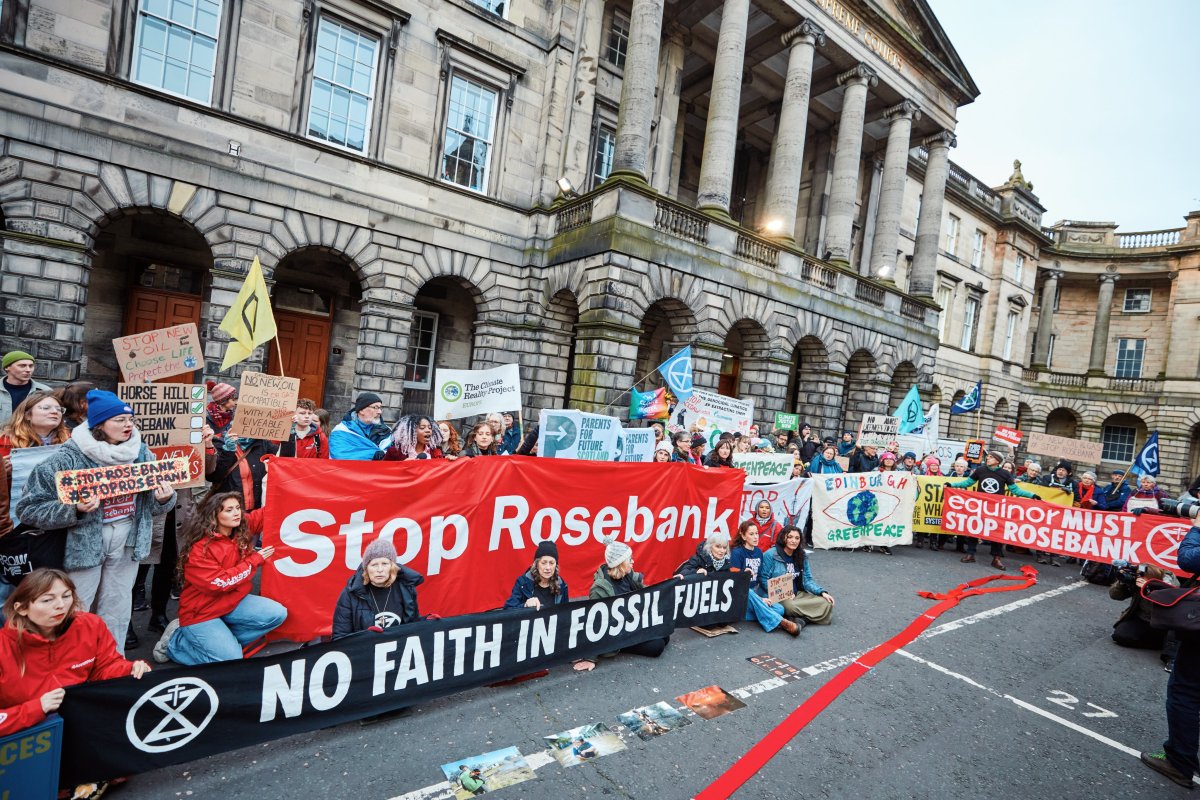
The court decision last week, that the process that gave the go-ahead for the development of the Rosebank and Jackdaw fields on the North Sea was unlawful, should pose absolutely no problem for the industry that was complicit in the hanging of Ken Saro-wiwa, and has been involved in human and ecological atrocities across the globe.  

Not much of a problem either, I’d have thought, for Rachel Reeves and Sir Starmer with their Growth & Growth & Growth mantra.  

The concept of a transition – never mind “just” – from fossil fuels to renewables, led in any part by the massed ranks of the proletariat self-organised in the offshore unions, now looks like an ongoing exercise in self delusion.

Long before XR was set up, in 1989-90, I was desperate to get some sort of an idea of the nature of the relationship of oil and capitalism – something that might inform me whether the rank and file Offshore Industry Liaison Committee (OILC) could chew what we’d bitten off by organising strikes and platform occupations after the Piper Alpha disaster. [Note. Here is an interview with Neil about this, and an archive of the rank and file paper he edited, Blowout.]

I was looking for some sort of an understanding of the possibilities and opportunities. Where did any of this lead? 

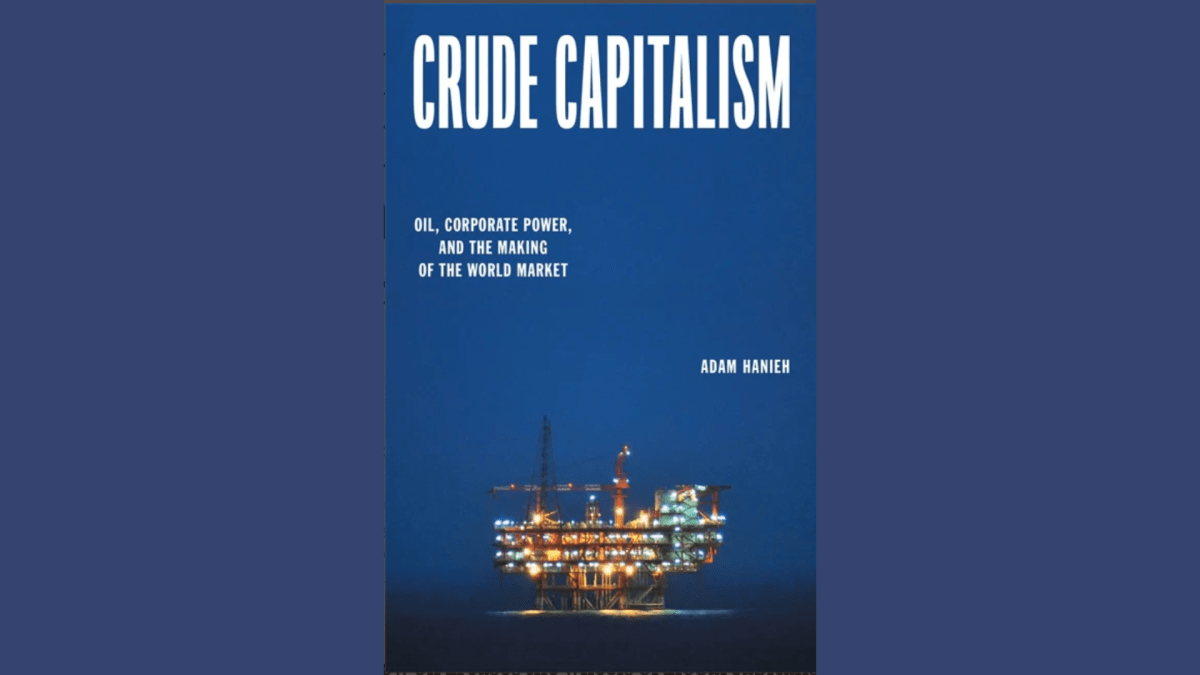
Thirty-five years later, and along comes Adam Hanieh with his book Crude Capitalism: oil, corporate power and the making of the world market (reviewed here and here). He says, as I read him, that the capital system and fossil fuels are inextricably entwined.

His book begs the question, at least for me, of the likelihood that the capital system can turn off oil and gas, and replace the world’s energy needs from renewables, before climate chaos becomes the norm.  

The vision this question conjures up, in my imagination, is of someone ripping out their own heart with one hand, while trying to construct a replacement organ with the other. 

Meanwhile Jean-Baptiste Fressoz tells us, in his book More and More and More: an all-consuming history of energy (Allen Lane, 2024), that that holy grail of the climate movement, a “transition” to renewables, is in fact a pipe dream, a chimera.  

There never was, it seems, in human history a precedent – an energy transition – corresponding in any way to the fantasy we hold of fossil fuels being replaced by renewables. Oil didn’t replace coal. Coal didn’t replace wood. It’s just been “more and more and more”.

The history, Fressoz insists, is of “symbiotic” relationships. Burning coal leads to using (more) wood. The exploitation of oil and gas drives (more) wood and (more) coal to be used, and crucially, renewable energy adds to and encourages the use of (more) wood and coal and oil and gas in such a way that Fressoz sees no plausible scenario where global heating might remain within 1.5, or 2.0 degrees C. 

We’re looking at “three degrees C – a catastrophic increase” he says. “How can we make do with less and less and less?” he asks.  

And Brett Christophers, in his book The Price is Wrong: why capitalism won’t save the planet (reviewed here) challenges another growing orthodoxy. The idea is firmly out there that now that the price of renewables is right, that renewables are “cheaper” than fossil fuels.  

This, the argument goes, will inevitably, according to the laws of the market, mean that renewables will supplant fossil fuels. Only who would have guessed that in fact “the price is wrong”, and that all along it’s been profits, not prices, that drive capitalism?

Let’s suppose that you’ve checked out these authors for yourself, and found that my very crude argument, largely drawn from my reading of them, casts reasonable doubt on the idea that there is a snowball’s chance in hell of the current “powers that be” getting us out of this mess.

Then your next step might be to have a look around for the Leninist parties that are going to wrest global power from the current crop of megalomaniacs and oligarchs and downright genocidal bastards. Where are the forces that will lead us over the barricades, kalashnikovs in hand, to capture the state (everywhere) and plan our way out of this one?

Perhaps that’s not the place to look. Perhaps it’s going to be more complicated.

If you are, like I am, disabused of almost every certainty you ever held dear, then there is at least one step that might help us “take care of ourselves”. No! This is not about Lush bath bombs (if they are still a thing). It’s not about playing Radio 3 in the mornings instead of exploding from bed shouting and swearing at Radio 4’s climate-deniers-lite.

April 2012: Volunteers running a centre where Hurricane Sandy survivors could stock up on staples. Photo by Liz Roll/ Creative Commons

“Taking Care of Ourselves in a World on Fire” is the subtitle of Adam Greenfield’s book Lifehouse (Verso, 2024). The “care” he’s talking about is putting human need, human relations and self organisation at the centre of our practice – in a period when it would seem that we are going to have to learn to survive and make worthwhile lives with less and less and less.  

And all this in the face of escalating climate emergencies and the inevitable breakdowns they provoke. 

The book is rooted in Greenfield’s own experience as part of Occupy Sandy, which had morphed out of Occupy Wall Street, organising relief to the victims of the hurricane that hit New York in 2012.  

He draws material together from the way people have been self organising in the face of inadequate official support, abandonment and just downright open hostility, in places as disparate as Rojava in Kurdistan; Jackson, Mississippi, in the USA; Greece in 2010, during the debt crisis that exploded health care; and in California, where the Black Panthers organised from the late 60s to the early 80s.  

The book is “optimistic”, not “hopeful”. Greenfield inveighs against hope, and lays out a rationale and a blueprint for a practice, and a physical space, that offers us a place to organise and the chance of shelter and community and dignity.

This is a rant, not a series of book reviews. And it may turn out to be no more prescient than that one from 2019. 

But is Greenfield, broadly speaking, right?  No point in just hoping so. The point of his book is, it seems to me, not just to understand the world but to change it. I’ve heard that somewhere before. A first step might be to have a look. 

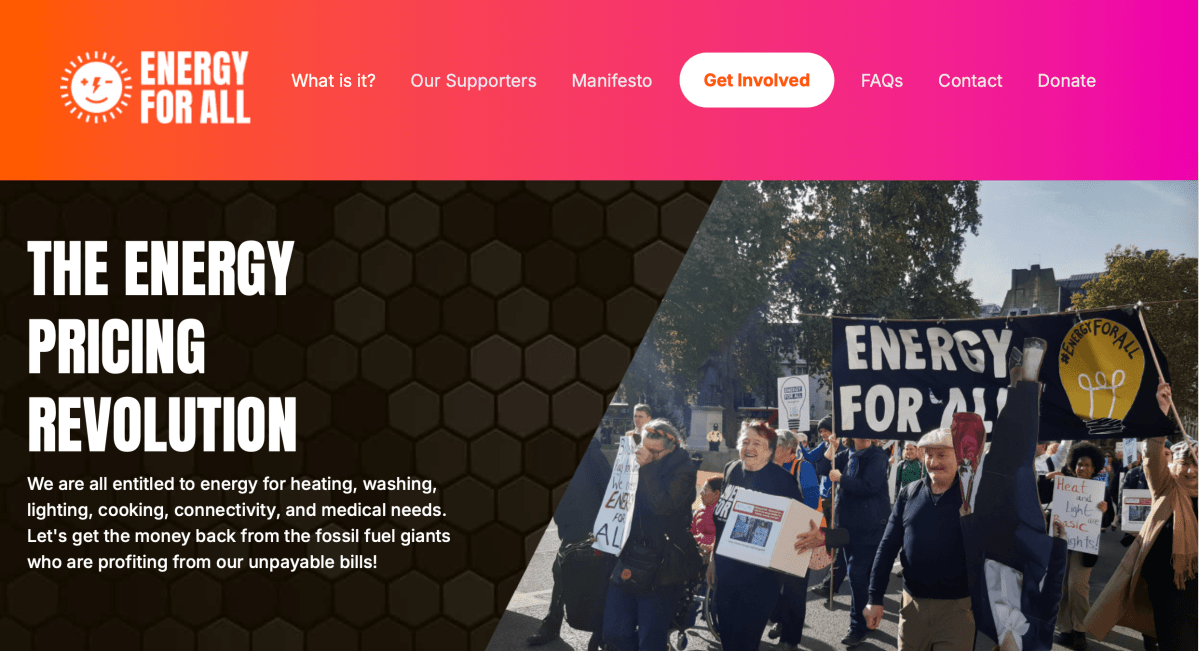
Energy for all

Sign the Energy for All petition

Scot.E3 has recently added its name to the list of organisations supporting the Energy for All manifesto.

You can add you support as an individual by signing the petition here.

These are the five points of the Energy for All Manifesto

Under Energy For All:
1. Each household will receive, free of charge, enough energy to ensure it can cover its needs. This includes for instance adequate heating, lighting, cooking, hot water, refrigeration, charging phone and digital connectivity, and where needed, hearing aids, medical equipment, stairlifts, and wheelchairs.   

2. This free energy will be paid for by higher tariffs on usage exceeding what is needed, by windfall taxes on fossil fuel corporations, and by recouping the millions of pounds now spent daily on subsidising the fossil fuel industry.  

3. UK housing will urgently be brought up to a standard where people are not made ill by their own homes. It is a scandal that homes in one of the world’s richest countries are the coldest and dampest in Europe. Safe, non-toxic, non-flammable insulation appropriate to the building, and sound heating systems must be installed by skilled workers in consultation with residents. All rented property must be kept in good repair. These measures will dramatically reduce the amount of energy required to meet provision number 1. They will put low income households on a par with better off neighbours who already need less energy, and it will greatly ease pressure on the NHS.

4. No household will be required to pay in advance for the energy they need by means of key or card prepayment meter in their home, or by means of a smart meter. There should be a permanent and statutory end to the installation of prepayment meters by court orders authorising intrusion in people’s homes, or remotely by smart meters set to prepayment mode. No one should be disconnected from vital supplies as a means of recovering debt. 

5. There must be urgent attention to injustices in the energy pricing system. Including the relationship between pricing for electricity and for gas when renewable energy is cheaper, geographical discrepancies, exclusion of itinerant and some other communities from current benefits and provisions, unfairness in pricing for storage heaters, time of use payments and district heating, and the huge standing charges which presently penalise people who can only afford to use a little energy. Many of these issues, including the standing charge, will be resolved by Energy For All but they must be attended to while the new pricing system is brought in. 

Review | Crude Capitalism

What has oil got to do with the history of the global capitalist economy? Pete Cannell reviews Adam Hanieh’s account.

REVIEW | CRUDE CAPITALISM

Pete Cannell • January 19, 2025

What has oil got to do with the history of the global capitalist economy? Pete Cannell reviews Adam Hanieh’s account.

A version of this review was published originally on the rs21 website.

The first commercially successful oil well in California was tapped in 1876 at Pico Canyon in Los Angeles County. Oil extraction and oil profits spurred the rapid growth of the city of Los Angeles. As I write this review 150 years later, LA is on fire. Crude Capitalism – Oil, Corporate Power, and the Making of the World Market charts the development of the oil industry from its early beginnings and shows how its history is intermeshed with the development of the world economy. It’s a book about oil, about the climate crisis and the environment, about economics and the dynamics of the capitalist system. The Los Angeles fires are one more instance, and not even the most destructive, of the global impact of rising temperatures and changing weather patterns. If you want to understand how oil and capitalism link events in 1876 and 2025 and the forces that shaped and continue to shape our world, then Crude Capitalism is a must read.

Wikimedia Commons CC BY-SA 4.0

In 1995 the rulers of the world met in Berlin, ostensibly to tackle the threat of global warming. In the following three decades more carbon dioxide has been added to the atmosphere than in the previous two hundred years. In the same period annual methane emissions have more than tripled. This exponential increase in greenhouse emissions should not be a surprise. Hanieh begins the first chapter of the book by noting that a decade before the first COP, the International Geosphere-Biosphere Programme (IGBP) was already investigating the connection between human activities and changes to the earth’s biological, chemical, and physical systems. When their report was published in 2004, they noted that

The second half of the twentieth century is unique in the entire history of human existence on Earth. Many human activities reached take-off points sometime in the twentieth century and have accelerated sharply towards the end of the century. The last 50 years have without doubt seen the most rapid transformation of the human relationship with the natural world in the history of humankind.1

Crude Capitalism sets out to explain why the mid-twentieth century was such a critical turning point and why despite decades of blah blah blah (to quote Greta Thunberg) the exponential increase in global greenhouse emissions continues. 

The core of the book is a chronological account of the development of the oil industry from its early beginnings until the present day. The story begins in the United States in the late 1890s. The second chapter explains how the rapidly developing oil industry became dominated by huge vertically integrated corporations such as Standard Oil. The structure of the new industry owed a lot to the particularity of US property law. The oil majors consolidated their grip through cartels and oligopolistic structures. These modes of organisation were adopted internationally in the decades that followed. A theme that runs through the book is the way in which the oil industry has become global, growing and adapting and often acting as a trail blazer for innovation in organisation and new techniques of capitalist exploitation. An example of this, in the British context, is the privatisation of the North Sea oilfields, which was at the forefront of the neoliberal reconstruction of the British economy.

With World War I, the focus of the book moves to the Middle East and Russia. One of the great strengths of the book is the way in which it deals with imperialism and how economic and military competition ties the global oil industry and the global arms industry together in an embrace of exploitation and callous destruction of the environment and possibilities for genuine human development. World War I generated a massive increase in demand for oil. The British Navy transitioned to an oil-based fleet. Britain’s colonial activities in the Middle East and its role in dismantling the Ottoman empire were critical for Britain to meet its growing demand for oil. It met this demand by developing new oil fields in Iran and Iraq. Collaboration between US big oil and British colonial interests in this new arena of exploitation paved the way for the US majors to go global.

The real acceleration in oil production, chronicled brilliantly in the central part of this book, came after World War II, when European economies joined the developmental path already well established in the US. At this point, the use of oil as a feedstock for plastics and synthetic fertilisers took off on a mass scale. Oil’s initial success lay in its energy density – a given volume of oil provides far more energy than coal or wood – but over the course of the second half of the twentieth century the ubiquity of plastics meant that, in Hanieh’s words, ‘commodity production had become a derivative – or a by-product – of the production of energy.’ This transformation of commodity production to a system powered and based on oil remains the dominant system in the global economy. This continuing domination is the reason why greenhouse gas emissions continue to rise.

In the last decade the US has once again become the largest single national producer of oil and gas. Yet at the same time as the Chinese economy has grown, the centre of gravity of the global industry has shifted east to Asia and new interdependencies have grown between Asia and the Middle East. 22 years after George Bush declared victory in Iraq, the largest oilfield in that country is run by a private Chinese company. But there is also a shift in power from private to state capital: the three biggest oil firms in the world are owned by the Chinese and Saudi Arabian states.

Crude Capitalism is withering in its critique of the oil industry’s corporate greenwashing. Hanieh notes, for example, that BP’s erstwhile rebranding as ‘Beyond Petroleum’ involved spending ‘more on the corporate rebrand than it did on renewable energy.’ The rebrand was short-lived and while many of the big companies are increasing their investment in renewables the rate of increase in investment in hydrocarbons is even faster. Twelve of the biggest companies plan to spend more than $100 million a day on new hydrocarbon projects up to the end of the decade. In addition, the industry is using its power and wealth to push technofixes that are often of limited or no utility for reducing greenhouse gas emissions but allow for the continuation of the infrastructure and systemic economic relations of fossil capital. In Britain the industry body Offshore UK has rebranded itself as Energy UK and its focus on Carbon Capture and Storage and Hydrogen is slavishly followed by the British government.

Adam Hanieh is absolutely clear about the obstacle that big oil continues to present:

Oil, in other words, remains at the core of our economy and our energy systems; without dislodging it from this position there is no possibility of ensuring a future for humanity. 

The strength of Crude Capitalism is that it shows how the oil industry is the result of a system that always puts profit first. The final paragraph sums it up:

We cannot behave as if the problem of capitalism does not exist, or can be ignored, or as if our current rulers can be convinced to take an alternative path through the sheer force of scientific evidence. This is an irrational economic system that pits the interests of a tiny few against the vast majority, and only by taking political and economic power away from the logic of the market will it be possible to build a different and better world. 

[1] Will Steffen et al., Global Change and the Earth System: A Planet under Pressure, Berlin: Springer, 2004, 81. 

New Briefing: Sustainable Aviation Fuel

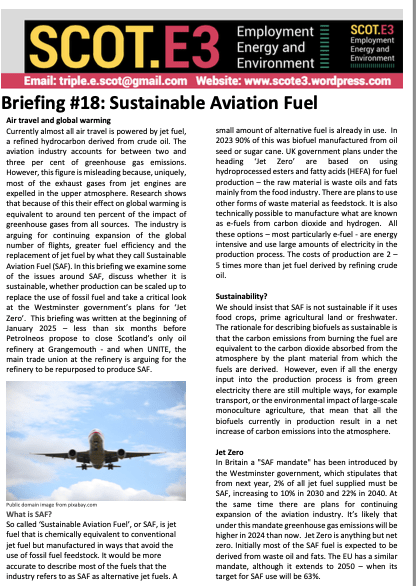
Briefing 18 takes a critical look at ‘Sustainable Aviation Fuel’ and the Westminster government’s Jet Zero plan.

Briefing 18 takes a critical look at ‘Sustainable Aviation Fuel’ and the Westminster government’s Jet Zero plan.

Click on the image to download the briefing

Air travel and global warming

Currently almost all air travel is powered by jet fuel, a refined hydrocarbon derived from crude oil. The aviation industry accounts for between two and three per cent of greenhouse gas emissions. However, this figure is misleading because, uniquely, most of the exhaust gases from jet engines are expelled in the upper atmosphere. Research shows that because of this their effect on global warming is equivalent to around ten percent of the impact of greenhouse gases from all sources. The industry is arguing for continuing expansion of the global number of flights, greater fuel efficiency and the replacement of jet fuel by what they call Sustainable Aviation Fuel (SAF). In this briefing we examine some of the issues around SAF, discuss whether it is sustainable, whether production can be scaled up to replace the use of fossil fuel and take a critical look at the Westminster government’s plans for ‘Jet Zero’. This briefing was written at the beginning of January 2025 – less than six months before PetroIneos propose to close Scotland’s only oil refinery at Grangemouth – and when UNITE, the main trade union at the refinery is arguing for the refinery to be repurposed to produce SAF.

Marching to save jobs at the Grangemouth refinery

What is SAF?

So called ‘Sustainable Aviation Fuel’, or SAF, is jet fuel that is chemically equivalent to conventional jet fuel but manufactured in ways that avoid the use of fossil fuel feedstock. It would be more accurate to describe most of the fuels that the industry refers to as SAF as alternative jet fuels. A small amount of alternative fuel is already in use. In 2023 90% of this was biofuel manufactured from oil seed or sugar cane. UK government plans under the heading ‘Jet Zero’ are based on using hydroprocessed esters and fatty acids (HEFA) for fuel production – the raw material is waste oils and fats mainly from the food industry. There are plans to use other forms of waste material as feedstock. It is also technically possible to manufacture what are known as e-fuels from carbon dioxide and hydrogen. All these options – most particularly e-fuel – are energy intensive and use large amounts of electricity in the production process. The costs of production are 2 – 5 times more than jet fuel derived by refining crude oil.

Sustainability?

We should insist that SAF is not sustainable if it uses food crops, prime agricultural land or freshwater. The rationale for describing biofuels as sustainable is that the carbon emissions from burning the fuel are equivalent to the carbon dioxide absorbed from the atmosphere by the plant material from which the fuels are derived. However, even if all the energy input into the production process is from green electricity there are still multiple ways, for example transport, or the environmental impact of large-scale monoculture agriculture, that mean that all the biofuels currently in production result in a net increase of carbon emissions into the atmosphere.

Jet Zero

In Britain a “SAF mandate” has been introduced by the Westminster government, which stipulates that from next year, 2% of all jet fuel supplied must be SAF, increasing to 10% in 2030 and 22% in 2040. At the same time there are plans for continuing expansion of the aviation industry. It’s likely that under this mandate greenhouse gas emissions will be higher in 2024 than now. Jet Zero is anything but net zero. Initially most of the SAF fuel is expected to be derived from waste oil and fats. The EU has a similar mandate, although it extends to 2050 – when its target for SAF use will be 63%.

Practicality/Scalability

A report published in May 2024 by the Institute for Policy Studies analysed Jet Zero, aviation industry plans and other initiatives and found that there is currently “no realistic or scalable alternative” to standard kerosene-based jet fuels. Jet Zero is not about a transition to a sustainable low carbon industry, and it’s based on fanciful assumptions. There are severe limits to its scalability due to the limited supply of used cooking oil and animal fat. British airlines will be in competition for these supplies with others around the world. For example, in the EU there is only enough supply for about 2% of current demand. It’s also in competition with the production of bio diesel for road haulage which uses the same feedstock. The scale of the gap between Jet Zero and net zero is illustrated by the fact that even with current levels of flights 50% of all agricultural land in Britain would have to be devoted to the production of biofuel to eliminate the need for fossil fuel. If crop-based biofuel is ruled out and SAF were to be produced from other forms of waste as well as cooking oils, it’s estimated that if all the useable waste in the UK was converted to SAF it would still provide less than 20% of the fuel demands from outgoing flights.

Conclusion

UNITE’s plan for the Grangemouth oil refinery suggests that there is an assured future as a biofuel hub for Britain. As we write the details of the plan are not publicly available. We can only assume that they are based on the faulty logic of the British government’s Jet Zero report. Sadly, these figures just don’t add up. There is a powerful case for a plan to support the Grangemouth workforce into a sustainable future, but Jet Zero is an illusion. SAF is not a magic bullet. Current technologies are not capable of meeting the fuel demands of the aviation industry. E-fuels are potentially scalable, but the costs are prohibitive. We will discuss what is to be done about aviation in a future briefing.

Click the link to download Briefing 18

You might also want to look at Briefing 10 – ‘Bioenergy with carbon capture and storage (BECCS)’ and Briefing 17 – Net Zero

All of the ScotE3 briefings can be downloaded from this site’s resources page.

Oil’s history: dissecting the many-headed hydra

Simon Pirani reviews Crude Capitalism: oil, corporate power and the making of the world market by Adam Hanieh

Review by SIMON PIRANI of Crude Capitalism: oil, corporate power and the making of the world market by Adam Hanieh (Verso 2024)
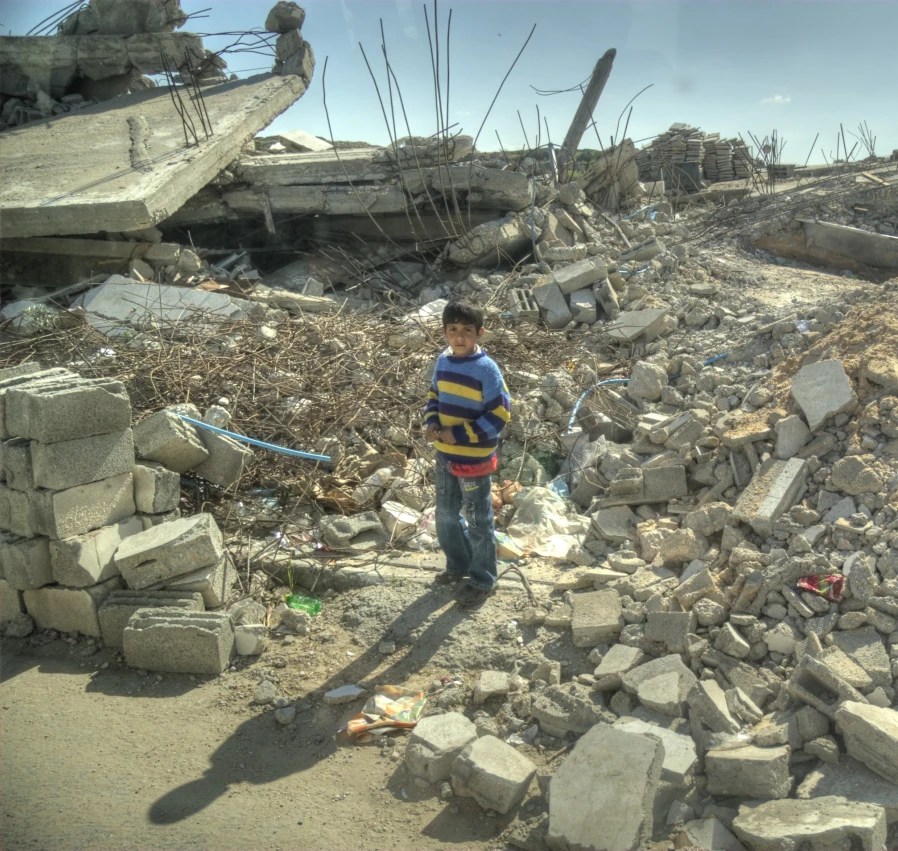
Witnessing genocide can be paralysing. The horror of Israel’s onslaught on the civilian population of Gaza seeps in to the spaces in our heads, interrupting and disrupting attempts to think.
My memory keeps connecting Gaza to the Vietnam war, news about which filtered through to me as a young teenager. My sheltered world was shattered by the cruelty with which innocent people were slaughtered and tortured, on the orders of governments I had vaguely assumed should protect people. I see teenagers going through analogous thought processes now. 

This post was originally published on the People and Nature blog.

How can it be that, half a century on, the grotesque “civilisation” that stalked Vietnamese villages has evolved, to produce the monstrous Netanyahu regime? What does this tell us about the many-headed hydra we are fighting, and humanity’s attempts to resist it?

Adam Hanieh’s book Crude Capitalism dissects one of the hydra’s heads – oil, and the corporations and states that use it to reinforce their wealth and power – and offers us a view on the part it plays in the whole organism. Reading it helped me to think of the horror of Gaza not as an aberration, but as a logical outcome of capital’s dominance in the twenty-first century.

Crude Capitalism tackles its big, difficult themes with precision and attention to detail. It is beautifully presented and organised.

The first part of the story Hanieh tells, of oil’s initial growth, plays out in the early twentieth century, in the US, and to a lesser extent in Iran, Azerbaijan and in Latin America. In the second part, from the mid twentieth century onwards, Middle Eastern oil resources and the battles for control of them loom large. And this is part of the background to the deluge of war crimes now being committed against Palestinians.

The connections are not direct. Regimes centred on vicious ethnic cleansing, like Netanyahu’s, are produced by capitalism; capitalism thrives on oil. But there are multiple mediations. Hanieh’s approach to these is an antidote to the simplifications that all too often circulate in radical political circles.

Physical control over oil production was crucial in the early twentieth century, but that has long ceased to be the case, Hanieh argues.

In the 1960s and 70s, against the background of powerful anti-colonialist movements, control over oil production shifted substantially from the powerful US- and European-based multinationals to state-controlled national oil companies, in the Middle East above all.

But capital and its state machines adapted. The US, which during the 1950s and 60s had superceded Britain and France as the dominant imperial power in the Middle East, established strategic and military relationships with the Gulf states and the Shah’s regime in Iran (at least, until the latter was overthrown in 1979). In the 1970s, the Saudi and Iranian monarchies were one pillar of US power in the region; Israel was the other.

Brute military force was only one aspect of imperial domination. Crucial, too, Hanieh argues, were changes in economic relationships, and in the financial system, through which control was maintained over oil revenues.

In the 1960s, oil producer countries’ governments, led by Venezuela, had forced through changes in oil pricing that disadvantaged the powerful US companies that had stakes in their oil fields. The Saudi monarchy, too, demanded a bigger slice of the cake. The US responded by changing its own tax rules so that, while more oil money flowed to Riyadh, the largest oil companies continued to earn record profits.

In the 1970s, price shocks shattered the monopolistic pricing system that had served the biggest companies. Action by the producer nations, coordinated through the Organisation of Petroleum Exporting Countries (OPEC), took control of prices out of the multinationals’ hands. Crude oil prices quadrupled in 1973-74, and doubled again in 1979.

In the 1980s, there was further momentous change: oil increasingly became a traded commodity; wealth and power poured into intermediary trading firms. The oil profits that had once flowed mostly to rich-country corporations were now pouring into the Gulf states especially.

Oil refining in Saudoi Arabia

These “petro dollars”, flowing to countries outside the circle of imperialist powers in unprecedented quantities, became a big factor in financialisation (the expansion of international money markets, supercharged by computerised trading) and globalisation (the minimisation of capital controls and other trade barriers associated with neo-liberal economics).

(Forty years later, the flow is greater than ever. The Gulf states accumulated an estimated two-thirds of a trillion dollars in current account surplus in 2022, when, after the Russian invasion of Ukraine, oil prices shot up.)

“Petro dollars” became “euro dollars”, funding that gathered in markets outside the US, denominated in its currency. The dollar, the status of which as a reserve currency had been endangered when it was unhooked from the gold standard in 1971, was reinforced.

Forms of money and the rise of the euromarkets, the dollar’s position as international reserve currency, the dominance of Anglo-American financial institutions, the chains of debt and the rise of neoliberal orthodoxy – these were not the automatic outcomes of dry economic processes centred in north America and Europe, but inextricably linked to the geopolitics of oil and the US presence in the Middle East. 

By focusing on these “subterranean global roots” of the new financial system, Hanieh writes, “it is possible to shift the ways that we usually think about the control of oil”.

This is not simply reducible to territorial power and the ownership of foreign oil fields – it is also a question of the control of oil’s wealth

To understand the killing fields of Gaza, we need to think, on one hand, about US military supplies to the Gulf states and Israel and the deranged ideologies that propel Israeli soldiers to massacre – and, on the other, about these “subterranean roots” that run through the banks, financial centres, trading houses and the City of London.

We are dealing with a many-headed hydra that combines wealth, power and terror in complex ways.

These relationships belie myths, such as the idea that our enemies fight repeated wars for oil. Actually, they rarely do.

The devastating 2003 US- and UK-led invasion of Iraq, Hanieh reminds us in a footnote, was “not so much about the seizure of Iraq’s oil as about the protection of the Gulf monarchies”.

He quotes another historian of the Middle East, Toby Craig Jones, who pointed out that capturing oil and oil fields has not been part of the US’s strategic logic for war, “but protecting oil, oil producers, and the flow of oil, has been”.

Oil does not just produce cash wealth. Once out of the ground, it is transported long distances, usually by ship (itself a hellishly oil-intensive business). It is refined into products: tarmac and bitumen; fuels from petrol to aviation fuel, the supply of which has shaped military, industrial and agricultural practices, and consumer markets, for a century; and ethylene and other raw materials for petrochemical plants.

Hanieh, in contrast to other big-picture historians of oil, foregrounds this “downstream”. He shows that, from the start, the US and European oil giants’ strategy was vertical integration, i.e. control of the whole process, down to the petrol stations.

Motor cars, the ultimate consumer good that consumes so much oil, loom large in this story. So does the burning of oil in power stations. Hanieh picks out for more detailed treatment the petrochemical industry, where oil is used not as an energy carrier that can be converted into mechanical motion, heat or electricity, but as a raw material.

He traces the origins of petrochemical processing in Germany; its development (if that is the right word) during the second world war as an arm of the Nazi military machine; and the US’s post-war acquisition of German technologies by theft and expropriation. Petrochemicals, while US- and European-dominated through the late twentieth century, are expanding rapidly in the Middle East and China in the twenty-first.

Fossil-fuel-based plastics and other synthetic materials, Hanieh argues, have displaced natural materials such as wood, cotton and rubber. “By decoupling commodity production from nature, there was a radical reduction in the time taken to produce commodities, and an end to any limits on the quantity and diversity of goods produced.”

This was a qualitative transformation: petrochemicals helped capital to achieve revolutions in productivity, labour-saving technologies and mass consumption; “birthed in war and militarism, they helped constitute a US-centred world order”. Our social being is bound up with a seemingly unlimited supply of cheap and disposable petrochemicals.

I hope Hanieh’s arguments on petrochemicals are brought to the centre of discussions about the transition away from oil, and what that implies for the socialist project of confronting and defeating capitalism.

First, the flow of oil as a raw material through the petrochemical industry needs to be put in the wider context of the colossal flow through the capitalist economy of extracted materials, including metals, minerals, concrete, asphalts, and living matter such as biomass and farm animals.

A team led by Fridolin Krausmann recently estimated that the aggregate of these material flows swelled 12 times over between 1900 and 2015. Eric Pineault has attempted to draw on this work, and that of ecological economists, to develop a Marxist view of this aspect of capital’s earth-shattering drive to expand.

Second, an issue of interpretation. I do not think the petrochemical industry “decouples” production from nature: it is another way of processing, and reprocessing, materials accessed from nature. Hanieh has, though, pointed to something hugely important, and dangerous, in the way that synthetic materials corrupt and deform humanity’s relationship with nature. Pinning down exactly what should be a concern to us all.

In the final chapter of Crude Capitalism, Hanieh surveys oil companies’ response to the threat of climate change. Having spent decades funding climate science denial, they have in the last decade reversed their public stance, accepted global heating as a fact … and become “enthusiastic converts” to the concept of “net zero”, as warped by politicians, that displaces genuine greenhouse gas emissions reductions with chimerical techno-fixes, above all carbon capture.

“By appearing to transform themselves into part of the solution”, the oil companies “not only hide their ongoing centrality to the fossil economy, but aim to frame and determine the societal response to climate change”, Hanieh warns.

The companies embrace technical false solutions – biomass, electric vehicles and hydrogen – that have moved to the centre of establishment climate policy. They are betting on expansion of the synthetic consumerist dystopia underpinned by petrochemicals. And their Orwellian grip on politics, hand in hand with producing-nation dictators, is on display at the international climate talks – last year (Abu Dhabi) and this (Azerbaijan) more than ever.

Ecosocialists, who endeavour to bring together the fight to overcome humanity’s disastrous rupture with nature with the fight for social justice, must first confront the fact that energy production and infrastructure “remain solidly in the hands of the largest oil conglomerates”, Hanieh argues.

Secondly, though, we need to acknowledge that while these firms are a “major obstacle” to moving away from oil, “they are a manifestation, not a cause, of the underlying problem” of capitalist social relations.

Let’s not only recoil in horror at the genocide: let’s also dissect and better understand the many-headed hydra. This book helps.

Crunch time for ex-GKN workers and their just transition plan

Italian workers who occupied a GKN factory to oppose closure went on to make a plan which shows what a just transition can look like. Now it is time to support their plans to start production.

Italian workers who occupied a GKN factory to oppose closure went on to make a plan which shows what a just transition can look like. Now it is time to support their plans to start production.

Matthew Crighton reports on the latest developments.

See previous articles on this site on the workers’struggle here and here.

Workers at GKN near Florence occupied the factory against closure over 3 years ago and are still there, after winning 6 legal cases including successful challenges to the lay-offs. They have been sustained by cycles of mobilisation by supporters across Tuscany giving solidarity and practical donations.

The strong trade union organisation in the plant didn’t just oppose closure of their factory, they decided to build a case for re-opening with a plan for socially-useful production, rather than servicing the luxury car manufacturers. Pooling their expertise and reaching outwards, they now have a plan for just transition to make solar panels and cargo bikes.

I was pleased to join a UK delegation to the Solidarity Assembly at the site on 13 October and a public event on the day before about convergence between the trade union and climate movements and even got to speak at it. More of the detail of their story is covered in the articles to which there are links below so here I will just summarise the current situation which we learnt about.

About one third of the original 400 workers are still taking part, now organised into the GFF Collective. After a series of sales, neither GKN nor Melrose, the company which bought from it, are now involved and the workers’ struggle to retain employment has become focused on their plan to re-start production, not of the luxury car parts which GKN made, but products of vital importance for the transition to zero carbon – cargo bikes and solar panels, includingrefurbishment of old panels. This was prepared in consultation with the climate movement in Italy and potential users of the products and its purpose is seen as leading a switch to reindustrialisation through addressing environmental crisis.

The Regional Council of Tuscany has given this plan some support but it has not taken the key next step to provide the Collective with working capital. The most recent development has been that the factory site has been sold again to property companies and the workers fear that they intend to use if for warehousing, retail or housing. As a result, they are looking for options of other sites for their collective enterprise while not giving up on the first one.

The Collective launched an appeal for funds and in particular for the purchase of shareholdings. Two UNISON branches in Scotland have committed to do this and I was able to act for them at the Assembly and report back. The good news which we received is that the Collective has been successful in reaching its target of 1 million euros.

The worrying news was that the Tuscany Regional Council still has no timetable for passing the decision which can enable it to give the funding and support needed. In this light, the Collective’s resolution to the Assembly both set a deadline at which, if there is still not a decision, it will have to reconsider the viability of its plan; and set a target for further fundraising of another 1 million euro.

As things stand at the end of October, the workers have three demands:

  • Pay unpaid salaries to the workers
  • Administration by the national government: the Government is asked to appoint a special receiver to the company
  • That the regional government buys the factory off the current owners and hands it over to the workers to run themselves under workers’ control

The deadline which they have set is 15 November and the date of the next mobilisation and an assembly at which the situation can be re-assessed in 17 November. As the Collective says “It will be a celebration for the start of the plan or anger against an entire system”.

It was inspiring to witness workers reaching out to the climate movement and solidarity received in return. As the attendance showed this has been a rallying point for the left in Tuscany, Italy and wider in Europe.

I was able to bring our experiences in Scotland, of Friends of the Earth and STUC setting up the Just Transition Partnership, to the audience. I emphasised what each movement has learnt from the other and the need for a foundation of respect between them. I was pleased that the next day, Greta Thunberg spoke on the same theme of building a mass movement of workers who want to stop climate change and environmentalist in solidarity with workers struggles.

The ex-GKN workers need solidarity and have a call out to buy shares to raise working capital for their cooperative. The shareholding appeal remains open and also straight donations can be made – see below*. Lastly, this inspiring example and lessons from it need to be widely known. Speakers can be provided.

Here are articles about it:

Rebirth or Surrender – 14 October 2024 – in Italian but Google can translate

The Italian Workers Occupying Against Climate Crisis – 11 October 2024

The GKN Workers Fight Continues – 13 March 2024  – Red Pepper

Facebook Group: GKN Factory Occupation – UK Solidarity Network

Key Learnings:

  • The inspirational impact of workers acting to defend their jobs, to defend the planet and transform the economy.
  • A concrete example of joint work between trade union and climate movements, at activist and formal levels – there is lots for activists in the UK to learn about this…
  • The inertia which arises from neither the trade union structures nor the local government being ready with support for this kind of initiative
  • The need for workers in all industrial enterprises to be thinking ahead and preparing just transition plans
  • The shift from a dispute with an employer about closure to a workers plan for production requires a new combination of skills, organising capacity and resources – fundraising for industrial production, securing a site, arranging finance and organising a workforce while continuing the political struggle is a big challenge
  • The importance of solidarity for keeping this going.

Matthew Crighton

matthewcrighton@gmail.com

* Donations can be made by single or continuous bank transfer to the following Banca Etica current account in the name of Soms Pinerolo IBAN IT81 E050 1801 0000 0002 0000 339 BIC ETICIT22XXX

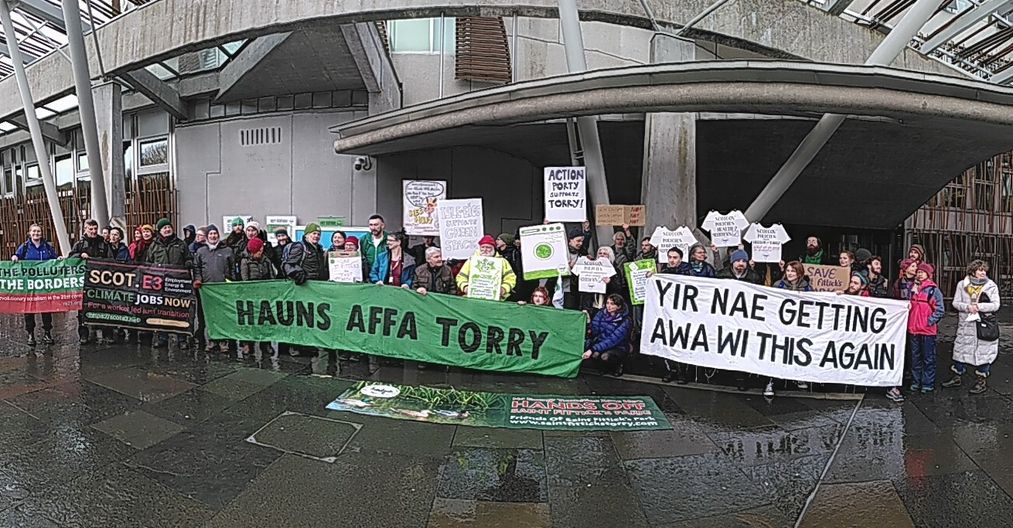
Demonstration – save St Fitticks

Join the Friends of St Fittick’s Park for a demonstration to protect St Fittick’s Park in Torry from industrialisation.

Join the Friends of St Fittick’s Park for a demonstration to protect St Fittick’s Park in Torry from industrialisation.

The last remaining greenspace in Torry is under threat from a bogus “Energy Transition Zone” factory. 

Aberdeen City Council are deciding on a planning permission in principle application that will deprive the wildlife in the park and the people of Torry, our much-loved environmental haven.

Come along to tell the council they’re nae getting awa wi it this time! They must reject the ETZ application.

We invite everyone to wear blue to create a wave of people and to show the flood waters in St Fittick’s Park are rising, a key reason why the application should be rejected. 

Watery-related props are welcomed.

Meet at Marischal College, Broad St, Aberdeen, 7 Nov. at 9 am before we ‘flow’ over to the Town House.

This is what worker led just transition looks like

After more than 3 years in occupation, the Florence GKN workers’ fight to save jobs and develop alternative production continues as an inspiration to workers and climate campaigners everywhere.

This article by Pete Cannell was first published on the rs21 website.

COP26 in November 2021 represented a moment when the climate and workers movements in Britain converged. The process of building for the huge demonstrations in Glasgow put the idea of ‘worker-led just transition’ to a sustainable economy firmly on the agenda. But that slogan hides real issues about what should be done. And in 2024, rather than workers driving just transition plans forward, we see big job losses in Port Talbot and now confirmation from Petroineos that the Grangemouth oil refinery will be closed in 2025 with the loss of around 500 jobs. 

But it doesn’t have to be this way and we no longer have to look back for inspiration to the 1970s and the Lucas Plan for alternative production. In Italy the workers at the GKN factory in Florence are waging an inspirational campaign to save jobs and establish alternative production.

Until 1994, GKN Florence was a Fiat factory. The workers, members of the CGIL union, had a tradition of organising within the factory and standing in solidarity with other struggles. Ownership passed to the British firm GKN, and by 2019 when GKN sold the factory to Melrose, a Britain-based investment company, there were more than 400 workers engaged in producing components for the car industry – including most of the big luxury brands.

The Melrose takeover was controversial and workers suspected that there were plans to asset strip. They were right and on 9 July 2021 the whole workforce were sacked by email. The workers’ response was to occupy and organise through a process which they describe as permanent assembly. Their initial demands were for the sackings to be rescinded and after a demonstration of 40,000 on 21 September the courts ruled that the sackings were inadmissible. So formally they had their jobs, but Melrose had no intention of restarting production. 

Two weeks later the workers joined an even bigger Fridays for Future demonstration of 50,000 in Milan. This was the start of an intense dialogue with climate activists. What to produce and why? Over the autumn the GKN workers worked on a plan for sustainable transport, converting the factory to produce cargo bikes and solar panels. By December the plan was complete and then Melrose sold the plant to a new owner. It rapidly became clear that the change of ownership was aimed at conning the workforce. There was no new investment and by August 2022 it was clear that there was no intention of restarting production in any form. Moreover, the new owner stopped paying wages. From August 2022 to July 2023 the workers received no wages and because they were under contract they were unable to claim unemployment benefit. Some were forced to resign – at the same time a system of social mutual aid was developed to sustain those continuing the occupation. 

At the end of 2023 the workers once more faced formal dismissal and yet again mass mobilisation and demonstration on New Years eve pushed back the threat. 

By itself the bare narrative of events testifies to the GKN workers commitment and resolve. However, these facts miss the dynamism and creativity of their response. The engagement with the climate movement was the catalyst for developing the plan for alternative production. The workers are clear that simply reopening the factory with new products is not possible. They know that they can’t build an island of sustainable production in an ocean of capitalism. They are clear that in the end it’s not just about GKN but developing collective production models that inspire similar struggles in multiple other sites. They also understand that cargo bikes are currently a niche product – selling either to well-off individuals who can afford the high price tags or enabling the exploitation of precariously employed delivery workers. Similarly, current practices in the production of solar panels are highly centralised, and entail rotten working conditions and little consideration of recycling and waste disposal. 

The workers’ response is to think about and campaign for approaches that are networked into horizontal local energy communities. They are producing prototype cargo bikes and working with local networks and campaigns to develop new models for use, and also evolving systems in which feedback from users shapes the next round of production. They’ve also pooled their practical knowledge with supportive academics from local universities who bring specialised theoretical knowledge to research and develop innovative and sustainable technical solutions driven by the social and political insights of users and workers.

In building solidarity, the workers have also placed the campaign for jobs and alternative production at the heart of wider social struggles. Their organising contributes to wider struggle and also learns from it. They have fought over migrant rights, workplace safety, anti-racism and anti-fascism. Most recently they have made common cause with the Palestine movement. In fighting for the regional government to back their plans for cooperative production under workers control, they set up an encampment outside the regional government buildings, later moving the camp to the centre of Florence. 

Throughout 2024 they have campaigned for donations to a one million euro fund. This, together with political demands on the regional government and the state government, would enable production to restart. Under pressure from the support that GKN has built locally, the regional government has given ground to the workers. The Italian government under Meloni is hostile, characterising the workers as undisciplined hooligans. But if they can get cooperative production started Italian law insists that the national government should contribute. The million euro target has essentially been met. Contributors to the fund – union branches, campaign groups and others – are entitled to a vote in the assemblies which will determine the future trajectory of the plant. 

Over the weekend of 11-13 October in Florence, there will be a mass demonstration led by Fridays for Future on the 11th, an open assembly in the factory on the 12th, and finally on Sunday 13th an assembly for ‘shareholders’. The objective is cooperative production under workers control, linked through democratic processes and democratic decision making to local communities, and national and international networks.

Thanks to REELNews for their reporting and their help with this post. REELnews are organising a trade union delegation to Florence for the 11-13 October demonstration and assemblies.

GKN Florence – the most important struggle in Europe

On 17th September ScotE3 teamed up with REELnews to screen their documentaries on GKN where the workers fighting for jobs and a sustainable future have been in occupation for more than three years.

At least two Scottish union branches have bought shares in the cooperative – many more can do so. There will be a delegation from the UK going to the occupation assembly in Florence on 13 October – if you are based in Scotland and interested in going please use the contact form to get back to us.

Not enough people know about this inspirational struggle so we are sharing the videos and some of the text from the REELnews site to spread the word. Please share on social media, raise the issue in your union branch or climate group and think about ways of giving practical solidarity – including raising money to take out a share in the collective enterprise.

The three videos together chart the course of the occupation – the third is the most recent and if you only have time for one it’s the one to watch but for the full story do watch all three.

GKN factory occupation needs YOUR help to start green production under workers control

GKN Workers start hunger strike for a worker led transition in the most important struggle in Europe

GKN Florence: 3 years of permanent assembly, leading the way in bottom up worker led just transition

The following text thanks to REELnews

The most important struggle in Europe
This July, workers at the GKN automotive engineering plant in Florence, Italy passed an incredible three years in permanent assembly – by some way the longest factory occupation in Italian history.

That would be historic enough in itself – but what started out as a standard industrial dispute to save jobs has transformed into a visionary rank and file worker led movement for just transition, with a reindustrialisation plan to move from producing parts for luxury cars, to solar panels and cargo bikes. All under workers control, and for the benefit of the community, not for profit.

They know that for this struggle to succeed and be part of a proper transition to ecological, non-exploitative production that benefits workers and communities and not the rich, the whole world has to change around the factory. So through mass assemblies of workers, a movement has been built that is challenging the capitalist model – in a country that has a far-right government. The occupied GKN factory is now acting as a focal point for all struggles to converge; not only to take serious action to combat climate change, but to support refugees, support the struggle for a Free Palestine, show solidarity with trans people under attack from the government, provide solidarity with anti-fascist campaigns and much more.

There have been enormous strides in the past few months. The regional government is now accepting that public intervention could be possible to buy the factory off the current owners and hand it to the workers; they now need to find the technical means to do it. The workers are producing protoypes of the cargo bikes which are being tested out in Italy and beyond to fit them to people’s needs, and most importantly, are being used to hold mass meetings to work out what else need to change and be fought for to make them, together with buses and trains, part of a real transition to sustainable mobility.

But most incredibly, nearly €1million has already been raised to start production via their popular shareholder scheme. Every individual or group who buys shares becomes part of the assembly that will collectively run the factory if the workers win – and the first international assembly is due to be held in Florence on 12-13 October.

Win or lose, the GKN workers have created the blueprint for a just transition – and shown us all how to do it. But if they do win, it would create a laboratory from which we could start activating a just transition everywhere – as well as providing the hope of a positive future so essential for stopping the growth of the far-right.

That is why a GKN factory occupation – UK solidarity network has been set up, involving union activists from rail, education, construction, firefighting and delivery unions. (If you’re interested in coming, email us at info@reelnews.co.uk, and/or join the Facebook group here: https://www.facebook.com/groups/1032188728576043/).

Three years of the GKN occupation

Watch this new film from REEL News

New Reel News film out today with all the details of this visionary struggle,as GKN workers mark three years in occupation with an incredible outdoor concert followed by a huge demonstration through the centre of the city – at 2 o’clock in the morning ….and with major steps forward in the most important just transition struggle anywhere in Europe, we’re asking for your help to fund a rank and file contingent to go over to Florence for the first international shareholders assembly.

For more details and how to join the delegation to the international assembly in Florence on 12/13 October 2024 co to the REEL News website