Neil Rothnie spent his working life on the North Sea oilrigs. In this post he looks at Covid-19 and the slump in oil process and how oil workers pay the price for the super profits stolen by the oil companies.
COVID19 exposes that there are no “market” solutions to the real problems that face us. In fact the, “neo-liberal” market-led society has left us with a precarious health service which has all but had to shut down looking after the health of the majority of people just to be able to cope with this virus. And it’s left us with insufficient resources in the form of testing kits and PPE and ventilators. The market can’t lead us out of this COVID19 emergency (no one is even making this claim) neither will it be able to lead us out of global warming and the developing climate emergency. When the oil & gas industry says that it is the solution to global warming it’s lying. Their plan is business as usual – produce every drop that can be economically produced from the North Sea and (presumably) worldwide. Greed, private property and getting rich drive the oil industry. Co-operation, the recognition of the crucial role of key workers, an end to poverty homelessness and the provision of basic necessities to all has to be the response to COVID19. No going back to the days when our “heroes” will once again be the “celebrities” that stand in for and apologise for the filthy rich. Our heroes are health and care workers, supermarket and delivery workers. Let’s make sure it stays that way.
Under conditions of this Covid19 pandemic, the exploitation of the workforce has taken on a more overt and sinister form, where workers are herded offshore under conditions where it is impossible to maintain social distancing. Only a virtual news blackout has allowed employers to try and mitigate the risks (to their reputations) by jumping the queue being formed by health and care workers, and privately organising COVID19 testing for oil & gas workers going offshore. Who knows how effective this is, or whether the infection is spiraling offshore only to come home with these guys at the end of their trip? Are all the companies quarantining all outward and inward bound workers? Are they testing everyone every day? Otherwise what possible precautions could be put in place to get workers offshore via helicopter to work eat and sleep (sometimes in shared cabins) cheek by jowl in an atmosphere of endlessly recycled air?
Belatedly the industry have organised their own “testing” regimes but are still capable of fucking that up by sending guys offshore before results are in and have, in at least one case, ended up sending one guy out who had tested positive to the virus and then disallowed his fellow passengers from self-isolating.
The testing of oil & gas workers for COVID19 before many health services and care workers could get tests, needs I think to be challenged. It’s not on as far as I’m concerned. How essential are oil & gas workers during a pandemic and a global glut of oil? Even a 10% cut in global production isn’t enough to artificially hike the prices that we ultimately pay to levels where the rich can continue to get their “dividends”. Many of these workers, far from being “key” workers have turned out to not even be essential to the industry. The industry is sacking workers en mass in the midst of a social crisis that we’re all supposed to be in together. What bollocks!
Oil that workers have sweated and risked life and limb to produce is trading at negative prices in a market that’s driven by greed and geopolitics and periodically crashes. Where the workers pay with their jobs, again and again? An industry that cannot learn the lessons of the periodic disaster and near-disasters and must be very close to another. What kind of life is that for the workforce? And all this from the industry that threatens an existential crisis for people and nature.
If the employers can’t/won’t furlough their workers, then the Government should step in and do so directly. If the Government won’t do it they should come out and explain why.
At every opportunity, and to get out of the holes they’ve dug themselves into, the industry periodically drives up exploitation by driving down wages and increasing offshore work periods. Dumping whole swathes of the workforce is the traditional method of achieving this. We’re well into the latest phase of this with another 30,000 UK job losses predicted on top of the steady stream of redundancies already underway.
We need to go for the industry by the throat and break this unholy alliance that exists between them and the Government and in which the trade unions have been willing participants or “partners” in sweetheart agreements. The media has largely failed to be anything more than a propaganda mouthpiece.
Should we not shut-in oil production, furlough the workers and use up the global glut if need be. Is this not the time to start offering oil & gas workers the chance to retrain for the renewables sector (or for whatever they want) and escape the ongoing nightmare of an industry that is an eater of men and women and a threat to our very existence?
The coal miners, their families and communities were fucked-off in the last energy transition. Oil & gas workers will get the same treatment if they stand by and let it happen this time.
Edinburgh and Lothians May Day Committee has organised an online rally for climate justice for 1pm on Friday May 1st, International Workers day.
The speakers are: Asad Rehman (War on Want), Quan Nguyen (Climate Camp), Mary Senior (UCU and STUC) and Kate Rutter (actor/socialist). The compere will be Susan Morrison and there will be music from Penny Stone and Calum Baird.
Scot.E3 banner on the 2019 Edinburgh May Day March
Scot.E3 is holding an online event in partnership with Edinburgh CND as part of the Edinburgh and Lothians May Day events. On Wednesday 6th May 7pm we’ll be showing the short version of the Lucas Plan film and then having a discussion on divestment and alternative production. Full details of how to join the meeting on the events page.
In this post, the latest in a series on the pandemic and climate crisis, Mike Downham discusses some of the lessons that we can learn. The article was first published in the Scottish Socialist Voice newspaper.
Yesterday I met two front-line doctors in Pakistan at a Zoom meeting. They described their work as a suicide mission. They have no PPE provided – they make what they can themselves. Health workers who protested were arrested and brutally treated. They have three ventilators for the whole country (population 213 million), and no staff trained to use them. Anyone who gets coronavirus pneumonia dies. The government doesn’t have a policy.
In India slumdwellers are being issued with hydroxychloroquine as an experiment – there’s no evidence that it’s effective. Getting food to these people, who by the way are human beings, is a bigger immediate problem than stopping infection. The government is panicking, already opening up the lockdown at a point when the epidemic is just taking off.
Yemen, after five years of civil war, has 2 million malnourished children. Malnutrition is notorious for reducing resistance to infections of all kinds. They don’t know how much coronavirus they have in the country because they don’t have tests.
As for Africa, a continent of poverty and underfunded health services, the predictions for numbers of deaths range from the terrible to the catastrophic – but how can you usefully describe the difference between hundreds of thousands of deaths and millions of deaths?
Meanwhile the Government of our rich, relatively small country, remains more concerned with covering its tracks than doing anything of significance. The Scottish Government didn’t adopt a better policy than Westminster’s at the point when they could have split, an act of subservience which the independence movement won’t forget.
Saving lives must be our priority, and I’ll come back to that. But, first, this pandemic is a huge learning opportunity, and if we don’t take action on the basis of what we learn, and begin to take action now, rather than wait until ‘it’s all over’- there will be other pandemics of new viruses, waiting for their moment. We need to act now to tackle the root causes, not just the symptoms.
There is little doubt that this new coronavirus originated in primary forests, as did Ebola, Zika, Swine Fever, Sars and Mers. All these viruses are thought to have existed for centuries in primary forests, where they were contained by sustainable ecosystems. The trouble started with deforestation to make way for agriculture – agriculture which has become more and more industrialised, monocultural and as a result unsustainable. There have been different intermediate hosts for each ‘new’ virus before it reached humans, and we don’t yet know which hosts were involved for the Covid-19 virus. Pigs are prime suspects, because pork has become a staple in China for the many who can now afford it. The Chinese eat an average of 39kg of pork in a year – even the Americans eat only 27kg. This appetite for pork has fuelled a huge expansion of highly profitable production by big companies. The animals are raised in factory farms with the usual inhumane crowding and conditions. Last year 100 million pigs died in China with Swine Fever. These farms are mostly sited on newly bulldozed forest land.
The initial theory that the pandemic started in a wild animal market in Wuhan is no longer holding up, though it may have contributed. An additional factor may also have been that wild-animal foragers were forced to push deeper into forests to satisfy demand, another large and profitable food market for big business, disrupting sustainable ecosystems as they hunt.
The first thing we’ve learned, then, is that the profit motive on the part of big agricultural companies is the root cause of this pandemic. These companies, as we know, have expanded by grabbing forested land in poor countries – less expense, and easier to buy off protest.
The second thing we’ve learned is that governments, for the most part, have failed us in controlling this pandemic once it started. The most despicable examples are the UK and USA Governments. For the UK Government to be prepared to sacrifice older people to save the shareholders is an abuse of human life which people will never forgive.
The third, and biggest thing we’re learning is that we have the power to control this epidemic ourselves. London bus drivers, having failed to get adequate protection from the Government, or from the Mayor of London, or from Transport for London, took things into their own hands. They organised through a whatsap group, sealed the front doors of their buses and waived fares. They were driven to this because they were dying – at the last count 30 TfL workers, bus drivers or Tube workers, have had their lives ended by corona virus infection.
Some intensive care NHS workers have decided, hospital by hospital, to refuse to work if they don’t have adequate protection. NO KIT, NO CARE. They feel they have a responsibility to make that painful decision, not only for their own survival as vitally essential workers, but also because they know that if they become infected they will pass on the virus to large numbers of both patients and other workers. They will not be complicit with intensive care units becoming coronavirus reservoirs.
Construction workers are forcing closure of non-essential sites – luxury flats and hotels for example – if they do not have adequate protection, either by persuading management to shut down, or by walking out. NO KIT, NO WORK.
People not at work are setting up highly effective mutual support networks in their communities.
That’s a lot to have learned in a few weeks, but it’s not all. We’re learning, through lockdown, ways of daily living that had been taken away from us – people are realising they’ve been working too hard, delegating too much of the care and education of their kids, delegating too much of the care of their older people, and relying too heavily on long and vulnerable supply chains for their necessities, especially food. They’ve learned above all that they like to have opportunities to be kind.
This pandemic isn’t the biggest crisis we face. Far bigger is the crisis of global warming. Yet there are similarities between these crises. Both are killing large numbers of people. Both are global. And the only solution is radical change of the economic system, mediated through participative and decentralised democracy.
Some of the things we’ve learned from this epidemic are directly transferable to the fight against global warming. Bulldozing primary forest is as lethal through its huge impact on global warming, as it is through the setting free of new viruses. As we come to understand more intimately the unsustainability of monoculture of pigs we’ll be able to more confidently reject the crazy proposal, supported by the Scottish Government, to replace Scotland’s old forests with monoculture quick-growing trees to capture carbon, harvesting these trees frequently to burn them in power stations – ‘Bio Energy and Carbon Capture and Storage’ or BECCS, which is nothing more than a capitalist scam.
One of the construction sites which was shut down last week on the insistence of workers was the building of a new gas power station at Keadby, near Scunthorpe. The workers saw this as work which was only essential to the company (SSE, headquarters at Perth), not to them or to the rest of us. It’s a short step from here to seeing the nonsense of building a new fossil fuel power station at the very point when we should be argueing, right now, for a Just Transition away from North Sea oil and gas. The construction workers will have jobs which are truly essential to all of us, and which will put their essential skills to better use. And we will be able to meet our carbon targets without resorting to carbon capture.
The action by London bus drivers to provide free bus travel puts us into a strong position to argue right now for publicly owned, democratically controlled, decarbonised and free public transport across the board. What’s more, people are already talking about how good it is to have less traffic on the roads. They know their health is benefitting from reduced air pollution.
I’ll finish by coming back to the immediate priority of saving lives. There are three things we can all do to save lives, on top of social distancing. We can encourage people in our communities and networks, particularly older people, who develop symptoms they think may be due to coronavirus, and become breathless, to phone for an ambulance if they can’t get through to NHS 111 or their GP. It’s become clear that many people are uncertain how ill they should be before calling for help, yet we’ve also learned that breathing difficulty can get worse rapidly, and that getting to hospital quickly gives people a better chance of being treated successfully. This decision isn’t easy to make, especially if you live on your own, or even for the people living with you. It can help to give your phone number to any older people you know so that they can at least speak with someone if they can’t get NHS advice when they need it.
Secondly, it’s also become clear that some people who suddenly become ill in other ways – they think they may be having a heart attack, or a stroke, or they have breathing difficulty because of COPD or asthma which has got worse – are hesitating about going to hospital at all. They may be frightened of catching the virus, or of putting further strain on the hospital and the ambulance service – or both. They may delay phoning, or even not phone at all. They can be supported to understand that although there is a risk of catching the virus if they go into hospital, the risk of not going into hospital is more certain. Paramedics are reporting that people are dying at home with these common non-Covid emergencies – or getting to hospital too late to be treated successfully.
Thirdly, we can join the swelling chorus of people demanding better PPE and testing in care-homes – for the sake of both residents and workers. It’s an on-going scandal that the Government continues to be slow to respond to the needs of care homes, and to be less than open about the numbers of deaths of people in care homes caused by this virus. In France, where care-home deaths have been added to hospital deaths in daily reports since early in their epidemic, around 50% of all Covid deaths have been in care homes. The lack of respect shown by the UK Government for people dying in care homes by not even counting them is despicable.
This pandemic is frightening – people are dying around us in appalling numbers, and our governments have failed us. But the virus has brought with it a determination among people everywhere to change the way our world works. Nothing could be worse than a return to ‘normality’.
Scot.E3 has added it’s name to this statement from the Global Campaign to Demand Climate Justice
A New Normal
The COVID-19 pandemic exposes an economic system unable to meet the needs of people and planet. Our only solution to address this global crisis, occurring amid a devastating climate crisis, is to join together and build a more just, resilient, and sustainable world. As members and allies of the Global Campaign to Demand Climate Justice we are making an initial set of demands of governments as they respond to the pandemic.
The word apocalypse comes from the word for revelation. The COVID-19 pandemic is revealing what the global majority has known all along: that the dominant economic system prioritises profits over people and planet.
With each new day of infections, deaths and destroyed livelihoods, the pandemic is exposing the gross injustices of our existing systems. Years of neoliberalism, ‘structural adjustment’ and austerity have dismantled the social welfare state, specifically underfunding and hollowing out health systems across the globe. We are left with deficits of life-saving equipment, and surpluses of polluting industries.
The dimensions of the collective suffering and individual trauma unfolding are too vast to contemplate. Families confronting loss or lockdown in abusive relationships; bodies facing devastating illness; communities facing hunger and isolation.
But the pandemic has also shown our enormous collective strength, and the possibilities that emerge when a crisis is taken seriously, and people join together.
For those of us in the global climate justice movement, the unravelling of the pandemic comes as no surprise. For decades, as movements we have denounced the violent impacts of an unequal global economic system, the devastation of an accelerating climate crisis, and the shockingly cruel ways in which those least responsible bear its heaviest burdens. For decades, we have demanded an end to a status quo that was and continues to be a death sentence for the world’s poorest. The coronavirus crisis is a stark reminder of a prolonged past, and our response to it a dress rehearsal for the present and future.
Justice
As with the climate crisis, the COVID-19 crisis loads the heaviest burdens on those most vulnerable. The poorest are affected first and worst. It inflames the disparities carved by wealth, gender, class, race, (dis)ability and other intersectional factors. The highest costs are being borne by those least able to pay them, who were always condemned to bear such costs.
Most clearly, those most at risk of infection are those least able to isolate themselves.
A lockdown means confinement in our homes. But some of us are entirely without a home, or live with multiple family members and relatives in one house. Some of us are internally displaced people’s or refugee camps, or in detention centres, or go without access to running water and sanitation. For some of us, home is the site of violence and abuse, and staying home means an end to public activity we rely on for our day-to-day subsistence. Some of us can’t stay home because we are working in the most crucial and life-sustaining sectors, such as agriculture, without protection, including many of the subsistence and family farmers who feed over two-thirds of the world.
Women and girls bear the brunt of care work in our current system, in the home, in our communities and also in the economy, as they are the majority of health care workers. This pandemic has shown us the importance of care work, the work needed to raise families, to cook and clean and take care of the sick and elderly. It has shown us the profound impact of the lack of public services and social institutions for care work . We must use this moment to understand the importance of care work, share it among all peoples and build a society and economy that takes on care work based on feminist, care-affirming principles.
In many countries, health, food and basic services sectors are supported by migrant labour, many of whom do not have a voice, recourse to public funds and most often serving with the least protection. Migrant voices are also most often ignored in climate discussions. In times of crises, whether health or natural calamities, they are one of the most vulnerable, discriminated against, and ignored.
Those most affected by the climate crisis – people in the Global South who have faced the violence of environmental degradation, extended drought, and forced displacement – have now become one of most vulnerable populations to contagion and its effects. In areas where the health of communities has been debilitated by polluting industries, leading to an array of respiratory and immunological conditions, people are particularly at risk to COVID-19.
The pandemic is already opening the door to a major economic crisis, with an upcoming recession that will render the vast majority of the global population – who live day-to-day with precarious livelihoods – in a condition of even more chronic poverty. The risk of famine and deep disruptions to food sovereignty is significant. Southern countries are burdened with illegitimate and unsustainable debt – accumulated through decades of exploitative and predatory lending by Northern governments, international financial institutions and big banks in collaboration with southern elites and those Southern governments with authoritarian and corrupt practices. The prioritization of payments of these debts have taken a heavy toll on public services and continue to take up a huge part of public spending that should be allocated instead to public health responses to the pandemic.
A Crossroads
We are at a crossroads. For years, we have demanded ‘system change not climate change’. System change now seems more necessary than ever, and more possible. The rules of the game are changing swiftly. Upheaval is unavoidable.
The question is: what kind of change is unfolding? What kind of system is emerging? What direction will change take?
The powerful are taking advantage of the crisis to advance disaster capitalism and a new authoritarianism, handing themselves expanding police and military powers, and rushing through extractive projects. Many governments are seizing the chance to push through draconian measures, police the population, undermine workers’ rights, repress the rights of Indigenous peoples, restrict public participation in decision-making, restrict access to sexual and reproductive health services, and institute widespread surveillance. In the worst situations, repressive actors are using the moment of political instability to violently quash dissent, legitimise racism, religious fundamentalism and advance predatory mining frontiers, and execute land defenders.
But the crisis they are making use of, also offers an opportunity for our movements to shape the emergent future. Our movements know the way forward, the type of world we need to build. Across the world, people are realising that our dominant economic system does not meet peoples’ needs. They are clearly seeing that corporations and the market will not save us. They are noticing that when a crisis is taken seriously, governments are capable of taking bold action and mobilise enormous resources to confront it. The limits of the possible can be radically shaken and rewritten. Within weeks, policy proposals long-campaigned for in many contexts (an end to evictions, liberating prisoners, bold economic redistribution to name but a few) have become common-sense and mainstream responses.
We are living through a convulsive but very fertile political moment. Our world has been forced into solidarity by a virus which ignores all borders; our deep interdependence has never been more undeniable.
In such a crisis rethinking and reimagining our economic model is inescapable. Resilient and justice-based solutions are not only possible, but the only real solution.
It is clear now that we need a response of solidarity, equity and care, with massive public investment that puts people and planet first, not polluting industries and profiteers. Just recoveries, and global and national new deals to build a regenerative, distributive and resilient economy is both necessary, and increasingly politically feasible.
The Fight for A New Normal
We will not return to a normal in which the suffering of the many underwrote the luxuries of the few. While politicians will push for a rapid resumption of the status quo, we can’t go back to normal, as social movements have affirmed, when that normal was killing people and the planet.
Our climate justice movements are in both a perilous and promising situation. The urgency of climate breakdown has dropped under the radar, even as climate violence is relentless, expressed most recently in devastating storms across the Pacific, forest fires in China, and torrential rains in Colombia. Unless we take this political moment, climate action will be on the backburner, and economies in the rich North will be turbocharged and revived with dirty investments that deepen the climate crisis. We must be vigilant and persevering to ensure that addressing the climate crisis must be front and center of bailouts, and programmes to ensure the resilience of society and all peoples.
Our movements have an expertise which is invaluable at this time. While COVID-19 and the climate crisis may have different direct causes, their root causes are the same: a reliance on the market, a failure of the state to address long-term threats, the absence of social protection, and an overarching economic model that protects investments over lives and the planet. The same extractivist system that extracts, burns and destroys ecosystems, is the same system which enables dangerous pathogens to spread. The solutions to the COVID-19 and climate crises are the same: solidarity, redistribution, collaboration, equity, and social protection. It is our opportunity and responsibility to join the dots, and use this political moment to confront corporate power, and build a more just and sustainable society.
The Horizons We Can Claim
The pandemic has changed the game. We have the resources to build an economic model that doesn’t trash the planet and provides for all. We have the momentum to recover from this crisis in a way that builds our resilience and fortifies our dignity as societies. Now is our time to claim it.
As members of the Global Campaign to Demand Climate Justice, we demand a bold response to the COVID-19 pandemic that simultaneously helps address the wider climate crisis, and transform the unequal economic system that has led to both.
We demand that governments:
Prioritise the health and wellbeing of people. People must always be valued over profit, for an economy is worthless without its people. No one is disposable. Fully fund and resource health services and systems, ensuring care for all, without exception. Governments must also prioritise robust investment in other essential public services, such as safe shelter, water, food and sanitation. These services are not only essential in stemming the spread of disease in the long-term, but are core to governments’ obligation to respect, protect, and fulfill human rights for all. Therefore, they must not be privatised and instead be managed in an equitable, publicly-accountable manner.
Guarantee the protection of marginalised populations. Provide aid, social protection, and relief to rural populations and the families that compose them, who are at the forefront of feeding our world. Special protection must also be guaranteed for the social and human rights of all peoples put in vulnerable and precarious circumstances, such as those in situations of homelessness, people in prison, refugees and migrants, elders in home care, orphans, and especially environmental defenders who are now being murdered with even greater frequency under the cover of the COVID-19 emergency.
Issue immediate economic and social measures to provide relief and security to all, particularly the most vulnerable and marginalised groups in our societies. Protect labour rights and guarantee protections for all workers, from the formal to the informal economy, and guarantee a universal basic income. Recognise, visibilise and value all care work, the real labour that is sustaining us during this crisis.
Governments must stop subsidies for fossil fuels and reorient public funds away from the military-industrial complex, and private corporations, and use them instead to ensure access to clean energy, water, and important utilities and public services for the well-being of communities.
We call for an immediatecancelation of debt payments by Southern countries due in 2020 and 2021 with no accrual of interest nor penalties, so that funds can be used for health services to combat COVID19 and for economic assistance for communities and people who are facing greater hardships in the face of the pandemic and responses to it. A mere suspension of payments is not enough, and will simply delay the pain of debt servicing. We also demand an immediate start to an independent international process to address illegitimate and unsustainable debt and debt crises to pave the way for unconditional debt cancelation for all Southern countries.
Governments must also transform tax systems, abolishing fiscal holidays for multinational corporations which undermine revenues, and abolish value-added tax and goods and services taxes for basic goods. Take immediate steps towards stopping illicit financial flows and shutting down tax havens.
Support a long-term just transition and recoveryout of this crisis, and take the crisis as an opportunity to shift to equitable, socially just, climate-resilient and zero-carbon economies. We cannot afford bailouts that simply fill corporate pockets or rescue polluting industries incompatible with a living planet. Rather, we need an economic recovery that builds resilience, dissolves injustices, restores our ecosystems, and leads a managed decline of fossil fuels and a justice-oriented transition towards a fair & sustainable economy. Governments should pursue economic programmes including just trade relations that prioritize domestic needs, dignified and decent jobs across the entire economy, including in the care economy, ecological restoration and agro-ecology, essential services and decentralised renewable energy — all necessary for an equitable and climate-just world.
Reject efforts to push so-called “structural reforms” that only serve to deepen oppression, inequality and impoverishment , including by international financial institutions such as the World Bank and International Monetary Fund, who may use the pandemic to push schemes in the Global South under the guise of “shortening the time to recovery.” The neoliberal pillars of austerity, deregulation, and privatisation — especially of essential services such as water, health, education etc — have devastated people across the world and are incompatible with a just recovery.
Bolster international cooperation and people to people solidarity. Global problems that respect no borders, whether they be the climate or COVID-19 crisis, can only have cooperative and equitable solutions. In a deeply unequal world, transferring technology and finance from the richest to the poorest countries is crucial. Governments should facilitate instead of hindering the efforts of people’s movements, citizens groups, Indigenous peoples and civil society organizations to link up across borders and countries for mutual support. We also call on governments to honor their historical responsibility and stop using tactics that dismiss that responsibility and delay a strong international response, such as withholding funding from the WHO and other institutions in a time of crisis.
Collaborate on the development of and unrestricted accessto vaccines and any medical breakthroughs of experimental therapy drugs, led by principles of international cooperation and free distribution. We need to ensure that any COVID-19 vaccine will reach all and that no country will be able to become a monopoly buyer, and no entity a monopoly producer.
Immediately cease extractive projects, from mining to fossil fuels to industrial agriculture, including extraterritorial projects undertaken by corporations headquartered in your country, which are accelerating ecological crises, encroaching on Indigenous territories, and putting communities at risk.
Reject any and all attempts to waive liability ofcorporations and industries. The actors that are responsible, in so many ways, for this multifaceted crisis and the broken system absolutely cannot be granted loopholes that allow them to escape responsibility for their abuses at home and across the world.
Governments must not take advantage of the crisis to push through draconian measures including the expansion of police and military powers that undermine workers’ rights, repress the rights of Indigenous peoples, restrict public participation in decision-making, restrict access to sexual and reproductive health services, or institute widespread surveillance under cover of the crisis.
Taking a battering. Will North Sea oil withstand the coming Covid-19, world recession and Climate change storms?
For over 40 years the North Sea oil and gas industry has been hailed as Scotland’s economic and industrial crowning glory. But economic dips and global price wars have seen the industry drop in both output and workforce over the past decade. And now, the most-deadly of confluences- a Coronavirus pandemic, a global economic recession and a rapidly closing climate crisis- confront the industry with its hastened demise.
In this brief paper we examine the closing economic vice on the industry- a crashing oil price against a sudden and historic decline in petroleum demand- as well as the realities of the urgent need to cut and eliminate carbon emissions in order to offset an impending environmental catastrophe.
But here we will argue that rather than crises spelling the death-knell for workers and their communities, new industries requiring new skills and more jobs should emerge via a Just Transition that can offer workers, their families and communities hope for a secure, bright and clean future.
SAUDI-CALEDONIA
In his Black Gold Charles More[1] dates the origins of the UK’s North Sea industry to a day in the early 1960’s when a Dutch family’s garden caught fire. Initially investigating for wartime explosives, the authorities eventually discovered that the fire was from an out-burst of gas from hydrocarbon bearing seams that ran west out to the North Sea- towards the UK. Initially, interest in North Sea hydrocarbons was restricted to natural gas- as a cheaper and cleaner option to town coking-oven gas- but with the founding of a Department of Energy with a sovereign security of supply remit, oil, which was found in equally abundant reserves, became a growing area of interest.
Then following a humbling miners’ strike in 1972, followed by the Yom Kippur war and subsequent OPEC oil embargo and price shock, gears were shifted to put UK Continental Shelf (UKCS) oil production (and nuclear power)- on high priority as energy security hedges. Subsequently a Labour government priority became the setting up of a British National Oil Corporation (BNOC) alongside a similar gas enterprise- British Gas, to ensure the fullest exploration and extraction of North Sea assets.
In late February Scot.E3 released a hitherto unpublished paper which in great detail explained how an intricate range of taxation vehicles and regulations had encouraged oil companies into the North Sea basin by ensuring that blocs would be virtually given away by the device of zero-valuing proven oil and gas deposits whilst also ensuring that capitalisation would be subsidised, investment risk deferred to the tax payer- along with future decommissioning liabilities.
The exploitation of offshore oil resources however, failed to realise any power-generation security of supply in that the oil from the first drillings (Aramco Montrose field developed 1967, BP Forties field developed 1969 and the huge Shell Brent field developed 1971-76) all proved to have oil totally unsuitable for burning in power stations. But nevertheless, UK Continental Shelf (UKCS) oil was able to provide up to 70% of crude for the purpose of refining into transport fuels. But the reserves were substantial.
And overnight the east of Scotland ports were transformed into oil and gas bonanza towns. Texans, Uzbekis and Arabs with exploration drilling skills flocked in- to be followed by newly recruited oil and gas workers with substantial numbers from the declining Scottish shipbuilding industry. And here it is worth noting that at its peak at the time of the millennium, total UKCS employment was around 600,000.
For Scotland, the offshore waters that proved to be the most fruitful were in the Central North Sea sector where at its peak, over 50% of all N Sea offshore activity took place- the more remote North N Sea and West of Scotland sectors being later in development. And with continued tension between the big OPEC producers and the ‘west’, up until the early 2000’s the UK Continental Shelf resource looked certain for continuous development- albeit on a slight declining output expectation.
DECLINE AND FALL
Oil, and to a lesser extent, natural gas, is the most necessary commodity on the world market. It is also the most precarious and volatile. Slight fluctuations in global growth, political tensions, commodity markets speculation- and more lately, growing environmental concerns, all influence a vast capital intensive and continually technologically evolving industry.
So with these factors in mind we have to then consider the status of the UKCS oil business as both marginal- in terms of total resource strength- as well in terms of exploration, development and extraction costs. Hence the tax and subsidy fiscal environment that the industry has enjoyed under successive UK governments since 1970 as explained by Juan Carlos Boue. But with a vastly expanding global hydrocarbon resource base, it was inevitable that a tendency to over-production would lead to a continued trend of downward prices- a trend that the high cost UK oil business would find impossible to compete under.
Wars are good for oil- particularly wars in the Middle East global energy hub. So some 20 years of Iraq-Iran, the US/UK- Iraq conflict has been good. But in 2014, OPEC led by Saudi Arabia started an over-production war in order to kill off the burgeoning US shale oil industry- which it virtually did by driving oil prices at one point down to $14 per barrel- only to be followed by an oil price 6 month long depression of a price at around $35-40 per barrel. And it is this historical juncture of 2014 that has since cast a shadow on the future of the UK oil and gas industry.
So it is 2014 we should use as the pivotal point where we see the immediate loss of 75,000 offshore and onshore support jobs, after which there is a marked decline in both employment and investment- as well as a weakening of world oil prices alongside a further expansion in marginal cost producers entering the market. By 2015 total N Sea related job losses were put at 185,000.
UKCS Report Sept 2019
The balance of offshore UKCS jobs is elsewhere in the Irish sea and West of Shetland.
The oil price recovery since mid-2014 has been patchy but generally upwards. Contract prices have on occasion held at around $100 per barrel, although more recently, $85 pb has tended to be the average price which has been sufficient to maintain global output at a growing over-capacity level. Once again OPEC has attempted to control over-capacity by throttling out-put in a bid to kill off the higher cost and marginal cost fields. In this endeavour, they have sought the cooperation from Russia- a joint venture that although unstable, was able to drive down prices from the $65 pb at which 2020 opened.
But 2020 opened with the signs of a global economic recession. And now the Covid-19 pandemic.
PRICE CRASH…AND GOING DOWN
2020 began with oil prices at around $65 per barrel- which for most N Sea production requiring a $40-50 as a ‘comfort zone’- looked set to ensure a good rate of return on the more ‘mature’ N Sea infrastructure. Output from the N Sea is divided into two grades; Brent and N Sea Light crude. The Brent grade due to its viscosity and chemical content characteristics is a ‘premium marker’ grade, which along with West Texas Intermediate (WTI) provides the benchmark prices by which world traded oil prices are measured.
By early February 2020 the international oil markets had come to realise that a forthcoming pandemic was about to hit an already faltering global economy- and this, combined with the OPEC-Russia oil price tussle- was about to have a massive impact on the future of whole sections of the oil industry- let alone immediate oil prices.
By mid-February N Sea oil and gas prices were ($ per barrel or unit):
Brent 32.93
N Sea Light 25.76
Natural gas 1.484
Then by 17th March (at which NYMEX trading was suspended) prices were:
Brent 28.02
N Sea Light 18.27
Gas 1.7
And of 20th April:
Brent 25.93
N Sea Light 15.05
Gas 1.95
These prices are subject to speculative swings and as such give no certainty to which point the oil and gas prices will level out. But with world oil and petroleum products storage at about 98%, there is clearly little- if any room- left for further production above what is an already collapsing rate of consumption. And it is also clear that world prices for the foreseeable future are likely to remain well below the cost of N Sea production.
But by the morning of 21st April the Financial Times, in a departure from its usual austere and responsible mode, was in full panic flight with a front page screaming about how for the first time ever the commodity markets had turned negative. Overnight the price of premium grade crude oil had been trading at minus $40 dollars per barrel. And elsewhere analysts were suggesting a possible market intervention by producers and traders alike where for the foreseeable future oil has a traded ‘floor’ where a demand-led ‘swing’ of between $10-20 per barrel would be permitted.
However, such a ‘swing price’ would eliminate the higher cost producers such as the US shale sector, the Canadian tar sands, about 35% of OPEC members- and with certainty- the entire North Sea operation. But in the first stage of the crisis many big drilling and appraisal contractors are already cutting back on their operations with some 40% of forward investment cut overnight and hundreds of workers sacked under force majeure terms with neither redundancy pay nor furloughing support.
If we look at the employment profile of Scottish workers engaged in N sea oil and gas we find around 110,100 overall in the direct production sector. And if we then factor in a c.£45,000 per capita annual income, this translates into £4.95 billion in total earnings of which some c.£3 billion constitutes disposable income into the regional economy per year.
If we look at recent job loss events in the Scottish economy (going back some 30 years) we find that losses in coal up to 2000 were 10,100 and steel (Ravenscraig) 14,000, pale by comparison to what could happen in oil and gas losses. By any measure the present situation represents a schism from which point the status quo is irrecoverable. The terminal collapse of UK oil and gas is now a possibility, which for Scotland would be an economic catastrophe.
Oil has no cover of long-term contracts. It is a Just-In-Time commodity which in the past has been robust enough to weather any market storms. But as Goldman Sachs have reported, the free market advocates of the US oil business have just issued an emergency appeal to the Federal Reserve for a $600 billion bail-out.[1] And at the same time Brent has been trading at a mere $21.54 with its sister marker grade, West Texas Intermediate at $14.85- and falling.
The International Energy Agency now reckons that over 1 million oil and gas jobs will go by the second quarter end of 2020.[2]And if it comes to screwing more effort and more oil out of the workforce- then forget it. Since April 2014 to January 2020 North Sea oil workers have contributed to a 16% increase in annual productivity from an offshore workforce cut of 38%. Furthermore, almost punitive working conditions of 17-hour shift on a 7-day week, with a three week onshore/offshore regime have been imposed- what some workers have suspected as being ideal conditions for the cultivation and transmission of the Covid-19 Coronavirus.
Silver lining
The confluence of the Covid-19 pandemic, a protracted global recession and a mounting antipathy to hydrocarbons in what is now widely perceived to be a growing climate crisis make any return to an oil and gas status quo inconceivable. And from this a North Sea high cost marginal offshore industry faces a bleak future. But the principal asset of that industry- its workforce could be easily redirected to a green economy urgently in need of a growing renewable infrastructure.
The North Sea workforce embraces a wide range of skills only found in the most modern production processes of construction, shipbuilding, aerospace and chemical engineering. This young workforce- average age 34 years- could easily be set to task in a new vertically integrated renewables industry where point of power production to plug via a publically owned and accountable energy company could provide Scotland with a secure, safe, secure and equitable future. For that, a Just Transition is crying out.
Brian Parkin 22nd April 2020.
Sources
Goldman Sachs. Financial Times, 22nd April 2020
IEA. Energy trends April 2020.
Oilprice daily bulletin quoting Bloomberg, New York 20th April 2020.
Charles More Black Gold: Britain and Oil in the 20th century. Bloomsbury, London 2011.
Our latest briefing (number 12) explains what COP 26 is and discusses some of the issues that it raises. Like all our briefings it’s designed for downloading, sharing and distributing in workplaces and community settings.
What is the COP?
COP stands for ‘conference of the parties’. Organised by the United Nations, it’s normally held on an annual basis and it is the place where the nations of the world come together to discuss policy on climate action. So to give it its’ full title COP26 is the 26th annual Conference of the Parties to the United Nations Framework Convention on Climate Change.
COP 26 was due to take place in Glasgow in November 2020. However, the actual event is always preceded by a number of inter-governmental meetings. These have not taken place because of the global pandemic and as a result it has been postponed until 2021. The new date is not yet known. At the moment Glasgow is still expected to be the venue.
A history of failure
The first COP was held in 1995 in Berlin. It has taken place every year since then. 2020 will be the first year that a COP has been postponed. In terms of making an impact on greenhouse gas emissions the COPs have been an abject failure. The two most common greenhouse gases are carbon dioxide (CO2) and methane. When COP 25 took place in Madrid at the end of 2019 the amount of carbon dioxide in the atmosphere had risen 67 parts per million by volume (ppmv) above what it was when the first COP met in Berlin. To put this in perspective CO2 levels increased by more during the 25 years of COP discussions than they had in the previous 200 years. Methane levels have tripled since 1995. Greenhouse gases act like an insulating blanket over the earth’s atmosphere and are responsible for rising global temperatures. So the massive increase in the amount of these gases in the atmosphere is the reason why the climate crisis is now acute and why rapid action to cut emissions is so important.
The Paris Agreement of 2015
Back in 2015 the COP (21) took place on Paris. The conference ended with an agreement that has since been ratified by 189 out of the 197 countries that participated (The Paris Agreement). Ratification committed countries to developing plans that would curtail global temperature rise to less than 2 degrees centigrade. Those who have not ratified include some important oil producers. Moreover, the USA ratified under Obama but has now withdrawn.
In principle ratifying the Paris Agreement commits countries ‘to put forward their best efforts through “nationally determined contributions” (NDCs) and to strengthen these efforts in the years ahead.’ The realityhas been that progress has been negligible. The agreement is essentially voluntary and avoids specific targets. Patrick Bond notes the ‘Agreement’s lack of ambition, the nonbinding character of emission cuts, the banning of climate-debt (‘polluter pays’) liability claims, the reintroduction of market mechanisms, the failure to keep fossil fuels underground, and the inability to lock down three important sectors for emissions cuts: military, maritime transport and air transport.’
Paris 2015- the big demonstration defies a police ban – image by Pete Cannell
COP 26
Along with committing countries to regular reporting on progress the Paris Agreement also scheduled 2020 and COP26 as a major milestone at which all the countries would need to assess progress. Had the COP gone ahead in November an honest assessment could only have been that the Paris Agreement has been a failure. The failure will have intensified by the time COP26 takes place in 2021. No one should have high expectations that COP26 will take action to address this failure but it is an important opportunity for the climate movement to hold the rulers of the world to account. Success for our side must mean a bigger, stronger, better-rooted movement that develops the strength to insist that governments take action.
COP fault lines
The COP is dominated by the big powers. So in the negotiations there are sharp divisions between the major industrial nations that are responsible for most greenhouse gas emissions and the global south, which endures the biggest impact of climate change. These divisions were much in evidence at COP 25 in Madrid. At the COPs and in the run up to them there is also a great deal of activity from non-state organisations. Businesses, NGOs and union federations lobby before the event and can obtain credentials that enable them to be within the main conference areas. There is of course a huge imbalance in resources between the corporate lobbyists and the climate campaigners. Groups that represent women, indigenous people and poor people struggled to have their voices heard within the conference – indeed in Madrid some were excluded for holding a peaceful protest. The climate movement is mostly excluded from the conference zone by barricades and police; we make our case on the streets and in meetings and the counter summit. This will be the case in Glasgow.
Cop 25 in Madrid – image from Wikimedia Commons
Why should we organise for the COP?
From the start the COP process has operated within the domain of market economic orthodoxy. Crudely it has assumed that market forces will drive a move towards less carbon intensive technologies and hence reduce greenhouse gas emissions. There have indeed been significant developments in sustainable technologies – particularly wind and solar. And yet at the same time the big energy companies have also pursued a ruthless drive to exploit new hydrocarbon resources in a way that is completely incompatible with even the most modest targets for limiting global warming.
COP 26 will take place in 2021 in the economic and social aftershocks of a global lockdown as a result of the Covid-19 pandemic. Mobilising for the COP is necessary because the event will be the occasion for a huge onslaught of ‘greenwashing’, aimed at persuading us all that the leaders of the world know best, and that the market, ‘business as usual’, can protect us. Now more than ever we know that ‘business as usual’ is not simply ineffective in face of global crisis, it costs lives. So building for mass protest in Glasgow is necessary, but is only part of the ongoing struggle to win a just transition to a people centred zero carbon economy.
Matthew Crighton continues the discussion on organising at a time of pandemic. You can check out earlier contributions here, here, here and here.
SUMMARY
The Covid19 crisis and climate change have in common not only that they are both deadly but also that we know that they can both be tackled. The reasons that each has become a massive crisis is that they have been exacerbated by the neo-liberal economic system, by the weakening of health systems and social protection, and by the lack of capacity, globally and nationally, to manage the economy so that it protects us and meets our needs.
To solve both of them and to put us on a safe trajectory into the future, we need a radically different approach – publicly-driven, pro-people and pro-nature, collective and egalitarian. Broad and strong mobilisations leading to decisive shifts in power away from the corporations and their political allies are required to ensure that, drawing in the diverse popular movements with a stake in this alternative.
These struggles are inter-linked. So climate change activists ought to be engaged now in the politics and economics of the coronavirus, and practical solidarity actions which it necessitates.
The essential messages are the same including:
Save lives! Take immediate urgent measures to stop the avoidable death, illness and suffering which will arise if we don’t act.
Collective actions for our shared needs must displace the pursuit of private profits. Public institutions must be strengthened and resourced.
In crises the powerful will seek to protect and consolidate their grip on power. Only mass organisation, vigilance and democratic accountability can prevent that and ensure change for the better.
Inequalities will increase unless strong and determined actions are taken to reverse that. Our actions must protect and empower the vulnerable and make the rich pay most.
We can build back better and merge our ideas about just transition into campaigns for a just recovery. It’s not in doubt now that radical public interventions in the economy are possible, in this case to reduce transmission of the virus, to boost public health systems, to support workers affected, and to sustain otherwise vulnerable companies. Only governments have these powers and they can and should be used to rapidly cut emissions as well. All support for private companies should include conditions that they should create forward plans for a just transition; and just transition approaches to redeploying and training of workers from one sector to another should be applied in the current crisis.
As it moves towards an end, the reconstruction of a new normal for economic activity should integrate health, wellbeing, climate change and environmental objectives at its core. We need work on a new economic strategy for that to start now.
THE SAME PRINCIPLES APPLY
We are all bewildered by the rapidity and scale of the Covid 19 crisis and most climate justice campaigners are juggling with reactions which can appear to pull in different directions. These include: this has knocked other issues from the attention they need – if only climate change had been treated as seriously – solving Covid will give us tools for stopping climate change – at least emissions are falling if only temporarily and at massive human cost – the same groups of people are at risk from both.
Thinking clearly about the similarities and differences will help fit these all into a perspective which can in turn help us to orientate to the political and campaigning challenges ahead. Here’s my first effort, with some concluding thoughts specifically about implications for work on sustainable economics.
These are very different problems. One is a disease – a medical problem with associated public health problems related in particular to the rate at which it can spread in urban societies. The other is at its heart an economic problem, an externality – an unintended, unanticipated, uncosted and initially unnoticed consequence of economic activity. In free markets, no costs are attributable to anyone responsible, even though the costs to society and nature are enormous.
Accordingly there are few intrinsic synergies between the two crises. Solving one has no necessary relation to solving the other. For example an end to Covid 19 through rapid creation and deployment of a vaccine will leave greenhouse emissions untouched, or rather bouncing back to previous levels. Equally a clear and rapid downward trajectory of emissions will bring no benefit to those dying from the virus, nor to the medics treating them. The timescales and the degrees of threat are also contrasting. Climate change threatens civilisation and therefore the lives of billions, in the fairly long term by the destruction of liveability and agriculture in much of the earth; and in the shorter term through disease, drought, flooding and wars, probably involving nuclear powers, driven by escalating resource competition. Unless it mutates badly, the virus will only kill a fraction of any human population but it could do that in a few years.
However the connection between the two crises is not just that efforts to solve one may distract from the other. We sense that there are lots of similarities and perhaps we have tried out the idea that they have common roots in a dysfunctional relationship between nature and humanity. Maybe, but perhaps that’s really just tautologous – restating as a generalisation that they both cause illness and death and both involve natural processes which we don’t have ways of controlling. (However I recognise that there is an argument that they are fundamentally connected – that Covid 19 would not have infected humans without the effects of globalised economic expansion on marginal agricultural communities and the pressure on wildlife from habitat extinction, even though viruses do transfer between species naturally. This could mean that it also could be portrayed as an externality of similar economic processes, though in my mind that is a stretch. Another true point is that climate change will make more pandemics more likely).
While both are instances where the interaction between the scientific community and politics is in the spotlight, it’s not in the natural sciences where we should look for similarities but in the social, economic and political spheres. There, I think we will see that the contradiction is not between nature and humanity per se, but between nature and humanity on the one hand and, on the other, the particular dominant way of organising economy and society – neo-liberal capitalism.
Firstly, equity and inequality: the impact of both Covid19 and climate change are universal in the sense that anyone may be victims, but both tend to fall most on particular sections of the population, disproportionately on those who suffer other disadvantages. People in poverty are more likely to have poor health and to be badly affected by COVID (think for instance of rough sleepers) and citizens of poor countries with limited health services will be much more likely to die. In a similar but not identical way, the impacts of climate change are mediated by social oppressions and global inequalities. A rich person can get the virus, or their house may be burnt by a wildfire, over all it is the poor and oppressed who will suffer most. Social inequalities kill, in both cases.
Secondly, the economy: both cause economic dislocation. That caused by climate change is slow and long term and if unchecked it will be massive, resulting in breakdown of the economic life support systems of many – for example through drought and starvation or flooding of coastal settlements. In the short term the consequences of climate change are more about the value of financial assets in specific sectors; and on specific countries and geographical areas. COVID 19 is having some similar effects, in an immediate and dramatic way. However, mostly it is not the illness which is having them but the measures being taken to prevent its spread.
It is when we get to think about these, the policy responses and the solutions, that we start to see really big connections between these two crises. At root, both require that the economy, and social conduct, is managed in order to achieve shared human purposes – prevention of a pandemic disease or stopping catastrophic global warming. Economic policy in capitalist countries, however, has as its formal purposes achieving economic objectives (though some might say that its real purpose is continuing a regime of accumulation which benefits the already rich).
These are both crises which need urgent solutions but which free markets cannot solve. They require decisive and forceful action by the state. Conversely the pro-market, neo-liberal consensus has contributed to making both of these crises worse in various ways (for instance the massive growth in cheap air travel). Austerity has weakened the capacity of our institutions and infrastructure to respond (for instance the stripping of the NHS to the bare minimum for regular, expected peak demand). The recognition that markets need to be constrained and that collective action and public agency are vital has de facto dispelled neo-liberal prescriptions.
We have been developing the tools, measures, policies which are needed to prevent greenhouse gas emissions and when we look at Covid 19 we find that we need them for that too, whether in preventing its spread or dealing with the economic consequences – again, not in identical ways. For each of the measures needed for a just transition to net-zero emissions listed below (in no special order) we can compare the way they need to be applied for the Covid19 crisis:-
Public leadership
State intervention
Economic management and regulation, general and sectorally specific
Fiscal policy
Restrictions on the rights of private owners
Bail outs, conditionality and extension of public ownership
Investment planning and direction of production in specific sectors
Social protections (unemployment benefit, pensions etc)
Redeployment, training and other labour market measures
Planning and long-termism
Regional and local responsibilities
Community organising and service delivery
Behaviour and consumption changes
(There are other tools used against Covid 19 of course – most notably social distancing, public health systems, digital surveillance – see annex).
It’s not just the policy tools, it’s how they are done.
National governments are the key agents of a pro-public response – only they have the capacity to overrule the decisions and desires of companies and individuals in order to impose measures which can limit and end these crises. Each nation, in its own political system, has its way of balancing consent and coercion and deriving the authority for the state to act in these ways. Between and within states there are right wing and left wing solutions (and ones in between) – this is a tension between ones which won’t be effective and will exacerbate social problems and existing inequalities – and ours, which will actually work and bring wider benefits.
However no national government on its own can solve these crises. Effective global governance is vital – we need institutions which can constrain global capital and ensure solutions are applied across the world. It is obvious that neo-liberalism has weakened these institutions and empowered corporations and profit seeking instead. In particular mechanisms for achieving a fair distribution of pain and gain between rich and poor, and rich and poor countries, have been fatally undermined.
To legitimate this, and to weaken the alternatives when the failures of globalisation and neo-liberal crisis management become apparent, xenophobic ideologies and the racist narratives of the right have been fostered. A focus on justice and combatting oppressions conversely has to be built in to our approach to both climate change and to Covid19.
In the face of hesitant, inadequate and incompetent response to Covid 19 from governments, in particular in the UK and USA, political campaigns and workplace organisation have been essential to insist on action to protect both the population and the workforce. Similarly, we have learnt from bitter experience that those same governments are failing to protect us from the consequences of climate change. We will only be protected if we have developed the power to insist on it, so democracy, scrutiny, movement building and populare mobilisations are essential – we need to force the existing system to deliver real solutions; and in doing so, to change that system.
The strength to do that will depend on seeing that these struggles are inter-linked – success in one can strengthen the likelihood of success in others. Workers, health, environment, social justice, liberation/anti-oppression are up against the same enemies. The strength of each helps the other.
Core Messages about both Covid 19 and climate change
The Covid 19 crisis is about mortality and illness, which is why people are prepared to accept such draconian measures against it. It is preventable, in the short term by lockdown, testing and tracing and effective health systems; in the long term by treatments and vaccines. It has arisen in the context of reckless exploitation of our environment and has been fostered and enhanced by neo-liberal capitalism. The most vulnerable and poorest are likely to be hit hardest- in our communities and across the world.
Each of these things is true of climate change too. It kills people, it is preventable and it is rooted in economic and social structures which put short-term profit above collective human needs.
So, many who care about climate change care equally about preventing the Covid 19 crisis from escalating and about ensuring that actions to stop it don’t make injustice and inequalities worse. Instead they want them to create a much stronger foundation for the solutions to both climate change and future pandemics. In political terms, this also suggests that they ought to become actively engaged in the immediate arguments and struggles about the virus and the responses to it.
Just as the solutions which we need to climate change are vital parts of the armoury we have to deploy against Covid 19 and its consequences, most of the measures which we need to take now are also required to stop greenhouse gas emissions. The essential messages are the same:
Save lives! Take immediate urgent measures to stop the avoidable death, illness and suffering which will arise if we don’t act.
Collective actions for shared needs must displace the pursuit of private profits. Public institutions must be strengthened and resourced.
Inequalities will increase unless strong and determined actions are taken to reverse that. Our actions must protect and empower the vulnerable and make the rich pay most.
In crises the powerful will seek to protect and consolidate their grip on power. Only mass organisation, vigilance and democratic accountability can prevent and reverse that.
Xenophobic, racist and reactionary ideologies which seek to blame and weaken other communities strengthen the elites and weaken our capacity to deal with these crises.
The workers most affected must be protected from danger, their voices must be heard and their actions supported. The principles of just transition can be applied to the management of any planned changes, not just decarbonisation.
Economic powers must be used to protect the wellbeing of the people. Support for businesses must ensure that the benefits are transmitted to workers and customers and tight conditions must reduce harmful impacts on our environment.
Tackle the crisis globally! We are dependent on each other for our health so governments must cooperate and create institutions which can ensure funding, delivery and oversight of solutions across the world.
The poorest countries and their poorest peoples will suffer most so rich countries must direct large-scale funding and support to them.
Build back better! The ways in which we act will determine whether we are in a stronger or weaker position to deal with ongoing and future crises.
The way in which a government deals with a crisis is likely to be the way in which it comes out of it. It not only affects how effective it will be but also all the other outcomes, for instance whether the society which emerges is more or less equal. It is vital, therefore, that we are stronger and better equipped to deal with the climate change crisis as a result of the massive efforts and sacrifices made to stop the Covid 19 pandemic.
The inescapable conclusion from this is that climate change activists ought to be engaged now in the politics, economics and practical solidarity actions of the coronavirus.
Some conclusions about campaigning
At the moment there is almost no news except coronavirus. Quite rightly people and journalists are giving full attention to this extraordinary crisis and the measures being deployed to tackle it; and to the economic questions.
In the debates about what the measures should be and how they should be implemented, our voice is unlikely to be heard, in large part because we don’t have anything to say about these which is specifically within our remit (or do we? ‘look after what keeps us healthy and that requires a healthy environment’ might work).
On economic questions we have a bit more to say because we identify that the way in which the economy develops and is managed is central to achieving our objectives regarding climate change and biodiversity. We have a unique contribution to make as part of the broad movement advocating for different objectives and policies.
While health-related measures and the economic response are to the fore at present, in parallel everyone will start thinking about more general issues as well, to differing degrees. These include questions like Why did this happen? What went wrong? Who might be blamed? What should be done differently from now on? On these we have a lot to contribute from our decades of experience of thinking about these questions in relation to climate change.
My conclusion from the discussion above is that our overall approach should be:
Covid19 and climate change have different roots but they have in common not only that they are both deadly but also that we know that they can both be tackled. The reasons that each has become a massive crisis is that they have been exacerbated by the neo-liberal economic system, by the weakening of health systems and social protection and by the lack of global and national capacity to manage the economy so that it protects us and meets our needs. To solve either or both of them and to put us on a safe trajectory into the future, we need a radically different approach – publicly-driven, pro-people and pro-nature, collective and egalitarian. Broad and strong popular mobilisations leading to decisive shifts in power away from the corporations and their political allies are required to ensure that, drawing in diverse popular movements with a stake in this alternative. We have a powerful and unique contribution to put alongside those of other allies; and we want to support them and learn from them in their struggles for protection of workers, care for the vulnerable, public health etc.
We should avoid saying that the Covid19 virus is helping fight climate change, even though emissions are falling, because it suggests that a) we think they are directly connected somehow and b) that high mortality and economic crisis are necessary parts of the solution to climate change.
We should try saying: Climate change will make similar disasters more likely and is already on course to cause similar levels of harm. Why do all this to stop a virus pandemic without using the same tools to also stop greenhouse gas emissions?
Implications for alternative sustainable economics
In relation to economics work and just transition, the key links with the response to Covid 19 are:
radical public/state interventions in the economy are possible and effective, in this case to reduce transmission of the virus, to boost public health systems, to support workers affected, to sustain otherwise vulnerable companies;
only governments have these powers and they can and should be used to rapidly cut emissions as well;
the terms of support for private companies should include conditions that they should create forward plans for a just transition;
just transition approaches to redeploying and training of workers from one sector to another should be used and developed in the current crisis;
social protections for the workforce should be improved permanently to make such shifts easier in the future;
as and when the Covid 19 crisis moves towards an end, the reconstruction of a new normal for economic activity should integrate health, wellbeing, climate change and environmental objectives at its core. We need work on a new economic strategy for that to start now.
in the longer run, it is likely that the Covid 19 crisis will lead to re-balancing of the offshoring of production in favour of greater self-sufficiency, complementing the requirements for creating local employment and a just transition;
the experiences of this episode should be instructive for how we promote circular economies, de-coupling and de-growth.
Author: Matthew Crighton
Email: mcrighton@gmail.com
Annex
Covid 19 campaigns and messages
Prevent avoidable deaths –
Immediately: through lockdown, testing, tracing and quality universal health and social care.
Restrict intra-national and international travel
Defend the disadvantaged and vulnerable (and all communities with greater vulnerability)
Protect frontline workers with PPE
Support union actions and community solidarity
Invest in health systems
Strengthen and empower public services
Convert industry to make health equipment
Protect and support poor countries
Create drug treatments
Create vaccines
Make them universally available
Global governance to ensure funding, delivery and oversight
Protect people economically – incomes, food, rent, bills
Ensure supplies of necessities
Bail out private companies with the right conditions – prevent profiteering, extend public ownership
Address inequalities- share the pain fairly – tax the rich
Resist restrictions on liberties
Build an economy which won’t repeat these mistakes
Sam Mason is a policy officer for the PCS union and active in PCS workers for climate justice. Sam introduced the latest Scot.E3 online meeting, which looked at Just Transition and Energy Democracy. Her introduction is available on the Scot.E3 YouTube Channel.
Sam started by reflecting on the pandemic and the talk that Jonathan Neale gave on the 5th April. She went on to explain the concept of energy democracy, its’ importance to people’s lives and livelihoods and why, when market solutions have failed, public ownership is necessary for its’ realisation. Later she spoke about how energy democracy is a necessary part of a just transition to a new sustainable economy and is about human rights and human needs nationally and internationally.
In the discussion participants in the meeting talked about: rebuilding the union movement as part of the campaign for just transition, the role of the state, the impact of the pandemic and global recession on oil process and jobs in the north sea, limits to growth, greenwashing, the role of hydrogen in a sustainable economy and participatory democracy. These contributions were not recorded. We’d welcome contributions to this blog on any of these topics whether you were at the meeting or not.
The impact of the pandemic on the oil and gas industry is huge and we will be looking at this in a forthcoming post. Here retired oil worker Neil Rothnie looks at the health and safety issues for workers on the North Sea rigs which remain in production.
According to oil & gas workers trade union official Jake Molloy speaking to the industry trade paper, Energy Voice, tests to help safeguard North Sea oil and gas workers against the outbreak of Covid-19 are “at long last becoming available”.
It’s not clear from the article whether swab testing is already underway, but the RMT trade union seems to have talked to one company in Aberdeen that is involved in the venture. In the “deal” maritime operations employers either have or will be able soon, to mobilise workers who test as “clear” to crew their vessels without fear that anyone is being sent offshore with the virus. It doesn’t look like testing has reached other categories of oil & gas workers.
Judging by daily Government briefings on the crisis, the issue of testing is a hot potato, with health workers very unhappy that, at least up until Thursday, April 2, when this article appeared, there had been virtually no testing of health workers. Front line NHS staff don’t know whether they are infected or immune when they treat patients or when they go home to their families. Similarly, those self-isolating because family members have shown symptoms don’t know whether they can get back to the front line.
This news from the North Sea begs the question of whether oil & gas workers are more “essential” than doctors nurses and all the other categories of hospital workers and should be prioritised for testing? This is quite possibly the case. Who would presume to judge the issue? It’s easy to see the possibility that if the lights (and the ventilators) went out, even heroics from the NHS workforce would be of little avail in the face of this ongoing emergency. Is this the case? Oil & gas workers it seems are being informed by letter that they are “key” workers.
Energy Voice and Jake Molloy of RMT can only be congratulated for bringing this issue out into the open. Because what certainly wouldn’t be acceptable is if testing of one or other section of the workforce went ahead under the radar and without public scrutiny. Talking about what would seem to be a different test altogether, Mr Molloy said 7000 antibody tests have also been purchased to build up a picture of which workers have had Covid-19 and track workers’ progress, and he added that the priority for the kits “100% has to be National Health Service (NHS) workers”. Mr Molloy said: “If it’s a question of who’s getting it first, then it’s no question that the NHS is getting it first. This does sound like his union RMT will have some role in making this decision. But there seems to be some confusion as to whether these kits are available to the industry yet or whether they still have to be purchased.
There needs to be some clarity from the Government and the industry, not least because according to the experts, and the Government, the co-operation of the whole of society is required if there is to be an outcome that doesn’t crash the NHS and lead to many avoidable deaths. So it should not be controversial to suggest that no single section of industry, however important, should be allowed to make its own arrangements as though it operated on a different planet to the one where the rest of us live and die.
The other valuable service this article has done is bring to public attention just what conditions exist in the industry and which mitigate against containing the pandemic. Jake Molloy, in the article, points out that if care is not taken, “every single installation or vessel out in the North Sea is another Diamond Princess”. This is the cruise liner where 634 (17%) of the 3711 passengers and crew were found to have contracted Covid 19 after it had been detected in a former passenger. 328 of those who tested positive showed no symptoms. Jake Molloy thinks that Covid-19 testing kits are essential to halt any major outbreak on an offshore installation or vessel – given the nature of confined helicopter travel and cabin sharing in the North Sea.
The impossibility of social distancing en route to and onboard oil & gas installations, surely makes transmission of the virus inevitable. What policy will apply to workers returning from installations where outbreaks occur? The industry is talking about dedicated hotels in Aberdeen to isolate infected workers when they return ashore. Till they recover or die? There’s mention of taxi companies prepared to take returning workers (presumably those either ill or presenting symptoms) home anywhere in the country. To die at home? To spread the infection to families and possibly further?
At least one oil worker has died on returning from offshore where he became ill with virus-like symptoms. And now the guys are travelling to Aberdeen, having their temperature taken, packing onto choppers and ending up in HVAC (Heating, ventilation, and air conditioning) accommodation modules where the air is recycled and people live cheek by jowl in shared cabins sometimes with 2 occupants sleeping in the same cabin at the same time, and everyone communally eating in the mess room. Keeping a consistent 2-meter distance on a North Sea installation is impossible while working normally. They can wash their hands till the skin comes off.
Although repeated hydrocarbon releases in recent years raise the suspicion that the North Sea is once more a disaster waiting to happen, no-one can have imagined that the disaster would be Covid 19. The media have to let go of their self-censorship, stop parroting industry PR and calling it news, and actually start investigating what’s going on and ask some pertinent questions and report clearly.
There’s been another mass cull of oil & gas workers in recent weeks. It’s the age-old response of the industry to price downturns. Maybe these guys will turn out to have been the lucky ones.
Pete Cannell (5th April) has helpfully spelled out what a return to normality after the pandemic will mean to the ruling elite. But what will it mean to the rest of us?
Even at this relatively early stage of a crisis likely to go on for many months, I hear people talking about the things they don’t want to go back to after it’s all over. Most commonly people talk about how society has suddenly become kinder, and how they don’t want to go back to a less kind way of life where they are less well-connected with their neighbours, work too hard, delegate so much of the care and education of their kids, and are dependent on long and insecure supply chains for their food.
Not all people feel the same of course – confusion and fear can readily overcome any other feelings. We don’t know yet whether tendencies like these will grow and spread. But if they do, they could turn out to be important. The biggest crisis we face is not this pandemic, despite all the loss and suffering it has produced and will go on producing, perhaps to a scale we can’t yet imagine, particularly in the global south. The biggest crisis we face is climate change. We know we have to achieve radical and systemic change if we are to slow down global warming. We will have the best chance of achieving that change if we keep track of the new aspirations which people develop in the face of this pandemic.
Radical change won’t happen, we have to make it happen. But, for the first time in our lifetimes, history is on our side. Pete quoted Arundhati Roy in his piece. Here is something else she said, lifted from Annie Morgan’s post on 18th March:
‘A new world is not only possible, she is on her way. On a quiet day, I can hear her breathing’.


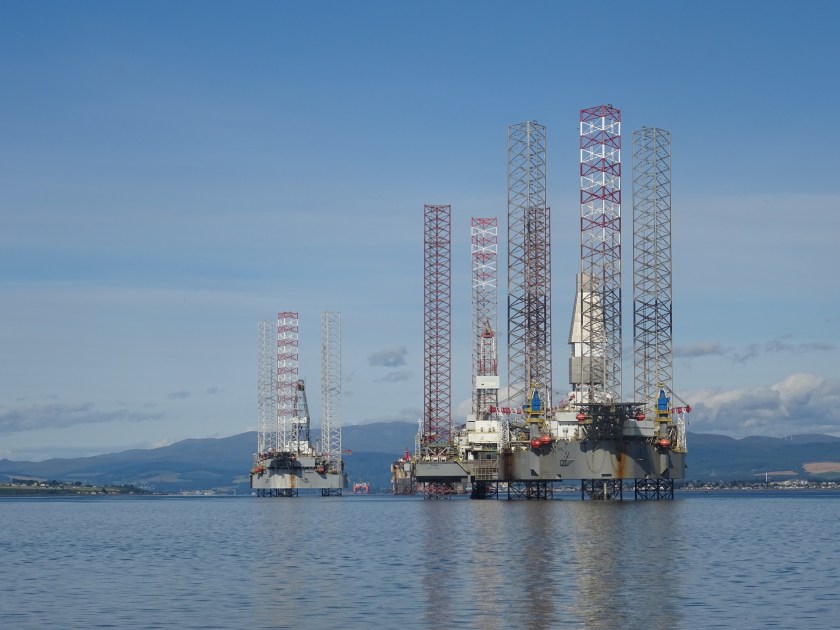
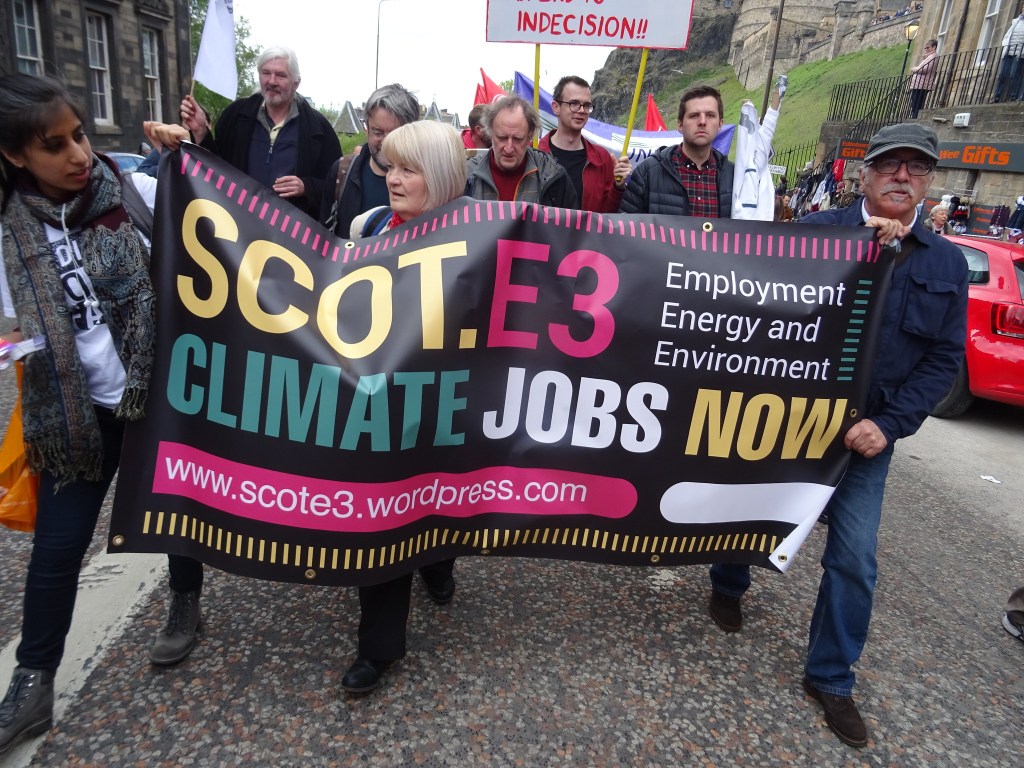
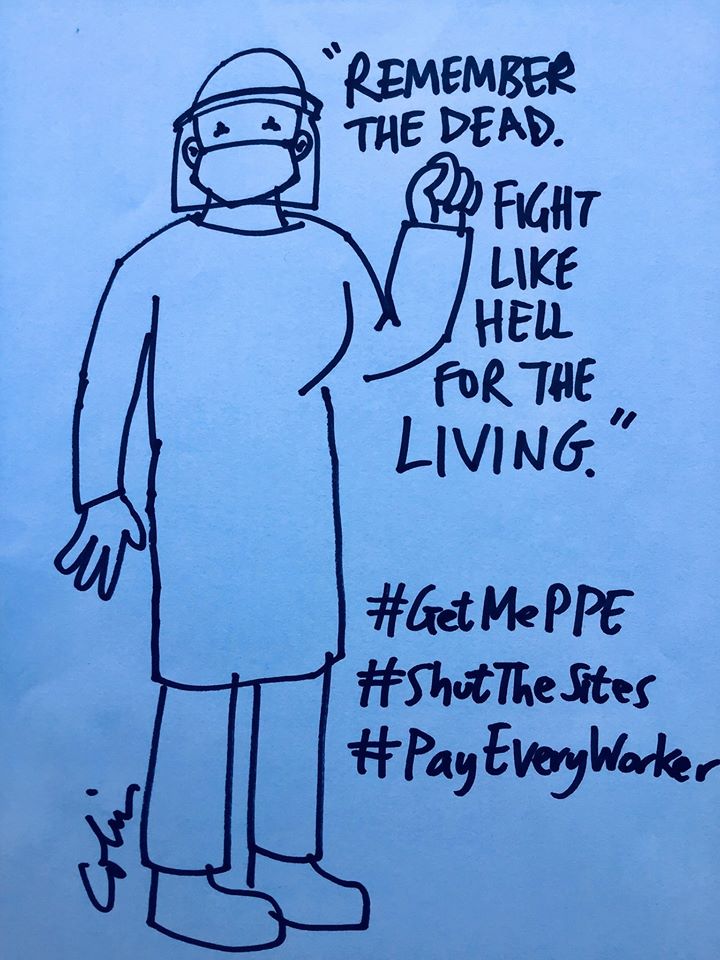




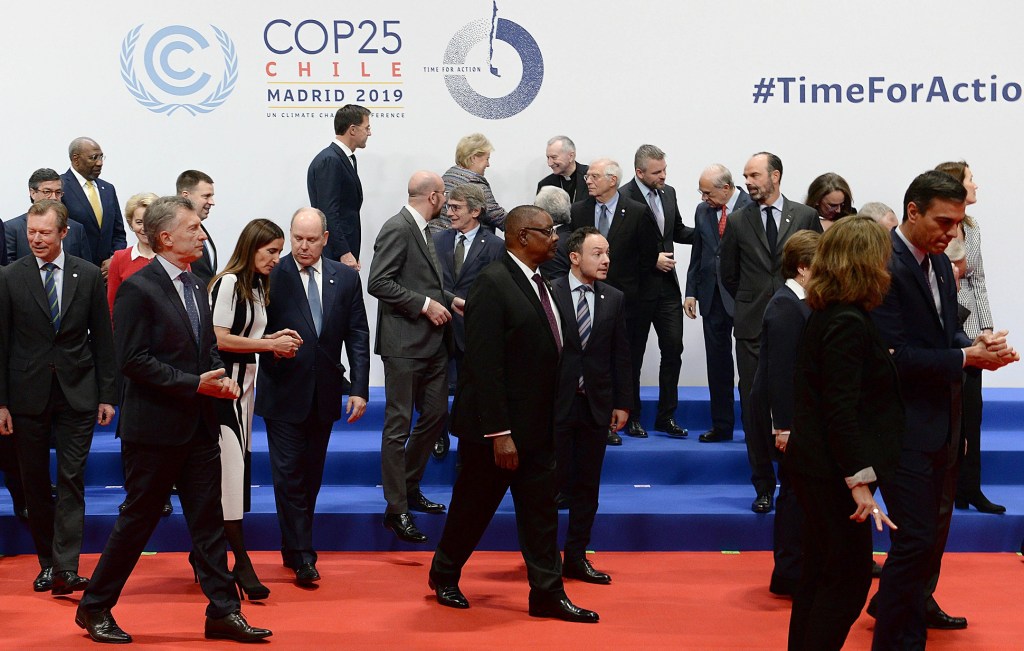

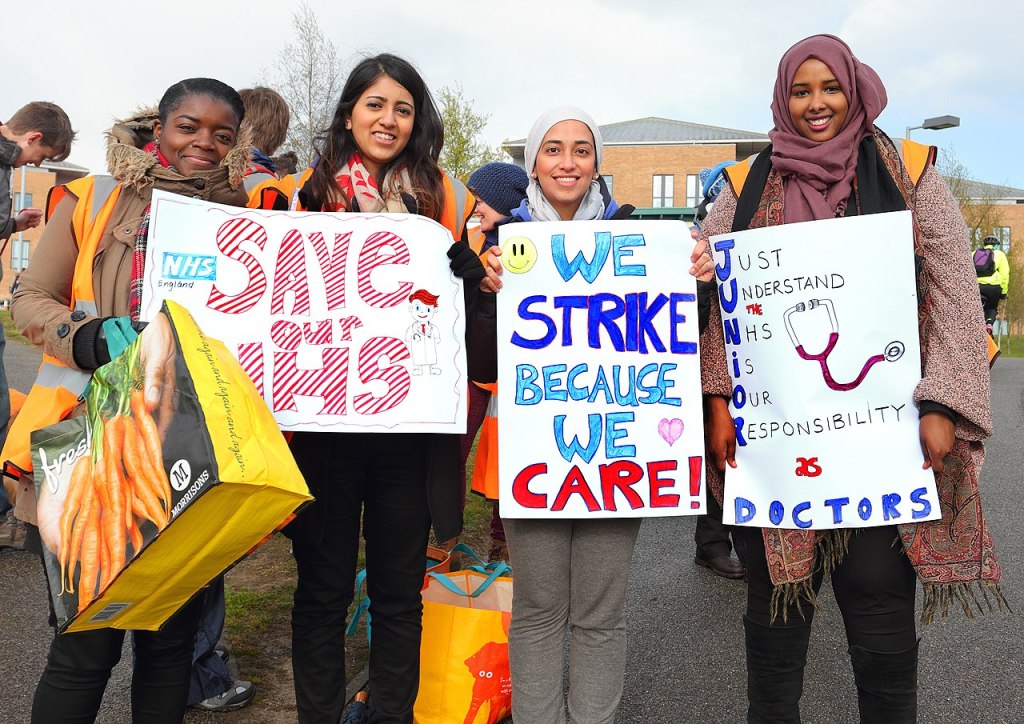

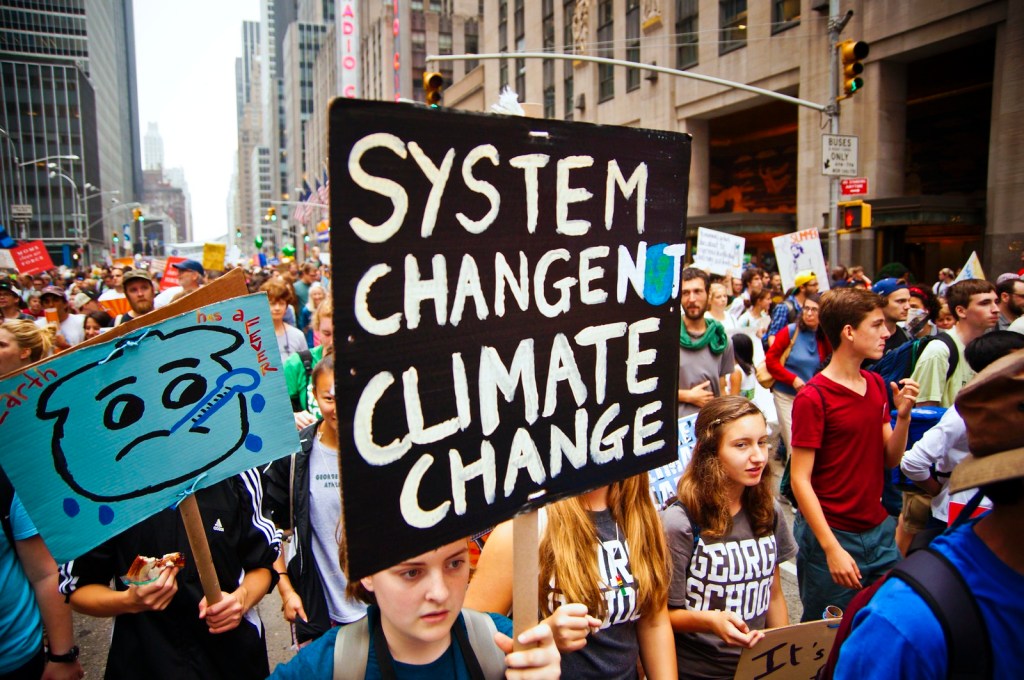
 Employment, Energy and Environment