Blog

LOCAL FOOD PRODUCTION – PART 3

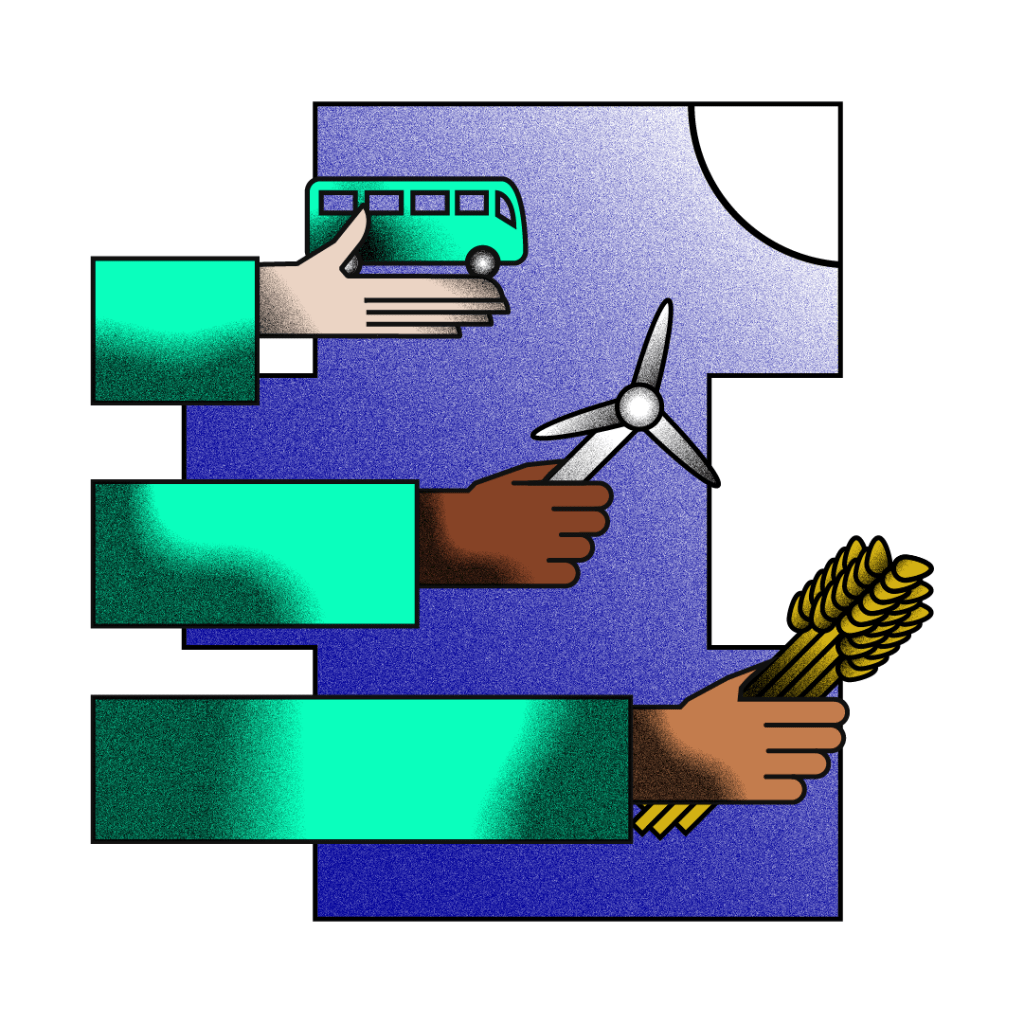
In this penultimate part of his extended article Mike Downham looks at different forms of local food production. Production and local democracy are fundamental to radical change. Tomorrows final instalment explores demands and organisation.

I’ll consider local food production under four headings: allotments, school gardens, community gardens, and farms.

Allotments

Allotments have a long and mostly successful history. In 1908 the Small Holdings and Allotments Act placed a duty on local authorities to provide sufficient allotments, according to demand. Originally a plot was defined as 250 square metres, based on the area needed to produce enough vegetables for a family of four. With the escalation of land prices and the erosion of local authority funding by central government, local authorities, desperate to sell land they owned, fell behind with provision. This led to waiting times of as long as 10 years in some places. Length of waiting list became a criterion for additional provision, but with the loophole that there was no statutory timescale within which local authorities were expected to meet their obligation to increase provision. By 2007 most local authorities had responded to unmet demand by simply halving the size of plots. Communities responded by trying to persuade private landowners to lease land to associations of local residents. Their efforts often failed, or leases were grudgingly granted with conditions slanted to suit the changing whims of landlords. Private sites are now common but the people working them often experience insecurity of tenure.

Individual plots are relatively affordable, at around £50 a year, paid to the site Association, who pays the landowner. Though plots are worked individually, sites are in practice usually strongly collective in the sharing of knowledge, skills, implements, plants and seeds. For many plot-holders they are an important place of belonging. 

For some people, particularly those living on their own or without children, a 250 metre plot is too big, and plots are often halved. Others, who have developed the knowledge and skills needed to produce reliably good crops of vegetables and fruit on every inch of their plots, would like to expand. “I just wish my plot was bigger” they say.

School gardens

School children love to garden. Without necessarily articulating it they recognise that growing veg and fruit isn’t just play but an opportunity to contribute their work to necessary production. Even nursery children can contribute significantly, their small fingers well-suited to sowing seeds, planting out seedlings and fine weeding. You have to be 5 or 6 before you can wheel a barrow, usually best if you have a partner to help you not to cowp your load of muck before you get to your destination. Digging straight trenches in gangs works well with older children. All ages like watering and love harvesting. Even weeding, notoriously unpopular, turns out to be satisfying if the task of clearing a specific area is shared between the right number of hands or hoes.

The learning opportunities in all this are enormous – I’ve heard primary teachers say they can teach everything on the curriculum while children are working in a veg garden – plants, wildlife, habitats, ecosystems, climate, weather, maths, history, the meaning of work … and of course food.

But there are certain conditions for making school gardens a success which these days often don’t exist. The first of these is that the garden has to be significantly productive. Too often school gardens are side-lined to an area which is too small, may be shaded and impoverished by trees, bushes or hedges, and may be badly drained. 

Secondly, there needs to be a teacher or a parent who has gardening knowledge and skills, and the time available to plan and work the garden with the children. There’s often no teacher in the school with the necessary skills and knowledge, and anyway their timetable may not give them enough time or flexibility to devote to learning in the garden. Parents sometimes or grand parents often come to the rescue, but they are increasingly unlikely to be able to give enough time now that two or more jobs per family is the norm, the grandparents preoccupied with caring for the pre-school children.

Thirdly, the whole educational experience in relation to food only has an impact if children have the opportunity to prepare and eat the food they’ve helped to grow, as experienced by children growing up on farms or in families with allotments or veg gardens at home.  Most larger primary schools have their own kitchens where the school meals are prepared. Many of these schools have school gardens, but few if any of these gardens yield enough produce to contribute significantly to meals in the school.

Secondary schools contract out the preparation of their meals, so students who don’t have the privilege of living in families which produce vegetables are one further step removed from the experience of preparing food from vegetables they’ve helped to grow. 

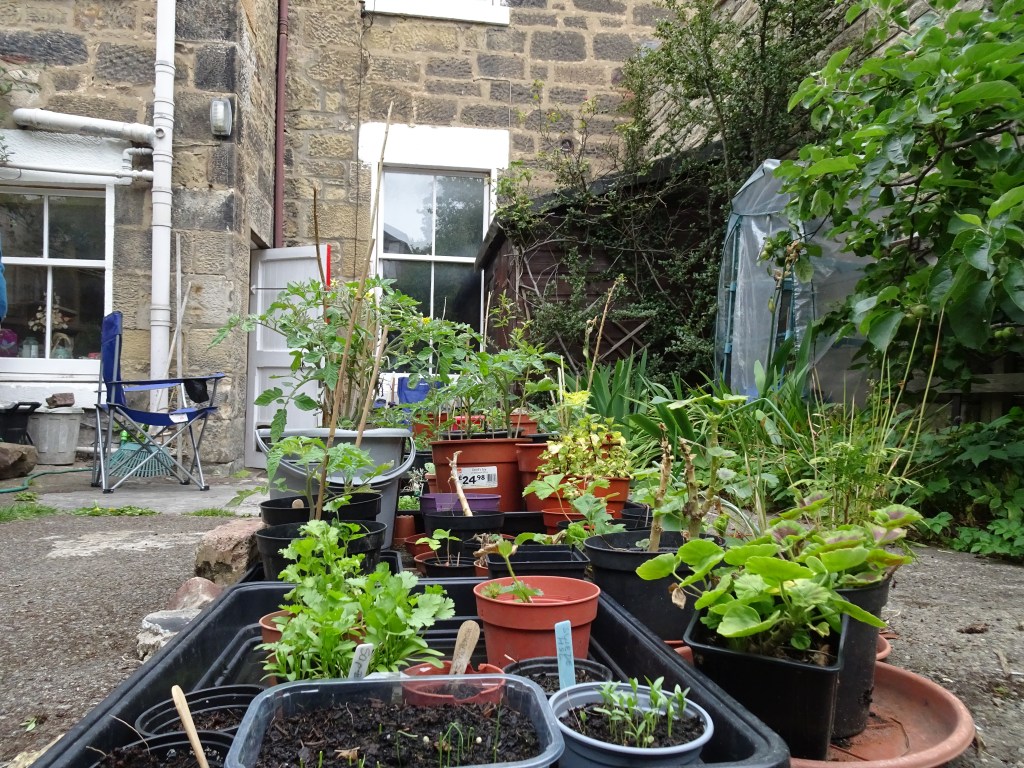
Image: Pete Cannell CC0

Community Gardens

The current community gardening movement in Scotland began in the late 60s with a renewed interest in green spaces in cities. As health and social issues for working class people have escalated during the neoliberal period, so has the number of urban community gardens.

Though there is much diversity in the design and aims of these gardens, the main driver has been social or therapeutic, rather than scale of production. In terms of physical and mental health, community adhesion and organisation, and as habitats for wildlife, community gardens have become important for a large number of communities.

Among the many benefits of community gardens, the therapeutic opportunity they offer to people with mental health issues stands out as a priority. At this moment there’s a conjuncture between on the one hand a new wave, precipitated by lockdown, in the epidemic of mental health issues spawned by neoliberalism 40 years ago and inflamed over the last ten of those years by austerity; and on the other hand the dialectic response to that epidemic now emerging in the revolutionary form of tearing up 60 years of psychiatry. Community gardens have the potential to play an important part in the new multidisciplinary mental health service.

But most community gardens are not productive to a significant scale. One reason for this is that they are generally sited on land whose fertility and soil structure have been compromised by previous industrial use. They are physically hard to work, and fertility isn’t easy to restore unless there is a farm or stable nearby. As with education, the health and social benefits of growing fruit and vegetables are enhanced if production is significant in relation to use by the number of people involved 

Farms

By ‘farm’ I mean any area of land for commercial food production too large to be farmed by hand, whatever its acreage. Defining a farm according to its acreage isn’t helpful because production methods depend on what is being produced, which in turn depends on the quality of the particular piece of land. It’s perfectly possible to raise a cow, a few sheep or goats, or hens on an acre of poor land without mechanisation or draft animal power, but very difficult to grow vegetables or fruit by hand on an acre of good land, unless it’s in a walled garden or covered by greenhouses or polytunnels. The term ‘market garden’, which attempted to capture 1-10 acres of land good enough for the production of vegetables and fruit, was never well-defined and has fallen out of use. With the escalation of land commodification, if you google ‘smallholdings’ you are offered for sale at extortionate prices every manner of land which can just about get away with not being called a garden along with a house. In the Highlands and Islands we also have crofts, which, despite their importance to remote communities and in relation to the radical legislation governing their land tenure, I’ll leave to one side because they aren’t able to contribute significantly to food production for urban populations by virtue of their location.

Farms, so defined, will play a highly significant part in a radical GND. Scotland is particularly well provided with land and climate suitable for growing vegetables, fruit and cereals in the east and for raising cattle and sheep in the west. Much of this land is close enough to the centres of population to supply locally, and the quantity of food production land is adequate for the size of Scotland’s population. There are not many countries in the world which are in this fortunate position. In this context agricultural skills and knowledge have remained strong despite industrialisation. Exceptional skills in low-cost field-scale vegetable production have developed in the face of low profitability, absence of subsidies (in contrast to other agricultural products) and increasingly fickle weather as a result of global warming.

Yet a staggering 80% of food is imported (that’s a UK-wide figure – I’m not aware of a separate figure for Scotland but there’s no reason to think it would be much different). The chief reason for this mismatch is of course the global commodification of food. What determines the food we eat isn’t where it comes from, how healthy it is, or the impacts of its production and distribution on carbon emissions and biodiversity, but how profitable it is to the big food corporations.  

But the other big reason we don’t eat more food produced in Scotland is the price of land. If people had affordable access to land, we could have more allotments, more community gardens sited on good growing land, not the left-over, infertile land which nobody wants, and bigger and better school gardens. 

And if affordable land was available we could have more farms producing for the local market, with lots of new job opportunities – a range of jobs all of which would be satisfying because they have a close connection to a product essential to society, and which would include jobs to suit people with different physical and mental abilities . We could have farms of 1 to 5 acres for people who want to have a go at producing food commercially for the first time, whether young people looking to make farming their career, or people who have lost their jobs or never had one, or retirees, or people ready to  expand from a successful allotment or community garden. We could have community-run 10-acre farms acting as local food hubs, providing training, advice, start-off tools, seeds and plants for a local network of allotments, community gardens, school gardens and small farms, as well as producing for the local market. We could have larger farms for secondary schools and colleges, as common in the days before land prices exploded. 

In the final part of this article to be published on 13th June Mike looks the kinds of demands we can raise and how we organise . If you’d rather read the full text of the article you can find it here.

LOCAL FOOD PRODUCTION – PART 2

The second part of Mike Downham’s four part series in which he looks at the extent to which local food production features in different versions of the Green New Deal. You can read the introduction here.

Green New Deals

One of the demand formulations now gathering widespread support is for a Green New Deal. There are many versions of GNDs, but they have in common huge expenditure by states, decarbonisation, new jobs and, to a greater or lesser extent, urgency. Until recently GND movements tended to focus tightly on renewable energy. Proposals then began to embrace additional approaches to decarbonising energy, particularly through improved heat efficiency of buildings and public transport initiatives.

But now something new has come into sight – the idea that a GND should not be focussed exclusively on energy but should cover every sector of society. The International Panel on Climate Change, in its October 2018 Report responding to the Paris Agreement’s readiness to settle for a 2.0⁰C rise in global temperature, said that “rapid, far-reaching , and unprecedented change in all aspects of society” were necessary to limit warming to a 1.5⁰C rise. But their definition of ‘all aspects of society’ included only “land, energy, industry, buildings, transport, cities” – a limited definition of society inevitable given the political influence the IPCC is subject to.

A few months later, in February 2019, Senator Markey and Representative Ocasio-Cortez proposed a more radical GND for the US, which includes job security for all, along with “providing high-quality health care; affordable, safe, and adequate housing; economic security; and access to clean water, clean air, healthy and affordable food, and nature”. But the way this was presented exposed them to dismissive right-wing attacks that these non-energy proposals were just ‘socialist add-ons’.  

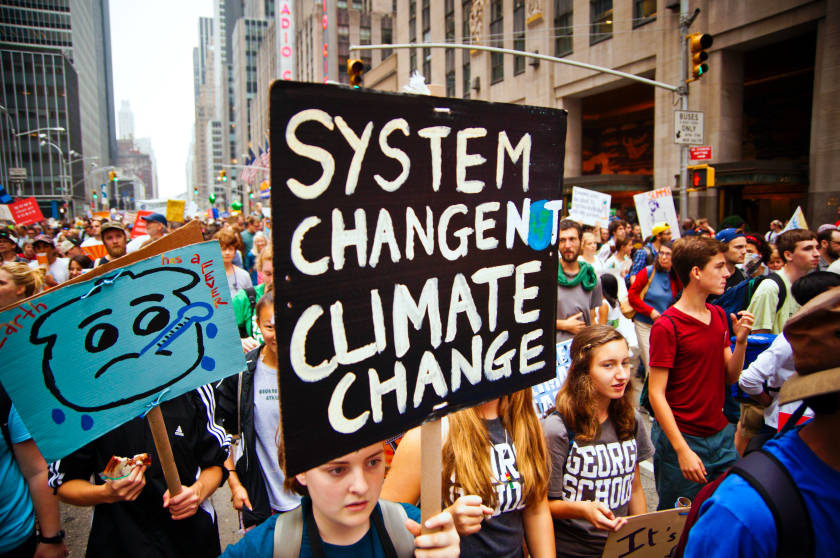
Image from Wikimedia Commons

Later last year, in November, A Planet to Win – Why We Need a Green New Deal by Aronoff, Battistoni, Cohen and Riofrancos was published in response to the Markey / Ocasio-Cortez initiative. I was among those who had an opportunity to meet with three of the authors at a ScotE3 zoom meeting on 15th May (see report on this website). They have developed the idea of a trans-sector GND extensively. Just as the root causes of global warming go beyond energy policy to the whole capitalist system steered by the market, they argue for a GND which addresses energy, jobs, housing, transport, recreation, nature conservation, education, and health and social care services. They explain that these aren’t just add-ons, but practically essential to reduce emissions, in three ways. 

By shifting more people from carbon-emitting jobs into carbon neutral jobs, which include education, health and social care services, overall emissions will be reduced. 

Secondly, as a GND can only be effective with intervention and massive investment by the state, market control over what is produced will necessarily be replaced by regulation. Without the distortion of profit, the ‘good life’ will be more closely aligned with the rationales of low resource use, low carbon emissions and well-being, rather than with status based on consumption of what the market tells us to buy.  As the authors of Planet to Win give as an example, people will prefer to spend their money on dancing classes than on another ipad. This shift will leave large numbers of workers without jobs – those who are currently employed by companies selling products which emit carbon, either in their manufacture or their use. In the context of a cross-sectoral GND these workers can readily be offered carbon-saving or carbon neutral jobs, accompanied by whatever training they need.

Thirdly, a just transition from fossil fuels can only be achieved through public ownership under local  democratic control. Local control cannot be truly democratic and effective without removing inequality and poverty. Job guarantees for all workers are a pre-requisite for reduction of poverty and inequality, so we will need a flexible and responsive employment sector. Any job whose purpose is to improve the quality of life, and which does not emit carbon, will be understood as a climate job.

A Planet to Win came out just one month before the start of the Covid-19 pandemic. The book’s recommendations are extraordinarily timely. They might have looked far-fetched at the point of publication, but now here they are – proposals which we can immediately move forward with and  develop. That they are available at this point is a bonus for the climate movement, which has no time to lose.

The pandemic has not only ripped off the protective blanket from the capitalist system, revealing the bankruptcy of its ideology for all to see. It has also presented us with new opportunities for organising. But before I move on to discuss those opportunities, what is it that at this moment is so important about local food production?

Local food production as part of a Green New Deal

Few would disagree with the importance of local food production, the benefits of which I summarised at the start of this piece.  In contrast, few of the GNDs which have been tabled have dealt with it in any detail. But, if for no other reason, the fact that food production and distribution are estimated to account for at least 30% of global carbon emissions, food has to be given a prominent position in the articulation of any GND.  Furthermore, as agreement grows that GNDs should be trans-sectoral, the argument for putting food at the heart of a GND becomes stronger, given the big but less easy to measure impacts of food on the physical and mental health, security and biodiversity of communities. 

The authors of A Planet to Win acknowledge that food is an important omission from their book, implying that it’s too big a subject to cover in a short book. This perhaps says something about the extent to which American people have become habituated to the commodification of their food. 

The IPCC did not include food in its list of societal factors which we need to address (though it did list land, without saying anything more about it). 

The US Green New Deal recommends access for all to “healthy and affordable food” but is silent on how that might be achieved. 

You could be forgiven for thinking that the EU GND, trotted out again last week by the European Commission in the context of a Just Recovery from the pandemic, does better by giving a whole section to food in its proposals, headed From Farm to Fork. But that section reads, along with its heading, as if written 20 years ago, with nothing more radical than improved labelling.

The Labour Party’s Green New Deal, agreed at its conference in September last year, is broad and radical and has urgency. But the word ‘food’ appears only once in the large document, at the bottom of the list of Universal Basic Services the Party intends to introduce, without any detail about what that ‘service’ would consist of.

All GNDs need to some extent to be country or region specific, while learning from each other about how best to articulate their demands. In Scotland the Green Party’s GND proposals, announced in April 2019, are limited to investing in low carbon industries, restoring our natural environment, giving everyone a warm home, and providing access to cheap, reliable and green transport. Food is not mentioned. 

In contrast the Commonweal GND proposals for Scotland, put out in November last year (the same month as the publication of a Planet to Win) include a wordy 17-page paper on food. This, along with all the Commonweal GND proposals, is about long-term strategy. The proposals do not articulate the urgent demands which we need to make at this moment if we are to limit global warming effectively. They also do not address the imbalance of power which confronts us. Notably, the paper on food says “It’s easy for food to become a class battleground, and we need better ways to talk about it”. But we don’t – a class battleground is precisely where we need to muster if we are to change food policy in Scotland, because the current confused policy is a reflexion of the class struggle, as is global warming. Once we’ve won that battle the Commonweal proposals will come into their own as contributions to the public debate about our collective strategy. To give them the respect they deserve, the Commonweal proposals were put together before the coronavirus pandemic, which has changed everything. 

The climate movement in Scotland needs to make urgent demands, addressing them not only to the Scottish Government but also to workers, including the many who have lost their jobs, or will soon loose them as a result of the coronavirus epidemic and  the simultaneous collapse of the North Sea oil and gas industry. Rapid change will only be achieved through the combined agency of the state and of workers. But we have to be clear first about what changes we are going to demand as part of a radical GND. As there’s been little discussion so far about demands in relation to food, here are some suggestions for starting that discussion. The suggestions are all about the production of food locally. Production and local democracy are fundamental to radical change. 

In Part 3 to be published on 12th June Mike looks in more detail at different forms of local food production. If you’d rather read the full text of the article you can find it here.

LOCAL FOOD PRODUCTION IN A TRANSECTORAL GREEN NEW DEAL FOR SCOTLAND – PART 1

Over the next four days we publish a series of articles by Mike Downham on local food production in the context of a just transition to a sustainable zero carbon economy

The local food story so far

Growing veg wasn’t in my family, and from what I can remember I never had any contact with anyone who grew veg when I was growing up in London. But from some instinct – perhaps because it’s not so long for most of us since there were farmers in our families – as soon as I had a garden, I wanted to try growing something I could eat. As I liked to eat purple sprouting broccoli and strawberries, I chose to concentrate on those – it was only a small patch in front of a terraced house in central Newcastle. Thinking I’d better do something about fertility, and with no farms nearby to beg or buy muck from, I collected some buckets of waste from the local slaughterhouse. This raised some eyebrows in the terrace, but my reputation was restored when the neighbours saw the size of the broccoli plants and the strawberries.

Having been overpaid by the NHS for 20 years I was privileged to be able to move on from that front garden to an allotment, then a subsistence smallholding, then a commercial farm with a Community Supported Agriculture scheme.

It’s not surprising that people, on their own or getting together with others, have been producing food in their urban neighbourhoods for a long time – it makes so much sense at so many levels. Theoretically the benefits embrace physical health, mental health, biodiversity, food security, food sovereignty, reduction of carbon emissions and political organisation. On top of theory, both the work of producing food and the eating of it are a lot of fun, especially if done collectively. Wherever working class people can get hold of land, in backyards, allotments, unused corner sites, reclaimed industrial sites, school grounds, or, if they can’t find land, in window-boxes and pots on doorsteps, they will grow vegetables and fruit, run hens for eggs, and when they have a bit more elbow room even raise a goat or a cow or two for milk, or animals for meat.

Historical surges in this activity, successfully driven by states because they were so popular, include the UK County Council smallholdings made available for servicemen returning from the first World War; the UK Dig for Victory campaign in the second World War; and urban food production in the Cuban Revolution. These surges did not last for long once war or the threat of war had subsided. In 2006 there was a resurgence of local food production driven by the Transition Towns movement across 43 Countries, mostly in the Global North. But this initiative soon petered out because it did not seriously challenge the powerlessness of communities, particularly in relation to land tenure, even when producers and consumers came together in cooperatives.

Across the Global South, and in the less industrialised parts of the Global North, small farmers producing for local markets are under increasing pressure from one set of capitalists who want to buy their land to farm it intensively or sell it on, and another set who want to sell them chemicals, seeds and machinery as must-haves for ‘modernisation’. Despite this, 70% of the world’s food supply still comes from small farms, and there’s a strong international movement of small farmers fighting to hang onto their land and achieve food sovereignty – the right to choose what food they produce, and how they produce it, in local partnership with the people who eat it. Via Campesina represents 200 million producers across 81 countries.

Image from Local Food Initiative CC BY 2.0

The new opportunity

The conjuncture of the coronavirus pandemic with the rising global movement for climate jobs as the basis of an effective strategy to limit global warming, and with the discreditation of capitalism by its evident inability to deal effectively with these two emergencies, has the potential to change the balance of power between labour and capital.  Demands which were unrealistic a few months ago have become realistically achievable. As consciousness of new possibilities grows, organisations have started to formulate demands, or to push more urgently through coalitions for demands they had already formulated.

In Part 2 to be published on 11th June Mike looks at the extent to which food production is integrated into proposals for a Green New Deal. If you’d rather read the full text of the article you can find it here.

What’s to be done about Mossmorran

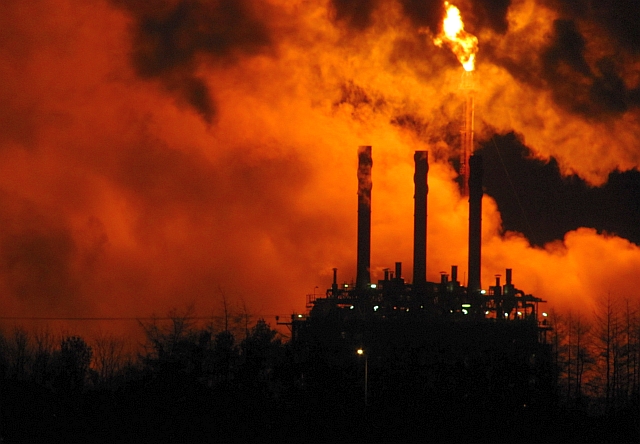
The twin gas plants run by Shell and Exxon Mobil at Mossmorran in Fife have had a devastating impact on the lives of people living nearby.  At our 3rd June online meeting Linda Holt and James Glen from the Mossmorran Action Group (MAG) gave a presentation on the progress of the campaign.

In the discussion that followed Linda and James addressed questions about the campaign and participants shared useful links and ideas for solidarity and joint activity.  

Campaigning

Linda noted that the MAG Facebook page is a really useful resource for following what’s happening and is used to share reports of flaring and other impacts from the gas plants.  However, Twitter has proved effective in pressurising the Scottish Government – the MAG twitter handle is @MossFlare – do follow and retweet.

We discussed the importance of phasing out Mossmorran as part of a Just Transition in Scotland and the opportunities for joint campaigning.

Linda and James talked about the SEPA investigations into Mossmorran and the limitations of SEPA as a Scottish Government Quango, whose board members are nominated by Scottish Government Ministers and dominated by representatives from the oil and gas industry.  There was strong support for replacing SEPA by an independent body that could take a critical view of government (in)action.  The UK Statistics Authority (UKSA) was suggested as an alternative model.  The UKSA has a statutory objective of promoting and safeguarding the production and publication of official statistics that ‘serve the public good’. 

Prior to lockdown Climate Camp Scotland was planning its summer 2020 action at Mossmorran.  Local campaigners were highly supportive, and it’s hoped that action will take place in the future.

Other points

MAG has attempted to get data on cancer in the areas adjacent to Mossmorran but NHF Fife refuses on the grounds of data privacy.  The only data available covers an area so large as to be useless.

ExxonMobil and Shell largely employ workers from outside the local communities so that the communities don’t get to find out what’s really happening in the plants. Closing down Mossmorran would not have a negative impact on local jobs.  The skills of those who work at Mossmorran are valuable and with support for retraining could be redeployed into new sustainable industries.

It was agreed that there was a need to submit something more robust on Just Transition to the Just Transition Commission.  Scot.E3 is working on a document and will share with MAG before final version is produced.  The deadline is the end of June.

Further reading

George Kerevan in Bella Caledonia writing on Big Oil, SEPA and Mossmorran

Information on ‘Cancer Alley’ in the US

Just and Green Recovery

Scot.E3 is one of more than 70 Scottish organisations that have added their names to a letter to the Scottish Government calling for a Just and Green Recovery. The letter was initiated by Friends of the Earth Scotland. You can sign the linked petition here. The five points that are central to the letter are:

  1. Provide essential public services for people, not profit. Expand public ownership of public services and boost investment, including in social care, strengthen the NHS and cradle-to-grave education, and create zero-carbon social and cooperative housing instead of buy-to-let.
  2. Protect marginalised people and those on low incomes by redistributing wealth. Provide adequate incomes for all instead of bailouts for shareholders, significantly raise taxes on the wealthy, ensure all public workers receive at least the real Living Wage and strengthen health, safety and workers’ rights, including access to flexible home working. Investigate and mitigate the disproportionate impacts of COVID-19 and social distancing on women, children and young people, disabled people, LGBTI people, people of colour, key workers, unpaid carers, private renters, and those on lower incomes.
  3. Provide new funds to transform our society and economy to meet Scotland’s Fair Share of climate emissions cuts and greatly enhance biodiversity. Create and protect jobs in sustainable travel, renewable heat, affordable local food and energy efficiency, with ambitious green employment opportunities for young people and support for retraining where whole industries are affected. Put measures in place to ensure all government programmes tackle inequality, public health and the just transition away from fossil fuels, excluding rogue employers, tax avoiders, major polluters and arms manufacturers from bailouts.
  4. Strengthen democracy and human rights during these crises. Withdraw new police powers, surveillance measures and restrictions on protest as soon as possible. Enable full scrutiny of planning and policy decisions. Create an independent Recovery Commission founded on participatory democracy to engage and empower communities, trade unions and civil society. Introduce fundamental human rights into Scots law so that safety nets are always in place for the most vulnerable.
  5. Offer solidarity across borders by proactively supporting an international Coronavirus and climate emergency response that challenges the scapegoating ofmigrants, centres on the worst affected, bolsters global public health, development and environmental bodies, and ensures equitable access to COVID-19 treatment. Use the UN climate talks in Glasgow to push for robust implementation of the Paris deal, platforming the voices of indigenous and frontline communities and advancing climate finance and global debt cancellation. Ensure coherence between all domestic policy and global sustainable development outcomes.

Decisions made in times of crisis have long-lasting consequences. After the 2008 financialcrisis, inequality grew and climate emissions spiralled. We want to see this moment seized for the common good, not repeat the mistakes of the past.

No new subsidies for big biomass plants

Scot.E3 has joined with many other campaigns and individuals in calling on the Westminster Government not to use renewable subsidies to support wood burning power stations. We reprint the Biofuel Watch Press Statement here. The Biofuel Watch website includes links to further reading and sources.

Hundreds of environmental campaigners are calling on the UK Government to take urgent climate action by ensuring that future renewable subsidies are not used to fund burning trees in UK power stations. Over 800 individuals as well as 20 environmental campaign organisations have submitted critical comments to the consultation, which sets out proposals on how to award future renewable electricity subsidies, called Contracts for Difference (CfDs). 

Image by Chris Allen CC BY SA 2.0.   

The NGOs and individual respondents to the consultation have called on the Government to ensure that safeguards vital for meeting climate commitments are reaffirmed, ones which would prevent new subsidies for large biomass plants reliant on imported wood from trees. They have urged the Government to protect forest ecosystems and the climate by ensuring that all future renewable power subsidies go to the cleanest forms of renewable energy, such as wind and solar power, rather than to more wood-burning power stations.

In 2018, the government announced new greenhouse gas and efficiency standards for CfD awards, which resulted in virtually all renewable power subsidies awarded since then going to lower carbon offshore wind and not to polluting biomass plants that emit at least as much CO2 as coal plants per unit of energy. They stated that failure to apply those changes “would lead to greenhouse gas emissions significantly above the projected UK grid average for most of the lifetime of [biomass] CfD projects”. The government’s proposal for future CfD awards, which they have just consulted on, makes no mention of extending those safeguards. The safeguards will automatically lapse unless they are explicitly extended.

Almuth Ernsting from Biofuelwatch said: “The UK already pays some £1.3 billion in subsidies for burning more wood in power plants than any other country in the world. At least, in 2018, the government’s new standards stopped the expansion of inefficient, high-carbon wood burning for electricity and thereby mobilised more money for non-emissive wind power. The government must not let those safeguards lapse now, after parliament acknowledged the climate emergency. It must not allow any more renewables subsidies to be misspent on a high-carbon source of energy which also harms wildlife and communities.”

Rita Frost from Dogwood Alliance added: “Following last Friday’s International Day for Biodiversity, I want to highlight the devastation that the biomass industry causes in the natural world. Living in the Southeastern forests of the North American Coastal Plain, I’ve been in awe of the remarkable biological diversity that’s all around me, and saddened by the devastating destruction of forest ecosystems by the biomass industry. Every day, this world-class biological hotspot of diversity, that includes species found nowhere else on the planet, is destroyed to make wood pellets for utilities like Drax [the world’s largest biomass power station, in Yorkshire]. The government has committed to planting 30,000 hectares of trees a year across the UK by 2025. Yet, just in the Southern U.S. in 2018 alone, over 43,000 hectares of forests were destroyed to feed Drax’s demand. No further biomass projects should receive government support.”  

David Carr from the Southern Environmental Law Center stated: “It is very worrying that we didn’t see any confirmation in the consultation document that the Government will apply the same emissions and efficiency standards to new biomass plants in future as it did in 2018 and ‘19. Those standards were hard-won by environmental campaigners as well as scientists showing the true climate impacts of cutting down trees for burning. We urge BEIS not to backtrack on its own commitments at this crucial juncture for the climate and biodiversity.”

Survey

Platform and Friends of the Earth Scotland are carrying out a survey to gather information on the effect of the oil crisis and COVID-19 on job security and work conditions and to understand how the campaign for a ‘Just Transition’ is perceived by oil and gas workers and what kinds of demands workers would like to see addressed by a transition to net-zero. 

The survey is directed at people employed in

  • The oil and gas industry
  • The supply chain (such as aviation, transport, car manufacturing and service industries)
  • Public bodies, unions or community organisations who regularly interact with the oil and gas industry and supply chain

If you fall in to one of these categories do take the time to complete the survey.

Scotland, Norway, Climate Jobs and Covid 19

The economies of Norway and Scotland have both been shaped by 50 years of exploitation of North Sea oil and gas. Both countries have governments that talk about tackling the climate crisis while remaining wedded to the further extraction of oil and gas from the North Sea basin.  There is however, a sharp divide between the two countries.  After 50 years Norway has the biggest Sovereign wealth fund in the world.  Scotland in contrast has no such fund and UK governments since the 70’s have pursued taxation policies that have resulted in massive net subsidies to the oil industry.  Right now job losses are taking place in the Scottish sector as companies respond to the overproduction of oil and the drop in price – in the worst-case scenario this could mean (including the multiplier effect) up to a quarter of a million jobs lost in Scotland out of a total workforce of 2.6m.

On the 24th May we were fortunate to hear from Andreas Ytterstad who is part of the Norwegian Climate Jobs Campaign – Bridge to the Future.  You can watch a video of Andreas’ introduction below.  This was followed by a very lively discussion in the course of which participants shared questions, ideas and links to resources.  It’s hard to do justice to such a rich discussion but in the rest of this post we have sketched a summary of the issues raised and included links to further reading and useful resources. 

Summary of the discussion

Andreas and others argued that state intervention and public control is essential for just transition. The door we’ve been pushing against is now slightly open – for example the growing scepticism in the Finance Department of even the right-wing Norwegian Government about further investment in oil extraction. All governments are now under huge financial pressure from increased expenditure and reduced receipts in the Covid-19 pandemic. This is an entirely new situation – we can push for things we couldn’t realistically push for before. Oil companies have no interest in funding transition, especially as they are led by men coming to the end of their working lives, not up for taking risks.

There was a lot of discussion about Climate Jobs, what they are and their relative importance in the overall economy.  Speakers noted the importance of studies by the Million Climate Jobs Campaign and the Green European Foundation in establishing a rigorous case for climate jobs.  Andreas noted that even if the current target number is too small it could act as the battering ram to break through to State acceptance of Climate Jobs and Just Transition.  He argued the need to win acceptance of the idea but that by itself it was insufficient.  The campaign also requires the agency of workers as active participants to ensure that ideas become implemented. Offshore workers’ skills will be important in new housing, energy efficiency retrofit of buildings and public transport. We are going to need huge numbers of Climate Jobs across all sectors, not just the energy sector. An aerospace worker added that there is also huge need for Climate Jobs arising from redundancies in the Aerospace industry.

Andreas noted that regional variation is important in planning and achieving Just transition. It will be most difficult in communities, which have grown and are now entirely dependent on oil.  Aberdeen is similar to Norwegian examples, but less remote and therefore more easily incorporated into a national plan. In the meantime we should support even defensive actions by these communities. One speaker noted that in England, Sheffield and County Durham for example, are both developing their own Climate Jobs / Just Transition plans. In both Norway and Scotland (and England) there’s potential for local and regional state authorities to join the Climate Jobs movement.  There were questions and contributions on the role of local authorities from contributors in Glasgow, Edinburgh and Aberdeen.

Other questions raised in discussion included:

How to fund the transition? Without a national investment bank how can manufacturing of renewables and other socially useful products for climate jobs be financed?

What are these green jobs?

Who will create them?

Who will fund these new jobs/businesses?

What is the response from Norwegian oil workers to transition jobs?

Will the jobs be from the private sector, or subsidised by national/regional governments, or state/regional publicly owned and financed?  Responses to this included ‘That’s fundamental  – I think the devil is not just in the detail of when or how much but also who will own it!  In Aberdeen the oil and local political establishment have ignored and then when they had to, slowly started to talk about transition but mainly to manage it and make sure they were still in control of transition!  What about pushing for transition without them in control?  Where all could the money be taken from.’

What does anyone think of case of Uruguay?  

More links and further reading

Andreas Ytterstad writing on climate jobs for the Open Democracy website

Scottish Government Energy Strategy

Aberdeen City Council consultation and net zero vision

Sea Change Report – the case for transition from North Sea Oil and Gas

In Scotland the Common Weal “Our Common Home Plan” outlines a way in which a six of passive measures to REDUCE energy requirements in buildings AND improve well-being. 

Call to Action

Read the call to action on global climate jobs

A Planet to Win

On Friday evening (15th May) three of the authors of ‘A Planet to Win – why we need a green new deal’ joined us from the United States to talk about the issues that are raised in their book.  The video of their introduction to the meeting is included in this post.  

While the book focuses on the US and draws inspiration from the original New Deal its themes resonated with the participants in the event – mostly from Scotland but also from England and the Republic of Ireland.  In an overview of the book Thea Riofrancos asks ‘what kind of labour movement do we need to win a green new deal and argues for the importance of broadening the idea of Just Transition and Climate Jobs to include care and social reproduction; a position that we have adopted in Scot.E3.

It’s impossible to do full justice to the range of issues raised in the discussion.  Participants raised the issue of housing and home insulation. In Scotland, well over 90% of the homes expected to be in use in 2050 have already been built – so dealing with the current buildings and current layout of cities is key to reducing emissions from the built environment.   Several people picked up on the issue of care and noted that the pandemic has underscored the fact that while care jobs should be central to a green new deal they have to be valued equally and paid equally to other jobs.

A Planet To Win lays the blame for the climate crisis on the fossil fuel companies – one participant suggested that staging a mock trial of CEO’s (and politicians?) for crimes against humanity might help take this view into the mainstream.   There’s a useful link to who the leading ‘criminals’ are on the Why Green Economy site

We didn’t have time to properly explore another question that was raised about how capitalist growth drives the continuing degradation of the climate.  There is a useful article on Degrowth in a recent issue of the Ecologist.  

There were also contribution on food and land use, taxation, the value of discussions that bring people together across national boundaries, the need to find new ways of using and conserving natural resources and the impact of  extractivism on the global south.  The final question before the speakers rounded up raised issues of the role of the state and the challenge of avoiding cooption by organisations whose purpose in proposing change is in fact to maintain the status quo.

If you were at the meeting or have watched the video we’d welcome contributions to this site on any of the issues raised.  

You can buy the book from Lighthouse Books who cohosted the event.

Covid19 and Oil Extractivism

In recent weeks we’ve published a number of articles on the impact of the drop in global oil prices on employment in North Sea oil and gas and on the urgent need to protect workers in the midst of the pandemic and seize the opportunity to organise for a rapid and just transition to renewables. Simon Pirani, Senior Research Fellow at the Oxford Institute for Energy Studies spoke at our 10th May public meeting.

You can watch the video of Simon’s talk here:

As background to the talk and for more information on the North Sea Oil and Gas industry you might also like to read the report on taxation and subsidies to the oil companies operating on the North Sea that we published in February.

If you’d like to look at Simon’s slides without watching the full video you can see them here:

We have a small number of Simon’s book available at the reduced price of £11 (postage extra). Email triple.e.scot@gmail.com if you’d like a copy.