Fossil Fuels and Right-Wing Populism

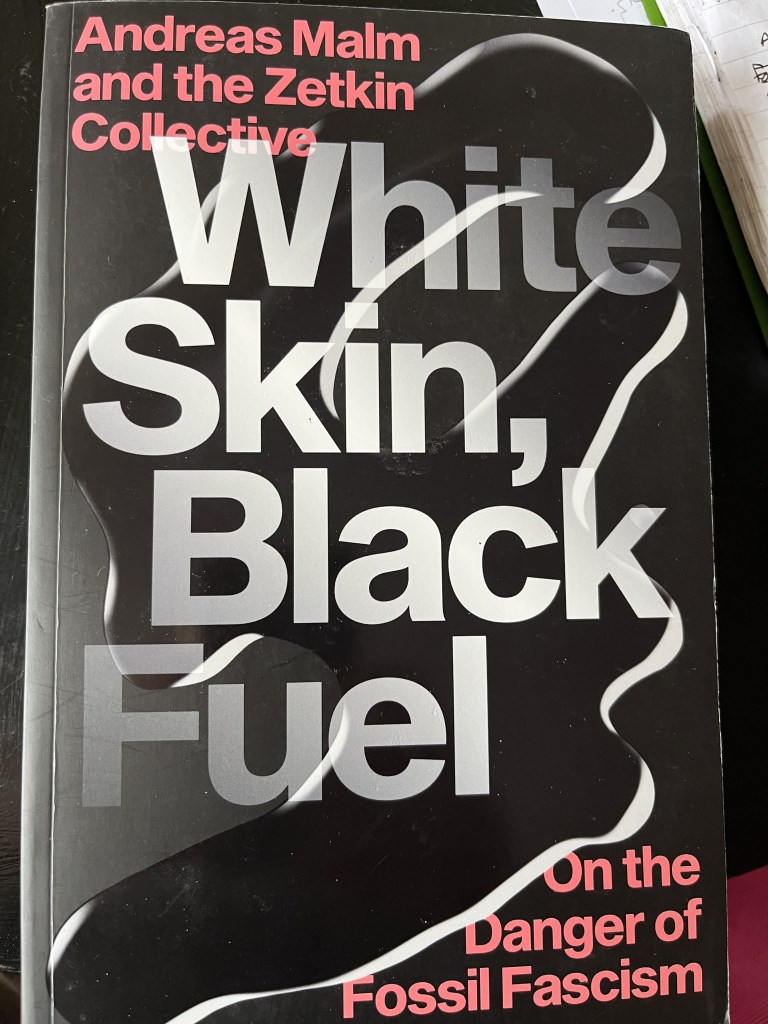
This post explores the way in which right wing populist parties use climate denial as a key part of their agenda.  In thinking about the topic, I found Andreas Malm’s excellent book ‘White Skin – Black Fuel on the danger of Fossil Fascism’ very helpful.  Early on in the book, Malm notes that: 

“All European far-right parties of political significance in the early twenty-first century expressed climate denial.”

The book weas written 3 years ago but it’s hard to think of more recent exceptions.  So, there’s definitely something to be explained here.

Clearly climate denial didn’t start with the rise of right-wing populism.  From the 1970’s onwards the major oil and gas companies, particularly Exxon, were researching the impact of greenhouse gas emissions on the environment and at the same time funding organisations like the Global Climate Coalition in the US whose role was to argue that pushing large amounts of CO2 into the atmosphere was not a problem.  Privately they knew from early on that fossil fuel extraction would have a devastating effect on the global climate.  In 1995 the GCC in an internal document wrote that 

“the potential impact of human emissions of greenhouse gases such as CO2 on climate is well established and cannot be denied”

but in public they denied it.  

As a strategy outright denial had its limitations.  The Kyoto protocol signed in 1997 marked the beginning of a new strategy – a shift from denial to greenwashing.  

The three core tenets of Kyoto are:

  1. Postpone the showdown with Fossil Fuels into distant future.
  2. Place no serious limits on fossil fuel extraction.
  3. New opportunities for generating profit.

In the UK, the industry’s plans for the North Sea are a good example of postponing any showdown with fossil fuels.  The strategy is based on continuing extraction through to and beyond 2050 and the development of a so-called net zero oil and gas basin.  Here net zero depends on heroic assumptions about techno-fixes such as carbon capture and storage combined with creative accountancy that ascribes all responsibility for the carbon in the oil and gas that’s produced to the users.  Globally there are virtually no regulatory limits on the production of fossil fuels.  It’s assumed that any run down will be as a result of market forces.  At the same time trading carbon permits has been highly profitable in financial terms and has allowed the industry to claim that the trade contributes to reducing carbon emissions.  There is next to no evidence that carbon trading and offsetting has reduced greenhouse gas emissions.

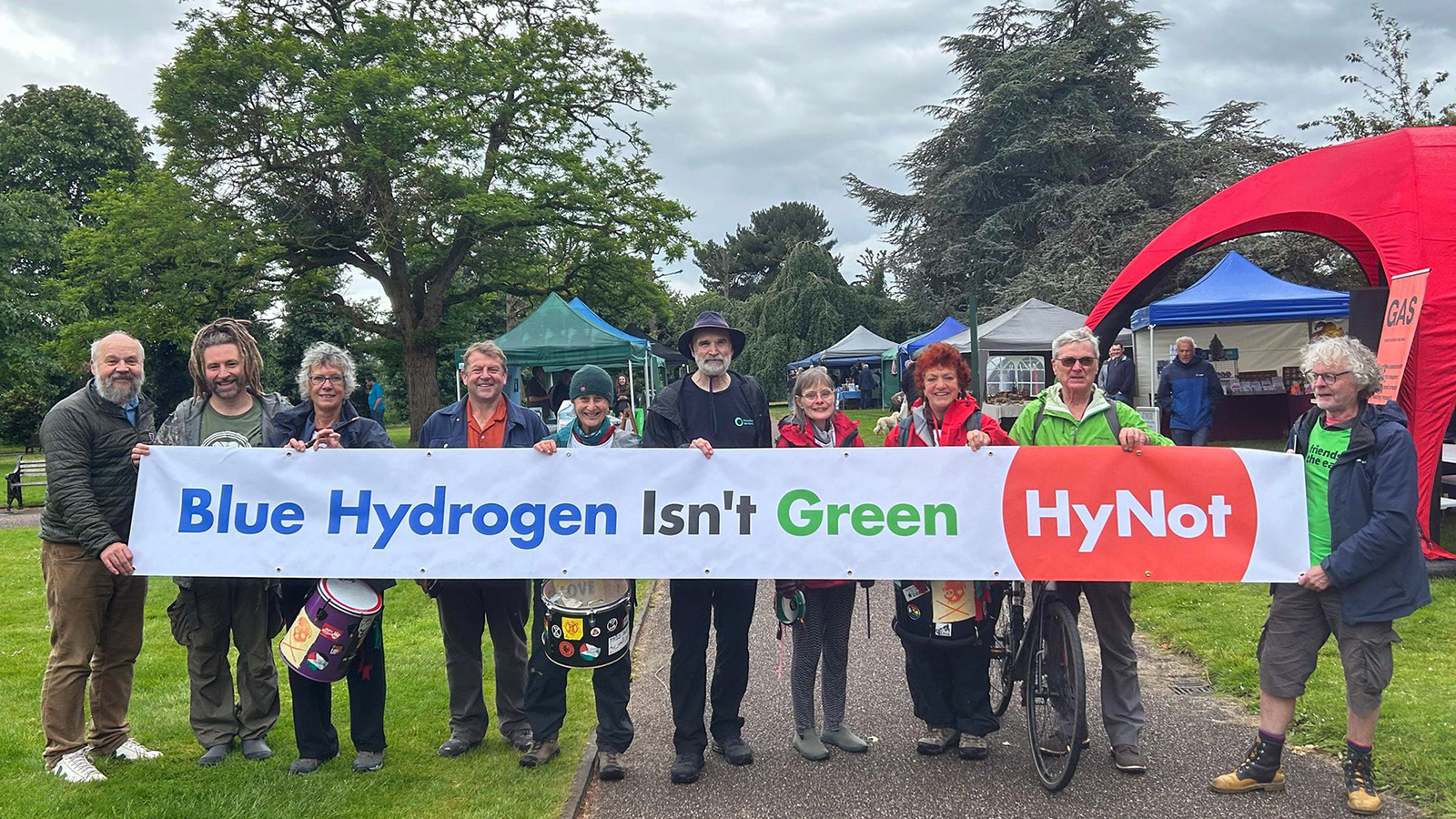
So as far as big business goes, we are still in the era of greenwashing.  Big oil and gas are at pains to argue that they want to protect the planet.  And almost all governments around the world are in lockstep with fossil fuel industry in this strategy.  Practically, depending on local circumstances the form that greenwashing takes varies, but everywhere it’s about maintaining or enhancing the profitability of fossil capital and preserving the existing infrastructure.  So, in the UK for example hydrogen is touted as the answer to domestic cooking and heating.  In the short to medium term this would probably mean higher carbon emissions than the existing use of natural gas and if ultimately the hydrogen was all green, i.e. produced by electrolysis it would be fantastically inefficient.  Requiring the use of up to seven times as much electricity than would be required to simply electrify cooking and heating.  But it’s attractive to the industry because it enables the continuation of existing economic and technical infrastructure.

The result of all this is that investment is skewed away from forms of energy use and production that are sustainable and rapidly achievable – and rather than supporting a just transition for workers and communities existing inequalities are maintained and ramped up. The ongoing cost of living crisis in which poor consumers of gas and electricity contribute to eye watering profits for energy producers and distributors is a case in point.

And it’s this that has provided fertile ground for right wing populist parties.

Five decades of neo-liberalism has syphoned money and resources from public to private and increased inequality everywhere so that working class people are anxious or scared about climate, cost of living, war, housing, growing old – in a world where the belief that their parents or grandparents had that things would be better for the next generation is dead.  Most people don’t trust established politicians – established parties offer variations on the same neo-liberal agenda.  Into this vacuum has stepped forms of right-wing populism that purport to offer alternatives to the ‘establishment’.

Right wing populism takes different forms – sometimes taking over long-established parties – Trump and the Republican Party in the US.  Or in the UK the continuing rise of right-wing populists as a major, perhaps majority faction within the Tory party.  Sometimes emerging from explicitly fascist formations, for example, Le Pen in France or Meloni in Italy.  And sometimes completely new organisations, for example the AfD in Germany.  None of them are into Greenwashing.  They are all about Climate Denial.

In Spain a prominent member of right wing populist party Vox explains climate change as 

“any change on the sun, the moon, the rotation of the earth, volcanoes and naturally occurring atmospheric phenomena but absolutely not on CO2 emitted by humans. It would, said Abascal, be ‘very arrogant’ to believe that humans could alter the climate. It would be ‘even more arrogant’ to think that the alteration could be rectified by ‘coercive laws and taxes’.”

The AfD in Germany has increased its influence through organising around climate issues, demonising perhaps the biggest climate movement around the world, foregrounding the cost-of-living crisis and agitating around the farmers protests.  Often supported and facilitated in this by the state and the police.

It’s obviously not just climate that is building the new far right.  Climate issues intersect with the legacy of neo-liberalism, migration and racism and the failure of the left to provide an alternative that speaks to working people’s insecurity and against individualistic solutions.  The far-right populists feed off social media fuelled confusion and conspiracies.  Very often angry or frightened people looking for answers find them in apparently anti-establishment and authoritative voices online.  

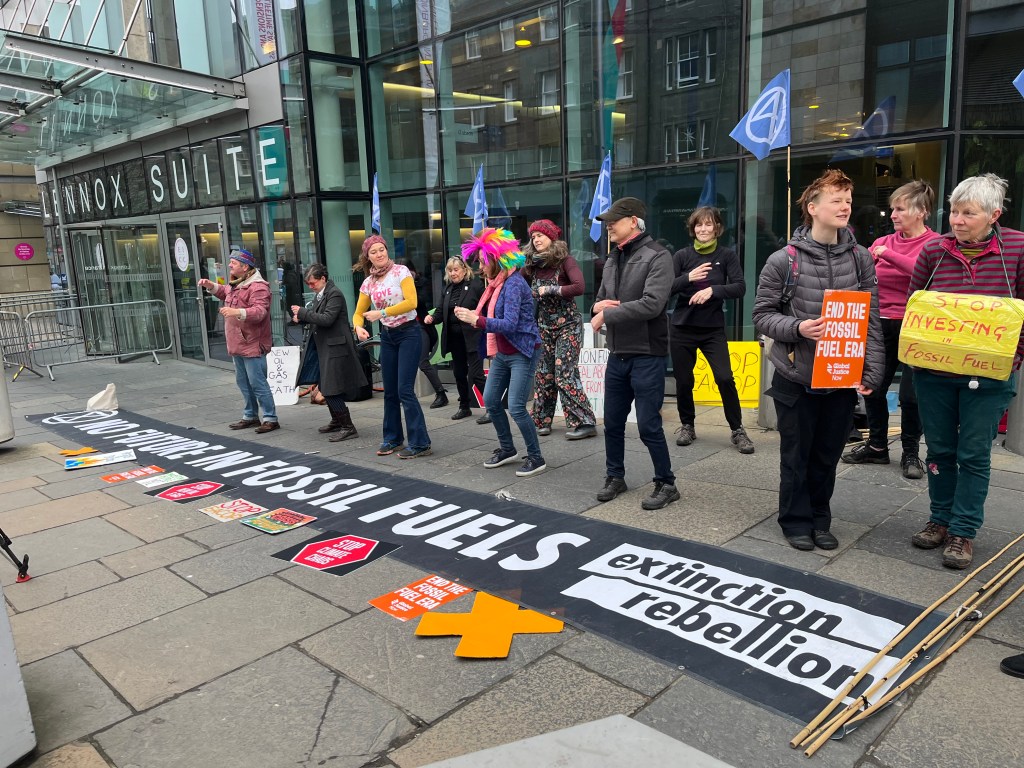
So, what’s to be done.  I think we can see the embryo of an alternative in the picket lines and in the huge response to the ongoing horror in Gaza.  It’s struck me standing on UCU picket lines last year, and then again in the last few months picketing and leafleting outside the Leonardo arms factory in Edinburgh, how many of the passing drivers beep their horns and wave.  Early in the morning many of them are white van drivers, very few of them will be in a union.  There’s are real possibility of breaking the rise of the populist right.  But if I’m right about why they’ve been able to build on climate I think part of what a revitalised left has to do is set it’s face firmly against partnership with fossil capital and clearly against solutions like CCS for continuing oil and gas production and hydrogen for domestic heating that preserve the power of fossil capital.  And that means for example that UNITE, RMT and GMB need to stop supporting the oil and gas industry’s North Sea transition deal.

Solidarity with GKN workers – join r+f delegation to Florence

From REELNews

GKN: Rank and file trade union delegation to Florence, are you interested?

Reel News are planning a rank and file trade union delegation from the UK to visit the GKN factory in Florence; not just to show solidarity to this important struggle, but also to spread the workers’ visionary ideas back here. And with thousands of jobs under threat at Port Talbot steel works (of which more below), and Grangemouth oil refinery due to close in 2025 with the loss of another 400 jobs, we can all learn a lot from what’s happening at GKN.

Many of us have been warning for years that if we don’t start planning a just transition away from fossil fuel production, it’ll be imposed on us – and thousands of workers will be thrown on the scrapheap. Now that’s starting to happen, it’s never been more urgent to fight for the alternative: a green future that would create literally millions of jobs globally as well as saving the ones currently under threat.

We’re still waiting to hear back from the GKN workers when would be a good time to visit, but at the moment we’re thinking maybe mid April, depending on how things develop. We want to time the visit for either a big mobilisation/demonstration, and/or if they actually start production under workers control. So the timing might well change. But for the moment, get in touch at info@reelnews.co.uk if someone from your workplace is interested in coming – and especially if you want to help with organising the trip too.

Obviously we’re looking at taking workers directly involved in fossil fuel industries, but every sector needs to make plans for a just transition (click here for a film detailing ideas that came out of a union workshop on a just transition for the hospitality sector for example), so please get in touch if you’re interested wherever you work.

The bosses have now agreed to delay the sackings until at least June 2024, after a NYE party packed out the factory with 7,000 people; and in the past month they’ve DOUBLED the money raised in popular shares to over 600,000 euros.

So now the workers have extended the share scheme until June – and are now very confident they can raise the full million euros. So if your trade union branch, organisation, or even a group of friends want to support this visionary project, there’s still plenty of time. Share packages start from 500 euros.

You can find details of how to take part here, and see the end of the video for more ways you can help. As the workers say, they can’t create an alternative model to capitalist fossil fuel production in just one factory – but they can create an example of what is possible.

Update from GKN workers

For more on the GKN occupation and a link to the REELNews video check out this post.

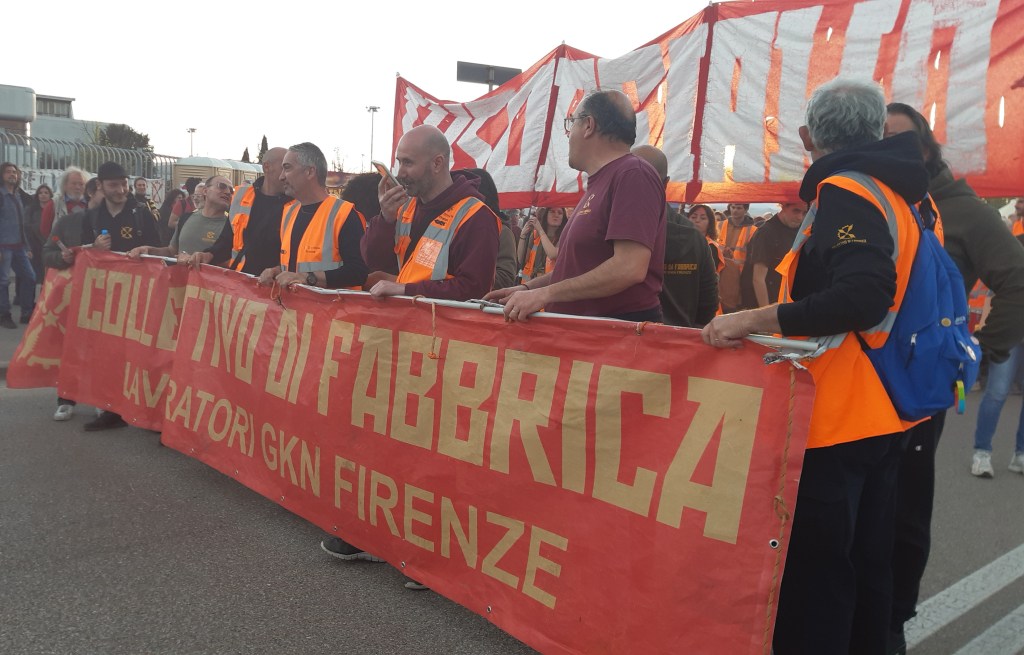
On 9 July 2021, Melrose Industries announced the closure of its GKN Driveline (formerly FIAT) factory of car axles in Campi di Bisenzio, Florence, and the layoff of its workers (more than 400). While in many such cases the workers and unions settle for negotiating enhanced redundancy benefits, the GKN Factory Collective took over the plants and kick-started a long struggle against decommissioning. However, what makes the Ex GKN Florence dispute really unique is the strategy adopted by the workers, who sealed an alliance with the climate justice movement by drafting a conversion plan for sustainable, public transport and demanding its adoption. Such a strategy engendered a cycle of broad mobilisations – repeatedly bringing tens of thousands to the streets – so that the dispute is still open, and the permanent sit-in at the factory remains until today.

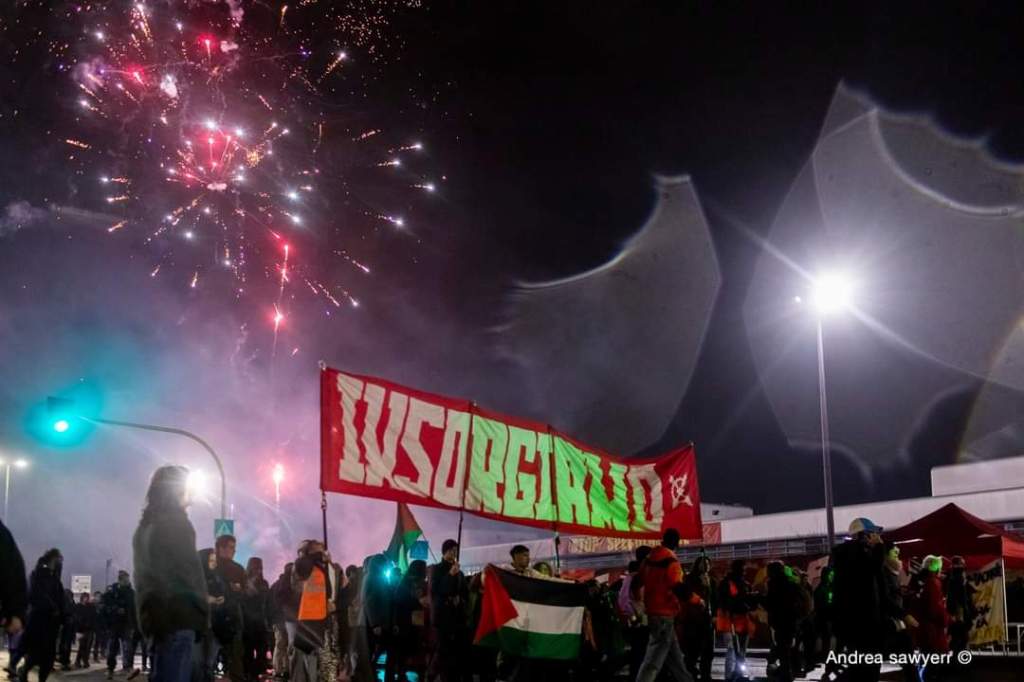
The workers were meant to be finally dismissed on 1 January 2024. The GKN Factory Collective had thus turned new year’s eve into a final call to action to defend their conversion plan. Such a pressure from below probably played a role in the labour court’s decision, announced on 27 December 2023, to overturn the layoffs for the second time. The 31 December 2023 concert in the factory and the subsequent nocturnal march across Campi Bisenzio’s industrial area became a mass mobilisation to relaunch the workers’ current plan to set up a cooperative for the production of cargo bikes and solar panels, as part of a broader vision for a worker-led ecological transition.

This project needs material solidarity now – over 600,000 euros have been collected by the popular shareholding campaign to launch the co-operative, moving closer and closer to the target of one million euros. All information on how to contribute, individually or as an organisation, can be found at the website www.insorgiamo.org.

Support the GKN workers in Florence

Thanks to REELNews for sharing this call

Already one of the most important climate justice struggles in Europe, the campaign by GKN workers is under imminent attack – and they need your help to complete their inspiring struggle

For over two years now, workers have been occupying the GKN autoparts factory in Florence to stop it from closing, in the longest factory occupation in Italian history.

They have received huge support in demonstrations of up to 40,000 people – and crucially, from the climate movement, which inspired the workers to come up with an alternative plan of production. 

Instead of autoparts, they plan to produce cargo bikes and solar panels, and use them to build a local economy based on the needs of people. They have already produced a prototype of the cargo bike; now they urgently need your help to make this “just transition” away from fossil fuels a reality.

The bosses are planning on sacking all the workers on January 1st so the first priority is to come to a New Years Eve event at the factory if you can, for a huge concert – and to barricade the factory. They’ve fought off redundancies before; with the same support, they can do it again.

But then they need to raise one million euros in a popular shareholder campaign, to start production off the cargo bikes and solar panels under workers control. So please share this video call out with trade unions, with environmental organisations, with everyone who wants to see a global just transition away from fossil fuels. Shares start from 100 euros, and already they have raised 315,000 euros – you can find details of how to take part at https://insorgiamo.org/100×10-000/.

You can also help by spreading their story; by offering to translate materials into other languages; and if you have the technical expertise, to look at the production plan to help improve it. Also, if you know of a cooperative or progressive group who would be interested in buying the cargo bikes or solar panels, that would be incredibly useful too. If you can help with any of this, email the collective at collettivo.gkn.firenze@gmail.com.

As the workers say, they can’t create an alternative model to capitalist fossil fuel production in just one factory – but they can create an example of what is possible.

Please support them in this absolutely crucial battle for a liveable, sustainable future.

What is the COP? Briefing 12 updated

Download a PDF version of this briefing

What is the COP?

COP is shorthand for conference of the parties.  Organised by the United Nations, it’s normally held on an annual basis, and it is the place where the nations of the world come together to discuss policy on climate action.   So, to give it its’ full title COP28 is the 28th annual Conference of the Parties to the United Nations Framework Convention on Climate Change.  COP 28 is taking place in Dubai.

A history of failure

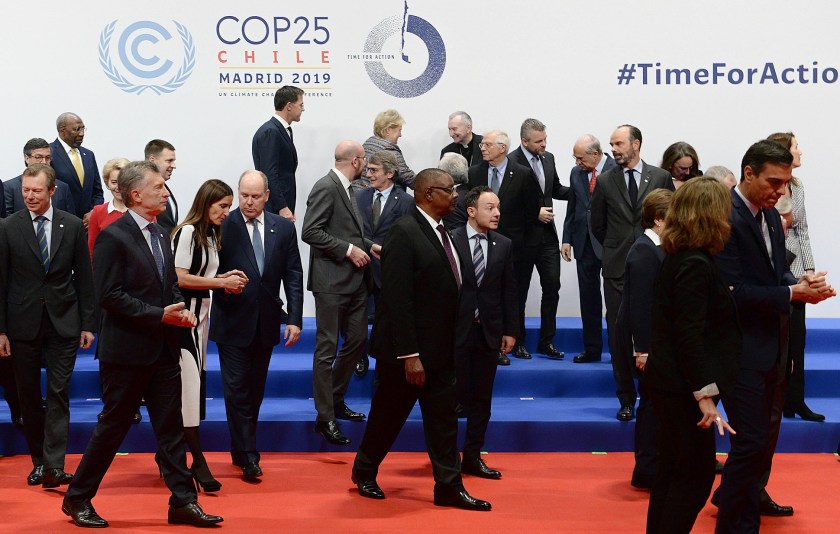
The first COP was held in 1995 in Berlin.  In terms of making an impact on greenhouse gas emissions the COPs have been an abject failure. The two most common greenhouse gases are carbon dioxide (CO2) and methane.  When COP 25 took place in Madrid at the end of 2019 the amount of carbon dioxide in the atmosphere had risen 67 parts per million by volume (ppmv) above the level it was at when the first COP met in Berlin. To put this in perspective CO2 levels increased by more during 25 years of COP discussions than they had in the previous 200 years.  Methane levels have tripled since 1995.  Greenhouse gases act like an insulating blanket over the earth’s atmosphere and are responsible for rising global temperatures.   So, the massive increase in the amount of these gases in the atmosphere is the reason why the climate crisis is now acute and why rapid action to cut emissions is so important.

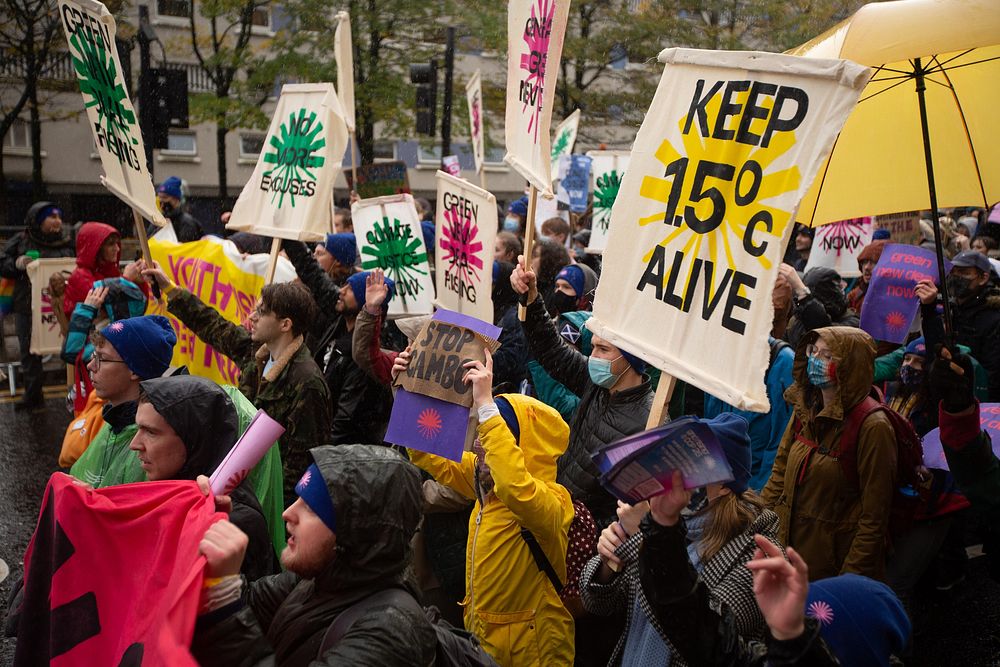
Climate activists bring the message “Insure Our Future” to COP26 in Glasgow, Scotland, UK, on 6th Nov 2021. More: Original public domain image from Flickr

The Paris Agreement of 2015

Back in 2015 the COP (21) took place on Paris.  The conference ended with an agreement that has since been ratified by 189 out of the 197 countries that participated (The Paris Agreement).  Ratification committed countries to developing plans that would curtail global temperature rise to less than 2 degrees centigrade.  Those who have not ratified include some important oil producers.  The USA ratified under Obama but then withdrew under Trump only to return on the first day of Biden’s term of office.

In principle ratifying the Paris Agreement commits countries ‘to put forward their best efforts through “nationally determined contributions” (NDCs) and to strengthen these efforts in the years ahead.’  The reality has been that progress has been negligible.  The agreement is essentially voluntary and avoids specific targets.  Political economist and environmentalist Patrick Bond notes the ‘Agreement’s lack of ambition, the nonbinding character of emission cuts, the banning of climate-debt (‘polluter pays’) liability claims, the reintroduction of market mechanisms, the failure to keep fossil fuels underground, and the inability to lock down three important sectors for emissions cuts: military, maritime transport and air transport.’

COP fault lines

The COP is dominated by the big powers.  So, in the negotiations at every COP there are sharp divisions between the major industrial nations that are responsible for most greenhouse gas emissions and the global south, which endures the biggest impact of climate change.  At the COPs, and in the run up to them, there is also a great deal of activity from non-state organisations.  Businesses, NGOs and union federations lobby before the event and can obtain credentials that enable them to be within the main conference areas.  There is of course a huge imbalance in resources between the corporate lobbyists and the climate campaigners.  Groups that represent women, indigenous people and poor people struggle to have their voices heard within the conference.  The climate movement is mostly excluded from the conference zone by barricades and police.

COP28

Sultan al-Jaber, the president of COP28 in Dubai is also the director of the Abu Dhabi National Oil Company.  Before the COP began the BBC disclosed leaked briefing documents showing that meetings with international participants were being used to make new oil and gas deals.  Jaber denies that this is the case but in truth it should hardly be a surprise.  The Financial Times (FT) describes the COP as a trade fair for the oil and gas industry.  Total attendance in Dubai is said to be around 80,000 and dominated by bankers, consultant and lobbyists.  These people attend to do business while using PR spin to burnish their climate credentials.  The chief executives on the UAE’s COP28 guest list included interim BP chief executive Murray Auchincloss, BlackRock’s Larry Fink, commodity trading group Trafigura’s Jeremy Weir and Brookfield Asset Management’s Connor Teskey.  Huge asset management companies like BlackRock and Brookfield are investing in renewables and were involved in the $30bn fund launched in Dubai to invest in climate-related projects – but while total investment in renewables now exceeds investment in fossil fuels the latter has risen year on year for the last four years.  There is no sign of fossil fuels being phased out as is necessary to prevent runaway climate change.

Organising for the COP

From the start the COP process has operated within the domain of market economic orthodoxy.  It assumes that market forces will drive a move towards less carbon intensive technologies and hence reduce greenhouse gas emissions.  There have indeed been significant developments in sustainable technologies – particularly wind and solar.  And yet at the same time the big energy companies have pursued a ruthless drive to exploit new hydrocarbon resources in a way that is completely incompatible with even the most modest targets for limiting global warming.   Since the COP began global emissions have risen by more than two-thirds.  

The history of the COPs has been one of dreadful failure.  And yet for many climate NGOs representation and lobbying at the COPs is an annual priority.  The COPs are a huge exercise in greenwashing, a jamboree for the corporate decision makers who are very much the problem and not part of the solution.  So, yes, we should protest when the COP takes place but there’s a growing movement to say that what we should be doing is boycotting its institutions.  There is a real need for international coordination but to get the COP process has failed – we need  to break from business as usual.  This year as COP28 takes place in air-conditioned luxury in Dubai – Earth Social is organising a grass roots conference in Colombia – check it out at earthsocialconference.org  

Earth Social Conference

A message from the organisers of the Earth Social conference – timed to take place in Colombia as COP28 takes place in Dubai.

It boils down to whether we are honest with ourselves, or not.
UN climate summits are a joke that continue to push the bounds of absurdity.
Since they began, yearly global emissions have increased by more than two-thirds. Worse still, no plans have been made to phase out fossil fuels. Should we be surprised when industry lobbyists continue to dominate conferences? Can we expect anything different from this next summit, taking place in a petro-state, chaired by an oil company boss… Are we expected to buy into this charade…?

We, on the other hand, are climate realists. We see where we are being led. We know we need to apply the emergency brake to avoid earth system collapse. That’s why we refuse to participate in a process of trading empty promises any longer.

That’s why we are inviting climate realists to the Earth Social Conference in Casanare, Colombia, from 5th-10th December 2023.

Join us to build the collective force we need in order to pull the emergency break.

Although the conference is in person in Columbia on 7th December it is possible to join some of the sessions by Zoom. Click here to go to the conference website and register.

Palestine is a climate justice issue

We are happy to share this article by Manal Shqair who is a founder of the Palestine COP 26 alliance.

Join the Scottish demonstration for Gaza – 1pm Saturday 2nd December – assemble on Regent Road – just up from Waterloo Place.

Human-induced climate change represents the biggest challenge and threat to living species and human existence. The climate crisis is deeply rooted in centuries of European colonialism intertwined with capitalism, which is rooted in white supremacy.  The exploitation of the planet and its resources, dehumanization of colonized people and obliteration of their cultures, knowledge and lifestyle have been the foundation of colonialism. Israeli colonization of Palestine is among the living examples of how colonialism and environmental degradation are intertwined. 

In the last two decades, the Gaza Strip has been facing severe effects of the climate crisis due to the inhumane Israeli blockade. With the incessant Israeli carpet bombing of Gaza since 7 October, the climate crisis is exacerbating threatening the lives of the 2.3 million people living there. According to the Euro-Med Human Rights Monitor, between October 7 and November 2, Israel dropped 25, 000 tons of explosives on the Gaza Strip, equivalent to two nuclear bombs.[1] Israeli excessive bombardment of the Gaza Strip has killed at least 13, 000, including at least 5, 500 children, and injured at least 30, 000 people.[2] Moreover, since October 7, Israel has been subjecting the territory to mass dehydration and starvation. The full extent of Israeli violence toll, including the resultant climate catastrophe is unclear yet. 

https://commons.wikimedia.org/wiki/File:Damage_in_Gaza_Strip_during_the_October_2023_-_07.jpg

Israel’s ability to dehydrate and starve 2.3 million people, half of them are children point to the decades-old Israeli policies and practices in terms of taking over and exploiting Palestinian natural resources, particularly land and water. For decades, before the assault on Gaza started, about 96% of Gaza’s water was unfit for human consumption due to Israeli siege and the acute power crisis. Israel has always denied Palestinians’ right to food sovereignty.[3] Since 2000, Israel has been gradually destroying Gaza’s agricultural land to establish buffer zones.[4]

In the occupied West Bank, Israel controls more than 87% of the Palestinian water resources and over 60% of fertile land in favor of illegal Israeli settlers, in an act of climate apartheid.  Several agrarian communities in the West Bank are facing increased Israeli settler violence under the protection of the Israeli army to force them from their land.[5] So far since October 7, 16 Palestinian herding communities have been expelled from their land thanks to intensifying Israeli settler and army violence.[6] The displacement of these communities is a threat to the environment that is shaped by their sustainable environmental stewardship. 

Palestinians are unable to adopt to and mitigate the climate crisis due to Israeli settler colonial policies, particularly the control of water and land. Simultaneously, Israel has been positing itself as an environmental steward and expert in agri-business, afforestation, water solutions and land efficiency. The Jewish National Fund (JNF) has been playing a key role in greenwashing Israeli apartheid settler colonialism. The JNF prides itself on planting millions of pine trees as an act of making ‘the desert bloom’ while in fact it has been a way to cover up destroyed Palestinian villages when Israel was created in 1948.  

The struggle of the Palestinian people for climate and environmental justice is inextricably linked to the struggle for self-determination. Climate movements in the UK and beyond should recognize the centrality of the Palestinian struggle to reclaim and liberate their land and resources to the struggle for a just energy and agricultural transition amid the exacerbating climate crisis. 

Support Palestine as a climate justice issue by:

  • Joining in the international call for an immediate ceasefire in the Gaza Strip and the provision of humanitarian aid, including water and food. 
  • Supporting the Stop the JNF campaign, which seeks to revoke the charitable status of the JNF in the UK, as well as expose it role in the colonization of Palestine. 
  • Adopting the BDS call for boycott, divestment and sanctions against Israel. 

[1] https://www.aljazeera.com/news/longform/2023/11/9/israel-attacks-on-gaza-weapons-and-scale-of-destruction

[2] https://www.aljazeera.com/news/liveblog/2023/11/19/israel-hamas-war-live-israel-attacked-two-schools-killing-

dozens#:~:text=At%20least%2013%2C000%20people%20have,on%20Gaza%20since%20October%207.

[3] https://www.newarab.com/features/israels-blockade-gaza-creates-environmental-crisis

[4] https://www.middleeasteye.net/news/israel-gaza-aerial-spraying-herbicides-near-palestinian-farmlands

[5] https://antigo.stopthewall.org/factsheet-cutting-lifeline-stop-annexation-palestinian-water

[6]https://www.btselem.org/video/20231113_community_of_khirbet_zanutah_south_hebron_hills_was_forcibly_transferred_under_cover_of_gaza_fighting#full

Why the world’s first flight powered entirely by sustainable aviation fuel is a green mirage

This article by Josh Moos and Gareth Dale was first published under a Creative Commons License in The Conversation on 28th November 2023

A Boeing 787 Dreamliner is set to take off from Heathrow on November 28 and head for JFK airport in New York, powered by so-called sustainable aviation fuel (SAF). According to its operator, Virgin Atlantic, the world’s “first 100% SAF flight” will mark “a historic moment in aviation’s roadmap to decarbonisation”.

Dreamliner https://commons.wikimedia.org/wiki/File:Boeing_787-8_Dreamliner,_All_Nippon_Airways_-_ANA_AN2105773.jpg

It is proof of concept, we are led to believe, of the dawn of “guilt-free” flying. Unfortunately, we have been here before, and the results last time were anything but green. 

Based on our research into how wealth and power shape the environment, we argue that continued growth of the aviation sector, as with the economy in general, is incompatible with preventing runaway climate change. The technology currently being developed by the aviation industry has zero chance of changing that. And the fuels being used in Virgin’s latest experiment are not significantly more sustainable than those in its previous attempt.

Virgin’s sustainability initiative dates back to the 2000s, when British business magnate Richard Branson was at the helm. In 2008, to some fanfare, a Virgin aircraft flew from London to Amsterdam using a fuel derived in part from palm oil and coconuts. Technically, the mission was a success, but the sustainability claims were laughable.

To have fuelled that short hop with 100% coconut oil would have consumed 3 million coconuts. The entire global crop would supply Heathrow for only a few weeks — and it is one of 18,000 commercial airports worldwide. Following this stunt, Virgin gave up on coconut oil.

Virgin’s latest flight is simply a repeat of 2008. It’s a smoke-and-mirrors exercise to convince governments that SAF will enable aviation to continue its relentless growth on a sustainable basis – and in this, it is succeeding.

Even waste products aren’t sustainable

Virgin’s defence rests on the claim that its new SAF no longer comes exclusively from crops. It is blended with waste products. One of the main suppliers for Virgin’s transatlantic flight is Virent, an organisation based in Wisconsin. Virent makes SAF from conventional sugars such as corn, mixed with wood, agricultural waste and used cooking oil. 

As with coconuts, any crop grown for fuel competes with foodstuffs and pushes the agricultural frontier further into forests and peatlands, with large releases of carbon.

But what of the waste products? Surely reusing cooking oils offers a sustainable solution? Unfortunately, in a notoriously unregulated market, it seems not. 

Another of Virgin’s suppliers, Neste, collects cooking oils from sources worldwide, including McDonald’s restaurants in the Netherlands and food processing plants in California, Oregon and Washington. The US Department of Agriculture alleges that some trade in SAF feedstocks – including from Indonesia to Neste’s refinery in Singapore – may be “fraudulent”. 

Neste has denied the claim. But, even if its used cooking oil is entirely legitimate, there is still an allegation that palm oil from plantations responsible for tropical deforestation is being marketed as used cooking oil

Virgin Atlantic maintains that the SAF it uses is made entirely from used cooking oil. However, if the aviation industry bets big on used cooking oil, it is feared it will turbocharge tropical logging and the extermination of the orangutan and countless other endangered species.

The real kicker is that even if all used cooking oils were traceable and sustainably sourced, they are not scalable. The US collects around 600,000 tonnes of used cooking oil each year. If every last drop were diverted to SAFs, it would meet at most 1% of America’s current aviation demand. 

Capturing the White House

The problems of scalability, the competition of agricultural inputs with foodstuffs, forests and wildlife, and the carbon emissions that result from land use change are just three of the shortcomings that ensure SAFs will not be the magic bullet that the aviation industry would have us believe. Despite this, SAF fever has won over the White House. 

The Inflation Reduction Act set targets for SAF production at 3 billion gallons by 2030 and 35 billion by 2050. These targets are fantasies. But, to the extent that they are approached, they will only add to the pressure on food prices and wildlife.

That SAF is being touted so zealously attests to the shortage of alternative technologies. Battery-powered planes are viable but only as short-haul “flying taxis” that compete with ground transport. The other panacea, hydrogen, confronts colossal technological and infrastructural barriers, problems of scalability, competing uses, and environmental concerns

Tinkering with aircraft technology, such as engine size or wing shape has also faced diminishing returns. Efficiency improvements lag far behind the sector’s growth, which is why aviation emissions are still soaring.

Where do we go from here?

Ahead of the 2008 coconut-fuelled flight, Virgin’s chief executive Steve Ridgway explained its logic. He said the aviation industry needs “to be seen to be doing something”. Fifteen years on and the playbook remains the same. 

The Virgin Atlantic SAF flight promises to rescue the airline from the threat of climate change, allowing them and their passengers to “keep calm and carry on”. In buying into this fantasy, governments give themselves an excuse to avoid taking climate breakdown seriously – an emergency that requires radical action if the planet is to remain habitable for humans.

There is the potential to create a good life for all within planetary boundaries. But getting there requires clipping the wings of the aviation industry. 

This would begin, for short-haul, with ground-based alternatives. Within the US, many flights could be swiftly replaced by coach travel, and over a quarter of flights between EU destinations could be replaced by high-speed rail. For long-haul, the first step is demand management, which will expedite the use of virtual conferencing, marine transportation and other alternatives.

Developing alternatives would be practical, efficient and create jobs. And now is a good time to begin. Americans have been “falling out of love with flying” in recent years, in part due to large numbers of flight cancellations following bad weather, which is only likely to increase with climate breakdown. 

As the weather chaos worsens, the aviation industry will find it harder to shrug off its responsibility through PR stunts and greenwashed gimmickry.

Now new gas at Peterhead

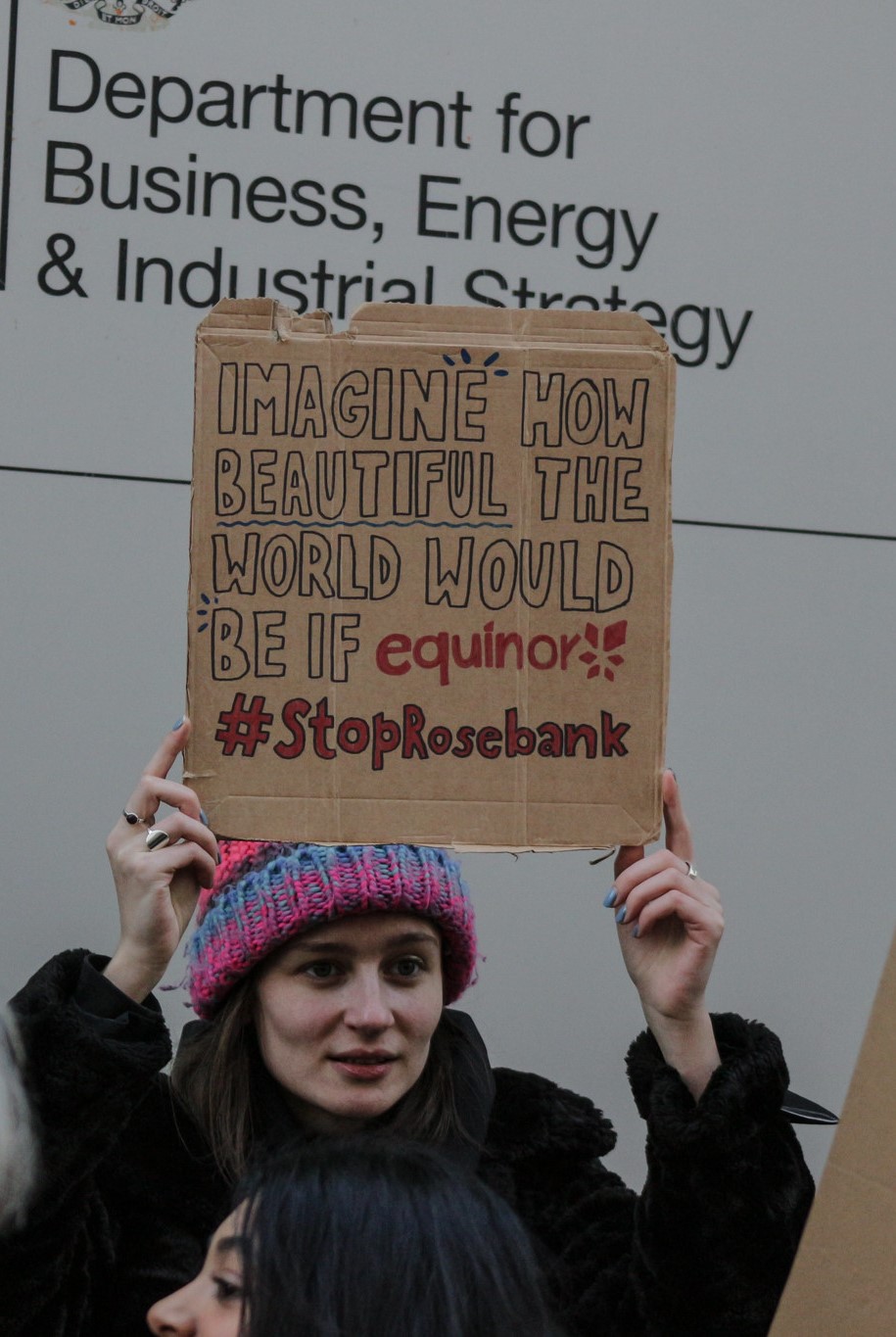
SSE and Equinor plan to build a new gas-fired power station at Peterhead in Aberdeenshire.  The existing gas-fired power station in Peterhead is Scotland’s single biggest climate polluter.  Building the new plant will increase pollution levels.  

The so-called North Sea Transition deal between the UK and Scottish governments and the oil and gas industry is based on squeezing out every profitable drop of oil and gas from the North Sea.  The Peterhead plant is part of this strategy.  The investment that is planned should be directed into renewables.

The plan is up for approval by the Scottish government.  Tell your MSP that rather than more gas we need investment in renewables, in retrofitting, in public transport and in a clean energy smart grid.

Sign the petition by Friends of the Earth Scotland.

North Sea Transition

We were invited to contribute to a panel on North Sea Transition at the conference ‘Working for Climate Justice: trade unions in the front line against climate change’ at Toynbee Hall in East London on 27th of October.

Aberdeen – image by Pete Cannell CC0

Since we launched in the autumn of 2017 Scot.E3’s emphasis has been on building capacity for a worker led transition with a focus on workplace and community organising.   Arguing for the rapid phase out of North Sea Oil and Gas has formed a central part of our campaigning.  The Sea Change report, published in 2019, remains very relevant.  It shows how switching from oil and gas to wind and solar would create a big net increase in jobs in Scotland and failing to make this transition would mean that targets to cut carbon emissions would not be met.

It’s very important that the climate movement has embraced the significance of North Sea oil and gas and a just transition for workers in the fossil fuel industries.  That wasn’t so much the case in 2017.  But two critical and closely linked challenges remain:

  • How do we build a mass movement with powerful roots in every workplace and working-class community that pushes for the necessary changes?
  • How do we engage workers in the energy sector, who are very aware that change is needed, but have very little confidence that it will be socially just?

For more than fifty years the big oil and gas companies have used their operations in the UK sector of the North Sea to blaze a trail for what we have come to know as neoliberalism; establishing practices that have been copied and taken up internationally.  Outsourcing, multiple layers of subcontracting, anti-union policies and the use of blacklists.  At the same time the so-called free ‘market’ has been featherbedded by massive state subsidies which have exceeded taxation revenue.  

The onshore construction industry has been on the same journey.  In Scotland the Construction Rank and File group has grown a new network through taking the construction industry using direct action tactics, picketing sites, and building combative organisation from the ground up. Just under a year ago two Unite activists, working on the new high voltage transmission lines from the Moray Firth to central Scotland were sacked for their union activity just before Christmas.  However, after the Rank and File group picketed the main subcontractor and Scottish and Southern Energy they were reinstated with full back pay.  The group has been a consistent supporter of Scot.E3 and have very publicly advocated for the importance of building worker organisation to ensure that the energy transition is a just transition.  

Despite many analysts and some industry insiders warning that oil and gas is an increasingly risky investment global levels of investment are high and currently booming while the industry remains determined to squeeze as much oil and gas out as it can out of the North Sea.   Among Westminster’s policy turns there has been a consistent adherence to the North Sea transition deal which describes in broad terms how that it is to be achieved.  The Scottish Government and the offshore trade unions remain signed up to the ‘transition’ deal.  Pursuing this path means that investment in hydrogen and CCS is prioritised at the expense of renewables, condemning UK consumers to a high cost and uncertain future and undermining progress to a genuine energy transition.   There’s no evidence that big oil has any particular commitment to the North Sea, and they must know that hydrogen for domestic heating is hugely problematic, but they are very keen to stick with false solutions that are compatible with the existing infrastructure and networks of fossil capital.

The cost-of-living crisis isn’t over.  However, to date, the climate and workers movements have failed to nail the intimate connection between fuel and food poverty and the oil and gas industry.  Perhaps there’s a lesson here.  At a time when we face a drawn-out existential crisis there is a need for new ways of organising that bring unions and communities together in common understanding and common struggle.  There are some examples of what this might begin to look like. In Scotland Edinburgh Trade Unions in Communities provides an innovative model, while in France social movement trade unionism is having an impact.