Video of the introduction to the Scot.E3 public meeting where Jonathan Neale introduced a discussion on organising for a sustainable future in a time of genocide, war and right wing reaction.
Watch this space – we will add a full transcript as soon as it’s complete and edited
Links to useful resources from the Scot.E3 conference workshop on organising at work
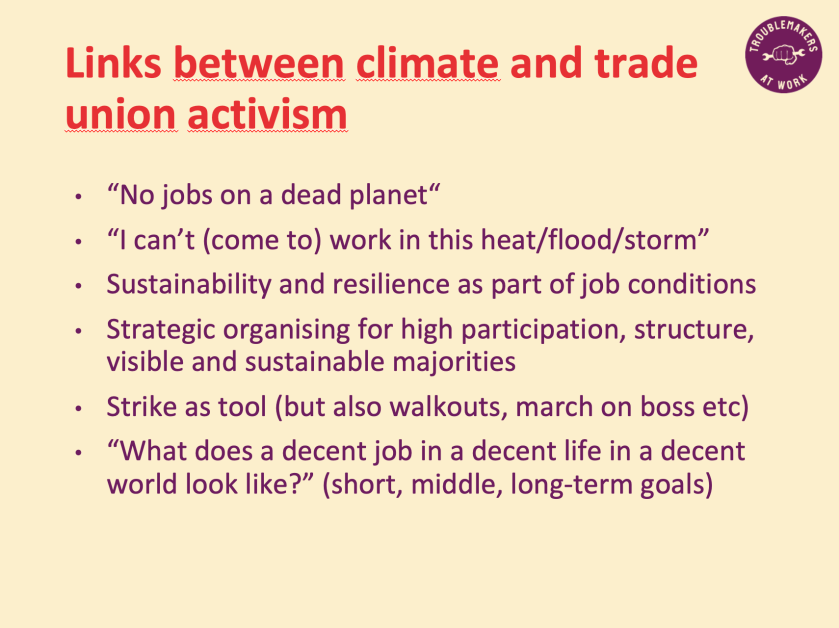
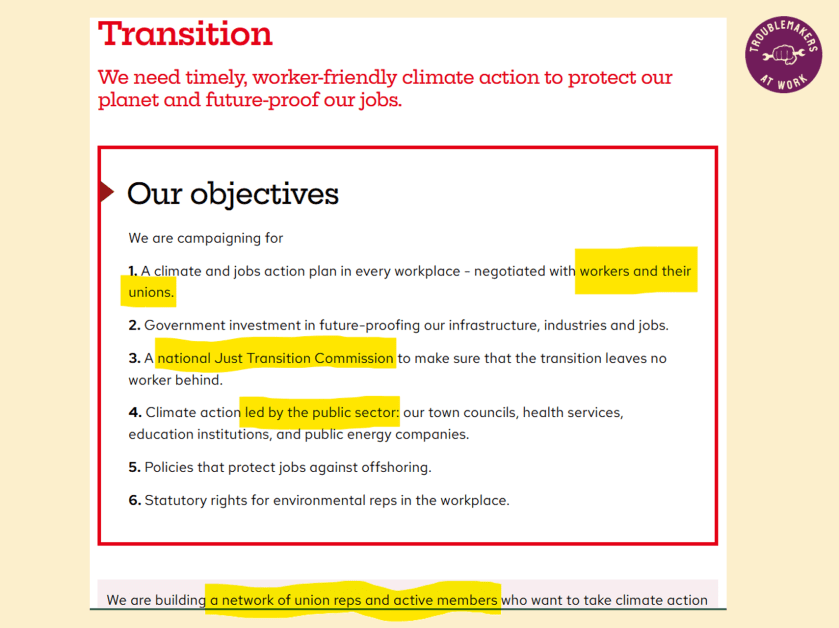
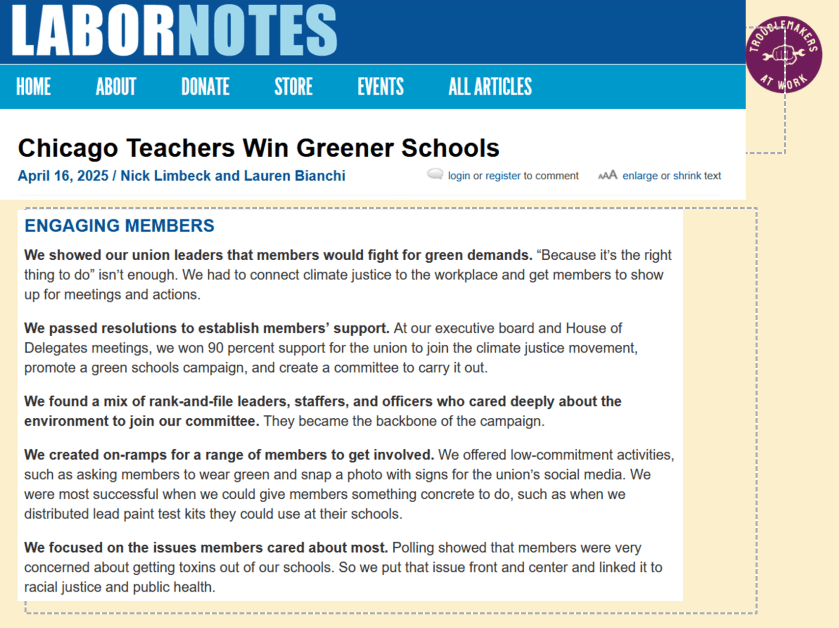
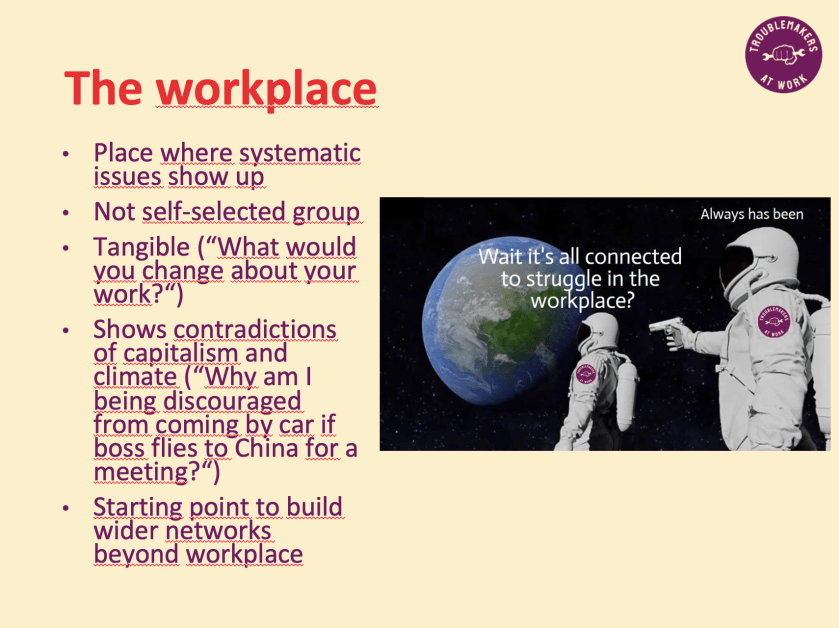
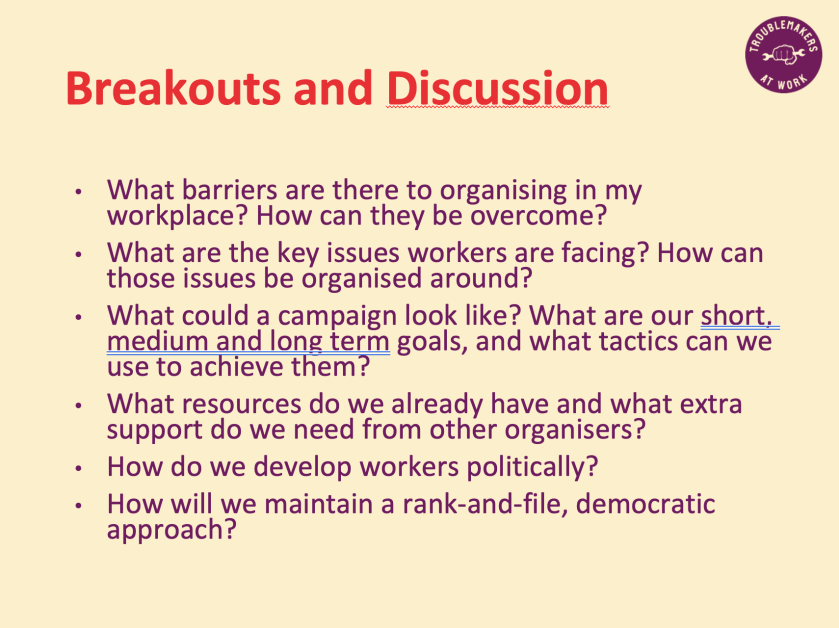
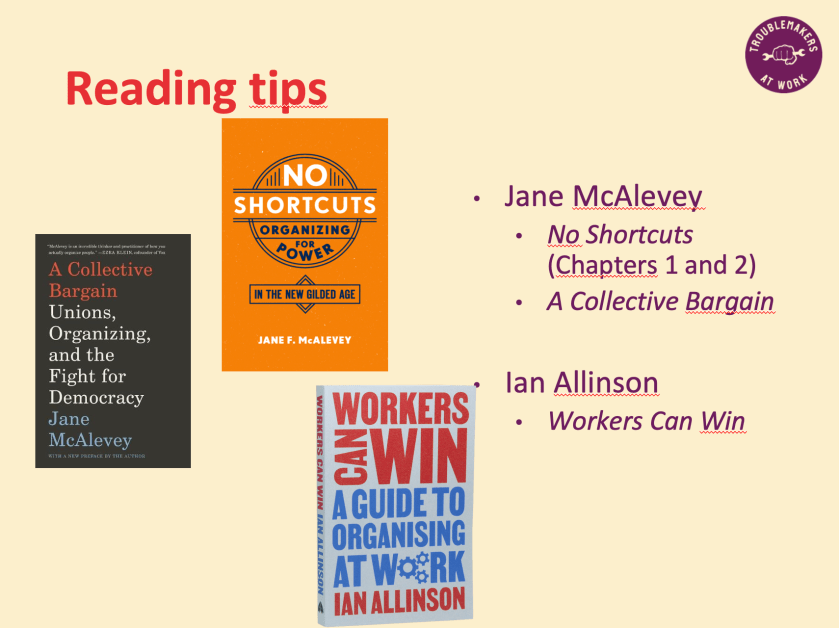
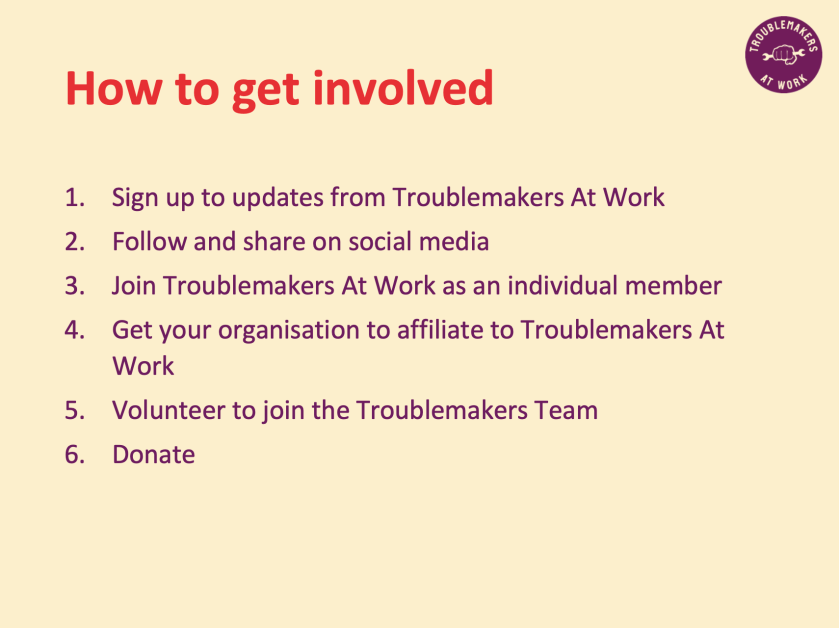
At the Scot.E3 conference on 18 October Sally Heier facilitated a workshop on taking climate issues into the workplace. These are her slides.
If you’re in a workplace we’d encourage you to join the Troublemakers network. Troublemakers holds meetings and conferences that bring together people who are organising at rank and file level in their workplace.
You might also like to look at the Workers Can Win website which is packed with useful information about organising.
A video about local fightback against cuts and the links to energy production. Produced by Moray Trades Union Council with support from the Scottish Trade Unions Congress
Climate activist and ex-offshore worker Neil Rothnie has written this letter to climate justice activists and organisations in Glasgow. It has already attracted some interesting and positive responses. As ScotE3 we’d like to share the letter across Scotland at the beginning of the new year. The letter raises important issues and we’d welcome your thoughts and responses. You can email ScotE3 directly via the contact form – and if you would like to contact Neil use the form and we’ll pass your message on.
The climate justice movement shares a common enemy with striking workers, and with those in our communities facing cold and hunger this winter due to energy price gouging,
A quick look at BP, Total, Shell and Equinor’s profits for the first 3 quarters of this year certainly suggests that it’s inflation, caused largely by the profiteering of North Sea gas producers, that’s driving the strike wave and the cost of living crisis.
Is this not why the climate justice movement should be on every picket line, offering our moral and practical support to striking workers?
Energy price inflation, caused by North Sea gas profiteering, is also set to drive many thousands of people into having to organise against cold and hunger and debt this winter.
Should then the climate justice movement not be thinking about how to help to organise locally, to ensure that everyone has access to warmth and food as the crisis bites?
We don’t need to be endlessly pushing the climate science. The people being forced into struggle today are not contemplating the end of the world, they’re trying to get to the end of the month, warm and fed and without more debt. If they want to know why the climate justice movement is on their side they’ll ask, and then we can tell them why.
The point is surely not just to understand the role of fossil fuels in climate change, but to end the oil and gas industry’s stranglehold on energy production, their profiteering, and the misery this is causing
What then are the slogans that we should take to the picket lines on our placards, and into the communities on posters, to expose the role of the North Sea gas profiteers?
How can we collaborate to encourage grass roots organisation, and resistance to the cold and hunger that North Sea gas profiteering promises?
The first covers 60 years of unbroken rank and file struggle by construction workers, including the National Building Workers Strike of 1972, the fights for safety, including from asbestos, and against the blacklisting of activist workers, up to the Shut-the-sites campaign last year in the pandemic, and this year’s campaign against deskilling of electricians at Hinkley Point C (‘No 2 ESO’) all threaded together by construction activist JT Murphy’s 100 year-old chant: “With the bosses never, With the trade union officers sometimes, With the rank and file always”.
The second film, in contrast, is about the collective aspirations of young people and people of colour for land and food justice. All very well you may be thinking, but where’s the power for change to come from? At which point the film deftly switches to the fierce and persistent militancy of Indian farmers in the face of three laws designed to commodify land and food for private profit. The Indian Farmers are even bringing their protest to Glasgow this weekend.
Here’s the video of Ian Allinson’s introduction to a discussion on organising in the workplace that we held on 25th June 2021. Ian is a former Fujitsu shop steward who ran as a candidate for the Unite union general secretary in the last election.
You can read the full notes from the meeting as a PDF here. What follows are some of the main points that were discussed.
We started with a discussion on the likely impact of the general election result. It’s likely that there will be detrimental changes to regulations and standards – areas that could be effected include energy from waste, devolved powers, outsourcing and tendering, nuclear policy, targets and subsidies, energy distribution and supply and workers rights. There is a likelihood for heightened tension between Westminster and Holyrood over many of these issues. The big issues in the Scottish context include Oil and Gas (particularly INEOS), Public Transport, Housing and the opportunities and challenges presented by the COP being held in Glasgow.
We resolved to do all we can encourage discussion and action in workplaces and community settings. Wherever possible we will do this in partnership. We will encourage requests to help set up or provide resources for events. We agreed to prioritise setting up events in Fife, Falkirk and Aberdeen and with the Construction Rank and File group.
We agreed to work on four new briefings (we are always open for suggestions of amendments to existing briefings and suggestions for new ones) – working titles for the new additions are:







 Employment, Energy and Environment