Occupation in support of Torry community

Activists occupy tree outside Edinburgh offices in support of Torry community in Aberdeen. Press statement from This is Rigged

For more about Torry and the proposed Energy Transition Zone that will destroy St Fitticks park just scroll down or type “St Fitticks” in the search box.

Ironside Farrar, Environmental Consultants with offices in Edinburgh, Glasgow and Manchester were commissioned by Energy Transition Zone Ltd (ETZ Ltd) to produce a ‘Masterplan’ for the industrial development of parts of St. Fittick’s Park, Gregness and Doonies Farm in Aberdeen. They were also tasked with obtaining Planning Permission for this development. Ironside Farrar’s plans were presented to the Aberdeen City Council Management Planning Committee yesterday morning (29th June). The Council say they will adopt the ‘Masterplan’ as Planning Guidance.

On the same day, supporters of This Is Rigged went to the Edinburgh offices of Ironside Farrar and met with Julian Farrar, Managing Director of the company, to discuss the issues and request that Ironside Farrar withdraw from further work for ETZ Ltd, and that employees boycott all further work for ETZ Ltd for the following reasons:

St Fittick’s park is the last remaining green space in Torry, which is one of the country’s most deprived communities, where residents have a life expectancy ten years lower than people living in wealthier parts of Aberdeen. Commenting on the potential loss of the park, local doctors and nurses fighting to improve the health of the Torry community,  say that industrialising any part of St. Fittick’s Park will be devastating for the health of that community.

In addition to its positive contribution to human health, St. Fittick’s Park is an oasis for wildlife, including many species of migrating birds, and Gregness and Doonies Farm support this wildlife as green corridors. In a recent article in the Guardian[1], journalist Tom wall suggested the park’s wetland is “perhaps Aberdeen’s most unlikely beauty spot. Reeds flap and bend in blasts of salt-edged wind. Grey and blue light catch in watery beds, where ducks dip and preen. Birds shelter in a young woodland of oak, dark green pine and silvery birch trees.”

It therefore makes no sense to destroy this important habitat while Scotland is in the midst of a biodiversity crisis. Furthermore, the wetlands and forest created 10 years ago in St. Fittick’s Park are already capturing carbon, and it is increasingly recognised that ecosystems like these even regulate local climate including rainfall.

The main purposes of the proposed Energy Transition Zone will be to develop carbon capture and hydrogen technologies, both of which are considered by leading scientists to be unproven and dangerous excuses for continued oil extraction and habitat destruction.[2]

In yesterday’s meeting, Julian Farrar was warned that being complicit in destroying the wetlands and woodland, both of which are vitally important green spaces and biodiversity sites that have taken years and a tens of thousands of community man-hours to create, would be seen as an act of immeasurable violence.

Ishbel Shand, member of the Friends of St.Fittick’s Park campaign said,

“The proposed industrial development is simply a land grab by the oil and gas industry to fill the pockets of their shareholders and directors.”

After leaving the meeting with Julian Farrar, This is Rigged activists Mike Downham and Tom Johnson decided to occupy a small tree outside the Ironside Farrar offices, and are there awaiting a response.

Mike Downham, a retired paediatrician and children’s DR said,

“There is a high incidence of asthma in children in Torry due to particulate matter air pollution from the nearby incinerator and the South Harbour industrial development. Further industrial development in this community would have a serious negative impact on the health of children in Torry.”

Following the meeting, Tom Johnson, a painter-decorator and This is rigged supporter who knows St. Fittick’s park well said, 

“If Ironside Farrar were to pull out of the project at this stage, it would have a huge positive effect on the wellbeing and health of the Torry community – disempowered folk who have lost so much already. I mean, Imagine losing an entire bay – your access to the sea. And now forests they planted 10 years ago are to be ripped up and concreted over with “green” factories.”

“Julian Farrar explained to me that Ironside Farrar have reduced the amount of harm to be done in the park, but if they now come out against any destruction WHATSOEVER of these spaces, that will be a really bold statement of solidarity, and an action that shows their real concern for the environment, and people. We understand it’s difficult for a company to do something like that in current economic and political contexts, but to me Julian did seem to be uncomfortable with what’s going on with the ETZ.”

 

Our response to the Scottish Government energy consultation

This is our response to the Scottish Government’s consultation on a draft energy plan. The deadline for the consultation is 9th May 2023.

Response to the energy consultation from Scot.E3

Scot.E3 campaigns for a worker led just transition that would require at least 100,000 new climate jobs in Scotland.  In our view the draft plan contains material that is useful and will be necessary as part of the energy transition that is needed. We particularly welcome the draft plan’s suggestion that the Scottish Government should not support any further exploration or development of oil and gas fields – this is vital and needs to be followed through. But overall, the draft plan aims for too little and too slowly, and it fails to provide a coherent strategy to reduce emissions and reshape the Scottish economy.

The plan is flawed in several fundamental ways:

  1. It relies on the private sector to a achieve its ambitions.
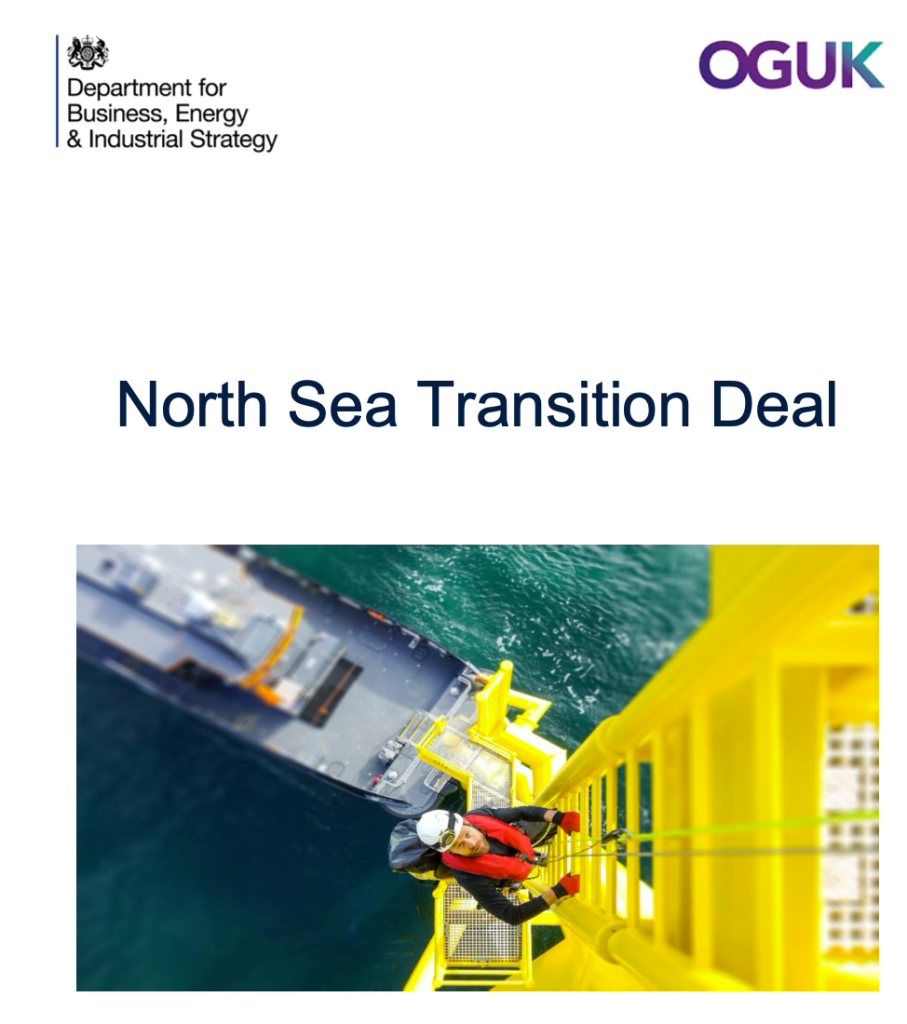
  2. It follows the strategy outlined in Offshore UK’s North Sea Transition deal which aims for net zero emissions achieved through the large-scale implementation of carbon capture and storage.
  3. It accepts the hype around hydrogen uncritically.
  4. Mass scale retrofitting and decarbonising domestic heating and cooking is not given enough priority.
  5. There is no clear plan for expanding public transport systems.
  6. There is no strategy for creating a resilient smart energy grid that would integrate local community energy initiatives with large scale wind, tidal, hydro, and solar.
  7. It accepts the concept of net zero when we the climate science tells us we should be aiming for real zero.
  8. It fails to consider how a national energy company (Scottish Climate Service) could drive forward a strategy for zero emissions and harness the skills and creativity of the energy sector’s current workforce or the many thousands of young people who are required to make a sustainable energy sector a reality.

Notes

Points 1 and 8.  Public versus private.  As a campaign Scot.E3 believes that the oil and gas industry aim to extract the maximum profit from its existing business and to maintain the power and influence which it established through the 20th century and into the 21st.  The infrastructure and practices of what Andreas Malm calls Fossil Capital are incompatible with a sustainable renewable economy.  We understand that not everyone would agree with this analysis.  However, the scale and scope of the economic transition that is required is unprecedented.  The nearest comparisons – transitions to war economies in the UK and the US between 1939 and 1945, and the US New Deal in the 1930’s, depended on strategic planning, public control and high degrees of regulation over the private sector.   The Scottish government’s objectives for a just transition can only be met by a much higher level of public investment, democratic control, and regulation than the energy plan proposes.

Points 2 and 3.  Rejecting the false solutions contained in the North Sea Transition Deal. In brief the North Sea transition deal (written by the oil and gas industry and endorsed by Holyrood, Westminster, and the Offshore trade unions) is a plan to maintain oil and gas production from the North Sea for as long as possible, and certainly beyond 2050.   Carbon capture and a hydrogen economy are central to the plan.  There is place for carbon capture when we’ve ended fossil fuel emissions and can focus on repairing the damage created by global temperature rise.  And there is a place for hydrogen as a fuel in a small number of important but specialised applications.  However, the energy plan’s proposals for prioritising carbon capture, and for making Scotland a world leader in hydrogen production, direct the focus of the plan away from the necessary investment into decarbonising energy production and use right now, and make it much more difficult to achieve the energy transition that we need.  Carbon capture at large scale is an unproven technology, while producing green hydrogen is highly inefficient and requires very large amounts of green electricity.  A recent report, The Future of Home Heating by the Imperial College Energy Futures Lab notes that ‘Hydrogen production would be best used strategically and its deployment prioritised in sectors which are hard to electrify or decarbonise such as heavy industry, shipping, aviation and heavy transport.’ 

Point 4. Retrofitting.  Energy for domestic heating and cooking in Scotland is mainly supplied via the natural gas network and currently accounts for more than 20% of emissions.  The level of emissions could be significantly reduced through improving standards of insulation.  Action on building regulations for new builds is possible straight away and amendments to guidance and regulations for the insulation of the existing housing stock to include the new breathable insulation materials that are now available (for example the hemp based materials produced in the Scottish Borders) could also be made very rapidly.  A mass campaign of retrofitting requires coordinated action and investment that involves the development of skilled direct works teams in every council area and the resourcing of Further Education Colleges to provide good quality training.   At the same time the transition from gas to electricity needs to be coordinated with the timescale for the rundown of North Sea gas production.  Retrofitting creates new jobs and has the potential to enhance the health and well-being of the Scottish population.  Action now, with investment designed to ensure that no one is excluded is a critical part of a just transition and can win hearts and minds to the project of transforming the economy.

Point 5. Public Transport.  Simply replacing petrol and diesel vehicles by electric vehicles will not remove all emissions, will increase demand for scarce and environmentally damaging resources and perpetuate inequality.  A sustainable energy plan requires large-scale improvements in public transport networks. 

Point 6.  Developing a smart grid.  This is a surprising omission from the draft plan.  A smart grid that includes large scale wind, solar, hydro and tidal energy sources combined with a network of community-based energy schemes and storage that includes local district heating schemes is technically feasible and would ensure that the system is resilient in the face of varying climatic conditions and demand.

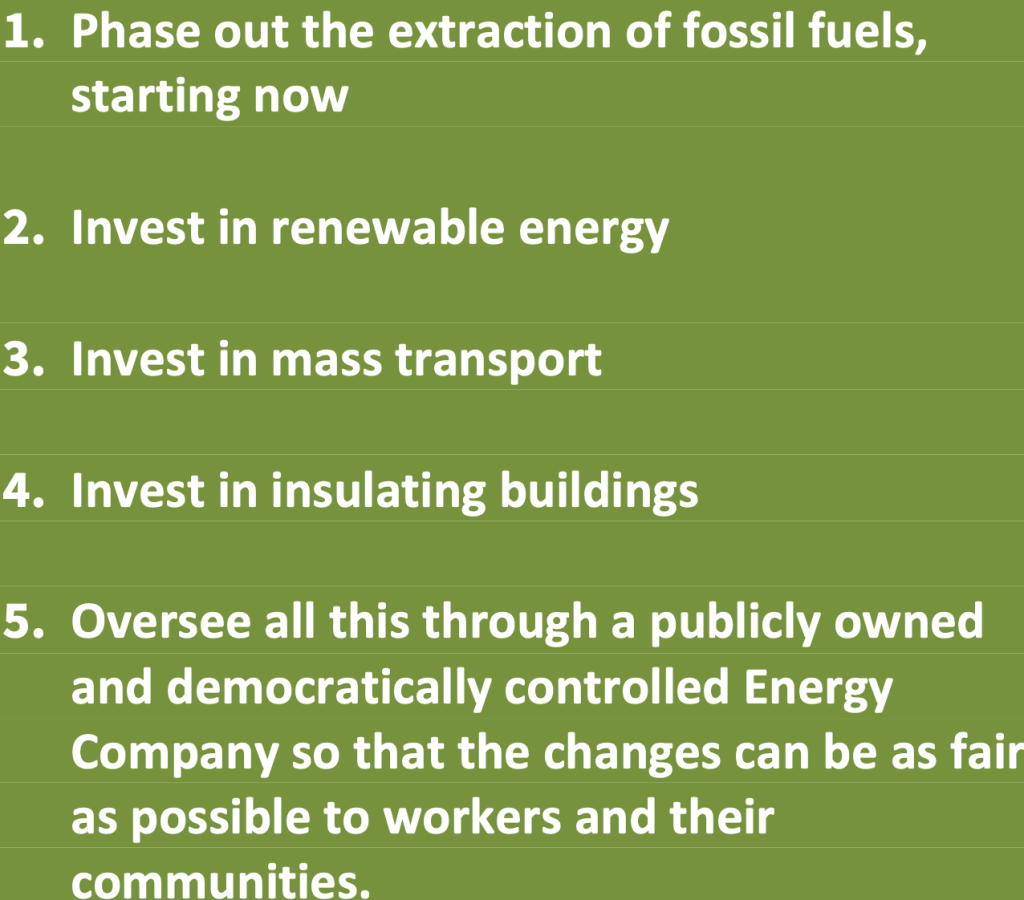
Point 7. Net Zero.  In practice net zero has become part of the set of false solutions used by the fossil fuel industries to delay real action on emissions.  It is bound up with arguments for carbon capture and carbon offsetting.  The latter has done almost nothing to actually reduce emissions (see for example Dyke, Watson and Knorr – ‘Climate Scientists: Net Zero is a dangerous trap) and often creates social problems in the private takeover of land for monoculture forests or other crops.  We would argue that an effective energy plan requires a critical position on net zero and setting the objective as absolute zero emissions.  The only way to achieve real zero in the context of the climate emergency is to phase out oil and gas quickly, starting now, and to invest heavily in renewable sources of energy. 

Briefing #17 – Net Zero

Our latest briefing takes a critical look at Net Zero. You can read it here or download the PDF. All our briefings are published under a Creative Commons license CC BY 4.0 . Find all our briefings on the resources page.

“Net Zero” was defined at the 2015 Climate Summit in Paris as “a balance between anthropogenic emissions by sources and removals by sinks of greenhouse gases”. So, for example, it would be OK to continue burning gas in power stations as long as all the carbon dioxide produced in the process is captured and permanently stored.

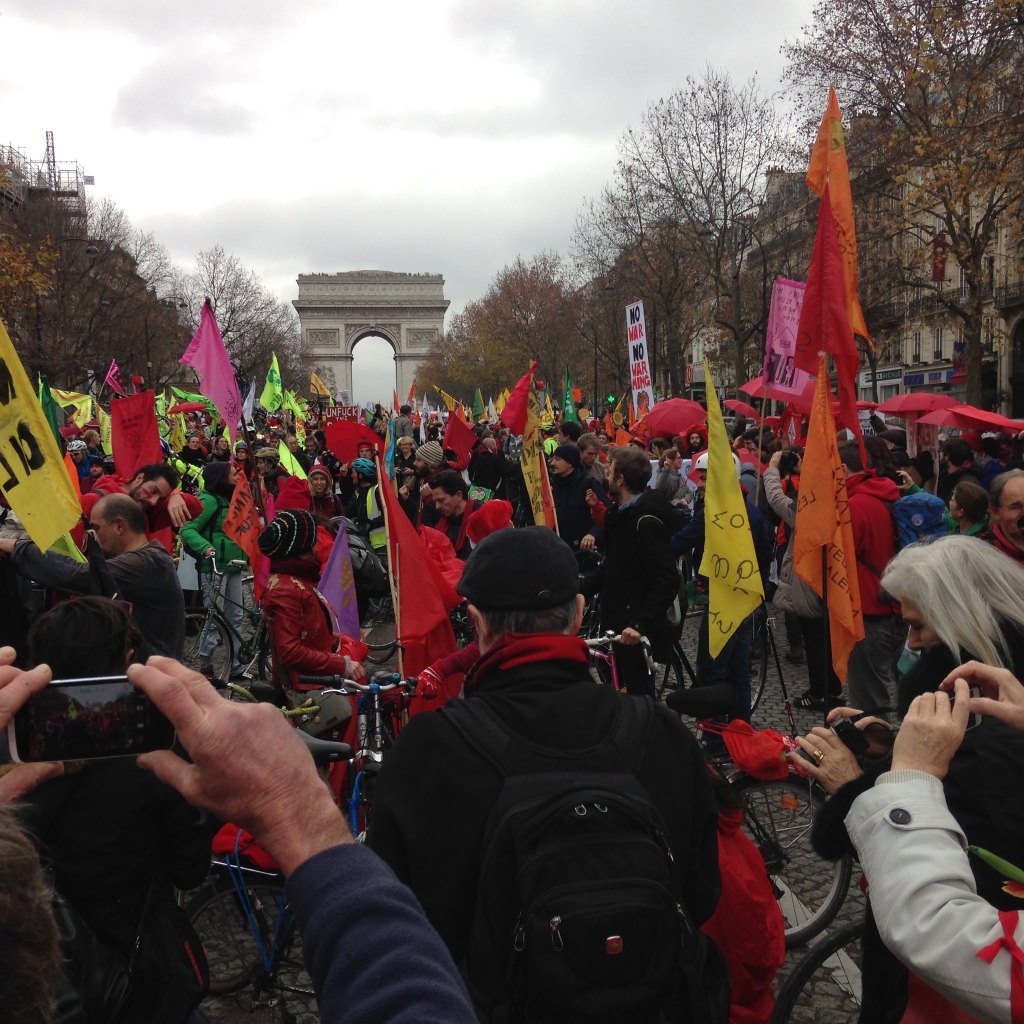
Paris COP 2015 – image by Pete Cannell CC0

Net Zero was an attempt to translate the temperature target of “well under a two degree rise above pre-industrial levels” into something countries could be held accountable for.

Since then governments have rushed to announce long-term Net Zero emissions goals. The Climate Change Committee has also fully embraced the Net Zero concept – hardly surprising because the members of the Committee are appointed by the UK and Devolved Governments.

As a result of these goals billions of dollars have been invested in research and development of low-carbon technologies , all of which face massive technological, economic and land use challenges when used at scale.

The Net Zero concept emerged in 2013 in the run-up to the Paris Summit, against the background of the collapse of the talks at Copenhagen in 2009. However well-intentioned the idea was, it’s notable that it arose among a group of 30 lawyers, diplomats, financiers and activists, who met at Glen House, a country estate in the Scottish Borders owned by a ‘green’ investment pioneer.

The current front runner technology, which governments are pinning their hopes on, is “Carbon Capture with Storage” (CCS). This is defined as “a process in which a relatively pure stream of carbon dioxide (CO2) from industrial and energy-related sources is separated (captured), conditioned, compressed and transported to a storage location for long-term isolation from the atmosphere”. The companies developing this technology are either the same companies which extract fossil fuels, or closely related to them financially.

CCS is an energy-hungry process and as such is not financially viable at scale for the companies experimenting with it. They are calling for government subsidies. In the US extracted carbon dioxide has been used to facilitate pumping in oil wells – a process known as “Enhanced Oil Recovery” – to close the energy gap, make CCS more financially viable, and enable the big energy companies to continue extracting fossil fuels.

On four related counts CCS is not in the interests of either people or the planet. First it requires too much energy; second it would need subsidising by tax-payers; third it would be controlled by giant corporations who already make obscene profits; and fourth it would be too slow to prevent catastrophic climate change.

In the UK at Drax Power Station – the site recently of vigorous strike action by the inadequately paid workers.

– biomass is being burnt and from time to time some of the emitted carbon is being captured in a process called Bioenergy and Carbon Capture (BECCS). A previous ScotE3 Briefing on BECCS explains why this is a crazy idea – primarily because it would require huge areas of land to be planted up with monoculture forests.

It’s clear then that both Net Zero and the technologies which underpin it are meaningless greenwash, being used to justify continued investment in fossil fuel extraction – an effective distraction from the urgent need to deliver sustained radical cuts to greenhouse gas emissions in a socially just way.

What’s needed is a Real Zero, not a Net Zero. We have the technology to achieve this – we don’t need new technology. This is what we need to do:

Urgent protest

Urgent protest against UK government greenwash – Friday 31st March

This Thursday he UK government is set to make an announcement of their “energy security day” which is set to boost fossil fuel companies while cutting green measures.
https://www.theguardian.com/environment/2023/mar/24/uk-government-launch-revamped-net-zero-strategy-oil-gas-capital-aberdeen

Newspaper reports indicate that the presentation will contain measures to please the fossil fuel industry, from new offshore drilling plans to a refusal to force oil and gas companies to stop flaring by 2025 – as recommended by Chris Skidmore in his net zero reviewIt may even give a licence to the huge, and so far undeveloped, Rosebank oil and gas field off Shetland.

There is also set to be a huge government investment of £20bn in the Trojan Horse of carbon capture technology. This unproven, un-implemented technology is being promoted by big oil and gas businesses as a way to allow them to carry on as normal. It will be the oil and gas giants who yet again pocket public money.

That is why Environmental groups from across Scotland have called for a protest at: Thursday 30 March, 12.30
UK Government Offices, 1 Sibbald Walk
EDINBURGH, EH8 8FT
Supported by: Edinburgh Climate Coalition, Friends of the Earth Scotland, Stop Cambo, ScotE3 
Bring placards, banners and friends!

Decisions made now will affect generations to come. Join the protest.

Please Like and Share the Facebook event page: https://www.facebook.com/events/3460706814206905/

An open letter to climate justice activists in Glasgow

Climate activist and ex-offshore worker Neil Rothnie has written this letter to climate justice activists and organisations in Glasgow. It has already attracted some interesting and positive responses. As ScotE3 we’d like to share the letter across Scotland at the beginning of the new year. The letter raises important issues and we’d welcome your thoughts and responses. You can email ScotE3 directly via the contact form – and if you would like to contact Neil use the form and we’ll pass your message on.

The climate justice movement shares a common enemy with striking workers, and with those in our communities facing cold and hunger this winter due to energy price gouging,

A quick look at BP, Total, Shell and Equinor’s profits for the first 3 quarters of this year certainly suggests that it’s inflation, caused largely by the profiteering of North Sea gas producers, that’s driving the strike wave and the cost of living crisis.

Is this not why the climate justice movement should be on every picket line, offering our moral and practical support to striking workers?

Energy price inflation, caused by North Sea gas profiteering, is also set to drive many thousands of people into having to organise against cold and hunger and debt this winter.

Should then the climate justice movement not be thinking about how to help to organise locally, to ensure that everyone has access to warmth and food as the crisis bites?

We don’t need to be endlessly pushing the climate science. The people being forced into struggle today are not contemplating the end of the world, they’re trying to get to the end of the month, warm and fed and without more debt.  If they want to know why the climate justice movement is on their side they’ll ask, and then we can tell them why. 

The point is surely not just to understand the role of fossil fuels in climate change, but to end the oil and gas industry’s stranglehold on energy production, their profiteering, and the misery this is causing

What then are the slogans that we should take to the picket lines on our placards, and into the communities on posters, to expose the role of the North Sea gas profiteers?

How can we collaborate to encourage grass roots organisation, and resistance to the cold and hunger that North Sea gas profiteering promises?

Briefing 16: oil and gas are costing us the earth

Here’s the text of out latest briefing on climate, oil and gas and the cost of living. You can download it here.

Cost of Living

Everyone knows that we are in a cost-of-living crisis.  Most of us in Scotland rely on natural gas for cooking and heating and North Sea gas is a guided missile sent into every home in the country which will drive thousands of new people into poverty and will kill the most vulnerable.  Oil and gas producers are making mega profits and demanding money with menaces.  

Before this happened around a quarter of Scots lived in fuel poverty.  As a result of the price rises hundreds of thousands more will be forced to make impossible choices between food and heating.  The response from the Tories has been derisory. Their so-called Energy Security Plan does nothing to tackle immediate hardship and doubles down on the most expensive energy options for the longer term – nuclear, oil and gas, hydrogen for heating and carbon capture and storage.  

Business as usual – the North Sea Transition Deal

There is a simple reason why the Tories have made these choices.  In the face of the climate and cost of living crises they’ve chosen to protect the interests of big oil.  It’s not just that they won’t tax the enormous profits that are being made from North Sea Oil and Gas – it’s that they are following the logic of the oil industry’s ‘North Sea Transition Deal’.  

A phony deal

The ‘Deal’ is a partnership between the UK and Scottish governments and the unions.  It aims to continue the exploitation of North Sea oil and gas up to and beyond 2050.  It talks about a net-zero oil and gas basin where the greenhouse gas emissions from the oil and gas would be captured and stored.  This is not going to happen, certainly not in the next few decades, and the consequence will be that the UK will fail to meet its contribution to restricting global temperature rises.  

Maintaining profits – wasting resources

Moreover, the ‘Transition Deal’ drives high-cost energy options at every step and leaves working people to pay the price.   The latest UK government energy strategy aligns entirely with the ‘Deal’. Most of the electricity produced by new nuclear power stations will be required to produce the hydrogen for domestic heating.  Using electricity to produce hydrogen for domestic heating at large scale is hugely inefficient.  Moreover, nuclear produces much more carbon emissions over its lifecycle than wind or solar.

Torness CC-BY-SA-4.0 Image by NH2501

The alternative

There is an alternative.  Electricity produced by wind and solar is already much cheaper than that produced by nuclear, oil and gas and the costs of renewables continue to fall.  The money the Tories want to spend on new nuclear is enough to retrofit most homes across the UK – creating jobs, improving health and well-being and cutting energy demand.  

An economy based on renewables results in many more jobs than the fossil fuel and nuclear options.

A challenge for the trade union movement

It’s time for a decisive shift in policy and end to partnership with the oil industry.  Just transition, indeed arguably any transition that restricts temperature rises to 1.5 degrees, is incompatible with the ‘North Sea Transition Deal’.  Sticking with the ‘Deal’ is a disaster for the planet and undermines the ability of the workers movement and the climate movement to build the power we need to win over climate and the cost of living.

A new policy for the union movement

Tackling the cost-of-living crisis and the climate crisis means breaking the partnership with big oil that is inherent in the Transition Deal and campaigning for an end to the development of new North Sea oil and gas and the rapid planned phase out of existing fields.  Large-scale investment in renewables and a massive programme of retrofitting would result in lower energy prices and reduced carbon emissions.   A serious plan would include support for the oil and gas work force while they transition to new jobs and ramping up options for reskilling, education and training in the new industries.

No more subsidies

The oil and gas industry has been subsidised heavily over the lifetime of the North Sea.  The subsidies must stop.  Working people are suffering because what they pay for energy fuels super profits for big oil and goes into the pockets of the richest in society whose wealth grows as hedge funds speculate on the oil market.  There’s plenty of money to pay for an energy transition.

Among the components of a new policy for the workers movement should be: 

Massive investment in wind, solar and tidal energy.

Large-scale expansion of energy storage options.

No more North Sea development. 

Taking the North Sea into public ownership and beginning a planned phased out of production.

Support for oil and gas workers to transition to new jobs.

Regulate energy prices to consumers and tax big oil and the rich to end the cost-of-living crisis.

COP26 gave us a glimpse of the potential power when the workers movement and the climate movement come together.  Together we can win.

Oil, gas and the cost of living

This post by Neil Rothnie was written as a letter to the Herald newspaper but the Herald declined to publish it

It’s North Sea gas price increases that are largely responsible for the cost of living crisis,  making energy bills unpayable for growing numbers of people. 

90% of the gas we use in our homes comes from the North Sea.  Wholesale gas prices  were soaring well before Russia invaded Ukraine.  So far Ukraine and Russia have  collaborated to keep most Russian gas flowing to Europe and finance both sides in this  war.  There have been no power outages or gas shortages in the UK or Europe. 

North Sea gas price increases have not been caused by rising costs of production.  There  have been no wage increases for oil and gas workers, and no new pipelines or gas  platforms built.   

So what are the sky high gas prices all about?  Supply and demand?  Prices pushed up  by a global shortage?  China, Japan and India, where it is claimed that there are gas  shortages, can’t access North Sea gas however much they’d be prepared to pay for  it.   There are not the facilities in Europe to liquify North Sea gas and there is not a fleet of  empty LNG tankers waiting to transport it to Asia.   

The oil companies either sell North Sea gas to us at prices people can afford or they drive  consumers into cold and hunger.  The choice they have made is clear.  Profits of Shell, BP  and Total in the first 3 months of this year are colossal – £7.5, £5 and £4 billion  respectively. 

Ordinary people can’t and won’t go on indefinitely paying for oil company  profiteering.  We can’t just live with the gas and electricity disconnections that are the  inevitable result of unaffordable bills.  Already Just Stop Oil and Extinction Rebellion are  justifiably on the streets engaged in civil disobedience aimed at the oil and gas industry.  Far more widespread civil disobedience is surely inevitable as people respond to cold and  hunger.  Remember the Poll Tax?   

Manipulating gas markets to impoverish your customers can’t in any way be described as  a “windfall”.  It’s an unprovoked and deadly attack by an industry whose time has passed,  and a one-off tax won’t cut the mustard.  

The plan to slash civil service jobs to free up the cash to meet the cost of living crisis is a  perverse response.  The industry needs to be taken out of the hands of our own  oligarchs.   The oil and gas that will have to be produced in the short term, needs to  finance the transition that will allow us to stay warm in our homes, and the planet to stay  cool enough to remain habitable. We need a plan to insulate our homes properly, and  massively expand wind and solar generation to heat and light our homes in a way that  doesn’t feed the climate crisis. 

This is the opposite of the current oil industry/Government plan to Maximise Economic  Recovery of North Sea oil and gas, ie, to produce and burn every barrel of hydrocarbon  they can turn a profit on – business as usual.

Oil and gas are costing us the earth

ScotE3 will have a stall at the Scottish Trades Union Congress in Aberdeen for 25th – 27th April. We’ve produced a leaflet for the delegates. The text is reproduced here.

Fuel Poverty

Everyone knows that we are in a cost-of-living crisis.  Most of us in Scotland rely on natural gas for cooking and heating and North Sea gas is a guided missile sent into every home in the country which will drive thousands of new people into poverty and will kill the most vulnerable.  Oil and gas producers are making mega profits and demanding money with menaces.  They’ve unilaterally torn up the social contract that they operate under and have weaponised gas.  The 54% increase on 1st April will be followed by another steep rise later this year.  

Before this happened around a quarter of Scots lived in fuel poverty.  As a result of the price rises, hundreds of thousands more will be dragged into a position where they are forced to make impossible choices between food and heating.  The response from the Tories has been derisory. Their so-called Energy Security Plan does nothing to tackle immediate hardship and doubles down on the most expensive energy options for the longer term – nuclear, oil and gas, hydrogen for heating and carbon capture and storage.

Business as usual

There is a simple reason why the Tories have made these choices.  In the face of the climate and cost of living crises they’ve chosen to protect the interests of big oil.  It’s not just that they won’t tax the enormous profits that are being made from North Sea Oil and Gas – it’s that they are following the logic of the oil industry’s ‘North Sea Transition Deal’.  

A phony deal

The Deal aims to continue the exploitation of North Sea oil and gas up to and beyond 2050.  It talks about a net-zero oil and gas basin where the greenhouse gas emissions from the oil and gas would be captured and stored.  This is not going to happen, certainly not in the next few decades, and the consequence will be that the UK will fail to meet its contribution to restricting global temperature rises.  

Maintaining profits – wasting resources

Following the ‘Transition Deal’ drives high-cost energy options at every step and leaves working people to pay the price.   Under the UK government plan, most of the electricity produced by the new nuclear power stations will be required to produce the hydrogen for domestic heating.  Using electricity to produce hydrogen for domestic heating at large scale is hugely inefficient.  Moreover, nuclear produces much more carbon emissions over its lifecycle than wind or solar.

http://www.pixabay.com CC0

The alternative

There is an alternative.  Electricity produced by wind and solar is already much cheaper than that produced by nuclear, oil and gas and the costs of renewables continue to fall.  The money the Tories want to spend on new nuclear is enough to retrofit most homes across the UK – creating jobs, improving health and well-being, and cutting energy demand.  Moreover, an economy based on renewables results in many more jobs than the fossil fuel and nuclear options.

A challenge for the trade union movement

Right now, industry, unions and both the Westminster and Holyrood governments are signed up to the North Sea Transition deal.  It’s time for a decisive shift in policy.  Just transition, indeed arguably any transition that restricts temperature rises to 1.5 degrees, is incompatible with the ‘North Sea Transition Deal’.  

A new policy for the union movement

Tackling the cost-of-living crisis and the climate crisis means breaking the partnership with big oil that is inherent in the Transition Deal and campaigning for an end to the development of new North Sea oil and gas and the rapid planned phase out of existing fields.  Large-scale investment in renewables and a massive programme of retrofitting would result in lower energy prices and reduced carbon emissions.   A serious plan would include support for the oil and gas work force while they transition to new jobs and ramping up options for reskilling, education and training in the new industries.

No more subsidies

The oil and gas industry has been subsidised heavily over the lifetime of the North Sea.  The subsidies must stop.  Working people are suffering because what they pay for energy fuels super profits for big oil and goes into the pockets of the richest in society whose wealth grows as hedge funds speculate on the oil market.  There’s plenty 

of money to pay for an energy transition.

Among the components of a new policy for the workers movement should be: 

Massive investment in wind, solar and tidal energy.

Large-scale expansion of energy storage options.

No more North Sea development. 

Taking the North Sea into public ownership and beginning a planned phase out of production.

Support for oil and gas workers to transition to new jobs.

Regulate energy prices to consumers and tax big oil and the rich to end the cost-of-living crisis.

COP26 gave us a glimpse of the potential power when the workers movement and the climate movement come together.  Together we can win.

About ScotE3

Check out our website at https://scote3.net The resources page includes short briefings designed to be used in the workplace and created under an open license so that you can modify and adapt them providing you acknowledge ScotE3 as the original source of the material.  We are keen to produce more briefings and we’d welcome suggestions for new briefings and updates to existing ones. We can also provide speakers for trade union branch meetings and discussions. 

Come along to our stall and have a chat.

An open letter to the climate movement 

In the wake of COP26 in Glasgow, ScotE3 (employment, energy, and environment) have been reassessing our focus.  

At the centre of our discussion has been North Sea oil and gas, UK’s major contribution to global greenhouse gas emissions. and the imperative “that business as usual” must end and must end soon.  

This conviction hasn’t been shifted by Russia’s attack on Ukraine.  Possibly Putin sees the writing on the wall for oil and gas, the basis of his economic power.  He has certainly gone for the breadbasket of Europe, and a country with rich reserves of mineral resources, and in doing so reminded the world that nuclear power is not an alternative to oil and gas.

If we think we’ve identified what is to be done on our patch here in the UK, we’ve also been trying to identify the forces that can achieve it.  

It’s not the Government.  They are fully behind the oil and gas industry, and the North Sea Transition Deal struck with the industry and designed to perpetuate it. If they are to play a progressive role at all, they will have to be dragged on side screaming and kicking. They do know the transition is inevitable, but they can’t break habits of several lifetimes, and can only imagine doing what the North Sea oil and gas industry allows them to imagine, and that results in policies that protect the power of big oil, invests in false solutions and cuts to emissions are too little and too late.

Despite the increasing number of trade unionists who recognise the importance of climate action the major unions are still signed up to the partnership with the oil and gas industry through the North Sea Transition Deal.

The North Sea oil and gas workers are another story altogether.  Dormant for 30 years since the Piper Alpha disaster where the North Sea oil and gas industry killed 167 men, they are between a rock and a hard place.  They produce the gas that’s being used to loot as well as heat the homes of the poor, and that drives climate change. But they are also subject to the whims of an oil and gas market that periodically throws thousands of them out of work, dictates wage cuts, imposes punitive work schedules, and will dump them again as the transition takes place – just as the coal miners were dumped before them.  If the transition is going to be “just” to North Sea oil and gas workers, they’re going to have to demand the training and jobs in a sustainable alternative. We think they need to be invited to the debate.

The climate movement, unique amongst the players here, is energetic and imaginative and has made massive inroads into popular consciousness.  These predominantly young people have transformed the debate, and by direct action have laid out the shocking implications of climate change that the science has been exploring now for many years. It is getting progressively more impossible to say that you just didn’t know.  Over the past few years, the focus of the climate movement has turned towards the North Sea oil and gas industry.  Its current trajectory will take it into more and more direct conflict with that industry. The climate movement and the oil workers have a common enemy.  

Now, as gas prices go sky high it looks very likely that masses of people are about to be drawn into open conflict with the oil and gas industry and the Government.  Here in the UK it is widely predicted that hundreds of thousands of families will be driven into poverty for the first time. Leaving the vulnerable and poorest in the cold, or hungry, or both.  There has been no increase in the cost of producing North Sea gas.  There is no shortage of North Sea gas. The oil and gas producers are profiteering from the rise in prices as are the hedge funds and the super-rich who drive the crazy casino style operation of the spot market for hydrocarbons. 

Many people will have no option but to not pay the increases.  The rest of us will have to decide whether we sit in our expensively warmed homes and watch them freeze.  Either that or we’ll have to be part of a struggle that the poor can’t avoid.  Is this the moment the struggles of climate movement meet up with the struggle of masses of people?  

Some things which we think are worth campaigning for are:

  • establish a publicly funded and democratically accountable Scottish Climate   Service to coordinate, fund and drive forward the transition
  • cease exploration and development of new oil and gas fields in the North Sea
  • initiate a phased close-down of oil and gas production, to be completed by 2032
  • provide free training and retraining for workers displaced as oil and gas activity is run down
  • guarantee employment in new climate jobs for oil and gas workers
  • regulate the renewables industry on and around the North Sea to ensure that wages and conditions are protected
  • North Sea oil and gas workers must face no more redundancies
  • As the industry is wound down, workers must be furloughed until they are retrained and re-employed

We know this list is incomplete and we don’t have all the answers.  We almost certainly haven’t even asked all the relevant questions.  We believe that working out the demands that we fight for is a job for oil and gas workers and the climate movement together. 

We’re inviting the climate movement to join us in this discussion. There needs to be the widest cooperation if we’re going to constantly update the strategy that’ll take this existential struggle forward.  We do have ideas.  We need them to be challenged, amended, scrapped – whatever.

Action

We’d love it if your organisation could discuss this letter at whatever levels, local groups and/or national organisation that you think appropriate.

Whatever your response we’d like to publish your reactions to this letter on the Scot.E3 blog https://scote3.net

We plan to hold a conference in the autumn of 2022 on how we can play our part in the struggle to shut down the North Sea and replace it with zero carbon energy systems.  We invite you to join the conference planning group.

We are holding a workshop on the North Sea at the Global Climate Jobs Network’s International conference taking place from 3-5th June and we invite you to join us in working out the plan for the workshop. 

[The text above is version 1.1 (updated 6th April 2022, it’s work in progress – we expect to make changes in the light of feedback]

Time to phase out North Sea Oil and Gas

Retired oil worker and XR Scotland activist Neil Rothnie responds to the recently published XR strategy for 2022.  Neil argues that the strategy is weakened by not making specific reference to the North Sea when North Sea Oil and Gas remains at the heart of both the UK and Scottish governments energy strategies. 

Begin a planned rundown of North Sea oil and gas production without delay.

That’s a real ‘demand’ and is directed at the UK oil industry and the UK and Scottish Governments.

North Sea oil and gas is a major contributor to the greenhouse gases that are the UK’s contribution to global heating.

 So why does the Extinction Rebellion UK Strategy 2022, on the fossil economy, make no mention of North Sea oil and gas?  

The new 2022 strategy document talks instead about End(ing) The Fossil Fuel Economy in general, and specifically demands No New Fossil Fuel Investment,   No New Fossil Fuel Licences,  and an End (to) Fossil Fuel Subsidies Now.  

But – End the Fossil Fuel Economy – is not a demand.  It’s a slogan!  And the three specific demands could be met in full today without making a jot of difference to the climate catastrophe that’s unfolding.  

Because without one more penny being invested in the North Sea, without one more licence issued, and without a penny more in public subsidy, everything is already in place to ensure that North Sea oil and gas fields will, unless someone puts a stop to it, produce more than the UK’s share of global greenhouse gases that will heat the atmosphere to way over +1.5 degrees, and trigger the irreversible climate change that leads, according to the science as I understand it, to mass extinctions of life forms on the planet.

A similar scenario is set to be repeated all over the world.  In Norway, the Gulf of Mexico, Saudi Arabia, Russia, the China’s coalfields, etc etc.  So, it’s a global problem that has to be addressed in each locality.  

In the UK, we have a responsibility to begin to choke back North Sea oil and gas production.  In the US the responsibility to end fracking and wind down hydrocarbon production from the Gulf of Mexico falls, in the main, to Americans.  In Russia to Russians . .  .

We must have the confidence that the peoples in each and every other fossil production zone will act at least as decisively as we will.  We can talk to them and encourage them, but above all we need to lead by example.  The main enemy is at home.  It’s our responsibility to fight our corner.

And the biggest support we can give to the masses of people in the global south who face climate chaos earlier and harder than us, is to end North Sea oil and gas production.

One massive implication of “disappearing” North Sea Oil and Gas from a UK strategy for fossil fuels is that you also “disappear” the North Sea oil and gas workers and their rights and their responsibilities.

Oil & gas production is going to go.  Sooner rather than later if the climate and our grandchildren are to have a chance. Oil workers must not be shafted like the coal miners were before them.

If you are an oil and gas worker. a climate activist, a trade unionist – if you live in a community that hosts the industry and the workers – or if you’re young and fearful for your future, put your name to our demands*.

  • No more redundancies of oil and gas workers.
  • Workers whose jobs are threatened as the oil industry is wound down, must be furloughed until they are retrained and re-employed.
  • North Sea wind jobs must be made to pay North Sea wage rates.

*These three demands are still in draft but will form part of a new Scot.E3 campaign in 2022.