‘Transition’ from oil? Our idea now looks like a delusion

NEIL ROTHNIE, retired oil worker and climate activist, reflects on his participation in Extinction Rebellion and what we have, and have not, achieved.

This post was first published on the People and Nature blog. If you’d like to respond to this article please use the contact form to get in touch.

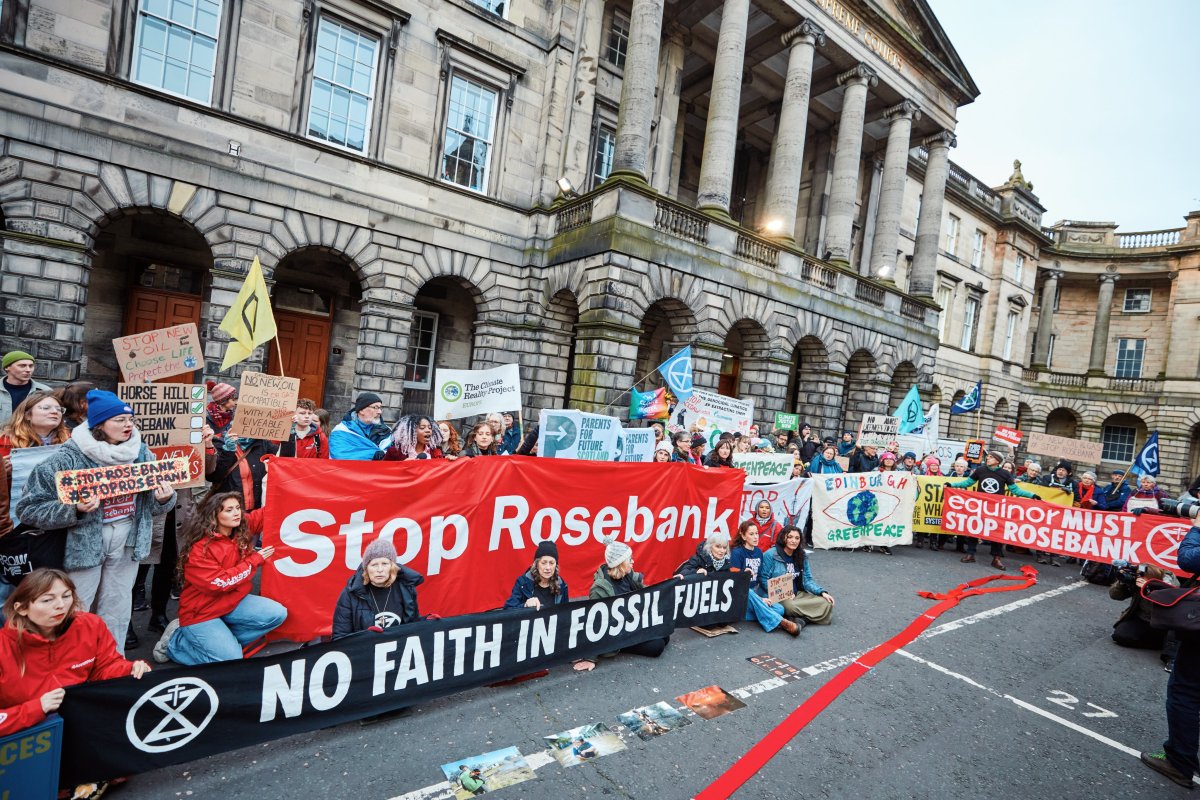
“The rebellion starts here”, I wrote in October 2019. “There must be non violent direct action aimed at big oil, and targeting oil production.”

The article, North Sea oil and gas: the elephant in the room, was originally a leaflet that I took to London, to Extinction Rebellion’s festival of rebellion.

At that time I was four years’ retired, after 40 years as an offshore oilworker. I was experiencing a personal renaissance, as Extinction Rebellion (XR) crashed onto the streets. 

My article wasn’t particularly radical or controversial. Certainly not to most XR rebels who were its target audience. And it still today, at least in part, reflects what is a fairly mainstream position in the climate movement. 

I wasn’t really focussed on XR’s demands as such – e.g. getting the government to “tell the truth”.  Even then I wasn’t convinced that that was very likely, but I certainly didn’t disagree. I knew next to nothing about the popular assemblies that XR was calling for, or about whether Net Zero was remotely achievable by 2025.  

But I’d been hugely impressed by the way Extinction Rebellion had burst onto the scene, blocking bridges over the Thames the year before. That’s when I’d become aware of the movement.  

By this time, I was troubled about global warming and thought that it would take the masses to intervene in this existential issue. Really all I wanted to do was to bring my own experience to bear on the situation.

I’d been flabbergasted that many rebels I’d spoken to had little awareness of the North Sea oilfield’s existence.

I felt that the “fossil fuels” that were understood to be the major source of greenhouse gases when burned, were in fact still pretty much a “concept” – something in their heads, rather than real stuff mined by real people in our patch.  

My article called on the climate movement to turn towards the oil workers with a call for a “just transition”.

Just transition of course was not my formulation, but was a concept that I swallowed whole, and expected would appeal to the offshore oil workforce on some level and might be the basis for workers to mobilise around.  

This, after all, was the workforce that had engaged in a huge struggle after the 167 deaths by burning and drowning on the Piper Alpha platform, albeit 30 years previously.

In what now seems like an age since 2019, we’ve seen virtually no response from oil and gas workers, despite a concerted turn towards them by parts of the climate movement.

Perhaps the one concrete thing is that we know that they would be more than happy to transfer from offshore oilfield to offshore wind field … if they can keep the lifestyle and the wages.

But the workers are still in lock step with their trade unions (the minority that are actually organised) and with their employers, with Big Oil globally, and with our government. 

Short of a massive storm event on the North Sea creating another major tragedy, it’s hard to see this unholy alliance unravelling any time soon.  

But while I’m not embarrassed by the 2019 article, I don’t think it reflects the reality we’re experiencing, never mind the future we’re facing. That is why I came back and asked Simon for the use of his blog again.  

Right now, everywhere, we have an accelerating pattern of disasters, intermittently destroying lives and the natural environment and by all accounts driving the tendency towards mass extinctions of species. 

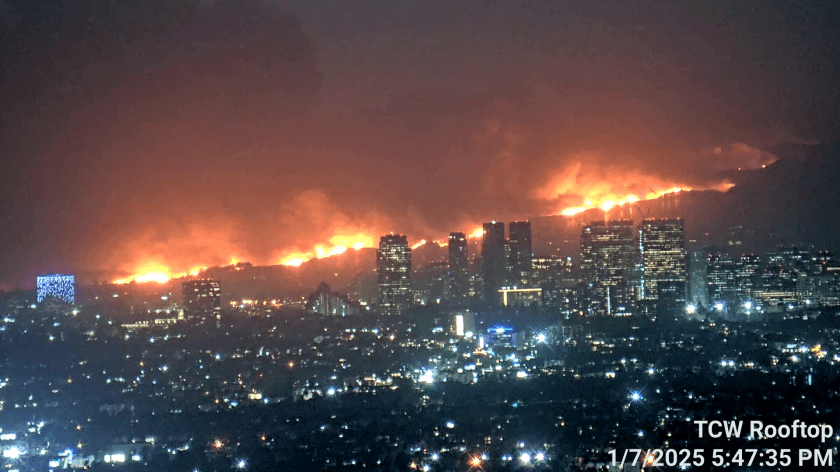
We’ve seen a succession of global heating-induced disasters rock the planet. The floods in Pakistan, the fires in the Amazon, and today in California, stand out for me. It’s relentless. You’ll have your own list.

Can I tell the future? Well obviously not. But, as far as any layman can understand the climate science consensus, it seems that we’re way way further down the road to a radically different global climate, and massive changes to local weather that cause mayhem and misery.  

My characterisation of the industry/government strategy as “business as usual” was, and remains, accurate, I think.  

The court decision last week, that the process that gave the go-ahead for the development of the Rosebank and Jackdaw fields on the North Sea was unlawful, should pose absolutely no problem for the industry that was complicit in the hanging of Ken Saro-wiwa, and has been involved in human and ecological atrocities across the globe.  

Not much of a problem either, I’d have thought, for Rachel Reeves and Sir Starmer with their Growth & Growth & Growth mantra.  

The concept of a transition – never mind “just” – from fossil fuels to renewables, led in any part by the massed ranks of the proletariat self-organised in the offshore unions, now looks like an ongoing exercise in self delusion.

Long before XR was set up, in 1989-90, I was desperate to get some sort of an idea of the nature of the relationship of oil and capitalism – something that might inform me whether the rank and file Offshore Industry Liaison Committee (OILC) could chew what we’d bitten off by organising strikes and platform occupations after the Piper Alpha disaster. [Note. Here is an interview with Neil about this, and an archive of the rank and file paper he edited, Blowout.]

I was looking for some sort of an understanding of the possibilities and opportunities. Where did any of this lead? 

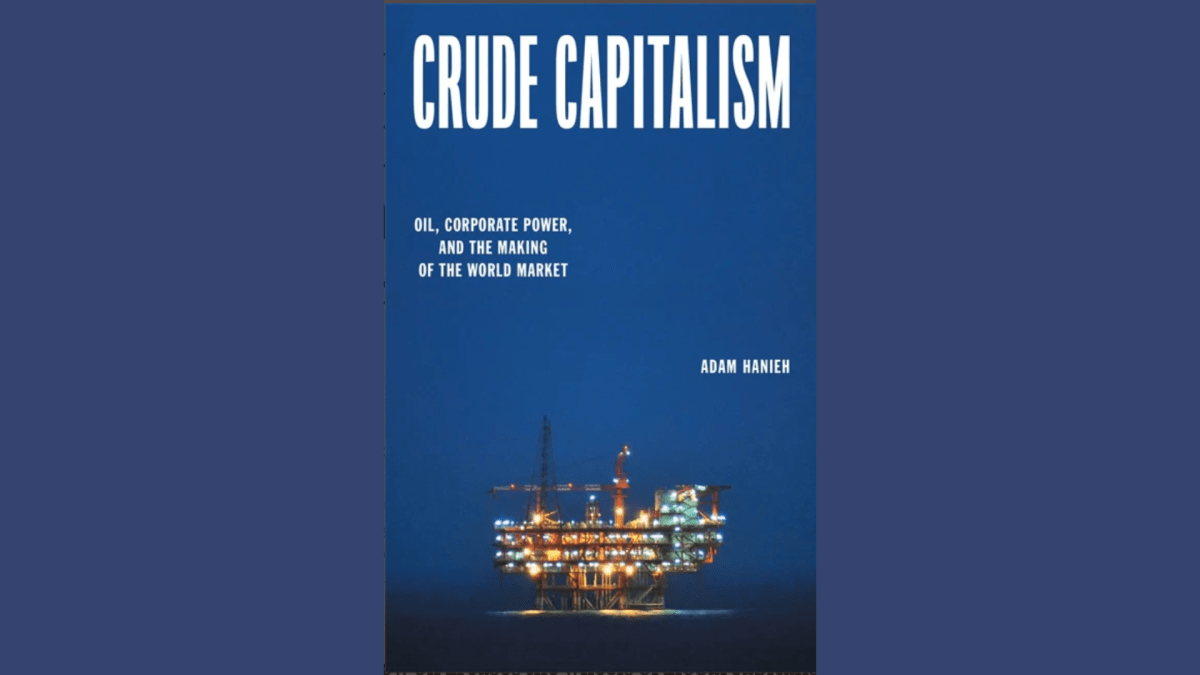
Thirty-five years later, and along comes Adam Hanieh with his book Crude Capitalism: oil, corporate power and the making of the world market (reviewed here and here). He says, as I read him, that the capital system and fossil fuels are inextricably entwined.

His book begs the question, at least for me, of the likelihood that the capital system can turn off oil and gas, and replace the world’s energy needs from renewables, before climate chaos becomes the norm.  

The vision this question conjures up, in my imagination, is of someone ripping out their own heart with one hand, while trying to construct a replacement organ with the other. 

Meanwhile Jean-Baptiste Fressoz tells us, in his book More and More and More: an all-consuming history of energy (Allen Lane, 2024), that that holy grail of the climate movement, a “transition” to renewables, is in fact a pipe dream, a chimera.  

There never was, it seems, in human history a precedent – an energy transition – corresponding in any way to the fantasy we hold of fossil fuels being replaced by renewables. Oil didn’t replace coal. Coal didn’t replace wood. It’s just been “more and more and more”.

The history, Fressoz insists, is of “symbiotic” relationships. Burning coal leads to using (more) wood. The exploitation of oil and gas drives (more) wood and (more) coal to be used, and crucially, renewable energy adds to and encourages the use of (more) wood and coal and oil and gas in such a way that Fressoz sees no plausible scenario where global heating might remain within 1.5, or 2.0 degrees C. 

We’re looking at “three degrees C – a catastrophic increase” he says. “How can we make do with less and less and less?” he asks.  

And Brett Christophers, in his book The Price is Wrong: why capitalism won’t save the planet (reviewed here) challenges another growing orthodoxy. The idea is firmly out there that now that the price of renewables is right, that renewables are “cheaper” than fossil fuels.  

This, the argument goes, will inevitably, according to the laws of the market, mean that renewables will supplant fossil fuels. Only who would have guessed that in fact “the price is wrong”, and that all along it’s been profits, not prices, that drive capitalism?

Let’s suppose that you’ve checked out these authors for yourself, and found that my very crude argument, largely drawn from my reading of them, casts reasonable doubt on the idea that there is a snowball’s chance in hell of the current “powers that be” getting us out of this mess.

Then your next step might be to have a look around for the Leninist parties that are going to wrest global power from the current crop of megalomaniacs and oligarchs and downright genocidal bastards. Where are the forces that will lead us over the barricades, kalashnikovs in hand, to capture the state (everywhere) and plan our way out of this one?

Perhaps that’s not the place to look. Perhaps it’s going to be more complicated.

If you are, like I am, disabused of almost every certainty you ever held dear, then there is at least one step that might help us “take care of ourselves”. No! This is not about Lush bath bombs (if they are still a thing). It’s not about playing Radio 3 in the mornings instead of exploding from bed shouting and swearing at Radio 4’s climate-deniers-lite.

April 2012: Volunteers running a centre where Hurricane Sandy survivors could stock up on staples. Photo by Liz Roll/ Creative Commons

“Taking Care of Ourselves in a World on Fire” is the subtitle of Adam Greenfield’s book Lifehouse (Verso, 2024). The “care” he’s talking about is putting human need, human relations and self organisation at the centre of our practice – in a period when it would seem that we are going to have to learn to survive and make worthwhile lives with less and less and less.  

And all this in the face of escalating climate emergencies and the inevitable breakdowns they provoke. 

The book is rooted in Greenfield’s own experience as part of Occupy Sandy, which had morphed out of Occupy Wall Street, organising relief to the victims of the hurricane that hit New York in 2012.  

He draws material together from the way people have been self organising in the face of inadequate official support, abandonment and just downright open hostility, in places as disparate as Rojava in Kurdistan; Jackson, Mississippi, in the USA; Greece in 2010, during the debt crisis that exploded health care; and in California, where the Black Panthers organised from the late 60s to the early 80s.  

The book is “optimistic”, not “hopeful”. Greenfield inveighs against hope, and lays out a rationale and a blueprint for a practice, and a physical space, that offers us a place to organise and the chance of shelter and community and dignity.

This is a rant, not a series of book reviews. And it may turn out to be no more prescient than that one from 2019. 

But is Greenfield, broadly speaking, right?  No point in just hoping so. The point of his book is, it seems to me, not just to understand the world but to change it. I’ve heard that somewhere before. A first step might be to have a look. 

Review | Crude Capitalism

What has oil got to do with the history of the global capitalist economy? Pete Cannell reviews Adam Hanieh’s account.

REVIEW | CRUDE CAPITALISM

Pete Cannell • January 19, 2025

What has oil got to do with the history of the global capitalist economy? Pete Cannell reviews Adam Hanieh’s account.

A version of this review was published originally on the rs21 website.

The first commercially successful oil well in California was tapped in 1876 at Pico Canyon in Los Angeles County. Oil extraction and oil profits spurred the rapid growth of the city of Los Angeles. As I write this review 150 years later, LA is on fire. Crude Capitalism – Oil, Corporate Power, and the Making of the World Market charts the development of the oil industry from its early beginnings and shows how its history is intermeshed with the development of the world economy. It’s a book about oil, about the climate crisis and the environment, about economics and the dynamics of the capitalist system. The Los Angeles fires are one more instance, and not even the most destructive, of the global impact of rising temperatures and changing weather patterns. If you want to understand how oil and capitalism link events in 1876 and 2025 and the forces that shaped and continue to shape our world, then Crude Capitalism is a must read.

Wikimedia Commons CC BY-SA 4.0

In 1995 the rulers of the world met in Berlin, ostensibly to tackle the threat of global warming. In the following three decades more carbon dioxide has been added to the atmosphere than in the previous two hundred years. In the same period annual methane emissions have more than tripled. This exponential increase in greenhouse emissions should not be a surprise. Hanieh begins the first chapter of the book by noting that a decade before the first COP, the International Geosphere-Biosphere Programme (IGBP) was already investigating the connection between human activities and changes to the earth’s biological, chemical, and physical systems. When their report was published in 2004, they noted that

The second half of the twentieth century is unique in the entire history of human existence on Earth. Many human activities reached take-off points sometime in the twentieth century and have accelerated sharply towards the end of the century. The last 50 years have without doubt seen the most rapid transformation of the human relationship with the natural world in the history of humankind.1

Crude Capitalism sets out to explain why the mid-twentieth century was such a critical turning point and why despite decades of blah blah blah (to quote Greta Thunberg) the exponential increase in global greenhouse emissions continues. 

The core of the book is a chronological account of the development of the oil industry from its early beginnings until the present day. The story begins in the United States in the late 1890s. The second chapter explains how the rapidly developing oil industry became dominated by huge vertically integrated corporations such as Standard Oil. The structure of the new industry owed a lot to the particularity of US property law. The oil majors consolidated their grip through cartels and oligopolistic structures. These modes of organisation were adopted internationally in the decades that followed. A theme that runs through the book is the way in which the oil industry has become global, growing and adapting and often acting as a trail blazer for innovation in organisation and new techniques of capitalist exploitation. An example of this, in the British context, is the privatisation of the North Sea oilfields, which was at the forefront of the neoliberal reconstruction of the British economy.

With World War I, the focus of the book moves to the Middle East and Russia. One of the great strengths of the book is the way in which it deals with imperialism and how economic and military competition ties the global oil industry and the global arms industry together in an embrace of exploitation and callous destruction of the environment and possibilities for genuine human development. World War I generated a massive increase in demand for oil. The British Navy transitioned to an oil-based fleet. Britain’s colonial activities in the Middle East and its role in dismantling the Ottoman empire were critical for Britain to meet its growing demand for oil. It met this demand by developing new oil fields in Iran and Iraq. Collaboration between US big oil and British colonial interests in this new arena of exploitation paved the way for the US majors to go global.

The real acceleration in oil production, chronicled brilliantly in the central part of this book, came after World War II, when European economies joined the developmental path already well established in the US. At this point, the use of oil as a feedstock for plastics and synthetic fertilisers took off on a mass scale. Oil’s initial success lay in its energy density – a given volume of oil provides far more energy than coal or wood – but over the course of the second half of the twentieth century the ubiquity of plastics meant that, in Hanieh’s words, ‘commodity production had become a derivative – or a by-product – of the production of energy.’ This transformation of commodity production to a system powered and based on oil remains the dominant system in the global economy. This continuing domination is the reason why greenhouse gas emissions continue to rise.

In the last decade the US has once again become the largest single national producer of oil and gas. Yet at the same time as the Chinese economy has grown, the centre of gravity of the global industry has shifted east to Asia and new interdependencies have grown between Asia and the Middle East. 22 years after George Bush declared victory in Iraq, the largest oilfield in that country is run by a private Chinese company. But there is also a shift in power from private to state capital: the three biggest oil firms in the world are owned by the Chinese and Saudi Arabian states.

Crude Capitalism is withering in its critique of the oil industry’s corporate greenwashing. Hanieh notes, for example, that BP’s erstwhile rebranding as ‘Beyond Petroleum’ involved spending ‘more on the corporate rebrand than it did on renewable energy.’ The rebrand was short-lived and while many of the big companies are increasing their investment in renewables the rate of increase in investment in hydrocarbons is even faster. Twelve of the biggest companies plan to spend more than $100 million a day on new hydrocarbon projects up to the end of the decade. In addition, the industry is using its power and wealth to push technofixes that are often of limited or no utility for reducing greenhouse gas emissions but allow for the continuation of the infrastructure and systemic economic relations of fossil capital. In Britain the industry body Offshore UK has rebranded itself as Energy UK and its focus on Carbon Capture and Storage and Hydrogen is slavishly followed by the British government.

Adam Hanieh is absolutely clear about the obstacle that big oil continues to present:

Oil, in other words, remains at the core of our economy and our energy systems; without dislodging it from this position there is no possibility of ensuring a future for humanity. 

The strength of Crude Capitalism is that it shows how the oil industry is the result of a system that always puts profit first. The final paragraph sums it up:

We cannot behave as if the problem of capitalism does not exist, or can be ignored, or as if our current rulers can be convinced to take an alternative path through the sheer force of scientific evidence. This is an irrational economic system that pits the interests of a tiny few against the vast majority, and only by taking political and economic power away from the logic of the market will it be possible to build a different and better world. 

[1] Will Steffen et al., Global Change and the Earth System: A Planet under Pressure, Berlin: Springer, 2004, 81. 

Crunch time for ex-GKN workers and their just transition plan

Italian workers who occupied a GKN factory to oppose closure went on to make a plan which shows what a just transition can look like. Now it is time to support their plans to start production.

Italian workers who occupied a GKN factory to oppose closure went on to make a plan which shows what a just transition can look like. Now it is time to support their plans to start production.

Matthew Crighton reports on the latest developments.

See previous articles on this site on the workers’struggle here and here.

Workers at GKN near Florence occupied the factory against closure over 3 years ago and are still there, after winning 6 legal cases including successful challenges to the lay-offs. They have been sustained by cycles of mobilisation by supporters across Tuscany giving solidarity and practical donations.

The strong trade union organisation in the plant didn’t just oppose closure of their factory, they decided to build a case for re-opening with a plan for socially-useful production, rather than servicing the luxury car manufacturers. Pooling their expertise and reaching outwards, they now have a plan for just transition to make solar panels and cargo bikes.

I was pleased to join a UK delegation to the Solidarity Assembly at the site on 13 October and a public event on the day before about convergence between the trade union and climate movements and even got to speak at it. More of the detail of their story is covered in the articles to which there are links below so here I will just summarise the current situation which we learnt about.

About one third of the original 400 workers are still taking part, now organised into the GFF Collective. After a series of sales, neither GKN nor Melrose, the company which bought from it, are now involved and the workers’ struggle to retain employment has become focused on their plan to re-start production, not of the luxury car parts which GKN made, but products of vital importance for the transition to zero carbon – cargo bikes and solar panels, includingrefurbishment of old panels. This was prepared in consultation with the climate movement in Italy and potential users of the products and its purpose is seen as leading a switch to reindustrialisation through addressing environmental crisis.

The Regional Council of Tuscany has given this plan some support but it has not taken the key next step to provide the Collective with working capital. The most recent development has been that the factory site has been sold again to property companies and the workers fear that they intend to use if for warehousing, retail or housing. As a result, they are looking for options of other sites for their collective enterprise while not giving up on the first one.

The Collective launched an appeal for funds and in particular for the purchase of shareholdings. Two UNISON branches in Scotland have committed to do this and I was able to act for them at the Assembly and report back. The good news which we received is that the Collective has been successful in reaching its target of 1 million euros.

The worrying news was that the Tuscany Regional Council still has no timetable for passing the decision which can enable it to give the funding and support needed. In this light, the Collective’s resolution to the Assembly both set a deadline at which, if there is still not a decision, it will have to reconsider the viability of its plan; and set a target for further fundraising of another 1 million euro.

As things stand at the end of October, the workers have three demands:

  • Pay unpaid salaries to the workers
  • Administration by the national government: the Government is asked to appoint a special receiver to the company
  • That the regional government buys the factory off the current owners and hands it over to the workers to run themselves under workers’ control

The deadline which they have set is 15 November and the date of the next mobilisation and an assembly at which the situation can be re-assessed in 17 November. As the Collective says “It will be a celebration for the start of the plan or anger against an entire system”.

It was inspiring to witness workers reaching out to the climate movement and solidarity received in return. As the attendance showed this has been a rallying point for the left in Tuscany, Italy and wider in Europe.

I was able to bring our experiences in Scotland, of Friends of the Earth and STUC setting up the Just Transition Partnership, to the audience. I emphasised what each movement has learnt from the other and the need for a foundation of respect between them. I was pleased that the next day, Greta Thunberg spoke on the same theme of building a mass movement of workers who want to stop climate change and environmentalist in solidarity with workers struggles.

The ex-GKN workers need solidarity and have a call out to buy shares to raise working capital for their cooperative. The shareholding appeal remains open and also straight donations can be made – see below*. Lastly, this inspiring example and lessons from it need to be widely known. Speakers can be provided.

Here are articles about it:

Rebirth or Surrender – 14 October 2024 – in Italian but Google can translate

The Italian Workers Occupying Against Climate Crisis – 11 October 2024

The GKN Workers Fight Continues – 13 March 2024  – Red Pepper

Facebook Group: GKN Factory Occupation – UK Solidarity Network

Key Learnings:

  • The inspirational impact of workers acting to defend their jobs, to defend the planet and transform the economy.
  • A concrete example of joint work between trade union and climate movements, at activist and formal levels – there is lots for activists in the UK to learn about this…
  • The inertia which arises from neither the trade union structures nor the local government being ready with support for this kind of initiative
  • The need for workers in all industrial enterprises to be thinking ahead and preparing just transition plans
  • The shift from a dispute with an employer about closure to a workers plan for production requires a new combination of skills, organising capacity and resources – fundraising for industrial production, securing a site, arranging finance and organising a workforce while continuing the political struggle is a big challenge
  • The importance of solidarity for keeping this going.

Matthew Crighton

matthewcrighton@gmail.com

* Donations can be made by single or continuous bank transfer to the following Banca Etica current account in the name of Soms Pinerolo IBAN IT81 E050 1801 0000 0002 0000 339 BIC ETICIT22XXX

Support the GKN workers in Florence

Thanks to REELNews for sharing this call

Already one of the most important climate justice struggles in Europe, the campaign by GKN workers is under imminent attack – and they need your help to complete their inspiring struggle

For over two years now, workers have been occupying the GKN autoparts factory in Florence to stop it from closing, in the longest factory occupation in Italian history.

They have received huge support in demonstrations of up to 40,000 people – and crucially, from the climate movement, which inspired the workers to come up with an alternative plan of production. 

Instead of autoparts, they plan to produce cargo bikes and solar panels, and use them to build a local economy based on the needs of people. They have already produced a prototype of the cargo bike; now they urgently need your help to make this “just transition” away from fossil fuels a reality.

The bosses are planning on sacking all the workers on January 1st so the first priority is to come to a New Years Eve event at the factory if you can, for a huge concert – and to barricade the factory. They’ve fought off redundancies before; with the same support, they can do it again.

But then they need to raise one million euros in a popular shareholder campaign, to start production off the cargo bikes and solar panels under workers control. So please share this video call out with trade unions, with environmental organisations, with everyone who wants to see a global just transition away from fossil fuels. Shares start from 100 euros, and already they have raised 315,000 euros – you can find details of how to take part at https://insorgiamo.org/100×10-000/.

You can also help by spreading their story; by offering to translate materials into other languages; and if you have the technical expertise, to look at the production plan to help improve it. Also, if you know of a cooperative or progressive group who would be interested in buying the cargo bikes or solar panels, that would be incredibly useful too. If you can help with any of this, email the collective at collettivo.gkn.firenze@gmail.com.

As the workers say, they can’t create an alternative model to capitalist fossil fuel production in just one factory – but they can create an example of what is possible.

Please support them in this absolutely crucial battle for a liveable, sustainable future.

Earth Social Conference

A message from the organisers of the Earth Social conference – timed to take place in Colombia as COP28 takes place in Dubai.

It boils down to whether we are honest with ourselves, or not.
UN climate summits are a joke that continue to push the bounds of absurdity.
Since they began, yearly global emissions have increased by more than two-thirds. Worse still, no plans have been made to phase out fossil fuels. Should we be surprised when industry lobbyists continue to dominate conferences? Can we expect anything different from this next summit, taking place in a petro-state, chaired by an oil company boss… Are we expected to buy into this charade…?

We, on the other hand, are climate realists. We see where we are being led. We know we need to apply the emergency brake to avoid earth system collapse. That’s why we refuse to participate in a process of trading empty promises any longer.

That’s why we are inviting climate realists to the Earth Social Conference in Casanare, Colombia, from 5th-10th December 2023.

Join us to build the collective force we need in order to pull the emergency break.

Although the conference is in person in Columbia on 7th December it is possible to join some of the sessions by Zoom. Click here to go to the conference website and register.