Climate and Militarism

Pete Cannell looks at the way in which the climate crisis and militarism are intertwined

Annual global expenditure on arms and warfare is of the same order of magnitude as the best estimates of the annual funding required to make a worldwide transition to a zero-carbon economy.

The US military-industrial complex is by far the biggest component producer of carbon emissions. It’s hard to get completely accurate figures since around the world nations simply fail to report carbon emissions from their armed forces or conceal the emissions under other headings. And generally, they are given a free ride – scientific reports – for example the IPCC reports on the state of the climate – scarcely mention the impact of military emissions.  But it’s estimated that the military contribute something like five and a half per cent of global emissions – more than all the carbon emissions from Russia.  Military kit is heavy, expensive and fuel greedy. To travel 1km a Humvee armoured car produces ten times the carbon emissions of an average car, an F35 jet aircraft as much as one hundred cars and one of the new British aircraft carriers is equivalent to five thousand five hundred cars. Around the world there are big increases in military expenditure taking place – the increases proposed for NATO amount to the equivalent emissions of 200 million tonnes of carbon dioxide (CO2e).

When weapon systems are deployed and used the environmental cost is magnified. Looking at the use of arms in Gaza since 7 October 2023, One Earth found that 99% of emissions were due to Israel amounting to more than 1.8 million tonnes CO2e. Total emissions from the onslaught on this tiny area exceeded the combined annual total of Costa Rica and Estonia. But these totals are tiny compared with the carbon cost of rebuilding Gaza which is reckoned to be around 29.4 million tonnes CO2e. And of course, the environmental impact is not just about carbon emissions.  It includes pollution, poisoning through residues from shells and explosives and contamination of ground water. Low level nuclear radiation from the dust produced using depleted Uranium shells is still causing deaths and birth defects in Iraq more than two decades after the second Iraq war.  Then there’s the degradation of the natural environment and agricultural land which in its turn adds to climate emissions.All of this highlights the importance of the military as a significant contributor to carbon emission and environmental destruction.  

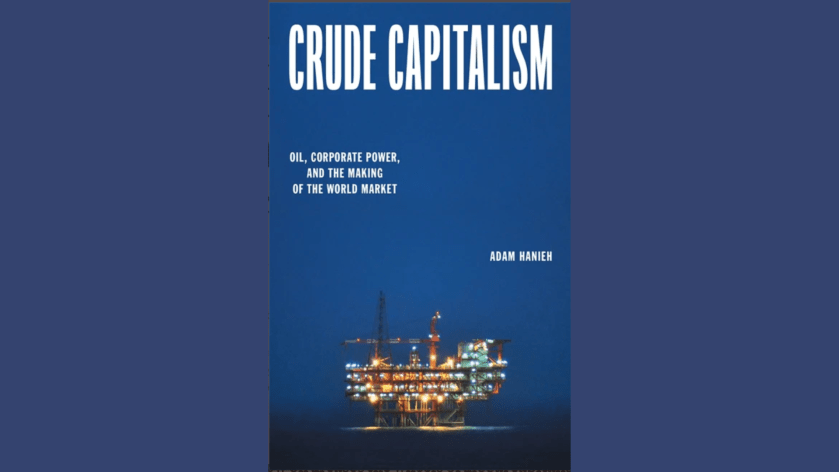
However, I’d argue that most important is the structural role that arms production has in the global capitalist economy.  Scotland is a good case study. The arms industry, including the nuclear base on the Clyde, is quite small in terms of numbers employed and even in terms of its percentage of GDP. But it has a status that no other industry has – access to and support from government. Investment is prioritised above the threat of climate change. above that for climate. Indeed, the latter is left to the private sector or marginalised. The skills needed to work in the industry are often transferable to renewables and the building of a sustainable economy. The arms industry is centralised, securitised, secretive and immune to oversight and criticism – all this justified by appeals to the ideology of national interest. More generally the arms industry is at the intersection of global capitalism, imperialism, and environmental destruction. The deep connections between middle east oil and gas (and its impact on the environment) and the arms trade are clearly drawn out in Adam Hanieh’s Crude Capitalism

Review | All In -a revolutionary theory to stop climate collapse

Portuguese ecosocialists Climaximo argue for a strategy of rupture in the face of climate collapse. Pete Cannell reviews a new book which lays out their case.

In the last few years, the Portuguese ecosocialist collective Climaximo has been one of the most dynamic and creative parts of the European climate movement.  Two years ago, the group made a sharp shift in its strategy and tactics, declaring that ‘the governments and the corporations declared war against the people and the planet’.  All In: a revolutionary theory to stop climate collapse, written by two Climaximo activists, Mariana Rodrigues and Sinan Eden, is an explanation of the Climaximo approach and a call to action. It’s an unusual book. You may find parts hard to follow. You’ll almost certainly find that it includes things you disagree with. I don’t think the authors will mind that. What they are concerned to do is to win a case for their key propositions about the problems we face and what is to be done. 

First the issue:

‘Everyone in the movement is more and more aware of two sets of information. The first is that the capitalist system is the root cause of the climate crisis and has absolutely no perspective of solving it. The logical consequence is that the task of any movement informed by climate justice is to dismantle capitalism. The second is the threat of runaway warming cascading to climate chaos. In other words: urgency.’

Mariana and Sinan argue that most people deal with one or other of these propositions but not both. They provide withering assessments of the movement as it is. They argue that existing climate campaigns generally end up becoming ‘every small decrease in emissions matters’ campaigns. Implicit in their assessment is a critique of NGOs who often talk about system change but whose practice is limited to demanding change within the existing system.  On the other hand, they see the revolutionary left as clear about capitalism’s responsibility but failing to reflect the urgency of the crisis in their organising. It’s important to note that these judgements are made by insiders and activists not by detached academic commentators.

Underpinning the book is an assumption that whether or not there was once a pathway to a zero-carbon economy through some form of highly regulated capitalism, as global temperatures break the 1.5 degree increase set by the Paris COP and carbon emissions continue to rise, that path, if it were ever possible, is foreclosed. 

The authors aim to develop a theory of change and an organisational model that can combine tackling the revolutionary overthrow of capitalism with the urgency that the climate crisis provides.  They acknowledge that embracing both objectives can be daunting. They suggest that many movement organisers avoid even confronting this by focusing on limited and short-term objectives – effectively sidelining the systemic challenge that we face. They also argue that ‘not enough new generation organisers are learning from historical experience, limiting their attention to specific interpretations of specific examples’.

Taking all of this into account, the middle section of the book examines multiple historic examples of ‘successful’ movements for change, with brief descriptors and classification into different explicit or implicit theories of change.  The overt aim is to develop a sense that contemporary movements have a rich history that should be engaged with. Mariana and Sinan encourage the reader to dig deeper.  While I understand the reason for spending time on these examples, I found this the least convincing part of the book.  In part this is down to my disagreement with the way in which some events are characterised. No distinction is made between political and social revolution. And there’s an uncritical framing of the 20th century as a period when for some decades more than half of the world was ‘socialist’. This opens serious questions. Why were these ‘socialist’ states so appalling in terms of environmental practice? If they were a new mode of production how did capitalism return?  But perhaps I’m being over-critical, the authors are clear that their aim is to get activists interrogating and learning from past struggles.

‘Look, all these people were thinking about the questions we have now, and they answered them, sometimes it even worked, and many times it worked better than whatever we have done so far. If we can spark such genuine curiosity, we shall be satisfied.’ 

In the final part of the book the authors turn to what is to be done. Essentially, they call for organisations to take the same turn as Climaximo, recognise that we are in a situation where the capitalist class are determined to hang on to a system that is trashing the planet and then act accordingly. There are two basic propositions. Firstly, the climate crisis is a global problem. 

Globalisation is the material process through which imperialism is integrated into a world system.’

Secondly, global capitalism has created its own gravedigger, a global working class. This is summarised as: 

At this moment of history, there is a global working class confronting globalised capital.’

Both propositions are common currency on the left. But the conclusion that Climaximo draw, and that Mariana and Sinan develop, is not simply ‘build the revolutionary party’ although they are clear that the goal is revolution. Their proposed strategy is a brutally honest attempt to chart a path forward in a context which we wouldn’t have chosen as a starting point and where older models of ‘party’ building are inadequate. It takes for granted that there are many campaigns, movements, groups, and parties too, that could form the nucleus of the mass campaign that we need. 

The core idea is the development of the ‘movement as party’. Some of the language is opaque so what follows is my interpretation. The aim is to build what Mariana and Sinan call a global movement ecosystem. What defines the parts of the ecosystem is a clear class-based focus on getting rid of capitalism.  Tactics and ways of organising will vary by, and within, different locations, but following the example of Climaximo, the components of the ‘movement as party’ will have declared a climate emergency within their organisation. They will have accepted the basic propositions and most importantly they will have adapted their practice to align with them. The authors note that:

Surely, we can have many plans, contingent on various possibilities. But we need those plans, anti-capitalist plans, actually-dismantling-capitalism-in-the-short-term kind of plans. ‘System change not climate change’ is not an agitation tool anymore, it’s a directive for our generation. 

They argue that:

‘… in a state of climate emergency, we need to take risks – a lot of them: political, strategic, organizational, tactical, personal and emotional risks. We cannot afford to lose everything without having really risked to win. We need to fail forward, we need to be intentional and attentive in our failures.’

They explain that:

By intentional failure we mean knowing what we are trying out and what risks we are taking. By attentive failure, we mean having specific collective processes in place to learn from the experience and share it.’ 

Climaximo’s understanding of class is based on the ecofeminist ideas of Stefania Barca which sees those involved in care work, work which contributes to social reproduction and the continuation of human life as integral to the working class. They note that:

Historically, marginalisation of reproductive work and metabolic work has accompanied marginalisation by gender, race and ethnicity.’ 

Critically this is a global working class which confronts the global issue of climate crisis.  Mariana and Sinan stress that building a global movement is not an optional extra but a key part of building the ‘movement as party’. They insist that it’s not just a theoretical position but a practical one and argue that organising in a climate emergency means devoting perhaps 25 per cent of an organisation’s capacity to international work. In this respect Climaximo has an exemplary record, being central to the organisation of the Global Climate Jobs Conference in Amsterdam in 2023 and the counter-COP Earth Social Conference.

‘All In’ wrestles with questions that should be on the minds of everyone who is concerned about the state of the world we live in. What it proposes may not be ‘the answer’ but it should make you think and it concludes by setting a challenge – ‘Will we dare to win?’ 

Check out the All In website and order the book.

A version of this review was also published on the rs21 website.

One of the author’s Sinan spoke at a book launch co-sponsored by ScotE3

Climate and energy: building blocks for labour movement strategy

This article is based on a talk by Simon Pirani at the energy campaigns strategy day, organised by the Campaign Against Climate Change in Leeds on 1 February 2025. It was first published on the People and Nature blog.

The “key questions” we hope to discuss today, listed in the agenda, include “how do we cut through with our demands for a clean energy system”, “how do we create the necessary alliances” and “how do we turn the tide of right-wing weaponisation and scapegoating of climate action”.

I will comment on these questions by taking a step back, and considering some underlying issues about how we understand the world – issues that we will come back to again and again, as we are trying to develop political strategies. I hope this is useful.

Some of this will sound general, some of it some of you know better than I do, but my idea is to try to allow us all to consider the basics that underlie all the hard campaigning work.

I will comment on six points: two on politics, two on energy systems, one on technologies, and one on campaigning proposals.

1. To what extent can we talk about UK government “climate policy”? What is the effect of the government’s actions and the way to influence them?  

The economic system that we live under has a built-in requirement to expand. Capital needs to accumulate continuously. The government’s function is to facilitate that.

And so the government’s default positions on things that matter in terms of global warming – airports, road building, regulation of the building industry, North Sea oil, and so on – are anchored in its attitude to economic policy (all about “growth”), which serves the needs of capital. Capital, in its drive to expand, undermines and sabotages all climate targets.

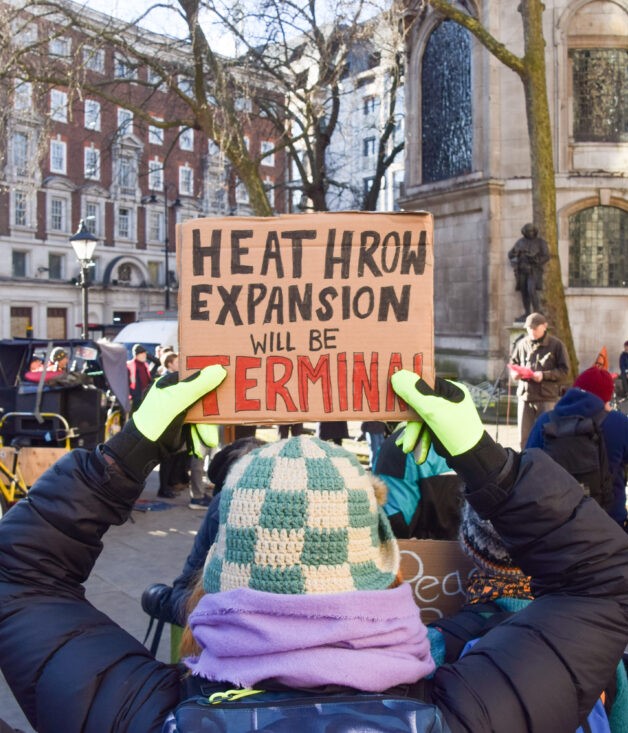
We, the movement, must not lose sight of how this works. This is how we end up with the chancellor of the exchequer talking nonsense about electric planes and biofuels, to justify reviving the discredited, climate-trashing Heathrow third runway proposal.

Our understanding of the relationship of capital and the government is obviously relevant to our political strategy.

Take for example the 2008 Climate Change Act, arguably the best bit of legislation we have, under which the UK carbon budgets are set, and which many of us here have used as a political lever for our arguments. Actually it is a double-edged sword. The Act is used by many politicians as a cover behind which to abandon actions that would address climate change.

A starting-point for a critique of the Act is research conducted at the Tyndall Centre for Climate Change Research, and published in 2020, showing that if the UK sticks to its carbon budgets, it pours TWICE AS MUCH greenhouse gas into the atmosphere as it would under a fairly worked-out target.

The Climate Change Committee, supposedly “independent”, has always ducked the crucial question of what proportion of the global carbon budget it thinks the UK could fairly use. It considers what is “feasible”, not what is necessary.[1]

My conclusion from this is NOT that nothing can be done in the political sphere, but that we should recognise how the battlefield is actually set out. Strategies focused on convincing the government, without social movements behind them, will often fail.

2. Do we see the international climate talks as part of the solution, or part of the problem?

In recent years it has become clearer that the oil and gas industry, and governments of fossil fuel producing countries, have to a large extent taken control of the annual conferences of the parties (COPs) through their lobbying machines.

We should not give an inch to the oil companies and their lobbyists. But, in fighting them, we should beware of the idea that the international climate talks set a standard that, without these recent changes, we could return to. That was never the case.

I am talking here about the political agreements made at the talks, not about the scientific research summed up in the reports of the International Panel on Climate Change, that we should all follow as closely as we can.

(When I gave this talk, the very valid point was made in discussion that we can not just “listen to the science”, as some environmentalists say. There is not one “science”: scientific interpretations are also shaped and influenced by social forces and power relations, by the society in which scientists live.)

The international climate agreements were always based on the false premise that there could be green growth. They always combined tolerance for vast subsidies to the fossil fuel industries with the fiction of carbon trading.

And it is not only the climate talks, but all the post-1945 international political institutions, that are in crisis. The weakening of these institutions by Trump, Netanyahu, Putin and others is the outcome of a long process, not the beginning. The outrage of COP talks being run by oil company executives and oil-producing countries’ dictators needs to be seen in this context.

A very real political consequence of all this is that some activists, confronted by the horrific scale of the climate crisis, conclude that the future will inevitably be worse than the present.

These are real fears. And against the background of these fears, e.g. in Extinction Rebellion and organisations that have grown out of it, some people articulate what I call disaster environmentalism, always emphasising the worst possible outcome and minimising our own agency.

This is a very important discussion, and I do not think people active in the labour movement can cut themselves off from it.  

We also need to recognise that, as the consequences of climate change become much more visible – floods, wildfires and other disasters – we will see much more civil disobedience by climate activists, and much more state repression in response.

Defending those activists, even those whose methods we might not agree with, is central, in my view.

3. What is our framework for understanding how fossil fuel use can be reduced?

First, let’s question the whole idea of “energy transition”. It has been poisoned, distorted beyond recognition, with misuse by the representatives of capital. In their telling, this “transition” will be led by oil companies, car manufacturing companies, “big tech” and their technofixes.

If you think I am exaggerating, look at the way it was discussed during the prime minister’s visit to Saudi Arabia just before Christmas.

A valuable perspective on this is presented in a new book by the historian Jean-Baptiste Fressoz, More and More and More: an all-consuming history of energy. He shows that previous so-called “energy transition” were actually additions: coal burning did not replace wood burning, but added to it; oil did not replace coal, but added to it.

And certainly right now in China, the world leader in building renewable electricity generation capacity, those renewables are being added to a still-expanding mountain of coal, not replacing it. 

A second concept we should question is that “energy” is an undifferentiated thing, bought and sold as a commodity. Energy, like labour, has been commodified over the past several hundred years, by capitalism. But that is not a permanent or natural state of affairs.

Our movement should aspire to the decommodification of energy; we should think of it as a common good that people should have access to by right.

How do we move in that direction? How do we start to disentangle the system that currently delivers energy to people in the form of electricity, heat, or motive power? I suggest we start by considering the technological systems through which fossil fuels are burned and turned into these things that people can use.

I mean technological systems in a very wide sense: not only power stations and electricity networks that burn gas and produce electricity, or petrochemical processing, but also industrial and agricultural systems, urban built environments, transport systems – that all run predominantly on fossil fuels.

These technological systems are embedded in social and economic systems, and stopping fossil fuel use will involve transforming all of these.

Thinking about it in this way, we can identify three ways of reducing fossil fuel use.[2] Starting at the end of the process, where the energy supplies people’s needs, these three ways are:

a. Changing the way that energy is used. For example, replacing car-based transport systems with systems based on public transport and active travel. People do things differently, and better, using far smaller quantities of energy carriers (that is fuels, or electricity or heat, different forms energy takes).

b. Reducing the throughput of energy through technological systems. For example, replacing gas-fired heating with heat pumps run with electricity. The same result is achieved, keeping homes warm, using a small fraction of the fossil fuels burned previously.

c. At the start of the process, replacing fossil fuel inputs with renewable inputs. This is capital’s favourite change, because it does not imply reducing throughput or people living differently. Nevertheless, in my view, we in the labour movement also favour it. For producing electricity and heat, it is quite straightforward. As you know, for other things, such as making steel, it is much trickier.

I suggest this framework because in our campaigning work we are hit with a constant barrage of nonsense about decarbonisation, such as we heard from the chancellor this week about electric planes and biofuels. None of us have to be engineers to answer this stuff, but we need robust analytical categories to work with.

In energy researchers’ jargon, the use to which energy is put at the end of these technological processes – getting from place to place using petrol, heating a room using gas – are called “energy services”. From the 1970s, environmentalists argued that the economy should focus on delivering these services with less energy throughput.

“Energy services” is not a term I would use uncritically. But it’s worth knowing that there are piles of research showing how these energy services can be provided, with a substantially lower throughput of energy carriers.

(Three different, and I think complementary, takes on the UK economy are the Absolute Zero report produced at the University of Cambridge, the Centre for Alternative Technology’s Zero Carbon Britain report and Shifting the Focus, published by the Centre for Research into Energy Demand Solutions.)

4. What do we say about “demand reduction”?

Because mainstream political discourse treats energy as a commodity, it also talks about supply and demand. Actually, demand for energy is a phantom.

No-one wants energy. What people, or companies, want is energy services. These are provided by energy carriers. We want heat, or light, or we want to get from one place to the other. If the technological systems, and the social and economic systems are changed, we can get these same outcomes using far less energy.

Furthermore, energy use is differentiated. The use of energy by a pensioner to keep warm can not be compared to the use of energy at a much greater rate for a company executive to take a plane flight, or a data centre to meet increased electricity demand for crypto currencies or AI.

This should be the starting point for our political strategy. We do not want demand reduction, as our right wing opponents claim. We want to use energy differently, as part of living differently – which is surely what the labour movement has always aspired to, long before the threat of global heating loomed in front of us.

5. How do we understand and respond to technofixes?

Technologies are instruments of labour, used by people in taking from nature their means of subsistence and the material basis of their culture. But those processes go on in specific sets of social relations – for the last three centuries or so, dominated by capital.

Just as labour is shaped and controlled by social forces, so are technologies. So we should beware of thinking of technologies outside of their social context.

An example is the internet. It transformed communication and access to information in ways that have changed all our lives. But we can also see how, in the hands of powerful corporations, it is being used to reinforce the most dangerous changes in society – the growth of dictatorship, the defence of genocide, and deception and lying on an industrial scale. Witness, too, the frightful expansion of energy-intensive data centres, particularly to facilitate cryptocurrency use and AI.

In the energy sector, bad or questionable technologies are supported by capital for its own reasons: those on which attention are currently concentrated are carbon capture and storage, and hydrogen, the primary social functions of which are as survival strategies for oil companies.

Technologies that have the capacity to serve humanity – I am thinking here particularly of solar, including decentralised solar – are distrusted by capital, which seeks to control them.

As a movement, we need to develop our collective understanding of these technologies and our critique of them. A great example has been set by the informal group set up by campaigners and researchers working on CCS. 

6. How do we confront the right-wing myths that climate policies are bad for ordinary people?

My conclusion from the last several years of campaigning on climate issues is: to get beyond the small number of people who have thought through the issues, we need to focus firstly on demonstrating the potential of policies that address both global warming on one hand, and social inequality on the other.

This is the way to counter the populist right wing narrative – which has also been taken up by Labour politicians and, on the issue of North Sea oil, even by union leaders – that action on climate change will inevitably hurt ordinary people.

Some exemplary campaigning, looking at how to move away from oil production on the North Sea without repeating the disaster that was visited on coal mining communities in the 1980s, has been done in Scotland. Another good example is the Energy for All campaign, launched by Fuel Poverty Action, which now has widespread support.

An example I know at first hand is that of our campaigns around transport issues in London. A couple of years ago we had to face the fact that our long-running campaign to stop the Silvertown tunnel, which will produce more road traffic and therefore more carbon emissions, had failed. The tunnel will open in April.

In discussions about how to keep together the unity and goodwill we had built up, a number of us felt that we should become more politically ambitious, not less, and advocate policies that clearly address social inequality at the same time as addressing climate and air pollution. This brought us to the demand for free public transport and the formation of Fare Free London.

Although this is a very new campaign, we have had nothing but positive responses, from unions representing transport workers and many other organisations.

We hope that, by shouting more loudly about this, we will cut right across the demoralising political diversion, launched by the populist right at the Uxbridge by-election and shamefully latched on to by some Labour right wingers, around the Ultra Low Emission Zone.

The call for free public transport flies in the face of thirty years of neoliberalism, opens the city to all and strikes a blow for social justice, and can also help to get cars off the road and make demonstrable progress towards decarbonisation. Nothing would make us happier than to see this issue taken up in other parts of the country and to move towards a Fare Free UK campaign. SP, 12 February 2025.


[1] The CCC does not say what proportion of the global budget it thinks the UK could fairly use. Instead it makes a political judgement about what a rich country, with a long history of fossil-fuel-infused imperialism, can manage. In its own words, it starts with what it deems to be “feasible limits for ambitious but credible emissions reductions targets in the near term” (Sixth Carbon Budget report, pages 319-325)

[2] I set out this argument in more detail in a talk at the Rosa Luxemburg foundation in Berlin, and in my book Burning Up: a global history of fossil fuel consumption

‘Transition’ from oil? Our idea now looks like a delusion

NEIL ROTHNIE, retired oil worker and climate activist, reflects on his participation in Extinction Rebellion and what we have, and have not, achieved.

This post was first published on the People and Nature blog. If you’d like to respond to this article please use the contact form to get in touch.

“The rebellion starts here”, I wrote in October 2019. “There must be non violent direct action aimed at big oil, and targeting oil production.”

The article, North Sea oil and gas: the elephant in the room, was originally a leaflet that I took to London, to Extinction Rebellion’s festival of rebellion.

At that time I was four years’ retired, after 40 years as an offshore oilworker. I was experiencing a personal renaissance, as Extinction Rebellion (XR) crashed onto the streets. 

My article wasn’t particularly radical or controversial. Certainly not to most XR rebels who were its target audience. And it still today, at least in part, reflects what is a fairly mainstream position in the climate movement. 

I wasn’t really focussed on XR’s demands as such – e.g. getting the government to “tell the truth”.  Even then I wasn’t convinced that that was very likely, but I certainly didn’t disagree. I knew next to nothing about the popular assemblies that XR was calling for, or about whether Net Zero was remotely achievable by 2025.  

But I’d been hugely impressed by the way Extinction Rebellion had burst onto the scene, blocking bridges over the Thames the year before. That’s when I’d become aware of the movement.  

By this time, I was troubled about global warming and thought that it would take the masses to intervene in this existential issue. Really all I wanted to do was to bring my own experience to bear on the situation.

I’d been flabbergasted that many rebels I’d spoken to had little awareness of the North Sea oilfield’s existence.

I felt that the “fossil fuels” that were understood to be the major source of greenhouse gases when burned, were in fact still pretty much a “concept” – something in their heads, rather than real stuff mined by real people in our patch.  

My article called on the climate movement to turn towards the oil workers with a call for a “just transition”.

Just transition of course was not my formulation, but was a concept that I swallowed whole, and expected would appeal to the offshore oil workforce on some level and might be the basis for workers to mobilise around.  

This, after all, was the workforce that had engaged in a huge struggle after the 167 deaths by burning and drowning on the Piper Alpha platform, albeit 30 years previously.

In what now seems like an age since 2019, we’ve seen virtually no response from oil and gas workers, despite a concerted turn towards them by parts of the climate movement.

Perhaps the one concrete thing is that we know that they would be more than happy to transfer from offshore oilfield to offshore wind field … if they can keep the lifestyle and the wages.

But the workers are still in lock step with their trade unions (the minority that are actually organised) and with their employers, with Big Oil globally, and with our government. 

Short of a massive storm event on the North Sea creating another major tragedy, it’s hard to see this unholy alliance unravelling any time soon.  

But while I’m not embarrassed by the 2019 article, I don’t think it reflects the reality we’re experiencing, never mind the future we’re facing. That is why I came back and asked Simon for the use of his blog again.  

Right now, everywhere, we have an accelerating pattern of disasters, intermittently destroying lives and the natural environment and by all accounts driving the tendency towards mass extinctions of species. 

We’ve seen a succession of global heating-induced disasters rock the planet. The floods in Pakistan, the fires in the Amazon, and today in California, stand out for me. It’s relentless. You’ll have your own list.

Can I tell the future? Well obviously not. But, as far as any layman can understand the climate science consensus, it seems that we’re way way further down the road to a radically different global climate, and massive changes to local weather that cause mayhem and misery.  

My characterisation of the industry/government strategy as “business as usual” was, and remains, accurate, I think.  

The court decision last week, that the process that gave the go-ahead for the development of the Rosebank and Jackdaw fields on the North Sea was unlawful, should pose absolutely no problem for the industry that was complicit in the hanging of Ken Saro-wiwa, and has been involved in human and ecological atrocities across the globe.  

Not much of a problem either, I’d have thought, for Rachel Reeves and Sir Starmer with their Growth & Growth & Growth mantra.  

The concept of a transition – never mind “just” – from fossil fuels to renewables, led in any part by the massed ranks of the proletariat self-organised in the offshore unions, now looks like an ongoing exercise in self delusion.

Long before XR was set up, in 1989-90, I was desperate to get some sort of an idea of the nature of the relationship of oil and capitalism – something that might inform me whether the rank and file Offshore Industry Liaison Committee (OILC) could chew what we’d bitten off by organising strikes and platform occupations after the Piper Alpha disaster. [Note. Here is an interview with Neil about this, and an archive of the rank and file paper he edited, Blowout.]

I was looking for some sort of an understanding of the possibilities and opportunities. Where did any of this lead? 

Thirty-five years later, and along comes Adam Hanieh with his book Crude Capitalism: oil, corporate power and the making of the world market (reviewed here and here). He says, as I read him, that the capital system and fossil fuels are inextricably entwined.

His book begs the question, at least for me, of the likelihood that the capital system can turn off oil and gas, and replace the world’s energy needs from renewables, before climate chaos becomes the norm.  

The vision this question conjures up, in my imagination, is of someone ripping out their own heart with one hand, while trying to construct a replacement organ with the other. 

Meanwhile Jean-Baptiste Fressoz tells us, in his book More and More and More: an all-consuming history of energy (Allen Lane, 2024), that that holy grail of the climate movement, a “transition” to renewables, is in fact a pipe dream, a chimera.  

There never was, it seems, in human history a precedent – an energy transition – corresponding in any way to the fantasy we hold of fossil fuels being replaced by renewables. Oil didn’t replace coal. Coal didn’t replace wood. It’s just been “more and more and more”.

The history, Fressoz insists, is of “symbiotic” relationships. Burning coal leads to using (more) wood. The exploitation of oil and gas drives (more) wood and (more) coal to be used, and crucially, renewable energy adds to and encourages the use of (more) wood and coal and oil and gas in such a way that Fressoz sees no plausible scenario where global heating might remain within 1.5, or 2.0 degrees C. 

We’re looking at “three degrees C – a catastrophic increase” he says. “How can we make do with less and less and less?” he asks.  

And Brett Christophers, in his book The Price is Wrong: why capitalism won’t save the planet (reviewed here) challenges another growing orthodoxy. The idea is firmly out there that now that the price of renewables is right, that renewables are “cheaper” than fossil fuels.  

This, the argument goes, will inevitably, according to the laws of the market, mean that renewables will supplant fossil fuels. Only who would have guessed that in fact “the price is wrong”, and that all along it’s been profits, not prices, that drive capitalism?

Let’s suppose that you’ve checked out these authors for yourself, and found that my very crude argument, largely drawn from my reading of them, casts reasonable doubt on the idea that there is a snowball’s chance in hell of the current “powers that be” getting us out of this mess.

Then your next step might be to have a look around for the Leninist parties that are going to wrest global power from the current crop of megalomaniacs and oligarchs and downright genocidal bastards. Where are the forces that will lead us over the barricades, kalashnikovs in hand, to capture the state (everywhere) and plan our way out of this one?

Perhaps that’s not the place to look. Perhaps it’s going to be more complicated.

If you are, like I am, disabused of almost every certainty you ever held dear, then there is at least one step that might help us “take care of ourselves”. No! This is not about Lush bath bombs (if they are still a thing). It’s not about playing Radio 3 in the mornings instead of exploding from bed shouting and swearing at Radio 4’s climate-deniers-lite.

April 2012: Volunteers running a centre where Hurricane Sandy survivors could stock up on staples. Photo by Liz Roll/ Creative Commons

“Taking Care of Ourselves in a World on Fire” is the subtitle of Adam Greenfield’s book Lifehouse (Verso, 2024). The “care” he’s talking about is putting human need, human relations and self organisation at the centre of our practice – in a period when it would seem that we are going to have to learn to survive and make worthwhile lives with less and less and less.  

And all this in the face of escalating climate emergencies and the inevitable breakdowns they provoke. 

The book is rooted in Greenfield’s own experience as part of Occupy Sandy, which had morphed out of Occupy Wall Street, organising relief to the victims of the hurricane that hit New York in 2012.  

He draws material together from the way people have been self organising in the face of inadequate official support, abandonment and just downright open hostility, in places as disparate as Rojava in Kurdistan; Jackson, Mississippi, in the USA; Greece in 2010, during the debt crisis that exploded health care; and in California, where the Black Panthers organised from the late 60s to the early 80s.  

The book is “optimistic”, not “hopeful”. Greenfield inveighs against hope, and lays out a rationale and a blueprint for a practice, and a physical space, that offers us a place to organise and the chance of shelter and community and dignity.

This is a rant, not a series of book reviews. And it may turn out to be no more prescient than that one from 2019. 

But is Greenfield, broadly speaking, right?  No point in just hoping so. The point of his book is, it seems to me, not just to understand the world but to change it. I’ve heard that somewhere before. A first step might be to have a look. 

Energy for all

Sign the Energy for All petition

Scot.E3 has recently added its name to the list of organisations supporting the Energy for All manifesto.

You can add you support as an individual by signing the petition here.

These are the five points of the Energy for All Manifesto

Under Energy For All:
1. Each household will receive, free of charge, enough energy to ensure it can cover its needs. This includes for instance adequate heating, lighting, cooking, hot water, refrigeration, charging phone and digital connectivity, and where needed, hearing aids, medical equipment, stairlifts, and wheelchairs.   

2. This free energy will be paid for by higher tariffs on usage exceeding what is needed, by windfall taxes on fossil fuel corporations, and by recouping the millions of pounds now spent daily on subsidising the fossil fuel industry.  

3. UK housing will urgently be brought up to a standard where people are not made ill by their own homes. It is a scandal that homes in one of the world’s richest countries are the coldest and dampest in Europe. Safe, non-toxic, non-flammable insulation appropriate to the building, and sound heating systems must be installed by skilled workers in consultation with residents. All rented property must be kept in good repair. These measures will dramatically reduce the amount of energy required to meet provision number 1. They will put low income households on a par with better off neighbours who already need less energy, and it will greatly ease pressure on the NHS.

4. No household will be required to pay in advance for the energy they need by means of key or card prepayment meter in their home, or by means of a smart meter. There should be a permanent and statutory end to the installation of prepayment meters by court orders authorising intrusion in people’s homes, or remotely by smart meters set to prepayment mode. No one should be disconnected from vital supplies as a means of recovering debt. 

5. There must be urgent attention to injustices in the energy pricing system. Including the relationship between pricing for electricity and for gas when renewable energy is cheaper, geographical discrepancies, exclusion of itinerant and some other communities from current benefits and provisions, unfairness in pricing for storage heaters, time of use payments and district heating, and the huge standing charges which presently penalise people who can only afford to use a little energy. Many of these issues, including the standing charge, will be resolved by Energy For All but they must be attended to while the new pricing system is brought in. 

Post-election battlegrounds for climate and social justice 

On 4 July, the climate-trashing Tory government will be replaced, as good as certainly by Keir Starmer’s “changed” Labour party.

For all its talk of “green prosperity”, Labour plans to work closely with the corporations that profit from North Sea oil and gas and from generating electricity – and who intend to produce, and use, fossil fuels for as long as they can.

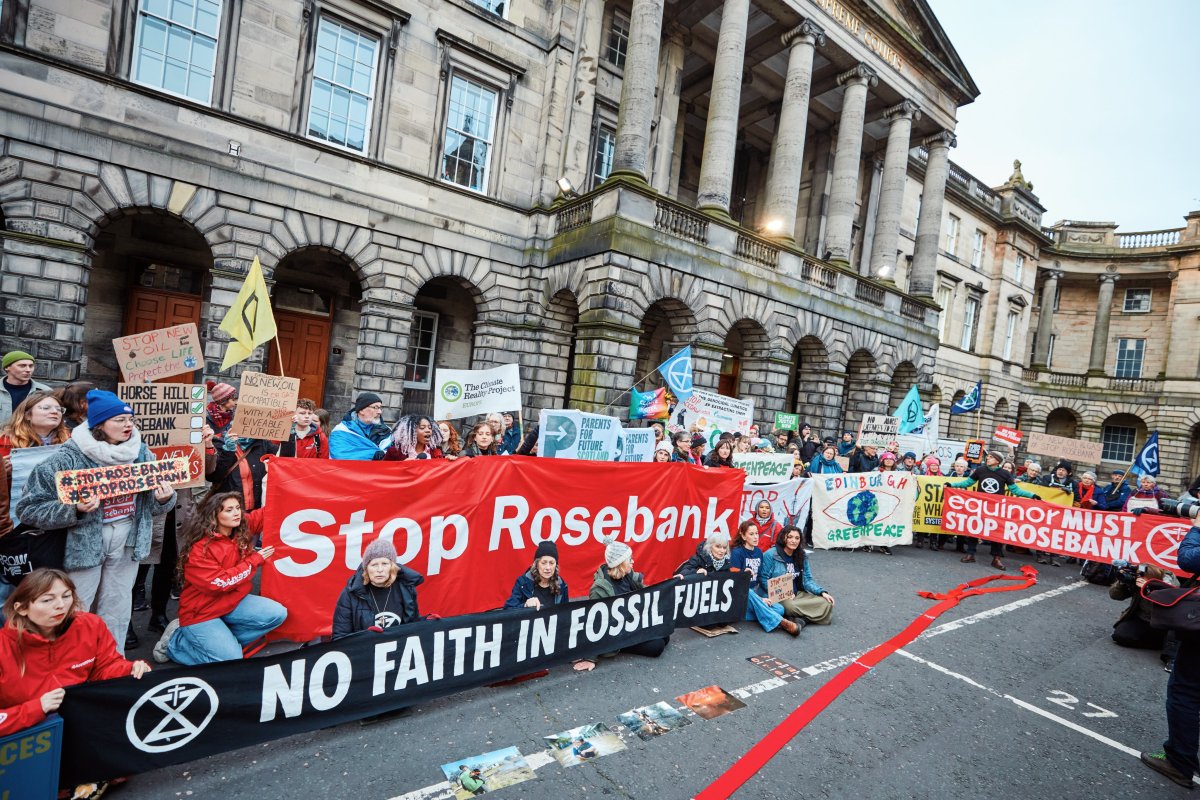
A protest at government offices against the Rosebank oil field project, January 2023. Photo by Steve Eason

Labour’s plans for cutting greenhouse gas emissions from homes and cars are hopelessly timid, because of its conviction that private business does it best.

Under Labour, we will in my view make progress against social injustice and climate change only insofar as social movements and the labour movement:

(i) confront and confound the government, and

(ii) show that action on climate change, far from costing ordinary people money as the extreme right claim, is 100% compatible with combating social inequalities.

In this article I try to identify the likely battlegrounds between our movements and a Starmer-led Labour government:

Fossil fuel production and the path away from it (part 1); electricity generation at national (part 2) and local (part 3) levels; avoiding false technofixes (part 4); and changing the way energy is used in homes and transport (part 5). Part 6 is about bringing these separate, but connected, issues together.

1. Transition away from fossil fuel production on the North Sea

The election-time slanging match about the North Sea’s future has featured politicians’ and union leaders’ cynicism at its worst. In opposition to this, our movement needs serious conversation about how to fight for working people’s livelihoods and run down oil and gas production simultaneously.

The political war of words has focused on Labour’s commitment not to issue new licences to explore for oil and gas in the North Sea.

The Scottish National Party, which fears losing parliamentary seats to Labour, has lashed out with a claim – shown by BBC Verify to be false – that this would cost “100,000 jobs”. This is “a clear about-face” from the SNP, which last year “committed to a built-in bias against granting new licences”, the Politico web site reported.

“Exaggeration and misinformation helps no-one”, given the urgent need for “a clear-eyed conversation about how to ensure that Scottish workers benefit from the transition away from oil and gas”, Tessa Khan of the climate advocacy group Uplift said.

But exaggeration and misinformation is exactly what leaders of the Unite union, which represents many North Sea workers, contributed. They withheld support for Labour’s manifesto, because of its North Sea policy (as well as for much better reasons, such as its employment policies) and endorsed SNP leader John Swinney’s nonsense.

Unite leader Sharon Graham suggests that a ban on oil and gas licences is the main threat to North Sea jobs. That is not true. It usually takes more than ten years from licence issue for a field to start production, so there is only a very indirect connection. In recent years oil corporations’ decisions to slim down their North Sea operations has posed a far more immediate threat.

If Labour reverses its ban on new licences, the only beneficiaries will be those corporations – while the planetary disaster threatened by climate change would come one step closer, as the heads of the UN and International Energy Agency have pointed out. Indeed there is a powerful case for scrapping the already-granted licence for the giant Rosebank field.

Unite says it wants to “see the money and the plan” for the transition away from oil and gas. But as its leaders well know, plans already exist.

The Sea Change report, published five years ago, showed how the North Sea workforce could expand, with investment in wind power and other renewables. The oil companies and Tory government have other ideas, set out in the North Sea Transition Deal – which proposes spending £15 billion on their pet technofixes, carbon capture and hydrogen. (See also part 4 below.)

The Green New Deal Rising group disrupted an event sponsored by oil industry lobbyists at the Labour party conference in October last year. Photo by Jess Hurd

Unite, along with other unions, accepts these false solutions, and calls for investment in hydrogen and carbon capture, as well as wind power. 

Perhaps we should be talking about “rupture, rather than transition”, he said, to make gains for social justice and tackling climate change. This starts with uniting oil workers and Scottish working-class communitiesmore broadly. This is the conversation we urgently need.  

At a recent gathering of trade unionists concerned with climate policy, Pete Cannell of the campaign group Scot E3 argued that, given the dominance of this technofix narrative, “it’s legitimate to ask whether ‘just transition’ is any longer the right framing”.

2. Public ownership in the electricity system

Labour will set up a “publicly-owned clean power company”, GB Energy, paid for by a windfall tax on oil and gas producers. But GB Energy will own few, if any, electricity generation assets and will focus on partnerships with private capital. Labour also plans to leave the electricity transmission and distribution grids in private hands, and to leave largely unchanged the neoliberal electricity market rules that allowed corporations to reap billions by impoverishing households in the 2022 “energy crisis”. 

Labour intends to capitalise GB Energy with £8.3 billion over the next five years: £3.3 billion for a potentially useful Local Power Plan (see part 3 below), and £5 billion to “co-invest in new technologies” including floating offshore wind and hydrogen, and “scale and accelerate mature technologies” including wind, solar and nuclear.

Labour’s loud claim that GB Energy will “lower [electricity] bills because renewables are cheaper than gas” is not credible. This would require, at least, an investment far greater than £5 billion, allied to a root-and-branch overhaul of electricity markets.

More likely, GB Energy will, at best, fund new technologies that financial markets prefer not to risk their own money on – or even follow in the footsteps of Tony Blair’s disastrous Private Finance Initiative, with which corporations milked billions from the NHS. The Guardian, apparently briefed by Keir Starmer’s team, reported that GB Energy will probably start with “investments alongside established private sector companies”, including the chronically over-budget Hinkley Point, Sizewell C and Wylfa nuclear projects.

The Greens and others slammed Starmer, when he finally clarified on 31 May that GB Energy will essentially be an investment vehicle. But a trenchant critique had already been published last year: Unite’s Unplugging Energy Profiteers report, which warned that “unless combined with a public purchasing monopoly, or significant market reform intervention, [GB Energy] will have no impact on distorted pricing in the wholesale market”, and “by concentrating very limited resources on de-risking experimental forms of generation, GB Energy will use public resources to underwrite and further increase future potential profits for the private sector”.

Unite, and the Trades Union Congress, call for public ownership to be extended not only in electricity generation, but also in the supplybusiness and in transmission and distribution networks. Labour madesimilar calls in 2019, but has now ditched them.

Underinvestment in these networks is a scandal as damaging as the water companies’ rip-off: tens of billions of pounds’ worth of network upgrades are needed to facilitate renewable generation and close the gap on missed climate targets.

The National Grid’s Nechells electricity substation near Birmingham

Already, there are 10+year queues for renewables to be connected to the grid; house-builders are fitting climate-trashing gas boilers because they can not access electricity for heat pumps; battery storage lies unusedbecause companies’ computer systems are out of date … all while distribution networks paid out £3.6 billion in dividends to shareholders in 2017-21.

The system is in such a state that even Rishi Sunak’s dysfunctional government took regulatory powers away from National Grid and put them in the Future System Operator. Nick Winser, the electricity network commissioner, warned the government that unchanged, the system would leave “clean, cheap domestic energy generation standing idle, potentially for years”. “Very few new transmission circuits have been built in the last 30 years”, he said: unless jolted, companies could take up to 14 years to build them.

To make the electricity network fit for the transition away from fossil fuels, wider public ownership is crucial. Our movement needs to work out how to coordinate the fight for it.

3. Community energy and decentralised renewables

Labour promises to spend £3.3 billion on a Local Power Plan, under which GB Energy will “partner with energy companies, local authorities and cooperatives to develop up to 8GW of cheaper, cleaner power by 2030”. Up to 20,000 renewable projects will return “a proportion” of their profits back to communities. But “the detail on these plans is sparse”, the New Statesman reported – and so it is surely up to community organisations and the labour movement to discuss effective ways this money could be spent.  

Until now, central government has been a wrecking ball for community energy. In 2015, it changed planning rules, effectively blocking onshore wind projects. In 2019, it scrapped the feed-in tariff paid for electricity supplied to the grid from small-scale renewables. And for years – as decentralised renewables technology leaped forward internationally – it ignored calls to overhaul market rules. Small renewables projects were locked out of the grid by the need for a £1 million + licence, and other obstructions.

The Green New Deal all-party parliamentary group last year called for the regulatory system to be turned upside down, to end its bias in favour of the “big five” generators. It proposed a “European style ‘right of local supply’”; changes to rules on planning and public procurement; mandatory transparency of grid data; and other measures.

Such changes would make it possible to replicate the success of Energy Local in Bethesda, north Wales, which supplies locally-produced hydro power to households at below-grid prices. In April, the Common Wealth think tank proposed a “public-commons partnership” as the institutional form under which local authorities could develop such projects.

All this will take a fight, though. Otherwise, electricity corporates will spread their tentacles into decentralised renewables, as they are doing in the US and Australia.

Furthermore, we need to overcome the official labour movement’s residual reluctance to support community energy projects. The TUC’s recent renewables policy paper, which lists offshore wind, wave, nuclear and “zero carbon hydrogen” (?) as energy technologies – but not decentralised wind and solar – is, unfortunately, indicative.

Decentralised renewables, developed with cooperative, community and local authority forms of ownership and governance, can help to break corporate control of electricity provision, and open the way to democratise and decommodify it.

4. Opposing false technological solutions

False technofixes, including hydrogen and carbon capture, use and storage (CCUS) feature prominently in Labour’s election manifesto – the outcome of lobbying by the oil industry, for which they comprise a survival strategy. Nuclear power – expensive, dangerous, and beloved of the military – is there too, grabbing funds from proven, socially useful technologies such as home insulation, public transport and decentralised renewable power.

While the case against nuclear has been made, and the false logic of CCUS exposed, over decades, the drive for hydrogen is more recent: it is the oil companies’ alternative to electricity-centred decarbonisation. Energy systems researchers argue that, while hydrogen may be needed in future e.g. for steelmaking or energy storage, it will never be suitable for home heating, and hardly ever for transport. 

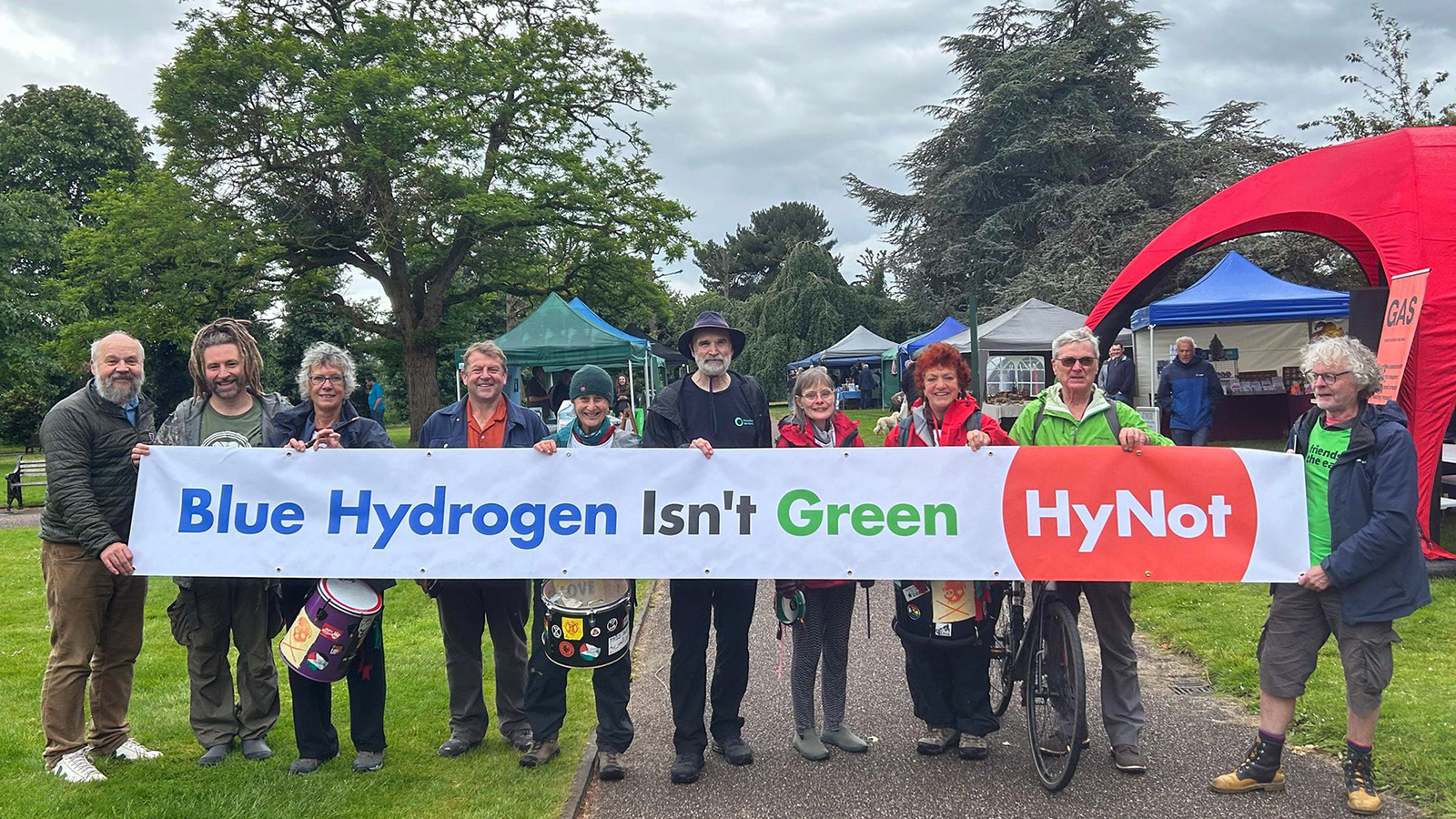
Demonstration by HyNot, which opposes hydrogen for home heating, at the Green Expo UK in Cheshire, last week. Photo from HyNot twitter feed

The Tory government has invested heavily in hydrogen, and the 2023 Energy Act provided a framework for its commercial development. But attempts to bribe communities into testing it out for home heating have hit setbacks. A planned test at Whitby, Merseyside, was cancelled last year after vigorous opposition by local residents and the HyNot campaign group. This year a second planned test at Redcar, Yorkshire, and a thirdone in Fife, Scotland, were both postponed.   

Catherine Green Watson of HyNot said: “These postponements are great progress for our campaign. But on Merseyside we still have strong local political support for hydrogen in industry, which should not be the priority. Instead, we need to concentrate on upgrading the electricity grid.”

We need a discussion in the labour movement and social movements about the social role of these technologies. We could work towards unity around the principle that they should not receive state funding that could go to quicker, more effective decarbonisation paths.

5. Energy use in our homes and transport 

Labour has scaled back its promises to invest in its Warm Homes Plan that will fund grants and low-interest loans for insulating homes and replacing gas boilers with heat pumps. Shadow energy secretary Ed Miliband last year talked about “up to £6 billion a year”; by the time Labour’s manifesto was published last week, this had shrunk to “an additional £6.6 billion over the course of the next parliament” (that is, over five years). Talk of upgrading 19 million homes had stopped; now it’s 5 million.

Labour has stuck with commitments to take railways back into public ownership, and to support municipal ownership and franchising of bus services. But it is also promising to “forge ahead with new roads”, and keep the transport system centred on private cars, at a time when researchers argue that this cuts dangerously across tackling climate change.

If Labour sticks to this course, determined by its neoliberal fiscal rules and by corporate lobbying, then key opportunities to cut UK carbon emissions, while improving people’s lives, will be missed. Researchers have been screaming for years that insulation and heat pumps, and superceding the car-centred transport system with better, cheaper public transport, are desperately needed to decarbonise homes and transport, the two largest sources of greenhouse gas emissions.

Battles on effective energy conservation in homes, transport and throughout the economy are part of the war to limit climate change.

Labour’s commitments are too timid to reverse the disasters caused by Tory policies. In the decade from 2012, annual completions of home insulation upgrades fell by nine tenths. The measures announced by government last year would take 190 years to improve the energy efficiency of the UK housing stock and 300 years to hit the government’s own targets for reducing fuel poverty, National Energy Action stated.

As for roads, the government could cancel the £10 billion Lower Thames Crossing scheme, final approval of which has been delayed until October, and apply to all future projects the principle adopted by the Welsh government – that they can only go ahead if compatible with climate policy.  

Labour may not only fail to deal with these gigantic sources of carbon emissions, but actually open up new ones. A grim example is Labour’s threat to overrule communities who question tech corporations who want to build fuel-guzzling data centres – which will help trash climate targets, to the benefit of those corporations alone.

6. Bringing the issues together

The stakes are high. Every new assessment by climate scientists underlines the conclusion reached by leading British researchers four years ago: that the UK’s decarbonisation targets are half as stringent as they need to be, to make a fair contribution to tackling global heating. The government’s own climate change committee says non-power sectors of the economy need to decarbonise four times faster than they are doing.

Tackling climate change, while reversing the effects of 14 years of neoliberal austerity policies, will not be easy. Indeed, Labour does not intend to: both decarbonisation and social policy will be subordinated to their fiscal rules.

The labour movement and social movements need to challenge and push back Labour’s pro-fossil-fuel, pro-austerity approach.  

We need to unite our forces and find the pressure points – be it saying “no”, to the Lower Thames Crossing project and similar, or finding openings for collective action, e.g. in the Local Power and Warm Homes plans.

To act effectively on climate, we need to keep in mind the necessity of holistic solutions, and reject illusory technofixes and greenwash narratives that claim to reduce emissions with one hand, and pour them into the atmosphere with the other. SP, 18 June 2024.

Making just transition possible

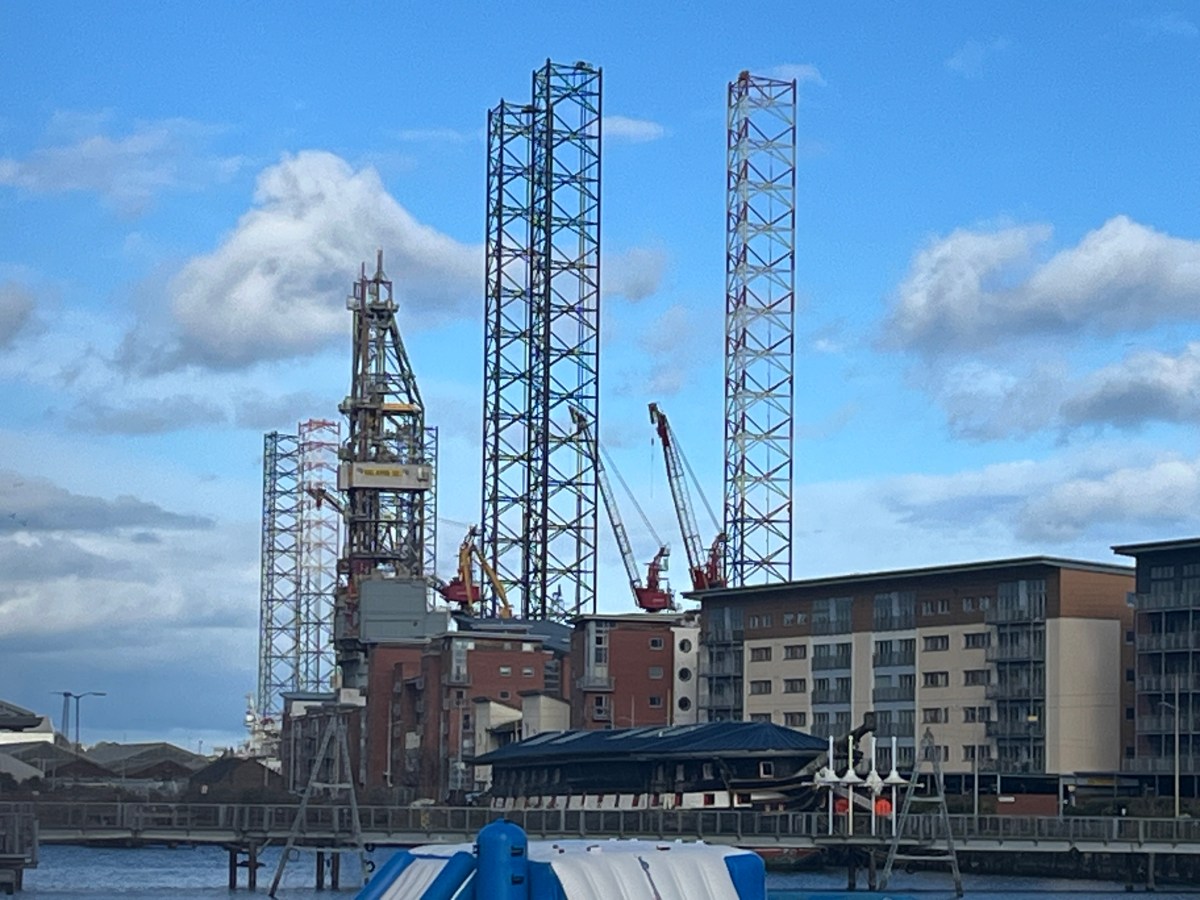
Dundee Harbour – image by Pete Cannell CC0

The previous speakers have talked about some of the very important practical issues that are central to enabling a transition to a sustainable zero carbon economy. There’s plenty of evidence to show that phasing out oil and gas combined with serious investment in renewables creates more jobs.  The Sea Change report, published in 2019, shows how switching from oil and gas to wind and solar would create a big net increase in jobs and how failing to make this transition would mean that targets to cut carbon emissions would not be met.

Similarly, home insulation, retrofitting and replacing gas with electricity for heating and cooking is essential, but critically dependent on a skilled workforce. 

This workshop is framed around developing a workers plan for just transition. I would argue that the main elements of such a plan are in place.  That being the case in the rest of this contribution I’d like to talk about why there’s not yet a simple consensus about a plan.  Having a plan is clearly necessary, and critical to being credible in the eyes of working people who are not yet convinced.  

In one sense we’ve made serious progress in the last five or so years, it’s now common sense in the climate movement to talk about the role of workers and the need for a just transition.  I think in this respect COP26 in Glasgow was a watershed moment.  But ironically in practical terms, in terms of action I think we’ve gone backwards in the same period.  So, for example, the number of workers in renewables in Scotland is about the same now as it was in 2014.  In the eyes of many workers talk of just transition looks like hot air.  And in the hands of right-wing populist politicians, it fuels arguments that the climate crisis is not a problem and climate action is a threat.  So, there’s a real danger that repetition of just transition, in the absence tangible steps that improve lives and livelihoods, becomes a form of greenwashing. 

So, while we need consensus on what to do for me the 64,000-dollar question is 

How do we build a mass movement with powerful roots in every workplace and working-class community that has the power to make the necessary changes happen?

I think the climate movement often underestimates the extent to which commitment to the North Sea and to the interests of the big oil and gas companies shapes and directs climate policy.  Westminster, Holyrood, the energy sector trade unions and the oil and gas industry work in partnership through what used to be called Oil and Gas UK and has now been rebranded as Offshore Energies UK.  They are all signed up to the North Sea Transition Deal and it essentially guides their actions.  So, for example it’s hard to find a serious analyst who things hydrogen for domestic heating and cooking makes sense but using hydrogen in this way remains a key plank of policy for both Westminster and Holyrood.  And while it does other options are not pursued.  Why?  Because hydrogen together with Carbon Capture and Storage is the best option for Fossil Capital that wants to maintain existing market dominance, infrastructure and (not least) profits.

For more than fifty years the big oil and gas companies have used their operations in the UK sector of the North Sea to blaze a trail for what we have come to know as neoliberalism; establishing practices that have been copied and taken up internationally. Outsourcing, multiple layers of subcontracting, vicious anti-union policies and the use of blacklists.  At the same time the so-called free ‘market’ has been featherbedded by massive state subsidies which have exceeded taxation revenue.  

In the old saying – if we had a choice – we wouldn’t start from here.  All the evidence is that we are just going past the 1.5degree threshold and the scientific evidence is that change is taking place more rapidly than anticipated.  This while the Scottish government which has been strong on rhetoric but feebly reliant on the market for action is judged to be a long way for reaching its targets and Westminster gives the green light for maintaining oil and gas production.  And the most important unions remain wedded to a policy of partnership with the energy industry. To answer my earlier question, that partnership, is why we don’t have consensus about a plan.  It’s the partnership that pulls in Unite, RMT and GMB behind CCS, Hydrogen and Nuclear.

In this context I think it’s legitimate to ask whether just transition is any longer the right framing for what we want or need.  

We need to be clear about what we want to happen and largely that thinking is in place.  But to make it happen – perhaps what we should now be talking about is rupture rather than transition. And the power to make that rupture resides within the working class.

North Sea workers are key, but the oil industry has been successful at keeping their organisation fractured and largely ineffective.  I think it’s most likely that oil workers will become active participants in the rupture we need only if the mass movement we need is built across all sectors and in working class communities.  

And if we are to win that mass participation then there’s no place for partnership with Fossil capital – and that means some very sharp arguments within our movement.

Earth Social Conference

A message from the organisers of the Earth Social conference – timed to take place in Colombia as COP28 takes place in Dubai.

It boils down to whether we are honest with ourselves, or not.
UN climate summits are a joke that continue to push the bounds of absurdity.
Since they began, yearly global emissions have increased by more than two-thirds. Worse still, no plans have been made to phase out fossil fuels. Should we be surprised when industry lobbyists continue to dominate conferences? Can we expect anything different from this next summit, taking place in a petro-state, chaired by an oil company boss… Are we expected to buy into this charade…?

We, on the other hand, are climate realists. We see where we are being led. We know we need to apply the emergency brake to avoid earth system collapse. That’s why we refuse to participate in a process of trading empty promises any longer.

That’s why we are inviting climate realists to the Earth Social Conference in Casanare, Colombia, from 5th-10th December 2023.

Join us to build the collective force we need in order to pull the emergency break.

Although the conference is in person in Columbia on 7th December it is possible to join some of the sessions by Zoom. Click here to go to the conference website and register.