‘Transition’ from oil? Our idea now looks like a delusion

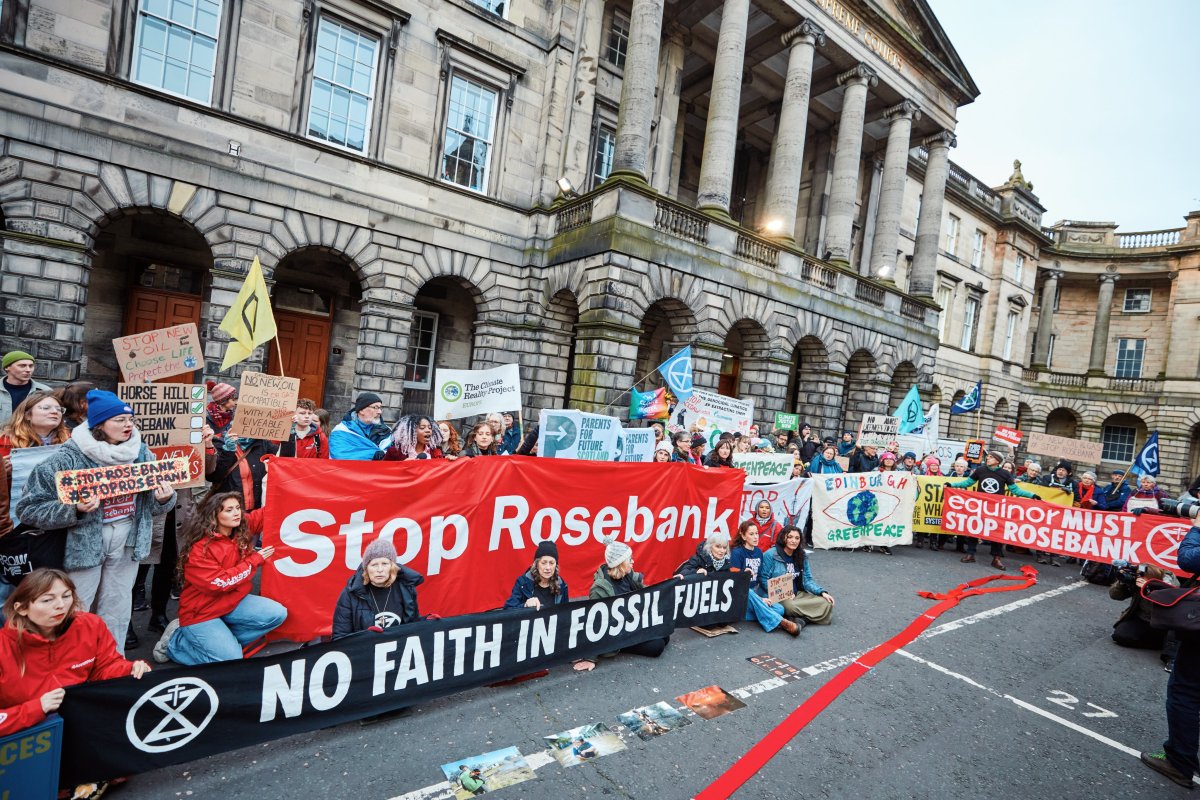
NEIL ROTHNIE, retired oil worker and climate activist, reflects on his participation in Extinction Rebellion and what we have, and have not, achieved.

This post was first published on the People and Nature blog. If you’d like to respond to this article please use the contact form to get in touch.

“The rebellion starts here”, I wrote in October 2019. “There must be non violent direct action aimed at big oil, and targeting oil production.”

The article, North Sea oil and gas: the elephant in the room, was originally a leaflet that I took to London, to Extinction Rebellion’s festival of rebellion.

At that time I was four years’ retired, after 40 years as an offshore oilworker. I was experiencing a personal renaissance, as Extinction Rebellion (XR) crashed onto the streets. 

My article wasn’t particularly radical or controversial. Certainly not to most XR rebels who were its target audience. And it still today, at least in part, reflects what is a fairly mainstream position in the climate movement. 

I wasn’t really focussed on XR’s demands as such – e.g. getting the government to “tell the truth”.  Even then I wasn’t convinced that that was very likely, but I certainly didn’t disagree. I knew next to nothing about the popular assemblies that XR was calling for, or about whether Net Zero was remotely achievable by 2025.  

But I’d been hugely impressed by the way Extinction Rebellion had burst onto the scene, blocking bridges over the Thames the year before. That’s when I’d become aware of the movement.  

By this time, I was troubled about global warming and thought that it would take the masses to intervene in this existential issue. Really all I wanted to do was to bring my own experience to bear on the situation.

I’d been flabbergasted that many rebels I’d spoken to had little awareness of the North Sea oilfield’s existence.

I felt that the “fossil fuels” that were understood to be the major source of greenhouse gases when burned, were in fact still pretty much a “concept” – something in their heads, rather than real stuff mined by real people in our patch.  

My article called on the climate movement to turn towards the oil workers with a call for a “just transition”.

Just transition of course was not my formulation, but was a concept that I swallowed whole, and expected would appeal to the offshore oil workforce on some level and might be the basis for workers to mobilise around.  

This, after all, was the workforce that had engaged in a huge struggle after the 167 deaths by burning and drowning on the Piper Alpha platform, albeit 30 years previously.

In what now seems like an age since 2019, we’ve seen virtually no response from oil and gas workers, despite a concerted turn towards them by parts of the climate movement.

Perhaps the one concrete thing is that we know that they would be more than happy to transfer from offshore oilfield to offshore wind field … if they can keep the lifestyle and the wages.

But the workers are still in lock step with their trade unions (the minority that are actually organised) and with their employers, with Big Oil globally, and with our government. 

Short of a massive storm event on the North Sea creating another major tragedy, it’s hard to see this unholy alliance unravelling any time soon.  

But while I’m not embarrassed by the 2019 article, I don’t think it reflects the reality we’re experiencing, never mind the future we’re facing. That is why I came back and asked Simon for the use of his blog again.  

Right now, everywhere, we have an accelerating pattern of disasters, intermittently destroying lives and the natural environment and by all accounts driving the tendency towards mass extinctions of species. 

We’ve seen a succession of global heating-induced disasters rock the planet. The floods in Pakistan, the fires in the Amazon, and today in California, stand out for me. It’s relentless. You’ll have your own list.

Can I tell the future? Well obviously not. But, as far as any layman can understand the climate science consensus, it seems that we’re way way further down the road to a radically different global climate, and massive changes to local weather that cause mayhem and misery.  

My characterisation of the industry/government strategy as “business as usual” was, and remains, accurate, I think.  

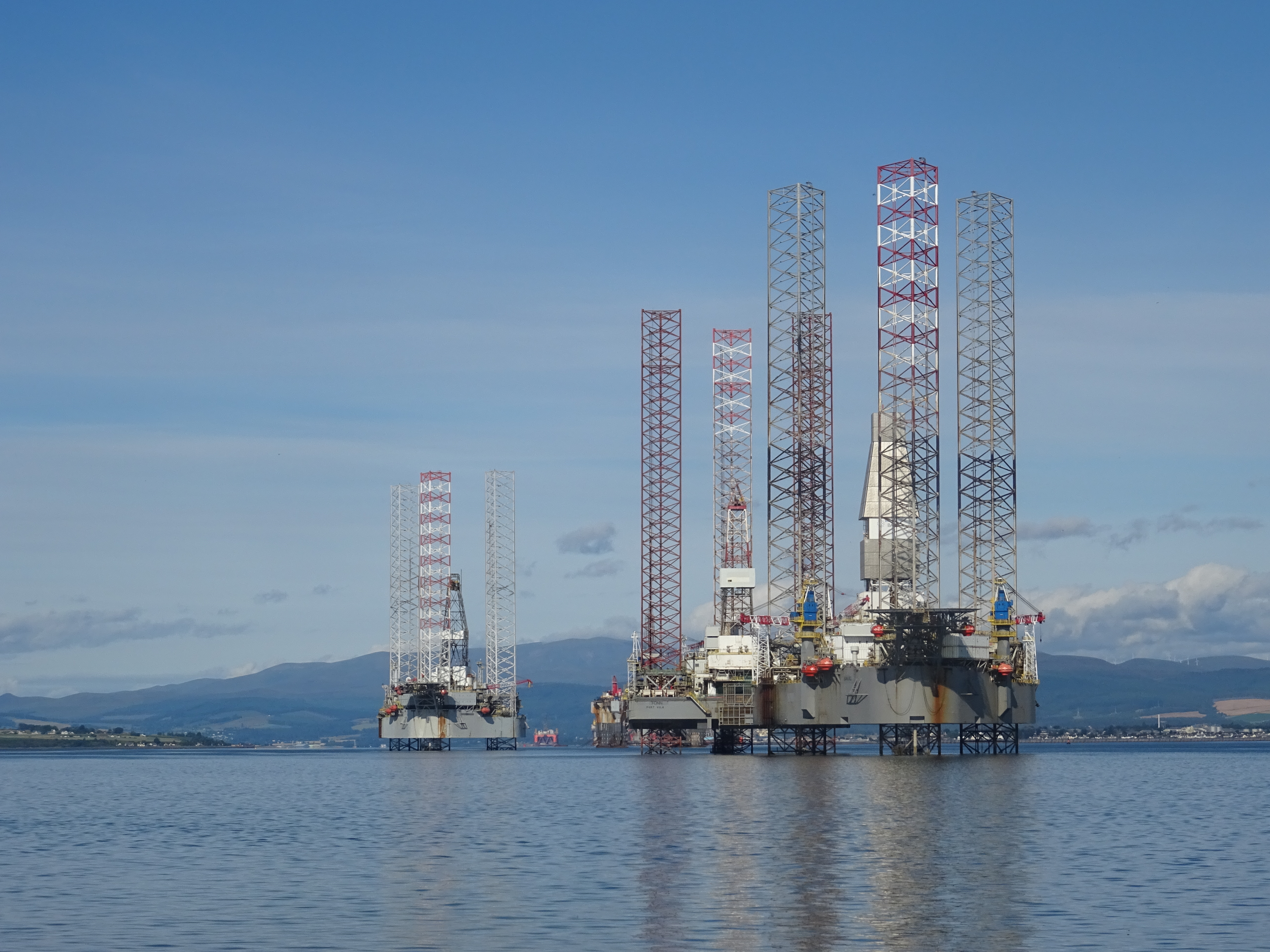
The court decision last week, that the process that gave the go-ahead for the development of the Rosebank and Jackdaw fields on the North Sea was unlawful, should pose absolutely no problem for the industry that was complicit in the hanging of Ken Saro-wiwa, and has been involved in human and ecological atrocities across the globe.  

Not much of a problem either, I’d have thought, for Rachel Reeves and Sir Starmer with their Growth & Growth & Growth mantra.  

The concept of a transition – never mind “just” – from fossil fuels to renewables, led in any part by the massed ranks of the proletariat self-organised in the offshore unions, now looks like an ongoing exercise in self delusion.

Long before XR was set up, in 1989-90, I was desperate to get some sort of an idea of the nature of the relationship of oil and capitalism – something that might inform me whether the rank and file Offshore Industry Liaison Committee (OILC) could chew what we’d bitten off by organising strikes and platform occupations after the Piper Alpha disaster. [Note. Here is an interview with Neil about this, and an archive of the rank and file paper he edited, Blowout.]

I was looking for some sort of an understanding of the possibilities and opportunities. Where did any of this lead? 

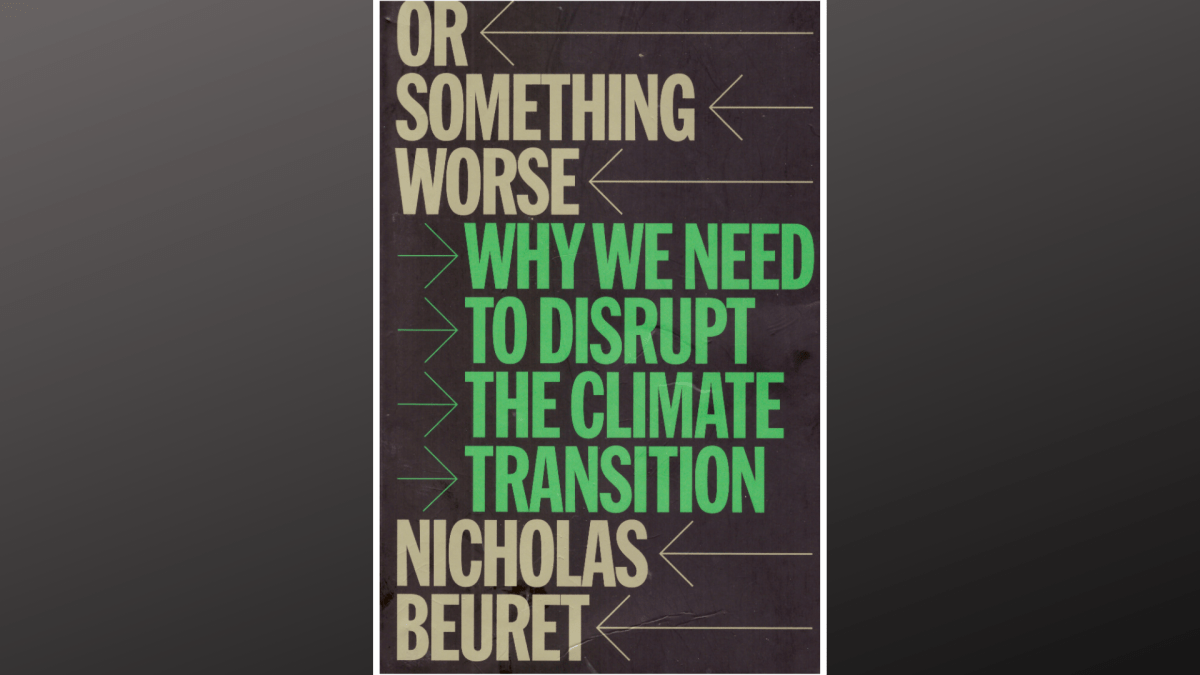
Thirty-five years later, and along comes Adam Hanieh with his book Crude Capitalism: oil, corporate power and the making of the world market (reviewed here and here). He says, as I read him, that the capital system and fossil fuels are inextricably entwined.

His book begs the question, at least for me, of the likelihood that the capital system can turn off oil and gas, and replace the world’s energy needs from renewables, before climate chaos becomes the norm.  

The vision this question conjures up, in my imagination, is of someone ripping out their own heart with one hand, while trying to construct a replacement organ with the other. 

Meanwhile Jean-Baptiste Fressoz tells us, in his book More and More and More: an all-consuming history of energy (Allen Lane, 2024), that that holy grail of the climate movement, a “transition” to renewables, is in fact a pipe dream, a chimera.  

There never was, it seems, in human history a precedent – an energy transition – corresponding in any way to the fantasy we hold of fossil fuels being replaced by renewables. Oil didn’t replace coal. Coal didn’t replace wood. It’s just been “more and more and more”.

The history, Fressoz insists, is of “symbiotic” relationships. Burning coal leads to using (more) wood. The exploitation of oil and gas drives (more) wood and (more) coal to be used, and crucially, renewable energy adds to and encourages the use of (more) wood and coal and oil and gas in such a way that Fressoz sees no plausible scenario where global heating might remain within 1.5, or 2.0 degrees C. 

We’re looking at “three degrees C – a catastrophic increase” he says. “How can we make do with less and less and less?” he asks.  

And Brett Christophers, in his book The Price is Wrong: why capitalism won’t save the planet (reviewed here) challenges another growing orthodoxy. The idea is firmly out there that now that the price of renewables is right, that renewables are “cheaper” than fossil fuels.  

This, the argument goes, will inevitably, according to the laws of the market, mean that renewables will supplant fossil fuels. Only who would have guessed that in fact “the price is wrong”, and that all along it’s been profits, not prices, that drive capitalism?

Let’s suppose that you’ve checked out these authors for yourself, and found that my very crude argument, largely drawn from my reading of them, casts reasonable doubt on the idea that there is a snowball’s chance in hell of the current “powers that be” getting us out of this mess.

Then your next step might be to have a look around for the Leninist parties that are going to wrest global power from the current crop of megalomaniacs and oligarchs and downright genocidal bastards. Where are the forces that will lead us over the barricades, kalashnikovs in hand, to capture the state (everywhere) and plan our way out of this one?

Perhaps that’s not the place to look. Perhaps it’s going to be more complicated.

If you are, like I am, disabused of almost every certainty you ever held dear, then there is at least one step that might help us “take care of ourselves”. No! This is not about Lush bath bombs (if they are still a thing). It’s not about playing Radio 3 in the mornings instead of exploding from bed shouting and swearing at Radio 4’s climate-deniers-lite.

April 2012: Volunteers running a centre where Hurricane Sandy survivors could stock up on staples. Photo by Liz Roll/ Creative Commons

“Taking Care of Ourselves in a World on Fire” is the subtitle of Adam Greenfield’s book Lifehouse (Verso, 2024). The “care” he’s talking about is putting human need, human relations and self organisation at the centre of our practice – in a period when it would seem that we are going to have to learn to survive and make worthwhile lives with less and less and less.  

And all this in the face of escalating climate emergencies and the inevitable breakdowns they provoke. 

The book is rooted in Greenfield’s own experience as part of Occupy Sandy, which had morphed out of Occupy Wall Street, organising relief to the victims of the hurricane that hit New York in 2012.  

He draws material together from the way people have been self organising in the face of inadequate official support, abandonment and just downright open hostility, in places as disparate as Rojava in Kurdistan; Jackson, Mississippi, in the USA; Greece in 2010, during the debt crisis that exploded health care; and in California, where the Black Panthers organised from the late 60s to the early 80s.  

The book is “optimistic”, not “hopeful”. Greenfield inveighs against hope, and lays out a rationale and a blueprint for a practice, and a physical space, that offers us a place to organise and the chance of shelter and community and dignity.

This is a rant, not a series of book reviews. And it may turn out to be no more prescient than that one from 2019. 

But is Greenfield, broadly speaking, right?  No point in just hoping so. The point of his book is, it seems to me, not just to understand the world but to change it. I’ve heard that somewhere before. A first step might be to have a look. 

North Sea Transition

We were invited to contribute to a panel on North Sea Transition at the conference ‘Working for Climate Justice: trade unions in the front line against climate change’ at Toynbee Hall in East London on 27th of October.

Aberdeen – image by Pete Cannell CC0

Since we launched in the autumn of 2017 Scot.E3’s emphasis has been on building capacity for a worker led transition with a focus on workplace and community organising.   Arguing for the rapid phase out of North Sea Oil and Gas has formed a central part of our campaigning.  The Sea Change report, published in 2019, remains very relevant.  It shows how switching from oil and gas to wind and solar would create a big net increase in jobs in Scotland and failing to make this transition would mean that targets to cut carbon emissions would not be met.

It’s very important that the climate movement has embraced the significance of North Sea oil and gas and a just transition for workers in the fossil fuel industries.  That wasn’t so much the case in 2017.  But two critical and closely linked challenges remain:

  • How do we build a mass movement with powerful roots in every workplace and working-class community that pushes for the necessary changes?
  • How do we engage workers in the energy sector, who are very aware that change is needed, but have very little confidence that it will be socially just?

For more than fifty years the big oil and gas companies have used their operations in the UK sector of the North Sea to blaze a trail for what we have come to know as neoliberalism; establishing practices that have been copied and taken up internationally.  Outsourcing, multiple layers of subcontracting, anti-union policies and the use of blacklists.  At the same time the so-called free ‘market’ has been featherbedded by massive state subsidies which have exceeded taxation revenue.  

The onshore construction industry has been on the same journey.  In Scotland the Construction Rank and File group has grown a new network through taking the construction industry using direct action tactics, picketing sites, and building combative organisation from the ground up. Just under a year ago two Unite activists, working on the new high voltage transmission lines from the Moray Firth to central Scotland were sacked for their union activity just before Christmas.  However, after the Rank and File group picketed the main subcontractor and Scottish and Southern Energy they were reinstated with full back pay.  The group has been a consistent supporter of Scot.E3 and have very publicly advocated for the importance of building worker organisation to ensure that the energy transition is a just transition.  

Despite many analysts and some industry insiders warning that oil and gas is an increasingly risky investment global levels of investment are high and currently booming while the industry remains determined to squeeze as much oil and gas out as it can out of the North Sea.   Among Westminster’s policy turns there has been a consistent adherence to the North Sea transition deal which describes in broad terms how that it is to be achieved.  The Scottish Government and the offshore trade unions remain signed up to the ‘transition’ deal.  Pursuing this path means that investment in hydrogen and CCS is prioritised at the expense of renewables, condemning UK consumers to a high cost and uncertain future and undermining progress to a genuine energy transition.   There’s no evidence that big oil has any particular commitment to the North Sea, and they must know that hydrogen for domestic heating is hugely problematic, but they are very keen to stick with false solutions that are compatible with the existing infrastructure and networks of fossil capital.

The cost-of-living crisis isn’t over.  However, to date, the climate and workers movements have failed to nail the intimate connection between fuel and food poverty and the oil and gas industry.  Perhaps there’s a lesson here.  At a time when we face a drawn-out existential crisis there is a need for new ways of organising that bring unions and communities together in common understanding and common struggle.  There are some examples of what this might begin to look like. In Scotland Edinburgh Trade Unions in Communities provides an innovative model, while in France social movement trade unionism is having an impact.

Climate justice, climate jobs and the military industrial complex

This is the slightly expanded text of a contribution that Pete Cannell (speaking for Scot.E3) made to a meeting organised by the global climate jobs network at the COP26 people’s summit.

Scotland is well placed to make a rapid transition to a zero-carbon economy.  It is well endowed with natural resources for wind, wave, tidal and hydro power generation.  Hydro power was developed in the 1950’s and sixties, more recently there has been some further development of local, small-scale hydro.  Offshore and onshore wind power has developed rapidly, wave and tidal has seen very little investment.  But Scotland also has a relatively strong representation of engineering skills among its workforces.  These workers have skills in electrical, marine engineering, fabrication and so on – skills that are needed for the transition to a zero-carbon economy that needs to begin right now.

Most of these workers are currently employed in either the Oil and Gas sector or ‘Defence’.  Sectors which are significantly larger as a proportion of the Scottish economy than they are of the UK as a whole. 

The current state of play with climate jobs is disastrous.  The policy of leaving transition to the market has resulted in declining numbers of jobs in renewables.  We’ve written about the closure of facilities at BiFab and Machrihanish elsewhere on this site.  At the same time there have been massive job losses in the North Sea and a long-term decline in engineering jobs in the defence sector.  While there has been a massive increase in offshore wind generation the private sector has driven down wages and conditions, used low paid workers from around the world, shifted production to sites thousands of miles away and focused on profit maximisation rather than just transition.

There’s a lot more we could say about oil and gas but in the context of the other talks at this meeting we want to focus now on the arms trade.  Britain is one of the biggest arms manufacturers in the world and Scotland has a disproportionately large share of this activity.  It has been excellent that during this mobilisation around COP26 there has been a lot of discussion of the huge carbon emissions of the military.  

Defence Imagery CC BY-NC 2.0

In Scot.E3 we’ve argued for the need to go further – the military industrial complex in Scotland (and globally) acts as a barrier to transition.  It thrives on public subsidy – far more than that provided for renewables.  This is a characteristic it shares with the oil and gas sector. It distorts the economy, it’s secretive and hugely corrupt, dominates research agendas and monopolises skills and resources that should be directed to saving the planet.

We look forward to a day when the commitment and imagination of young people currently in school can be deployed to develop the kind of sustainable and socially just society that we are fighting for.  But time is short, and we need to start the transition now with the skills and knowledge that are already available. To achieve climate justice and win the climate jobs we need it’s going to be necessary to force a radical shift of resources away from the defence sector as well as from oil and gas.

Global Climate Jobs Network – Technical Conference

ScotE3 has been working with other organisations in the Global Climate Jobs Network, the Alternative Information and Development Centre (South Africa) and Climaximo and Empregos para o Clima (Portugal), on a proposal for a technical conference to be held in March 2022.

Call for Papers

Climate jobs and green new deal movements are springing up around the world. This is a call for papers for an international conference on the technical aspects of the jobs that will be necessary, in 10th, 11th and 12th March 2022.

The conference will be on zoom, over three days, and contributors will be able to participate from all continents. We want papers from engineers, scientists, system modellers, designers, architects, planners, educators and trainers, foresters, soil scientists, trade union researchers, NGO researchers and other specialists.

The Climate Jobs Approach

We want contributors to think about the technical and technological implications of a “climate jobs” approach. This approach involves several features:

Massive government spending on public sector, direct employment to make possible reductions of 95% in CO2 emissions, and deep reductions in other emissions, within 20 years. In South Africa or Britain, this would be something like one million jobs a year, or in the United States 8 million jobs.

People who lose their jobs in old, high carbon industries would be guaranteed training and well paid, permanent work in climate jobs.

The work would begin from year one, starting with training a new workforce and shovel ready projects. Over twenty years many new technologies would become possible.

Public sector bodies would share intellectual property across borders.

Profits would be less important. Technologies that are necessary but currently “unrealistic”, could be developed rapidly at scale even if the cost was very high for many years. For example, alternative methods of making steel, substitutes for cement, or expensive forms of renewable energy like marine power and concentrated solar could enter mass production.

We could also move beyond the market, with regulations of many sorts. So we could think about the sort of rail, bus and electric system needed if all flights of 5,000 kilometres or less were banned. Or what could be done if we banned the manufacture of concrete, or F-gases?

Or contributors to think about the details, and the implications, of a building code that required new buildings to have greatly reduced energy use, and to burn no fossil fuels for heating or cooking. In this, we would like not only papers that argue this would be a good idea but think about how that code would be worded in different places, and what technologies and materials would be required, and what research would be required.

For more information about the conference, possible topics, how to participate and the deadline for submitting abstracts please download the full call for papers.

Support Alexander Dennis – Green Buses for Just Transition

Thanks to Friends of the Earth Scotland for sharing this information.  The skills of the workforce at Alexander Dennis and the production facilities are vital for the transition to a zero carbon economy.

Background 
Despite the Scottish Government’s fine rhetoric on climate action and just transition, hundreds of workers are currently at risk of redundancy at Alexander Dennis (ADL), the Falkirk-based manufacturer of high-performance hybrid buses. Unite the Union has found evidence that despite the claims of ADL, these job cuts were planned before the health crisis as part of a restructure strategy. Like the still under threat BiFab offshore platform fabrication yards in Fife, Alexander Dennis should be at the forefront of the just transition to a zero carbon economy, not struggling for survival. 

Why your help is needed
Environmentalists and climate change campaigners can stand in solidarity with workers fighting to save their jobs – jobs that are vital to the green economy and protecting livelihoods.  


Please support the @UniteScotland and @UniteADL campaign on social media, and call for MSPs to sign motion S5M-22467 in the Scottish Parliament. The text of the motion is below, along with links to suggested tweets to share and tweets to send directly to MSPs. 

A demonstration of solidarity like this from environmentalists and climate change campaigners with workers and trade unionists will help build stronger alliances and a broader movement for climate action. Please take action today! 

Scottish Parliament Motion

Motion S5M-22467: Richard Leonard, Central Scotland, Scottish Labour, Date Lodged: 19/08/2020 R

Importance of Engineering and Manufacturing to the Scottish Economy

That the Parliament recognises and affirms its support for the importance of engineering and manufacturing to the Scottish economy; considers that the sector will play a crucial role in a just transition to a cleaner and greener economy; expresses its concern at the announcement by Alexander Dennis Limited, a world leading bus manufacturer, that a significant number of jobs throughout its UK operations are at risk, including at sites in Falkirk and Larbert; recognises the serious impact that this would have on thousands of workers, and calls on the Scottish Government to offer every assistance to support the company and its skilled workforce and to work with it and the trade unions to ensure that it has an important future in supporting the development of a clean and green public transport infrastructure for communities across Scotland and further afield.

Tweets to retweet 
If you’re short on time, please retweet these focused at UK & Scot Govs

If @NicolaSturgeon wants a cleaner, greener future then jobs like @ADLbus will be crucial to making this a success. 

Time for @scotgov to support these key manufacturing jobs in Falkirk.
https://twitter.com/UniteADL/status/1303762702616190976 

We’re still waiting on action from @BorisJohnson and @GOVUK. 4,000 green buses were promised. Our members at @ADLbus are ready to build them.

Suggested text to tweet @ your MSPs

If you want to engage your MSP, share this tweet with them. Find out who is your MSP

We call on MSPs to support @ScotParl Motion https://bit.ly/2D5cVOH 

@ADLbus workers want to be part of a cleaner greener future. @UniteScotland @unitetheunion

If you want to ask your MSP to sign the motion

Hi

@XXXXXMSP

Bus manufacturing is essential to the green economy – Alexander Dennis should be thriving & at forefront of#JustTransition to zero carbon, not struggling for survival.

As my MSP, please support the motion bit.ly/2D5cVOH 

@UniteADL

@UniteScotland

If you want to thank your MSP for signing the motion (we should remember to praise MSPs when they do good stuff!)

Hi

@XXXXXMSP

Bus manufacturing is essential to the green economy – Alexander Dennis should be thriving & at forefront of#JustTransition to zero carbon, not struggling for survival. 

Nuclear weapons, the climate and our environment

Don’t Bank on the Bomb Scotland has produced an excellent new report that looks at the links between nuclear weapons, tackling the climate crisis and degradation of the environment.  Written by Linda Pearson the report collects together a wealth of useful links for anti-war and climate campaigners alike.  The aim of the report is ‘to highlight the connections between climate change, nuclear weapons, militarism, environmental destruction, racism, gender inequalities and social injustice in order to build a broad-based movement that can challenge existing power structures and bring about systemic change’.

Scot.E3 from its formation has argued that defence divestment needs to be part of the transition to a sustainable zero carbon economy.  We agree with Don’t Bank on the Bomb that ‘… any Green New Deal plans should include a transition away from military production, as well as a transition away from fossil fuels’. 

The new report highlights the expenditure of huge sums of money on ‘modernising’ nuclear arsenals around the world.  The nuclear industry (military and civilian) is perhaps the most centralised and authoritarian manifestation of the military-industrial complex.  We would argue that it’s not simply that the money spent on nukes should be spent on developing a new sustainable economy; the nuclear industry and arms manufacture more generally distorts economic and social choices and constrains civil liberties.  The skills of engineers and scientists that could be devoted to productive, environmentally useful activity are instead harnessed to a system that produces waste, trashes the environment and risks all our lives.  The report highlights the interconnections between the drive for profit, the impact of climate change and increased military tensions.  One example of this is the race for commercial and military dominance of the Arctic.

Nuclear Weapons, the Climate and Our Environment – screen shot

Further Reading:

Scot.E3 Briefing Scotland Deindustrialisation and Diversification

Phasing Out Oil and Gas

One of the workshop streams at the Scot.E3 conference in November focused on Oil and Gas and Just Transition for workers involved with the North Sea.   Stephen McMurray summarises the discussion that took place.  

The oil and gas group included Simon Pirani, author of Burning Up: a global history of fossil fuel consumption, and a retired oil worker now campaigning with XR and ScotE3. The initial discussions included how we start to phase out oil and gas extraction. The main policy suggestions included ending subsidies to the oil and gas industries and ending licences for oil and gas exploration.

There was an interesting debate about whether the government should set a date to end oil and gas, for example in 2030. On a positive note, it may stop companies exploring for oil and gas well before 2030. On a more negative note, it may encourage companies to seek to maximise output and increase carbon emissions before 2030.

Earlier in the conference, we had watched a series of short films by REEL News. One of the films illustrated that companies were increasingly turning to automation and subsequently reducing their workforce. This led to a discussion considering that research should be undertaken into the impact of automation into the oil and gas industries. Furthermore, it would be useful for REEL News to make a film of the North Sea and show their films on the impacts of oil and gas to oil workers.

There was a general feeling that there was a lack of information for oil and gas workers in relation to training for new industries, and that a just transition conference should be held in Aberdeen for oil and gas workers. There was also a discussion on how we engage with suppliers to the oil and gas industries so they are included in a just transition. Additionally, it was not clear that the Scottish Government had produced a post-oil industrial strategy, and there was a need to give presentations at universities for the need to move to careers post carbon.

Finally, there was an agreement that we need to bring the rebellion to the oil and gas industries and that we need a massive confrontation with big oil in Aberdeen during COP26 when it comes to Glasgow next year.

2018-07-19 08.57.05

Upcoming events

Saturday 26th October: Scot.E3 will have a stall at the Radical Independence Conference, which takes place at the Radisson Blu Hotel in Glasgow – you can browse and pick up copies of briefings.

Saturday 2nd November:  Scot.E3 will have a stall at the Edinburgh EcoFair – which takes place at Out of the Blue (Drill Hall) in Dalmeny Street.  We still need people to help with the stall on the day – if you’re free for an hour or two your help would be much appreciated.

Tuesday 12th November:  We are co hosting a meeting on Public Transport in Glasgow and the 2020 COP with Glasgow CACC and FOE. Speakers are Rebecca Menzies from ‘Get Glasgow Moving’ and Stuart Graham (Glasgow CACC). 7pm at the Unison offices, 84 Bell Street G1 1LQ

And of course Saturday 16th November is the Scot.E3 conference. Bookings can be made on Eventbrite at https://www.eventbrite.co.uk/e/just-transition-employment-energy-and-environment-2019-tickets-68768192515  and there’s also a Facebook Event at  https://www.facebook.com/events/1133891030332559/  If you are in position to share the event it would be really helpful.

flyer

The politics and practice of just transition

On Wednesday 16th October, 7.30pm we have a public meeting/discussion as part of the Edinburgh World Justice Festival 

We plan to explore what is meant by justice transition and reflect on the need to develop the definition.  There’ll also be some film clips on struggles for just transition around the world.

We’ll finish with discussion on making just transition core to the politics and practice of the movement.  Who we need to reach, how we can reach them and what are the priorities for action.

IMG_4675