Video of the introduction to the Scot.E3 public meeting where Jonathan Neale introduced a discussion on organising for a sustainable future in a time of genocide, war and right wing reaction.
Watch this space – we will add a full transcript as soon as it’s complete and edited
Links to useful resources from the Scot.E3 conference workshop on organising at work
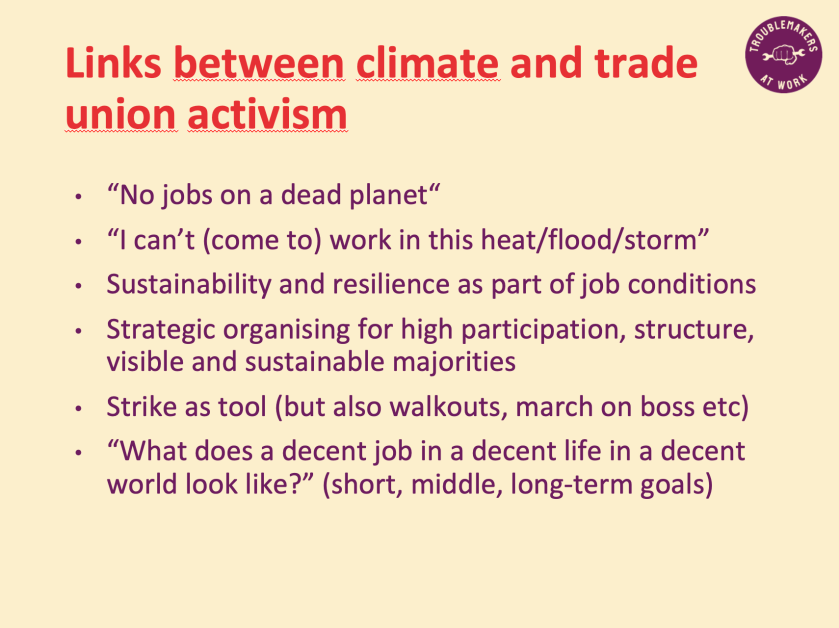
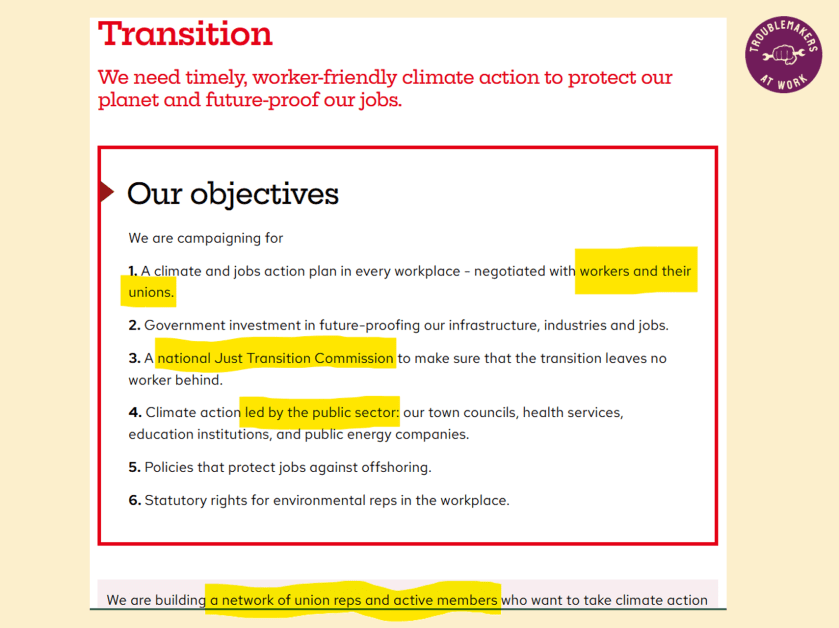
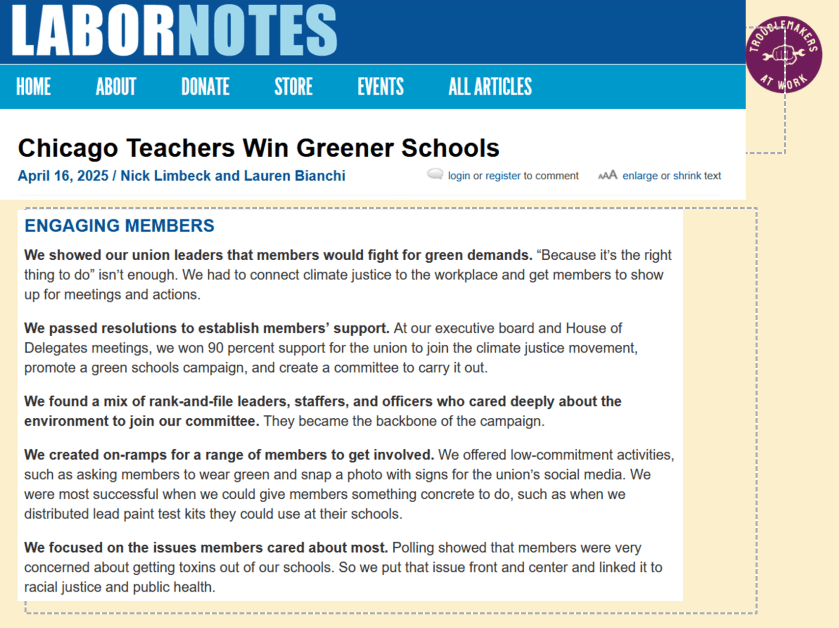
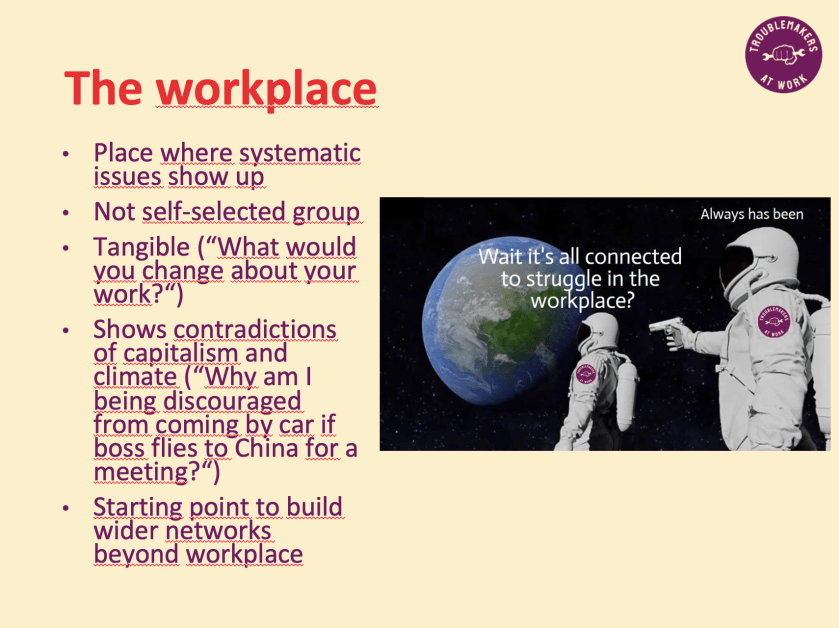
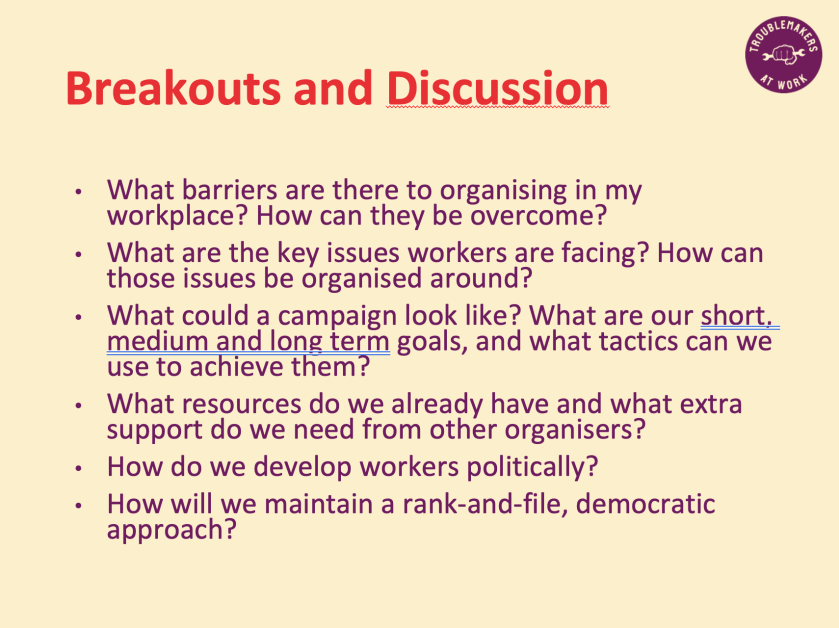
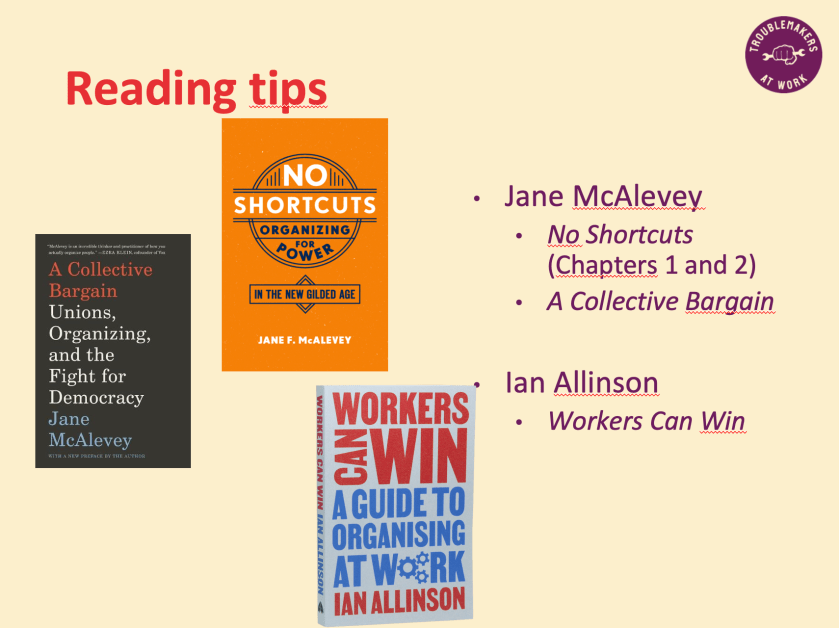
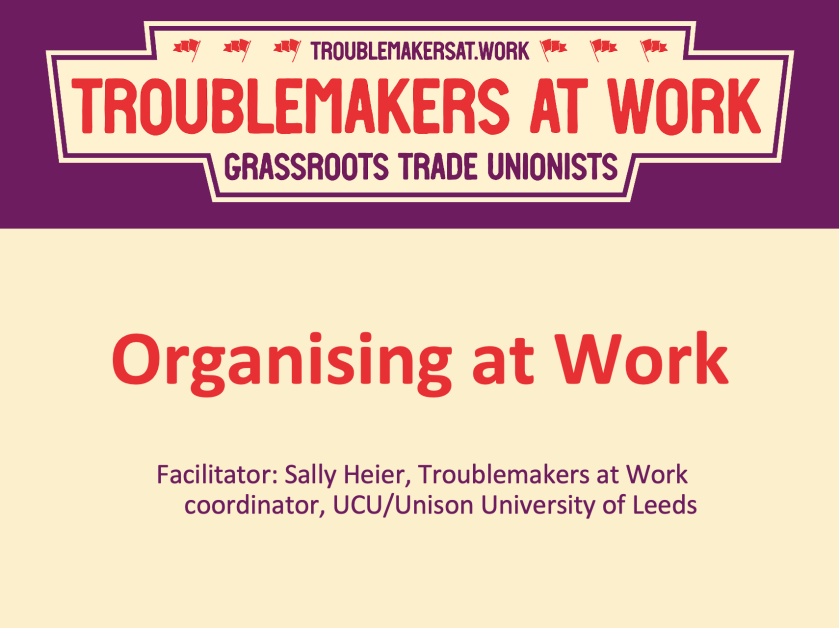
At the Scot.E3 conference on 18 October Sally Heier facilitated a workshop on taking climate issues into the workplace. These are her slides.
If you’re in a workplace we’d encourage you to join the Troublemakers network. Troublemakers holds meetings and conferences that bring together people who are organising at rank and file level in their workplace.
You might also like to look at the Workers Can Win website which is packed with useful information about organising.
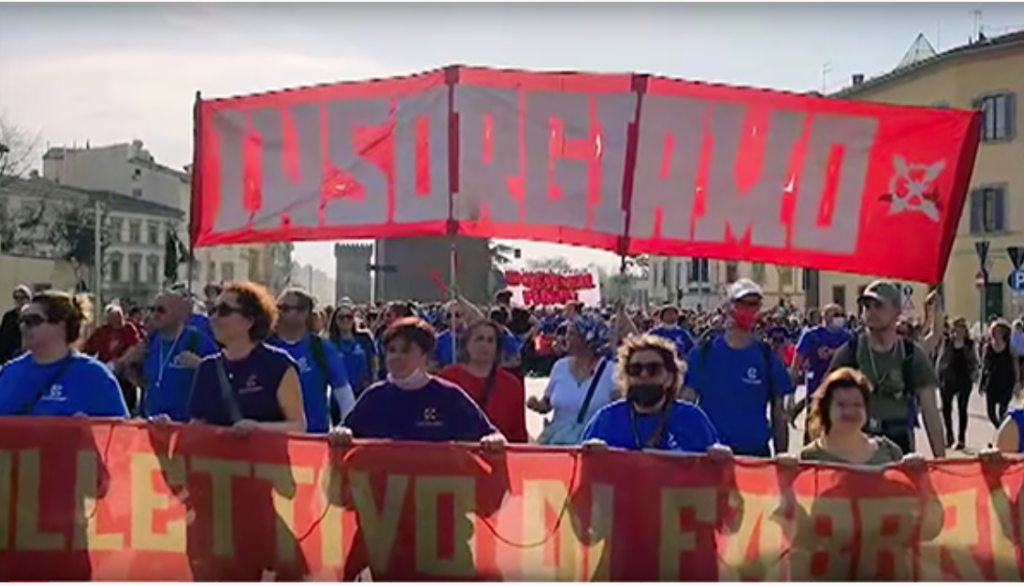
GKN: Rank and file trade union delegation to Florence, are you interested?
Reel News are planning a rank and file trade union delegation from the UK to visit the GKN factory in Florence; not just to show solidarity to this important struggle, but also to spread the workers’ visionary ideas back here. And with thousands of jobs under threat at Port Talbot steel works (of which more below), and Grangemouth oil refinery due to close in 2025 with the loss of another 400 jobs, we can all learn a lot from what’s happening at GKN.
Many of us have been warning for years that if we don’t start planning a just transition away from fossil fuel production, it’ll be imposed on us – and thousands of workers will be thrown on the scrapheap. Now that’s starting to happen, it’s never been more urgent to fight for the alternative: a green future that would create literally millions of jobs globally as well as saving the ones currently under threat.
We’re still waiting to hear back from the GKN workers when would be a good time to visit, but at the moment we’re thinking maybe mid April, depending on how things develop. We want to time the visit for either a big mobilisation/demonstration, and/or if they actually start production under workers control. So the timing might well change. But for the moment, get in touch at info@reelnews.co.uk if someone from your workplace is interested in coming – and especially if you want to help with organising the trip too.
Obviously we’re looking at taking workers directly involved in fossil fuel industries, but every sector needs to make plans for a just transition (click here for a film detailing ideas that came out of a union workshop on a just transition for the hospitality sector for example), so please get in touch if you’re interested wherever you work.
The bosses have now agreed to delay the sackings until at least June 2024, after a NYE party packed out the factory with 7,000 people; and in the past month they’ve DOUBLED the money raised in popular shares to over 600,000 euros.
So now the workers have extended the share scheme until June – and are now very confident they can raise the full million euros. So if your trade union branch, organisation, or even a group of friends want to support this visionary project, there’s still plenty of time. Share packages start from 500 euros.
You can find details of how to take part here, and see the end of the video for more ways you can help. As the workers say, they can’t create an alternative model to capitalist fossil fuel production in just one factory – but they can create an example of what is possible.
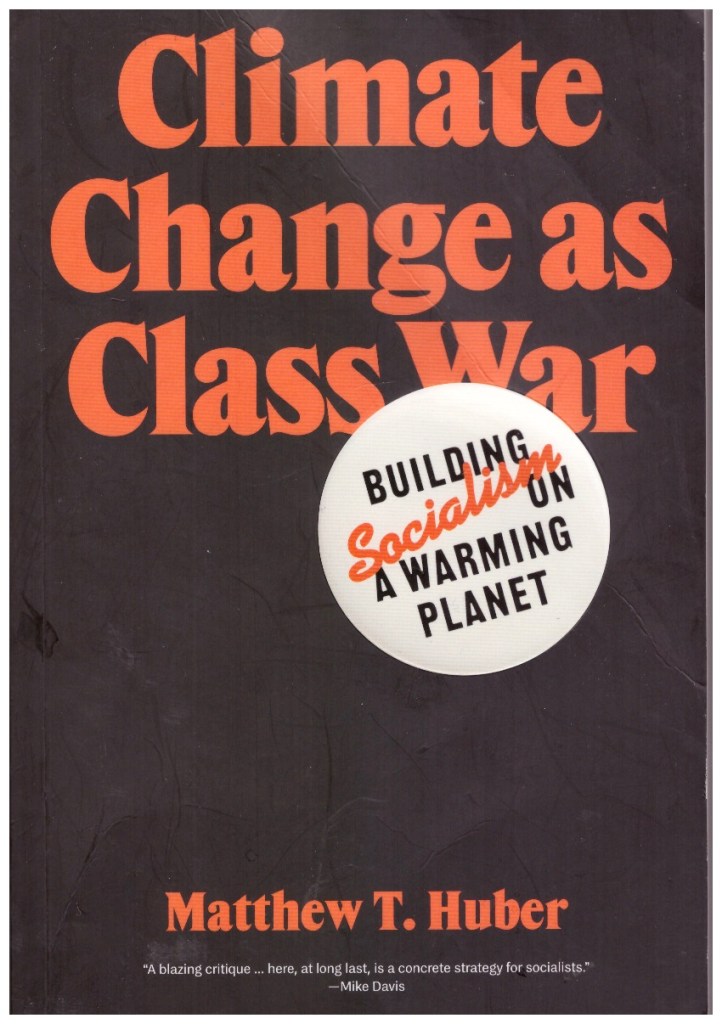
Mike Downham and Pete Cannell review CLIMATE CHANGE AS CLASS WARby Matthew T. Huber: Verso 2022
A couple of weeks ago one of us had the opportunity to join an early morning direct action outside the SSE offices in Glasgow. The action, called by Unite rank-and-file construction workers and the Black List Support Group was against the dismissal on Christmas Eve of high-voltage electrician Greig McArthur by Kirby Engineering, an SSE subcontractor. No reason was given for the dismissal, but it followed closely on McArthur’s request for recognition of Unite as the negotiating Union in his workplace. The direct action, which consisted of about 20 of us with leaflets, banners and a film-crew outside the main entrance, resulted in McArthur’s reinstatement. No attempt was made to enter the building, but the perceived threat of entry resulted in the main entrance doors being locked, and visible panic of staff in the foyer as they directed arriving employees to the back entrance of the building. On the back of this win, against one of the five big energy companies in the UK, McArthur’s branch is organising a combine of all electrical and mechanical workers in Scotland to not only push for recognition but also for proper wages and conditions.
As the power of rank-and-file of workers grows, the seizure of the means of production of energy and its distribution moves from being a pipe-dream to something highly possible. Nothing less than public ownership and democratic control of energy is necessary to prevent climate chaos. It’s the only way we can decarbonise energy in time, and the only way we can make sure that workers in the energy sector have secure jobs with proper wages and conditions – two goals which are inextricably linked.
When so much is at stake, when there’s so little time, and when left politics, nationally and globally, remains so weak, it’s inevitable that this will be a time when many people suggest different strategies. None of them will have all the answers. Rather than accept or reject a particular view-point, we need to discuss the strengths and weaknesses of each proposal and evolve a strategy which is truly collective. Discussion of each contribution to the debate is an opportunity to move forward to address the most urgent issue of our time. In our view Mathew Huber’s book Climate Change as Class War has significant strengths but also significant weaknesses. First, we’ll discuss the strengths.
Urgency
Huber writes with refreshing urgency. In his first paragraph he reminds us that
in 2018 the IPCC gave us 12 years (now eight!) to implement rapid far-reaching and unprecedented changes in all aspects of society
Scientists are saying that humanity must unite and face what could be its last fight.
Capitalism
It’s also helpful to be reminded that capitalism has made human emancipation possible because on the one hand it has developed production to the necessary level, and on the other hand it has created a class which has the collective power to emancipate.
Seizing the means of production
This is the focus of Huber’s call to action – as it surely must be for any successful and sustainable climate strategy. The only solution is for global production to become socially coordinated. We need to seize the means of production of energy, housing, transport and food so that they can all be decarbonised.
Reconciliation with nature
Also unarguable is Huber’s contention that the working class, now the vast majority of humanity, is most critically separated from the land, so that its livelihood no longer has a direct relationship with nature. The working class is entirely dependent on a wage for survival. This social coordination of global production, Huber says, needs to be entrenched in a reconciliation of humanity’s relationship with nature.
Species solidarity
Social coordination of production, Huber says, also needs to be rooted in “species solidarity” – which looks beyond international solidarity towards a world ethos
where workers in all countries recognise that the very conditions for species survival are at stake, and that survival depends on defeating the small minority of our species who control production
Encouragement
Recognising the daunting scale of the difficulties ahead of us, Huber encourages us by pointing to the current growth of strikes in the US. Here in the UK, we are also seeing a big resurgence of strike action. Particularly inspiring is the intensification of strikes by NHS workers – Click here to watch video (8 mins 24 secs)
At the same time, we should keep in mind that most strike action is still dominated by a trade union leadership who are concerned to operate within the straitjacket of anti-union law, desperate to get to the negotiating table and ready to compromise on agreements that don’t meet the needs of their members and fail to tackle systemic issues that underpin appalling working conditions. At the moment we don’t have a strong enough rank and file to resist these poor compromises and operate independently of the leadership. Huber also offers the encouraging point that the increasingly stark indifference of the wealthy and powerful to working-class well-being is creating increased militancy. He reminds us too that the working class in the US was able to turn round quickly it’s powerlessness in the late 1920s and early 1930s into power which forced the New Deal of 1933-36.
Where to start? It’s also helpful to be given suggestions of where to make a start. Huber suggests reviving the simple demand of public good over private profit. And he goes to some length to argue his case that we should start by seizing the means of production and distribution of electricity. But there are also significant weaknesses in Huber’s book:
Repetition Huber sets out his arguments four times – in a long introductory chapter, then in a chapter dedicated to each main argument, then in a Conclusion at the end of each chapter, and in a final chapter headed Conclusions. This makes the book a bit of a slog for the reader. It could have been a shorter and more easily digestible book. Moreover, the multiple Conclusions are not always consistent with each other (see the next point).
Professional Class Huber devotes a whole section to his theory that there is a distinct “Professional Class” and that its class interests determine the politics of the climate movement. This argument is not convincing. He seems confused between the idea that almost anyone with a degree is in this class, or whether it’s only some people, particularly lawyers and managers, who occupy contradictory class positions. Furthermore, the Professional Class concept doesn’t survive into the conclusive final chapter, where it gets no mention at all. It’s true, though Huber doesn’t specifically mention this, that in the US non-profit organisations tend to dominate social movements and struggles. They often have shed-loads of money and pay their employees fat salaries. But does this constitute a distinct class? In contrast, Cooperation Jackson made the political decision not to be a non-profit, based on years of activism in organisations where nobody was paid (see Michael Haber’s Breaking Out of the Nonprofit Industrial Complex). US exceptionalism The concept of a Professional Class is perhaps, at least partially, an example of US exceptionalism. Although Huber recurrently and correctly emphases that climate solutions have to be global, he sometimes slips into assuming that the US context is representative of the global context. For example, the considerable detail he goes into about the electricity sector in the US may not be transposable to the electricity sectors of other nations. And levels of unionisation vary widely internationally.
Workers’ Power and State Power Huber argues that organised workers have the potential power to force a transition into new sustainable forms of production. To shift from potential power to actual power he advocates a rank-and-file strategy (RFS). The case for building from the grass roots is clearly made – however, the politics of the strategy and the relationship between the rank and file and the union leadership is less clearly articulated. Is the RFS a means to an end – a reinvigorated union movement – or should it be more than that? Put simply the strategy seems to be that a resurgent working class can force change through the ballot box and then the state can take the decisive action required to transform the economy.
In conclusion Climate Change as Class War is a valuable contribution to the debate about building the power to avert a climate catastrophe. It asks the right questions and does the movement a service in putting production under capitalism at the centre of its concerns. However, in our view, its critique of the politics of the climate movement is undermined by a concentration on the material interests of a so-called professional class. Important questions about why the left internationally is at such low ebb; about the relationship between social movements, parties and working class organisation; and about the role of trade union bureaucracies are not addressed.
We have a small number of copies of the book available at the reduced price of £11 – use the contact on the menu to get in touch if you are interested in a copy.
Climate activist and ex-offshore worker Neil Rothnie has written this letter to climate justice activists and organisations in Glasgow. It has already attracted some interesting and positive responses. As ScotE3 we’d like to share the letter across Scotland at the beginning of the new year. The letter raises important issues and we’d welcome your thoughts and responses. You can email ScotE3 directly via the contact form – and if you would like to contact Neil use the form and we’ll pass your message on.
The climate justice movement shares a common enemy with striking workers, and with those in our communities facing cold and hunger this winter due to energy price gouging,
A quick look at BP, Total, Shell and Equinor’s profits for the first 3 quarters of this year certainly suggests that it’s inflation, caused largely by the profiteering of North Sea gas producers, that’s driving the strike wave and the cost of living crisis.
Is this not why the climate justice movement should be on every picket line, offering our moral and practical support to striking workers?
Energy price inflation, caused by North Sea gas profiteering, is also set to drive many thousands of people into having to organise against cold and hunger and debt this winter.
Should then the climate justice movement not be thinking about how to help to organise locally, to ensure that everyone has access to warmth and food as the crisis bites?
We don’t need to be endlessly pushing the climate science. The people being forced into struggle today are not contemplating the end of the world, they’re trying to get to the end of the month, warm and fed and without more debt. If they want to know why the climate justice movement is on their side they’ll ask, and then we can tell them why.
The point is surely not just to understand the role of fossil fuels in climate change, but to end the oil and gas industry’s stranglehold on energy production, their profiteering, and the misery this is causing
What then are the slogans that we should take to the picket lines on our placards, and into the communities on posters, to expose the role of the North Sea gas profiteers?
How can we collaborate to encourage grass roots organisation, and resistance to the cold and hunger that North Sea gas profiteering promises?
Over the next few days we are keen to publish posts that reflect on COP 26. We’re particularly interested in articles that look at the challenge of movement building in the wake of COP. To kick things off we republish this article by Brendan Montague the editor of the Ecologist which was first published online under a CC BY 4.0 license in that magazine on 12th November.Send articles or ideas for articles to triple.e.scot@gmail.com
The COP26 conference has failed to usher in a new era where capital is constrained to prevent catastrophic climate breakdown.
The future was supposed to be copitalism: a new global economic paradigm where national governments work together through the United Nations (UN) Conference of the Parties (COP) process to limit emissions and prevent runaway climate breakdown – while leaving capitalism otherwise intact.
The climate conferences have taken place annually for a quarter of a century. The aim is to negotiate global emissions targets that will be translated into national policies. The high-water mark was the Paris Agreement of COP21 when the worlds’ leaders agreed to limit global heating to 1.5C.
The mechanism agreed was “nationally determined contributions” (NDCs). This means national governments are responsible for submitting commitments to cut emissions to the UN. The COP process is also supposed to include a “ratchet mechanism” where those government commitments are made increasingly ambitious.
Credibility
In order to deliver on the NDCs each country would have to use a combination of carrot – investment, incentives, tax cuts – and stick – regulation and taxation – to move capital away from fossil fuels and towards “green” technology and infrastructure. The most obvious and effective means of reducing emissions is a limit or stop on the exploitation of coal, oil and gas.
Thus, “copitalism” is designed to maintain the status quo except where specific economic activity drives us towards climate breakdown. Capital accumulation remains the logic of our economies. Economic growth is maintained, or profit is delivered by the distribution of wealth from the poorest to the richest. Corporations continue to deliver profits for shareholders. Social inequality deepens. Poverty grinds.
The Glasgow conference, COP26, was the first deadline for presidents and prime ministers to hand in their Paris Agreement homework. The problem is, reducing fossil fuel exploitation involves a confrontation with the wealthiest, most entrenched monopoly corporations in human history.
And even on its own terms, the outcomes from the COP process over the last two weeks are catastrophic. As Climate Action Tracker (CAT) reported during the conference: “The projected warming from current policies – not proposals, what countries are actually doing – is…at 2.7 ̊C with only a 0.2 ̊C improvement over the last year and nearly one degree above the net-zero announcements governments have made.”
The distressing truth is Copitalism should be a dystopian nightmare.
Bill Hare, the chief executive of Climate Analytics, a CAT partner organisation, has said: “It’s all very well for leaders to claim they have a net zero target, but if they have no plans as to how to get there, and their 2030 targets are as low as so many of them are, then frankly, these net zero targets are just lip service to real climate action. Glasgow has a serious credibility gap.”
The new promises emanating from Glasgow would reduce this warming by just 0.1C. As Climate Action Tracker has established, there is a “very big credibility gap” when it comes to net-zero policy. Life under such conditions will not be worth living for millions, if not billions, of people.
Damage
The primary weakness of the COP process is that even the best outcomes are, by design, not action but words. The conferences are focused on national governments setting out new commitments, always framed by deadlines years into the future. The politicians and their parties may not even be in power when those chickens come home to roost.
Those members of civil society paying the most attention – concerned citizens, protesters, charities and NGOs and the thousands of journalists – feel duty bound to celebrate and amplify the smallest successes from the COP process. There is a deep concern that the general public will become disheartened, climate anxiety will intensify and campaigners will switch off.
And so one of the major successes being touted at the conference is an agreement signed by 40 countries to phase out coal power by the 2030s for the coloniser economies and 2040s for the colonised, and to end all investment in new coal power generation. China has not agreed to reduce coal production and burning at home.
There has also been much fanfare about the surprise agreement between the United States – historically the largest contributor to climate breakdown – and China – currently the largest national contributor. But even here the response of many at COP26 has been characterised thus: “This was a stage-managed nothingburger. There was nothing new bar words, nothing on coal, finance or loss and damage.”
The problem is, climate breakdown is a physical reality.
Share price
A total of 88m barrels of oil were produced globally in 2020. The historically unprecedented international shutdown of production as a result of the global pandemic did not come close to reducing our use of oil by the levels necessary to prevent climate breakdown. Indeed, production was at a historic high of 95m barrels in 2019. There is no reason to believe it will not return to these suicidal levels in the coming years.
Further, a total of 159,610,000 tonnes of coal were produced globally in 2020. Again, the pandemic slowdown resulted in a dip in mining. But, even so, coal production globally is higher today than when the gavel was struck to mark the signing of the Paris Agreement in 2016. And bear in mind that there remains 1,074,108,000,000 tonnes of proven coal reserves around the world.
The actual introduction of a copitalist economy would inevitably result in coal, oil and gas becoming stranded assets. Those companies that hold these assets would not be able to exploit them, turning assets into sales into profits into dividends for shareholders. The share prices might not collapse, but they would certainly move. If capitalism works on any level, then it is that those with capital will only invest in companies that deliver a return on that investment.
CC0
The share prices of the major energy companies tell the same story. ExxonMobil currently has a market capitalisation of $281 billion. A share in the company today is worth $64 – indistinguishable from the price on the opening day of COP26 and well above the $35 price from this time last year. ExxonMobil shareholders do not fear copitalism.
Likewise, the share price of the Peabody Energy Corporation – the world’s largest private coal company – remains steady at $11, almost three times its value last year. Closer to home, shares in BP have risen from £2.36 each to £3.41 in the course of the last year, as the company recovers from the pandemic.
Campaigners
The justification for this political project is that the need to avert climate breakdown is so urgent and critical, and the likelihood of a wider and deeper political transformation of our societies and our economies is so remote, that the capitalists must be appeased while being persuaded that climate mitigation is in their interests as much as anyone else’s.
The problem with the capitalist project is that capitalists are not running the capitalist system, but perversely the capitalist system runs the capitalists. The corporate leadership of any country does not choose what or how it produces but instead is the flotsam of our societies willing to do anything to ride the wave of capitalist wealth-making at any cost.
Ben van Beurden, the chief executive of Shell, is a moral vacuum. But this is not a personal failing of a human being who just happens to have risen through the ranks of his corporation through hard work and diligence.
A capitalist logic has promoted those executives who deliver results, deliver profits, precisely by grinding the most out of the human and natural resources they control. No amount of evidence or hectoring can change van Beurden’s mind. And if it does, he will be out of a job.
The assembled delegates, the surrounding banks of NGO campaigners and exhausted journalists try to understand the daily shocks and disappointments of the COP process. It is assumed that a failure of understanding on the part of a particular leader – usually someone else’s leader – is the cause of failure at the conference. We are wedded to the idea of human agency, of powerful saviours, of national leaders.
Billionaires
The delegates of COP26 negotiating our collective future are hidden away in a cordoned off zone within the Blue Zone. More than 500 of those delegates are either directly within the employ of fossil fuel companies or delegates for government departments working with Big Coal, Oil and Gas. The NGOs and the journalists accredited to the zone are locked out of the real discussions, relying on press conferences for any crumbs of information.
The Blue Zone itself feels like a military encampment on the banks of the River Clyde. The fences tower overhead with delegates rushing through turnstiles guarded by security. The Green Zone along the road is entirely separate, but here the pavilions are dominated by National Grid, Unilever, Sainsbury’s and Microsoft. The message – that corporations are the solution – is not subtle. The Green Zone is open to the public, and school children tour the science museum styled displays.
Civil society is represented in Glasgow. But the COP26 Coalition is both physically and metaphorically cast into the hinterland in venues scattered across the living centre of the city of Glasgow. Here the science of climate change is understood and accepted, and the reality of the actual change needed to prevent calamity is discussed. The attendees are actual people from Glasgow.
The discussions at the venue in Adelaide Place were wide ranging and meaningful, taking in the Green New Deal, degrowth, Indigenous traditions, the threat of green colonialism, food sovereignty, international trade, and more. But the event seemed only to coincide with the COP negotiations happening less than two miles away. There seemed no possibility of these debates influencing the proceedings.
Copitalism should be a dystopian nightmare. The COP26 conferences are a political project aimed at maintaining as much as possible of our current global economic system. The billionaires will continue to make gargantuan profits, fuelling their intergalactic fantasies. At the same time, 15 million people have likely died from coronavirus and billions are denied a cheap vaccine to maintain the profits of the pharmaceutical industry.
Monsters
But the experience of COP26 during the last few days suggests that copitalism itself is an unachievable utopian dream, as vacuous as Charles Fourier’s vision of the oceans turning to lemonade. There is, alas, no real need for a neologism. Capitalism cannot allow copitalism to exist, such is its rapacious need for mountains and oceans of coal, oil and gas.
Barack Obama when president of the United States was instrumental in defusing the Paris Agreement and now calls on young people to protest for climate action. During his speech on Monday he made the following confession: “There are times where the future seems somewhat bleak. There are times where I am doubtful that humanity can get its act together before it’s too late, and images of dystopia start creeping into my dreams.”
The reality is that COP26 is failing because capitalism cannot allow copitalism to supersede. We cannot postpone the work of ending capitalism until after we have moved to avert climate breakdown. Because capitalism is climate breakdown. Ta’Kaiya Blaney of the Tla A’min Nation, the Indigenous activist told People’s Plenary meeting before a walkout today: “Cop26 is a performance. It is an illusion constructed to save the capitalist economy rooted in resource extraction and colonialism. I didn’t come here to fix the agenda – I came here to disrupt it.”
This argument does not have to be simplified for the public. We already know. As Cora, a 15-year-old member of Fridays For Future from Edinburgh said so eloquently this week: “Letting that kind of capitalist theatre run every COP? We are never going to see the change that we need now.”
But if copitalism is now an impossible utopia, is capitalism really the only game in town? Is it easier to imagine the end of the world than the end of the billionaire? Or is now the time for the climate movement to merge fully into the environment movement, the social justice movement, the (dare I say it) anti-capitalist movement so that we can aggregate our traumas, our grievances, our hopes, into something with the force and multitude that can begin to challenge the capitalist machine at the core of our misfortunes?
The famous quote from the Italian philosopher Antonio Gramsci also seems apposite right now. “The old world is dying and the new world struggles to be born. Now is the time of monsters.”
The first covers 60 years of unbroken rank and file struggle by construction workers, including the National Building Workers Strike of 1972, the fights for safety, including from asbestos, and against the blacklisting of activist workers, up to the Shut-the-sites campaign last year in the pandemic, and this year’s campaign against deskilling of electricians at Hinkley Point C (‘No 2 ESO’) all threaded together by construction activist JT Murphy’s 100 year-old chant: “With the bosses never, With the trade union officers sometimes, With the rank and file always”.
The second film, in contrast, is about the collective aspirations of young people and people of colour for land and food justice. All very well you may be thinking, but where’s the power for change to come from? At which point the film deftly switches to the fierce and persistent militancy of Indian farmers in the face of three laws designed to commodify land and food for private profit. The Indian Farmers are even bringing their protest to Glasgow this weekend.
Scot.E3 has endorsed this campaign to repeal the anti trade union laws:
Workers need the right to strike for climate justice – repeal the anti-union laws** A joint statement from Earth Strike: Empower the Unions and Free Our Unions. Please add your or your organisation’s name! **
On 24 September, young people around the world struck for the climate. The youth climate strikes are vibrant and inspiring. They are also powerful: because they are defiant, because they are disruptive, because they are young people leveraging their collective power. Most of the strikers are too young to vote or hold political office, but by striking they are exercising power.
We want workers of all ages to follow the youth strikers’ lead. Workers have huge power, we need to use it! We need workers’ action to defend ourselves against the environmental dangers and deteriorating conditions brought about by the climate crisis. We need action to challenge and confront bosses and governments who care far more about profit than the planet and its people. It is time to revive the proud history of industrial struggles over social and political issues, including environmental ones – from the New South Wales building labourers’ “Green Bans” to the Lucas Plan.
For decades workers in the UK have been fenced in by multiple laws which make quick and effective strike action difficult, and action over political issues like climate change more difficult still. Workers do and will continue to defy the anti-union laws; but these laws have helped weaken the culture of organisation, direct action and solidarity.
We call on all organisations who seriously want to fight climate change to fight and vocally demand the abolition of all anti-union laws and their replacement with strong legal rights for workers and unions – including rights to strike freely at will, in solidarity with others and for political demands, and to picket freely.
We call on the whole labour movement to support the youth climate strikers in any way it can.
1. Leafletting workplaces We want to use our general briefing on COP 26 to get back to proactive workplace leafletting. If you’d like hard copies of the briefing, you can download and print yourself or just email and say how many you need, and we can put them in the post. Use them in your workplace. Or if you’d like to help by leafletting outside a workplace near you, we can put you in touch with others local to you if you need help and we can provide posters with QR codes that some people going in to work may prefer to use rather than taking a physical copy.
3. Glasgow Assembly The COP Coalition’s 2nd Glasgow Assembly is Sunday 19th September, 12 – 4pm – more details on Facebook
4. Recent Blog Posts Recent posts include updated the textbriefings on Trident and on Fuel Poverty, plus posts on Cambo, Covid and Climate and more. Find the blog here.
Outside the new UK Government headquarters in Edinburgh – photo CC0, public domain
Here’s the video of Ian Allinson’s introduction to a discussion on organising in the workplace that we held on 25th June 2021. Ian is a former Fujitsu shop steward who ran as a candidate for the Unite union general secretary in the last election.







 Employment, Energy and Environment