
The Scottish parliamentary elections are coming up on Thursday 7 May. Edinburgh Climate Coalition is actively campaigning against the far right Reform party and has produced this leaflet. You can click here or on the image to download a PDF.
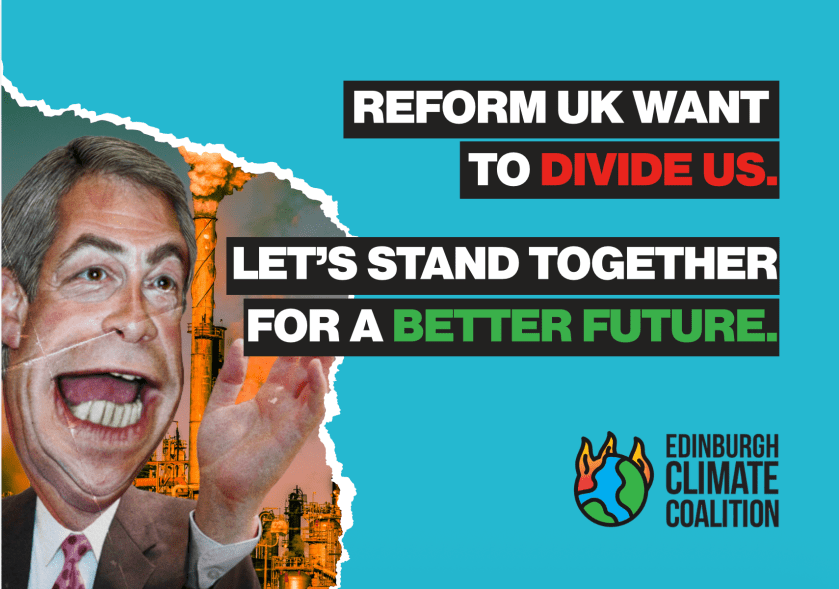
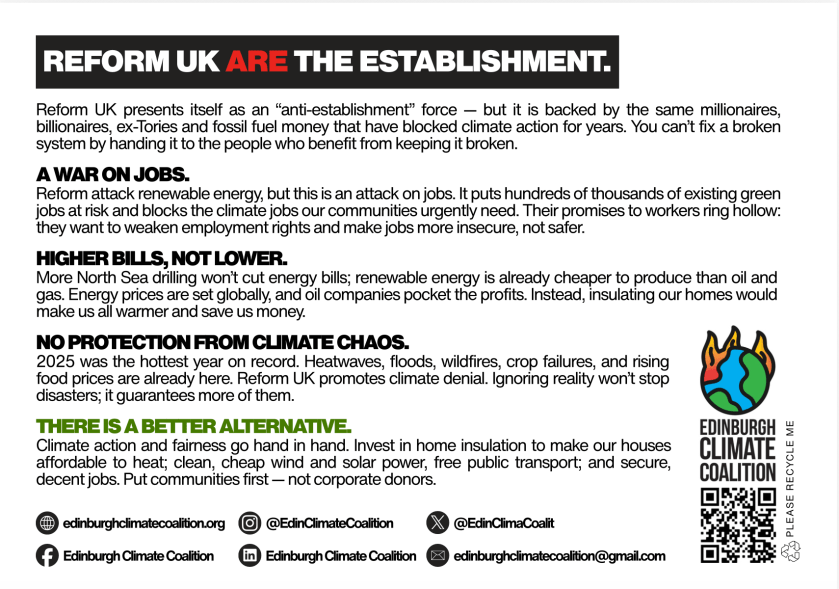
The Scottish parliamentary elections are coming up on Thursday 7 May. Edinburgh Climate Coalition is actively campaigning against the far right Reform party and has produced this leaflet. You can click here or on the image to download a PDF.
Video of the introduction to the Scot.E3 public meeting where Jonathan Neale introduced a discussion on organising for a sustainable future in a time of genocide, war and right wing reaction.
Watch this space – we will add a full transcript as soon as it’s complete and edited
This article is reposted with permission from the rs21 website
Adam Cogan analyses the politics of Portugal’s “natural” disasters, where the dead and displaced reveal not a failure of prediction but a war declared by fossil capital. A warning for Britain, where millions of unprepared homes face a similar fate due to government inaction.

This article draws from the contents and structure of a newsletter (link) written by Climáximo in Portuguese, it was translated and rewritten with their permission.
There are numbers governments like to announce. GDP growth. Investor confidence. Renewable energy targets pencilled in for 2050. And then there are the numbers they’d rather you didn’t dwell on for too long – the ones that don’t make the opening slide of the press conference, that get buried in civil protection bulletins and regional hospital admissions data, that require a bit of excavation to assemble into a picture that accurately reflects what actually happened.
The Portuguese ecosocialist organisation Climáximo has done that work. What they reveal is ugly.
Sixteen people have died from storm-related incidents since late January. One of them a worker killed repairing damaged electrical infrastructure – dying, in other words, cleaning up a ‘natural’ disaster that was really anything but. Nearly 1,000 people were treated for physical trauma at a single hospital in Leiria. Around 45,000 homes without electricity. Fifteen thousand people without water in Torres Vedras. Seven thousand more in Arruda dos Vinhos. In Coimbra, the possibility of the Mondego levees bursting prompted the preventive evacuation of 3,000 people – a risk that was then confirmed when two levees ruptured in less than 24 hours, with warnings remaining in place for a further 9,000 in the urban network. A total of 12,467 civil protection incidents nationally since February began. Sixty-three roads were prohibited or restricted in Aveiro alone. In Almada, 48 residents were evacuated from Porto Brandão. Thirty-one more were forced out of Costa da Caparica by landslides. In Salvaterra de Magos, the rising Tagus left 200 animals stranded, with firefighters diverting to ensure they were fed.
The damage isn’t only to homes and infrastructure. A total of 120 museums, monuments, and churches have been affected across 20 municipalities. Twenty-one theatres and cinemas. This matters not because cultural heritage outweighs human displacement – it obviously doesn’t – but because it completes the picture of a society absorbing damage on every level simultaneously, in ways that will take a long time to properly calculate and longer to repair.
The government’s response has been to declare a situation of calamity in 68 municipalities and contingency in 48 more. This is the administrative vocabulary of crisis management – the language of a state reacting rather than one that ever seriously attempted to prepare. Portugal has not been blindsided by the existence of climate risk. The science has been clear, the projections have been available, and the specific vulnerabilities of its river systems, its coastal areas, its ageing infrastructure, have been documented. The political choice to maintain fossil fuel dependence while gesturing towards transition has been made consciously, repeatedly, and with full awareness of what it means for the country’s exposure to exactly this kind of event. The floods aren’t a failure of prediction. They’re the predictable result of a certain set of choices.
Climáximo’s framing of all this is worth taking seriously: these numbers, they write, are the result of the war declared by governments and businesses against everything we love. A precise description of a situation in which the costs of fossil capital’s continued operation are being systematically transferred onto working-class communities, onto the elderly, onto renters without the resources to absorb repeated disruption, onto workers sent out into dangerous conditions to repair damage that will happen again next season.
In the weeks since the storms, Climáximo have been in the affected areas, rather than observing it from Lisbon – taking donations, helping with clean-up, and crucially listening to people living through this daily. Their politics are practical as well as structural: mutual aid now, and an uncompromising demand for systemic change alongside it. Their slogan – ‘only the people save the people’ – isn’t a counsel of despair about the state. It’s an accurate description of where solidarity actually materialises in a crisis, and a political argument about where power needs to be built for the longer fight.
They’re also clear-eyed about what happens next. Heavy rain slows, the news cycle moves on, and what was viscerally immediate to thousands of people in evacuation centres gets quietly filed under ‘extreme weather event’ – a phrase practically purpose-built to drain political content from situations that are saturated with it. The specific danger isn’t just forgetting. It’s normalisation. Another February, another sixty-odd municipalities in calamity, another government that helped create the conditions expressing solemn solidarity with those suffering them. If that rhythm becomes routine, it becomes very difficult to break.
There’s a further set of numbers that definitely won’t make the press conference. Climáximo’s legal team maintains what they call a Repression Counter – a running tally of sanctions handed to activists who participated in direct actions for climate justice. The current figures: 238 months of suspended prison sentences. A total of 5,500 hours of community service. Over 28,000 euros in fines, compensation, and court costs. These are the outcomes of concluded cases only – the pipeline of ongoing prosecutions is longer.
The same state apparatus that cannot maintain functioning levees on a river system it has had decades to prepare, that leaves tens of thousands without water or electricity in a storm, that sends a worker to his death fixing infrastructure that failed – that state has found consistent institutional energy to pursue, prosecute, and sanction the very people trying to stop things getting worse. The inversion is not incidental. It reflects whose interests the legal system is organised around, and whose it isn’t.
Climáximo’s legal team is also tracking the broader European context: what they describe as the rise of authoritarianism and the normalisation of repression as tools for maintaining a collapsed system. Portugal isn’t an outlier here. Across the continent, climate activists are facing increasingly aggressive prosecution, civil injunctions, and in some cases imprisonment, as states respond to the failure of their own climate commitments by criminalising those demanding they be honoured. This is the other side of the greenwashing coin – the warm language about transition and net zero on one face, the riot police and the court summons on the other.
On March 9th – the day Portugal’s new president took office – Climáximo and others called students, workers, and retirees onto the streets to demand an end to fossil fuels by 2030. The date was deliberate. A president assuming a mandate that runs to 2030 should be confronted, on the very first day of that mandate, with what the deadline actually requires. Not targets. Not frameworks. An end to fossil fuels, in a country that has just watched what continued dependence on them costs in human terms.
Climáximo also point to the International Court of Justice’s recent landmark opinion on climate justice, which strengthens the legal accountability of states for inaction – a development their legal team has written about in detail. The architecture of climate accountability is slowly being built, both in the streets and in international law. The question is whether it’s being built fast enough, and whether the political will to enforce it can be generated before the damage becomes irreversible.
The floods in Portugal are not a warning of things to come. They’re already here. The question isn’t whether the climate crisis will affect working-class communities in Europe – it’s already doing so, these past weeks, in the evacuation centres and the hospital wards and the homes that waited days for the water to come back on. The question is whether we treat each disaster as an isolated weather event to be managed and forgotten, or as political facts that accumulate into an argument about power, and about who bears the costs of political decisions they were never consulted on.
In the UK, 6.3 million homes are at risk of flooding, with the majority of households reporting they are unprepared for flooding. At the same time, natural flood defences have been consistently eroded due to environmental degradation and government inaction on climate adaptation, meaning it is only a matter of time before disaster strikes. In Portugal, Climáximo’s answer is organised resistance. It’s our duty as ecosocialists to join in their struggle.
Climáximo are continuing their solidarity and support actions in affected areas. Follow them, share their work, and consider contributing to their organisation.
This new film is being shown at venues all round Scotland during March. Director Peter Knapp travelled to Greece, Sicily, Spain and Portugal interviewing people affected by wild fires. The film unpicks the links between fires, the far right, big business and organised crime – and often the complicity of governments. We saw the film in Edinburgh – it’s excellent and deserves to be watched by as many people as possible as possible. It’s also possible to download the film and show yourself. It would be a great way to start off a discussion.
Find out more and check out when it’s in your local area from the Fires and Fascism website.
Calling on candidates for public office in the May 2026 election to pledge support for free public transport
Fare Free London have initiated a campaign to get candidates for parliamentary or local government office in the local government elections to commit to campaigning for free public transport.

Calls to widen the provision of free public transport have been growing over the last few years. Buses are already free for pensioners across the UK, and for under-22s in Scotland and Wales; London residents who are 60+ travel free on the tube and trains too.
The House of Commons transport committee called in August last year for free bus travel to be extended to under-22s in England.
Glasgow City Council, acting on a recommendation of the Scottish Just Transition Commission, in 2024 published a report on how free public transport could be implemented in the city, and will run a pilot scheme this year under which 1000 residents between the ages of 22 and 59 will travel free for six weeks.
Outside the UK, free transport schemes are widespread. Public transport is free for residents in European cities including the capitals of Estonia and Serbia; Montpellier and Dunkerque inFrance; Kriviy Rih in Ukraine; and the whole of Luxemburg. No less than 130 municipalities in Brazil have free public transport, as do Kansas City, Albuquerque and other cities in the US.
If you are a candidate for a Scottish constituency or on a regional list please add your name to the form here.
If you support this campaign please ask candidates in your area to sign up. You can use this QR code or share this link to the form.

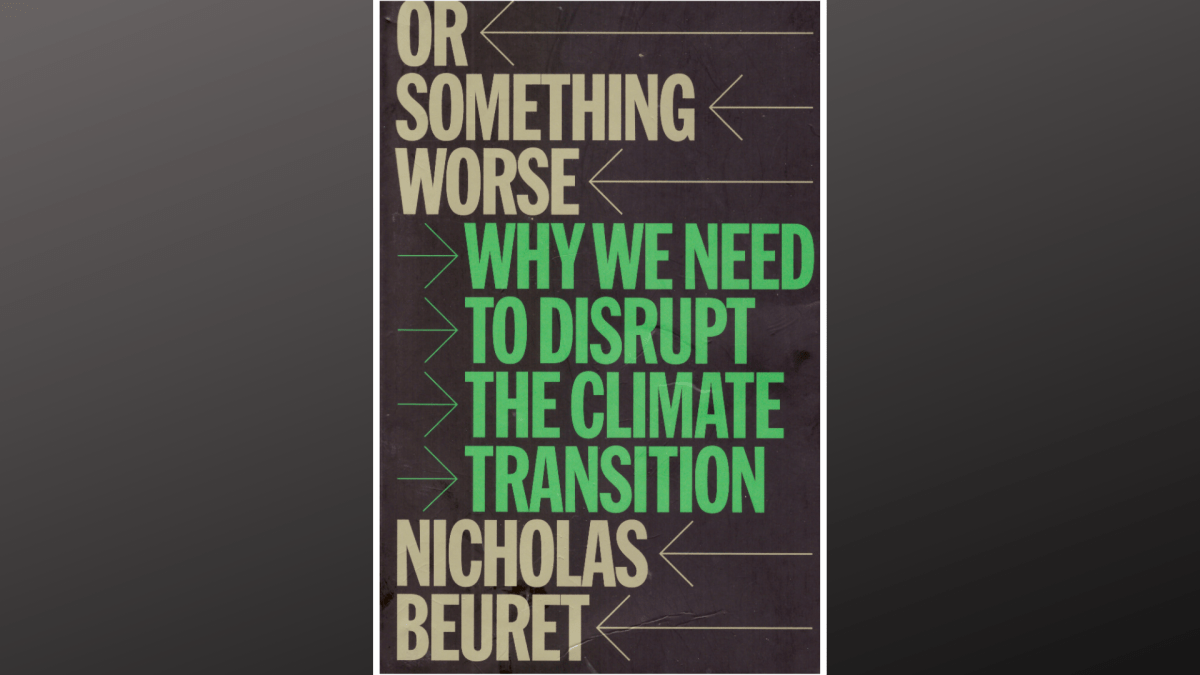
Pete Cannell reviews Nicholas Beuret’s book, which critiques green capitalist transition pathways and sets out strategies to fight back against them.
This article was first published on the rs21 website.
Another year, another COP – this time in Brazil. Since the global climate summits began in 1995, levels of atmospheric carbon dioxide have climbed inexorably. They now stand approximately 20 per cent higher. It looks like 2025 will have been the year when the 1.5 degree increase in global average temperature was breached. Yet in the face of pressure from petro-states and fossil capital the final statement from COP30 could scarcely hint at the need to end the use of fossil fuels.
Or Something Worse by Nicholas Beuret is an uncompromising call for a reinvigorated climate movement that faces up to the reality of this crisis and adopts new tactics which reflect the urgency of the situation we find ourselves in. He has no time for the professional optimism of the NGOs looking for slivers of hope in the dismal outcomes of each annual COP conference. In the first half of the book Beuret lays out the stark reality of the consequences of years of inaction. Not just extreme weather events, but crop failures, water shortages and everywhere higher food prices – all of which hit the poorest hardest. The climate crisis is here now, and it has real material impacts on the lives and livelihoods of people around the world.
In the introduction Beuret argues that ‘What is needed is for us to understand the shape of the transition, to map its contours and contradictions … in order to organise not against it, but through it.’ He goes on to explain that ‘we are in the midst of a profound social, political and economic transition’. But throughout the book he describes this process as a ‘green transition’. He makes it clear this is a capitalist transition – one that prioritises the interests of dominant groups and reinforces the status quo. However, I found the green tag unhelpful and a barrier to understanding.
The first three chapters provide a bleak assessment of the impact of the crisis, using the steel plant at Port Talbot as an example. Together, they paint a compelling picture of the depth and extent of the crisis. In my view, however, the overall framing in terms of green transition has a distorting effect. Part of Beuret’s case is that countries in the Global North bought into the necessity of green transition while establishing a social contract predicated on a state-promoted transition that stimulates economic growth. I think the idea that there was ever such a social contract is overstated. It’s true that governments engaged in green transition rhetoric, some even acknowledging the climate emergency in response to the mass movement of young people that exploded in 2018 and 2019. But most often they put their faith in the market to achieve a transition framed by the priorities of fossil capital. For example, in Britain and elsewhere strategic investment was directed towards hydrogen, carbon capture and storage, and nuclear. So, we can talk about a process of economic transition that involves increased utilisation of wind and solar power – but it is not clear that there is any meaningful sense in which this is a greentransition either in intention or in practice.
We are witnessing a rapid growth in new ‘green’ technology. Globally, capital expenditure by the fossil fuel industry is down to just under $600 billion a year, a decline of 40 per cent in the last decade. Yet at the same time (witness COP30) fossil capital is digging in for the longer term. Beuret describes very well how in the Global North countries are pushing down carbon emissions within their territory while pushing fossil fuel use and resource extraction onto the Global South. What’s happening looks like previous capitalist energy transitions – wood to coal (and wood), coal to oil (and coal) – that Jean-Baptiste Fressoz criticises in More and More and More. Can we call this a ‘green transition’ when energy consumption globally continues to rise, and when the expected future use of fossil fuels goes far beyond the level at which limiting global temperature rise to two- or even three-degrees remains achievable?
At one point Beuret talks about governments in the Global North becoming more interventionist and allocating billions of dollars to support national industrial policies. Yet this conflicts with what he says later on in the chapter on the ‘transition economy’, where he explains that in general, policy goals for green transition are almost always left to the market; he’s also scathing about liberal utopianism that assumes that governments or markets will respond to the crisis rationally. This reflects a weakness in the book’s analysis of the economics of the climate crisis. It seems as if Global North ‘transition’ initiatives are the main driver of change rather than mediated through a world economic system which is in flux. Rather than framing what’s taking place as a ‘green transition’, I would argue that technological and economic transition driven by the climate crisis is shaped by and mediated through the changing contours of global imperialist competition following five decades of neo-liberalism. Crude Capitalism, published earlier in 2025, has a much firmer grasp on the geopolitics of the world economy, the deep entanglement of fossil fuels with the military industrial complex and the shifting balance of power between major imperialisms, principally but not exclusively between the US and China.
Arguably, another weakness of the economic analysis is the discussion of the impact of transition on jobs and employment. Beuret accurately describes how the so-called ‘green transition’ has had a negative effect on employment and working conditions. He goes further, however, to claim that as jobs related to the fossil fuel economy decline:
… while there are many ways to cushion the blow, from reduced working weeks to building up the social economy to strengthening social services and public provisioning, none of these would amount to the creation of an equal number of similar jobs.
No evidence is given for the claim that whatever is done there will be a net loss in jobs. In fact there is strong evidence from a number of studies that suggests that a genuine green transition would involve substantially more jobs than those that will be lost as the fossil fuel economy ends.
Beuret’s pessimism over jobs is also related to pessimism about the way in which the production of solar, wind and other green technologies will take place. It is certainly the case that production is currently dominated by China and he assumes that this will inevitably continue. As a result, he believes that new jobs in the Global North will be exclusively concerned with installing technology produced elsewhere – what he calls the installation economy. Surely there’s a strong case for sites of production to be closer to where equipment will be used to minimise transport distances.
The second half of the book discusses what is to be done. To date the climate movement has largely attempted to persuade states to see the logic of what needs to be done and take action. Beuret argues that there needs to be a much more confrontational approach. He notes that:
The fossil economy is produced in specific places. If we are to build the kind of disruptive power that can move us towards the rapid ending of fossil fuels, then it is precisely at these critical junctions that we must organise.
He characterises the direct action taken by Extinction Rebellion, Just Stop Oil and others as propaganda. He notes that this kind of direct action can win victories through raising consciousness and pressurising politicians. However, to win the kind of systemic change required to break fossil capital he argues that direct action in the form of the blockade is necessary. An effective blockade has to be long term, sustained and targeted at choke points in the fossil fuel supply chain. Most of all it needs to materially affect the operation of the production or the supply chain that is being targeted. It requires organisation and development of cadres. He notes that contemporary examples of the blockade are rare. In Britain in the 1990s direct action stopped the introduction of GMO crops and Thatcher’s huge programme of road building that began in 1989 was severely limited by persistent blockading through permanent encampments. Roughly ten years later in Australia the development of the Jabiluka Uranium mine was stopped by 5,000 protestors camped close to the proposed site.
Having introduced the blockade, the discussion moves on to other forms of direct action. There’s an important emphasis on building on the anger of working-class people faced with paying the price of transition and a sympathetic use of the French Gilets Jaunes as an example of how this might be developed. There’s an interesting discussion of past examples of community-based campaigning such as the Anti-Poll Tax campaign, tenant organising and actions over transport costs. The emphasis is on developing popular campaigns of refusal. In Beuret’s view, deep community organising includes activity in communities and in the workplace. Workplace organising needs to include fighting around issues of social reproduction and wider political and community issues need to be taken into the workplace. The task is not simply to reject and disrupt the transition but to simultaneously build our own transition from below. In all this there is a rejection of asking governments to act – in effect the mainstream approach of the climate movement for so long.
I want to insist that although it has problems, Or Something Worse is well worth reading. At a time when the left is struggling to be relevant in the face of existential crisis and a burgeoning far right, books like this are essential. They help develop ideas about how to catalyse, grow and coalesce resistance at the level that is required to shift the momentum towards self-conscious collective working class led action locally and internationally.
Or Something Worse by Nicholas Beuret is published by Verso Books.
Crunch time for GKN, the most advanced worker led transition struggle in history
| XMAS APPEAL: Crunch time for GKN, the most advanced worker led transition struggle in history The battle by ex-GKN workers in Florence to convert their autoparts factory to zero carbon production under workers control is at a critical stage – and you can help. Find out how below and watch a video of the story of this historic struggle so far – PLUS the latest from the most important strike in Britain, a siginificant victory for education workers in Bristol, and what you can do to help prisoners on hunger strike for Palestine |
 |
| GKN: Cash urgently needed to start production under workers control Click here to watch video of the story so far (30 min version) Click here to watch 5 min version Those of you who have been following the incredible just transition struggle of ex-GKN workers in Florence (and if you haven’t, you can catch up by watching the video above) will know that the regional council have been stalling on their commitment to put together a consortium to buy the factory off the current owners and hand it to the workers to produce cargo bikes and solar panels – all under workers control, and for the benefit of communities, not for profit. Now, after delaying the process for months – increasing the suffering of the workers who have now had no wages for 15 months – it’s fallen apart. The main reason seems to be the drive to war and the increase of arms spending across Europe, with most of the banks who agreed to fund the project now demanding that the workers produce weapons rather than zero carbon products based on equality and social justice. And as the workers point out, “the former GKN is an example they can’t afford. Because a conscious community, insurgent, through the convergence of social and climate justice shows that an alternative would be possible.” So now the workers have made the decision to go it alone and do everything themselves. Which means raising substantial sums of money from our own workers organisations, social movements and civil society. CLICK HERE TO READ FULL STATEMENT AND EXPLANATION BY THE WORKERS WHAT YOU CAN DO TO HELP 1) Make a donation to the workers’ crowdfunder, which has a target of 2 million euros. You can make a donation by clicking here. So if you were looking for somewhere to donate to for Xmas, this is the place! 2) If your trade union branch or organisation, or a collection of individuals can afford 500 euros, that’ll buy you a share in the workers cooperative and be part of the assembly that will collectively run the factory if the workers win. CLICK HERE TO BUY A SHARE IMPORTANT: IF YOUR GROUP HAS ALREADY PLEDGED TO BUY A SHARE, CLICK ON THE LINK ABOVE TO PAY THE 500 EUROS FOR IT And a warning: the form to buy shares is not easy to fill in. Having just done it to buy the share for the UK rank and file workers delegation that visited Florence last year, we can give you some help below; if you’re still having trouble, please feel free to email us at info@reelnews.co uk and we can talk you through it. If you’re not in Italy, fill it in as an individual, not as an organisation. If you try to do it as, for example, a trade union branch, you’ll get a load of questions that are impossible to answer because our union branches are not set up in the same way legally as Italian union branches. So you’ll have to pick a trusted individual who doesn’t mind paying the 500 euros out of their personal bank account and then getting it back from the branch. Most of the questions are meaningless – but what you answer doesn’t matter. The questions are obiously geared to a generic shareholder issue for companies – but don’t worry about the fact that none of the answer choices fit your situation, just pick anything – the answers seem to be completely irrelevant, so for example there’s no need to reveal your financial circumstances. When you get to the page that says “send link to continue on your phone, or scroll down to continue, choose the phone option. You’ll findthat it’s actually impossible to scroll down, so in fact you have to continue you on your phone – which is actually just to take a picture of your passport as proof of identity. Once you’ve done that, it’ll return you to your computer. Once you’ve finished this part, you’ll have to wait for another email to set up payment. This comes in a few minutes, but then once you’ve set up payment (bank transfer seems to be easiest), you’ll have to wait for up to 48 hours for it all to be cleared to actually transfer the 500 euros. Hopefully that hasn’t put any of you off! But if it feels daunting, please get in touch – we’ve done it and can help you do it very quickly. We’ll leave the last word to the workers: “After 4 years of struggle, 15 months without a salary, and 8 months of unemployment, all may seem lost. But at the same time, it may all be enough to claim that, “after all, we won”. The lessons we can learn from this struggle are enormous, its historical legacy will not fade away, and its example will speak for years to come. Then, why insist (on continuing the struggle)? Because we cannot afford to lose this fight and “they” cannot afford to let us win. Because it started with the “simple” aim to keep the factory open, but ended up exposing every “systemic” issue that is dragging us towards the catastrophe today.” |
Briefing on the proposed closure of the Exxon Mobile Plant at Mossmorran
Brian Parkin provides background on the proposed closure of the Exxon Mobile Plant at Mossmorran
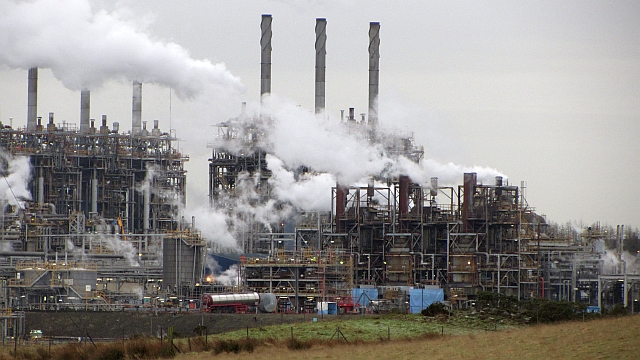
ExxonMobil has announced plans to close the Fife Ethylene Plant (FEP) at Mossmorran in Fife in February next year. Up to 400 jobs will be lost if the closure goes ahead.
The announced closure of the gas treatment plant closure may have consequences upstream for its supply terminal at St Fergus in Northern Aberdeenshire. St Fergus is the landfall terminal for all the gas produced in the Central and Northern UK Continental Shelf fields and the recently opened North Atlantic West of Shetland fields. It also receives gas from the Western Norwegian sector.
Braefoot Bay is a private facility which handles almost all of the output of the two Mossmorran operations, and is presently at 85% capacity. It operates under the joint ownership of Exxon/Mobil and Shell UK and is entirely dependent on the export requirements of Mossmorran. The port has two jetties- a deep-water jetty capable of handling 40,000- 80,000 tonne vessels, and the smaller, for 5,000- 10,000 tonne tankers.
The main tanker loading is via floating ‘roof’ tanks are continuously ‘toped-up’ from large quayside storage tanks.
At Mossmorran, there are around 90 directly employed in control rooms and plant management. with most engineers, electrical and welders etc being subcontractors directly employed with Balfour Beatty. Virtually all Balfour Beatty workers are members of Unite.
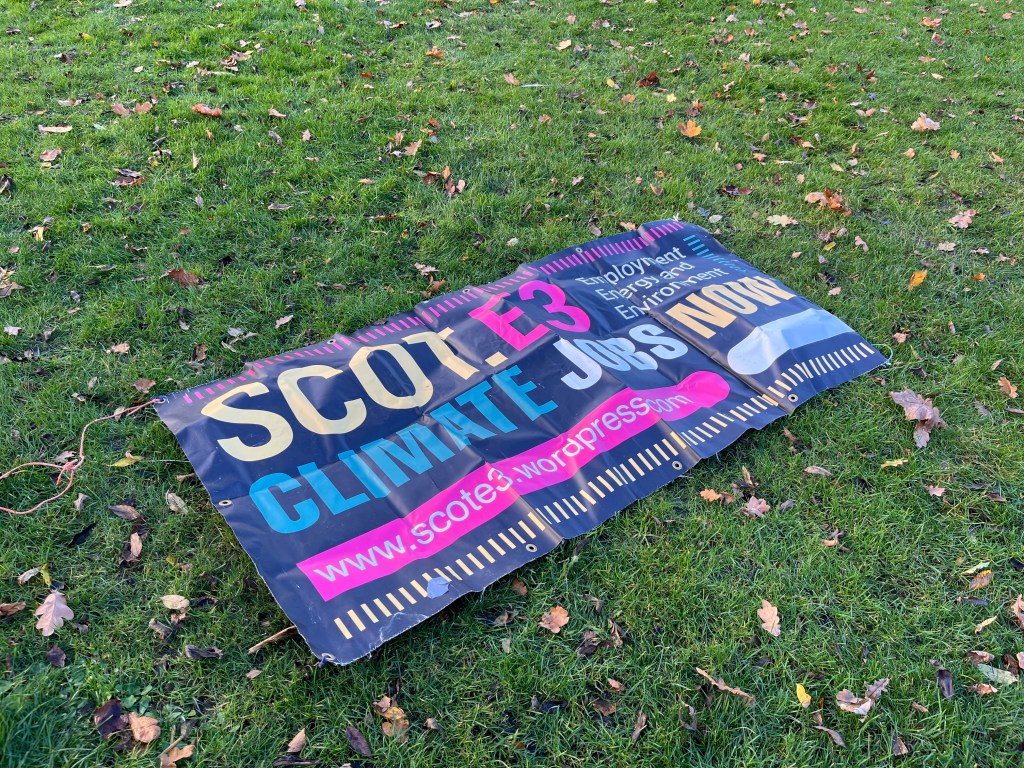
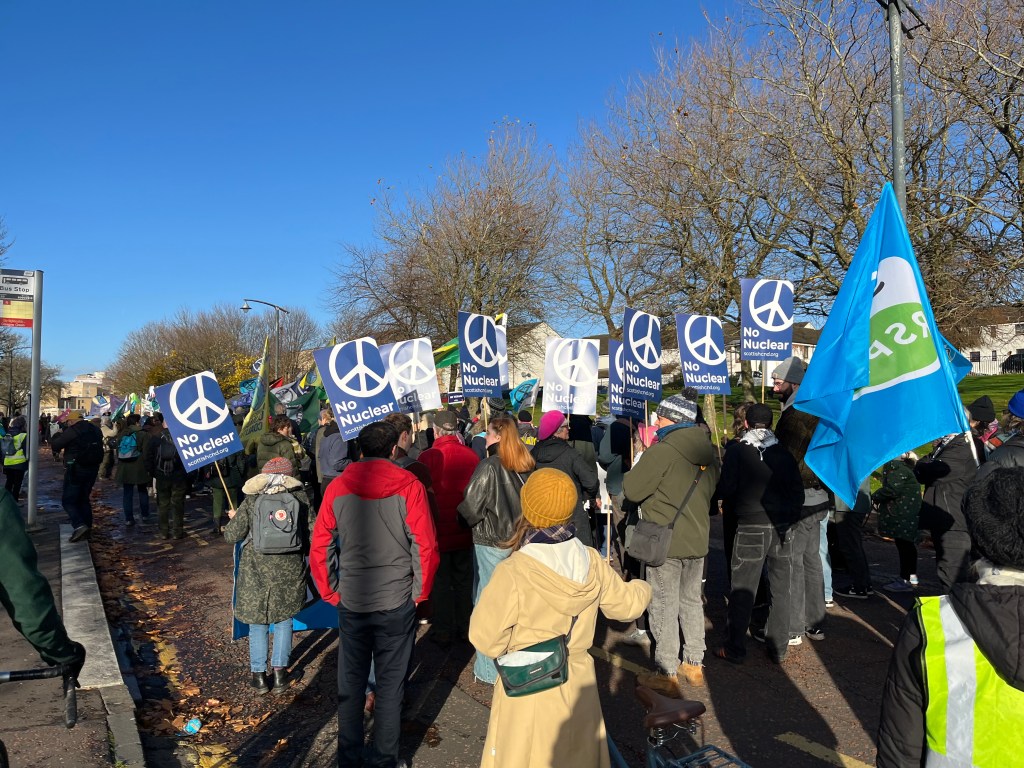
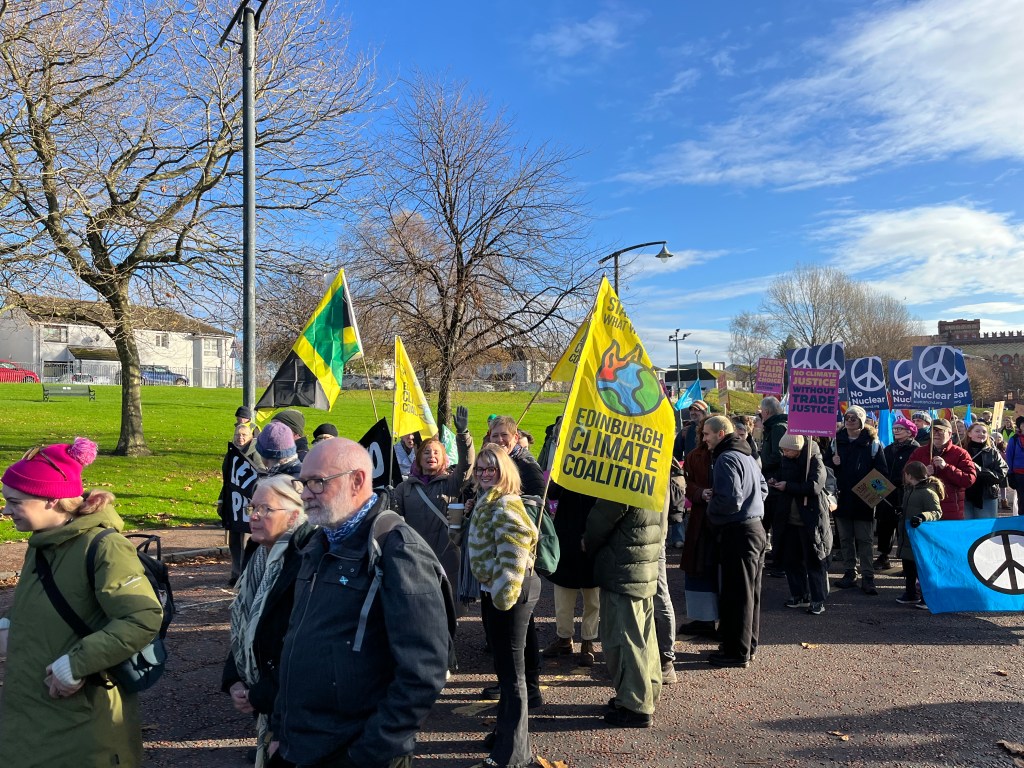
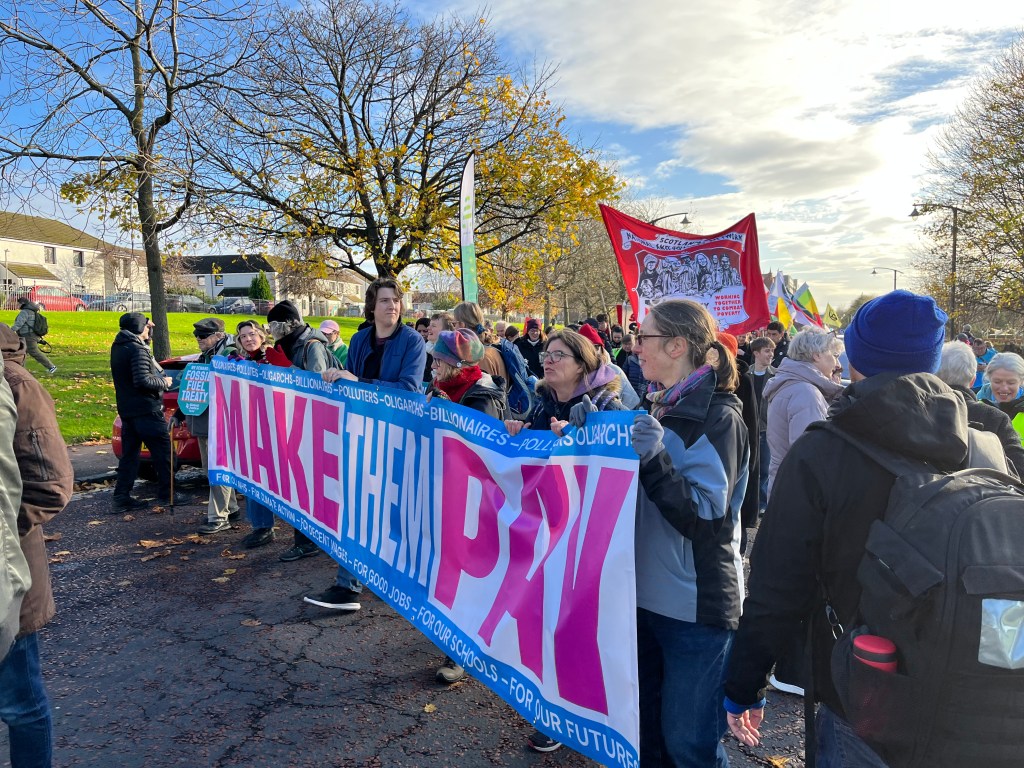
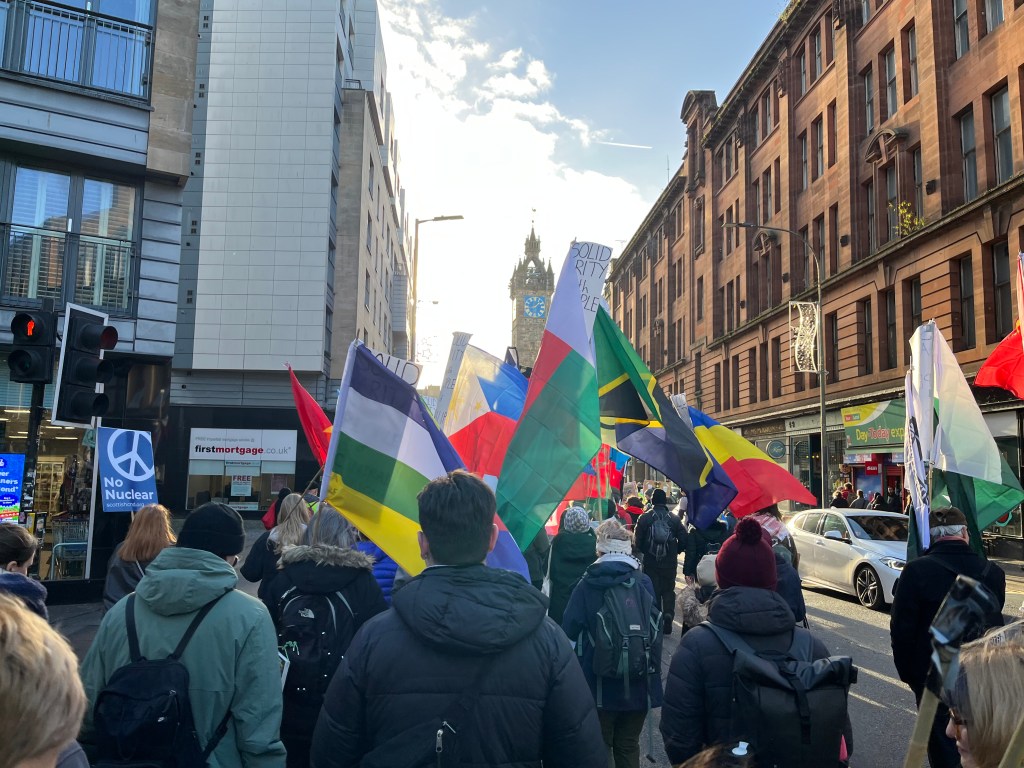
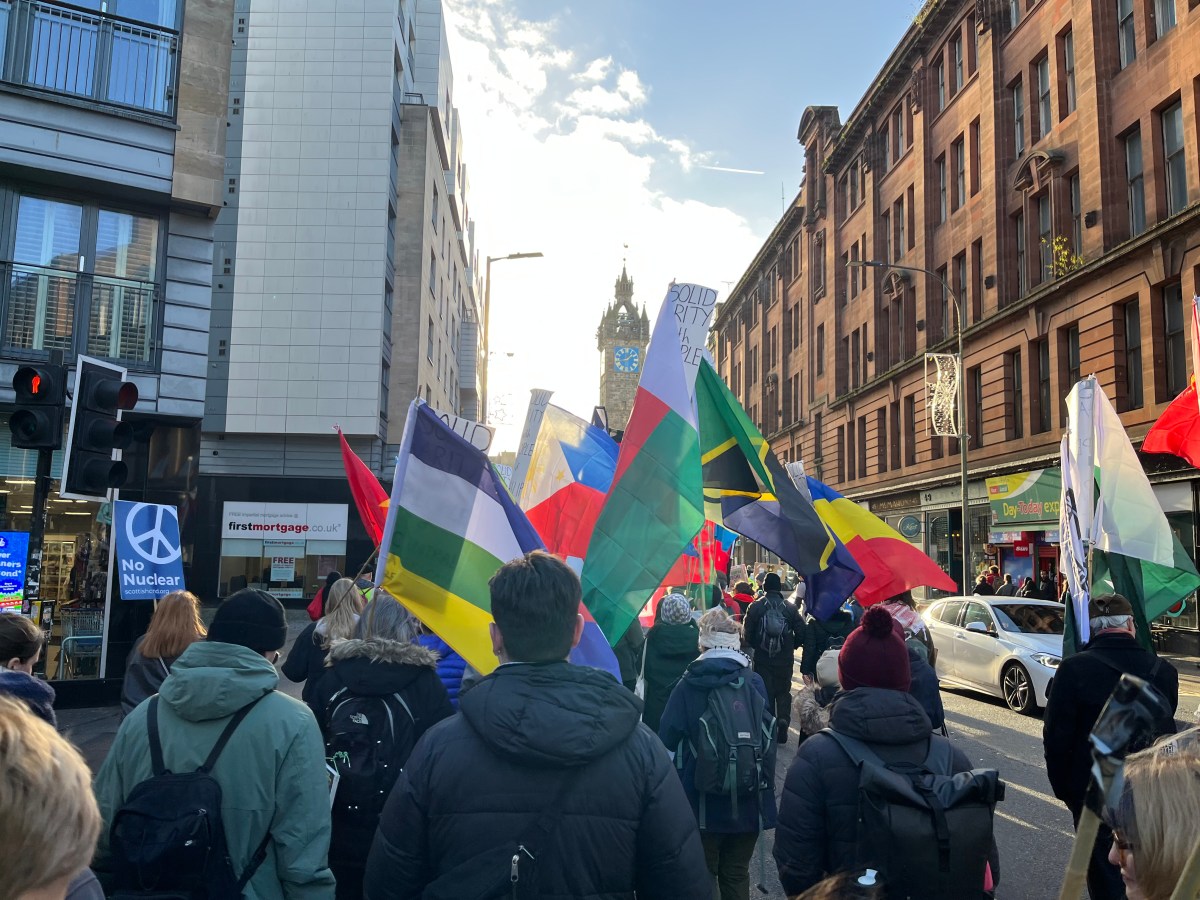
Photos from Scotland’s climate march
Between two and three thousand marched in Glasgow on 15 November




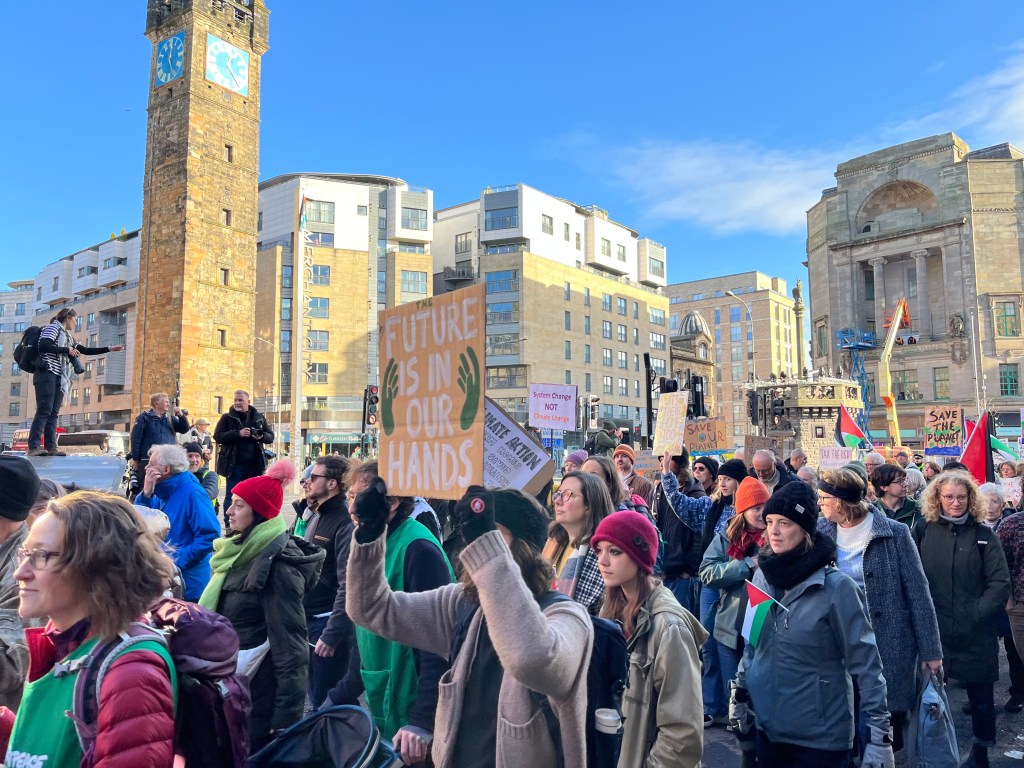
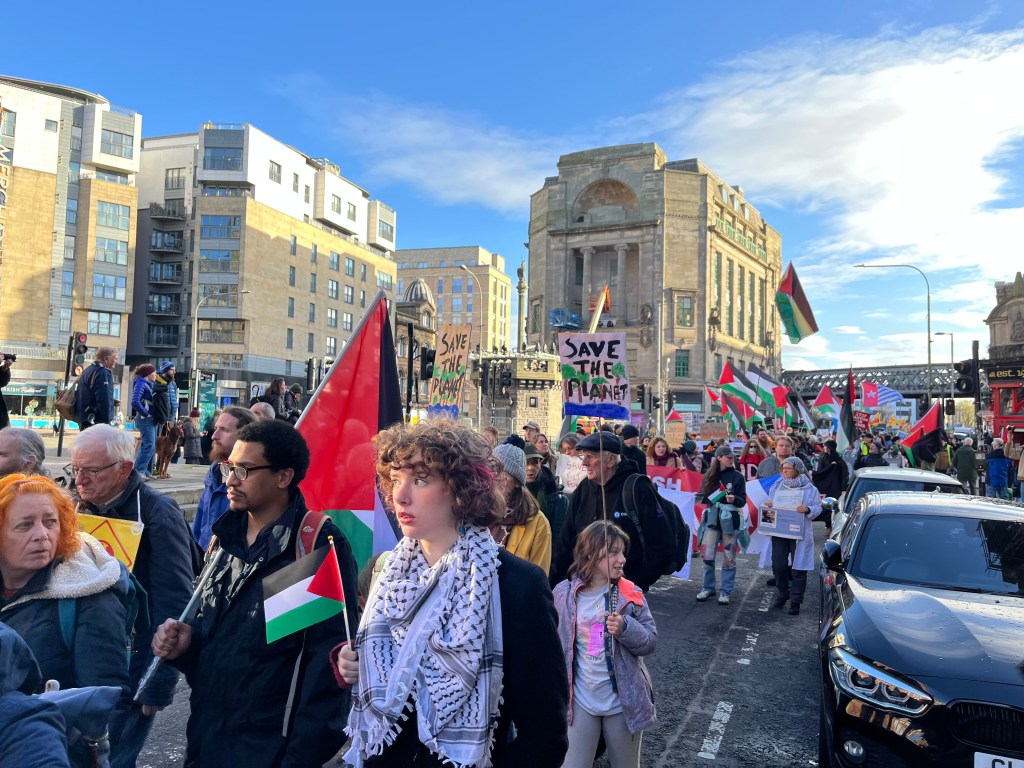


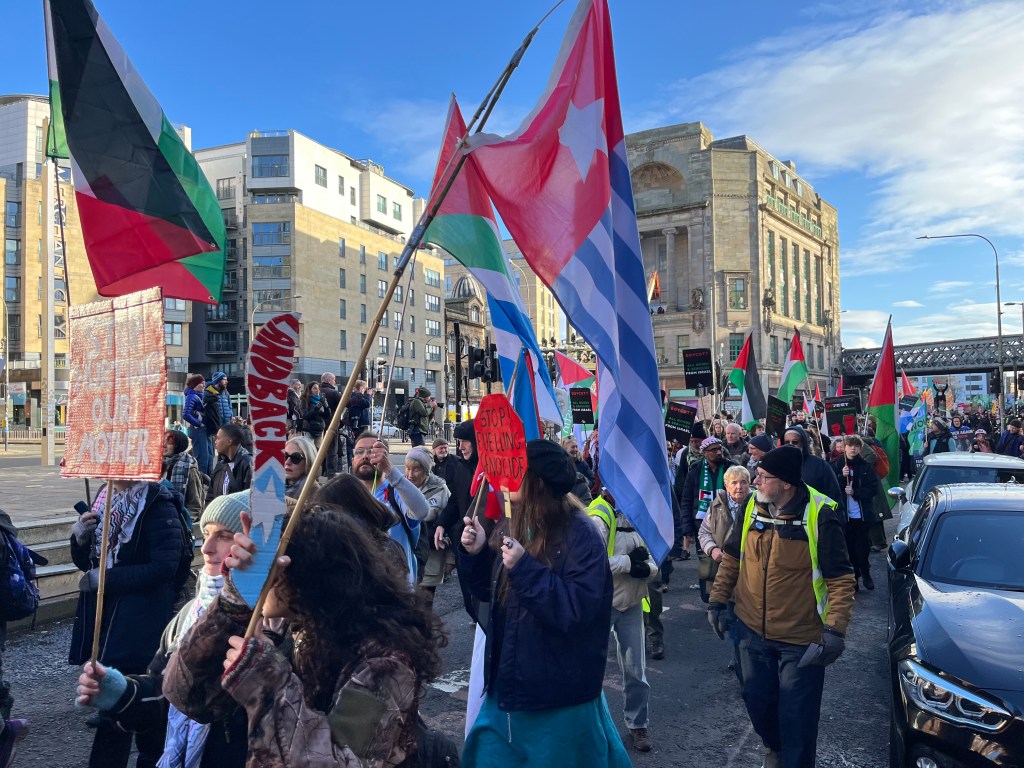
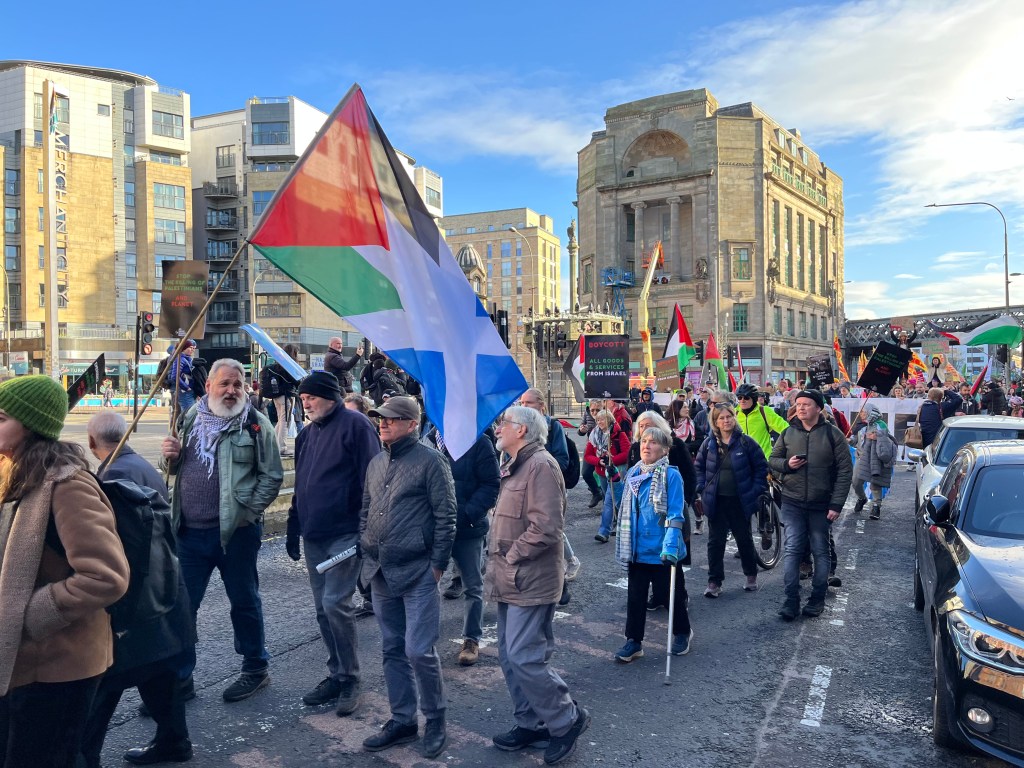
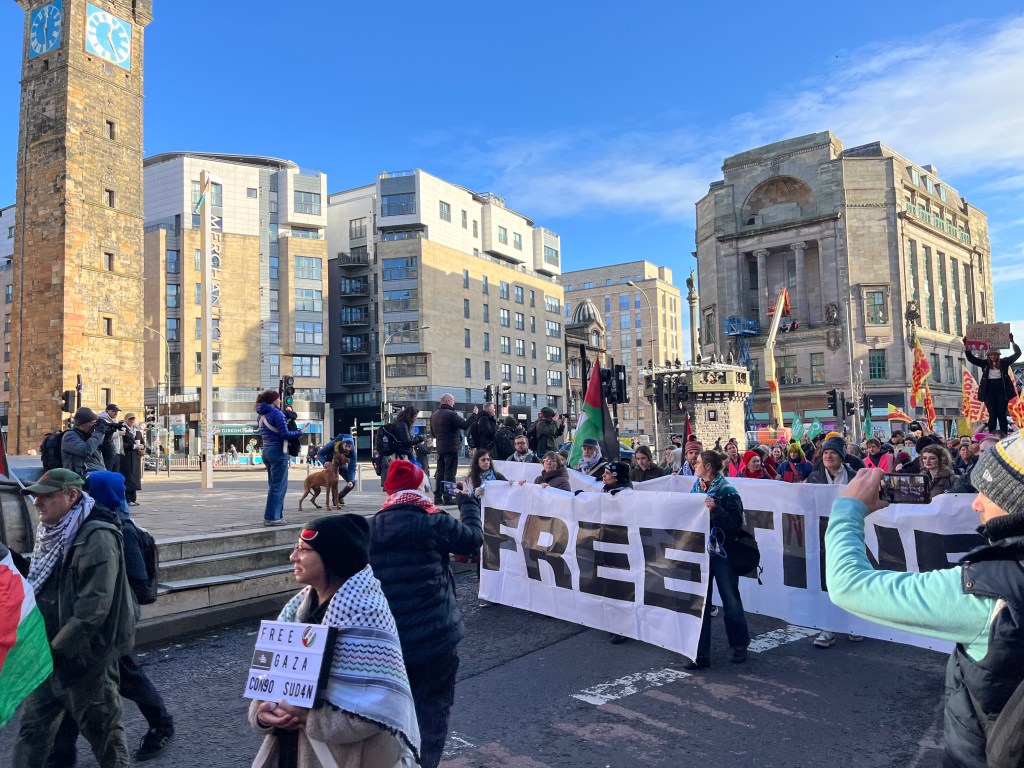


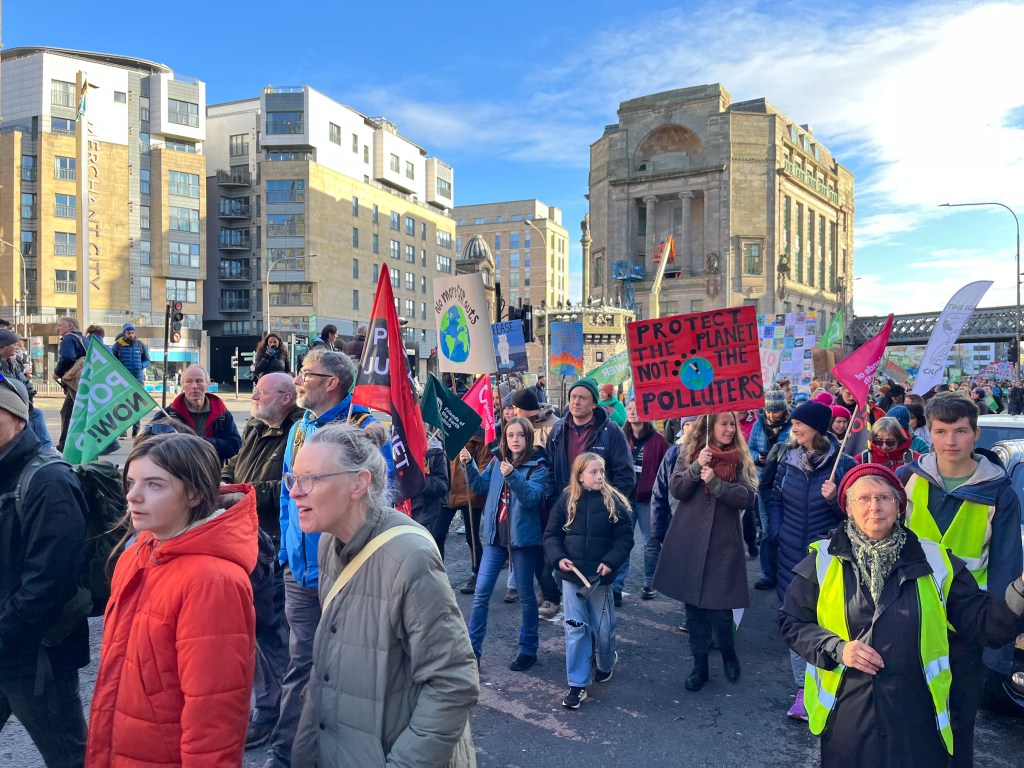


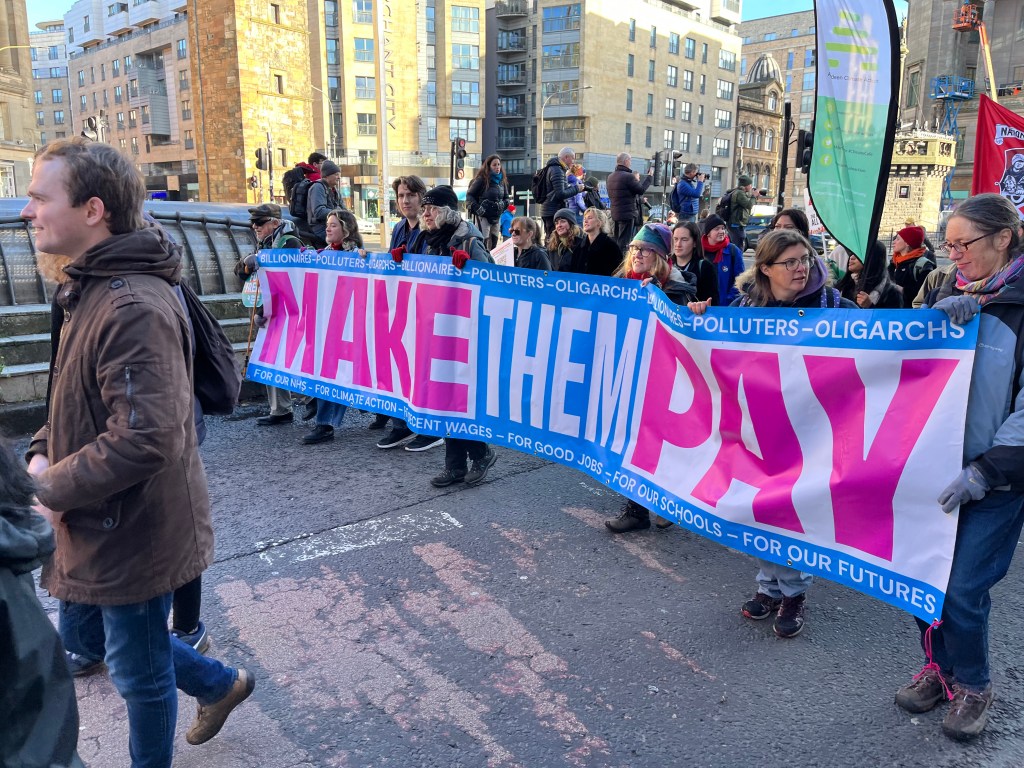
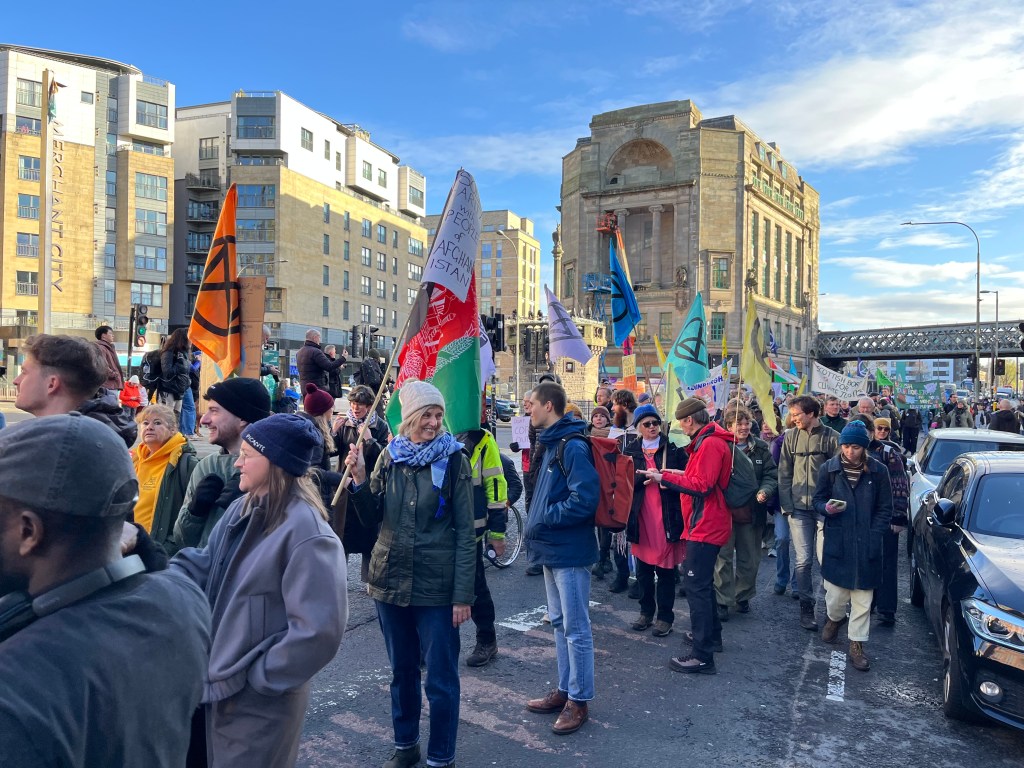
The Portuguese ecosocialist group Climaximo contributed to the Scot.E3 conference
Leonor Canadas from the Portuguese group Climaximo spoke in the initial plenary session at the conference. on 18 October. Later she spoke in more detail about Climaximo – how they organise and what they do. We recommend checking out the Climaximo website.

In Climax’s words they are ‘an open, horizontal and anti-capitalist collective.’
They say:
We are the ones who refuse to lose everything without first trying to win, for the risk we take can’t be compared to the risk of not acting.
In 2019 we explicitly and consciously took on systemic change as our social and political mission, declaring a state of climate emergency within Climáximo and launching an in-depth process of internal restructuring. Every year we have updated the measures we take based on reality. In 2023 we changed everything. Read the current declaration of a state of climate emergency within Climáximo here: state of emergency.

The background to Climaximo’s approach to climate action and climate politics, and the sharp change they made in 2023, is summarised in the book All In which we reviewed on this website in April. You can find out how to get hold of the book and access more resources on the All In website.
 Employment, Energy and Environment