Climate and Militarism

Pete Cannell looks at the way in which the climate crisis and militarism are intertwined

Annual global expenditure on arms and warfare is of the same order of magnitude as the best estimates of the annual funding required to make a worldwide transition to a zero-carbon economy.

The US military-industrial complex is by far the biggest component producer of carbon emissions. It’s hard to get completely accurate figures since around the world nations simply fail to report carbon emissions from their armed forces or conceal the emissions under other headings. And generally, they are given a free ride – scientific reports – for example the IPCC reports on the state of the climate – scarcely mention the impact of military emissions.  But it’s estimated that the military contribute something like five and a half per cent of global emissions – more than all the carbon emissions from Russia.  Military kit is heavy, expensive and fuel greedy. To travel 1km a Humvee armoured car produces ten times the carbon emissions of an average car, an F35 jet aircraft as much as one hundred cars and one of the new British aircraft carriers is equivalent to five thousand five hundred cars. Around the world there are big increases in military expenditure taking place – the increases proposed for NATO amount to the equivalent emissions of 200 million tonnes of carbon dioxide (CO2e).

When weapon systems are deployed and used the environmental cost is magnified. Looking at the use of arms in Gaza since 7 October 2023, One Earth found that 99% of emissions were due to Israel amounting to more than 1.8 million tonnes CO2e. Total emissions from the onslaught on this tiny area exceeded the combined annual total of Costa Rica and Estonia. But these totals are tiny compared with the carbon cost of rebuilding Gaza which is reckoned to be around 29.4 million tonnes CO2e. And of course, the environmental impact is not just about carbon emissions.  It includes pollution, poisoning through residues from shells and explosives and contamination of ground water. Low level nuclear radiation from the dust produced using depleted Uranium shells is still causing deaths and birth defects in Iraq more than two decades after the second Iraq war.  Then there’s the degradation of the natural environment and agricultural land which in its turn adds to climate emissions.All of this highlights the importance of the military as a significant contributor to carbon emission and environmental destruction.  
However, I’d argue that most important is the structural role that arms production has in the global capitalist economy.  Scotland is a good case study. The arms industry, including the nuclear base on the Clyde, is quite small in terms of numbers employed and even in terms of its percentage of GDP. But it has a status that no other industry has – access to and support from government. Investment is prioritised above the threat of climate change. above that for climate. Indeed, the latter is left to the private sector or marginalised. The skills needed to work in the industry are often transferable to renewables and the building of a sustainable economy. The arms industry is centralised, securitised, secretive and immune to oversight and criticism – all this justified by appeals to the ideology of national interest. More generally the arms industry is at the intersection of global capitalism, imperialism, and environmental destruction. The deep connections between middle east oil and gas (and its impact on the environment) and the arms trade are clearly drawn out in Adam Hanieh’s Crude Capitalism

This is what worker led just transition looks like

After more than 3 years in occupation, the Florence GKN workers’ fight to save jobs and develop alternative production continues as an inspiration to workers and climate campaigners everywhere.

This article by Pete Cannell was first published on the rs21 website.

COP26 in November 2021 represented a moment when the climate and workers movements in Britain converged. The process of building for the huge demonstrations in Glasgow put the idea of ‘worker-led just transition’ to a sustainable economy firmly on the agenda. But that slogan hides real issues about what should be done. And in 2024, rather than workers driving just transition plans forward, we see big job losses in Port Talbot and now confirmation from Petroineos that the Grangemouth oil refinery will be closed in 2025 with the loss of around 500 jobs. 

But it doesn’t have to be this way and we no longer have to look back for inspiration to the 1970s and the Lucas Plan for alternative production. In Italy the workers at the GKN factory in Florence are waging an inspirational campaign to save jobs and establish alternative production.

Until 1994, GKN Florence was a Fiat factory. The workers, members of the CGIL union, had a tradition of organising within the factory and standing in solidarity with other struggles. Ownership passed to the British firm GKN, and by 2019 when GKN sold the factory to Melrose, a Britain-based investment company, there were more than 400 workers engaged in producing components for the car industry – including most of the big luxury brands.

The Melrose takeover was controversial and workers suspected that there were plans to asset strip. They were right and on 9 July 2021 the whole workforce were sacked by email. The workers’ response was to occupy and organise through a process which they describe as permanent assembly. Their initial demands were for the sackings to be rescinded and after a demonstration of 40,000 on 21 September the courts ruled that the sackings were inadmissible. So formally they had their jobs, but Melrose had no intention of restarting production. 

Two weeks later the workers joined an even bigger Fridays for Future demonstration of 50,000 in Milan. This was the start of an intense dialogue with climate activists. What to produce and why? Over the autumn the GKN workers worked on a plan for sustainable transport, converting the factory to produce cargo bikes and solar panels. By December the plan was complete and then Melrose sold the plant to a new owner. It rapidly became clear that the change of ownership was aimed at conning the workforce. There was no new investment and by August 2022 it was clear that there was no intention of restarting production in any form. Moreover, the new owner stopped paying wages. From August 2022 to July 2023 the workers received no wages and because they were under contract they were unable to claim unemployment benefit. Some were forced to resign – at the same time a system of social mutual aid was developed to sustain those continuing the occupation. 

At the end of 2023 the workers once more faced formal dismissal and yet again mass mobilisation and demonstration on New Years eve pushed back the threat. 

By itself the bare narrative of events testifies to the GKN workers commitment and resolve. However, these facts miss the dynamism and creativity of their response. The engagement with the climate movement was the catalyst for developing the plan for alternative production. The workers are clear that simply reopening the factory with new products is not possible. They know that they can’t build an island of sustainable production in an ocean of capitalism. They are clear that in the end it’s not just about GKN but developing collective production models that inspire similar struggles in multiple other sites. They also understand that cargo bikes are currently a niche product – selling either to well-off individuals who can afford the high price tags or enabling the exploitation of precariously employed delivery workers. Similarly, current practices in the production of solar panels are highly centralised, and entail rotten working conditions and little consideration of recycling and waste disposal. 

The workers’ response is to think about and campaign for approaches that are networked into horizontal local energy communities. They are producing prototype cargo bikes and working with local networks and campaigns to develop new models for use, and also evolving systems in which feedback from users shapes the next round of production. They’ve also pooled their practical knowledge with supportive academics from local universities who bring specialised theoretical knowledge to research and develop innovative and sustainable technical solutions driven by the social and political insights of users and workers.

In building solidarity, the workers have also placed the campaign for jobs and alternative production at the heart of wider social struggles. Their organising contributes to wider struggle and also learns from it. They have fought over migrant rights, workplace safety, anti-racism and anti-fascism. Most recently they have made common cause with the Palestine movement. In fighting for the regional government to back their plans for cooperative production under workers control, they set up an encampment outside the regional government buildings, later moving the camp to the centre of Florence. 

Throughout 2024 they have campaigned for donations to a one million euro fund. This, together with political demands on the regional government and the state government, would enable production to restart. Under pressure from the support that GKN has built locally, the regional government has given ground to the workers. The Italian government under Meloni is hostile, characterising the workers as undisciplined hooligans. But if they can get cooperative production started Italian law insists that the national government should contribute. The million euro target has essentially been met. Contributors to the fund – union branches, campaign groups and others – are entitled to a vote in the assemblies which will determine the future trajectory of the plant. 

Over the weekend of 11-13 October in Florence, there will be a mass demonstration led by Fridays for Future on the 11th, an open assembly in the factory on the 12th, and finally on Sunday 13th an assembly for ‘shareholders’. The objective is cooperative production under workers control, linked through democratic processes and democratic decision making to local communities, and national and international networks.

Thanks to REELNews for their reporting and their help with this post. REELnews are organising a trade union delegation to Florence for the 11-13 October demonstration and assemblies.

A reply to justice, jobs and the military industrial complex.

Ex oil worker Neil Rothnie reflects on the post we published three days ago Climate Justice, Climate Jobs and the Military Industrial Complex. We welcome further responses.

I suppose I just thought that campaigning amongst armament workers and on behalf of armament workers would be likely to be difficult in terms of how we might begin to “actually” impact global heating.  I know that if we weren’t building all this military shit and jetting it all over the world and destroying humans and other productive forces with it, then we would avoid putting a lot of carbon into the atmosphere.  It’s just that I’ve never considered that it was an issue that you might be able to intervene in quite the same way as I think we might be able to when it comes to oil and gas production.

The issue of oil and gas is looming ever larger in the consciousness of the climate movement.  It’s way, way higher than it was when I discovered XR in 2019. When I took part in the London Rebellion it was hard to get a sensible conversation about oil and gas and the North Sea was a very nebulous “concept” for many. Look at the movement today with Stop Cambo.   If reporting on mainstream media is anything to go by it’s beginning to exercise thoughts in layers way beyond just the activists and the scientists now.  Interestingly the only people who dare not mention oil & gas is the COP.  I don’t know if any of this is true about the military complex.

But I can see that from the perspective of jobs, and that’s how the discussion was framed, there’s pretty much no difference in making “demands” about just transitioning armaments workers and oil workers into renewables and other sustainable work. 

But I can’t see how it would ever be likely to be more than just a “demand” in the case of armaments workers.  In the case of oil workers I have, as you know, an idea that a mass intervention amongst oil workers is a crucial first step if we’re ever going to get to the point where we try to choke off oil and gas production – the absolute first and crucial necessity of a movement that has any hope of abating climate change in the face of this system.  There has to be a time and it has to come very soon when the licence society gives the industry to produce fossil fuels is withdrawn.  Who is going to force that issue?

I don’t know if a part of all this that as oil is is all I’ve ever known/done, oil is all I can ever really see.  The opposite was surely very widely the truth for the bulk of the population until very recently.  I think that’s changing.

But I’m beginning to realise that what I see as the impossibility of armaments workers turning their weapons into ploughshares, is what others see as impossible when the issue of confronting/challenging the oil and gas workers.   I can see why people think it’s a very long shot to imagine that they’ll either participate in the ending of oil and gas production.  But I think that least they can be neutralised, picketed at the heliports and stopped from producing the oil.  For how long?  And anyway!  They need to be informed of the science and we can’t rely on the media to do that.

These two issues, fossil fuel and the armaments/military complex, seem to be of different orders (qualitatively and quantitatively) in the context of tackling climate change.  Fossil fuel production seems to me to be primary.  Once the fossil fuels are out of the ground, they are pollution – they will be burned/processed.   Being used to build and deploy military hardware is just (just?) the path the pollution takes to get into the atmosphere. Or do we think that realistically we can take on the military complex and somehow stop it, and therefore stop the demand for fossil fuel?  

They (?) take fossil fuels out of the ground and then make fortunes on it.  They need to keep taking it out of the ground to keep making fortunes – to keep feeding the beast.  So they are endlessly imaginative in finding new and more extravagant and destructive ways of using it.  It looks like a real madness. to me.  The thing is that they can’t turn this hellish roundabout off themselves.  But turned off it will have to be if life is to survive, inasmuch as I understand the science.

Capitalism is the problem.  But to a great extent isn’t the oil industry pretty much the same thing as capitalism (?) . . the same thing as climate change? The military complex surely is just (just again?) how they regulate capitalism – keep the imperialistic plunder going and ensure that the trade routes remain open to keep that wealth flowing north, and in the process provide an ever-renewing market for the oil.  I never did get my head round the concept of a permanent arms economy – it was an idea touted by a political tendency I was taught was beyond the pale.  But I guess I’m stumbling along in the same neck of the woods here.

Obviously, the military complex is a huge issue for humanity, but I just don’t see how you tackle it head on with any hope of affecting climate change.  On the other hand, if you end oil you end capitalism (don’t ask me to prove that – I was hoping someone else would though) and then you have at least a fighting chance (is that a pun) of ending the military complex. The other way round it’s even clearer.  You don’t stop oil and life on earth is in danger.  However, you frame it you need to stop oil.

Climate justice, climate jobs and the military industrial complex

This is the slightly expanded text of a contribution that Pete Cannell (speaking for Scot.E3) made to a meeting organised by the global climate jobs network at the COP26 people’s summit.

Scotland is well placed to make a rapid transition to a zero-carbon economy.  It is well endowed with natural resources for wind, wave, tidal and hydro power generation.  Hydro power was developed in the 1950’s and sixties, more recently there has been some further development of local, small-scale hydro.  Offshore and onshore wind power has developed rapidly, wave and tidal has seen very little investment.  But Scotland also has a relatively strong representation of engineering skills among its workforces.  These workers have skills in electrical, marine engineering, fabrication and so on – skills that are needed for the transition to a zero-carbon economy that needs to begin right now.

Most of these workers are currently employed in either the Oil and Gas sector or ‘Defence’.  Sectors which are significantly larger as a proportion of the Scottish economy than they are of the UK as a whole. 

The current state of play with climate jobs is disastrous.  The policy of leaving transition to the market has resulted in declining numbers of jobs in renewables.  We’ve written about the closure of facilities at BiFab and Machrihanish elsewhere on this site.  At the same time there have been massive job losses in the North Sea and a long-term decline in engineering jobs in the defence sector.  While there has been a massive increase in offshore wind generation the private sector has driven down wages and conditions, used low paid workers from around the world, shifted production to sites thousands of miles away and focused on profit maximisation rather than just transition.

There’s a lot more we could say about oil and gas but in the context of the other talks at this meeting we want to focus now on the arms trade.  Britain is one of the biggest arms manufacturers in the world and Scotland has a disproportionately large share of this activity.  It has been excellent that during this mobilisation around COP26 there has been a lot of discussion of the huge carbon emissions of the military.  

Defence Imagery CC BY-NC 2.0

In Scot.E3 we’ve argued for the need to go further – the military industrial complex in Scotland (and globally) acts as a barrier to transition.  It thrives on public subsidy – far more than that provided for renewables.  This is a characteristic it shares with the oil and gas sector. It distorts the economy, it’s secretive and hugely corrupt, dominates research agendas and monopolises skills and resources that should be directed to saving the planet.

We look forward to a day when the commitment and imagination of young people currently in school can be deployed to develop the kind of sustainable and socially just society that we are fighting for.  But time is short, and we need to start the transition now with the skills and knowledge that are already available. To achieve climate justice and win the climate jobs we need it’s going to be necessary to force a radical shift of resources away from the defence sector as well as from oil and gas.

Made in Scotland

The Campaign Against the Arms Trade (CAAT) together with Peace and Justice have published an excellent report ‘Made in Scotland’ which highlights how Scottish arms manufacturers have fuelled the war in Yemen.

Scot.E3 argues that workers in the arms industry should be redeployed to provide the engineering skills that are necessary for building a new sustainable, zero carbon< Scottish Economy. For more on this see Briefing 5.

Excerpt:

UK-made warplanes, bombs and missiles have fuelled the conflict in Yemen which has created the world’s worst humanitarian crisis, with 24 million people, 80% of Yemen’s population, requiring humanitarian assistance as of January 2019. Saudi Arabia and the UAE lead the coalition, alongside Egypt, Bahrain, Kuwait and Morocco. Coalition forces have targeted hospitals, clinics and vaccinations centres across Yemen, and after nearly six years of conflict, the country’s healthcare infrastructure has “almost collapsed.”

Polls over recent years have found the Scottish public are significantly opposed to Saudi arms exports. Just 11% of Scots said arms sales to Saudi Arabia were acceptable in a 2019 Opinium poll. In 2018, a ComRes poll gave similar results, with only 14% of Scots supporting continued arms sales to the Kingdom.

Despite this public opposition, weapons and military goods made in Scotland, from Dumfries and Galloway, Fife, Midlothian, Glasgow and Lanarkshire, are all in operation with the Saudi-led coalition forces. At least 16 arms companies operating in Scotland have applied for military export licences to Saudi-led coalition members or worked directly with military forces since 2008.

In the Scottish Parliament, the Government has faced criticism over grants and support given to arms companies by its business support body Scottish Enterprise. Scottish Enterprise provides ten of the companies mentioned with free account management services, yet held meetings around diversification from arms sales with only four of them over the past 12 months.

‘The Plan’

At last night’s meeting held jointly with Edinburgh CND we showed the 30 minute version of Steve Sprung’s film about the Lucas Plan. We strongly recommend watching the full version and you can find out more about the film at the dedicated website. You can also follow up on current developments via the new Lucas Plan website. If you weren’t able to make the meeting you can watch the 30 minute version here https://vimeo.com/305253552

From arms to renewables

At the 2018 Scot.E3 conference we were fortunate to have a contribution from Andrew Feinstein from Corruption Watch and author of ‘The Shadow World – Inside the Global Arms Trade’.  Andrew made the case that ending the arms economy should be an integral part of a broader strategy of tackling the climate crisis.  In the course of the year this topic has been raised again at meetings that we’ve held or participated in.  Some people have argued that whatever your opinion on the arms trade – taking arms divestment on board at the same time as taking measures to decarbonize is a distraction.  Others have supported Andrew’s view and in the course of this debate the outline of a more developed and strategic view has emerged.  We hope that this can be developed further in the course of the 2019 conference.

This autumn a number of peace organisations have joined up with Extinction Rebellion to organise around XR Peace.  The London October rebellion included a number of actions highlighting the links between war and the environment.  XR Peace has focused on the massive carbon footprint of the military, the environmental devastation cause by war and social and economic upheavals as a result of climate change as a cause of conflict.

In the discussions that we have been involved in throughout the year other reasons for including arms and ‘defence’ divestment in our strategy have emerged.  The first is very pragmatic.  There is a pressing need to switch from energy systems that produce green house gases (carbon emissions) to zero carbon technologies.  These technologies exist and it perfectly possible to implement them.  But to make the transition at the speed that is required requires the skills and labour of a large number of engineers, electricians and other specialists.  Most of these jobs will have to be done by people already in the workforce.  Some of them work in oil and gas and as these carbon-based sources of energy are phased out they can be redeployed in the new renewable industries.  But there are not enough people in oil and gas – we also need the skills of those currently employed in the military industrial complex.  Shifting from arms to renewables is morally right but it’s also an economic imperative if we want to prevent catastrophic climate change.

DSC03194

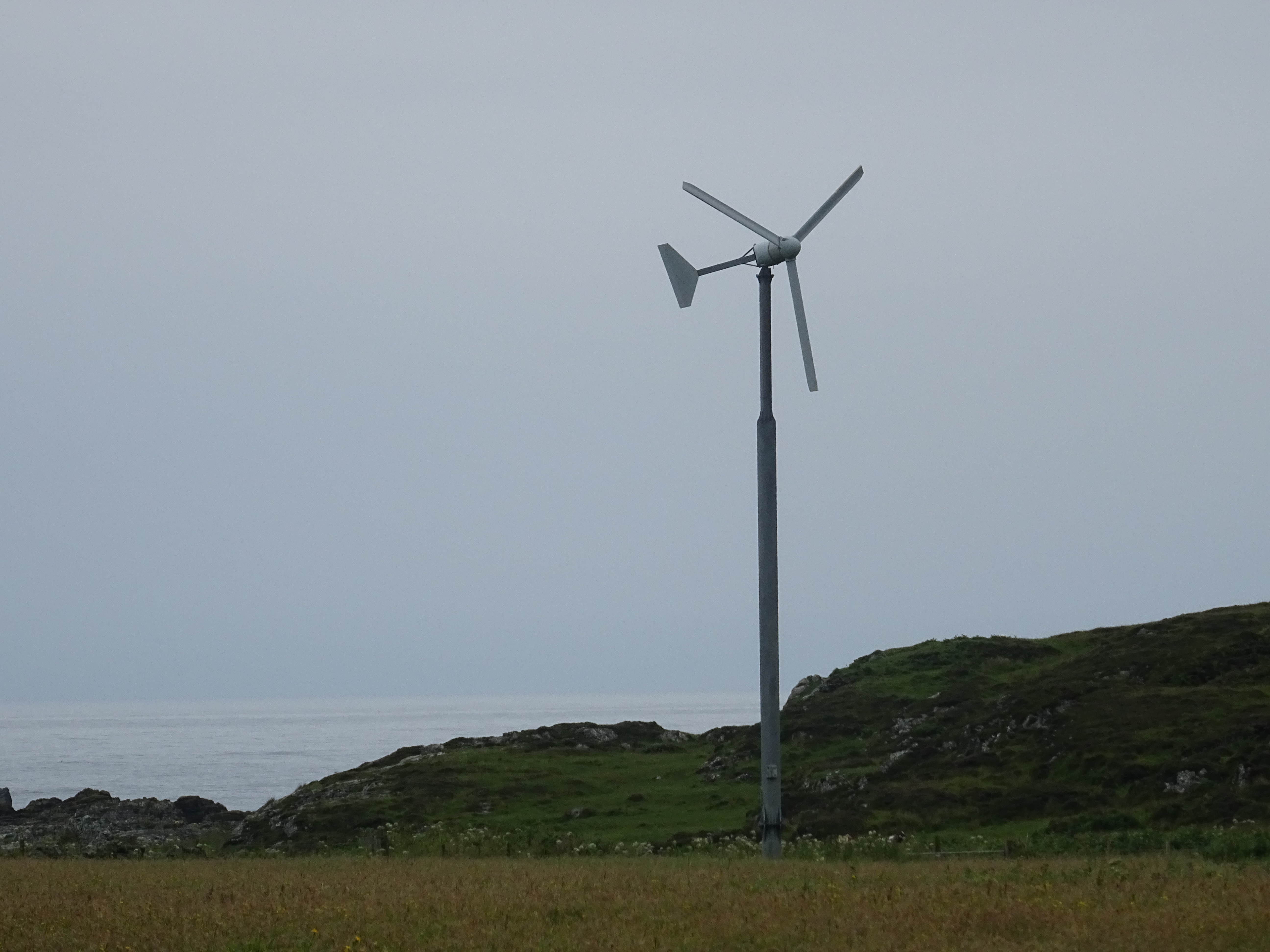
Image: Pete Cannell CC0

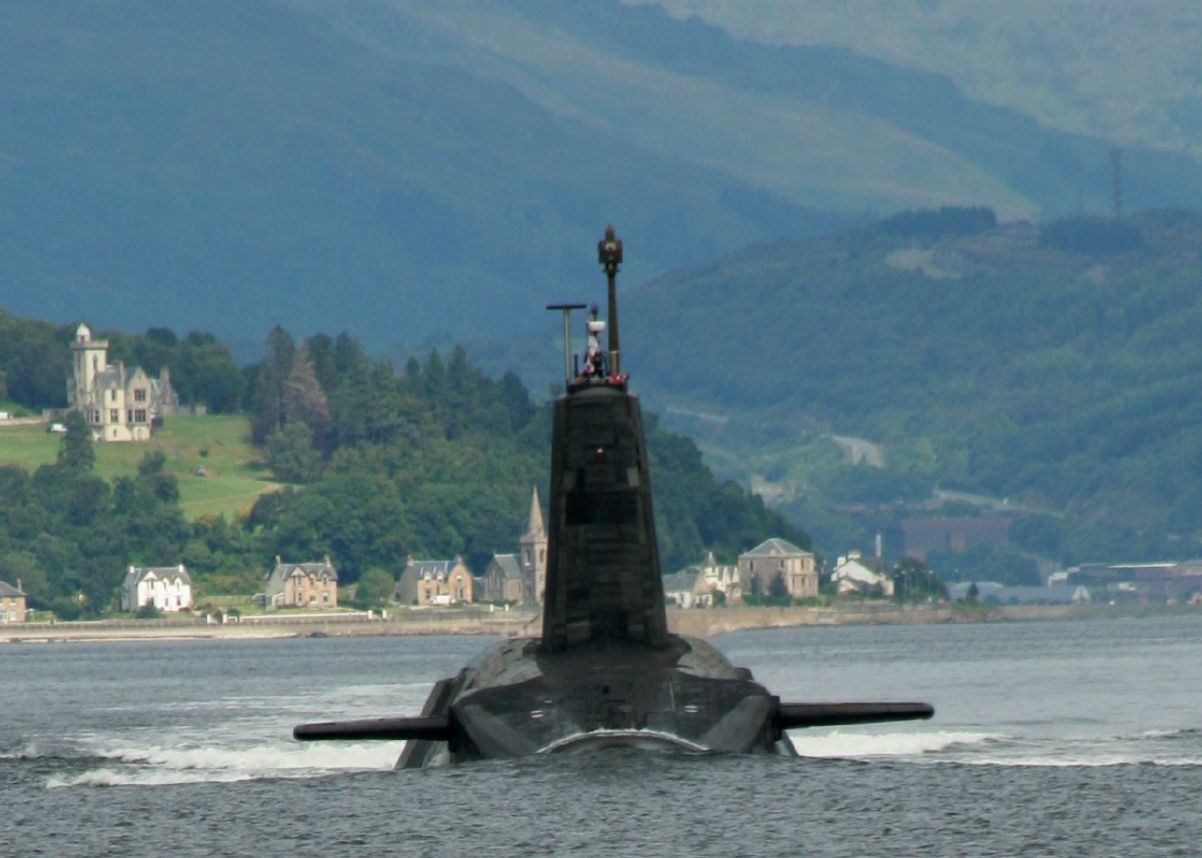
There are of course other economic reasons too.  Levels of investment and state support for the arms trade and for the military are huge.  Our economies are distorted by the privileged position that the major arms companies (along with the big energy corporations) occupy.  These privileges go hand in glove with eye watering levels of corruption and huge levels of corporate lobbying with a revolving door through which politicians and executives continually move and switch roles.  It’s these relationships which actively oppose realistic attempts to take action over climate and as a movement we need to demand that state support and investment ends, lobbying stops and arrangements are put in place for a rapid shift to sustainable and ethical employment for those who work in these industries.   These demands have a particular resonance in Scotland where the Trident nuclear system and arms manufacturing have had a disproportionate impact on our economy.

Trident_boat

Image: Wikimedia Commons

STUC Fringe Meeting

The Scottish Trades Union Congress meets at the Caird Hall in Dundee from 15th – 17th April.  Scot.E3 is contributing to one of the fringe meetings:

Developing Sustainable and Socially Useful Jobs in Today’s Economy 
Wednesday April 17 at 1230pm
Committee Room 2 City Chambers
Pete Roche – research officer  – Nuclear Free Local Authorities
Speaker from Scot.E3
Meeting organised by Scottish CND

wind-energy-488534_1280

Defence diversification and just transition

More from the #justtransitions conference: Andrew Feinstein director of Corruption watch speaking on the arms trade, diversification and just transitions @EdinburghCAAT #scote3