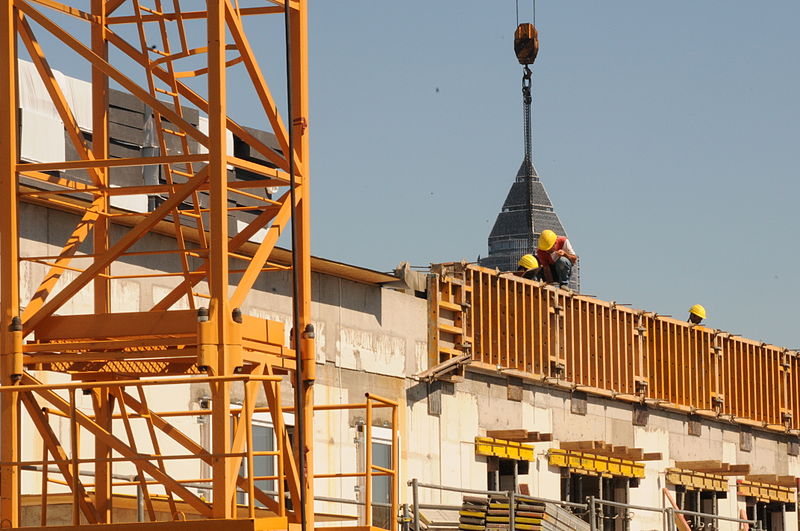
Housing and climate action

One of the workshop streams at the Scot.E3 conference in November was devoted to housing. This report is from Mike Downham who was one of the facilitators of the discussion.  

  1. Housing in Scotland is a disgrace – from the Muirhead tower blocks to new-build. A participant from Hungary, who has been in Glasgow for a year or so and has had extreme difficulties in finding somewhere to live and which is affordable to heat, said that Scotland’s housing compares very badly with Hungary’s, which at least has thick walls. “You’ve got to do something about it”.
  2. Student housing. The Universities are supplying student housing which is unaffordable except for wealthy students, mostly from the Far East, and make it difficult for most students to find less expensive accommodation. There has been a lot of public criticism about students having such high quality housing, while many citizens are homeless. But the reality is that the majority of students have huge difficulties in finding housing they can afford to rent and heat. It’s not unusual for them to end up on someone else’s sofa.
  3. Commodification of housing since 1980 is at the root of the housing crisis in Scotland. Housing policy has been primarily aimed at growing the national economy, instead of housing being recognised as a human right.
  4. What we can do together towards a just transition in Scotland’s Housing:
  • Demand that Councils bring building standards up to passive-house specifications and replace building control jobs lost in the name of austerity, without which new housing can’t be adequately inspected. These changes are perfectly feasible for Councils.
  • Put pressure on the Scottish Government to ensure that the new Scottish Investment Bank will direct enough funding to build the new houses needed (this is urgent – the Scottish Investment Bank Bill is going through parliament now).
  • Put pressure on Pension Funds to invest in housing.
  • Support grass-roots protest as demonstrated by Living Rent’s support for Muirhouse tenants, which started with door-knocking to get all tenants’ views.
  • Suggest to XR that they target some of their direct action on grass-roots projects such as Muirhouse
  • Suggest that grass-roots projects such as Muirhouse deliver their demands to the COP 26 – to both the formal and the alternative meetings.
  • Keep in our sites the eventual objective of a National Housing Company through which communities will choose the type of housing, local facilities and green species they need
  1. Climate is just one part of the wider argument – so the challenge for the Climate Movement is to build links with all other movements concerned with social injustice.
  2. “We need to close this down” – just as we would have no hesitation in doing if there was a proposal to build an asbestos factory at the end of our street. Though this was said in respect of the climate polluters, the fact that it was said in a discussion on Housing, Health and Fuel Poverty suggests that it should be our approach to all forms of social and planetary injustice.

Construction_of_the_passive_house_10_(18696022004)

Image (Construction of the Passive House) CC BY SA 2.0 from Sustainable Sanitation Alliance  


Energy from Waste

On of the issues that came up in discussion at the recent Scot.E3 conference was ‘Energy from Waste’.  There is large-scale investment in this technology taking place across the UK.  We agreed to produce a briefing on the topic.  What follows is the text of the first draft of the briefing.  We are also developing further resources that will be added to the Resources page on this site.  We’d welcome comments on the text and ideas for useful resources that we could link to.

There are a large number of Energy from Waste (EFW) projects planned across the UK.  By the end of 2017 there were nearly 120 EFW proposals at various planning stages. Sixteen of these are in Scotland. In this briefing we take a critical look at Energy from Waste and ask whether it has a place in a strategy for a zero carbon Scotland.

Energy from Waste Projects

At first sight, the term ‘Energy from Waste’ appears to be all things green. It suggests a new and rational way of ‘treating’ the ever-growing mountains of waste that are an inevitable by-product of our throwaway society.  It invites the idea of a ‘green energy’ that has been derived from what would otherwise be a possibly harmful and long-term environmental problem. When the alternatives proposed are either a long-term toxic and smelly and unsightly landfill problem or a health-threatening incineration route, then EFW appears to be a sensible choice.

Behind the EFW hype, which many UK local authorities have accepted, there is a fog of confusion regarding the most optimal waste management solutions; whether they be recycling or minimising the production of waste at source – both options are ruled out by market driven/low cost and value-for-money economics.

Landfill

Since 1945 the volume of disposable waste per household in the UK has multiplied threefold. Over the years, the local authorities have traditionally chosen landfill disposal as the preferred waste ‘treatment’ route.  However, landfill, demands considerable land acreage and depth and entails significant public health risks as well as potentially long-term hazards for the environment. Aside from smell and vermin nuisance, landfill sites- even the best managed ones- constitute over time- a high risk of biological and toxin leaching into surface soils and ground-waters.  Methane from decomposition also adds to greenhouse gas emissions.

For all of these reasons, waste management authorities have either been incentivised away from landfill by grants for recycling- or more often – ‘disincentivised’ in the way of increasingly punitive landfill taxes. First introduced in the 1970’s, landfill taxes have been subsequently reinforced by EU directive-and as alternative waste ‘treatment’ technologies have fallen in capital cost, so landfill taxes have risen.

landfill-879437_960_720

Landfill tax per tonne

2010      £63.00

2018      £88.95

2019-20 £94.15

Tax policies make EFW-type waste treatment strategies appear attractive- particularly because in exchange for a penalty for handling waste, there is an income from generating electricity.

EFW technologies

There are a number of EFW technologies on offer but all share the same objective of converting solid (or in some cases, liquid/sludge) waste into energy for the production of electricity.

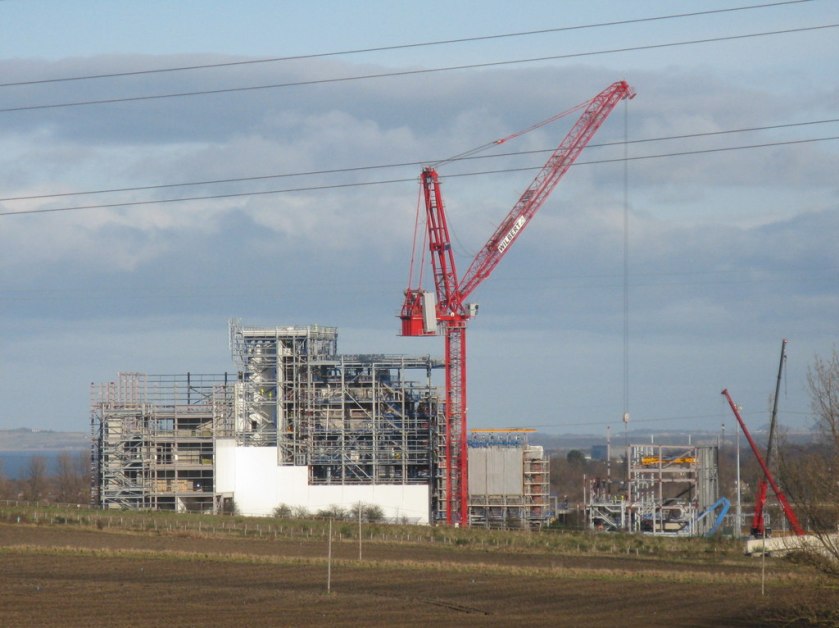
Typically, an EFW plant is based on an incinerator chamber into which is fed solid waste.  The upper walls of the chamber comprise water-filled tubes in which super-heated steam is produced for a steam turbine that in turn produces electricity.

Steam is also captured from the waste feed system. If the plant is fitted with what is called a ‘back-pressure’ steam turbine, then high-pressure hot water can be distributed to local industrial and residential heating networks in what is called a Combined Heat and Power (CHP) system.

However, as such plant is typically fed unsorted, or semi-sorted waste with a low calorific value, the combustion process will be ‘boosted’ with an additional combustion element in the form of natural gas or diesel oil. Less typical EFW technologies with little application to date, are the various gasification processed that involve the digestion of biological waste- usually food or agricultural wastes which are then converted into a ‘bio-gas’ which via a gas turbine is converted into a higher electricity output. In some processes, the waste is heat-treated anaerobically – i.e. in low oxygen conditions- (pyrolysis) to produce a synthetic ‘natural’ gas.

All EFW systems discharge exhaust gases. The principal emission is carbon dioxide but there are also emissions of nitrogen dioxide.  Quenching water can contain uncombusted toxins and  solid wastes in the form of light ash or clinker have to be disposed of safely.
5668478_c75f25e1_1024x1024

Image M J Richardson, CC BY-SA 2.0 https://www.geograph.org.uk/photo/5668478

Renewable energy?

EFW systems add greenhouse gases to the atmosphere through the process itself and also through large-scale transport of waste to the incinerators (mostly by road).  They are a response to the perceived problem of landfill rather than tackling systems that produce unrecyclable waste.  To operate efficiently EFW plants require a continuing supply of waste at or around current levels.  Scotland produces around 1.6 million tonnes of combustible municipal waste per year, if current plans come to fruition this means and awful lot of capacity chasing a very finite amount of waste. Local authorities could be tied in to contracts to supply waste for the next thirty or forty years.   This could pose a real threat to the commitment to recycle plastics and other recoverable materials out of the waste treatment stream. The Scottish Environmental Protection Agency notes that EFW is not a renewable energy source but claims that because it can be substituted for fossil fuel electricity production it forms an important part of the Scottish Strategy for sustainable energy!
DSC03194

Alternative Strategy needed

Energy from Waste is not green and not sustainable.  It undermines attempts to reuse and recycle and it has a significant carbon footprint through transport of waste to centralised sites and through the greenhouse emissions from the burning of waste.

Investment in Energy from waste should be reallocated to genuinely sustainable technologies aimed at cutting greenhouse gas emissions, which also provide opportunities for jobs in construction and better opportunities for long-term employment.

Further reading

For further information on Energy from Waste go to www.scote3.wordpress.com and click on the Resources tab in the menu.  This briefing is one in a series produced by Scot.E3.

How can public ownership in Offshore Wind deliver good jobs for the climate transition?

Thanks to Anna Markova from Transition Economics for permission to share this video which she presented at the STUC Energy conference – ‘Building Worker Power in the context of the climate crisis’ on 20th November.  The video looks specifically at offshore wind but raises issues around public ownership and is well worth watching in full.


Campaigning for climate jobs

The first session after the lunch break at Saturday’s Scot.E3 conference focuses in on the campaign for climate jobs. Find out more about the conference here.  Book for the conference on Eventbrite 

This quote from the Million Climate Jobs Pamphlet explains the critical importance of these jobs to the transition to a zero carbon economy.

’Climate Jobs’ are not the same as ‘green jobs’. Some green jobs help the climate, but ‘green jobs’ can mean anything – park rangers, bird wardens, pollution control, or refuse workers.   All these jobs are necessary, but they do not stop climate change.

Climate Jobs are jobs that lead directly to cuts in emissions of greenhouse gases, and so slow down climate change. For instance, workers who build wind farms replace power stations that burn coal or oil. Workers who insulate buildings reduce the oil and gas we burn. Bus drivers reduce the amount of oil we burn in cars.

You can read more about climate jobs from the pamphlet online on the Campaign Against Climate Change website 

Speakers in the session are Clara Paillard, an activist in the PCS Union and the Campaign Against Climate Change, Davie Brockett from Unite Rank and File and Eurig Scandrett on behalf of UCU Scotland.


Conference creche deadline

In order to ensure that we have the right level of support on the day of the ScotE3 conference we are not able to take creche bookings after 5pm on Wednesday 13th.  If you want to book a creche place please email triple.e.scot@gmail.com before then.

conference flyerv3

From arms to renewables

At the 2018 Scot.E3 conference we were fortunate to have a contribution from Andrew Feinstein from Corruption Watch and author of ‘The Shadow World – Inside the Global Arms Trade’.  Andrew made the case that ending the arms economy should be an integral part of a broader strategy of tackling the climate crisis.  In the course of the year this topic has been raised again at meetings that we’ve held or participated in.  Some people have argued that whatever your opinion on the arms trade – taking arms divestment on board at the same time as taking measures to decarbonize is a distraction.  Others have supported Andrew’s view and in the course of this debate the outline of a more developed and strategic view has emerged.  We hope that this can be developed further in the course of the 2019 conference.

This autumn a number of peace organisations have joined up with Extinction Rebellion to organise around XR Peace.  The London October rebellion included a number of actions highlighting the links between war and the environment.  XR Peace has focused on the massive carbon footprint of the military, the environmental devastation cause by war and social and economic upheavals as a result of climate change as a cause of conflict.

In the discussions that we have been involved in throughout the year other reasons for including arms and ‘defence’ divestment in our strategy have emerged.  The first is very pragmatic.  There is a pressing need to switch from energy systems that produce green house gases (carbon emissions) to zero carbon technologies.  These technologies exist and it perfectly possible to implement them.  But to make the transition at the speed that is required requires the skills and labour of a large number of engineers, electricians and other specialists.  Most of these jobs will have to be done by people already in the workforce.  Some of them work in oil and gas and as these carbon-based sources of energy are phased out they can be redeployed in the new renewable industries.  But there are not enough people in oil and gas – we also need the skills of those currently employed in the military industrial complex.  Shifting from arms to renewables is morally right but it’s also an economic imperative if we want to prevent catastrophic climate change.

DSC03194

Image: Pete Cannell CC0

There are of course other economic reasons too.  Levels of investment and state support for the arms trade and for the military are huge.  Our economies are distorted by the privileged position that the major arms companies (along with the big energy corporations) occupy.  These privileges go hand in glove with eye watering levels of corruption and huge levels of corporate lobbying with a revolving door through which politicians and executives continually move and switch roles.  It’s these relationships which actively oppose realistic attempts to take action over climate and as a movement we need to demand that state support and investment ends, lobbying stops and arrangements are put in place for a rapid shift to sustainable and ethical employment for those who work in these industries.   These demands have a particular resonance in Scotland where the Trident nuclear system and arms manufacturing have had a disproportionate impact on our economy.

Trident_boat

Image: Wikimedia Commons

Building the movement: challenges and opportunities

In the second session of our conference on Saturday 16th November Simon Pirani and Mary Church will take a look at the challenges we face locally and internationally.   This, together with session one on American Climate Rebels will form the backdrop to discussion during the rest of the day.

At last year’s conference we worked together to draft a climate jobs manifesto. In the twelve months since November 2018 there have been hugely significant developments driven by the Youth Climate Strikers and the growth of XR. However, we still have a long way to go. This year we hope to take the discussion forward by looking at the politics and practice of building a mass social movement that has climate justice at its heart.

Find out more about the 2019 conference here.  Book for the conference on Eventbrite and email triple.e.scot@gmail.com if you want to book one or more crèche places.

48765693228_bc6737968b_c