Blog

More on Hunterston

On 10 January we wrote a short blog post on the dire state of the Hunterston B nuclear reactors and reported on a meeting where environmental radiologist Ian Fairlie spoke about the risk this poses to the population of central Scotland and beyond.

Ian Fairlie was back in Edinburgh on February 5th to provide an update on developments. Along with a colleague he had presented a technical report to the Office for Nuclear Regulation (ONR) – the regulatory body that has to give EDF permission to resume operations at Hunterston. The ONR agreed with the substance of his report. Apparently the inspection of the reactor core suggests that a small number of the graphite blocks have double cracks but more than expected have multiple cracks.   It also transpires that Hunterston in fact has only one safety back up system rather than two – as became the norm in the later Advanced Gas Cooled Reactors (AGRs). Overall the ONR’s view of the current state of the reactors is even bleaker than Ian Fairlie had suggested in January. And in the face of this EDF are lobbying for reducing the accepted risk factor for the reactors by a factor of a 1000.

There is almost no chance that the reactors will be restarted in March and April as EDF have stated. This gives more time to continue to raise awareness of the safety threat they pose and to get the Scottish Government onside in a campaign to ensure the reactors are never restarted. There is no immediate threat to jobs because it takes some years for the reactors to get to a state where decommissioning can begin. This is a test case for Just Transition, however, and we need to campaign that over time the workforce is supported to move into sustainable jobs.

As we mentioned in January EDF are hugely in debt. They are desperate to restart production – not least because they have problems with their other AGRs. So they will fight the closure of Hunterston. Adding to their problems though is that, unreported and unmarked in the mainstream media, the Tories at Westminster are in the midst of a U-turn on nuclear. Although for the moment they cling on to idea that Hinkley C can still be built.

To find out more about why Hunterston is so dangerous read our latest Briefing 9.

radioactive-39665_1280


February organising meetings

Wednesday 20 February, 7pm at the Scottish CND office 77 Southpark Avenue, Glasgow, G12 8LJ

NB the venue is the SCND office – if you are walking up Southpark road from Great Western Road it’s on the left hand side tucked back from the road by the side of an ex(?) church building – you can see the peace symbol on the outside.

Thursday 21 January, 7pm at the Edinburgh Peace and Justice Centre, 5 Upper Bow EH1 2JN
NB the Peace and Justice Centre is just down from Johnston Terrace or from the other direction just round the corner from the Edinburgh Quaker Meeting House
Come along and get involved in thinking through and planning the next steps in the campaign. You can see the notes of the last meetings on the blog. We’ll be looking at fuel poverty, climate jobs, new briefings and the content for a pamphlet. 

WWF report

A new report on ending Scotland’s contribution to climate change, written by vivideconomics and commissioned by WWF Scotland was published on January 23rd.   ‘A Climate of Possibility: Harnessing Scotland’s natural resources to end our contribution to climate change’ argues that:

Scotland is a country laden with natural advantages for net zero. From our abundant renewable energy resource, to our large land area suitable for carbon sinks such as forests and restored peatlands, to our history of innovation and skilled workforce, this report shows we can hit net zero before other UK nations and be among the global leaders on this issue. 

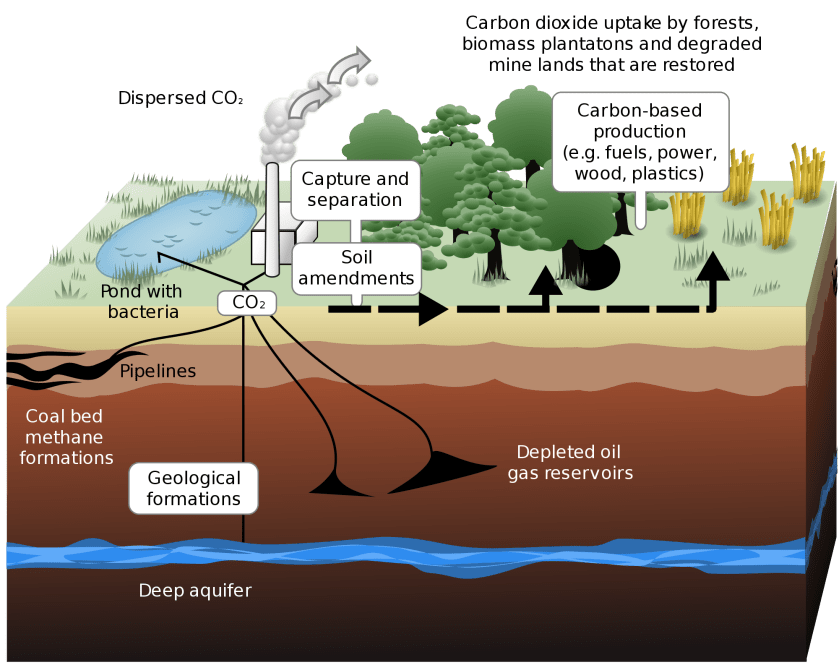
There’s much to be commended in the introduction to the report. The authors are absolutely right that we have multiple options. However, as the report develops, one option, Greenhouse Gas Reduction through Carbon Capture and Storage (CCS), is given prominence. In my view this is unhelpful. CCS is an unproven technology that would be capital intensive (making the involvement of corporations inevitable) and take longer than we’ve got. A specialist paper on CCS notes that

Although technologies regarding the capture and storage of CO2 exist, the overall cost of using current CCS procedures is still high and must be substantially reduced before it can be widely deployed. There are multiple hurdles to CCS deployment that need to be addressed in the coming years, including the absence of a clear business case for investment in CCS, and the absence of robust economic incentives to support the additional high capital and operating costs associated with CCS.

The fundamental point is (see ScotE3 Briefing 3: Time for action ) that the world desperately needs sources of energy which are clean, secure and affordable, and which can be readily put under democratic control. Fossil fuels have none of those characteristics. To continue to extract, burn and rely on them, and depend on greenhouse gas removal to address climate change, would mean continuing with insecurity of supply, oil imperialism and wars (Venezuela and Iran examples currently in the news), and high energy prices in order to meet the profit margin requirements of the big corporations who control their extraction and distribution. A focus on CCS plays into the hands of the corporations.

Mike Downham

NB We’d welcome further contributions on this topic.

image from commons.wikimedia.org 

2000px-carbon_sequestration-2009-10-07.svg

Notes from the January organising meetings

We met on 16th January in Glasgow and 17th January in Edinburgh.  Here’s the composite notes of the discussion at the two meetings.  If you’d like to get involved in  any of the proposed activity do email on triple.e.scot@gmail.com

  1. Outputs from the Just Transitions Conference in Edinburgh on 17th November 2018:
  • Videos of the plenary contributions – see scot.e3.wordpress.com
  • A draft manifesto for a Just Transition in Scotland. A first version, a synthesis of the discussion on 17th November, has been circulated. It is intended as a basis for further development. All suggestions welcome.
  • A pamphlet/online resource focused on climate jobs and just transition. This has yet to be started on, but we have much of the text already in the Briefings (there are now nine of these). It was agreed that a small team should be gathered for this task. PC agreed to lead on this ER and CM agreed to be critical readers and EC agreed to transcribe the text of Andrew Feinstein’s talk at the conference.
  1. We now have a simple constitution and a bank account (see details on website home page). For the latter we needed to submit a draft business plan. This was tabled and could be further developed. It was agreed that the plan should include explicit working aims, consistent with the implicit approach we’ve taken so far. These might look something like:

Scot.E3:

  • Aims to contribute to a mass social movement that will make a transition towards a zero-carbon economy possible – in doing so it works with environmental, trade union and community groups
  • Argues for transition policies that ensure social justice (Just Transition)
  • Campaigns for 100,000 Climate Jobs in Scotland
  • Focuses on education, agitation and organisation at a rank and file level to ensure that policy ideas are implemented with the urgency that is required
  • Provides a platform for sharing information, ideas and discussion
  1. The Just Transitions Conference Accounts were tabled, showing a balance of £0.40
  2. Actions to be addressed now:
  • Sharing the Draft Manifesto widely, identifying organisations to send it to, and encouraging them to discuss, debate, modify the draft and make it their own. A working group needs to be established for this. We already have three invitations to speak – from the Muslim Women’s Association of Edinburgh, the Fife Trades Council Women’s Conference in March, and Bella Caledonia
  • Set up a small team to write the pamphlet/online resource (see item 1 above)
  • Gather fund-raising ideas
  • Organise to attend the STUC conference in Dundee in April
  • Gather ideas for new briefings and other kinds of resources; the Economics of Just Transition was suggested as a subject of a briefing
  • Raise funds to upgrade the website so that it can support debate and discussion
  • Agreed to prioritise contributing to the debate and discussion around the Fuel Poverty bill that will be going through the Scottish Parliament – argue that it should include more urgent deadlines and should be integral to a developing strategy for Just Transition
  • Agreed to write a response to the criticism of just transition by GMB Scotland and to ask Common Space if they would publish it
  • Begin to think about another conference in 2019 – there was a suggestion that the theme might be alternative economic plans to support transition
  1. Dates of next meetings: Wednesday 20th February at 7.00pm in Glasgow, at Scottish CND office and Thursday 21st February at 7.00pm in Edinburgh, at the Peace and Justice Centre

Briefing #8: Just Transition

The latest Scot.E3 briefing looks at what we mean by Just Transition and how a focus on climate jobs, workers rights and social justice can be core the the transition to a zero carbon economy.  Please download, use in your workplace and community group.  These briefings are produced under an open license so do feel free to adapt – although we’d appreciate if you include attribution to the existing material and if you can send a copy for further sharing/development.

untitled2

The case for closing Hunterston

In June 2018 we published a briefing on the perilous state of the nuclear reactors at Hunterston and Torness.   The reactors at Hunterston have been offline since then while inspection of the graphite cylinders in the reactor core takes place. With around 28% of the core inspected the Ferret has now revealed that 370 major cracks have been found in the graphite core of reactor three and 200 cracks in the core of reactor four. To put this in context there are 3000 graphite blocks in each reactor.

EDF Energy who run the reactors intend to apply for permission to reopen production in March or April this year. In the view of environmental radiologist Ian Fairlie, who spoke at the Scottish Parliament and at meetings in Edinburgh and Glasgow this week such a move is fraught with risk. The level of damage to the reactor cores is such that they should be permanently shut down.

At the Edinburgh talk Ian noted that Hunterston is now probably the oldest operating nuclear reactor in the world. It first generated electricity in 1976 and was designed to run for 30 years. Currently it’s scheduled for closure in 2023. EDF have previously applied for five-year extensions and there is every likelihood they plan to do so again.

The cylindrical graphite blocks are critical to the stability and safety of the reactors. The cracks form in pairs, running the full length of the cylinders and splitting them apart. Under normal conditions the others around them hold the cracked blocks in place. However, a sudden outage, steam surge or earth tremor could result in a serious accident and a large release of radioactive gas. If other safety systems were to fail – and they are untested – there is a possibility of a catastrophic accident on the scale of Chernobyl.   The direction of the prevailing wind would take the radioactive plume across Glasgow, Edinburgh and most of the central belt.

plume

EDF are under political and economic pressure to keep the reactors operating. The political pressure comes from Westminster and a strong emphasis on nuclear. The economic pressure is arguably more acute. EDF are in a financial crisis, €37 billion in debt and needing more than €200 billion to bankroll commitments in construction, refurbishment and decommissioning. Hunterston and Torness, when operational, are a significant source of income to the firm.

The continued operation of these aging power stations is a real threat to the lives and well being of the Scottish population. Permanent closure and a focus on renewables is the safe and sustainable alternative.

Fuel Poverty Briefing

The latest briefing looks at Fuel Poverty in Scotland, the Scottish Government’s Draft Fuel Poverty Bill and the importance of Climate Jobs.  Please share and download to print paper copies for distribution.

bulletin image

Image shows page 1 of the briefing

Climate jobs and a mass movement

It’s great that the last few days have seen an upsurge in protest against inaction on climate change.  In our view climate jobs are vital to a transition to a sustainable economy.  ‘Climate Jobs and a mass movement’ is intended as a contribution to the debate and can be downloaded to use as a flyer.

Untitled