
Paul Atkin replies to an interview with the GMB union’s General Secretary Gary Smith in the Spectator.
In agreeing to be interviewed by the Spectator under the title “the folly of Net Zero” GMB General Secretary Gary Smith lets his members down; not least because remarks like these from a leading trade unionist help give Rishi Sunak encouragement to accelerate his retreat from the government’s already inadequate climate targets.
The phrase “the folly of Net Zero” makes as much sense as “the folly of getting into the lifeboats when the ship is sinking”.
Difficulties in making a transition to sustainability does not mean that making it isn’t essential, and the faster we move the less damage is done. We can see that damage all around us even now.
Gary doesn’t seem to get this, any more than Rishi Sunak does, and he latches on to some of the same lines as the PM does, albeit with a more pungent turn of phrase. To go through these point by point, quotes are either directly from Gary Smith or the Spectator.
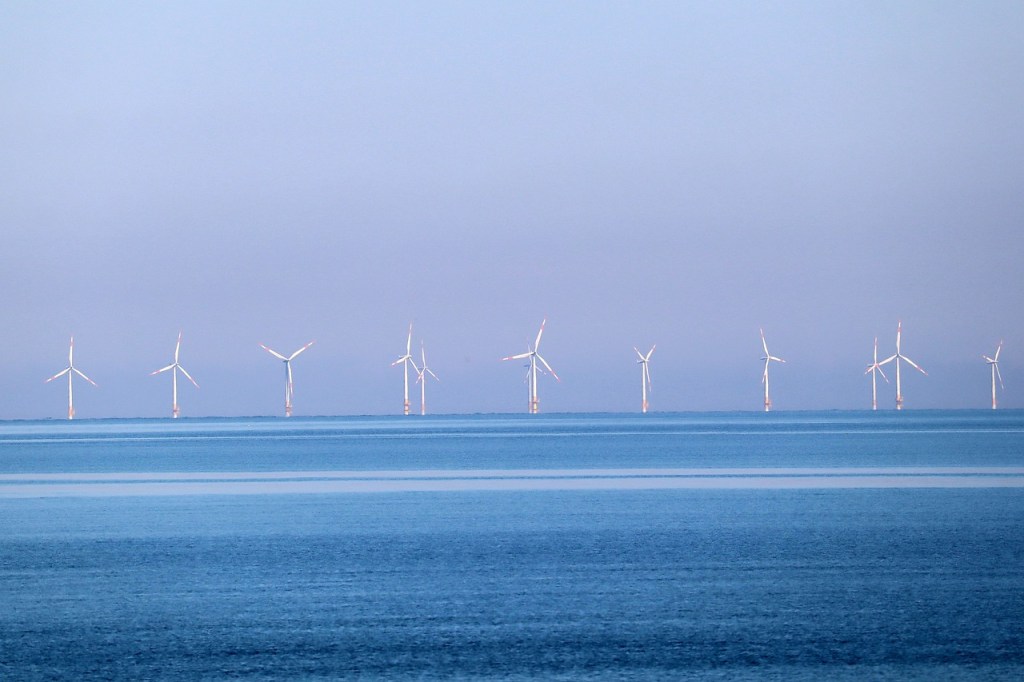
Auctions for offshore wind power
“Now there will be no bids for the next round of licences because the wind industry can’t afford to put up the projects”
The article starts with an odd bit of misdirection, that echoes the entire right-wing press, on the results of the latest round Contracts for Difference auction for new electricity generation. This focusses on the absence of offshore wind bids at the strike price of £44 per Megawatt hour. The way the Spectator puts it is “The government and the renewables lobby hoped that a successful auction would show that wind power could compete with fossil fuels”. The fact is that it already does. There were no bids from fossil fuel sources at this price either; and the successful bids were all from renewable sources.
- 24 onshore wind projects
- 1 Remote Island wind project
- 56 Solar projects
- 3 Geothermal projects
- 11 Tidal stream projects.
These are slated to produce 3.7GW of power. So, renewables 95: Fossil Fuels 0. It’s quite clear which source is heading for the relegation zone. And the International Energy Agency has just reported that electricity generation from fossil fuel sources declined by 7.4% in the whole OECD in the year to September, so this is happening in every developed country.
Starmer’s 2030 net-zero carbon electricity deadline
“Starmer’s 2030 deadline is impossible, I don’t even worry about it”
With 5GW of potential offshore wind projects not coming online, due to rising raw material and interest rate charges increasing costs beyond the auction price, you have to wonder if the government set this up to fail. With the current wholesale electricity price set at over £80 per Kilowatt hour, there was a lot of room to set a price (perhaps around £60 per KWH as suggested by the industry) that could have brought this on stream, and still cut the cost of electricity for customers. This will have a knock-on effect on bills and supply chain jobs – which have been projected on the basis of a tripling of UK offshore wind by 2030 – and choke them off unless the momentum is restored at the next auction. Anyone concerned about jobs in the supply chain will be campaigning between now and then to make sure this is the case.
The stop-go market driven model embodied in the CfD system makes a consistent plan for energy transition vulnerable and chaotic. To take this process by the scruff of the neck and drive it through at the scale and pace that we need requires, as UNITE successfully argued at the TUC, public ownership of energy.
Undersea cables
“The National Grid can’t get undersea cables, There are 4 suppliers of cables in the globe, they’re all booked out to 2030”
If you are concerned with cutting carbon emissions and growing jobs, this is an argument for campaigning for more investment in cable laying and the jobs that go with them, not accepting current limited capacity as an insuperable obstacle. A very good use for some of that £28 billion Labour is pledged to ramp up to.
North Sea drilling
“There will be more drilling in the North Sea”
Senior figures in the unions can’t afford to ignore the scientific reports on this matter. They are not ambiguous. NO new oil and gas exploration is compatible with Net Zero. 60% of existing reserves have to be kept in the ground to avoid catastrophic consequences. Weaning ourselves off fossil fuels requires unions to fight for a just transition as rapidly as possible for their members in the oil and gas sector. Spinning a delusion that everything can carry on as it is, will speed us to a point at which sustaining jobs will be the least of our problems.
Renewables lobby
“The renewables lobby is very wealthy and powerful. I think people on the left, for good intentions, have got hoodwinked into a lot of this”
This is a breathtaking inversion of reality. How “wealthy and powerful” is the “renewables lobby” compared to the fossil fuel companies? Octopus compared to Shell? Vesta compared to BP, or Aramco, or Exxon? According to the IMF, last year total fossil fuel subsidies were $7 Trillion. 7.1% of global GDP. That’s power. That’s wealth. We should note that this is $3 Trillion more than the total that would be needed globally to get us on track for sustainable development. Shell is now casually projecting that Net Zero will only be possible sometime in the 22nd century if they have their way, with no accounting at all for the social, economic and political consequences of that. Gary sees these companies as “people who we can work with” without reflecting that, since they have known about climate change for fifty years and tried to cover it up, with no “good intentions” at all, that hoodwinking is a large part of what they do.
UK net zero targets
“We’ve cut carbon emissions by decimating working class communities
Who does he mean by “we”? A better word would be “they”. The succession of Tory governments, in all their various guises, since 2010 have been bad for climate breakdown and the working class. They have put business imperatives (profit) above sustainability, and dumped costs of transition downwards onto those least able to afford it. Two examples. Insulation and solar energy installation fell off a cliff when the Tories “cut the green crap”, leading to thousands of lost jobs and higher bills as a result.
Green levies
“Green levies are a modern-day poll tax”
It’s also the case that, because it was the Tories, the schemes they had were skewed to subsiding the sort of consumers who could afford the upfront investment; while dumping the costs on everyone else’s bills. Hence Gary’s complaint that this was ‘disproportionately paid for by the poorest’. Quite so, but the answer to that is not to scrap insulation and solar panel installation altogether, but to approach it as a social mission to upgrade the “leaky, freezing council house(s)” that need it most first, and do it through Direct Labour run by Local Authorities; thereby creating jobs, cutting fuel poverty and improving health, as well as cutting energy demand and therefore emissions. Win, win, win.
Green Jobs
“It’s usually a man in a rowing boat sweeping up the dead birds”
Given that there were 19,600 jobs directly in offshore wind in 2022, and another 11,500 in the supply chain, that’s quite a lot of rowing boats. 30% of these are in Scotland. 15% in Yorkshire and Humber. If considering bird fatalities, Gary might note that in this study from the US, “for every one bird killed by a wind turbine, nuclear and fossil fuel powered plants killed 2,118 “. If we go for nuclear and stick with fossil fuels, we’re going to need a bigger boat.
According to Prof Sir Jim McDonald, president of the Royal Academy of Engineering, 30,000 new skilled workers would be required to retrofit buildings, while 60,000 technicians would have to be on hand to go one step further and install energy efficient heating systems in homes, offices and factories, with intensive training required. This is an extremely conservative estimate given that it can take four skilled workers six months to do a thorough retrofit on a house. In their latest Climate Jobs Report the Campaign Against Climate Change Trade Union Group argues that two million jobs will be required to deal with all 27 million homes and public buildings that need retrofitting if it were to be addressed seriously with the level of investment that’s needed.
That’s an awful lot of new jobs. Were the GMB to campaign for this, positively and proactively, some of these new workers might join.
Nuclear energy
“Smith is broadly positive about the future of green energy and sees Hinckley Point as a success story”
The argument that new nuclear is the core of future “green energy” is not consistent with any concern for impact on energy bills. The strike price for electricity generated by Hinckley Point is £93.50 per KWh. More than double the price at the last CFD auction and a third more than Offshore wind companies were pitching. This will go onto electricity bills and hit the poorest hardest. Small Modular Reactors are projected to be even more costly. So, whatever the green merits or otherwise of nuclear, it is not compatible with the concern for costs to customers that is foregrounded in his argument against “green levies”.
Hydrogen

Gary also argues for hydrogen, in general terms in this article. Elsewhere the GMB has pushed hard for hydrogen to be used as a mass replacement for natural gas for domestic cooking and heating. This is a complete non-starter on grounds of cost, emissions and safety. Unless the hydrogen is produced by renewable energy, the carbon emissions produced in making it are greater than if you just use natural gas in the first place. To produce sufficient hydrogen for mass domestic use using renewable energy would need far more wind farms than Gary is prepared to contemplate as a realistic possibility. Hydrogen has a role in some hard to decarbonise industrial sectors, so any green hydrogen we produce should be kept for that. It will be an expensive and precious resource that we should use accordingly. You have to add to that the concerns about how flammable the stuff is in a domestic context. As hydrogen is much lighter and more flammable than natural gas, the possibility of leaks and fires is much greater, so the existing infrastructure would need significant upgrading. A recent government report concluded that hydrogen in the home would be four times more dangerous than natural gas. A job creation scheme for the Fire Brigade perhaps, but probably one they’d rather not have. That’s why people selected to trial it as a cooking and heating tool in Ellesmere Port rebelled against the prospect of a domestic Hindenburg disaster* in their kitchen, leading to the pilot project having to be scrapped. Many gas fitters are less than happy at the prospect of working with hydrogen for domestic heating or cooking for the same reason.
China and supply chains
“We’ve become increasingly dependent on China because we can’t secure our energy future”
Gary’s position on trade and supply chains is contradictory. The GMB has argued for a “Great British Supply Chain”, with an almost autarkic vision of everything from widgets to jackets to turbines being built here, and for the CFD auctions to be stopped until one is established. At the same time, he quite rightly says he is “not a protectionist”, because workers lose out. But also, that the UK can’t do what the US is doing with the Inflation Reduction Act because it does not have a major reserve currency; which does not quite add up. He objects to the Tory approach for its “ideological bent” to neo liberal globalisation and buying the goods from the cheapest source, but also objects to imports from China as a “non-market economy” that “distorts the world economy”.
Gary seems to accept that China’s “non market economy” is more efficient at producing the necessary goods than the UK neo liberal economy is. In the case of energy, this is probably because they are investing more than twice as much in renewable energy generation than the EU and USA combined, and the UK lags behind both of these. Whether you agree with China’s definition of itself as “Socialist with Chinese characteristics”, or argue that it is a form of “state capitalism”, there’s no doubt that their state directed investment and coordination of state companies, academia and the private sector is beginning to produce the necessary goods at the necessary speed and scale. Just as well, because getting their dependence on coal down fast is crucial for all of us and, again according to the International Energy Agency, both possible and happening.
And that brings us to the paradox of Gary’s position. To develop a comparable supply chain here would require investment on that scale. But he claims that investment even on the smaller scale being carried out in the US is beyond the UK’s capacity. To deploy the £28 billion that Labour projects that it will ramp up to (which will be comparable to the US and EU, so therefore about half the Chinese level) would either require direct state investment through newly created nationalised industries, or you have to bribe a multinational, which at the moment is “free money” that comes with no government stake or even a say for the workforce or affected communities. Tata is doing rather well out of this at the moment, with half a billion for an electric arc steel furnace in Port Talbot and another 600 million for their EV plant in Swindon. Gary’s complaint that the redundancies that come with this deal at Port Talbot shows that Just Transition is “fantasy land” undercuts the position that his members would expect him to take alongside the other affected unions – for a say in the transition, for investment in a wider range of viable technologies to sustain volume steel making and the jobs that go with it. If this is a “fantasy” then so is any prospect of defending those jobs.
The reality is that “British” manufacturing is, for the most part, owned by multinationals and might be better understood as “production in Britain”. It also shows that companies like these and the Fossil Fuel majors in the North Sea about whom Gary argues “we’ve got to stop seeing them as the enemy and we’ve got to start seeing them as people who we can work with”, do not return the favour, and shut the unions out whenever they can.
More positively, it should be noted that high quality locally produced goods are not solely dependent on the national market and can also be exported, and companies based here, whoever owns them, do that too. In 2017, according to the Renewables UK Export Nation Report this included “an extraordinarily wide variety of goods and services, including supplying, installing and maintaining onshore wind turbines and components, designing gearboxes, manufacturing offshore wind turbine blades and steelwork, supplying and laying underwater power cables, installing, inspecting and maintaining offshore wind farms, providing helicopters, crew and vessels, developing wave and tidal energy projects and providing components for the marine energy industry, as well as designing software, conducting geological surveys, monitoring wildlife, and providing financial and legal services”. With properly targeted and coordinated R&D producing patents as part of a proper industrial strategy, there is a lot of room for growth in all of this, which matters for the sector because most of the growth in it will be “in Asia”.
“Failing to prepare is preparing to fail.” Benjamin Franklin
Transition and jobs growth will only happen if there is investment at scale and speed. Seeking to “moderate” Labour’s policy so that the investment doesn’t happen, means there will be no growth in jobs either. Without plans, and without union engagement in making them, we will stagnate at best. That is what we should be concentrating on now, so that mobilising people for transitions in their communities and workplaces that will cut their bills, boost jobs and cut our carbon emissions fast becomes part of the election campaign to drive the Tories out of office and cement Labour in government into actions that drive that forward.
*I was once told at a SERA meeting by a representative of the Hydrogen industry that the reason the Hindenburg burned so fiercely was not because of the highly flammable gas that it was filled with, but because of the lacquer that was painted on the outside of the dirigible. He did this with a straight face.
By Paul Atkin

 Employment, Energy and Environment