
Review by SIMON PIRANI of Crude Capitalism: oil, corporate power and the making of the world market by Adam Hanieh (Verso 2024)
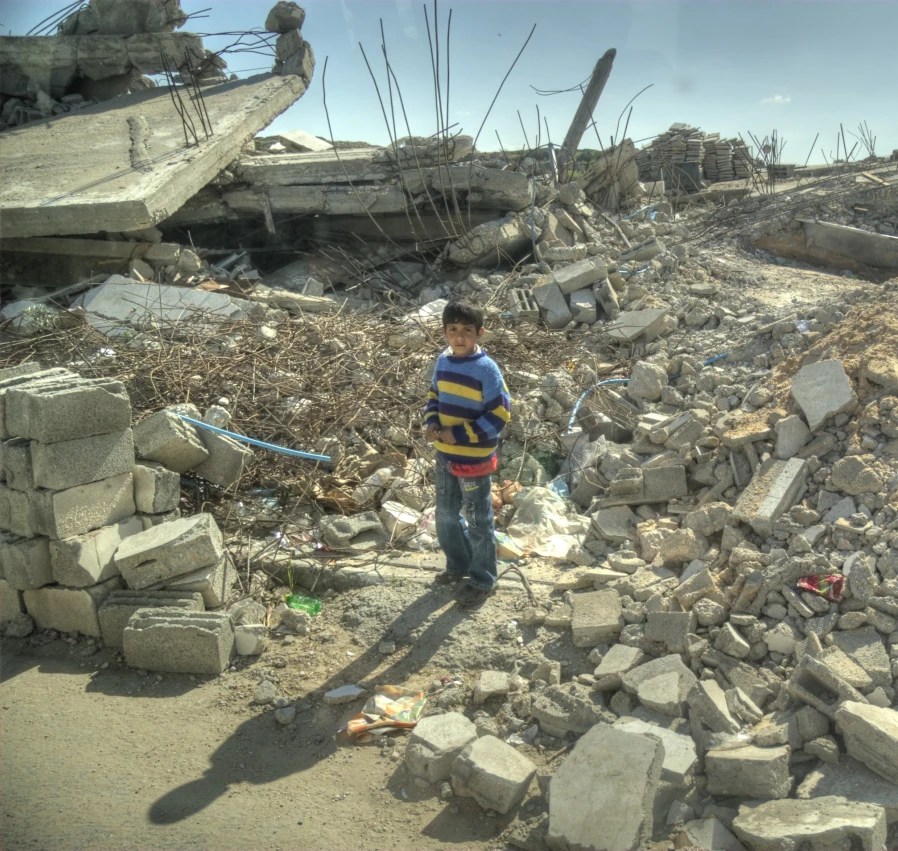
Witnessing genocide can be paralysing. The horror of Israel’s onslaught on the civilian population of Gaza seeps in to the spaces in our heads, interrupting and disrupting attempts to think.
My memory keeps connecting Gaza to the Vietnam war, news about which filtered through to me as a young teenager. My sheltered world was shattered by the cruelty with which innocent people were slaughtered and tortured, on the orders of governments I had vaguely assumed should protect people. I see teenagers going through analogous thought processes now.
This post was originally published on the People and Nature blog.
How can it be that, half a century on, the grotesque “civilisation” that stalked Vietnamese villages has evolved, to produce the monstrous Netanyahu regime? What does this tell us about the many-headed hydra we are fighting, and humanity’s attempts to resist it?
Adam Hanieh’s book Crude Capitalism dissects one of the hydra’s heads – oil, and the corporations and states that use it to reinforce their wealth and power – and offers us a view on the part it plays in the whole organism. Reading it helped me to think of the horror of Gaza not as an aberration, but as a logical outcome of capital’s dominance in the twenty-first century.
Crude Capitalism tackles its big, difficult themes with precision and attention to detail. It is beautifully presented and organised.
The first part of the story Hanieh tells, of oil’s initial growth, plays out in the early twentieth century, in the US, and to a lesser extent in Iran, Azerbaijan and in Latin America. In the second part, from the mid twentieth century onwards, Middle Eastern oil resources and the battles for control of them loom large. And this is part of the background to the deluge of war crimes now being committed against Palestinians.
The connections are not direct. Regimes centred on vicious ethnic cleansing, like Netanyahu’s, are produced by capitalism; capitalism thrives on oil. But there are multiple mediations. Hanieh’s approach to these is an antidote to the simplifications that all too often circulate in radical political circles.
Physical control over oil production was crucial in the early twentieth century, but that has long ceased to be the case, Hanieh argues.
In the 1960s and 70s, against the background of powerful anti-colonialist movements, control over oil production shifted substantially from the powerful US- and European-based multinationals to state-controlled national oil companies, in the Middle East above all.
But capital and its state machines adapted. The US, which during the 1950s and 60s had superceded Britain and France as the dominant imperial power in the Middle East, established strategic and military relationships with the Gulf states and the Shah’s regime in Iran (at least, until the latter was overthrown in 1979). In the 1970s, the Saudi and Iranian monarchies were one pillar of US power in the region; Israel was the other.
Brute military force was only one aspect of imperial domination. Crucial, too, Hanieh argues, were changes in economic relationships, and in the financial system, through which control was maintained over oil revenues.
In the 1960s, oil producer countries’ governments, led by Venezuela, had forced through changes in oil pricing that disadvantaged the powerful US companies that had stakes in their oil fields. The Saudi monarchy, too, demanded a bigger slice of the cake. The US responded by changing its own tax rules so that, while more oil money flowed to Riyadh, the largest oil companies continued to earn record profits.
In the 1970s, price shocks shattered the monopolistic pricing system that had served the biggest companies. Action by the producer nations, coordinated through the Organisation of Petroleum Exporting Countries (OPEC), took control of prices out of the multinationals’ hands. Crude oil prices quadrupled in 1973-74, and doubled again in 1979.
In the 1980s, there was further momentous change: oil increasingly became a traded commodity; wealth and power poured into intermediary trading firms. The oil profits that had once flowed mostly to rich-country corporations were now pouring into the Gulf states especially.

These “petro dollars”, flowing to countries outside the circle of imperialist powers in unprecedented quantities, became a big factor in financialisation (the expansion of international money markets, supercharged by computerised trading) and globalisation (the minimisation of capital controls and other trade barriers associated with neo-liberal economics).
(Forty years later, the flow is greater than ever. The Gulf states accumulated an estimated two-thirds of a trillion dollars in current account surplus in 2022, when, after the Russian invasion of Ukraine, oil prices shot up.)
“Petro dollars” became “euro dollars”, funding that gathered in markets outside the US, denominated in its currency. The dollar, the status of which as a reserve currency had been endangered when it was unhooked from the gold standard in 1971, was reinforced.
Forms of money and the rise of the euromarkets, the dollar’s position as international reserve currency, the dominance of Anglo-American financial institutions, the chains of debt and the rise of neoliberal orthodoxy – these were not the automatic outcomes of dry economic processes centred in north America and Europe, but inextricably linked to the geopolitics of oil and the US presence in the Middle East.
By focusing on these “subterranean global roots” of the new financial system, Hanieh writes, “it is possible to shift the ways that we usually think about the control of oil”.
This is not simply reducible to territorial power and the ownership of foreign oil fields – it is also a question of the control of oil’s wealth.
To understand the killing fields of Gaza, we need to think, on one hand, about US military supplies to the Gulf states and Israel and the deranged ideologies that propel Israeli soldiers to massacre – and, on the other, about these “subterranean roots” that run through the banks, financial centres, trading houses and the City of London.
We are dealing with a many-headed hydra that combines wealth, power and terror in complex ways.
These relationships belie myths, such as the idea that our enemies fight repeated wars for oil. Actually, they rarely do.
The devastating 2003 US- and UK-led invasion of Iraq, Hanieh reminds us in a footnote, was “not so much about the seizure of Iraq’s oil as about the protection of the Gulf monarchies”.
He quotes another historian of the Middle East, Toby Craig Jones, who pointed out that capturing oil and oil fields has not been part of the US’s strategic logic for war, “but protecting oil, oil producers, and the flow of oil, has been”.
Oil does not just produce cash wealth. Once out of the ground, it is transported long distances, usually by ship (itself a hellishly oil-intensive business). It is refined into products: tarmac and bitumen; fuels from petrol to aviation fuel, the supply of which has shaped military, industrial and agricultural practices, and consumer markets, for a century; and ethylene and other raw materials for petrochemical plants.
Hanieh, in contrast to other big-picture historians of oil, foregrounds this “downstream”. He shows that, from the start, the US and European oil giants’ strategy was vertical integration, i.e. control of the whole process, down to the petrol stations.
Motor cars, the ultimate consumer good that consumes so much oil, loom large in this story. So does the burning of oil in power stations. Hanieh picks out for more detailed treatment the petrochemical industry, where oil is used not as an energy carrier that can be converted into mechanical motion, heat or electricity, but as a raw material.
He traces the origins of petrochemical processing in Germany; its development (if that is the right word) during the second world war as an arm of the Nazi military machine; and the US’s post-war acquisition of German technologies by theft and expropriation. Petrochemicals, while US- and European-dominated through the late twentieth century, are expanding rapidly in the Middle East and China in the twenty-first.
Fossil-fuel-based plastics and other synthetic materials, Hanieh argues, have displaced natural materials such as wood, cotton and rubber. “By decoupling commodity production from nature, there was a radical reduction in the time taken to produce commodities, and an end to any limits on the quantity and diversity of goods produced.”
This was a qualitative transformation: petrochemicals helped capital to achieve revolutions in productivity, labour-saving technologies and mass consumption; “birthed in war and militarism, they helped constitute a US-centred world order”. Our social being is bound up with a seemingly unlimited supply of cheap and disposable petrochemicals.
I hope Hanieh’s arguments on petrochemicals are brought to the centre of discussions about the transition away from oil, and what that implies for the socialist project of confronting and defeating capitalism.
First, the flow of oil as a raw material through the petrochemical industry needs to be put in the wider context of the colossal flow through the capitalist economy of extracted materials, including metals, minerals, concrete, asphalts, and living matter such as biomass and farm animals.
A team led by Fridolin Krausmann recently estimated that the aggregate of these material flows swelled 12 times over between 1900 and 2015. Eric Pineault has attempted to draw on this work, and that of ecological economists, to develop a Marxist view of this aspect of capital’s earth-shattering drive to expand.
Second, an issue of interpretation. I do not think the petrochemical industry “decouples” production from nature: it is another way of processing, and reprocessing, materials accessed from nature. Hanieh has, though, pointed to something hugely important, and dangerous, in the way that synthetic materials corrupt and deform humanity’s relationship with nature. Pinning down exactly what should be a concern to us all.
In the final chapter of Crude Capitalism, Hanieh surveys oil companies’ response to the threat of climate change. Having spent decades funding climate science denial, they have in the last decade reversed their public stance, accepted global heating as a fact … and become “enthusiastic converts” to the concept of “net zero”, as warped by politicians, that displaces genuine greenhouse gas emissions reductions with chimerical techno-fixes, above all carbon capture.
“By appearing to transform themselves into part of the solution”, the oil companies “not only hide their ongoing centrality to the fossil economy, but aim to frame and determine the societal response to climate change”, Hanieh warns.
The companies embrace technical false solutions – biomass, electric vehicles and hydrogen – that have moved to the centre of establishment climate policy. They are betting on expansion of the synthetic consumerist dystopia underpinned by petrochemicals. And their Orwellian grip on politics, hand in hand with producing-nation dictators, is on display at the international climate talks – last year (Abu Dhabi) and this (Azerbaijan) more than ever.
Ecosocialists, who endeavour to bring together the fight to overcome humanity’s disastrous rupture with nature with the fight for social justice, must first confront the fact that energy production and infrastructure “remain solidly in the hands of the largest oil conglomerates”, Hanieh argues.
Secondly, though, we need to acknowledge that while these firms are a “major obstacle” to moving away from oil, “they are a manifestation, not a cause, of the underlying problem” of capitalist social relations.
Let’s not only recoil in horror at the genocide: let’s also dissect and better understand the many-headed hydra. This book helps.


 Employment, Energy and Environment