

Annual global expenditure on arms and warfare is of the same order of magnitude as the best estimates of the annual funding required to make a worldwide transition to a zero-carbon economy.
The US military-industrial complex is by far the biggest component producer of carbon emissions. It’s hard to get completely accurate figures since around the world nations simply fail to report carbon emissions from their armed forces or conceal the emissions under other headings. And generally, they are given a free ride – scientific reports – for example the IPCC reports on the state of the climate – scarcely mention the impact of military emissions. But it’s estimated that the military contribute something like five and a half per cent of global emissions – more than all the carbon emissions from Russia. Military kit is heavy, expensive and fuel greedy. To travel 1km a Humvee armoured car produces ten times the carbon emissions of an average car, an F35 jet aircraft as much as one hundred cars and one of the new British aircraft carriers is equivalent to five thousand five hundred cars. Around the world there are big increases in military expenditure taking place – the increases proposed for NATO amount to the equivalent emissions of 200 million tonnes of carbon dioxide (CO2e).
When weapon systems are deployed and used the environmental cost is magnified. Looking at the use of arms in Gaza since 7 October 2023, One Earth found that 99% of emissions were due to Israel amounting to more than 1.8 million tonnes CO2e. Total emissions from the onslaught on this tiny area exceeded the combined annual total of Costa Rica and Estonia. But these totals are tiny compared with the carbon cost of rebuilding Gaza which is reckoned to be around 29.4 million tonnes CO2e. And of course, the environmental impact is not just about carbon emissions. It includes pollution, poisoning through residues from shells and explosives and contamination of ground water. Low level nuclear radiation from the dust produced using depleted Uranium shells is still causing deaths and birth defects in Iraq more than two decades after the second Iraq war. Then there’s the degradation of the natural environment and agricultural land which in its turn adds to climate emissions.All of this highlights the importance of the military as a significant contributor to carbon emission and environmental destruction.
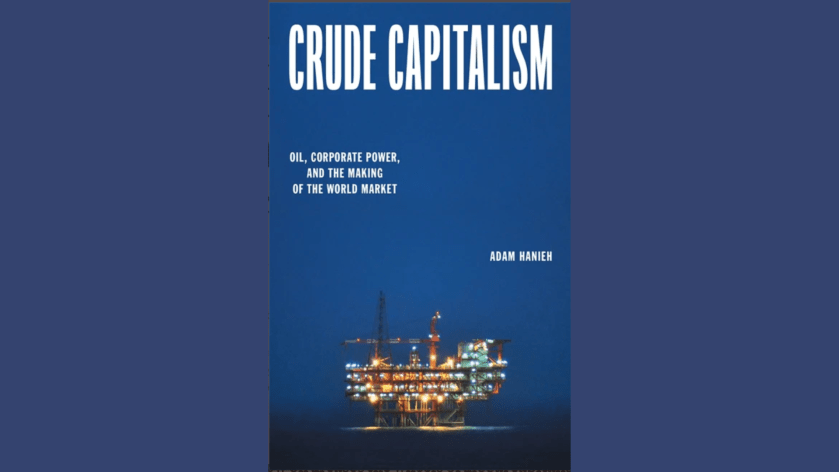
However, I’d argue that most important is the structural role that arms production has in the global capitalist economy. Scotland is a good case study. The arms industry, including the nuclear base on the Clyde, is quite small in terms of numbers employed and even in terms of its percentage of GDP. But it has a status that no other industry has – access to and support from government. Investment is prioritised above the threat of climate change. above that for climate. Indeed, the latter is left to the private sector or marginalised. The skills needed to work in the industry are often transferable to renewables and the building of a sustainable economy. The arms industry is centralised, securitised, secretive and immune to oversight and criticism – all this justified by appeals to the ideology of national interest. More generally the arms industry is at the intersection of global capitalism, imperialism, and environmental destruction. The deep connections between middle east oil and gas (and its impact on the environment) and the arms trade are clearly drawn out in Adam Hanieh’s Crude Capitalism

 Employment, Energy and Environment